
5 Ways Piet Mondrian Redefined Simplicity in Art
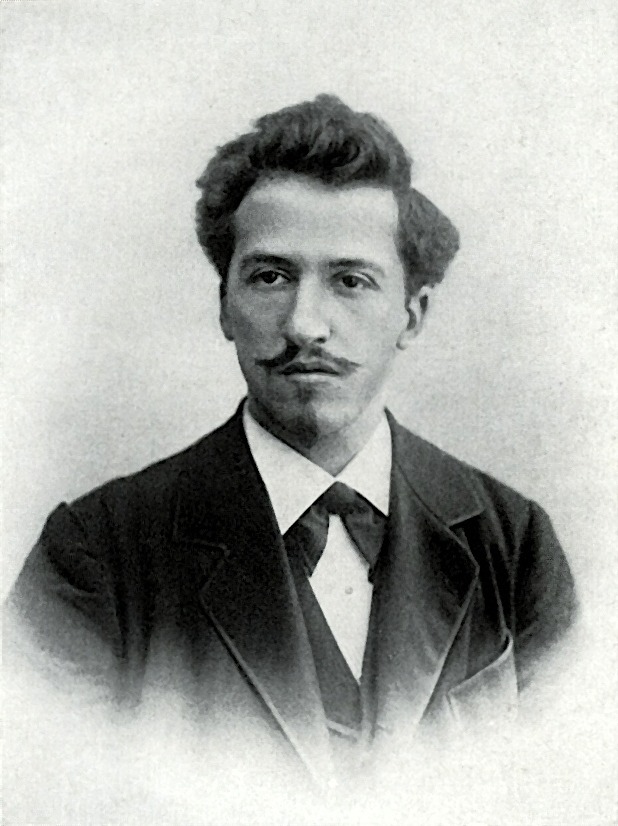
Simplicity looks easy until you try to master it. Piet Mondrian did what most artists spend lifetimes chasing, he made simplicity profound. Born in the Netherlands in 1872, Mondrian began like many others, painting trees, fields, and quiet horizons. But somewhere along the way, he stopped chasing what he saw and started painting what he felt. His journey from representational landscapes to pure abstraction wasn’t just about changing styles, it was about redefining what art could even be.
Mondrian believed that beneath all the chaos of life was a hidden order. You can see that belief evolve in his paintings, from swirling branches to strict grids, as if he was slowly stripping away everything unnecessary until only truth remained. The red, blue, and yellow blocks that made him famous weren’t random, they were his way of showing balance, clarity, and spiritual calm. He wanted viewers to feel harmony, not just see it.
What makes Mondrian’s work timeless is how deeply modern it still feels. A century later, his compositions could easily sit on a gallery wall, a building facade, or a minimalist designer’s mood board, and they’d still look fresh. That’s the mark of vision , when your art outlives the trends it inspired.
He didn’t just paint squares and lines, he painted structure into emotion. In a world obsessed with noise and movement, Mondrian’s silence spoke volumes. His art wasn’t trying to describe nature anymore, it was becoming its rhythm.
In this article, we’ll walk through five of his most remarkable works, each showing a different side of how Mondrian shaped simplicity into something spiritual. You’ll see how his disciplined restraint turned into emotional depth, and why his work still resonates in everything from contemporary painting to the layouts of modern cities.
Composition II in Red, Blue and Yellow (1930)
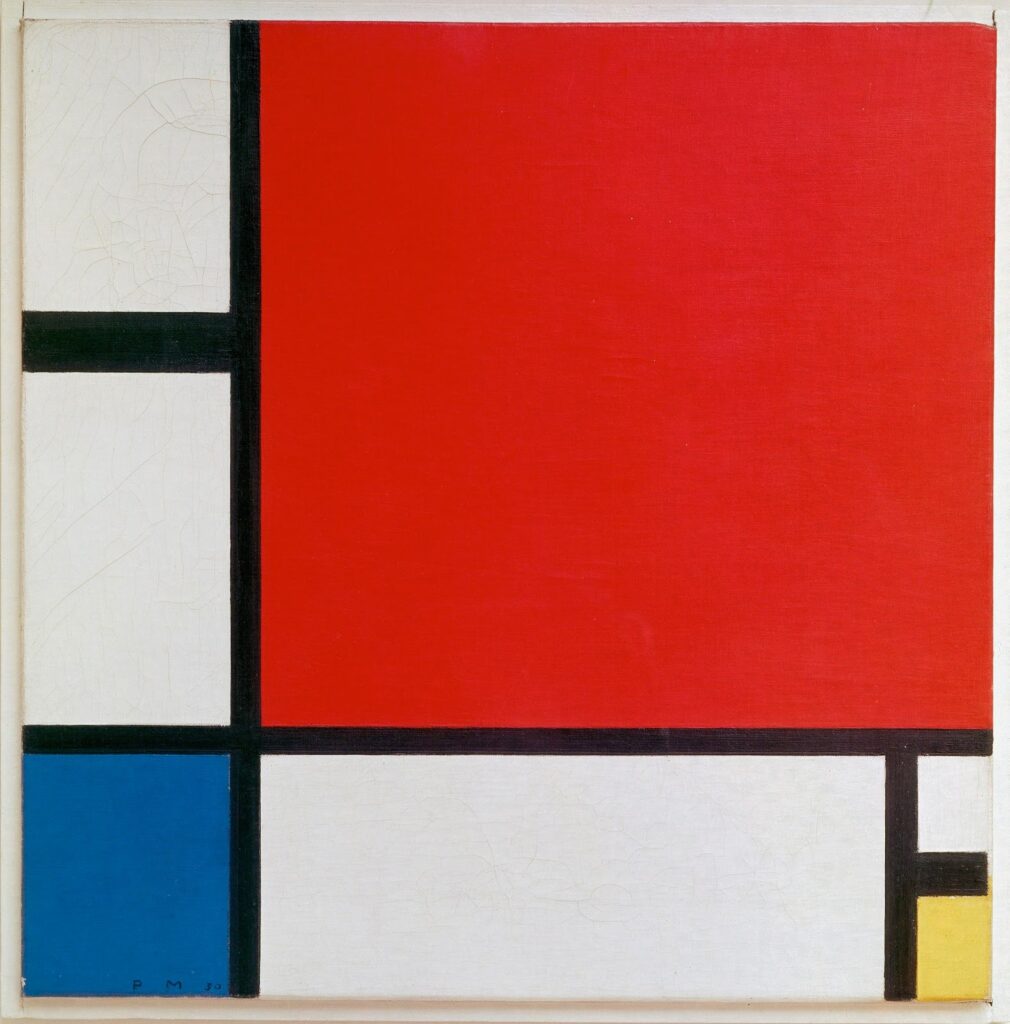
Composition II in Red, Blue and Yellow builds on the breakthrough of his previous works but feels more refined, more in control. Mondrian’s black grid lines are sharper, the blocks of colour more confidently placed. According to scholars this period marks his shift into the fully-realised Neo-Plastic style.
The acclaim comes from how thoroughly abstract yet visually satisfying it is. With no subject, no figure, no narrative, the painting invites contemplation. Viewers paused to engage with colour and form rather than story. That was radical for its time, and still feels fresh.
In your practice, this painting suggests you can ask your viewer to stay, to focus. If you reduce distraction and make your elements speak clearly, you give your audience room to think, to feel.
Look at how the white background dominates the space. It isn’t empty, it’s part of the piece. Negative space can be just as powerful as colour. Don’t hesitate to let your canvas breathe.
Finally, the painting’s legacy lies in its versatility. It influenced graphic design, architecture, the visual culture of the 20th century. When your work crosses disciplines or inspires beyond its immediate medium, you’ve reached a landmark.
Broadway Boogie Woogie (1942-43)
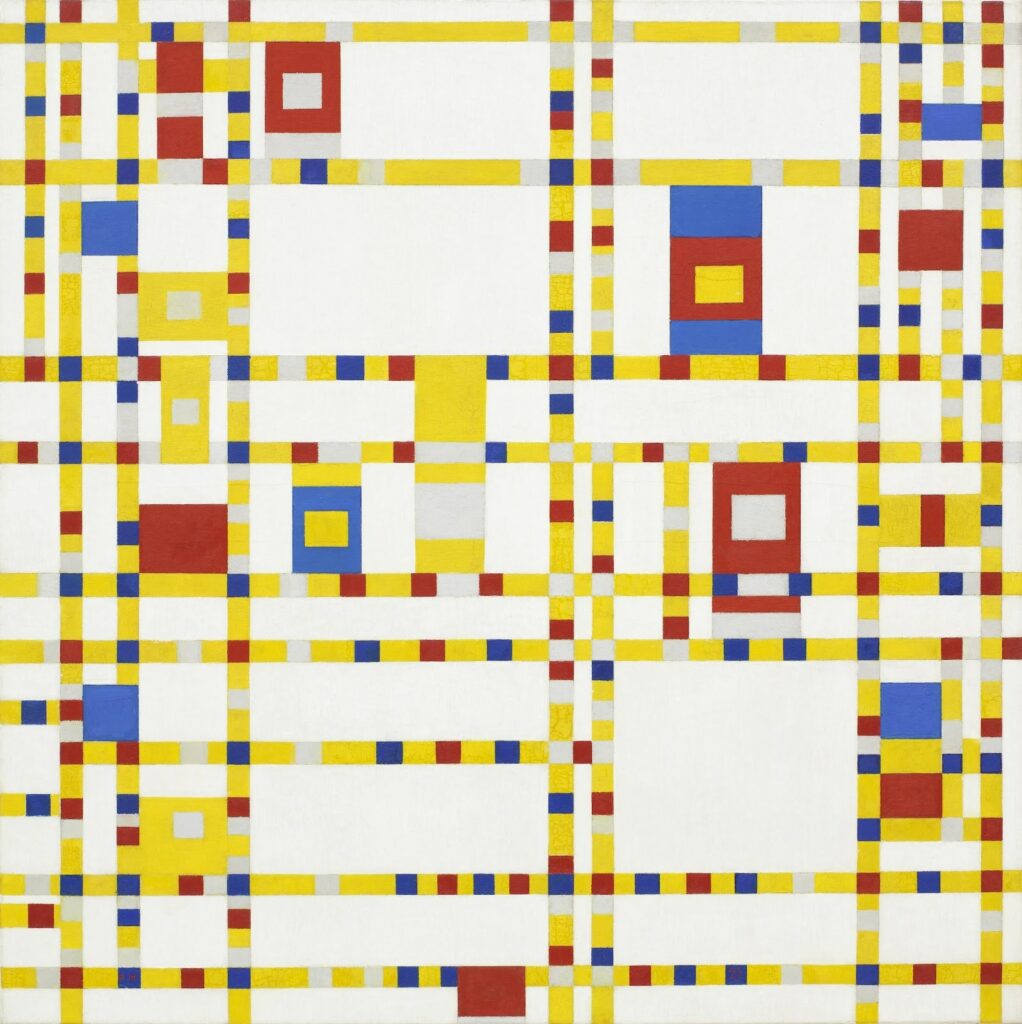
In Broadway Boogie Woogie, Mondrian brought his abstract vision into the rhythm of New York. He translated the city’s grid, jazz beats, yellow taxi lights into squares, lines and vibrant colour. The result pulses, it’s abstract but alive.
It was acclaimed because it showed Mondrian could evolve, adapt, and still remain true to his language of abstraction. The city inspired him, yet he didn’t depict the city in the conventional sense, he conveyed its energy.
For artists, this work teaches that abstraction doesn’t mean detachment from life. It means transforming life into form. Think: what is your subject’s rhythm, its structure, its movement? Then translate it.
Observe how the small coloured blocks create a sense of movement across the large canvas. Scale matters here. You might work small, but ask: how can the viewer feel motion in your piece?
And note: this work is highly influential because it bridges art, culture and environment. It’s not just about lines and colour, it’s about interpretation. When you tap into broader contexts, your pieces gain depth.
Gray Tree (1911)
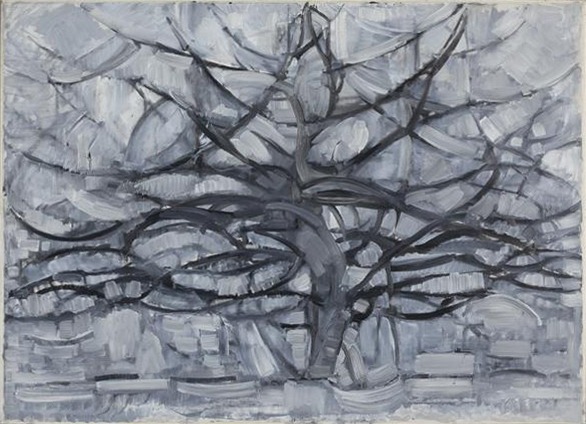
Gray Tree shows Mondrian in transition, his tree motif simplified, the palette muted, the structure opening toward abstraction. The branches blend into the background in interlocking forms. According to sources, this painting marks his journey from naturalism toward his more famous grids.
It was acclaimed because it revealed that abstraction can emerge naturally from representation. You sense the tree, yet the tree also dissolves into form. That duality fascinated critics and artists alike.
In your work, this means you don’t need to abandon representation cold-turkey. You can evolve. Use familiar forms, then progressively simplify them. Let your audience follow you.
Look at how contrasting textures and colour tones hint at the tree’s form without spelling it out. Suggestion can be stronger than statement. Use that subtlety.
And remember: the acclaim of this piece comes from its bridge-moment. Transitional works matter, they show mastery and exploration. Don’t skip your evolution.
Victory Boogie Woogie (1944)
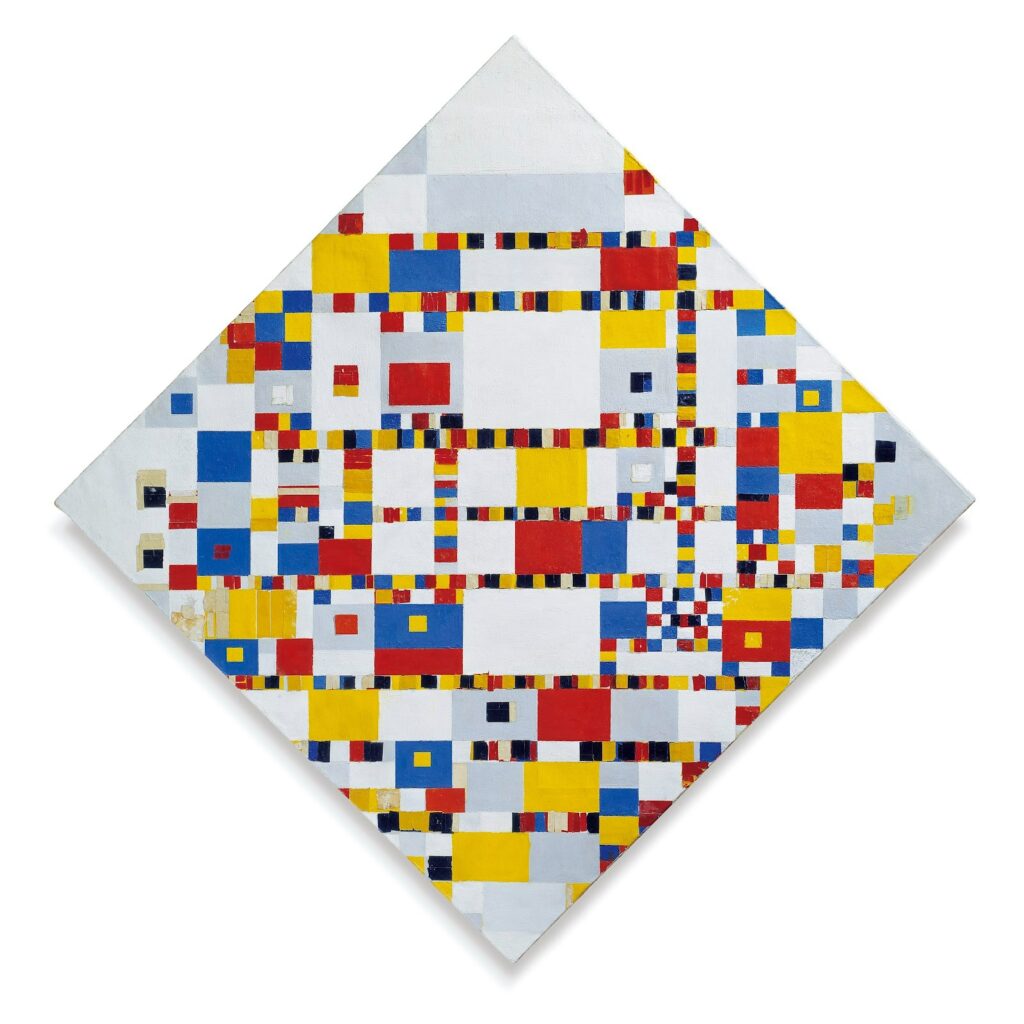
Victory Boogie Woogie is Mondrian’s final, unfinished work. It breaks his rigid grid into smaller blocks, more rhythm, more movement, almost dance-like. It was acclaimed because it showed his willingness to push his language further, even at the end.
Artists and historians celebrate this work because it demonstrates that even masters keep evolving. It’s dynamic, almost jazz-inspired, yet still disciplined. It reminds us artistry isn’t static.
For your own practice, this piece is a prompt: don’t settle into one style. Push your language. Explore tension. Let your work breathe and shift.
Notice the interplay of empty space and coloured blocks. The structure remains but the boundaries feel elastic. Let your composition hold structure but feel alive.
Finally, the legacy of this painting lies in its humanity. It’s abstract, but you feel the painter, his space, his studio, his last thoughts. When you make work, let your voice be clear, even in abstraction.
Lozenge with Four Lines and Gray (1926)
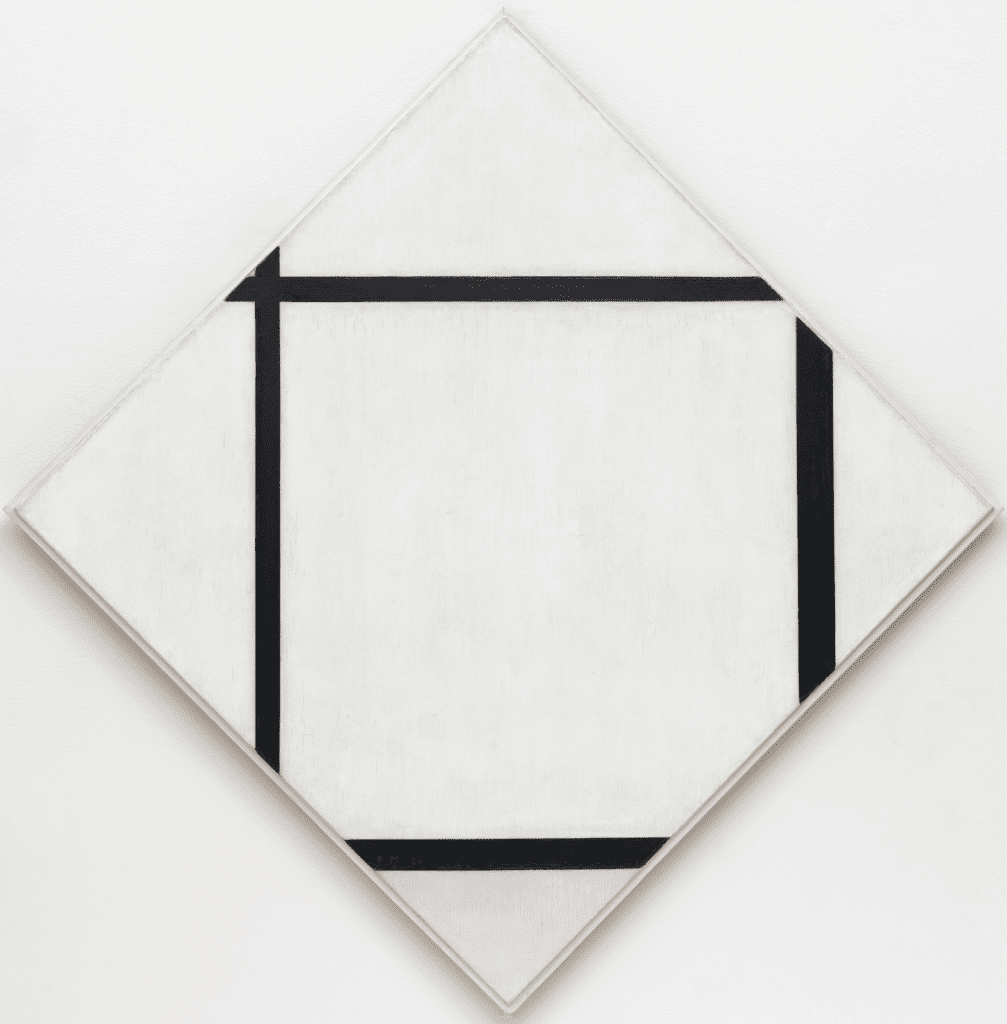
At first glance, Tableau I: Lozenge with Four Lines and Gray might look like Mondrian stripped things too far. There are no coloured blocks, only black lines on a diamond-shaped canvas, with a soft gray background. Yet that restraint is what makes it so extraordinary. By 1926, Mondrian had already proven the power of red, blue, and yellow. Here, he challenged himself to see how much emotion could be created through limitation alone. The tilt of the lozenge format made the composition feel as if it were in motion, testing how geometry could still create energy.
Critics and historians often call this painting one of Mondrian’s purest visual experiments. It was acclaimed because it demonstrates a deep confidence, he no longer needed to rely on color to express tension and harmony. The gray tone sits between light and shadow, inviting the viewer’s eye to rest and reconsider what balance means. This painting was a turning point for the artist, showing his ability to speak through silence, to make minimalism feel monumental long before the term existed.
If you’re an artist, Lozenge with Four Lines and Gray offers a quiet kind of wisdom: sometimes taking away more leads to deeper meaning. Mondrian reminds us that space, angle, and placement can carry emotion as powerfully as color or texture. Think of your own creative work, what happens if you remove one beloved element? Does what’s left feel truer? Stronger? Often, clarity hides behind what we strip away, not what we add.
The lozenge shape itself was revolutionary for its time. Instead of presenting a square in a conventional orientation, Mondrian rotated it forty-five degrees, breaking tradition yet maintaining structure. That decision created both tension and freedom. It invited the viewer to turn the painting in their mind, to feel how geometry could defy gravity. This subtle defiance became symbolic of Mondrian’s entire vision: art should evolve as freely as life itself.
Finally, Lozenge with Four Lines and Gray continues to hold acclaim because it represents artistic courage, the bravery to pause when others expect spectacle. It’s meditative, restrained, and yet endlessly studied for its precision. The work proves that even the smallest gesture, when intentional, can shape art history. Sometimes, what you leave out becomes the loudest statement of all.
