
A Look at Dr. Evilletown’s NYC Studio Life
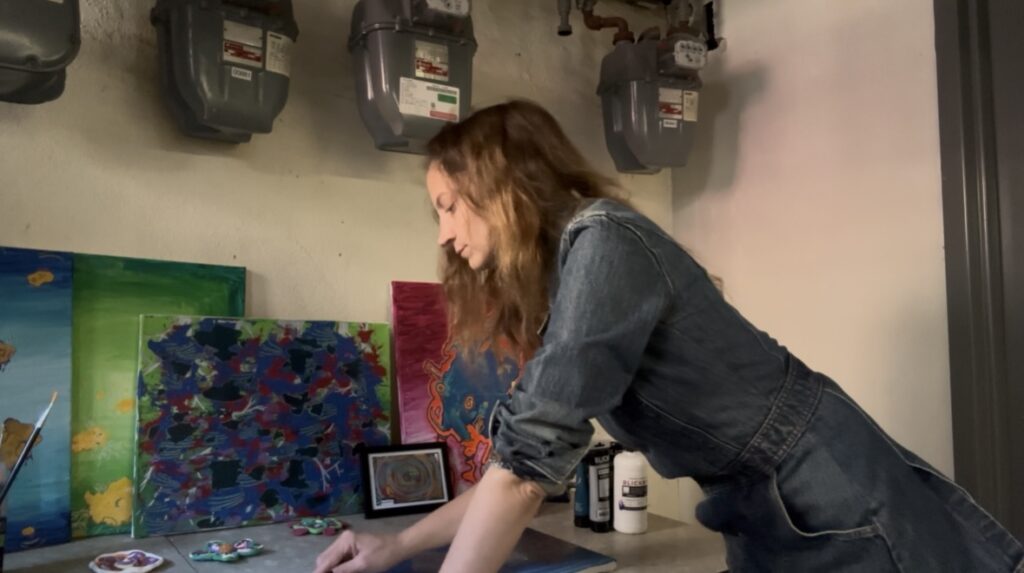
Our studio visit this week brings us underground to the basement workspace of Dr. Evilletown, a multidisciplinary artist working with painting, animation, sculpture, sound, and textiles. Beneath her New York City apartment building, the studio exists alongside the building’s pipes, boiler, and passing neighbors functional, imperfect, and unmistakably alive. The faint scent of paint, beeswax, and concrete lingers in the air, grounding the space in a quiet, everyday kind of magic.
During our visit, Dr. Evilletown walks us through her studio and her daily routine. She talks about why she keeps her workspace clear of clutter, the tools she always reaches for, and how she moves ideas from sketchbooks and phone notes onto the canvas. We get to hear about the way she works late at night or early in the morning, how she takes short breaks to stretch or step outside, and how she balances multiple projects at once. Around her, finished works sit alongside pieces in progress, giving a glimpse of ideas in every stage of development.
This interview isn’t just about her work, it’s about the way she inhabits her studio, the small choices she makes to keep herself focused, and the quiet rhythms of creating in a city that’s never really silent. It’s a chance to step into her world and see how her art comes to life, one brushstroke, sketch, and sound at a time.
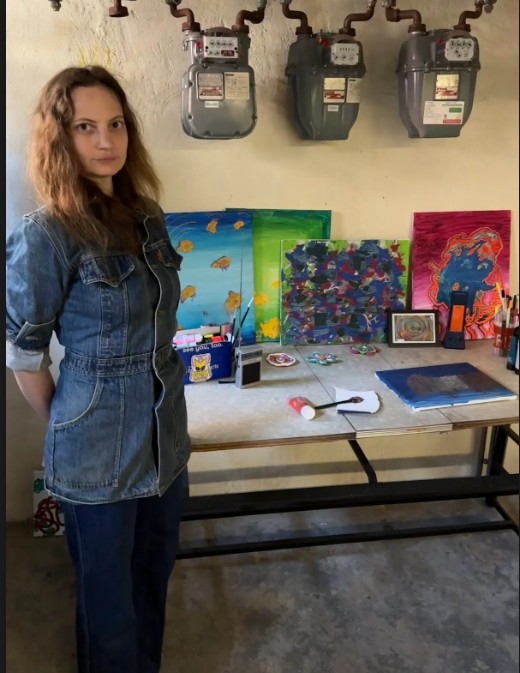
Dr. Evilletown (she/her) is an interdisciplinary artist working sound and visuals. Her work generally involves painting, animation, nature footage, sculpture, movement, original sound, public art, and textile work. She explores themes of gender, personal injury, environmental stewardship, and future biological issues. Her work has been shown in theaters, gallery spaces, skyscrapers, small screens, roof tops, restaurants, sidewalks and sidewalks in Tampa, NYC, L.A., Austin, Portland, Seattle, Chicago, and Kyoto, Japan. Most recently she received the NYFA / Queens Council for the Arts 2025 New Work Grant, and is a BRIClab Video Art Resident.
1. Can you walk us through your studio space? What’s the first thing you see when you walk in?
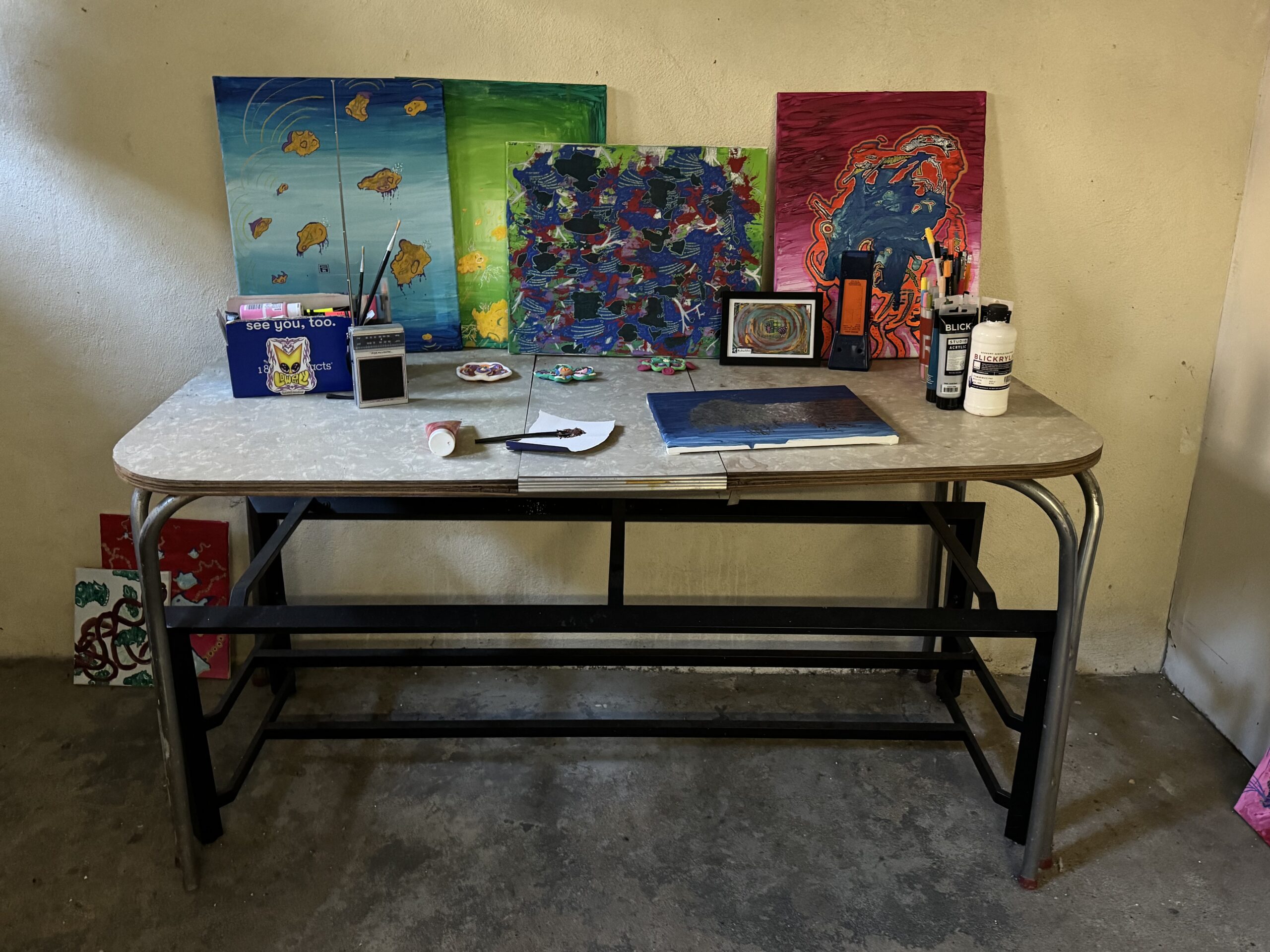
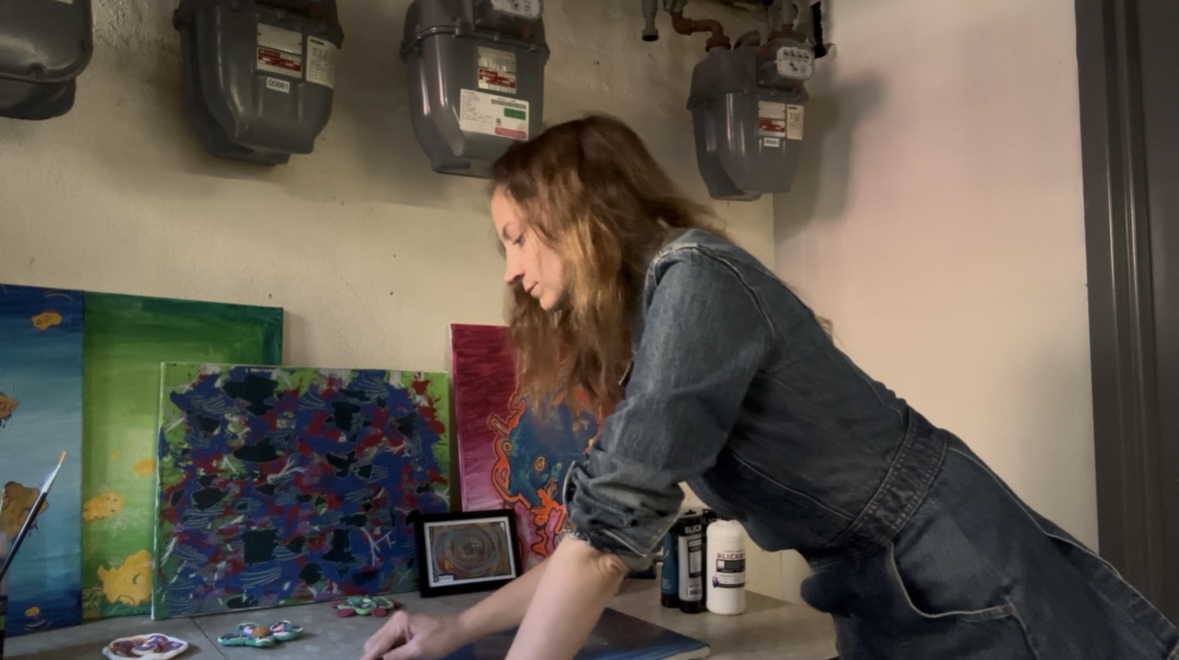
My studio space is in the basement of my apartment building. When you first walk in, there are two doors and a staircase going down. My workspace is just to the right of this, in an open area where there is evidence of water and gas lines. The basement has the boiler for my entire building, our trash and recycle, and my work table. I prefer to stand when I am down here. There are chairs, but I never use them. I have a few finished works, some works in progress, a little radio, and a sound effects toy, in addition to some art supplies. Though I am the only artist down here, I am not the only person who uses this space. I really try to keep it minimal and as tidy as I can.
2. How is the space arranged to support the way you like to work on a painting from start to finish?
Keeping only the essentials in my immediate work space is really important for me. I am easily distracted by clutter and I like a lot of empty space to work in. I don’t keep very many completed works down here, and I am rotating them out often. Everything revolves around my work table, so I try to keep it as empty as possible. The wall I am facing has some natural light, which I rely on more if I’m working in the morning. Because I am in a basement, it is usually pretty quiet, especially on weekdays. Having a clear, open space, with limited noise is particularly luxurious in NYC, and the proximity to my living space is really convenient.
3. What materials or tools do you keep closest to you while working?
I am not affiliated with this brand in any way, but I wish that I was. I LOVE BLICK acrylic paint. I’ve used it for many years, all over town, on murals, canvas, as a dye for clay, printmaking, just to name a few. BLICK if you are reading this; I’m your girl! I always have a few sharpers, micron pens, and acrylic markers near. I used recycled drawings and boxes as palletes and a lot of recycled plastic cutlery in the place of paint brushes (but I have those too). I like Stockmar beeswax crayons in block and stick form.
4. Are there certain books, film stills, or notes that stay in the studio as part of your process?
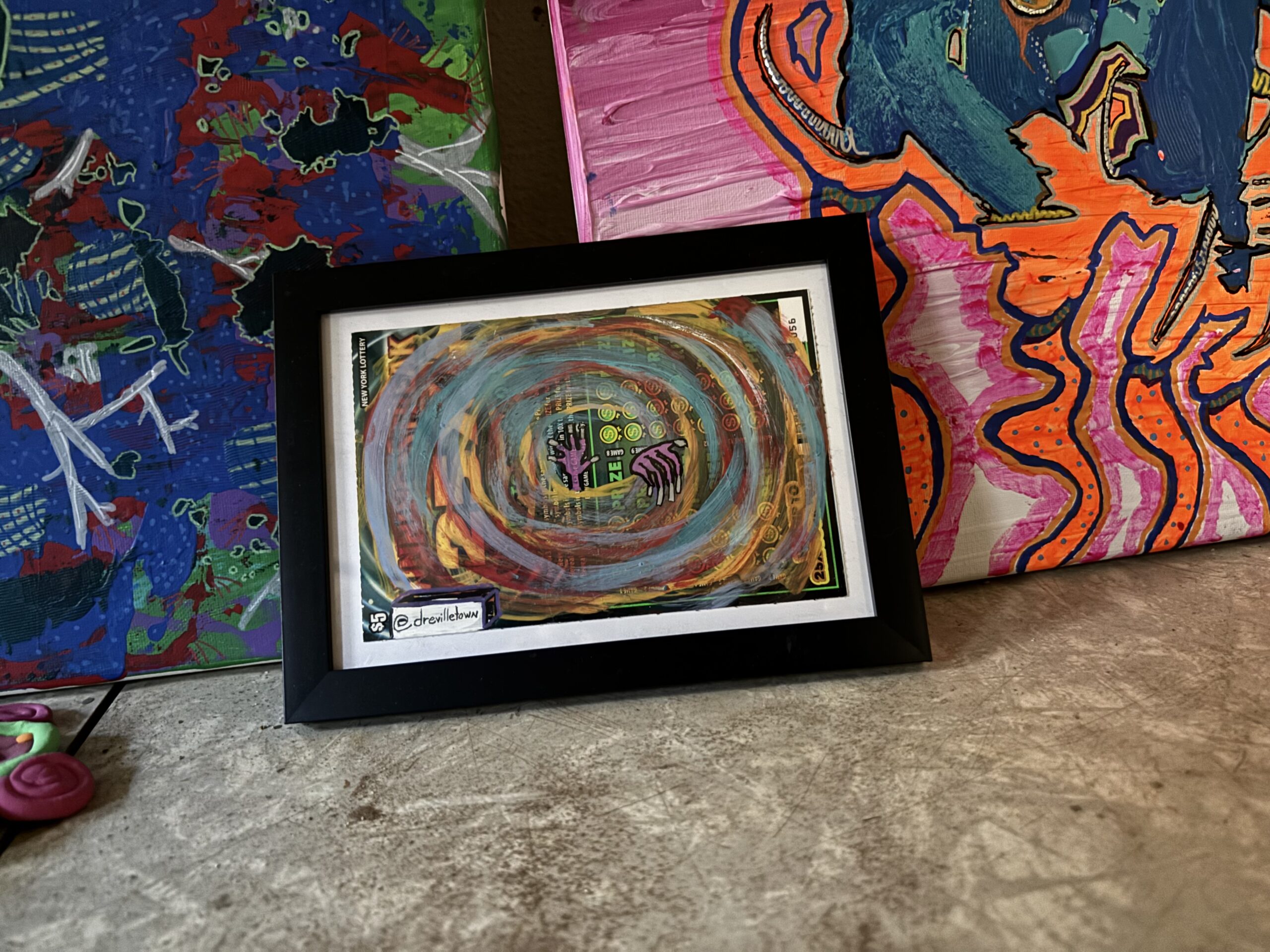
This is my chance to focus, so I try to keep only my own works around. I find outside influences to divert my attention easily, so it’s important that I set myself up for success. I keep completed paintings I am still stewing on, sculptural objects, prints, and of course, my current works in progress on the table and sometimes on the ground. I have a portable radio, and sometimes I will listen to music or white noise on my phone. For the most part, I like working in silence. The sidewalk is right outside, and it’s never really silent in NYC. Buses, traffic, and the voices of strangers and neighbors are a great backdrop to my practice.
5. How do you usually keep track of ideas as they move from your journals into the canvas?
I have a few portable sketch books, and I will jot down key words in the Notes app on my phone. I have a little sketch book that I carry around with me when I am commuting, and another one that lives between my apartment and studio area. If an idea becomes more concrete, that means it’s moved out of the sketchbook / notes phase and is becoming a more tangible work. If I’m really out and about I will use a napkin, loose piece of paper, post-it, etc., and put that item or glue it into a sketchbook. It’s super helpful when they have the pockets; I really like the moleskin line, but also use a stapled homemade version.
6. What does a typical day in this studio look like for you?
I get a lot of work done late at night and sometimes early mornings. I never mix food with art making so I try to eat something in my apartment before starting on a project. Unless I have a deadline, I try to keep my work focus loose, but consistent. Meaning, I work on whatever I am feeling at the moment, and try to keep it up regularly. As an interdisciplinary artist, a lot of my pieces are in service to a bigger project. It is not unusual for me to bounce around between techniques within the span of a couple of hours, especially if I am waiting on something to dry, seal, etc., I try not to spent more than a few hours working straight without at least one short break. That could include stretching, walking around, wasting time on my way phone, checking emails, and occasionally I will go back upstairs and eat something before diving back in.
7. How does the light in this space change the way you approach a painting?
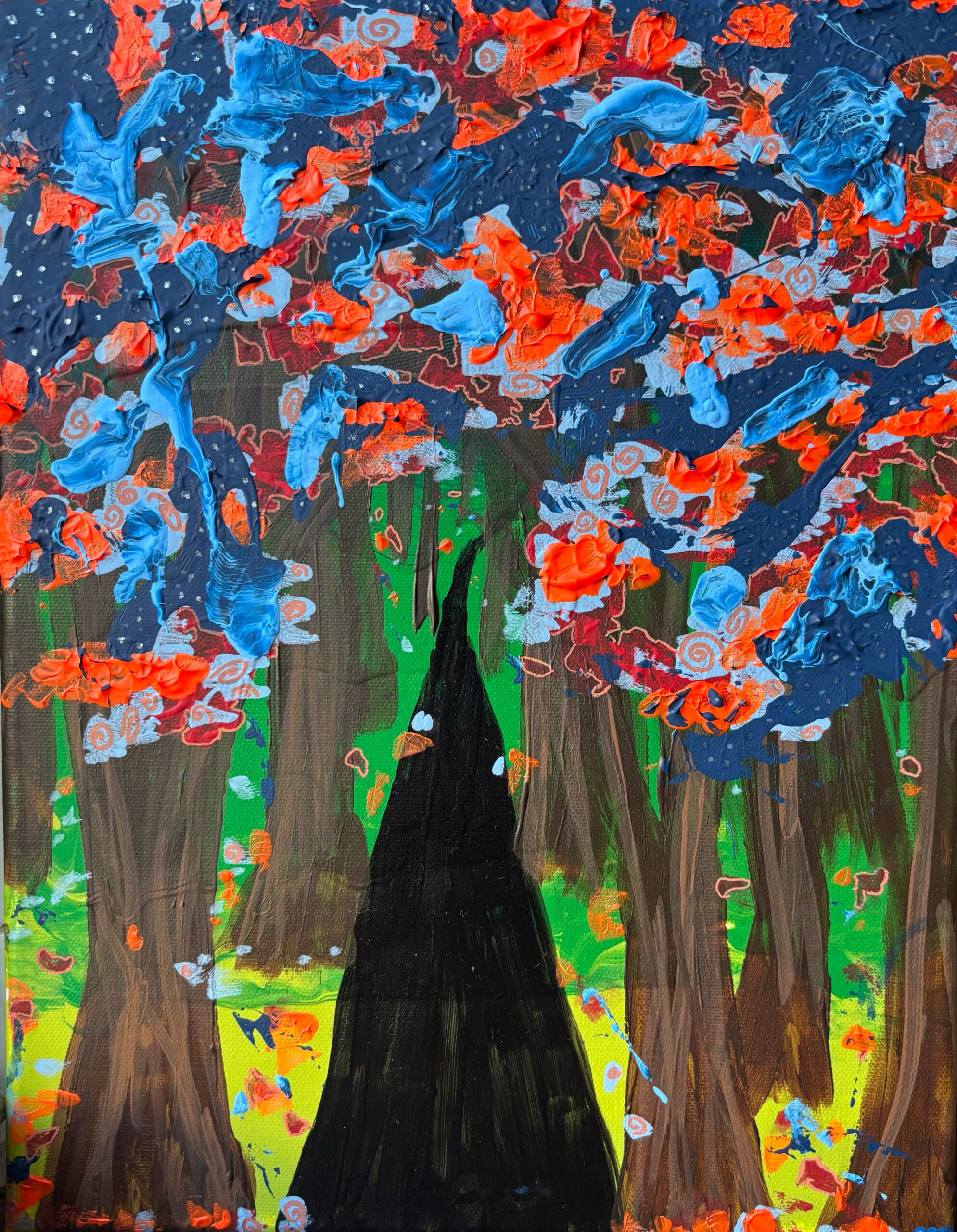
I have some natural light, and fluorescent light. Usually I need both if I am working during the day. I am below street level, so the natural lighting is limited. If I am working at night, I am completely dependent on overhead lighting. I try not to let these different light experiences effect my work one way or another, but there are less natural shadows to deal with at night, so in some respects it’s easier to see at that time. Sometimes I will walk upstairs and check work in the hall, as that lighting is a little softer.
8. Do you have works in progress visible around the room, or do you prefer to focus on one piece at a time?
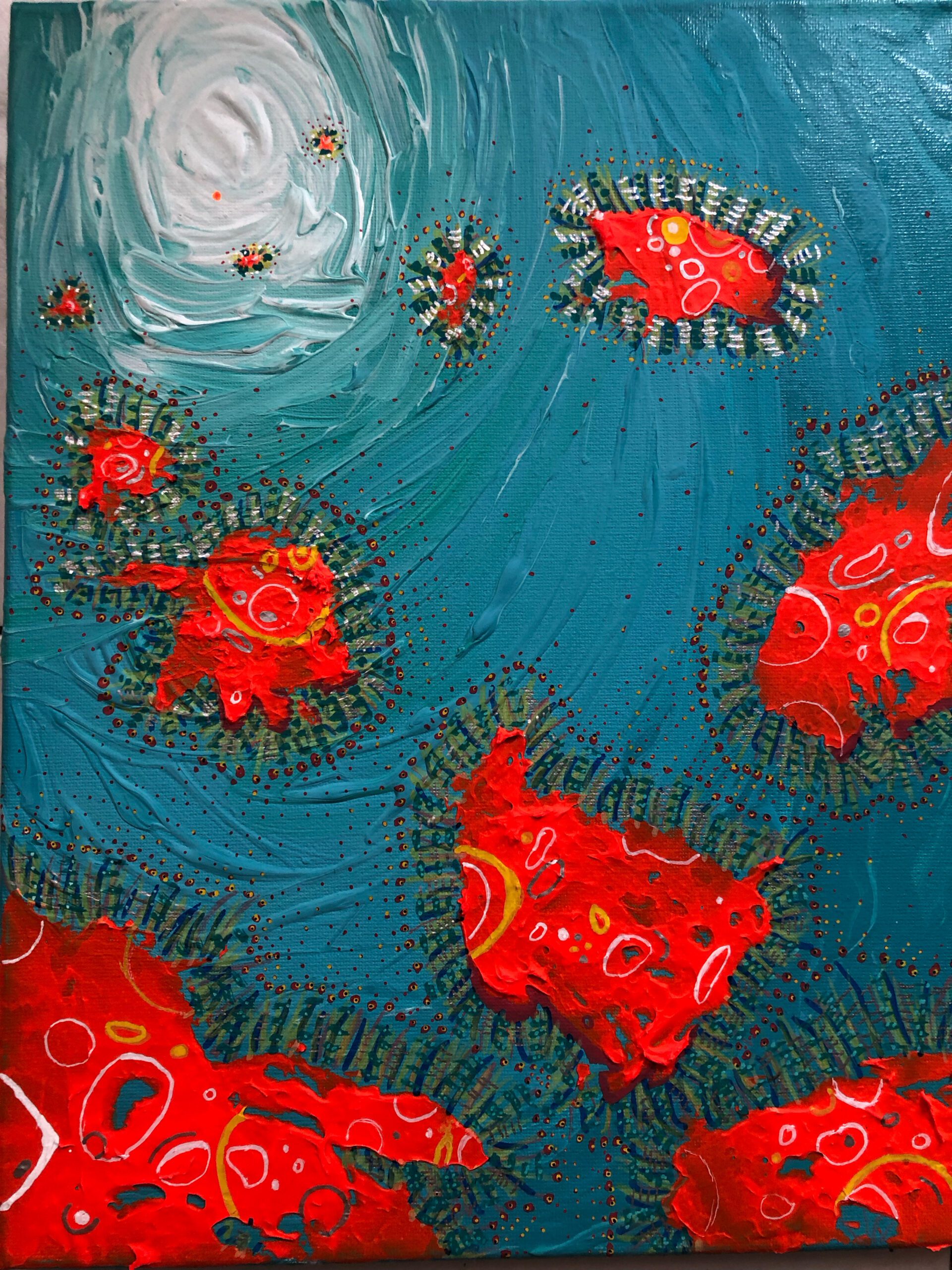
My work space is made up of completed works and works in progress. Sometimes they are part of the same series, or are just pieces that I like having around. I try not let these canvas amount exceed more than 10 pieces at a time, and I only keep a few sculptural or textile works visible at a time. I do like to have projects around me in all different kinds of stages as I tend to divide my time between a few different projects while I am working.
9. Is there a spot in the studio where you usually pause to step back and look at the work differently?
For NYC, there is a lot of open space here. If I need a break I’ll walk up and down the hall way, or just open the door to the left and walk outside. I don’t get very far from my area, and I am lucky to have the option to move or get some fresh air. I like to take stretch breaks, and just let my eyes wander a little bit before re-focusing on the work table.

10. If you get a chance to set up your studio anywhere in the world, where would it be?
If I could set up a studio anywhere in the world, it would probably be somewhere in Ireland or Iceland ! I read recently that both of these countries have a base pay for artists, and I would love to have that kind of financial support. Not to mention, each of these countries are stunning and pretty fascinating. New York State has more artist resources and support than a lot of other US states, but nothing on that scale.
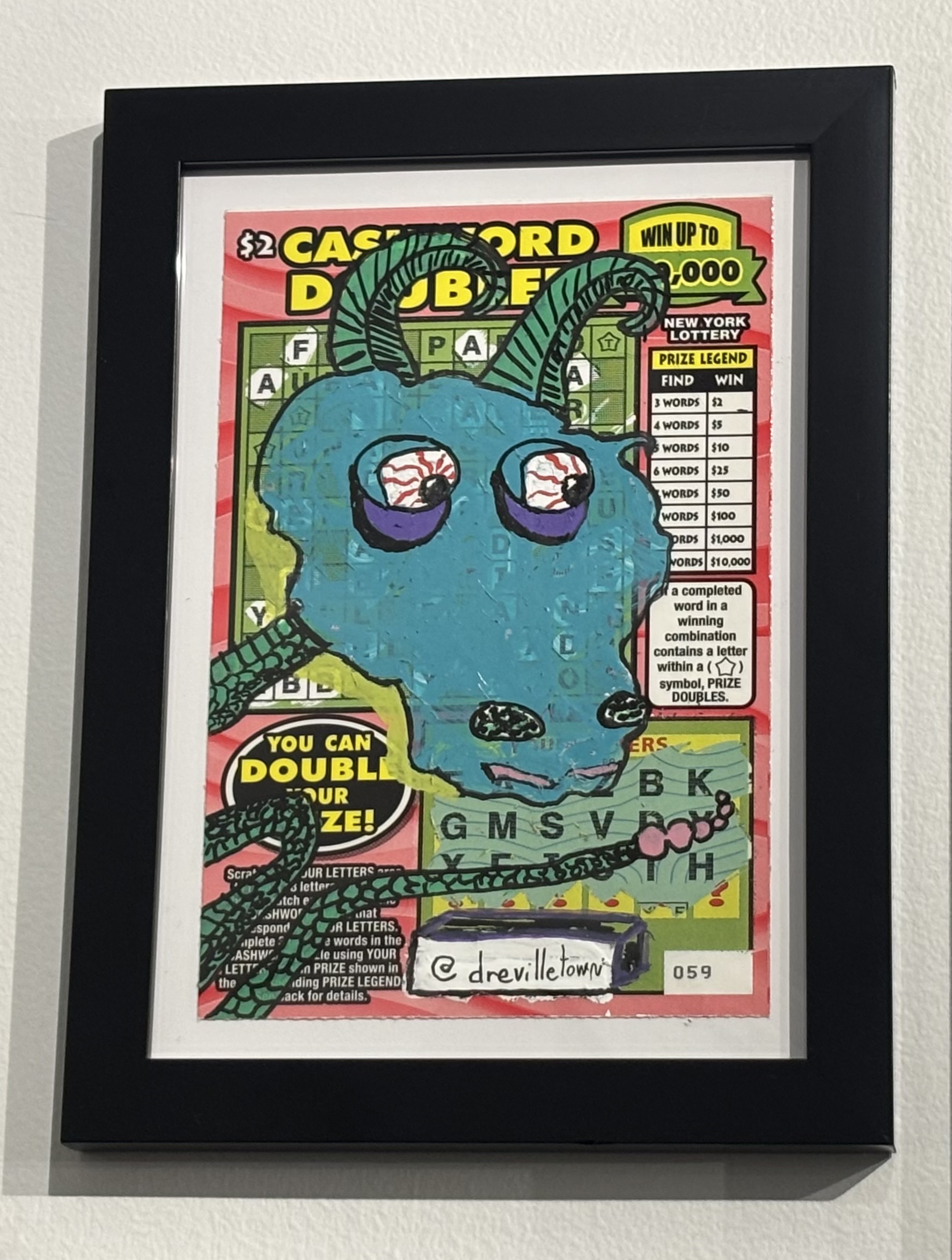
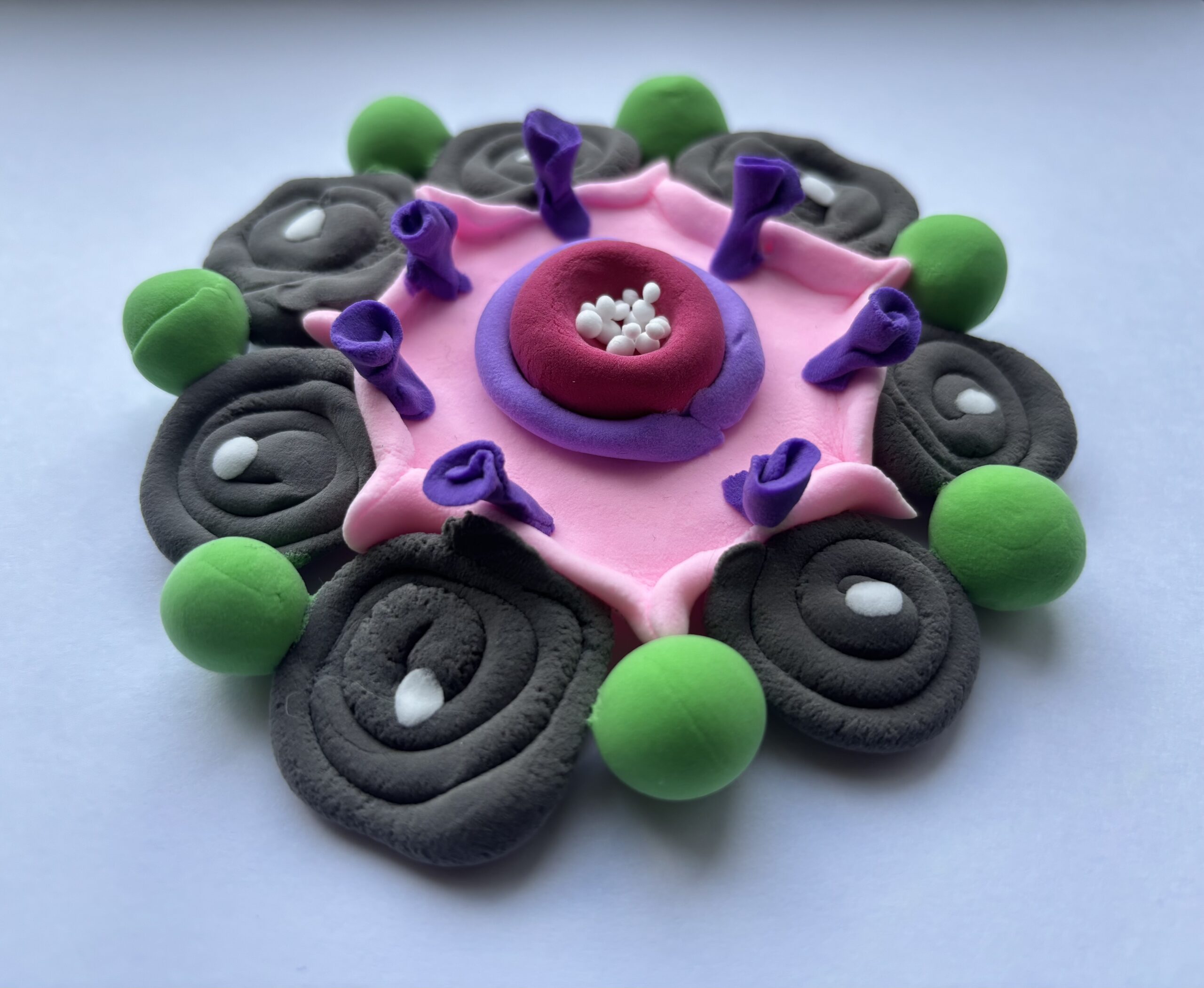
The studio feels quiet and tucked away, like a small world hidden beneath the city streets. It has a cool, concrete air with faint traces of paint and beeswax, mixed with the smells of the building’s pipes and boiler. Even though it is below ground, there is some natural light that softens the space, and fluorescent lights fill in when needed. The room is simple and uncluttered, with open areas that make it easy to move between projects, but there are still signs of work everywhere.
Finished paintings lean against the walls, sculptures and textiles sit in progress, and sketchbooks and tools are always close by. You can hear the distant sounds of traffic and voices from the streets above, which give a quiet background to the focused energy of making art. It is a space that feels practical and lived-in, where ideas can shift and grow while the artist moves through her day.
To learn more about Dr. Evilletown, visit the links below.
