
This artist spent years teaching art rules then broke them all in her own studio

Artist Patricia Frederick makes a mark on canvas and then waits to see what it wants to become.
This interview features an artist who has spent her career teaching composition and design, only to find in her own practice that the best work happens when all that knowledge steps aside. Frederick, who earned national recognition for building an award-winning high school art program before retiring, now creates paintings that unfold through what she describes as listening rather than telling. Her canvases are built slowly, layer by layer, with each mark responding to the one before it until something cohesive emerges from what started as chaos.
In the conversation that follows, Frederick opens up about the challenge of trusting a process that resists planning. She talks about the moment in every painting when she has to choose between control and surrender, and how often the work reveals thoughts she didn’t know she had. We learn about her fascination with consciousness and metaphysics, subjects that have led her to writers exploring everything from nature spirits to astral projection to the science of reality itself. She explains why she avoids horizon lines, how animal presences show up uninvited in her work, and what it means to create paintings that function as portals.
What comes through most clearly is Frederick’s commitment to unlearning. After decades of teaching students how to compose an image, she’s now trying to forget those rules in her own studio. She quotes Einstein on intuition and describes wanting her paintings to feel as natural as rainbows in oil or the spots on a fawn. The work has changed how she experiences the world around her, making her more attentive to nature and more aware of the synchronicities between what appears on her canvas and what’s happening in her life. This is an artist who believes her paintings know things before she does, and she’s willing to follow where they lead.
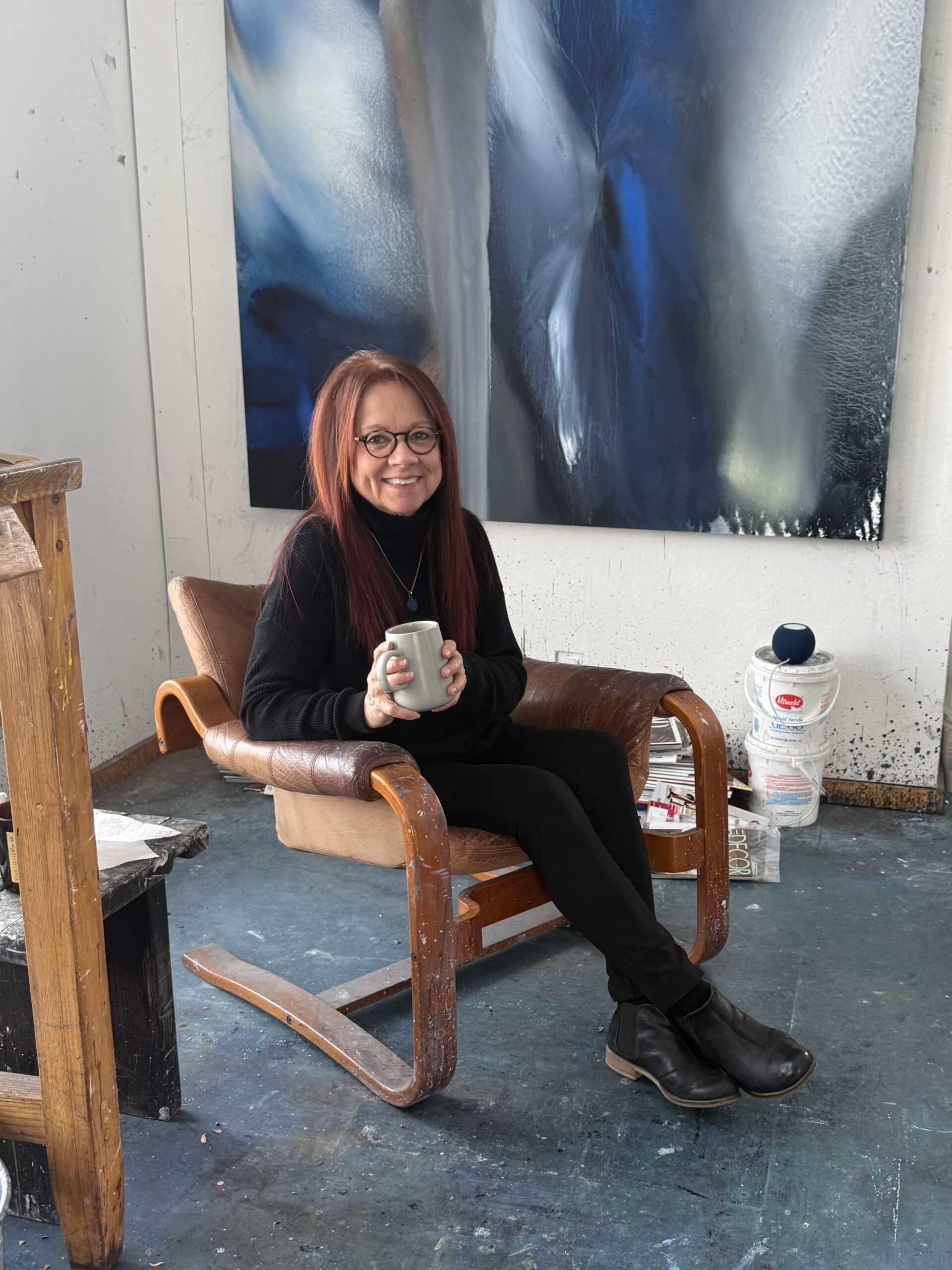
Patricia Frederick received an MFA in painting from the Maryland Institute College of Art and a BFA from St. Norbert College. She taught art at Pius XI High School beginning in 1977, where, as department chair, she led the art program to national prominence. Her work as a teacher has earned numerous regional and national awards, including Teacher of the Year from the International Network of Performing and Visual Art Schools and Distinguished Teacher from the White House Commission on Presidential Scholars. She is currently retired. Exhibits of her own paintings include group and solo shows in Maryland, Missouri, and Wisconsin. Collectors include Johnson Controls, Inc., UW Health at the American Centre, and the City of Milwaukee Art Commission.
1. How do you recognise when a mark or idea on the canvas is meant to guide the next stage of a piece?
I try not to think. At first, I just wanted to play. I want every move to feel organic and spontaneous. There comes a point in the painting where I need to step back, however, to get a sense of the space and light that are developing. In the long run, I want the space to feel transcendent. That is also where a painting might reveal what it is trying to show me. It is not unusual for the work to show me thoughts that were previously only in my subconscious. That is actually where the magic is.
I am paying attention to how I pay attention. The power of the imagination to create meaning that aligns with my immediate consciousness continually surprises me.
Patricia Frederick
2. Can you describe the process of surrendering control in your work and allowing the painting to unfold on its own?
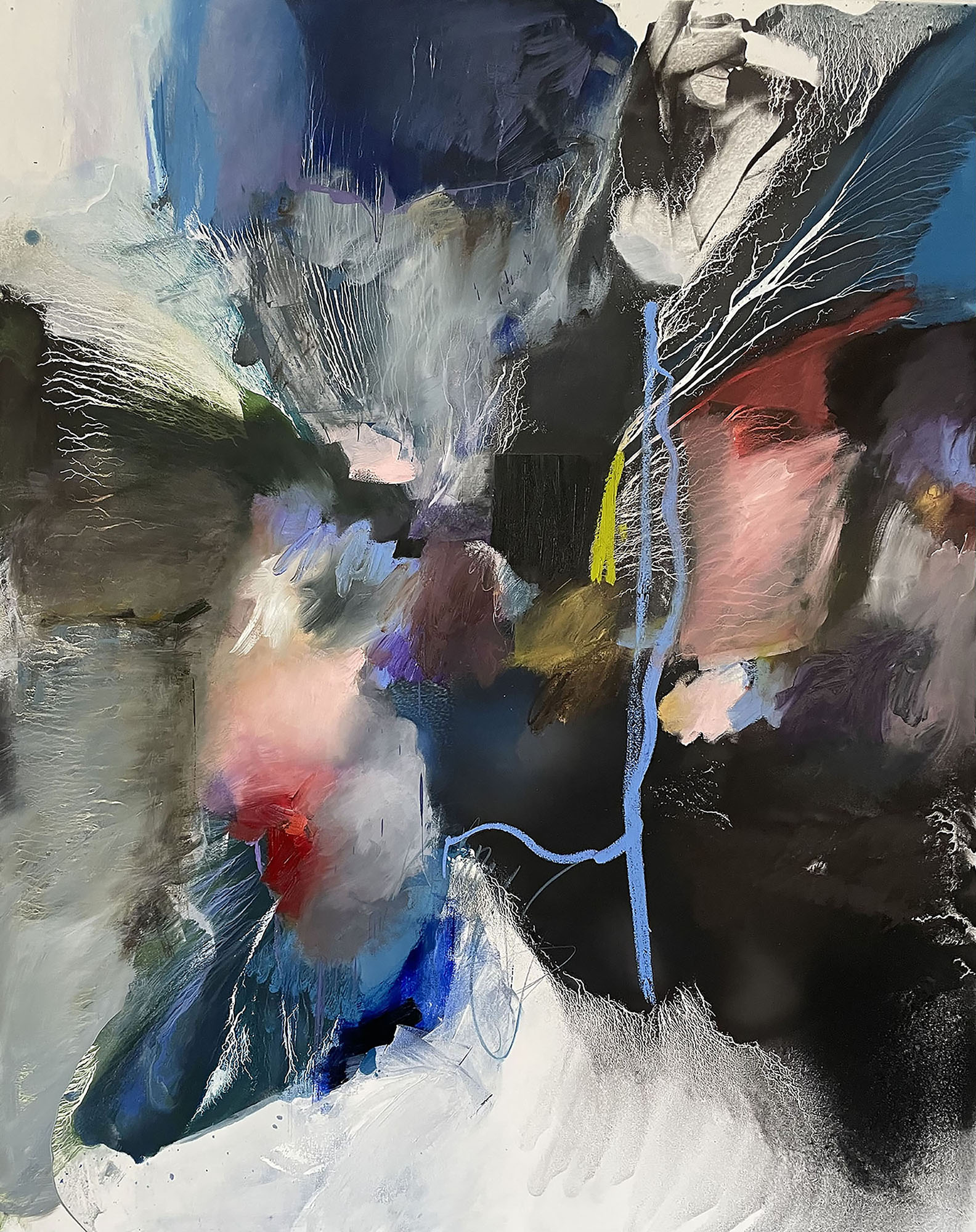
This is where much of my learning comes from. I spent so many years teaching composition to high school students, so my design instincts often want to take over. I like what Einstein said: “The intellect has little to do with the road to discovery. There comes a leap in consciousness, call it intuition or what you will, the solution comes to you, and you don’t know how or why.” I want my work to open me up to what I don’t already know. There is always a moment in a painting, a tipping point perhaps, where I either keep trusting the process or I fall into the trap of controlling the outcome. I am fascinated by that space where thought seems to disappear and the mind gets out of its own way. My paintings emerge slowly over time. They are about watching, waiting, and listening. They are about cause and effect. Possibilities and probabilities. Particles and waves. Action and reaction. Acceptance and resistance.
3. Your work often draws on patterns found in nature. How do you translate those observations into forms that feel alive on the page or canvas?
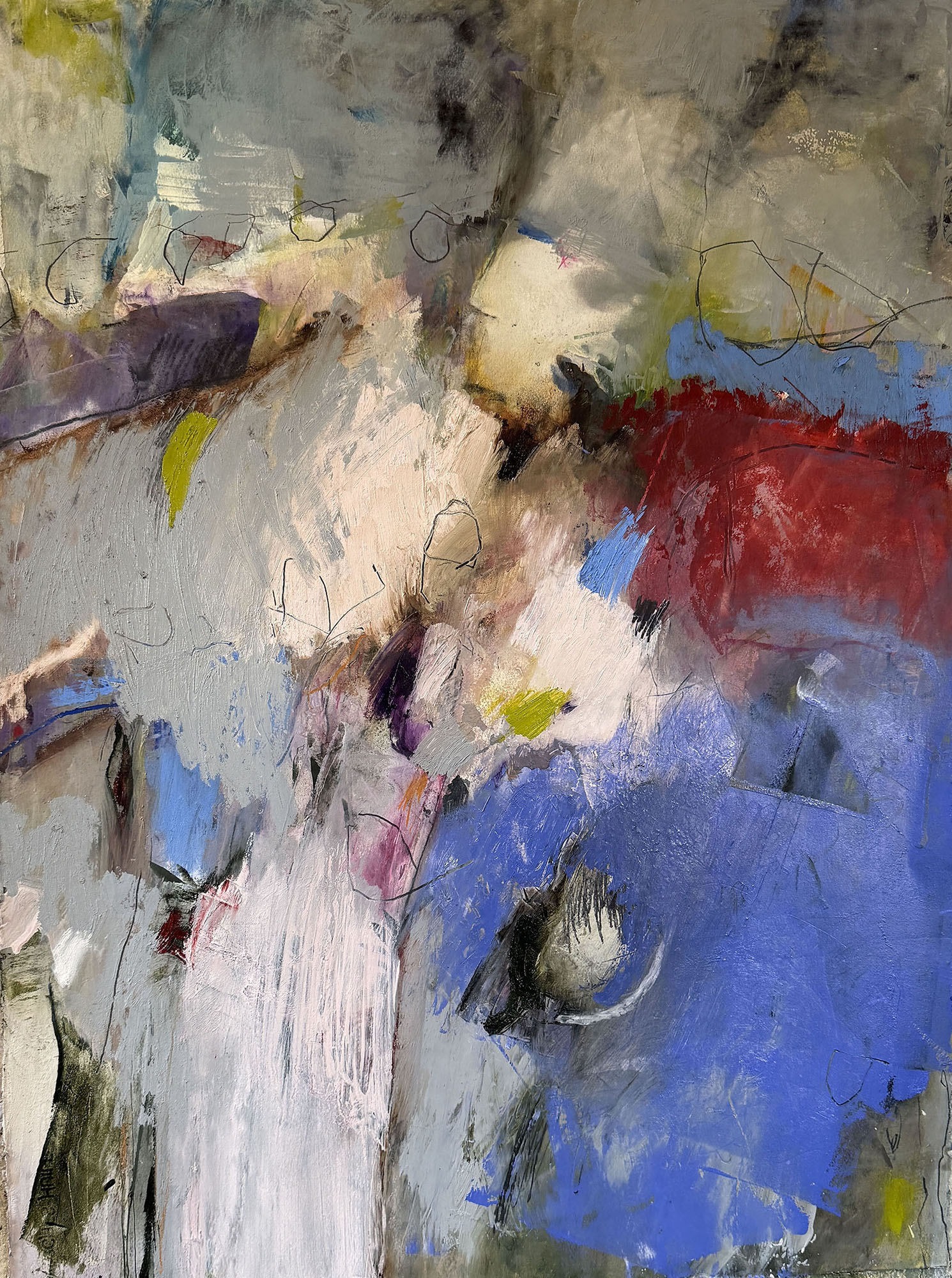
Actually, those patterns find me. I intentionally avoid anything that feels like a horizon line. I am always surprised when images or characters show up on the page, because I didn’t deliberately put them there.
4. How do the concepts of consciousness and metaphysics shape the way you approach each new piece?
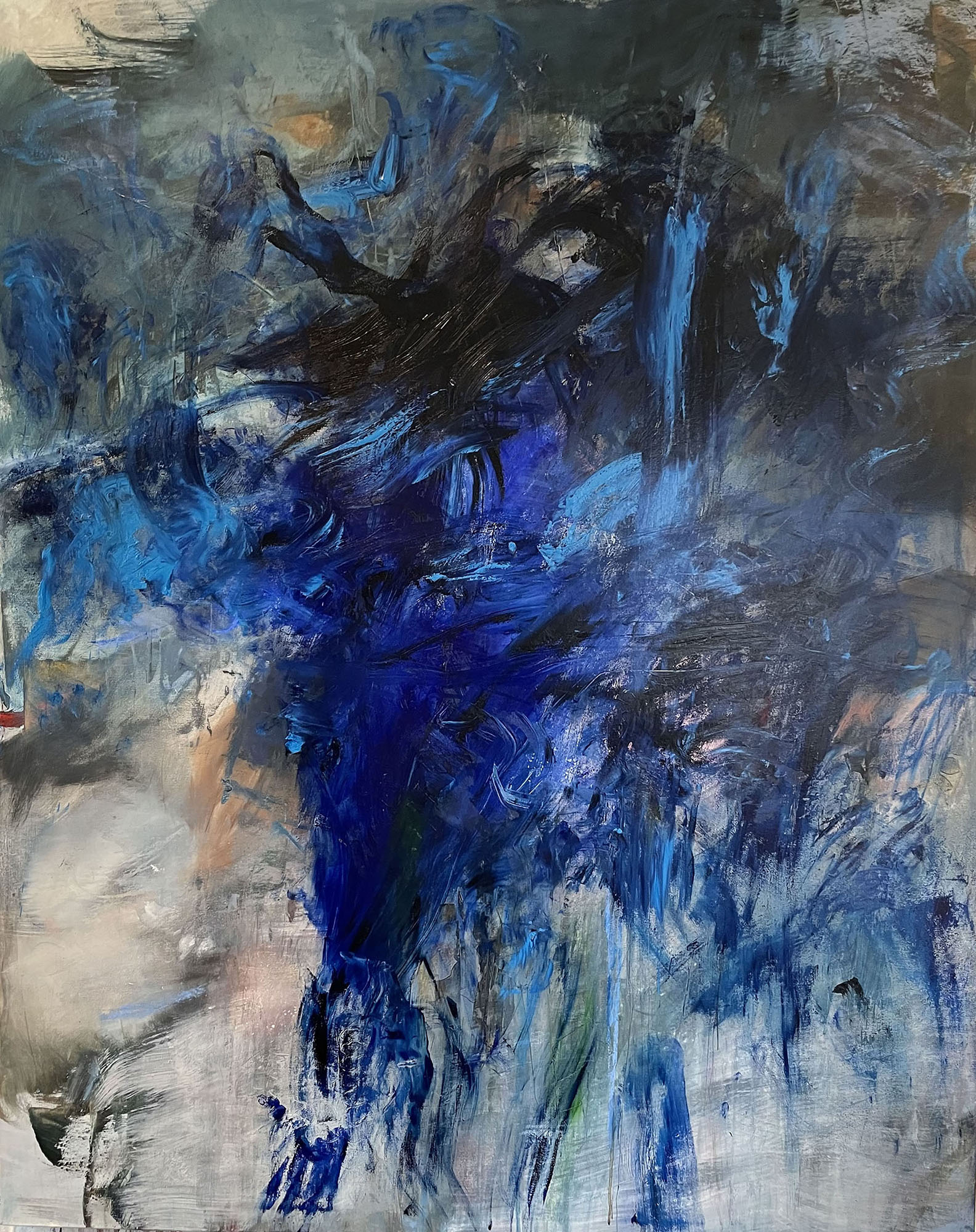
I start with random marks, but they eventually develop into a structure that informs me how to enter into the work. It is in the observation of the marks that worlds emerge, and that interests me. I am paying attention to how I pay attention. The power of the imagination to create meaning that aligns with my immediate consciousness continually surprises me. Even more surprising for me is how this trust in the imagination often unveils what was going on in my head before I could even identify it–pre-thought, if you will.
There is always a moment in a painting, a tipping point perhaps, where I either keep trusting the process, or I fall into the trap of controlling the outcome.
Patricia Frederick
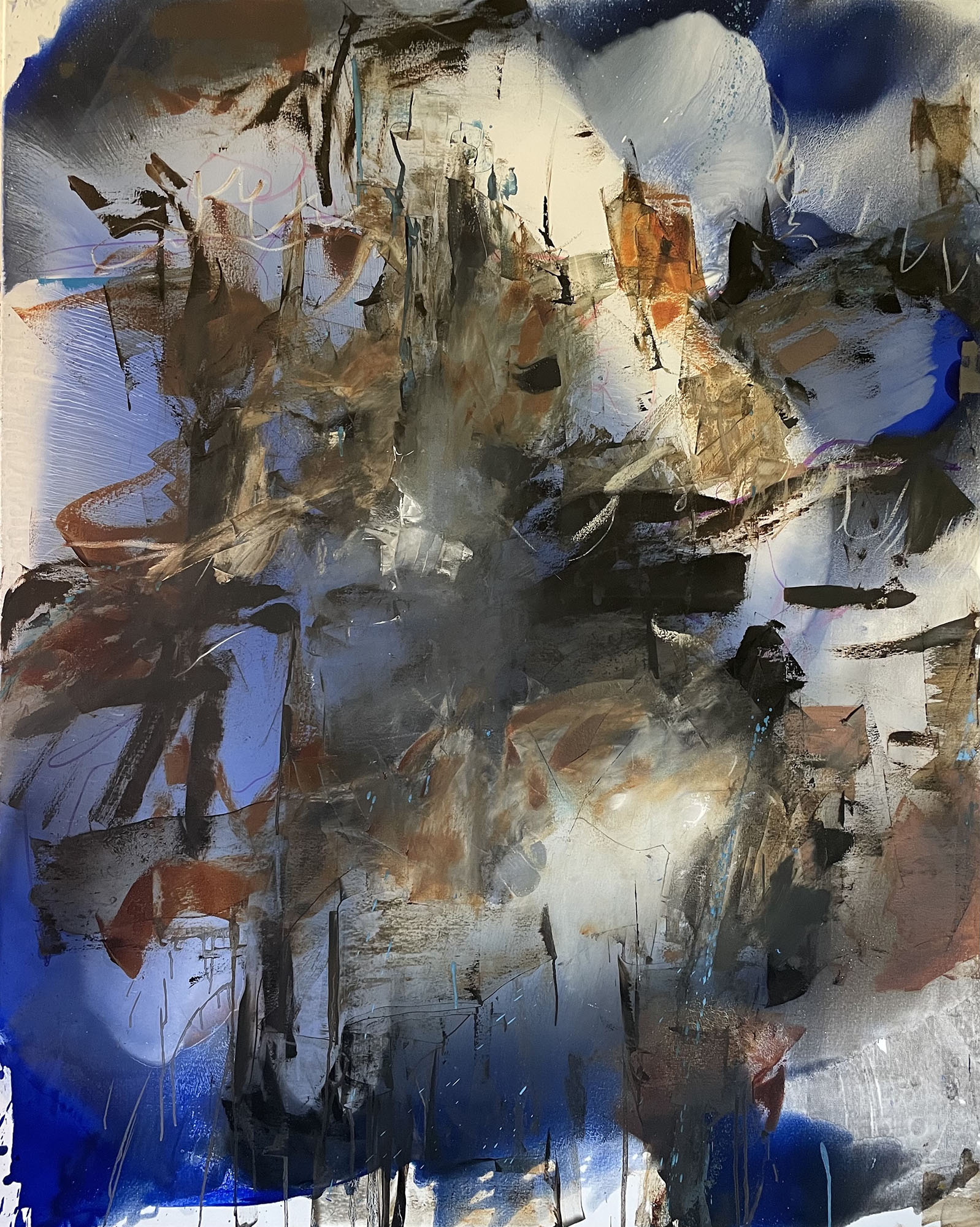
5. In what ways do your paintings act as a bridge between your experience of the physical world and a sense of something beyond it?
Painting has confirmed for me that there is more to this world than meets the eye. So often, the paintings seem to know what is going on within me before I even do. Synchronicities continue to play out between the paintings and what is ready to show up next for me in my life. Since so much of the work has an unintended landscape quality, I have become much more sensitive to nature in its many forms. I now find myself absorbed by writers in any field who are ready to question the nature of reality itself: like Sandra Ingerman who wrote “Speaking With Nature,” to William Buhlman and his writings on astral projection or Brian Froud and his writings on the Fairie Realm, to novelists like George Saunders who wrote “Lincoln in the Bardo,” and to scientists like Dean Radin who wrote “The Conscious Universe” and “Real Magic. “
6. How do you balance planning and intuition when developing a piece that evolves from an initial spontaneous mark?
I don’t. I am trying to lose control. I am trying to learn to trust the universe entirely. I am trusting that space inside me that craves freedom, that stops trying so hard. I know that involves a willingness to play back, but I honestly try very hard not to make decisions that come from my head. And even when I say that, I am not advocating for complete chaos, but alignment. The discipline required to know your materials and history and subject matter comes in at some point, I suppose, but once a mark is made, all of that has to fade into the background.
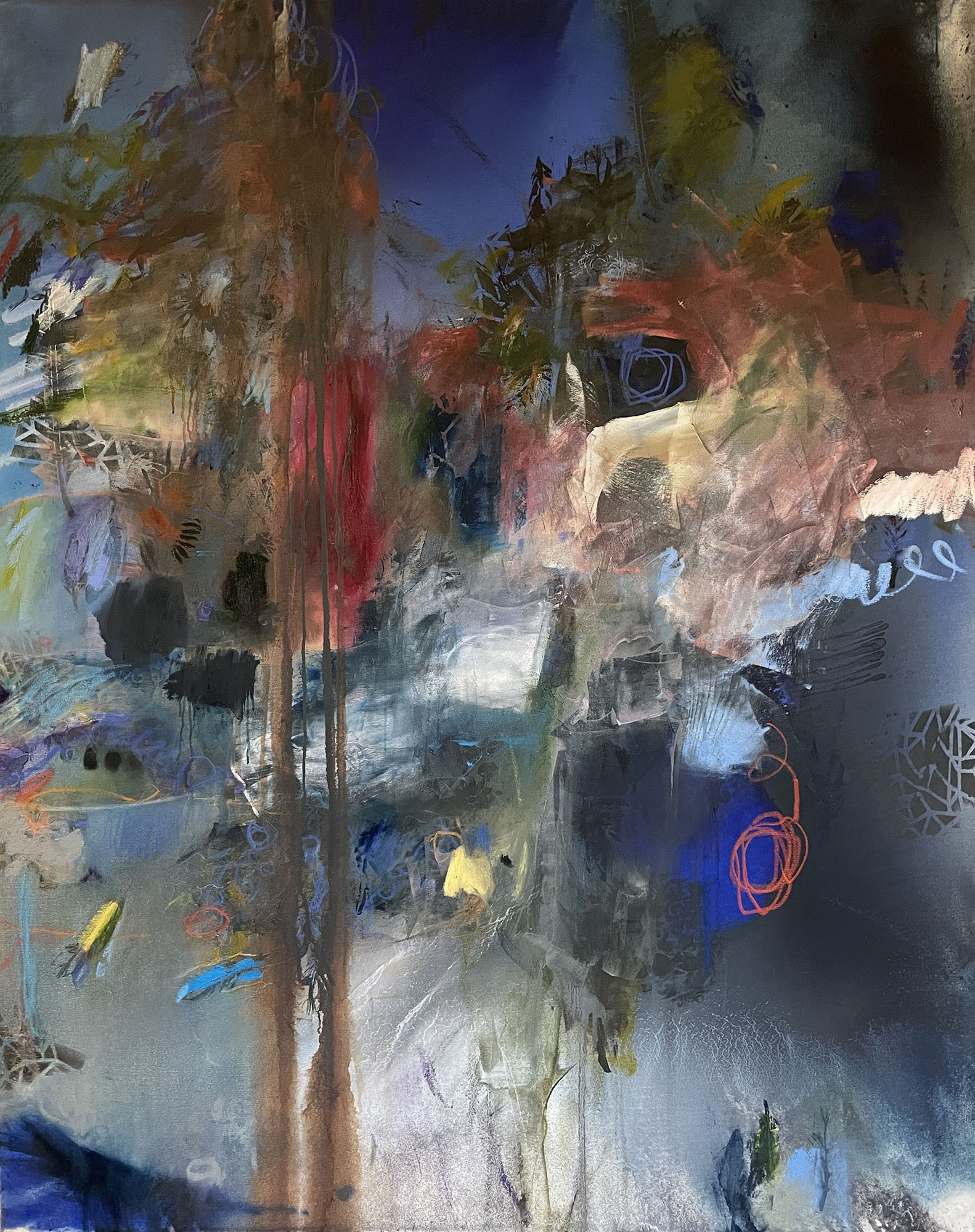
Frederick’s artwork is about what happens when you stop trying to steer and start paying attention to what’s already there. Her paintings track a process where marks build on marks until something coherent appears, not because she planned it that way but because she learned to follow rather than lead. Through years of working like this, she’s found that paint can be a way to investigate consciousness, that forms will show up without being invited, and that letting go is both more complex and more essential than most people realise.
What we take away from her story is that sometimes knowing too much gets in the way. Frederick spent her teaching career showing students how to compose an image, and then had to figure out how to forget it all in her own studio. Her paintings have shown her how to wait instead of decide, how imagination fills in what consciousness is ready to see, and how what appears on canvas often connects to what’s about to surface in her life. The work has changed how she sees the natural world and made her more curious about whether reality operates as we assume it does. More than anything, she’s learned that paintings can say what the subconscious knows before words catch up, and that this requires letting go instead of holding on.
To learn more about Patricia, visit the links below.
