
What We Leave Behind Is Never as Small as We Think I Laura Fox-Wallis
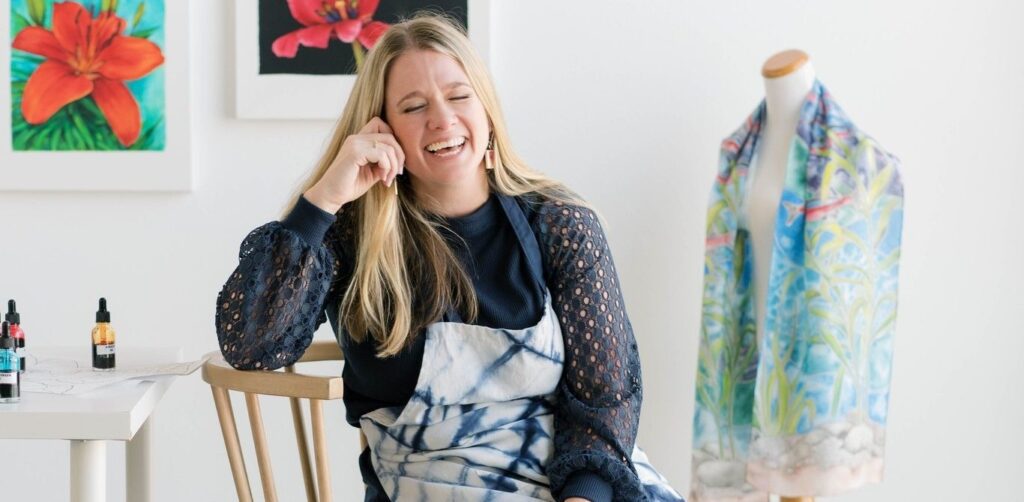
At Women in Arts Network, we’ve learned that some of the most powerful art doesn’t announce itself. It waits. It invites you closer. And when you finally look, really look, you realize you’re not just seeing something beautiful you’re witnessing years of discipline, curiosity, and quiet devotion to a craft most people don’t even know exists.
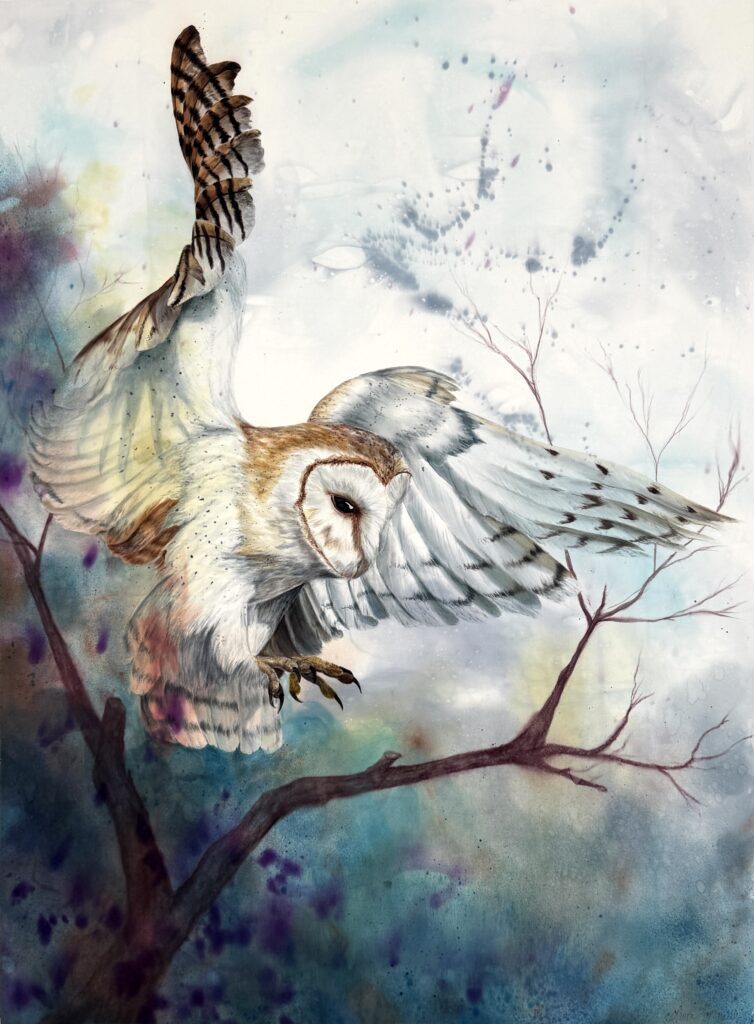
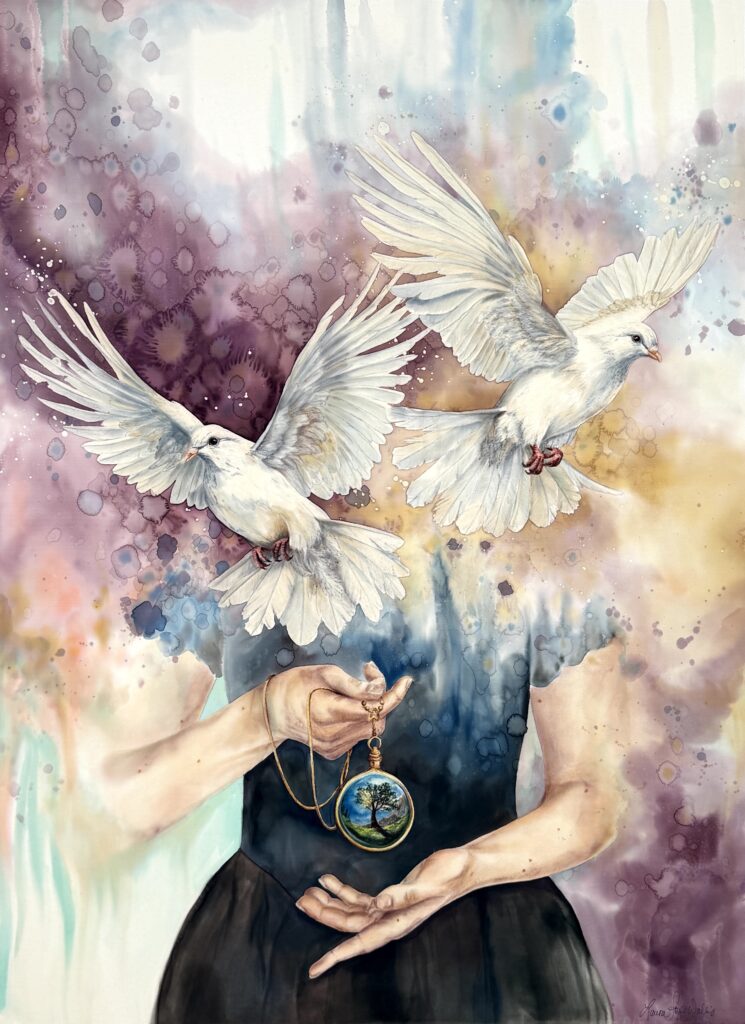
For our virtual exhibition Birds, we selected artists who understood that birds aren’t just subjects to paint they’re symbols of movement, transformation, the traces we leave behind. Among those artists, Laura Fox-Wallis brought something we hadn’t seen before: birds painted on silk with dyes that bloom and bleed and move in ways paint never could.
Now let me tell you a little bit about Laura.
She’s based in Leander, Texas now, but her story started somewhere else entirely. In 2006, she was teaching high school art in Indiana, working with ceramics outside the classroom. She had her hands full, her path set. Then one day, she watched a colleague demonstrate silk painting to students. A loaded brush touched stretched white silk, and magenta dye bloomed across the fabric in a way she’d never seen before. That single moment captivated her completely.
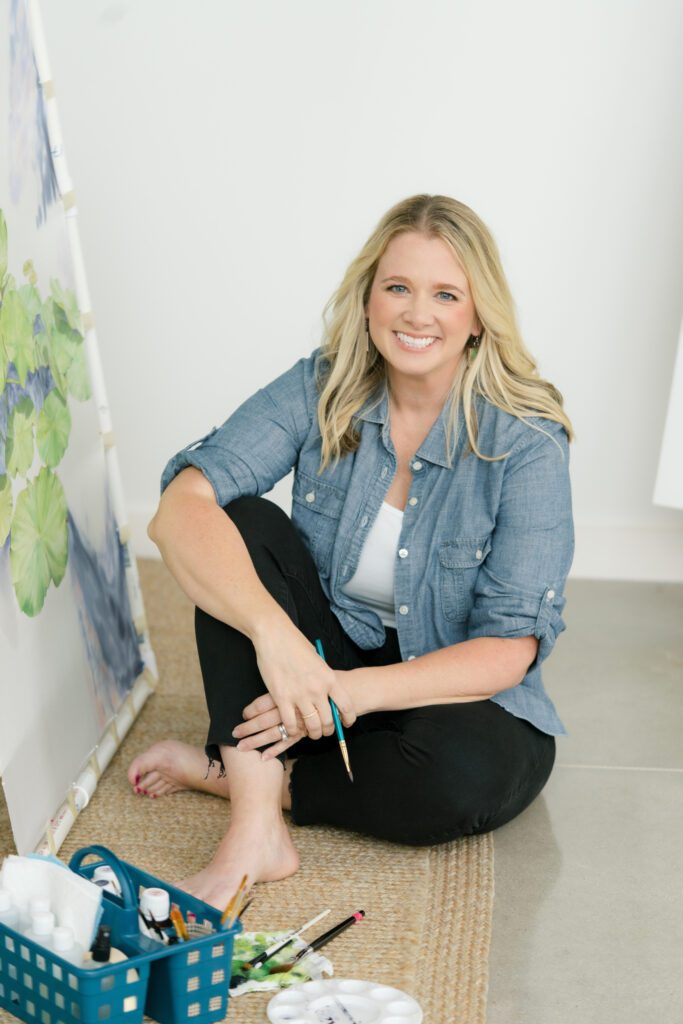
She made her first silk scarf alongside her students the following week. Within months, she stepped away from clay entirely. She’s been painting on silk ever since—nearly two decades of exploration, refinement, and discovery in a medium most people don’t even know exists.
Her attraction to silk has deep roots. Both her grandmothers introduced her to fiber and flow early in life. One took her to her first watercolor class when she was eight. The other taught her to sew the same year. Watercolor’s graceful movement and the tactile world of fabric became foundational to how she sees and creates. Silk painting naturally merged these two early loves: the fluidity of dye and the structure of fiber. It was almost like the medium had been waiting for her.
Laura works with medium-weight Habotai silk and steam-fixed French dyes, layering color to create form and texture. Her process involves both free-flow and stop-flow techniques one allows dye to integrate seamlessly through fibers, the other ensures precise control. She learned to master both. Early on, she craved control, achieving highly realistic imagery. But eventually, she missed the spontaneity that first drew her to silk. Now she fuses both approaches: realistic, dimensional subjects layered over organic movement and unexpected color shaped by chance. She counts missteps as design elements sometimes more beautiful and interesting than the original concept.
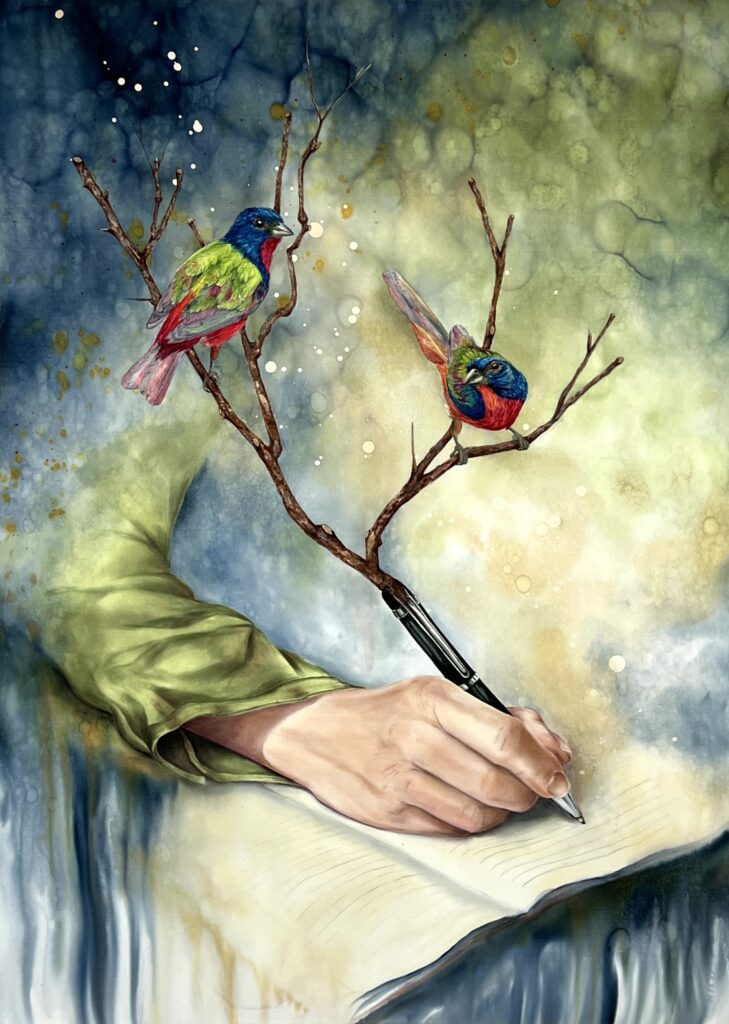
Nature guides everything in her work. Birds, moths, floral elements appear not as decoration but as symbolic representations of imprint and impact. Each detail represents the interplay between the marks we make on the world and the traces we leave behind. Birds, with their ephemeral flight, embody fleeting imprints. Moths symbolize transformation and enduring impacts. Florals mirror the delicate balance between our existence and the lasting traces we leave behind. Her art prompts contemplation on the dance between transience and lasting influence.
She’s lived in both North Carolina and Texas, and both places shaped her work differently. The Carolinas offered mountains, coastline, lush greens, four true seasons. Texas gave her expansive skies, desert landscapes, sudden bursts of spring colour. Each place introduced new species that found their way into her paintings. What she misses most about North Carolina is fall vibrant leaves against blue skies. That absence shifted her palette toward blues and rusts, keeping that memory alive in her work.
She created self-paced online courses, connecting with students worldwide from Ireland to Australia to India. She teaches at international festivals, leads workshops across the US, including recently at Arrowmont School of Arts and Crafts in Gatlinburg, Tennessee. She was recently awarded Best of Show in an international silk painting exhibition. In 2024, she completed an artist residency at Chateau d’Orquevaux in France. Her dedication to arts education and advocacy solidify her position as a prominent figure in the silk painting community. She believes deeply in collaboration over competition.
With two teenage children, her schedule feels like Tetris every moment matters. She’s learned to say no to opportunities that don’t align with her vision. What she safeguards most: her time, her creative energy, her commitment to experimentation. She never wants to treat materials as too precious. Every meaningful development in her work grew from play, from asking “What happens if I try this?” Happy accidents, risks, unexpected outcomes that’s what keeps the process alive after nearly two decades.
Now, let’s hear from Laura herself about working with dye and silk, about letting control and chance collaborate, and why what we leave behind is never as small as we think.
Q1. Your journey began in art education before moving fully into silk and dye. What led to that transition, and what has sustained your commitment to this medium since 2006?
In 2006, I was teaching high school art in Greenwood, Indiana, and a ceramic artist beyond the classroom. One day, while observing my colleague Ms. Shake gave a silk-painting demonstration, a class I was suddenly responsible for teaching due to high enrolment, I watched her touch a loaded brush to a stretched white silk scarf. The dye bloomed in the most luminous magenta, and in that moment, I was completely captivated. I created my first silk scarf alongside my students the following week, and within a few months I stepped away from clay entirely. I’ve been painting on silk ever since. The medium continues to challenge and inspire me, and that ongoing discovery is what keeps me committed to it after nearly two decades. My attraction to silk also has deep personal roots. Both of my grandmothers introduced me to fibre and flow early in life. One took me to my first watercolour class at eight, and the other taught me to sew the same year. Watercolour’s graceful movement and the tactile world of fabric became foundational to how I see and create. Silk painting naturally merges these two early loves: the fluidity of dye and the structure and sensitivity of fibre. Those childhood experiences, combined with the magic I witnessed in that classroom, continue to shape my voice as a silk artist today.
Q2. Working with steam-fixed French dyes on Habotai silk involves both careful control and chance. How do unexpected outcomes shape your creative decisions during the process?
In my early years of silk painting, everything was about discovery, learning how dye moved across the fibers, experimenting with application techniques, comparing dyes with silk paints, and figuring out the delicate art of steam-setting. Steaming alone is a science. If it goes wrong, hours of work can quite literally melt and bleed away. Over time, as I refined my control and mastered these processes, I was able to achieve highly realistic imagery on silk. Learning the Magic Sizing Technique pushed that realism even further. By spraying sizing onto the silk, it filled the fibers of the silk, preventing the dye from bleeding and allowing for photorealistic detail. For a while, I loved having complete control over the flow. But eventually, I found myself missing the spontaneity of the free-flow method, the unpredictability that first drew me to silk. That longing led me to the approach I use today, a fusion of free-flow and stop-flow techniques. This combination gives me the best of both worlds: realistic, dimensional subjects layered over organic movement, texture, and color shaped in part by the unexpected. The surprises that occur on silk aren’t interruptions anymore; they’re collaborators in the creative process.
Q3. Nature continues to guide your work through color, texture, and form. How did your time in North Carolina compare with Texas in shaping these influences?
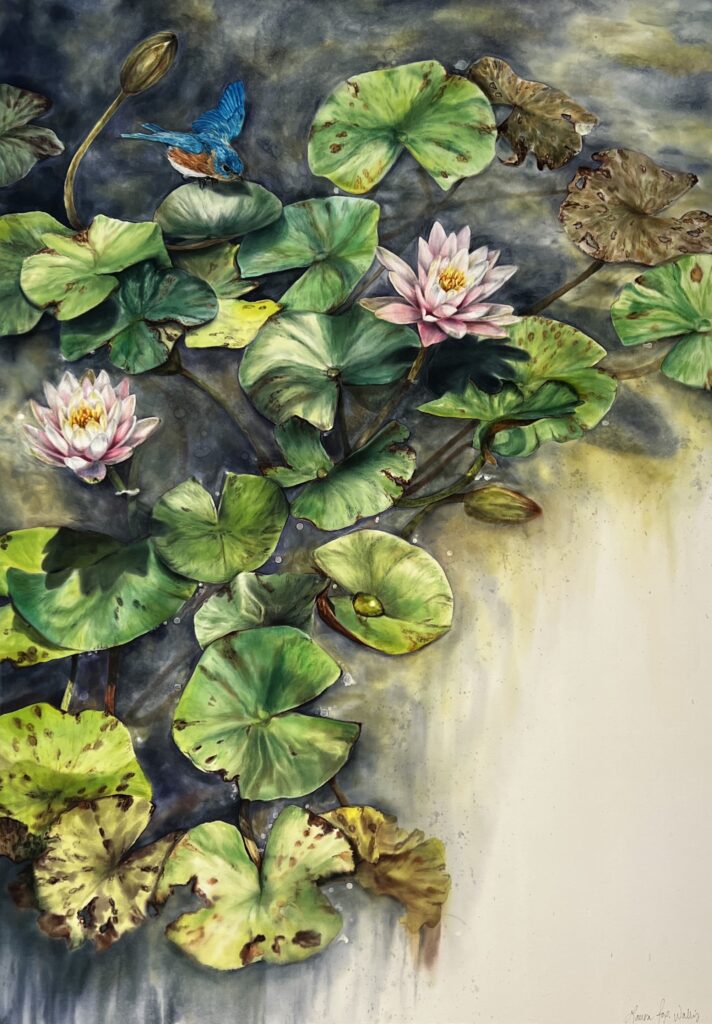
Both North Carolina and Texas have shaped my work, but in very different ways. The Carolinas offered a rich blend of mountains and coastline in lush greens, shifting blues, and the softer transitions of four true seasons. Texas, by contrast, is defined by expansive skies, desert landscapes, and sudden bursts of color in the spring. The textures, palettes, and rhythms of these environments are completely different, and my work responds to whatever is present in my world. Each place introduced me to new species of birds, flowers, and butterflies, many of which have made their way into my paintings. But there are also comforting constants in house finches, cardinals, and water lilies that seem to follow me wherever I go. What I miss most in Texas is the fall season of the Carolinas. The vibrant leaves against clear blue skies. That absence has subtly shifted my palette, leading me to incorporate more blues and rusts as a way of keeping that memory alive in my work. Texas, meanwhile, has offered its own extraordinary inspiration, from Painted Buntings to witnessing the Monarch migration. Each state has its own beauty, and all of it, every landscape, every creature, every season, ultimately finds its way onto my silk.
Q4. Teaching has remained a steady part of your professional life alongside studio work. How has that long-term classroom experience influenced the way you now lead workshops and lectures?
Receiving the Master Silk Painter (MSP) designation from Silk Painters International (SPIN) in 2020 was a defining moment in my career. The MSP title is awarded by committee to artists who demonstrate exceptional skill, creativity, and mastery of dye and design. It’s considered a lifelong honor. For me, it represented the highest recognition of the years I had devoted to developing my techniques, deepening my knowledge, and pushing the boundaries of the medium. That acknowledgment also shifted my relationship with the wider silk painting community. It gave me the confidence to step into a more active teaching role and ultimately led to the creation of my self-paced online courses. Through those courses, I’ve been able to connect with silk painters from around the world, including students in Ireland, Australia, and India, and share the techniques I’ve developed over nearly two decades. Through SPIN, I’ve also had the opportunity to teach at international festivals and lead live online workshops. Community is at the heart of everything I do. I believe deeply in collaboration over competition, and the MSP designation allowed me to contribute to the community in a more meaningful way. Sharing my knowledge has only expanded my own understanding, and the conversations and connections I’ve made with other silk painters continue to fuel my creativity.
Q5. With recent exhibitions, awards, and international residencies adding momentum to your career, what feels most important to safeguard in your practice right now?
Right now, the most important things for me to safeguard are my time, my creative energy, and my commitment to ongoing practice. With two teenage children, my schedule often feels like a game of Tetris, every space of time matters. I’ve learned to say no to opportunities that don’t align with my vision, because not every invitation is the right one for a sustainable creative career. Protecting my bandwidth allows me to show up fully for the work that matters. Even with years of experience and technical mastery, my creative energy comes from experimentation. I never want to safeguard my curiosity or treat my materials as too precious. Every meaningful development in my work has grown out of play—those moments of asking, “What happens if I try this?” The happy accidents, the risks, and the unexpected outcomes are what keep the process alive. The days I give myself space to follow ideas, explore, and push beyond what I already know are the days that move my work forward. Maintaining that openness, rather than perfection, is what I’m most committed to protecting in my practice.
Talking with Laura, what stayed with me wasn’t the technical mastery or the awards it was the moment she described watching magenta dye bloom across white silk for the first time.
She was a ceramics artist. A teacher. Someone with her hands already full. But that single moment a brush touching silk, colour spreading in ways she’d never seen changed everything. She could’ve admired it from a distance. She could’ve stayed in her lane. Instead, she made her first silk scarf the next week and never looked back. That’s not just curiosity. That’s recognizing when something calls you and having the guts to answer.
What makes her practice powerful is how she holds two opposing forces at once. For years, she chased control learning techniques, mastering steam-setting, achieving photorealistic detail on silk. But eventually, she realized she missed the unpredictability that first captivated her. So she found a way to fuse both: stop-flow for precision, free-flow for spontaneity. Realistic subjects layered over organic movement shaped partly by chance. That balance between knowing exactly what you’re doing and letting the material surprise you is what keeps her work alive after nearly two decades.
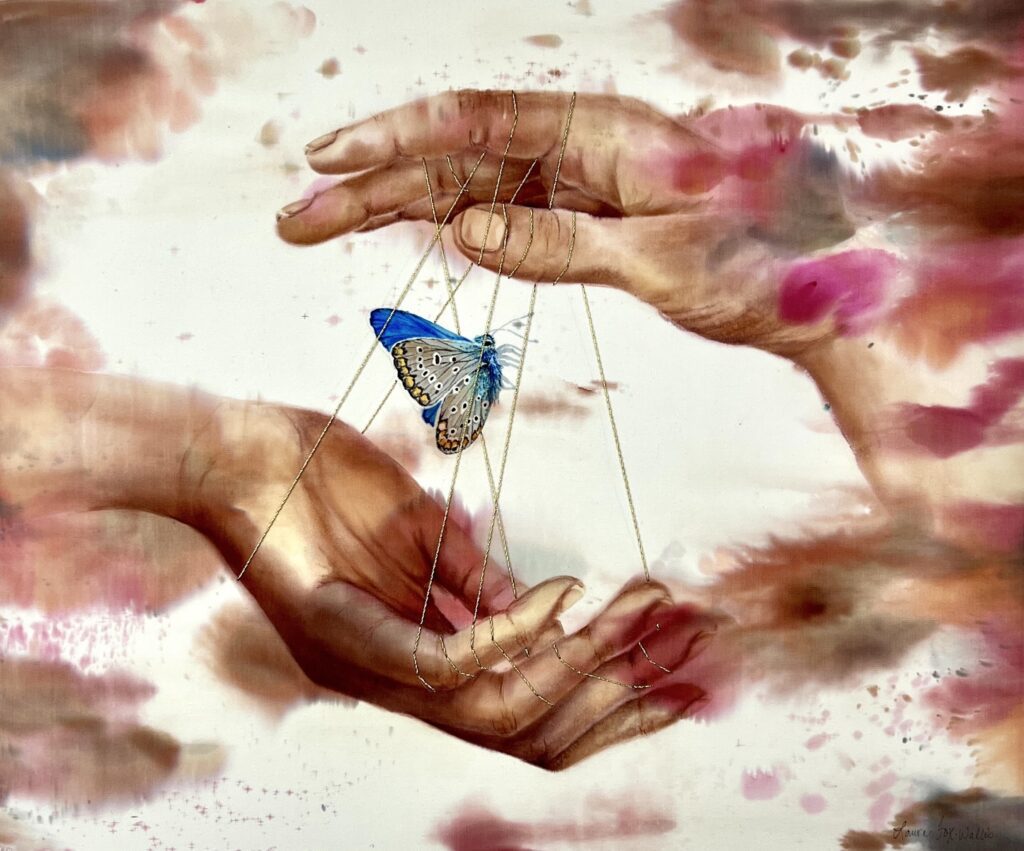
There’s also something quietly profound in what she paints. Birds, moths, florals not as decoration, but as symbols of imprint and impact. The fleeting marks we make versus the lasting traces we leave. She’s asking a question most of us avoid: What remains after we’re gone? Not in a morbid way, but in a way that makes you pay attention to what you’re creating right now. The daily gestures. The small choices. The moments that feel insignificant but accumulate into something permanent.
What Laura taught me: mastery isn’t about eliminating uncertainty. It’s about becoming skilled enough that you can afford to invite it back in. She spent years learning control so she could eventually surrender parts of it. And that surrender letting dye bloom where it wants, letting accidents become collaborators that’s where the real beauty lives.
Follow Laura from the links below to see what happens when discipline meets spontaneity, when control collaborates with chance, and when you finally realize that the marks you leave behind, no matter how fleeting they feel are never as small as you think.
