
Why Margo Nacai Paints Partial Faces Instead of Whole Figures
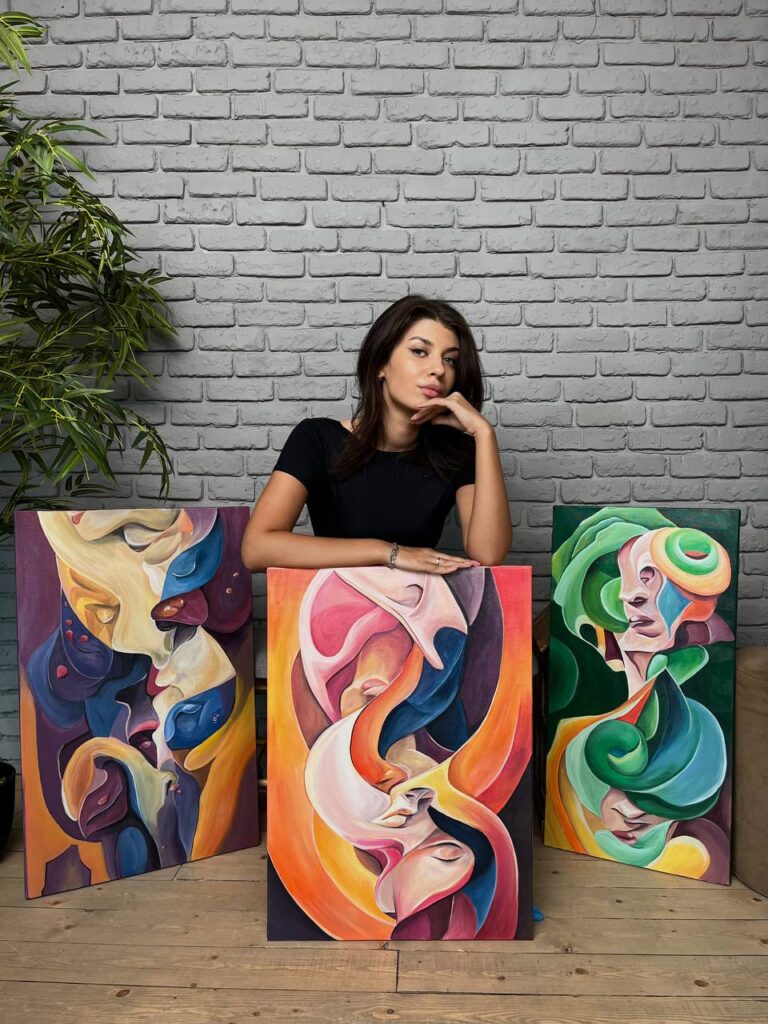
At Women in Arts Network, every artist we select for Faces makes us rethink what we thought we were looking for. We go in expecting one thing and the work shows us something we didn’t know we needed to see.
Margo Nacai is a selected artist for the Faces exhibition, and her work didn’t just fit the theme, it quietly broke it apart and rebuilt it into something we’re still sitting with.
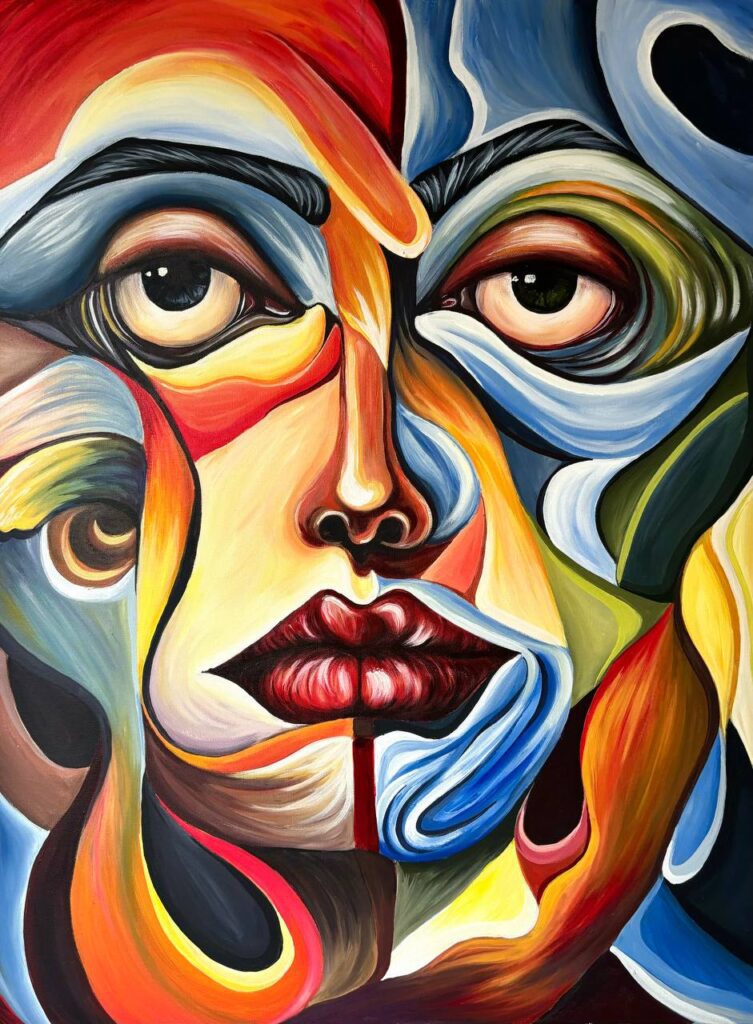
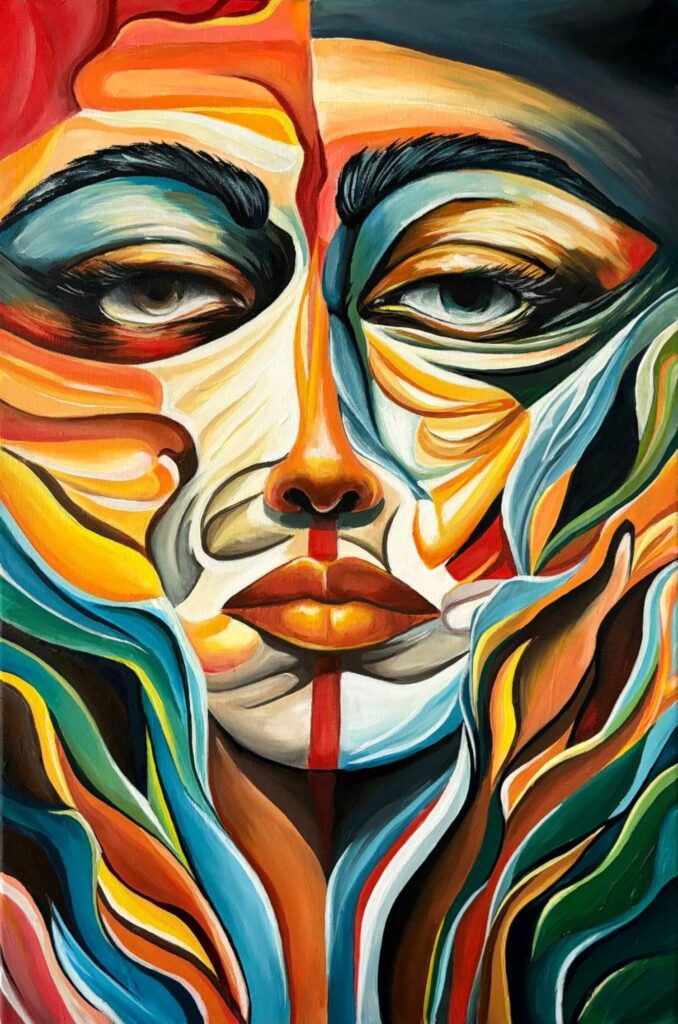
She’s an abstract expressionist and what she paints isn’t faces in any traditional sense. It’s fragments. A line that begins and breaks. A form that almost becomes a cheek or a jaw and then dissolves into colour before it commits to being anything. Hands that show up from nowhere. Features that interrupt themselves mid-thought. And here’s the thing, none of it feels incomplete. It feels more real than a finished portrait because honestly when was the last time you felt like a finished anything? We’re all walking around made up of pieces, memories we half remember, feelings we can’t name, parts of ourselves we haven’t figured out yet, and Margo’s paintings look exactly the way that feels.
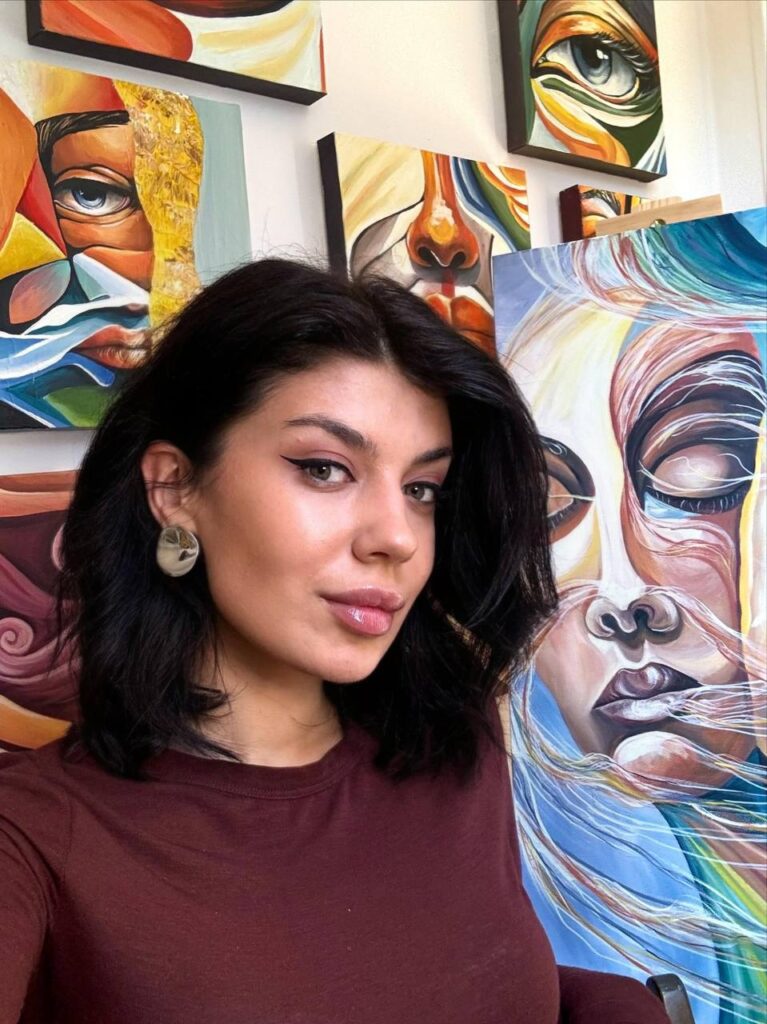
Her colour doesn’t illustrate. It creates weather inside the canvas. Sometimes it’s loud and everywhere and sometimes it retreats into stillness and leaves space for you to breathe. Her compositions live right at the edge where something could become recognisable but chooses not to. Where a line meets quiet. Where suggestion does the work that explanation never could.
She’s been drawing since she was a kid. Before anyone taught her anything, before she had the vocabulary for what she was doing, it was just how she processed being alive. She trained later in art schools and academies and that gave her the technical ground. But abstract expressionism found her the way the important things always find you, not because she went looking for it but because nothing else was honest enough.
Her work has shifted over the years. Started quieter, more minimal, restrained. And then something opened up and she let more colour in, more movement, more tension. She’s still changing. Still not settled. Still open to wherever the work takes her next. And that kind of willingness to keep moving when you’ve already found something that works, that’s not restlessness. That’s an artist who respects the work more than her own comfort.
Now let’s hear from Margo, about why she paints pieces instead of wholes, about what a line means when it breaks on purpose, and why the most honest face in this exhibition might be the one that never finishes becoming a face at all.
Q1. Can you share your background and how your early relationship with drawing and visual thinking led you toward your current art practice?
Art was present in my life from childhood and drawing quickly became a natural way to think and to feel. I have always worked spontaneously. When an inner impulse appears, I sit down immediately and try to capture it while it is still alive. Later my studies in art schools and academies gave me a foundation of knowledge and a deeper understanding of visual language. That experience gradually led me to abstract expressionism, the style in which I felt able to speak most honestly.
Q2. Your work often prioritises feeling over narration. When did you first realise that emotional space, rather than literal representation, would be central to your work?
I understood this most clearly after moving to another country. The feeling that life would never return to what it had been created a deep sense of disconnection, and I became more closed within myself. Painting was the only place where I could interpret those unnamed emotions. Through the works I learned to face uncertainty and inner distance, and since then emotional space has become more important to me than any narrative.
Q3. Many of your drawings and paintings feel like they emerge from an internal rhythm. Do you work toward that sensation consciously, or does it arise organically during the making process?
I usually begin with colour and gesture rather than with a concept or narrative. At the start, there is often no clear subject. I follow an internal rhythm and let the work develop organically. Only during the process does a more defined theme or structure begin to emerge. In that sense, the rhythm isn’t planned. It reveals itself through making.
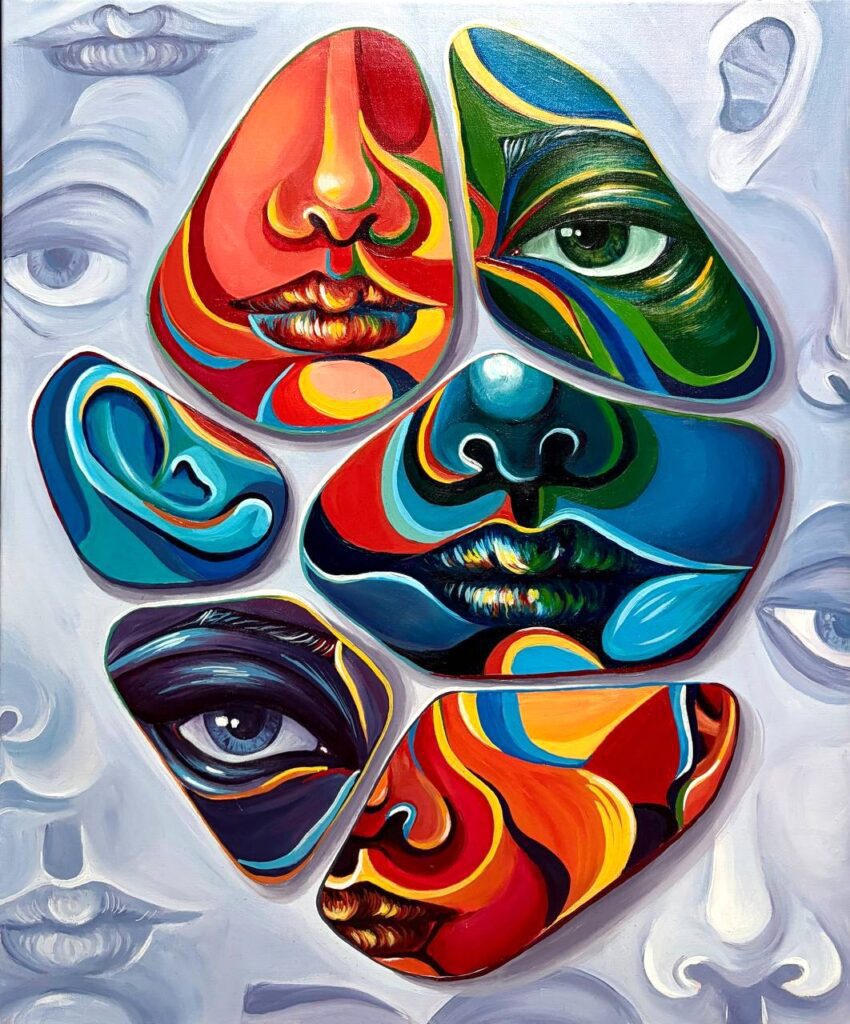
Q4. Your artworks incorporate partial faces, hands, or fragments rather than complete forms. What draws you to working with fragment, suggestion, or interruption?
Fragmented forms feel closer to human experience than complete ones. A person rarely perceives themselves as whole. We consist of memories, doubts, and fleeting impressions. Partial faces or interrupted lines speak about this inner division more honestly than finished shapes. Through fragmentation I try to approach the idea of unity instead of denying the cracks inside it.
Q5. Many pieces feel like interiors of feeling rather than specific moments in time. How do you translate emotional nuance into visual language without relying on narrative cues?
I translate emotion through tension between elements, through the place where a line breaks or where colour meets silence. I prefer suggestion to explanation.The focus shifts from “what is happening” to “what is being felt.” This allows the viewer to enter the work through their own emotional experience.
Q6. When a viewer responds emotionally to one of your works, do you feel that response aligns with your intention or does it belong to the viewer’s interpretation?
Different reactions to the same piece make me feel that the work is alive. I do not want to control the response. My task is to create a space where various feelings are possible. Every interpretation has the right to exist because art begins when the artist becomes silent and the viewer starts to listen to themselves.
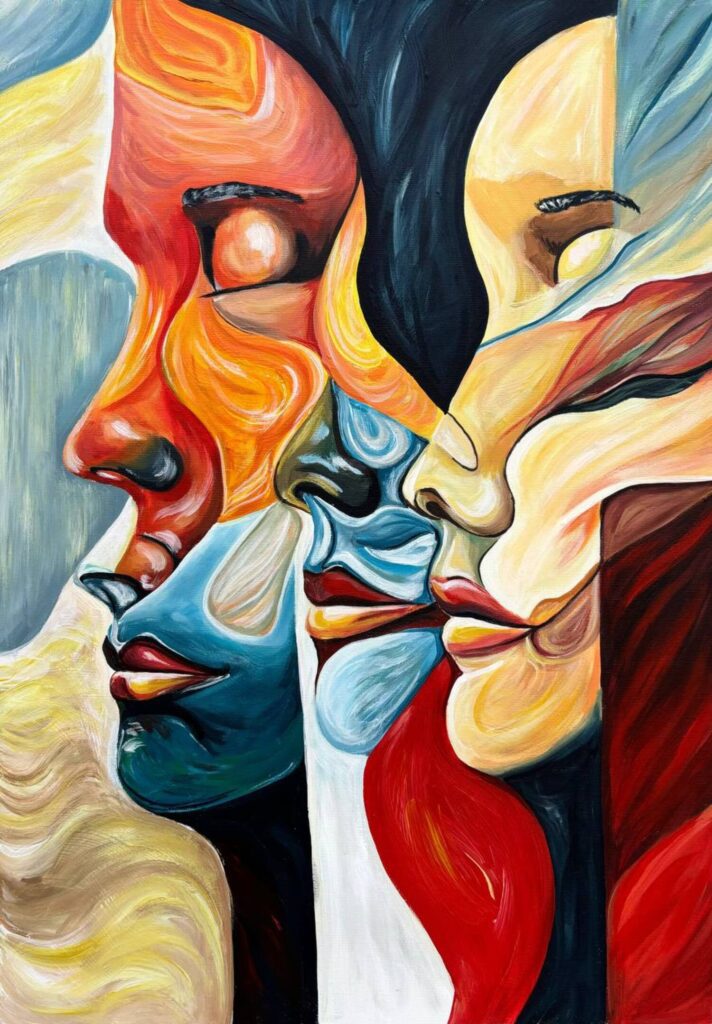
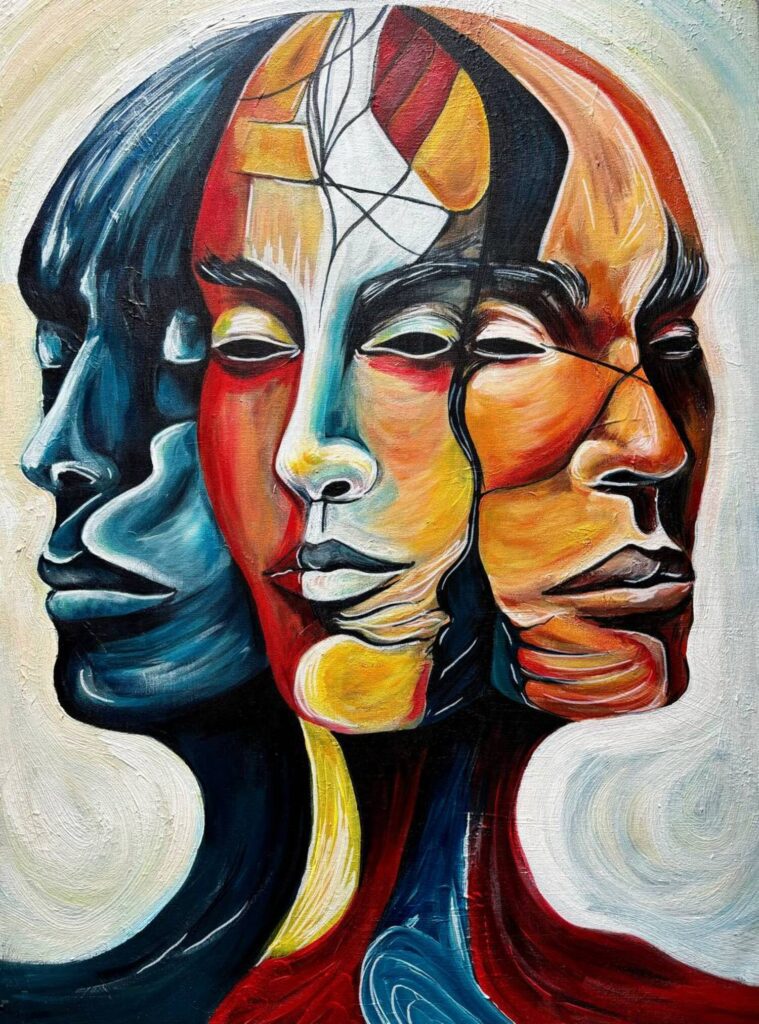
Q7. While working on The Harmony of Three, what specific aspects of the process made you realise this approach allowed you to express emotions more directly than your earlier work?
This painting opened a new direction for me. Before it I worked mainly with abstract minimalistic compositions, restrained in colour and almost ascetic in form. At a certain moment I realised that I no longer recognised myself in that quiet language. In The Harmony of Three I allowed more colour, movement of lines, and inner tension. Many of the works that followed would not have existed without it. Through this piece, I realised that this approach allowed me to express emotions more directly and honestly than before.
Q8. Your use of colour often feels atmospheric rather than descriptive. How do you decide when colour should carry mood, and when it should step back into quietness?
Colour in my practice is not a description of objects but a way of breathing inside the canvas. Sometimes it speaks loudly and leads the whole composition. At other moments it retreats and leaves space for stillness. I do not decide this intellectually. I observe what the painting asks for and follow that request.
Q9. Has there been a moment where letting ambiguity remain in a piece enhanced its meaning? Can you describe that experience?
Allowing ambiguity has often strengthened my work. On one painting, I initially planned to clarify the central form and make it more recognisable, but I realised that any additional definition would silence something fragile inside the piece. I chose to leave it unresolved, almost unfinished, and in that openness the work began to breathe. That moment taught me that meaning can become stronger when I resist the urge to explain and let uncertainty remain.
Q10. How do you hope viewers feel when viewing your work is there a particular register of attention you are trying to invite?
I hope a viewer slows down in front of my paintings. Understanding is less important than attention to one’s own feelings. If the work encourages a person to notice something intimate and perhaps forgotten, then it has fulfilled its purpose.
Q11. Looking back at your earlier work compared to what you are making now, what changes do you see in how you approach form, emotional content, or material exploration?1 response
Looking back, I see a clear evolution from my earlier minimalistic abstractions toward a more expressive and personal language. I have added colour, movement, and emotional depth, which allow me to connect more fully with the work. At the same time, my earlier experiences continue to inform how I understand and approach art today. The style I have reached now is the point in my practice where I most recognise myself, but I never stop learning or evolving, and I remain open to changes both within myself and in the work I create.
Q12. What advice would you give to artists who want to develop visual language grounded in internal experience, intuition, and emotional presence, but struggle with pressures to make meaning concrete or visible right away?
I would tell artists not to rush to explain themselves. Inner experience rarely speaks clearly at first. Give it time to find its own shape, even if that shape feels strange or uncertain. Not everything needs to be defined or resolved immediately. Allowing space and patience can lead to a more authentic visual language.
As our conversation with Margo drew to a close, something she said kept circling back to us. And we think it’s something every person reading this needs to hear.
You don’t have to be whole to be real.
That sounds simple. It’s not. Because everything around us says the opposite. Be complete. Be resolved. Have it figured out. Know who you are. Present a finished version of yourself or don’t show up at all. And Margo’s entire body of work looks at that and says no. The unfinished thing is the true thing. The fragment is more honest than the polished portrait. The line that breaks is saying something the line that finishes never could.
And if you’ve ever felt like you’re not enough, not together enough, not clear enough about where you’re going or who you’re becoming, Margo’s work is proof that you don’t need to be. That the pieces you’re made of are not a problem to solve. They’re the most truthful version of you there is.
She keeps evolving. Keeps changing. Keeps refusing to hold onto any one version of herself just because it worked before. And that’s not instability. That’s courage. That’s a woman who would rather stay honest than stay comfortable.
The world wants finished. Margo gives you real. And real is always, always braver.
To follow Margo’s journey and see more of her work, find her through the links below.
