
This Artist’s Abstractions Are Full of Torn Edges and Buried Text │ Adi Zur
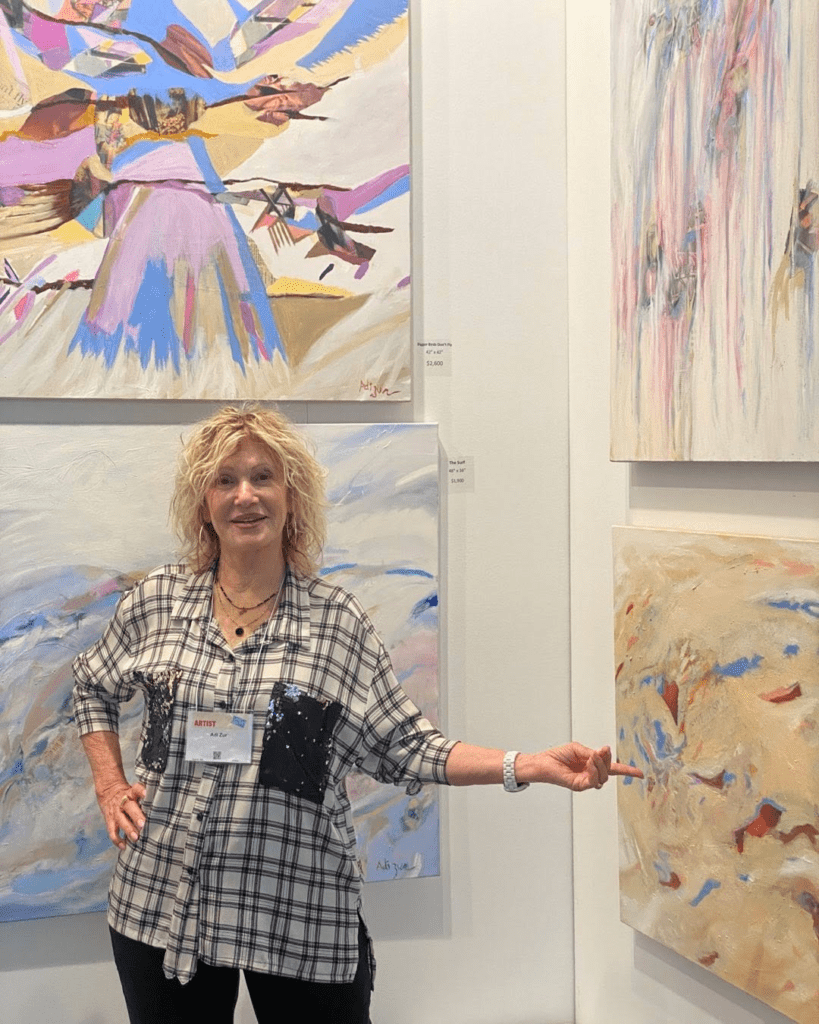
At Women in Arts Network, every now and then an artist comes into Faces and makes us realise we’ve been thinking about the theme too simply. That a face isn’t just what’s on the surface. It’s what’s been layered underneath over years and years of living. The things that got covered up. The things that are still there if someone cares enough to look.
Adi Zur makes paintings that work exactly like that. And that’s why she’s a selected artist for the Faces exhibition.
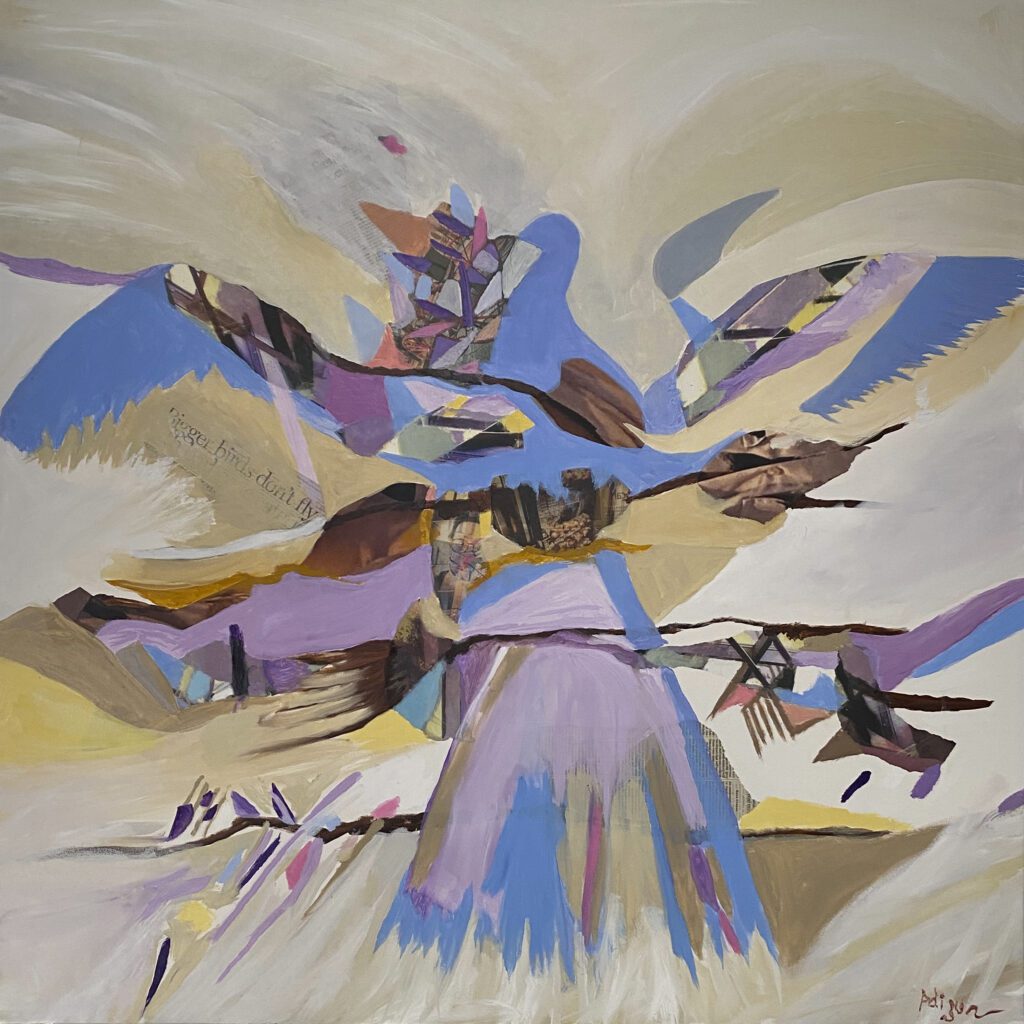
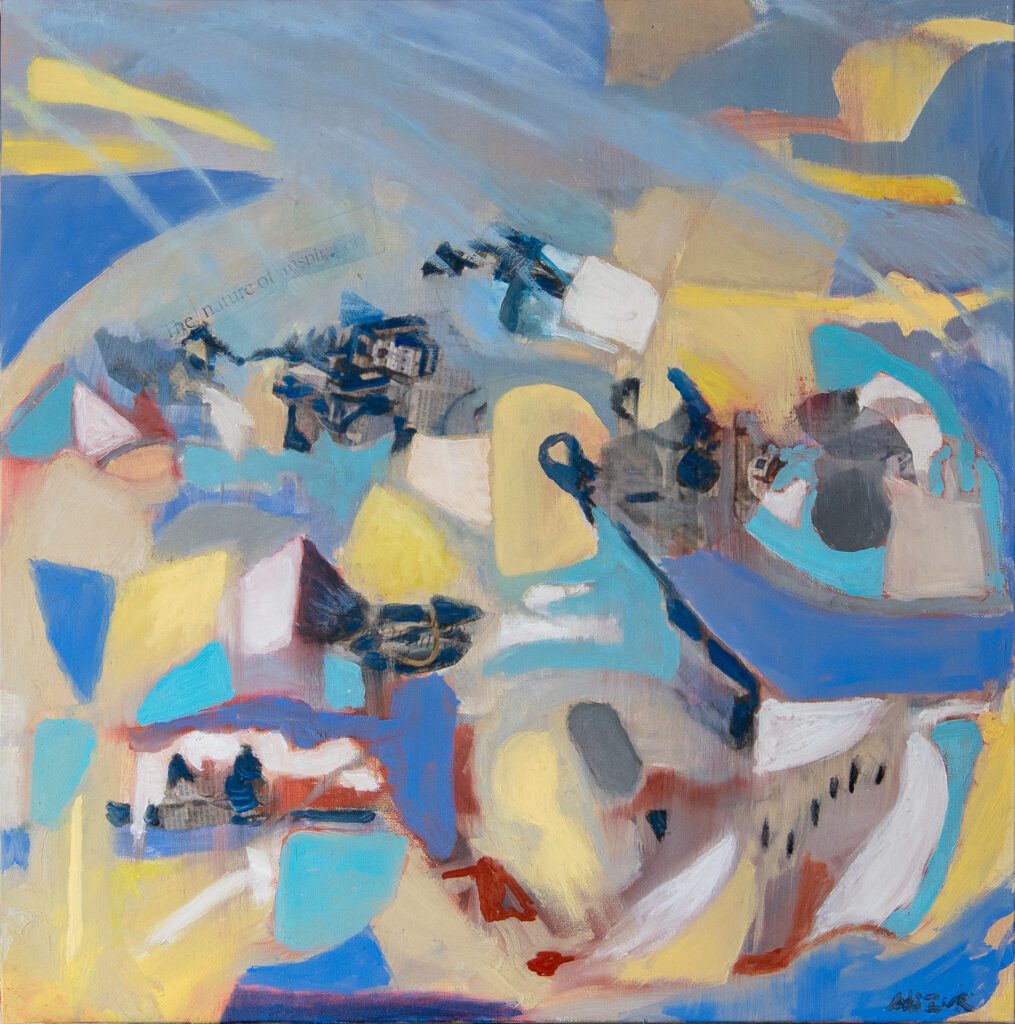
Her work is oil over collage and the process itself tells you everything. She begins with fragments. Newspaper headlines she’s chosen because they hold a feeling that can be read more than one way. Photographs picked for their colour and form.
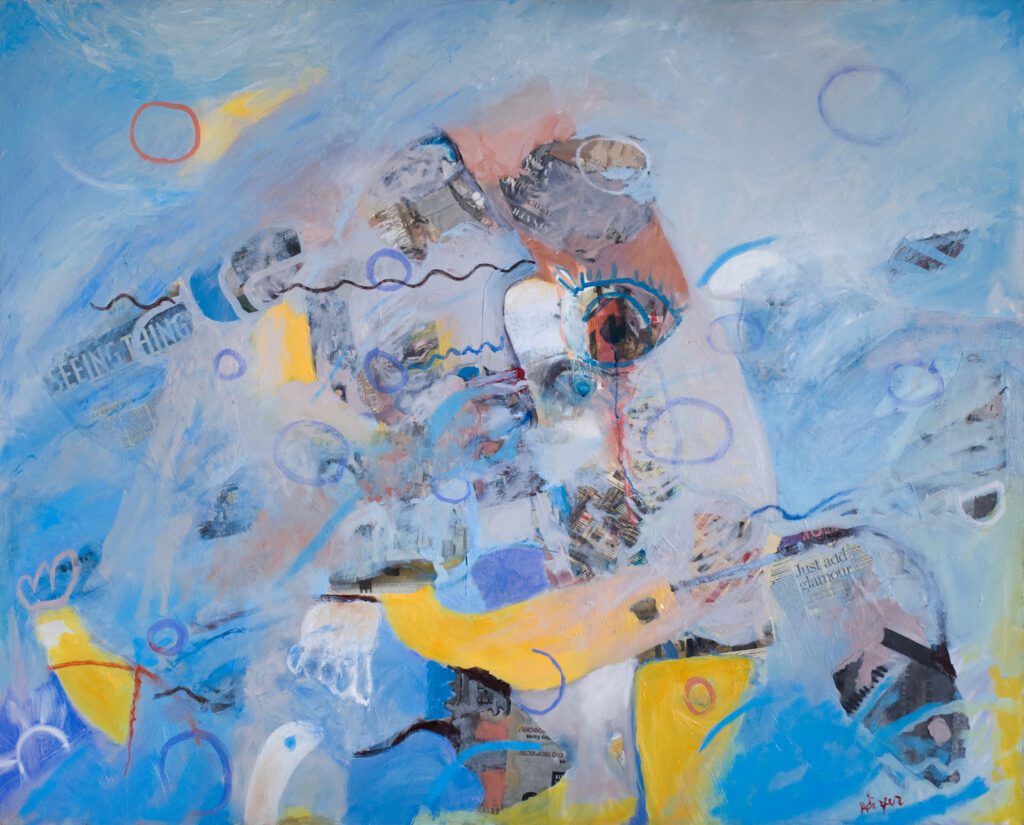
She lays all of that down first. And then she paints over it. Layer by layer. Oil on top of text on top of image. Adding and removing and adjusting until something clicks. The finished surface is beautiful but it’s also a burial site. Everything she put into it is still in there. The headlines. The images. The decisions she made and unmade. You just have to come close enough to find them.
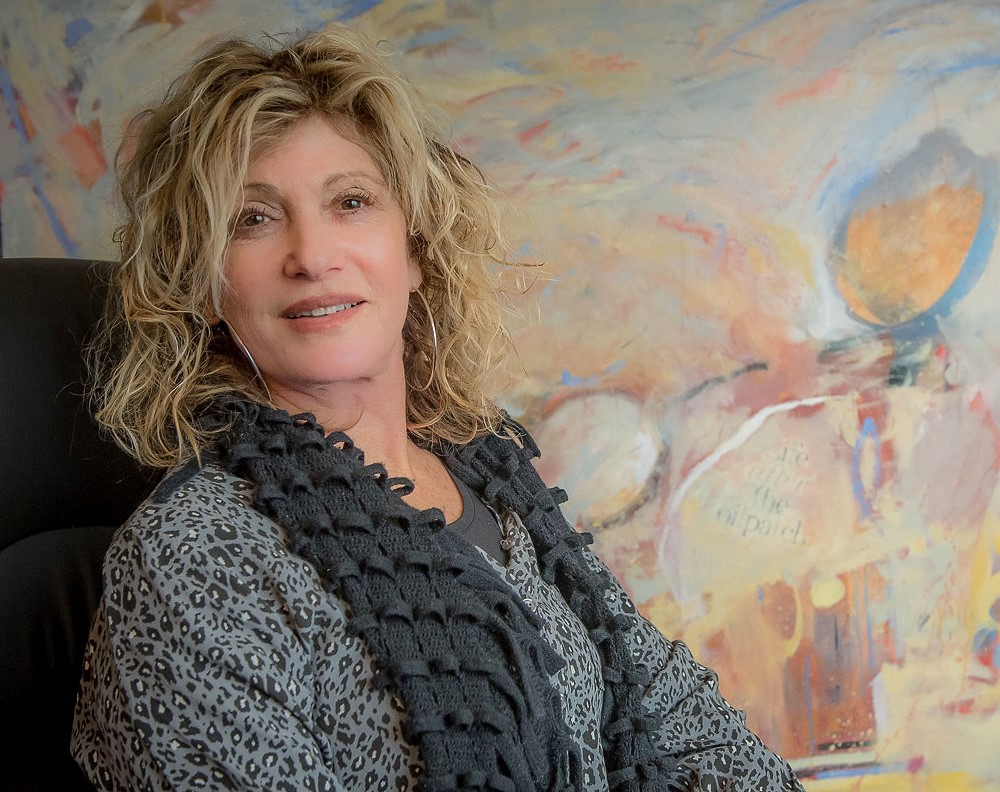
Her colour is confident but never aggressive. She starts bold and then softens with layer after layer of lighter tones until the painting breathes. There’s always this tension between vibrancy and calm, between something pushing forward and something pulling it back into gentleness. Wavy floating lines move across her canvases like they’re still deciding where to land. The surface never fully settles. It stays alive.
Adi grew up in Israel where history and philosophy weren’t abstract ideas, they were in the ground under your feet and in the conversations at the dinner table. You can feel that in her work. Every painting is an excavation. Every layer is a chapter. The text buried under the paint carries ideas that keep working on you long after you’ve walked away. Her work doesn’t give you answers. It gives you questions dressed up as colour.
She’s shown internationally, been published in art books, and spent years teaching alongside her practice. She used to work in encaustic but reached a point where she needed more freedom and directness so she moved to oil. That shift is pure Adi. The moment something stops being the most honest way to work, she moves on. No attachment. Just the work.
Now let’s hear from Adi, about headlines torn from newspapers and buried under layers of paint, about growing up surrounded by archaeology and carrying that into every canvas, and why the best thing a viewer can do with her work is step as close as they possibly can.
Q1. Growing up in Israel and encountering archaeology and philosophy early on, how did those experiences shape the way you think about image, history, and meaning in your work today?
My work reveals archeology and history through its layers. The philosophy is revealed by the idea – the text.
Q2. You’ve worked as both an artist and an educator. How have teaching and studio practice informed one another over time?
In my studio, I experience a sense of freedom through painting. As a teacher, I was under a controlled environment, governed by a set of rules.
Q3. Your paintings often combine oil with newspaper headlines and personal photographs. What guides your choice of which fragments enter a particular work?
I specifically choose headlines with a sense of feeling in it, which could be interpreted in several different ways. The photographs used are chosen according to colors and shapes. Through my work with layers I add and remove shapes and colors until I find the right balance.
Q4. In Golden Silence and The Golden Fleece, you evoke a sense of stillness with vibrancy. How do you build that tension between softness and intensity in your palette and gesture?
I like working with strong colors, but i don’t leave the harsh. I soften them with layers, blended with light tones, so painting feels alive but also gentle.
Q5. Many viewers encounter your work first through the juxtaposition of text and image. What kind of interpretive orientation do you want viewers to bring when they first see a piece?
I would like the viewers to have any feeling toward the painting, and I would like them to view the painting from close up so they can try to understand the meaning behind it.
Q6. Your work has appeared in international galleries and art books. How do different cultural contexts affect how people read or respond to your paintings?
The more that people are open to modern, contemporary an abstract art, the more they appreciate my work.
Q7. Your titles often come directly from the headlines you use. How does language and visual form interact in your process does one lead the other?
I always start with the collage and text, and I then continue to use oil paints and create my own narrative to the text.
Q8. Wind, Race for the Sky, and Whistle of the Wind suggest movement and force. How do concepts of motion or breath shape your compositional rhythms?
I feel the freedom with the brush strokes and paint in an intuitive way, and if I feel the need to make any changes then I do so.
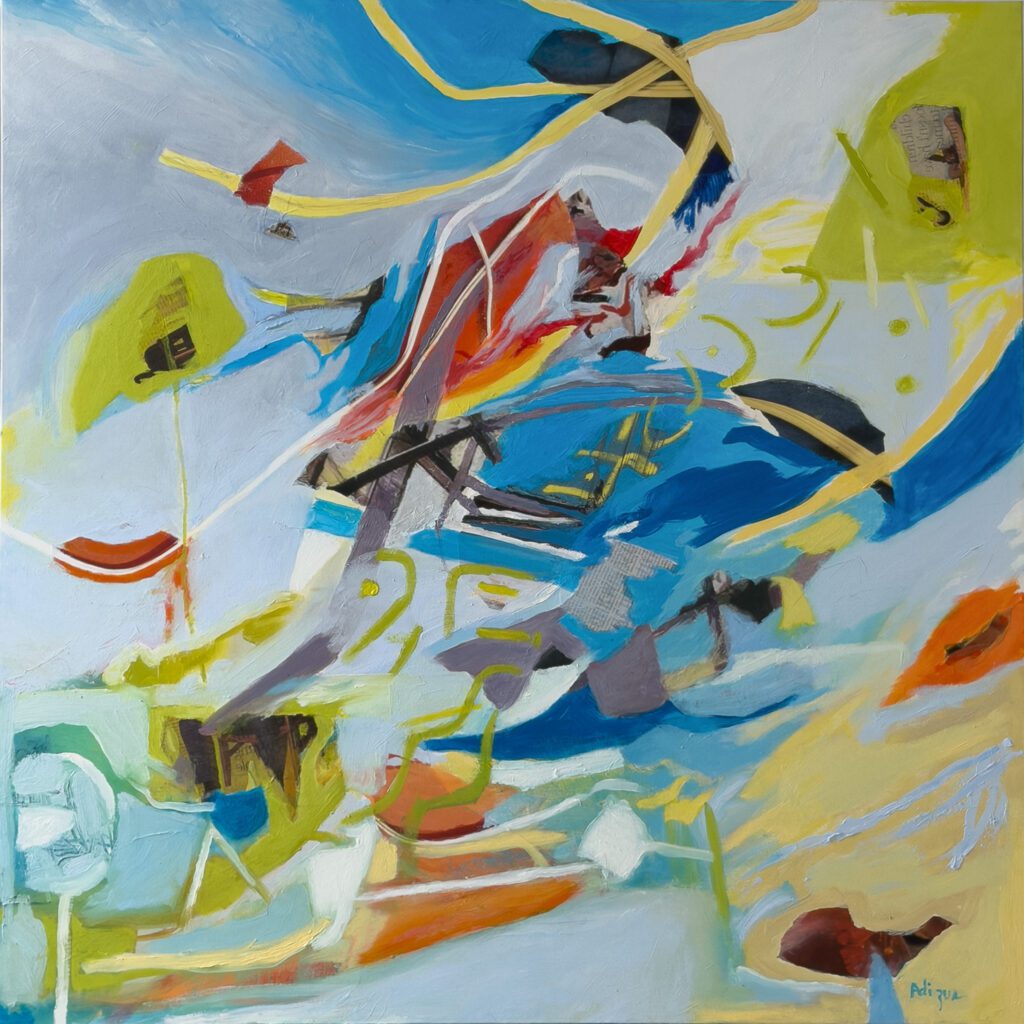
Q9. Are there visual structures, motifs, or ways of building space that you find yourself returning to again and again?
I notice repetition of wavy moving lines- floating on the canvas.
Q10. Looking back over your career, what shifts in material, theme, or method feel most significant to how you see your work now?
I used to work with encaustic in the past but after a while I felt the need to be more direct and free.
Q11. What advice would you give to artists who want to meaningfully combine image, text, and lived observation without losing visual coherence?
My advice is to start with the text and think about the colourfulness that expresses its idea. Then during painting always check the composition.
As our conversation with Adi drew to a close, we kept thinking about layers. About how we all walk around with things buried underneath our surface that nobody sees unless they come close enough. Old headlines of our own. Memories covered over by newer ones. Feelings we painted over because it was easier than explaining them.
Adi’s whole practice is built on the idea that what’s underneath matters as much as what’s on top. That the buried thing isn’t gone just because you can’t see it anymore. That every surface, every face, every person you meet is carrying a whole archaeology of experiences that shaped them into what you’re looking at right now. And most of the time nobody bothers to look past the first layer.
That’s what we think everyone reading this should sit with for a second. How often do we actually look closely? At art. At people. At ourselves. How often do we glance at the surface, decide we’ve seen enough, and move on?
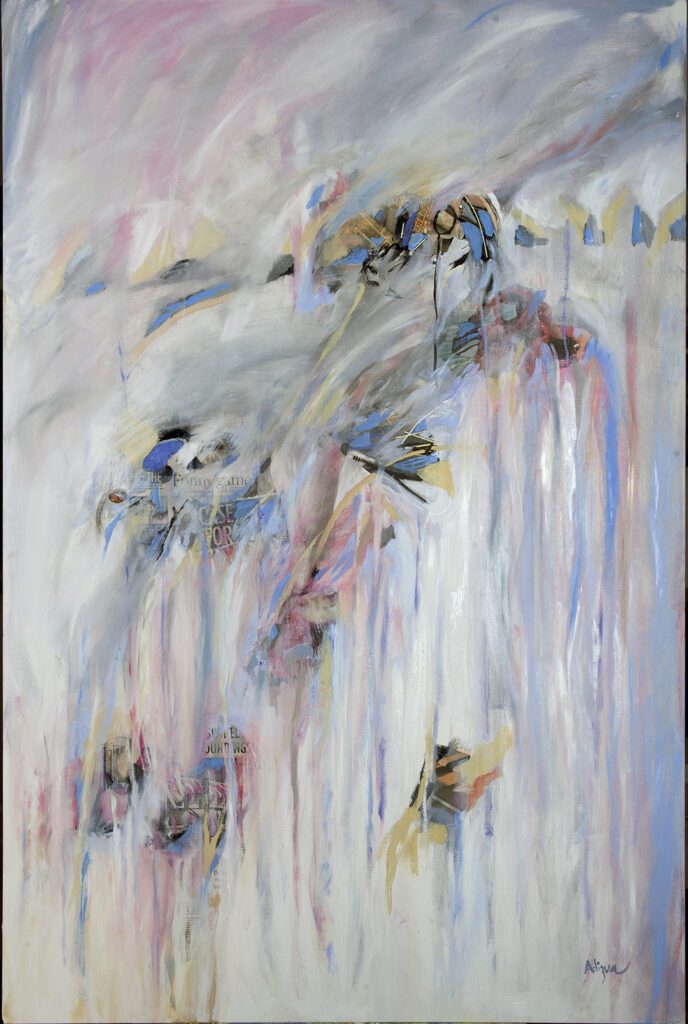
Adi’s work is a challenge to that habit. It rewards the people who step closer. It gives more to the ones who stay longer. And it keeps revealing things you missed the first time, the second time, even the fifth time.
There’s something in that for how we move through life too. The best things, the truest things, are almost never sitting on the surface waiting for you. They’re layered underneath. They take patience. They take willingness to dig. And most people won’t.
Most people look once and keep walking. But the ones who stop, the ones who lean in, the ones who care enough to ask what’s underneath, those are the ones who find what’s actually there.
Adi grew up in a country where digging is how you find truth. Where the ground holds centuries of stories and you just have to know where to look. She’s been doing the same thing on canvas her whole career. Building surfaces that hold more than they show. And trusting that the right people will come close enough to find it.
To follow Adi’s journey and see more of her work, find her through the links below.
