
This Artist’s Work Proves Charcoal Can Be as Expressive as Colors ︱Lorena Casanova
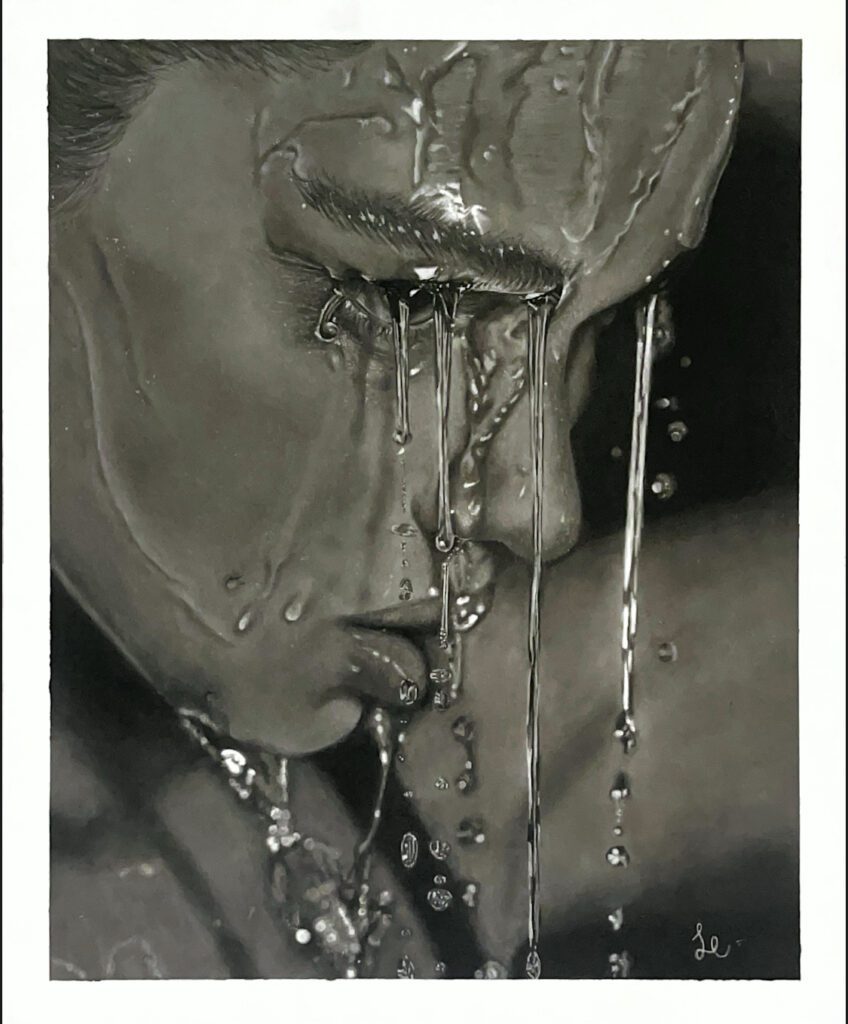
At Women in Arts Network, every artist selected for Faces brings a different answer to the same question. What does a face actually hold? Some answer with paint. Some with texture. Some with abstraction.
Lorena Casanova answers with charcoal. Just charcoal. And it’s enough to make you forget colour exists.
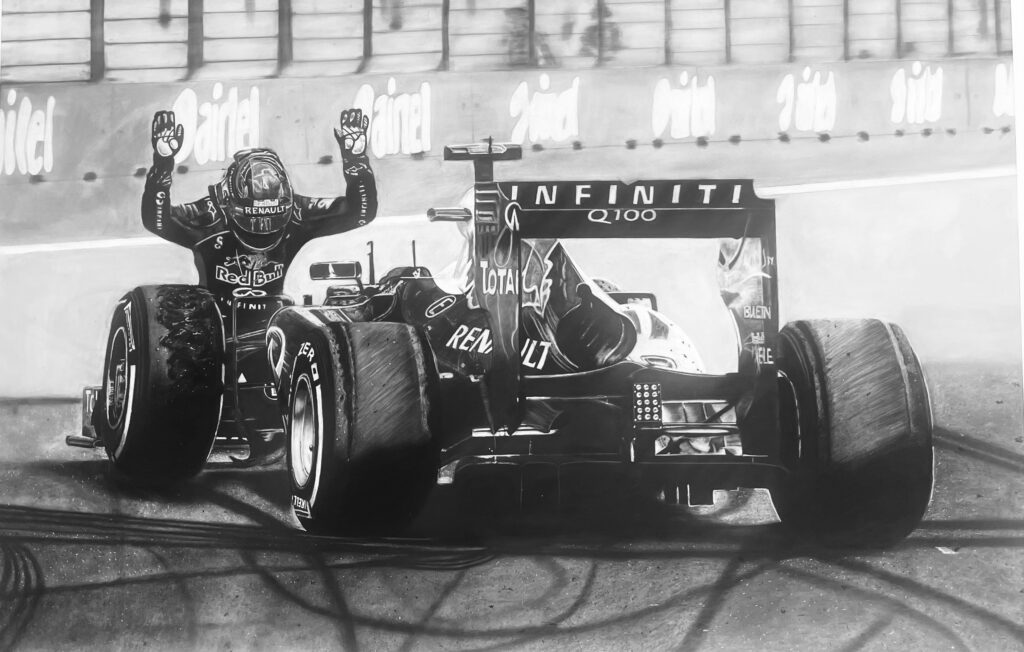
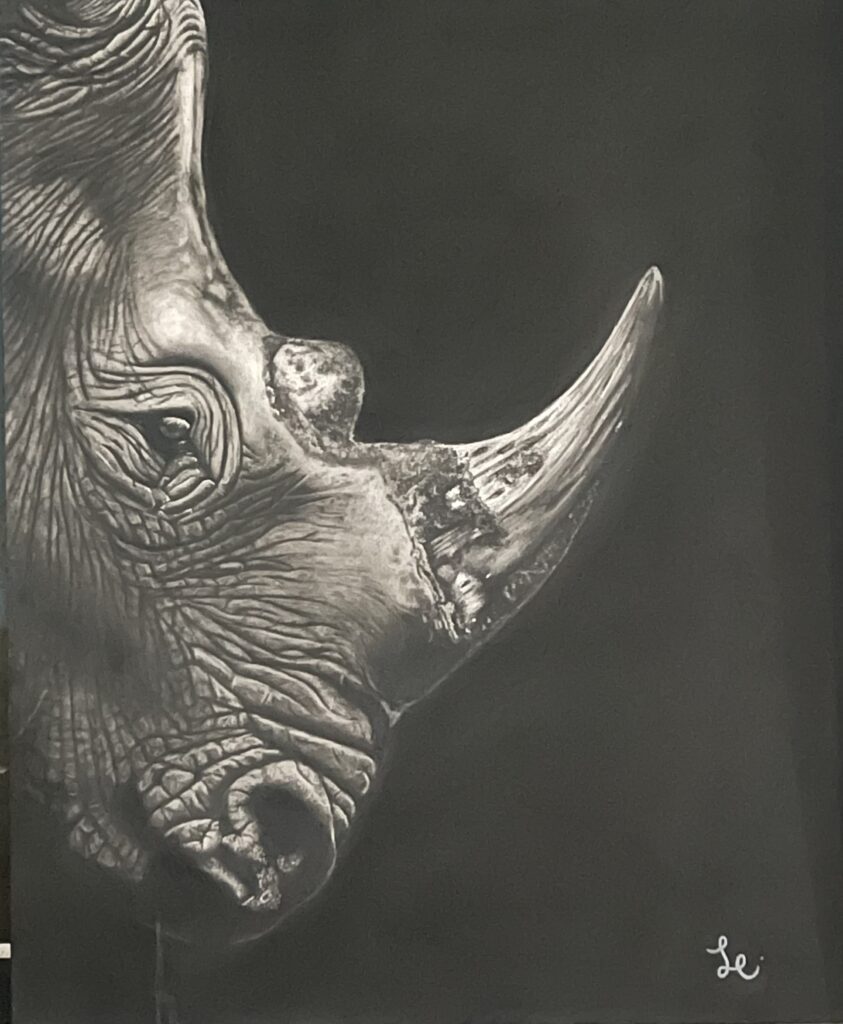
Lorena is a selected artist for the Faces exhibition and the first time we saw her work we had to look twice because we couldn’t believe what we were seeing was charcoal. The depth. The emotion. The way skin looks like it could warm your hand if you touched it. All of it done with pencils and powder and blenders and erasers on paper or wood. No paint. No colour. Just black and white and every shade of grey between them carrying more feeling than a full palette ever could.
She’s a hyper realist drawn to the human form and specifically to faces. Not because of how they look but because of what they carry. She’s fascinated by how a subtle expression or a shift in body language can tell a powerful story without a single word being spoken.
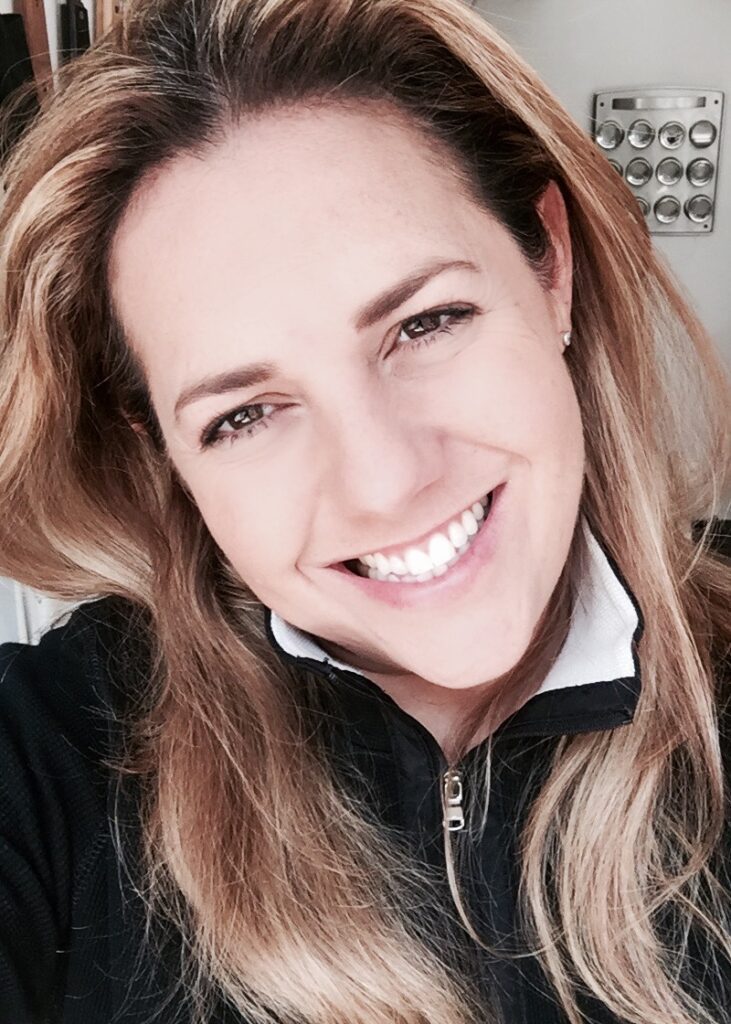
A tightened jaw. A softened gaze. The way someone holds their own face in their hands. She sees all of that and she translates it into charcoal with a precision and sensitivity that makes you feel like you’re not looking at a drawing but at an actual person having an actual moment that you weren’t supposed to see.
Art has been with her since she was young. She explored different mediums but charcoal was the one that stayed. The one that felt like her. She’s said each piece she creates is a reflection of her journey and her dedication and you can feel that when you stand in front of her work. Nothing is rushed. Nothing is careless.
Every mark has been considered and every shadow has been built up slowly and deliberately until the face on the surface holds exactly as much feeling as a real one does.
She had a turning point in her practice that changed how she understands her own work. A piece where she realised she’d stopped focusing on technical precision and started focusing on emotion and storytelling. That shift, from getting it right to getting it true, that’s where her voice as an artist was born.
Now let’s hear from Lorena, about what charcoal can do that colour can’t, about reading the stories hidden in someone’s posture, and why the most powerful portrait might be the one drawn with the simplest tools.
Q1. Can you share your background and how you first became serious about pursuing art as a career?
I’ve always had a deep passion for art since I was young. My journey began with exploring various mediums, but I found my true calling in charcoal and hyper realism. Each piece I create is a reflection of my journey and my dedication. What initially drew me to human form was the incredible depth of emotion and complexity, I’ve always been facilitated by how subtle expressions and body language can convey powerful stories.
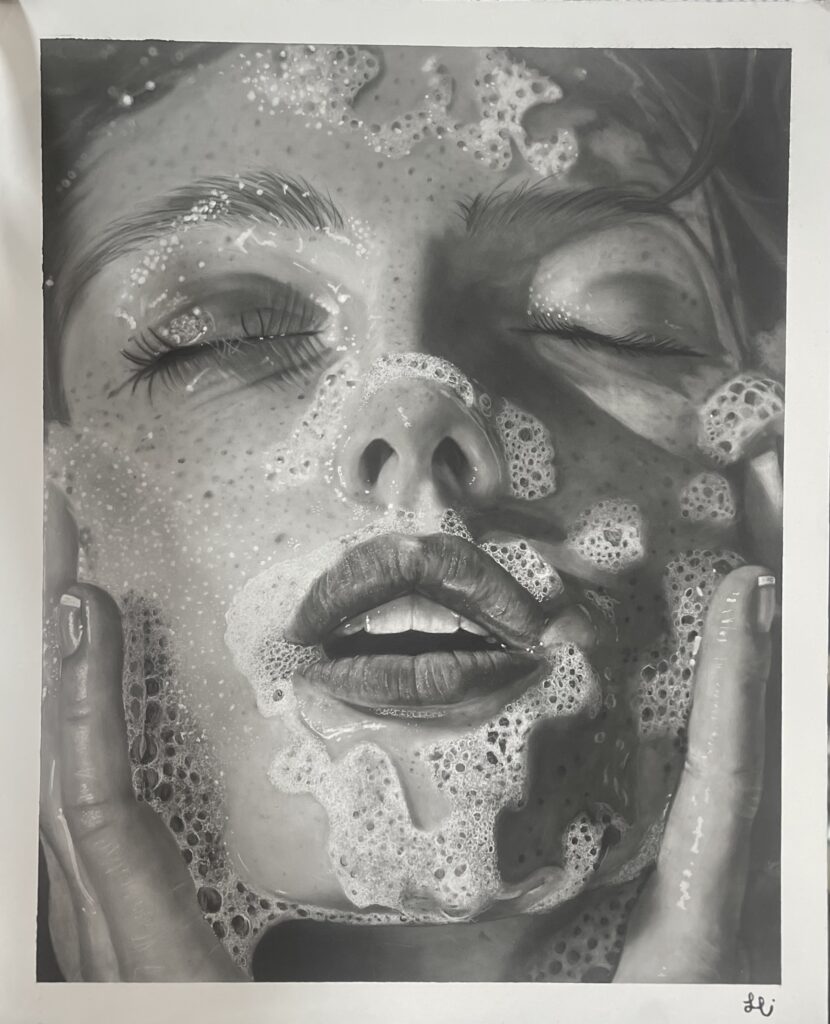
Q2. Many of your works focus on expressive portraits and dynamic figures. What initially drew you to the human form as a central subject?
I’m captivated by the subtle gestures, expressions, and dynamic energy that the human body can communicate, this is what inspires me to explore and celebrate the human form in my art
Q3. When you start a new painting, do you typically begin with a sketch, a colour idea, or a feeling you want to express?
I usually start with a combination of both the sketch helps me map out the composition and details, while the underlying feeling guides the mood and tone of my piece.
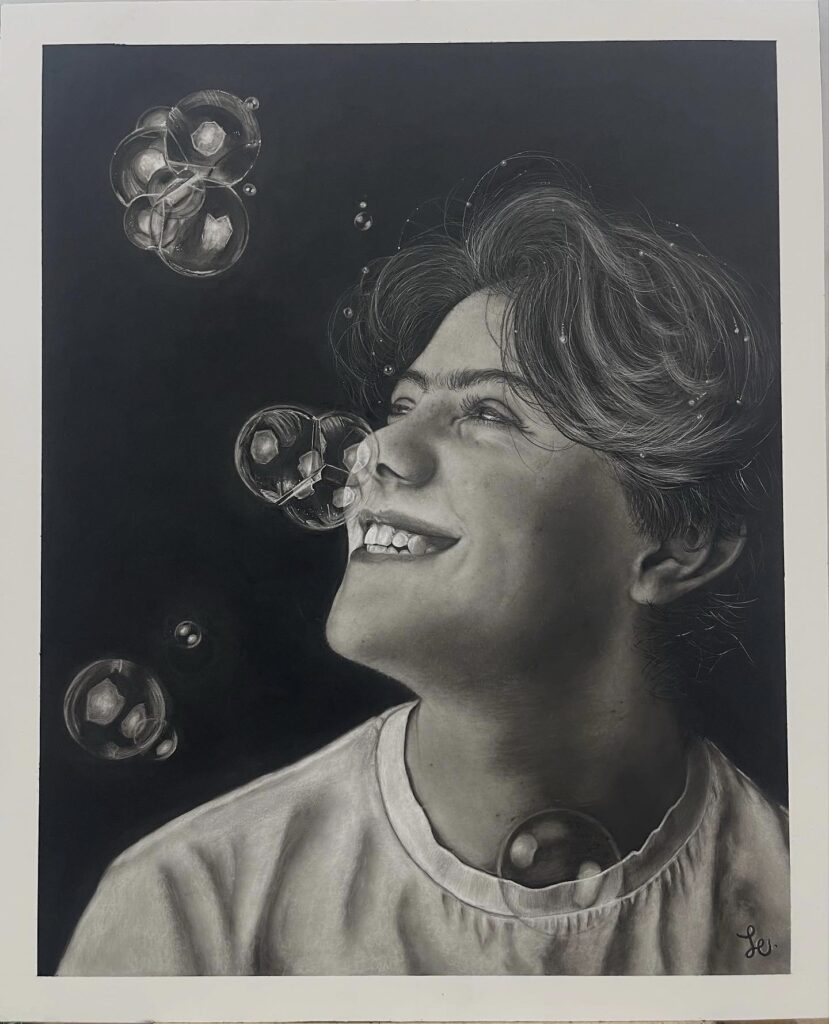
Q4. Your use of bold lines and textured colour fields is very consistent. What materials or tools have become essential to your practice over time?
I’ve found that certain tools have become essential like the wood or paper I carefully choose to draw, charcoal pencils and powder are fundamental for achieving the depth and detail, blenders to create textures and contrast and erasers are crucial for refining my pieces
Q5. How do facial expression, posture, and gesture work together in your paintings to communicate mood or intent?
They work together to show how someone feels and what they mean, all together the help the viewer understand the character and the story behind the painting.
Q6. When viewers respond emotionally to your work, what kinds of reactions do you find most meaningful?
Those that show a deep emotional connection, a sense of being moved or inspired, when the viewers find a personal meaning in my work and connect with the story I’m trying to convey, this kind of response is what makes it all worthwhile
Q7. What part of your practice feels most challenging technical execution, conceptual clarity, or something else?
I think that the technical execution, to understand the precise technique I have to use in every piece.
Q8. Has there been a piece or series that felt like a turning point in how you understand your own work?
Yes, there was a particular one, while working on it, I realized I was no longer focused on the technical precision, but the emotion and storytelling, this shift help me understand my voice as an artist
Q9. What advice would you give to emerging artists who are working to find their own visual voice and distinction in the figurative arts?
I would encourage them to be patient with themselves and stay curious, developing a visual voice takes time, experimentation and practice, don’t be afraid to break rules and follow what moves you, let your work emerge inspiration and happiness in you, and your distinction will emerge naturally through persistence and self-reflection, just do what makes you happy and proud of you work.
As our conversation with Lorena drew to a close, we found ourselves sitting with something simple but hard to shake. That sometimes the bravest thing an artist can do is use less.
We live in a world that tells you more is better. More colour. More detail. More noise. More everything. More tools, more techniques, more layers, more complexity. And Lorena walks into that world with charcoal and paper and says no. This is enough. This face, in black and white, with nothing between you and the emotion except shadow and light, this is all you need.
And she’s right. Because when you stand in front of her work you don’t think about what’s missing. You don’t wish there was colour. You don’t feel like something’s been taken away. You feel like something’s been revealed. Like colour was actually hiding the thing she wanted you to see and she had to remove it to let the face speak for itself.
That’s a bold move. In a world drowning in visual noise and saturation and filters and a million ways to make something louder, choosing black and white is almost radical. It says I trust the face enough to let it stand on its own. I trust the shadow enough to carry the story. I trust the viewer enough to feel it without me telling them what to feel.
She talked about a moment where she stopped focusing on getting the technique perfect and started focusing on the emotion. And that shift is something every artist and honestly every person could learn from. Because we all do it. We hide behind being good at something instead of being honest about something. We polish the surface instead of showing what’s underneath.
We add more colour, more detail, more distraction, because somewhere along the way we got convinced that rawness isn’t enough. That simple isn’t impressive. That stripped back means you didn’t try hard enough.
Lorena stopped believing that. She stopped polishing. She picked up charcoal, the most basic tool in the drawer, and she made faces that carry more feeling than most paintings three times their size and ten times their budget. And what came through was more powerful than perfection ever could have been. Because perfection keeps people at a distance. It makes them admire. But honesty pulls them in. It makes them feel. And Lorena’s work makes you feel something whether you were planning to or not.
If her journey reminds us of anything it’s this. You don’t need more to say more. Sometimes the most powerful thing you can do is take everything away until only the truth is left. And then trust that the truth is enough. Lorena trusts it. And standing in front of her work, you will too.
To follow Lorena’s journey and see more of her work, find her through the link below.
