
This Artist Turns Nature-Inspired Shapes into Flowing Abstract Paintings │ J Reeves
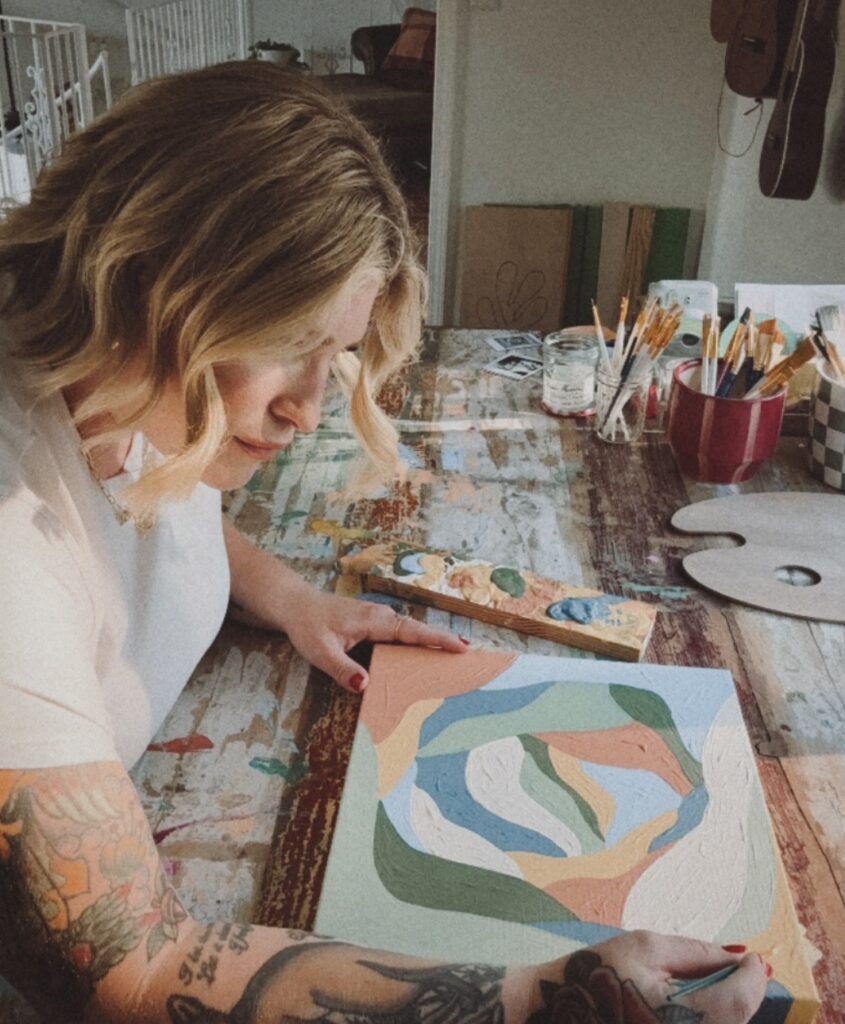
At Women in Arts Network, for our Love, Life and Everything She Creates exhibition, we got abstracts from all over. Some were intense, some were conceptual, some wanted to make you think hard. J Reeves sent us paintings that just made us feel calm and we sat there going why does this feel so good and couldn’t figure it out and honestly that’s probably the highest compliment you can give an abstract painting.
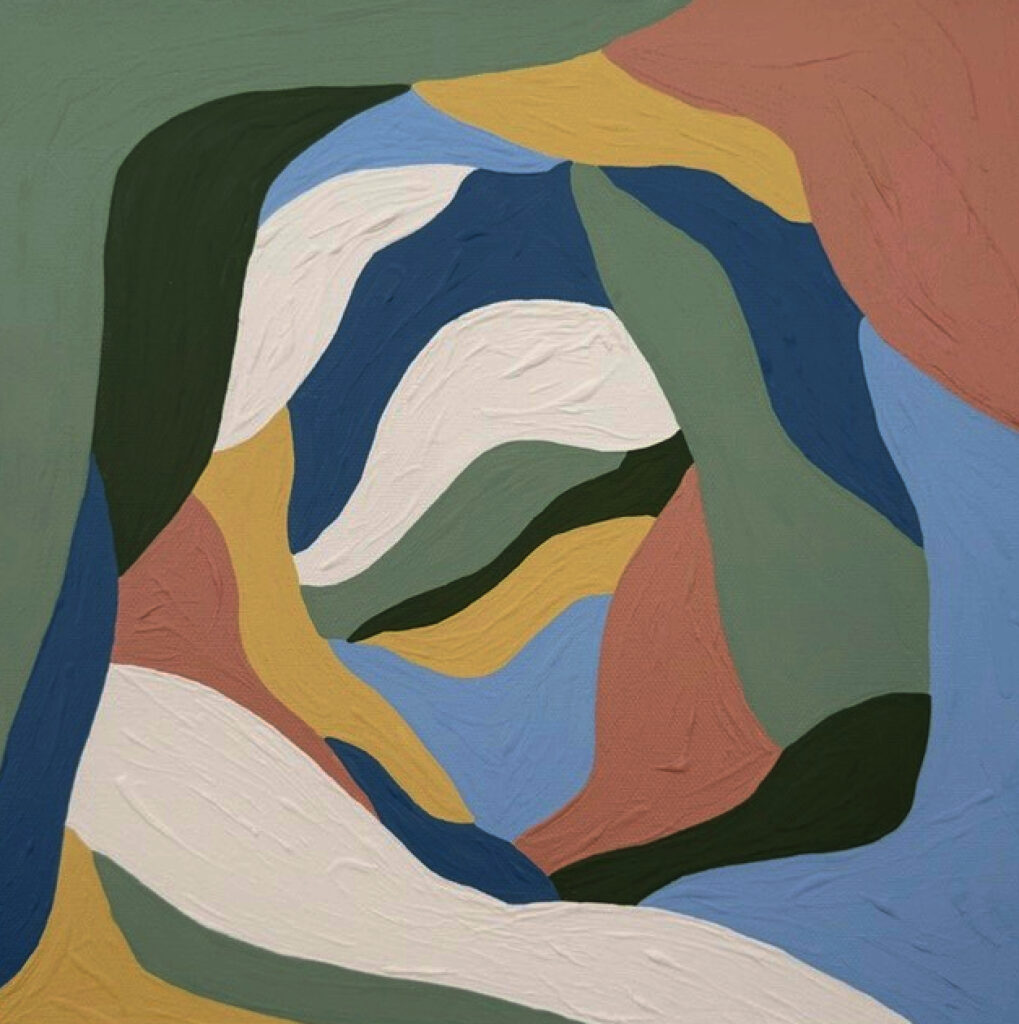
J is a selected artist for the Love, Life and Everything She Creates exhibition and the funny thing about her work is nobody agrees on what they’re seeing. One person says birds. Another says fish. Another says leaves. J hears all of it and just smiles because that’s the whole point. The shapes are organic and flowing and alive and what you find in them is yours, not hers, and she wouldn’t have it any other way.
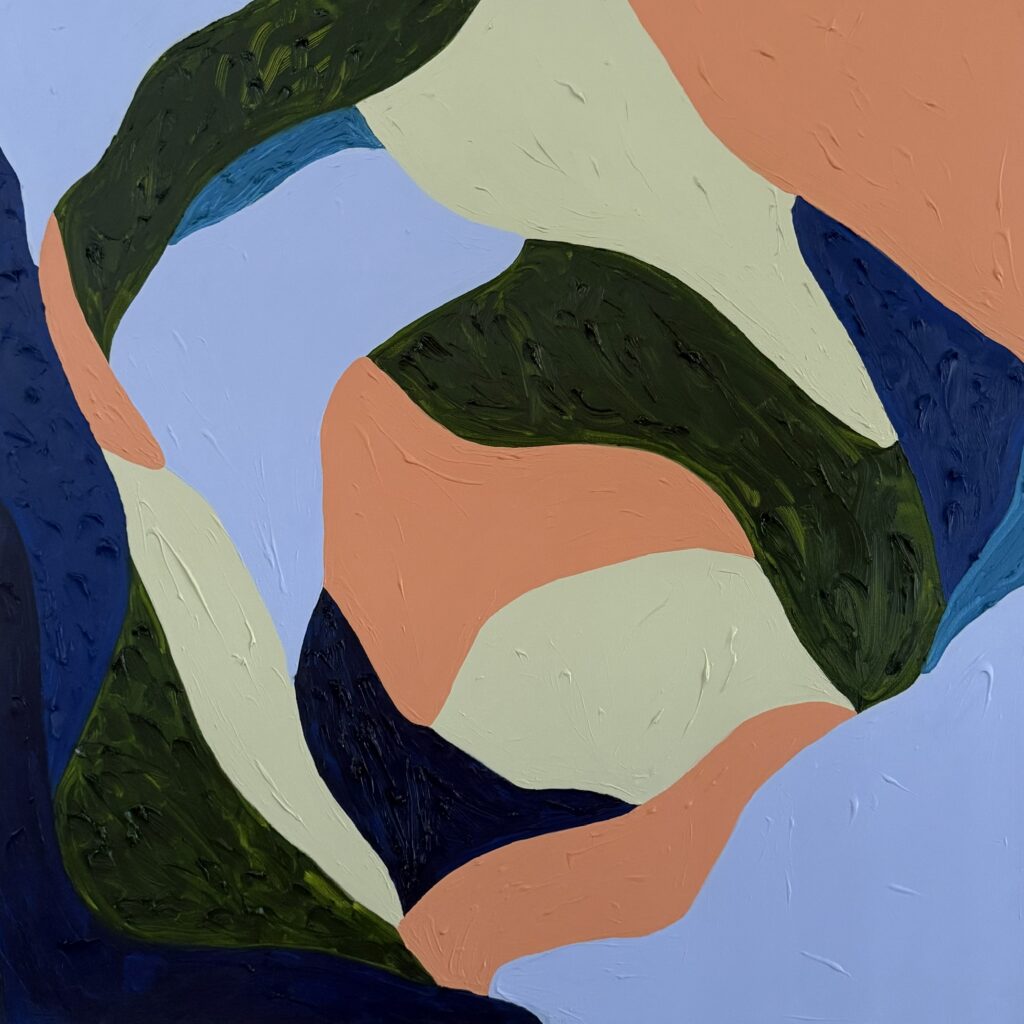
She paints in acrylic and her colours tell you exactly where she lives before she says a word about it. Blues keep showing up in everything because she’s by the water and you just can’t keep the ocean out of your palette when it’s outside your window.
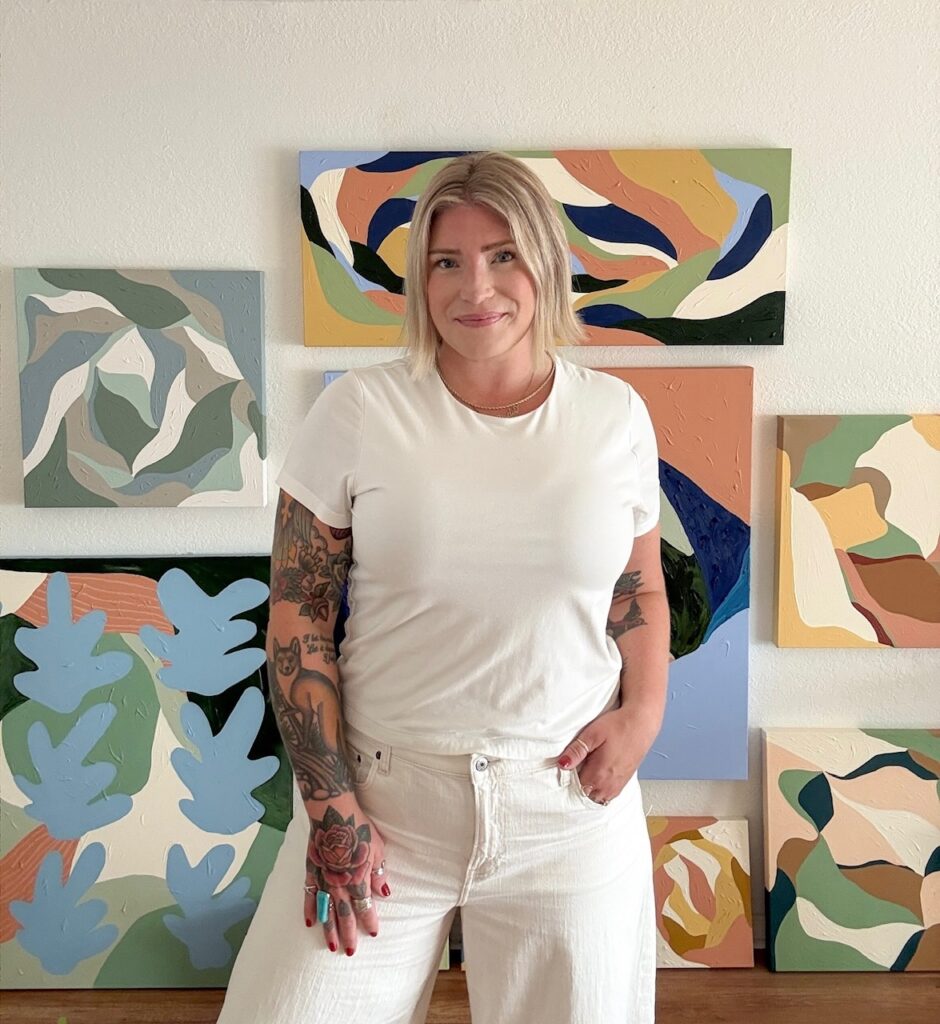
Earthy tones and warm peaches and little pops of brightness that don’t shout but just lift the whole thing gently. Nothing in her work fights with anything else. It all just gets along.
She doesn’t sketch. Doesn’t plan. Just starts and lets one shape respond to the next until the composition finds itself. And she’s got this instinct now, after ten years of painting, where she can feel when something’s off before she can explain why.
But that instinct took a long time to arrive because she spent most of those ten years making work she thought other people would want instead of work that felt like hers. Two years ago she stopped doing that. Just let go. And the paintings that came after feel completely different from everything before them because for the first time they’re actually her.
Her grandmother is the reason all of this exists. Ninety years old and still painting almost every day. J grew up spending summers with her watching this woman make everything, paint, food, gardens, clothes, just constantly creating with her hands because that’s how she moves through the world. J absorbed that without anyone having to explain it. Making things is just what you do. You do it at ten and you do it at ninety and you don’t stop in between.
She’s got a new collection called Halcyon and that word means something specific to her that we’ll let her share because the story behind it changes how the paintings look once you know it.
Now let’s hear from J, about birds that might be fish and a grandmother who still paints at ninety, about living by the water and letting it into every canvas, and why the most honest abstract might be the one that lets you see whatever you need to see.
Q1. Could you share a little about your background and what first inspired you to become an artist?
Growing up, I would spend the summers with my grandmother, who is incredibly creative. Whether it was painting, baking, working in her garden, sewing – the list goes on – she has always been very self-expressive and that really made an impression on me at an early age. At 90 years old, she still paints almost every day and to me, that’s the beauty of being an artist, is having the ability to carry it with you throughout your life.
Q2. Your work has developed a very recognizable abstract style. When did you feel you had found your own visual language?
I’ve been painting for over ten years now and it started out as just a way to get out of my head and try to bring something to life on a canvas, but I wasn’t able to truly express myself because I was painting for other people and what I thought they would want. Then, about two years ago, I gave myself the freedom to just let go and I started to see something that felt genuine to me. That’s when I knew I was on the right path.
Q3. Many of your paintings feature leaf-like and botanical shapes without directly depicting nature. What interests you about working with these forms?
I have had people tell me they see fish and different sorts of sea life, leaves and plants, but most often it’s birds, which I always love to hear! Nature is one of my main inspirations and it brings me so much joy that it comes through. That’s also what’s so great about abstract art because it can be and mean so many different things to the viewer.
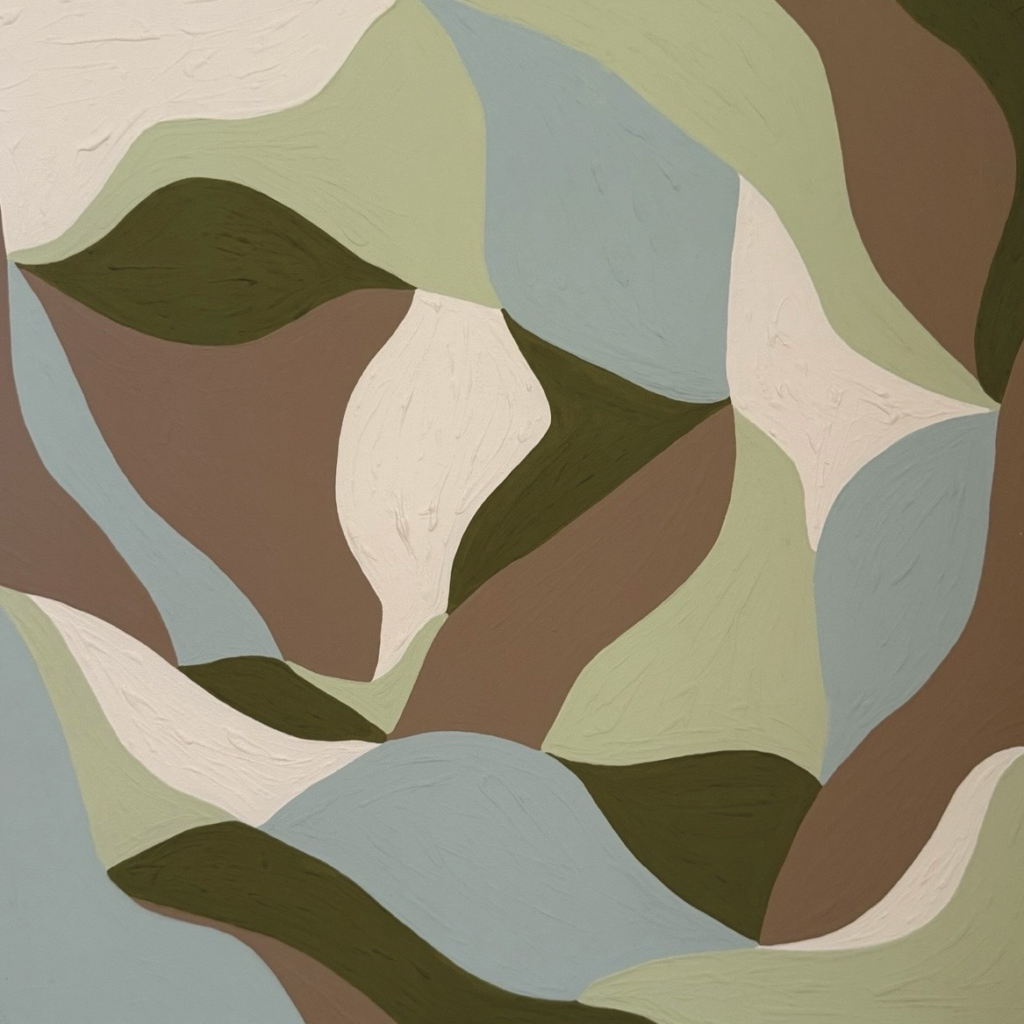
Q3. Your recent collection Halcyon introduces a fresh color palette and flowing organic forms. What inspired this body of work?
I love the definition of halcyon because it means peaceful, calm, happiness. It also refers to a carefree, golden time of the past and this body of work represents that for me. This piece encouraged me to reflect on seasons of my life and memories I’ve collected over the years. I tend to always look ahead, to get excited for what’s next, but every now and then I think it can be good to look behind.
Q4. Your paintings often balance earthy neutrals with soft blues and warm peach tones. What draws you to these colour relationships?
My husband and I are fortunate enough to live by the water, so it’s undoubtedly the reason a variety of blues seem to always find their way into each piece. I love bringing colors together that encompass a balance. I’m also just naturally drawn to earthy tones with touches of brightness because for me, it brings on an overall sense of happiness and a connection to the natural world.
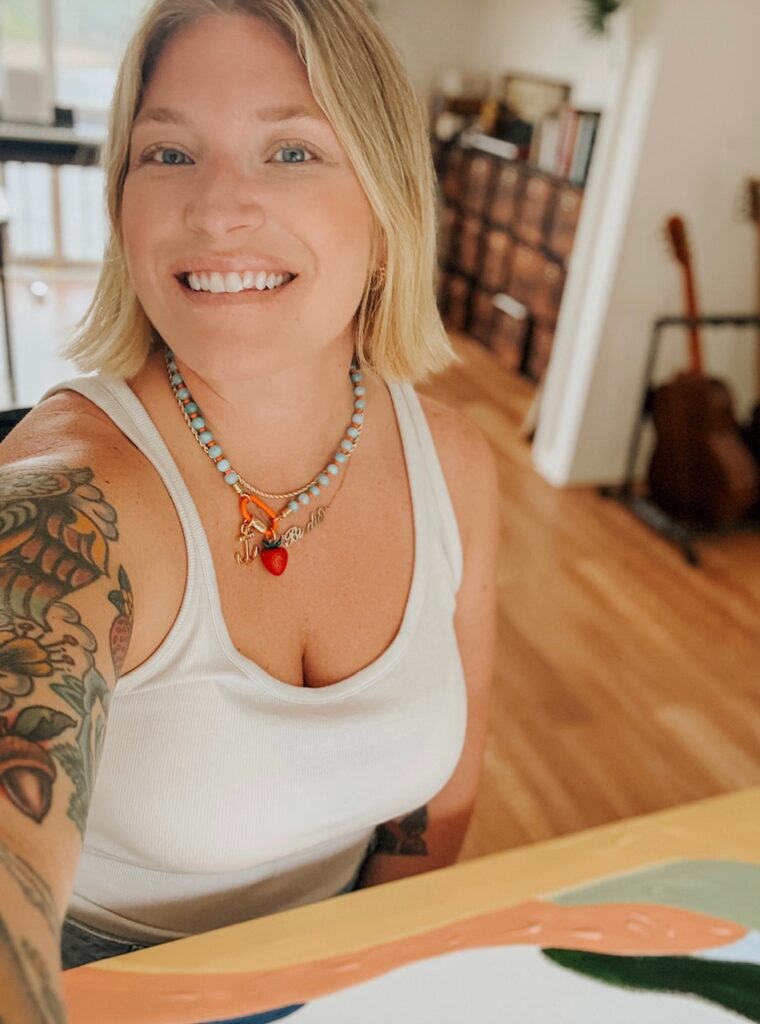
Q5. Many of your shapes appear to flow into one another. How do you decide when a composition has reached the right balance?
Since I never sketch my work prior to painting, the piece has to come together in a way that flows without repeating the same color or shape over one another. I can look at a shape and almost instantly know if it’s going to throw off the rest of the composition, so sometimes it requires some tweaks to be made along the way but it’s just all part of my process.
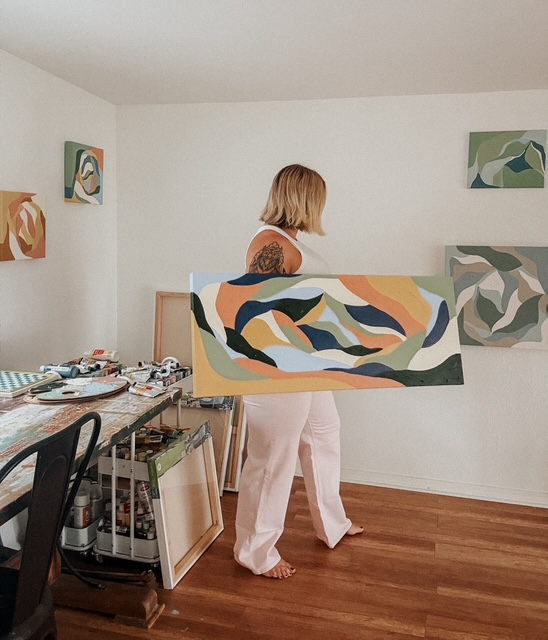
Q6. Your studio feels like an extension of your work. How important is your creative environment to your process?
My studio is in my home and I wouldn’t have it any other way. It allows me to paint any time I want or am able to, but also, I’m surrounded by all the things I love. We’ve been very intentional about filling our home in a way that’s reflective of us and our style. From books to records, plants, artwork from other artists we admire to treasures from our travels, we have created a space that just ignites inspiration.
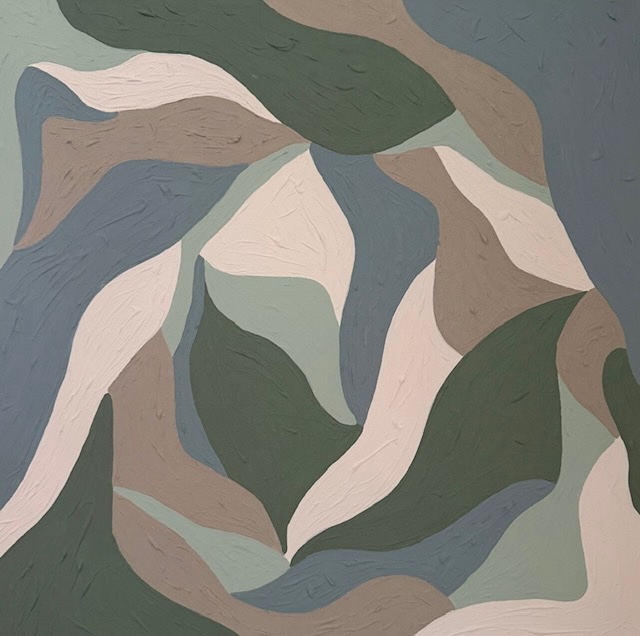
Q7. Do you think viewers experience texture differently when they see a painting in person rather than online?
Texture is such a big part of my work. I want the viewer to be able to see the depth of the piece and how it breathes out life, as if the bird or whatever they see or feel is in motion. In my opinion, one can absolutely get that feeling from seeing art online, but it’s only from the point of view of the picture shared. When you’re in person, you can see it from so many angles and it allows you to experience it in a different way.
Q8. Abstract painting continues to evolve in many different directions. Where do you see your work within contemporary abstraction?
Abstract is such a subjective form of self-expression. It doesn’t have to conform to the conventional ideas that realism or still life are bound to. It focuses more on creating an emotion rather than capturing a likeness. It’s an experience as familiar as staring up at the clouds and seeing a bird when someone else sees a fish. When I paint, my intention is to evoke feelings of nostalgia, curiosity and beauty for the viewer. There is a deep tradition of women artists that have created abstract art, such as Joan Mitchell and Helen Frankenthaler, that resonates with people decades later, and I hope to be a part of that in some way.
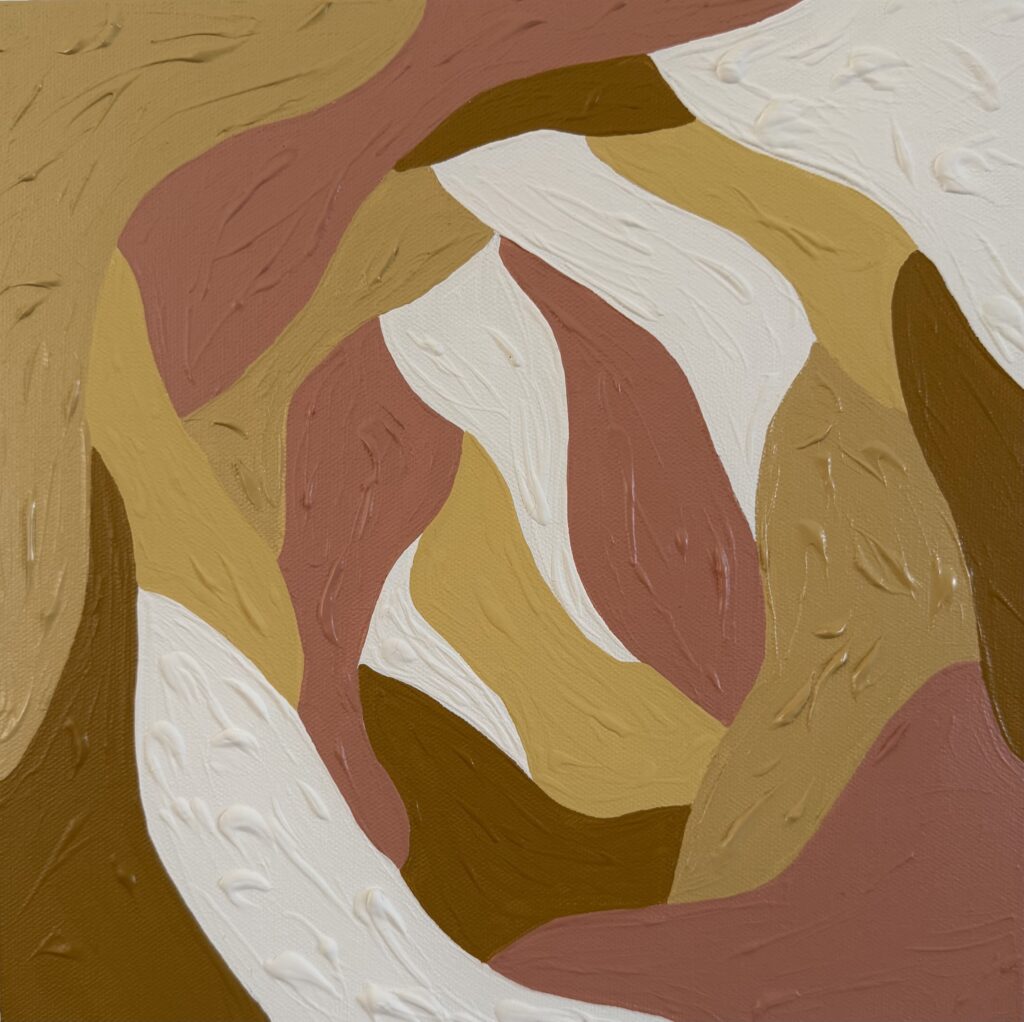
Q9. Social media has become an important platform for abstract artists. How has sharing your work online influenced your creative practice?
Sharing my work online was initially and is sometimes still challenging because I never wanted it to take away from the actual creative process. For me, the point of painting is to get out of my own head and be free, so when I knew the camera would be on, it was hard not to focus on if I was going to have the right “content.” But the truth is, people want your authenticity, and once I decided each post didn’t have to look and be a certain way, I’ve been able to have a more copacetic rhythm with the process.
Q10. How has your definition of success changed since you first began sharing your work publicly?
For me, success has been having the courage to share my work. It makes me feel very vulnerable to put myself out there but sharing that part of my life has really given me so much more confidence.
Q11. What advice would you give your younger self when you were just beginning as an artist?
I love that question because I try to live a life that would make my younger self proud, and I often think of what she would feel knowing where I’m at in my art journey. The advice I’d want to give her is to not worry about the future, you’re exactly where you’re supposed to be.
As we wrapped our conversation with J, the thing we couldn’t shake was the grandmother. Ninety. Still painting. Every day. And J watching that as a kid during long summers thinking this is just normal, this is just what people do, they make things with their hands and they keep making things until they can’t anymore.
That’s a gift most people never get. Seeing creativity modelled not as a career choice but as a way of being alive. Not something you do when you have time. Something you do the way you eat and sleep and breathe because it’s just part of being you. J got that gift early and she’s living it now.
She spent ten years painting for other people’s approval before she gave herself permission to make work that actually felt like hers. Ten years is a long time to be making stuff that looks right but sits wrong inside you. And then she stopped and just painted what she felt and the difference was immediate and obvious and she’ll never go back.
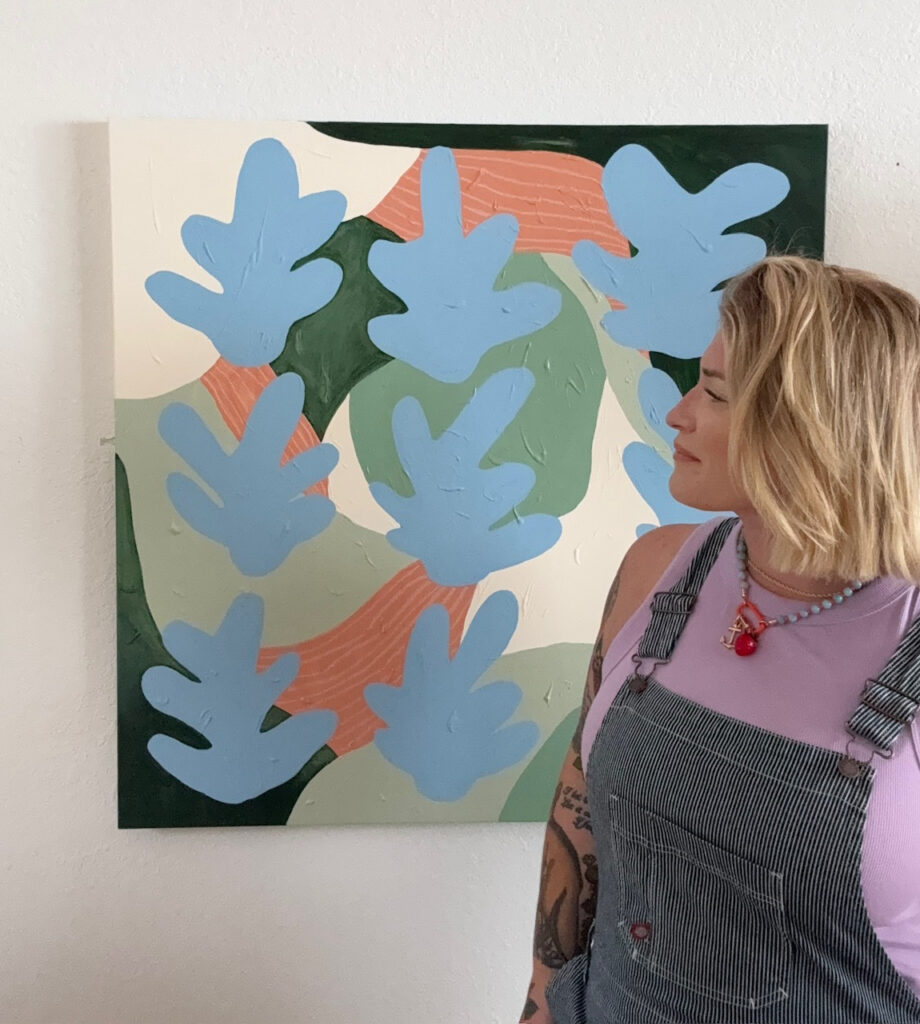
For anyone thinking about living with her work, here’s what we’d say. J’s paintings make a room feel like a good day. That’s the simplest way to put it. The colours are water and earth and warmth. The shapes move and breathe and let your eyes wander without ever getting lost.
And because the forms are abstract enough that everyone sees something different in them, the painting becomes personal to whoever owns it. Your version of it is yours. Nobody else will see the exact same thing. That kind of relationship between a painting and the person living with it, where the meaning is shared but never identical, that’s the kind of art you keep forever.
To follow J’s journey and see more of her work, find her through the links below.
