
Mickel Celest Uses Colour and Rugged Texture to Build her Layered Abstract Paintings
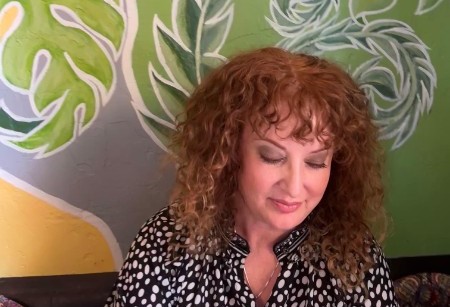
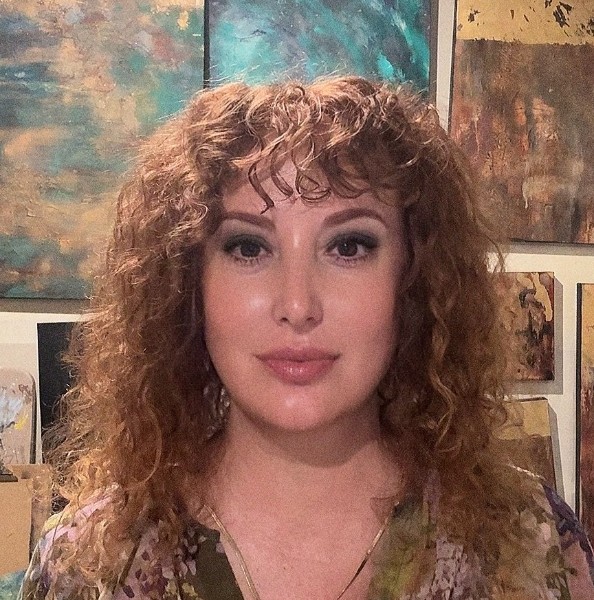
At Women in Arts Network, Love, Life and Everything She Creates brought together artists who understand that creating and living are never truly separate. Mickel Celest is one of our selected artists, and her richly layered abstract paintings embody that idea completely surfaces built up, broken down, and rebuilt in search of the beauty that only emerges through transformation.
Mickel was always drawn to creativity, but it was only later in life that she gave herself permission to truly pursue art. When she did, it became far more than a way of making something beautiful it became a way to slow down, process life, and express the emotions that are so difficult to put into words.
She found her home in abstraction, though not right away; like many artists, she experimented with other styles first, until something simply clicked. She realized she had no interest in recreating what she could already see. What drew her was the chance to make something that had never existed before.
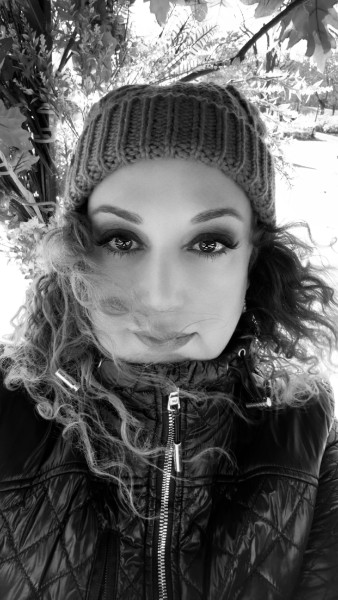
Her process is deeply intuitive. She rarely begins with a finished image, starting instead from a color palette or a feeling and letting the painting evolve layer by layer, responding to what it asks for rather than trying to control it. Sometimes that means adding texture, collage, or metallic elements; sometimes it means painting over something entirely and trusting the process.
Much of her inspiration comes from natural erosion and urban environments, a weathered rock face, an old and worn wall because both, however different, tell the same story of time, change, and the layers of history that transformation leaves behind.
That is the thread running through all of it. Mickel is fascinated by the idea that things can be changed, layered, worn down, and rebuilt into something new, and that what was once hidden can become the most compelling part of a piece.
Every layer leaves a trace. She knows a painting is finished only when nothing needs to be added or taken away when the elements feel balanced and the work feels alive. Above all, she has learned to trust herself: that her intuition is the truest part of her creative voice, and that even the layers that get covered over still have a purpose.
Let’s get to know Mickel through our conversation with her about giving herself permission to create, why abstraction clicked, and the lesson she learned from trusting her instincts.
Q1. Could you take us back to where it all began and share what first inspired your journey into the arts?
I’ve always been drawn to creativity, but it wasn’t until later in life that I truly gave myself permission to pursue art. Creating became more than just making something beautiful, it became a way to slow down, process life, and express emotions that are often difficult to put into words. What began as a personal creative outlet has grown into a true passion. I’m especially drawn to abstract art because it allows for freedom and discovery.
I love building layers of texture, color, and collage, then stepping back to see where the painting leads me. I rarely start with a fixed plan. Instead, I let each piece evolve naturally, which makes every painting a unique journey. Today, creating art is one of the most fulfilling parts of my life. My hope is that each painting invites viewers to pause, connect with it in their own way, and discover something meaningful through their own experiences.
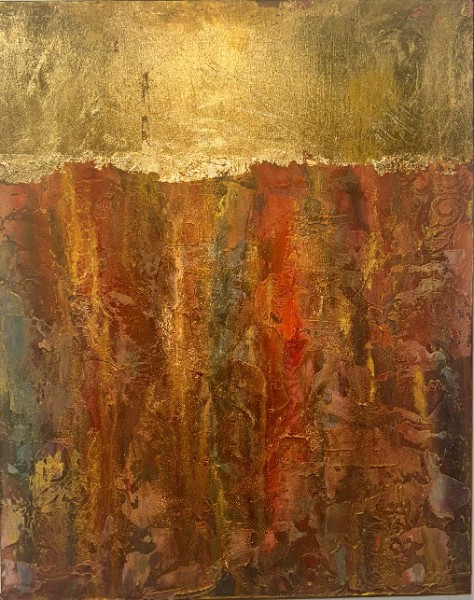
Q2. Your work feels very intuitive today. Was abstraction something you were always drawn to, or did it develop naturally over time?
It definitely developed over time. Like many artists, I experimented with different styles before I found what truly resonated with me. Once I discovered abstract art, something just clicked. I realized I didn’t enjoy trying to recreate what I could already see. I was much more interested in creating something that had never existed before. My process is very intuitive. I usually start with a color palette or an idea, but I don’t have a finished image in mind.
I let the painting evolve layer by layer, responding to what it’s asking for rather than trying to control it. Sometimes that means adding texture, collage, or metallic elements, and sometimes it means painting over something completely and trusting the process. That’s what I love most about abstraction. It gives me the freedom to explore, take risks, and create pieces that invite each viewer to find their own meaning and emotional connection.
Q3. You draw inspiration from natural erosion and urban environments. What do these two very different sources have in common for you?
Although they seem very different, both natural erosion and urban environments tell stories of time, change, and transformation. I’m drawn to the layers, textures, and imperfections that reveal history—whether it’s a weathered rock surface or an old, worn wall. I try to capture that same sense of depth and discovery in my paintings through layers of texture, color, and mixed media.
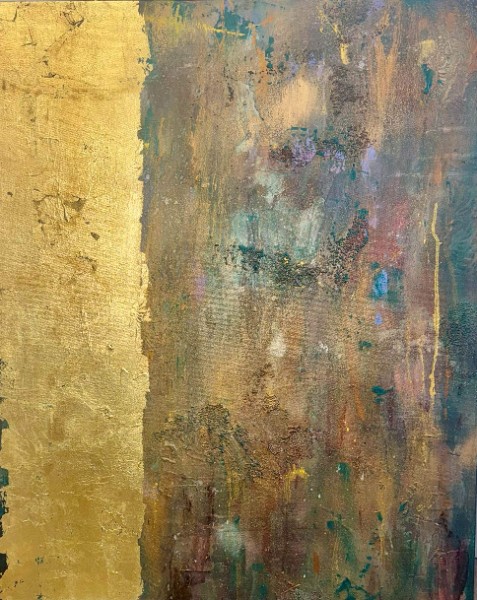
Q4. Your work combines bold colour with textured surfaces. How do you decide when a painting has the right balance between the two?
For me, the balance between color and texture happens through intuition. I love using bold colors, but I also want the surface to have depth and movement that invites people to look closer. As I build a painting, I add and remove layers until everything feels connected. Sometimes the texture becomes the focus, and other times the color leads the way.
I know a piece is finished when nothing feels like it needs to be added or taken away—it reaches a place where the elements feel balanced and the painting feels alive.
Q5. Mixed media gives you the freedom to experiment in many different ways. What excites you most about working with different materials?
What excites me most about mixed media is the freedom to experiment and discover something unexpected. Each material brings its own character texture, movement, depth, and emotion. I love layering acrylics, inks, collage, texture, and metallic elements because each layer adds to the story of the piece.
Sometimes a material creates a direction I never planned, and those moments of surprise are often where the most interesting parts of the painting emerge. For me, mixed media is about exploration, curiosity, and allowing the artwork to evolve naturally.
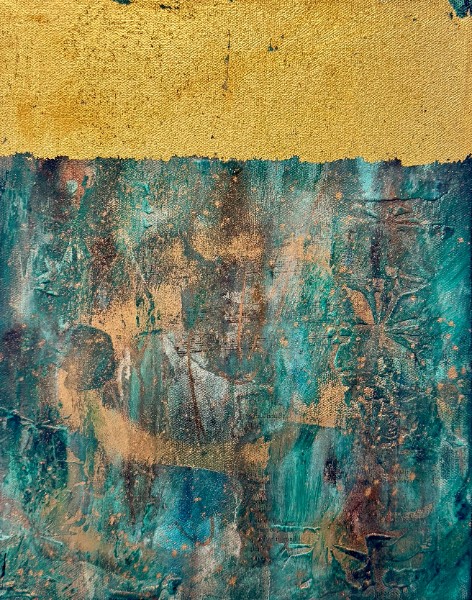
Q6. Your paintings feel as though they hold traces of things that have been built, broken down, and rebuilt again. Is transformation something you consciously explore while working?
Yes, transformation is something I explore in my work, both consciously and intuitively. I’m fascinated by the idea that things can be changed, layered, worn down, and rebuilt into something new. My process often reflects that. I’ll add layers of paint, texture, collage, and other materials, but I also allow parts of the piece to be covered, altered, or transformed along the way.
What was once hidden can become one of the most interesting parts of the painting. I love that sense of history within a piece—the idea that every layer leaves a trace of what came before.
Q7. Has there been a painting that completely surprised you or led you in a direction you weren’t expecting?
Absolutely. Some of my favorite pieces are the ones that take on a life of their own and lead me somewhere I didn’t expect. I may begin with an idea or a certain color palette, but as layers are added, the painting often starts to reveal its own direction. Those moments of surprise are one of the things I love most about creating.
A mark, a texture, or a layer I didn’t originally plan can completely change the feeling of a piece. I’ve learned to trust that process and allow the artwork to guide me rather than trying to control every outcome.
Q8. Every artist develops certain ideas that keep returning over time. Looking back, what themes have stayed with you the longest?
The themes that seem to return again and again in my work are transformation, change, and finding beauty in the unexpected. I’m drawn to things that show the passage of time—the textures of nature, weathered surfaces, and the layers of history that surround us. I think that’s why I’m so drawn to building layers in my paintings.
Each layer becomes part of the story, whether it’s visible or hidden beneath the surface. I love the idea that something can be changed, broken down, and rebuilt into something new. For me, creating art is about exploring those moments of transition and finding beauty in the process.
Q9. Looking back, what has been the biggest lesson you’ve learned from trusting your own creative instincts?
The biggest lesson I’ve learned is to trust the process and trust myself. Early on, I felt like I needed to know exactly where a painting was going, but I’ve learned that some of the most meaningful pieces happen when I let go and allow the work to evolve. I’ve learned that my intuition is an important part of my creative voice.
When I stop overthinking and allow myself to experiment, that’s when the most authentic work emerges. Art has taught me to be patient, embrace the unexpected, and trust that every layer—even the ones that get covered up—has a purpose.
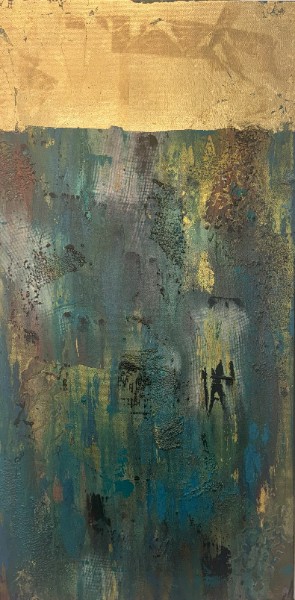
Q10. What has been the biggest lesson you’ve learned from developing your practice over the years?
The biggest lesson I’ve learned is that developing as an artist takes time, patience, and a willingness to keep exploring. I’ve learned not to rush the process or compare my journey to anyone else’s. Over time, I’ve become more confident in my own voice and more comfortable experimenting with materials, techniques, and ideas.
I’ve learned that every piece—whether it feels successful right away or not—teaches me something and helps me grow. The more I create, the more I understand that finding your style isn’t about forcing it; it’s about showing up, exploring, and allowing it to naturally evolve.
Q11. What advice would you give artists who are still developing their own visual language?
My advice would be to give yourself permission to explore and not be afraid of the process. Developing your own visual language takes time, and it often comes from experimenting, making mistakes, and discovering what truly feels authentic to you. Don’t focus too much on creating what you think others will like.
Pay attention to what excites you, what you’re naturally drawn to, and what keeps pulling you back. Your style will develop through consistency, curiosity, and trusting your own journey. The more you create, the more your unique voice begins to reveal itself.
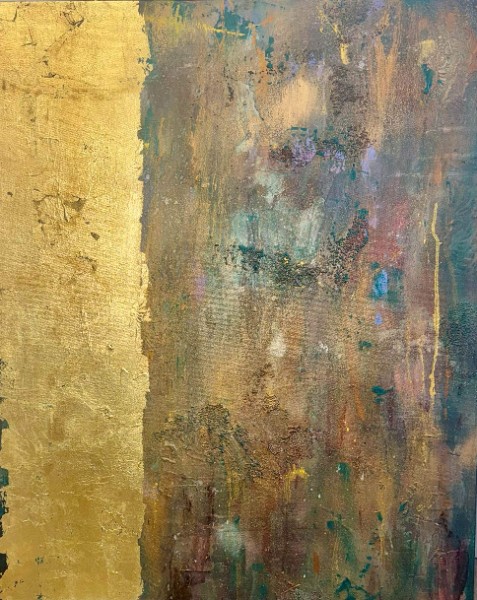
By the time our conversation with Mickel drew to a close, we kept circling back to the layers in her work to all the things her paintings raise up, cover over, and bring to light again, and to the quiet transformation that lives in that.
Consider how much of who we are is simply the sum of what we have lived through. We carry older versions of ourselves just beneath the surface, shaped by things that no longer show. Mickel paints that very idea. One of her canvases is never a single clean image but a stack of choices colours set down, textures added, whole passages buried under the layer that follows and she has made her peace with the fact that some of her finest marks will disappear beneath whatever comes next.
She is not trying to keep a surface spotless. What pulls at her is everything that wear and age leave behind: the peeling wall, the roughened stone, the line you can only half make out. And often, she tells us, the thing she painted over becomes the very thing that gives the piece its soul. Her work is a gentle argument that nothing is ever truly done, and that the parts of ourselves we have buried are still quietly at work.
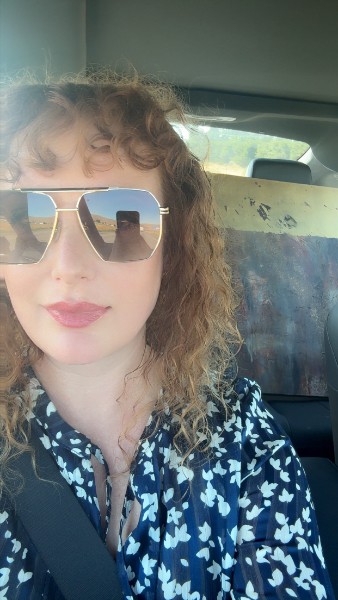
It is hard not to think about the moment this work has arrived in. We are surrounded now by images that appear fully formed in seconds, clean and controlled and more or less interchangeable. Mickel works as though the opposite were true. She sets out without knowing where she is going and lets the painting pull her forward, building and scraping back, committing and abandoning, chasing an accidental mark she never planned and could never repeat. You might read that as a want of direction.
We read it as the thing a hurried, frictionless world keeps reaching for without ever naming it the pleasure of not knowing, the relief of imperfection, and the quiet depth that surfaces only when something is given the time to find itself.
For anyone who loves or collects art, that is the whole of the appeal. No two of her paintings could ever be alike, because each is really a record of how it came to be — every buried layer still faintly present, every piece holding more than it first reveals. Live with one for a while and it goes on showing you things, a little differently each time the light shifts. It is a daily reminder that the most beautiful things are seldom the untouched ones, but those that have been through something and emerged changed.
Follow Mickel Celest through the links below and see her work for yourself.
