Art News Of The Week

Stories Every Artist and Art Lover Should Know
The past week has brought plenty for anyone following women in the arts, from a major museum debut in New York to new recognition for a pioneering Filipina artist and a feminist exhibition examining how generations of women artists have changed the possibilities of contemporary art. Elsewhere, a new public commission is bringing a woman’s artwork to one of London’s most recognizable cultural landmarks, while an international sculptor has been selected for a major site-specific commission in Australia.
For artists, collectors, and art lovers, these stories offer more than a quick look at what is happening in galleries and museums. They also point to the wider conversations shaping the art world right now: whose stories are being preserved, how women’s artistic histories are being revisited, and how institutions are creating space for artists working across painting, sculpture, installation, and socially engaged practice.
Here are five art news and stories to know this week.
1. Imelda Cajipe-Endaya Is Named A National Artist Of The Philippines
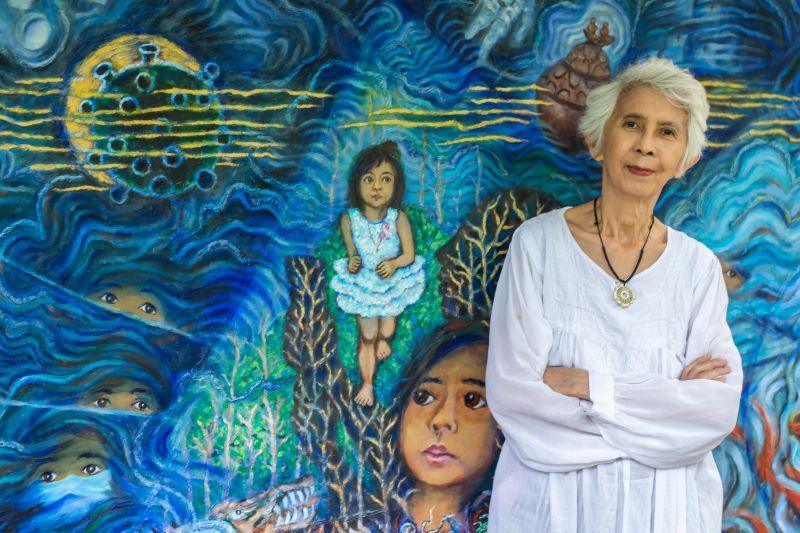
Another major recognition has arrived in the Philippines, where artist, writer, curator, and cultural organizer Imelda Cajipe-Endaya has been named a National Artist for Visual Arts.
President Ferdinand Marcos Jr. named ten new National Artists for 2025 under Proclamation No. 1414, signed on September 1 and officially announced in September. Cajipe-Endaya was recognized for her contributions as a visual artist, writer, curator, and cultural organizer, particularly her work connected to feminist discourse and socially engaged practices in Philippine contemporary art.
The recognition marks an important moment in Cajipe-Endaya’s long career. Working across painting, collage, installation, printmaking, writing, and cultural organizing, she has consistently used art to explore the experiences of women and wider social realities.
Her work has often drawn from everyday life, domestic materials, Filipino culture, labor, migration, gender, and the lives of ordinary people. Rather than separating artistic practice from social experience, Cajipe-Endaya has built a career around bringing the two together.
Her contribution extends beyond her own studio practice as well. In 1987, she co-founded Kasibulan, a women’s artists’ collective created to provide a space for women working in the Philippine art community. She also founded Pananaw: Philippine Journal of Visual Arts in 1996 and held positions connected to national cultural institutions.
The University of the Philippines describes Cajipe-Endaya as the first Filipina to receive the National Artist distinction in Visual Arts, adding another important dimension to the recognition. Her career demonstrates how an artist’s influence can extend beyond individual artworks into publishing, organizing, advocacy, and the creation of opportunities for other women artists.
For a woman artist who has spent decades connecting feminist perspectives with social realism and cultural history, the National Artist recognition represents a significant acknowledgment of a practice that has operated across many different parts of the art world.
2. Ruby City Brings Feminist Art Into A New Conversation
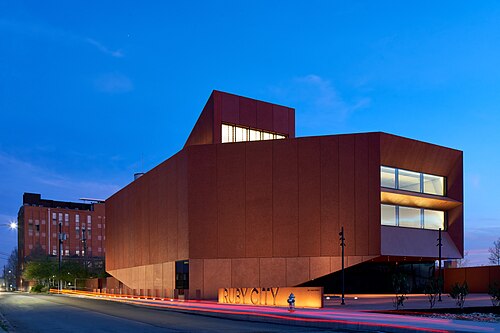
What happens when a museum looks back at feminist art history while also asking what that history means for artists working today?
That question sits at the center of Generative Disruption: Feminist Art from the Collection, a new exhibition at Ruby City in San Antonio, Texas.
Opened on September 26, the exhibition brings together work by 33 artists and looks at the continuing influence of feminist artistic practices on contemporary art. It will remain on view through August 29, 2027.
The exhibition takes inspiration from the feminist art movements that became particularly influential during the 1960s and 1970s, when women artists were challenging assumptions about who could be represented in art, which subjects were considered worthy of artistic attention, and what materials or forms could be accepted within the art world.
But Generative Disruption does not present those questions simply as history.
Instead, the exhibition considers how feminist approaches continue to influence contemporary artists working today. Themes across the exhibition include the body, identity, gender, belonging, place, power, personal experience, and the reclaiming of narratives.
The participating artists include Laura Aguilar, Sama Alshaibi, Nao Bustamante, Alex de León, Annette Lawrence, Tala Madani, Tracey Moffatt, Carrie Mae Weems, and Miwa Yanagi, among others.
Another interesting aspect of the exhibition is its attention to materials and artistic processes. Feminist artists have historically challenged the hierarchy between so-called fine-art materials and forms of creative labor associated with women, bringing textiles, fiber, ceramics, embroidery, domestic objects, and found materials into contemporary artistic practice.
Ruby City’s exhibition uses that history as a starting point for a broader conversation about how feminist art expanded the possibilities of contemporary art and opened space for different experiences and perspectives.
The exhibition is also accompanied by related programming, including conversations, workshops, film, and music, allowing the ideas explored in the gallery to extend beyond the artworks themselves.
3. Nilima Sheikh’s First New York Solo Exhibition Opens At MoMA
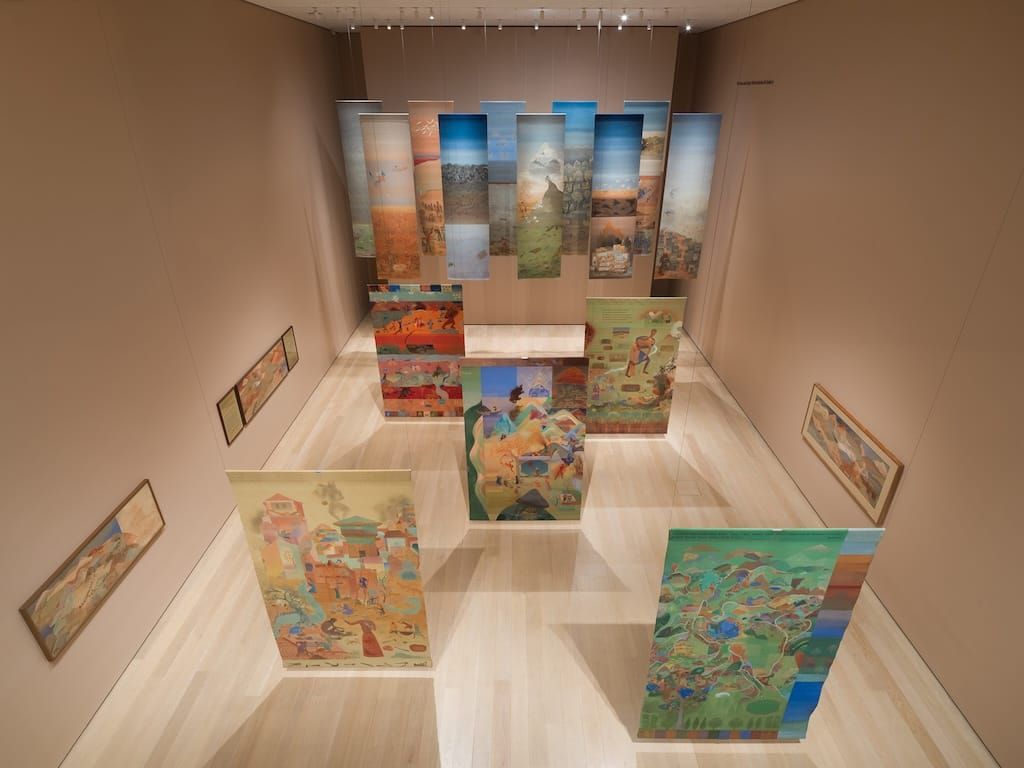
One of the biggest recent moments for South Asian art has arrived in New York, where The Museum of Modern Art has opened Nilima Sheikh: Fractured Skies, the first solo presentation of the Indian artist’s work in New York.
The exhibition opened on September 27 and will remain on view through June 13, 2027. Organized by MoMA in collaboration with the Kiran Nadar Museum of Art in New Delhi, it brings together work from across the past two decades of Sheikh’s practice, including selections from Each Night Put Kashmir in Your Dreams (2003–14) and Home, Land (2023–25), alongside a new group of site-responsive paintings titled Shahid/Witness (2025–26).
Sheikh has spent more than five decades developing a deeply researched form of narrative painting. Her work combines image, text, pattern, and references to literature and history, often creating paintings that unfold almost like visual stories. She frequently works with casein and gum tempera and has adapted the traditional scroll format to create multilayered compositions.
The exhibition is particularly significant for the way it brings together Sheikh’s long engagement with memory, displacement, violence, landscape, and human connection. Her work on Kashmir has been an important part of her practice since the early 2000s, and the exhibition brings several bodies of work into conversation rather than presenting them as isolated series.
The new Shahid/Witness paintings also extend Sheikh’s interest in bearing witness to the world around her. Among the works are paintings addressing subjects including migration, forest fires, and climate change, showing how her practice continues to respond to contemporary realities while remaining rooted in historical and literary research.
For women artists from South Asia, the MoMA exhibition is also a notable institutional moment. It gives an artist whose work has long engaged with regional histories and women’s voices a major New York platform while introducing her practice to audiences who may be encountering it for the first time.
4. Renée Levi’s Monumental Painting Takes Over The Hayward Gallery
London’s Hayward Gallery has recently gained a striking new addition to its exterior, thanks to Swiss artist Renée Levi.
Titled September, the large-scale public artwork was unveiled on September 23 and will remain on the Hayward Gallery’s façade until November 15, 2026. The work was co-commissioned by the Hayward Gallery and Audemars Piguet Contemporary, marking Levi’s first large-scale public installation in the UK.
Rather than treating the gallery’s Brutalist architecture as a neutral backdrop, Levi made the building itself part of the artwork. The two-panel painting is created on industrial mesh and responds to the Hayward’s distinctive concrete structure, windows, protrusions, and surfaces.
The result is a work that changes the visual character of the building without hiding its architecture. Levi’s sweeping brushstrokes and vivid areas of colour sit against the gallery’s familiar grey exterior, making the artwork visible to people moving through London’s South Bank.
Levi’s background in architecture plays an important role in her practice. She has long explored the relationship between painting and physical space, treating painting not simply as something to hang on a wall but as a medium capable of altering how a viewer experiences an environment.
Even the title September connects the work to its temporary nature. The installation is intended to exist in dialogue with changing light, weather, the movement of people, and the atmosphere of the city during the transition into autumn.
For visitors to the South Bank, this means the work can be encountered without entering a gallery at all. It becomes part of the everyday cityscape, transforming an institutional façade into a temporary public artwork and bringing a woman’s abstract painting practice into one of London’s busiest cultural spaces.
5. Last 24 Hours To Submit To The Things We Feel
And finally, for women and non-binary artists looking for an opportunity of their own, there is no time to wait.
Today is the final day to submit to The Things We Feel, the virtual exhibition by Women in Arts Network.
The open call invites women and non-binary artists aged 18 and above to submit work exploring feelings, emotions, and personal experiences. The theme leaves room for a wide range of interpretations, from joyful and tender moments to nostalgia, vulnerability, difficult experiences, memory, connection, and everything in between.
With submissions closing on October 5, 2026, artists have their final hours to complete their applications and send their work for consideration.
For artists who have been saving the opportunity, considering which piece to submit, or waiting for the right moment to finish their application, this is the last call.
A Week Of Women’s Art Worth Paying Attention To
This week’s stories move across very different parts of the art world, but they share an interesting thread. A major museum is giving Nilima Sheikh’s five-decade practice its first solo presentation in New York. In the Philippines, Imelda Cajipe-Endaya’s long contribution to feminist and socially engaged art has received one of the country’s highest cultural recognitions. Ruby City’s Generative Disruption is revisiting the history of feminist art while considering its influence on contemporary practice, and Renée Levi’s September is bringing painting beyond the gallery wall and into London’s public landscape.
Together, these developments show the many ways women’s contributions to art are being recognized: through exhibitions, collections, national honors, commissions, public artworks, and new opportunities for artists working today.
And for those still deciding whether to submit to The Things We Feel, there is one final reminder. The deadline is October 5. If your work has something to say about what it means to feel, remember, experience, or connect, this is your final chance to submit.
