
Margret Pinger Uses Expressive Faces to Explore the Fragility & Strength of Being Human
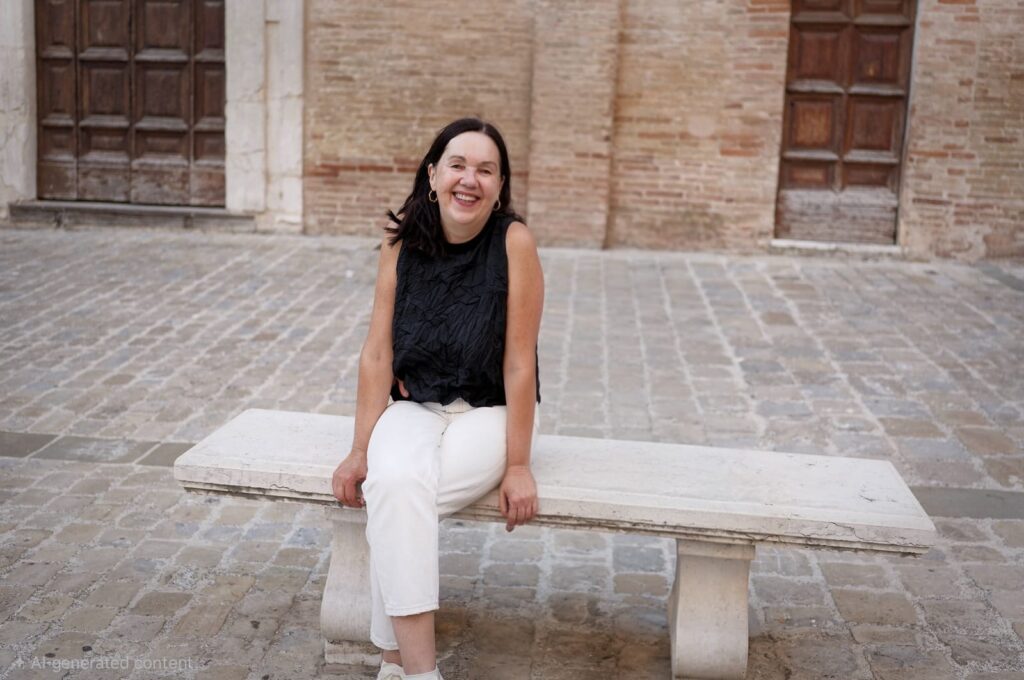
At Women in Arts Network, Portraits brought together artists who believe a face can say what words never could. Each of them looks past the surface of a person toward the feeling underneath, turning the portrait into a language of its own.
Among the artists chosen for this exhibition is Margret Pinger, a German painter whose tender, textured portraits of women give form to the emotions we carry quietly, and whose faces seem to speak directly from the soul.
For Margret, art has always been a language. A keen observer as a child, but never one for words, she found in painting a way to express what she could not easily say. That belief only deepened across more than thirty-five years of teaching. Working first with Sinti and Roma children who spoke no German, and later with pupils who had special needs, she watched art become a bridge where words failed, a way for them to connect, express themselves, and be seen. The experience changed not only how she saw her students, but how she saw the world.
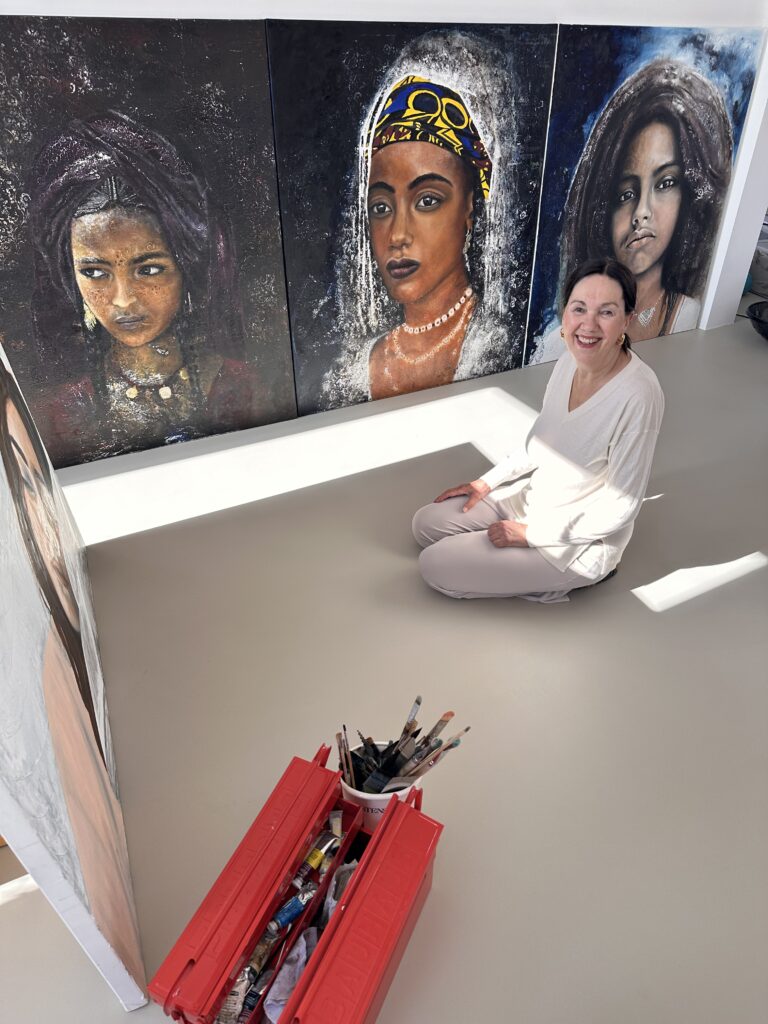
She has always been drawn to painting women. Raised among strong women, two sisters, a formidable mother and grandmother, she feels she understands their emotions and experiences from the inside. Her portraits dwell in the quiet, individual ways a woman might show loneliness, longing, reflection, or strength, each moment entirely her own.
At the centre of every portrait are the eyes. For Margret, they are a mirror of the soul, revealing everything without a word, and she trusts that a face, read in all its tiny expressions, can say far more than language ever manages.
Her way of working is as intimate as her subjects. She paints entirely with her fingers, never using a brush, because she needs to feel the painting and stay truly in touch with it. She builds her backgrounds in layers of textured acrylic, pressing in stamps and surfaces to create depth and tension, then turns to oil for the faces, for its softness and the way it blends light and shade. Often the background floats and merges with the figure, until mood and person become one.
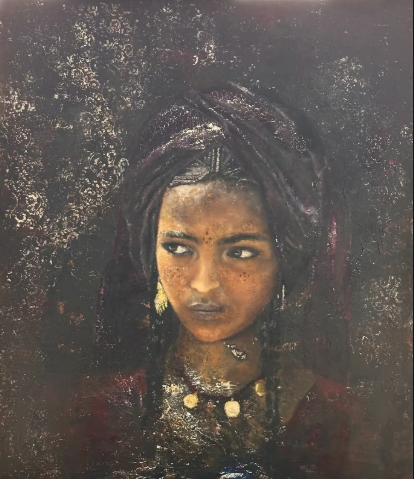
She never sets out to make art about issues; she is not a politician, she says, only someone struck by the moments she witnesses. A young girl orphaned by illness, teaching her siblings in a dark, windowless room. The image of a refugee child lost to the sea. These are the things she cannot simply move past, and painting becomes the only way to carry them.
Children, who suffer most from war and inequality, appear again and again in her work, and with them, always, the thread of hope, because, as she believes, without them there is no hope for any of us.
Margret paints for what moves her, not for the market, convinced that a work belongs in a home only if it genuinely touches the person living with it. Parting with a painting, she says, is like giving away a piece of herself, and the deepest reward is knowing it has found good hands.
Now let’s hear from Margret about the childhood that made art her language, why she paints women, how she works with nothing but her fingers, and her belief that it is never too late to follow your passion.
Q1. Could you take us back to the beginning of your creative journey and share what first drew you to painting?
Even as a child, and later while studying art, I loved capturing and preserving special emotions and situations in an artistic way. I was always a keen observer but never particularly good at explaining or talking. Art became my language—a way to express myself. I have always been drawn to working with colors.
Q2. You spent more than 35 years teaching art to children with different needs. How did teaching influence the artist you became?
As a young teacher, I taught a class of Sinti and Roma children who couldn’t speak German at all. I realized that art was a way to communicate and connect with them. Art became our language. Later, when teaching pupils with special needs, I saw how art allowed them to express themselves.
So, I started an art class called Meisterklasse (Master Class). Projects like “One man’s trash is another man’s treasure” gave them the opportunity to exhibit their work, which made them incredibly happy. The Meisterklasse even won a national art prize sponsored by the German President and held many exhibitions. Seeing how transformative art was for them—and how it raised their self-awareness—greatly impacted not only how I saw them but also how I came to see the world differently.
Q3. Your portraits focus strongly on women and their individual stories. What draws you to portraying women?
I grew up with two sisters in a family of strong women, particularly my mother and grandmother. I feel I understand the emotions and experiences of women much better. I’m often asked why I don’t portray men, and it is on my bucket list.
Q4. Your You Are Unique series focuses on individuality and feminine strength. What does the idea of being “unique” mean to you personally?
The expression of emotions and feelings is as individual as human beings themselves, and every captured moment stands on its own. My portraits depict feelings of loneliness, being lost, being touched, or reflecting—and every woman has her own way of showing these emotions, making each moment truly unique. The You Are Unique series is like a collection of special life situations. To me, being unique also means being myself—being free and open to others being different. Having lived in different countries and having a very international family, individual and cultural diversity have enriched my life.
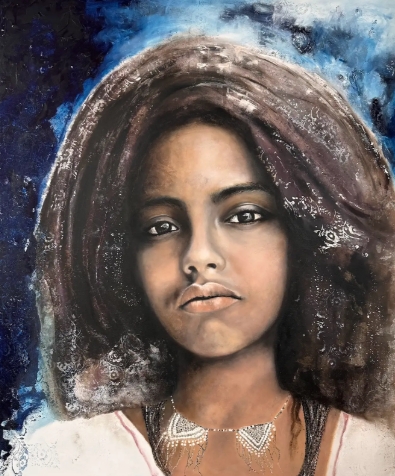
Q5. How important are the eyes and facial expressions when you are trying to reveal something beyond a person’s physical appearance?
Our eyes are a mirror of our soul. Looking into someone’s eyes reveals everything without a single word being spoken. The same is true for the expressions on our faces. Evolution has taught us to subconsciously identify and interpret even the most micro changes in facial expressions. I believe faces say more than words ever could.
Q6. Your work has addressed homelessness, alienation, war, consumerism, reproductive rights, and social inequality. What makes a social issue feel urgent enough for you to turn it into art?
It’s the key moments that strike me. For example, when I was with German Doctors e.V. in Howrah Southpoint, Calcutta’s largest slum, I saw a young girl whose parents had died from tuberculosis. She was teaching her younger siblings in a dark, windowless room. Seeing the situation, understanding the story behind it, and especially seeing the young girl herself touched me so deeply that I simply had to express it through art. In 2015, when the refugee crisis began to gain public attention in Germany, I remember seeing a picture of a refugee child lying dead on the shores of the Mediterranean Sea.
It broke my heart, and I found no other way to process this emotion than through painting. As a result, I created a series of paintings portraying children suffering from war. I don’t intentionally create artworks to address social issues, and I’m not a politician. It’s the situations and moments in people’s lives that strike me and compel me to express them.
Q7. Your Hope series focuses on children. What inspired you to turn your attention towards childhood and the idea of hope?
First, I am a very happy mother, and my children have given direction to my life. Unfortunately, children suffer the most from social inequalities and war. For example, seeing a young Asian girl forced into marriage with a stranger—her resistance, escape, and eventual surrender to her destiny written all over her face—made me deeply sensitive to the suffering of children. Yet children are our future, and hope is what helps them change their destiny. Whether they stand up at the beach as stranded refugees, run away, or are deported as Jewish children during the war, or escape bombed and burning cities—hope keeps them alive. And without them, there is no hope for us.
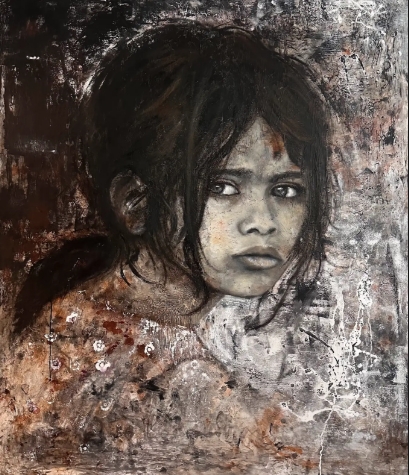
Q8. You work with acrylic and oil, often building colour layer by layer and incorporating stamps and textured surfaces. How did this distinctive technique develop?
To me, backgrounds are essential for creating the mood and supporting the main expression. I love layering and texturing the canvas to create depth and tension. In some of my paintings, the backgrounds float and merge with the portraits, creating an even stronger expression in the artwork.
I primarily use acrylic to structure the backgrounds, while I prefer oil for painting faces. Oil has a wonderful velocity, softness, and creates beautiful shades and color blends. This is very important to me because I paint everything only with my fingers—I never use brushes. I need to feel the painting; I am truly in touch with my work. Sometimes, I even revisit and refine my paintings after many years.
Q9. How do you balance the personal stories behind your portraits with the expectations of the contemporary art market?
I want to express what has touched me, and during that process, I don’t consider how it might resonate with others. For example, I only later realized that some of my artworks might be difficult to integrate into modern interior design settings. But I wouldn’t change anything, even if it means a piece might not sell. I believe you should only hang an artwork in your home if it touches you—if you connect with it every time you look at it. My art is deeply personal.
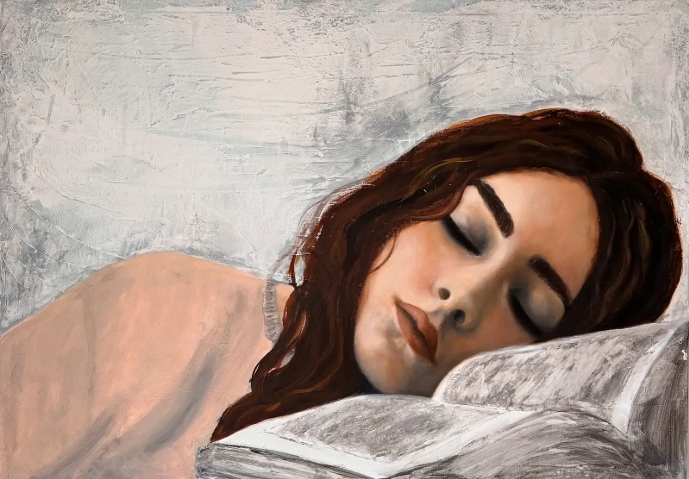
Q10. What does success mean to you after such a long and evolving relationship with art?
To me, success is when I am happy with a painting. Unfortunately, I am a perfectionist and constantly try to improve my works. Fortunately, I have an “inner circle” of people close to me who give me feedback—including my family and Saroj, who supports me in the digital realm. Of course, it is motivating to sell artworks.
But I only feel truly happy when my works are in “good hands.” It feels almost as if I am giving away a piece of myself, and I am so happy when someone truly appreciates the artwork. To me, it is like forming a connection with that person.
Q11. What would you tell an artist who has spent years putting their own creative practice aside because of teaching, family, work, or other responsibilities?
If you follow your passion, it closes the loop. Life is too short!
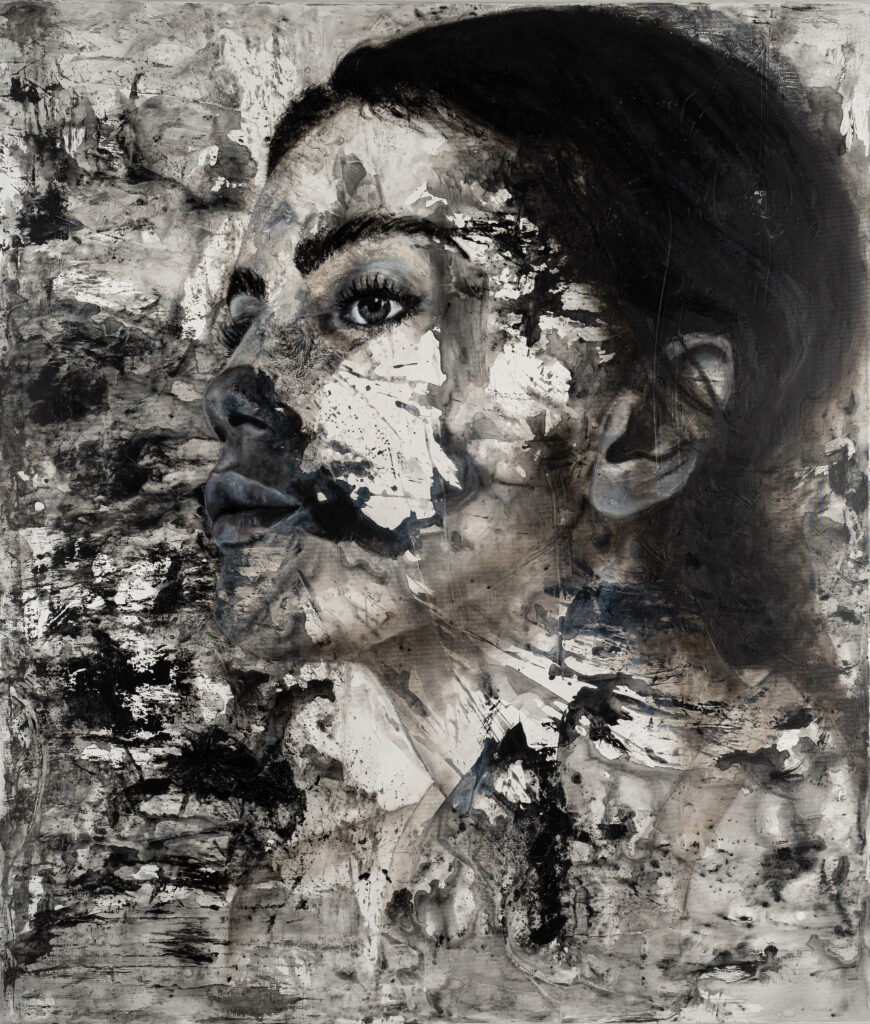
As we wrapped up our conversation with Margret, we found ourselves thinking about how much a single face can hold. For centuries, the portrait has tried to capture not just how a person looks, but who they are, the feeling behind the eyes, the story written in an expression. Margret belongs to that tradition completely, convinced that a face says more than words ever could.
Her portraits of women reach for the emotions we so rarely speak aloud, loneliness, longing, reflection, quiet strength, and render them with real tenderness. She does not paint a type or an ideal; she paints the individual, trusting that every woman carries her feelings in her own unrepeatable way. In doing so, she turns portraiture into something deeply human: a way of making the hidden inner life visible.
There is a conviction running through her whole life that the art world is only beginning to honour, that art is, above all, a language, and one that belongs to everyone.
She learned it teaching children who had no words, watching them find a voice in paint. She carries it into portraits of those the world overlooks, orphaned children, refugees, the suffering and the unseen. Her work is a quiet argument that art’s truest purpose is not decoration but connection, and that it can speak for those who cannot speak for themselves.
For art lovers and collectors, Margret’s work offers something rare and unguardedly personal. Painted entirely by hand, finger on canvas, layered in texture and feeling, her portraits carry the warmth of an artist who refuses to make anything she does not believe in. She holds that a painting belongs in a home only if it genuinely moves you, and to live with one of hers is to live with a real human presence, and a reminder of the emotions we all share beneath the surface.
Perhaps that is the enduring gift of a portrait: it lets one person’s feeling become a language anyone can read. Margret may begin with a single woman’s face, but what she is really painting is all of us, and the quiet truth that we are more alike, and more deeply felt, than we often allow ourselves to see.
Follow Margret Pinger through the links below and explore more of her work and creative journey.
