
From Graphic Design to Painting: Diana Maria Reconnects with Her Art
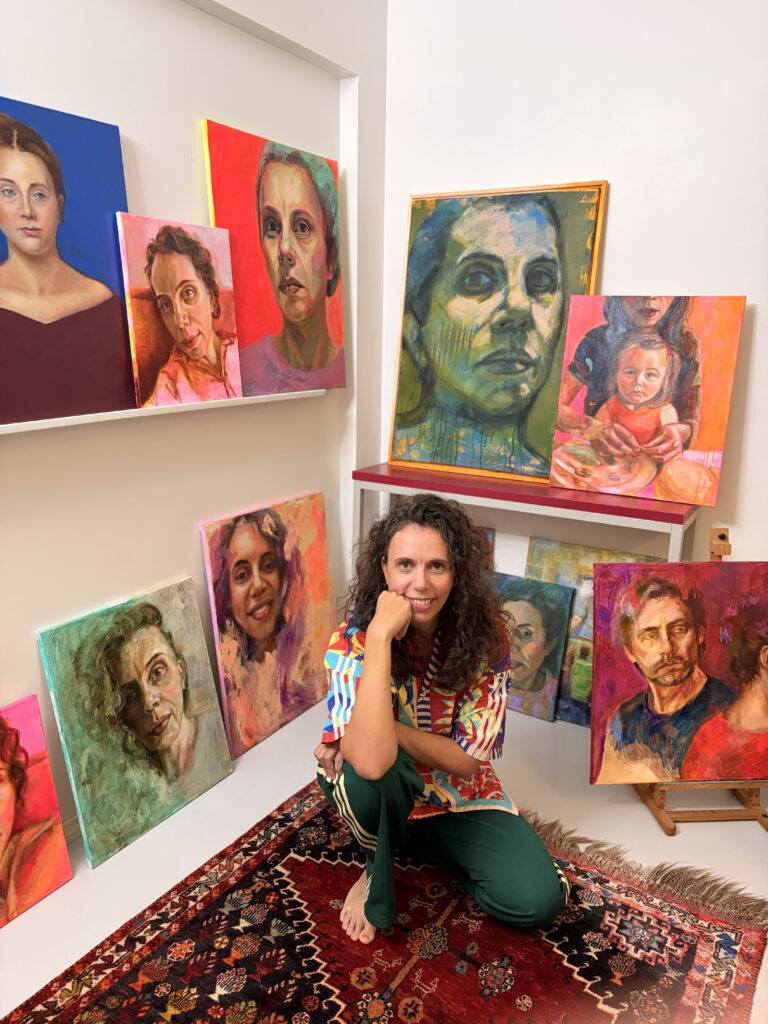
At Women in Arts Network, our Portraits exhibition set out to explore everything a face can hold, not only how a person looks, but the feeling moving quietly beneath. Each artist approaches that in her own way, and together they remind us why the human face has fascinated artists for centuries.
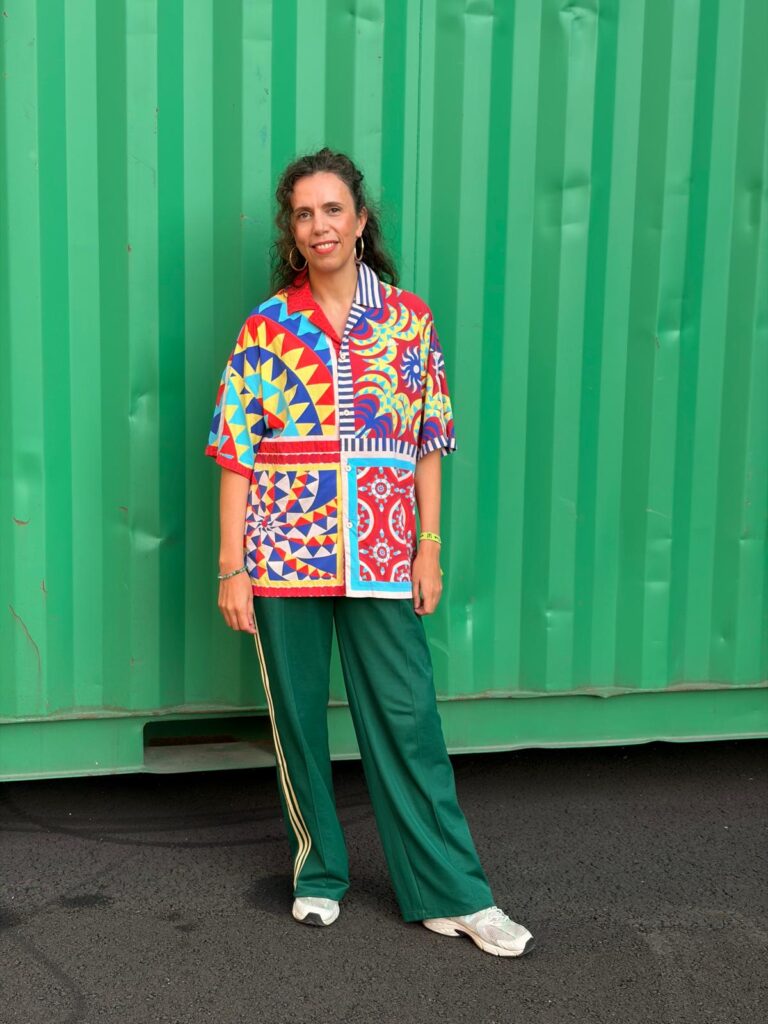
And among our many selected artists is Diana Maria de la Encarnacion, a Finnish Spanish painter drawn to faces, expressions, and the things we reveal without ever meaning to.
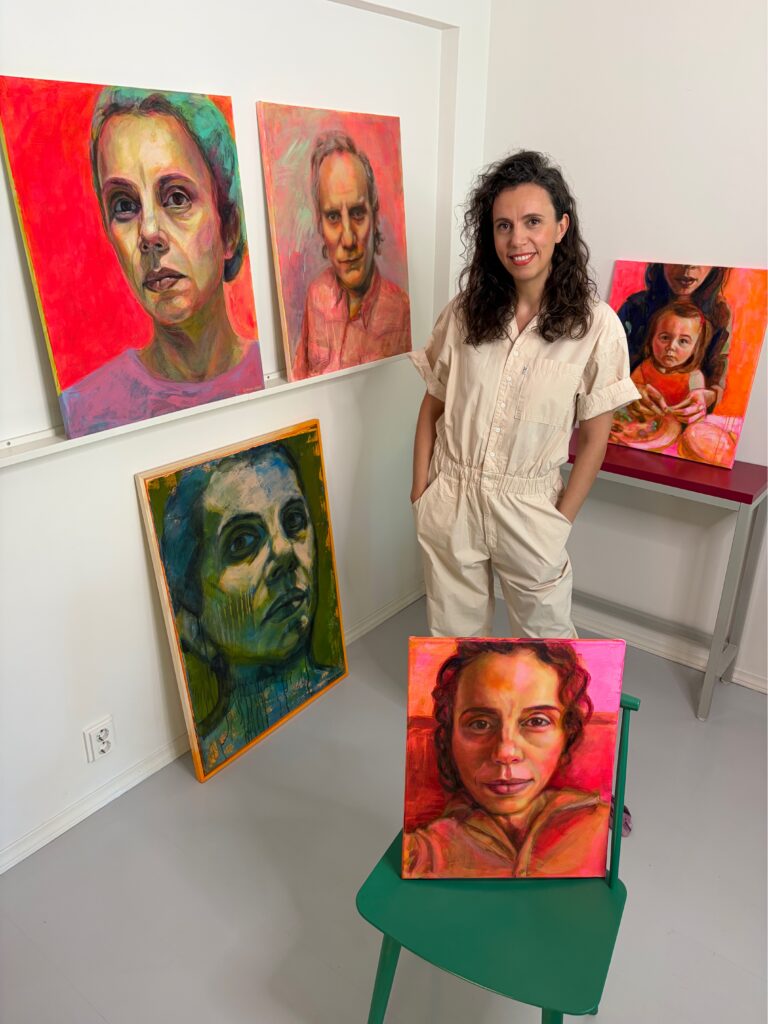
Based in Helsinki, Diana has spent more than twenty years working in graphic design, building a career as an art director and co-founding her own design studio. But drawing came first. As a child she could lose hours drawing people, completely absorbed, and though her professional work eventually took over and pushed her personal art aside, the pull never really left. Returning to painting, she says, felt like reconnecting with something that had always been part of her.
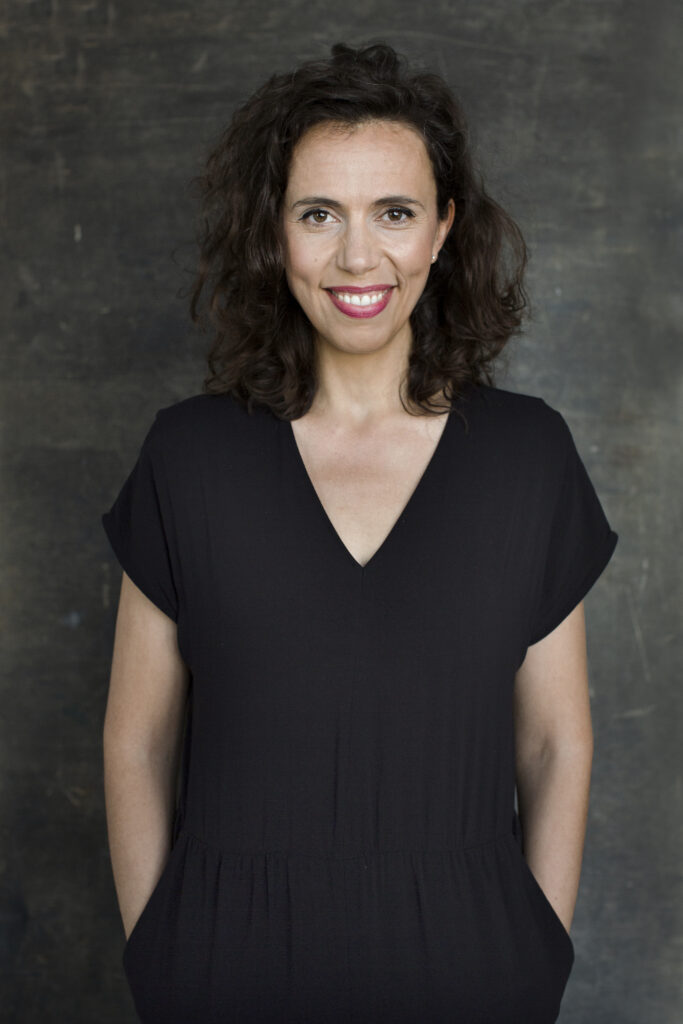
Raised by her grandparents in a home steeped in art, film, and culture, her grandfather a film director who owned small independent cinemas, she grew up amid conversations about cinema and storytelling, an upbringing that still shapes the way she sees the world.
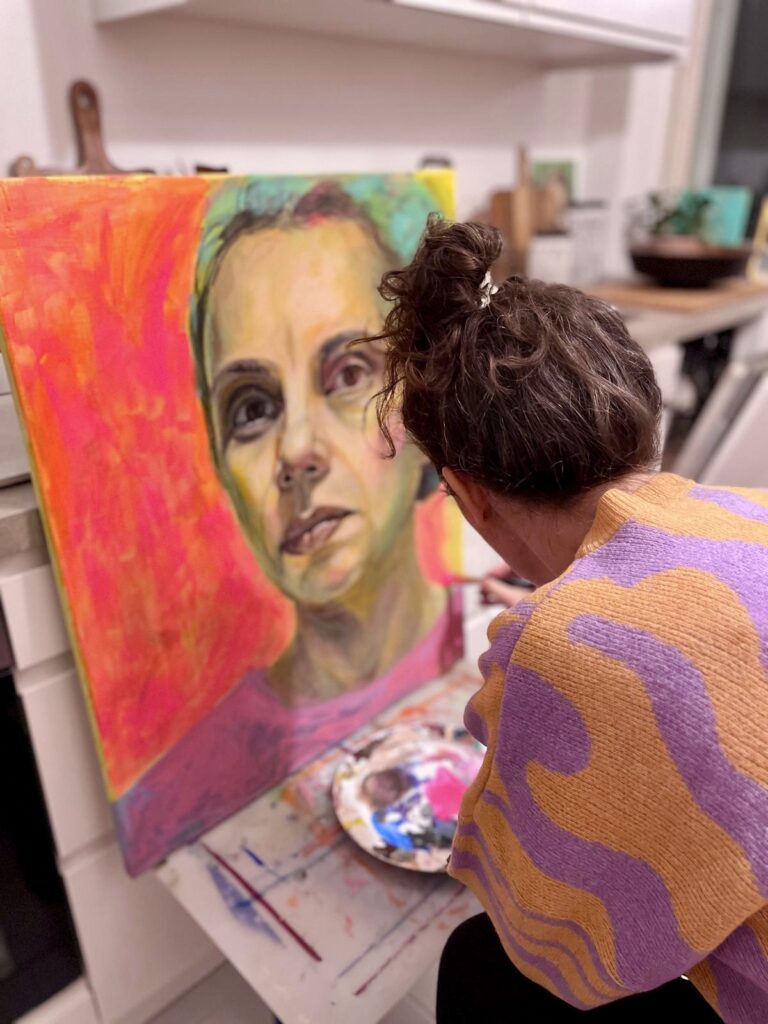
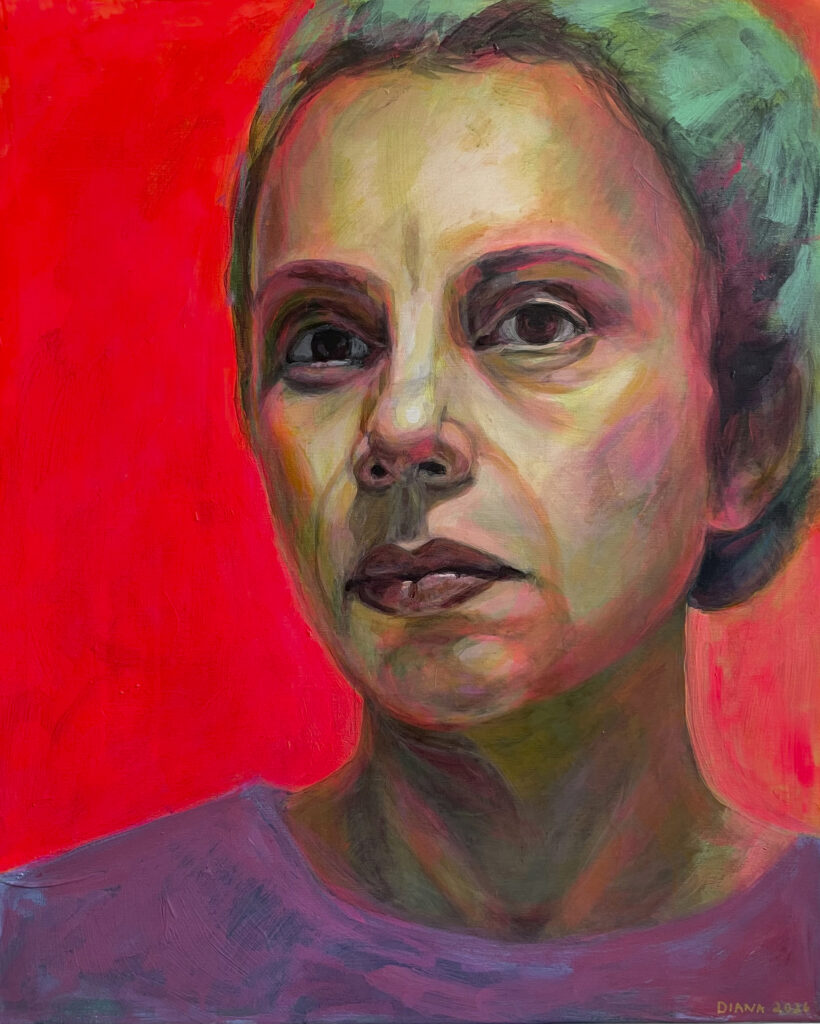
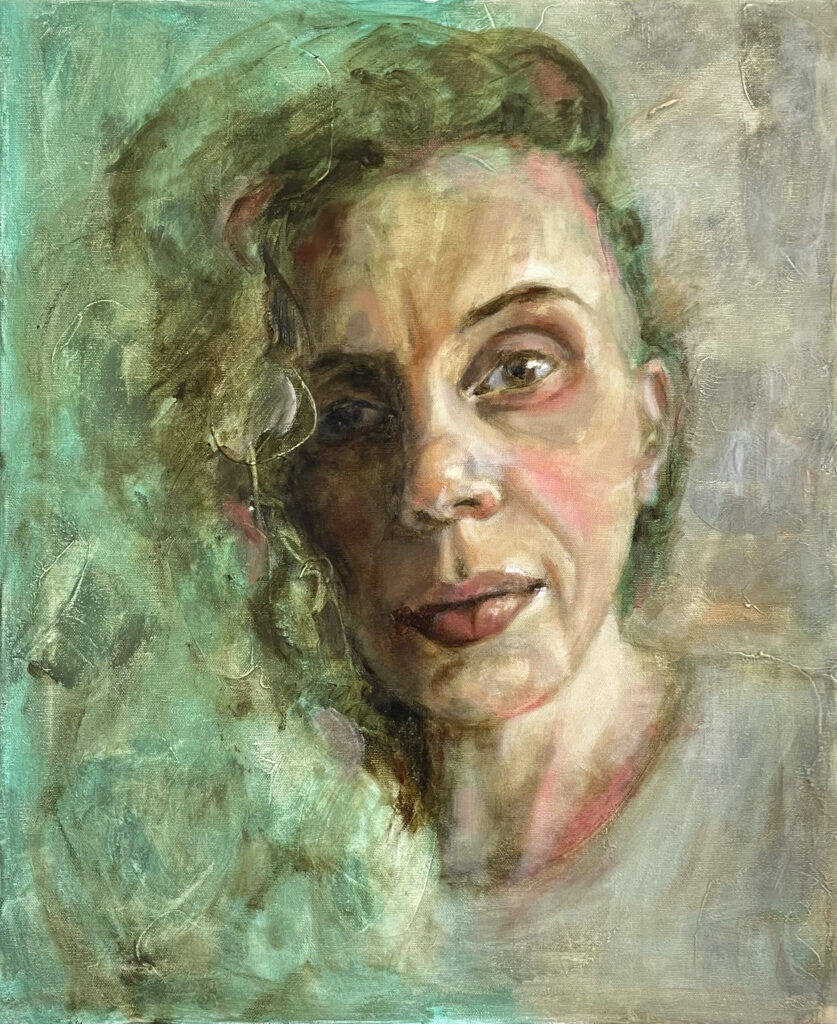
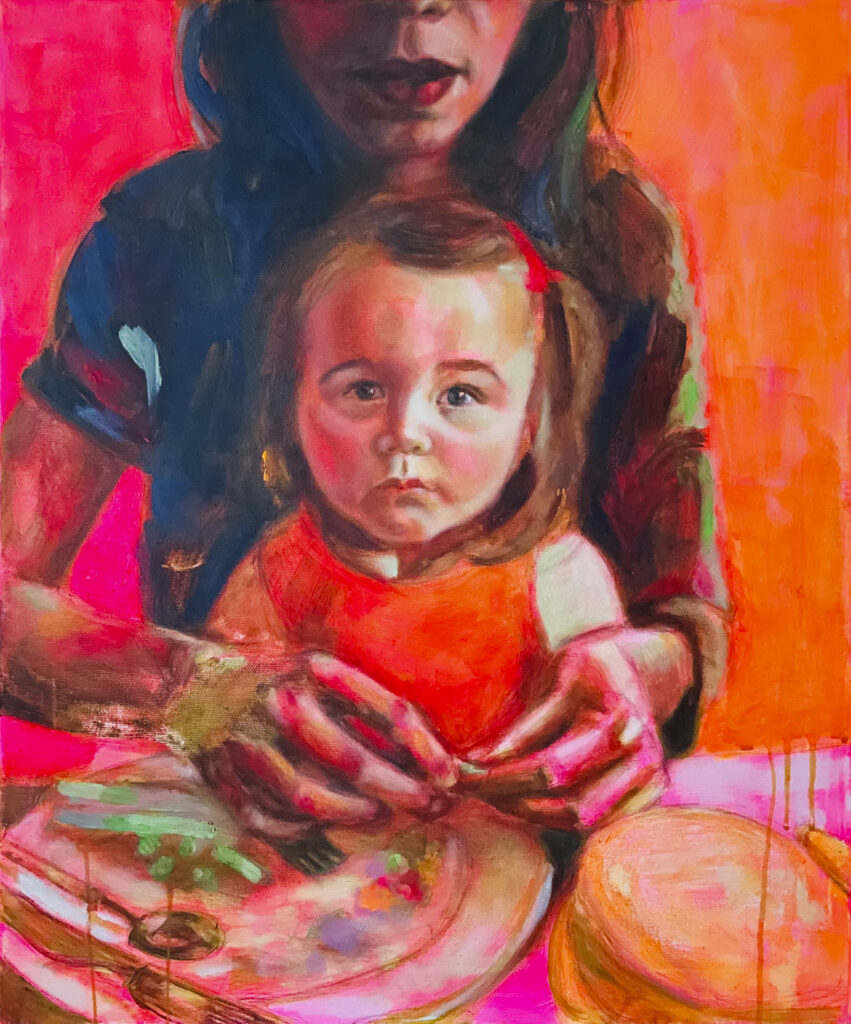
She paints mostly people, and her work is figurative, though she has little interest in making everything look perfect. What she wants, above all, is for a painting to feel alive. She works in oils and acrylics, combining careful observation with bold, instinctive colour, and colour is where her Spanish roots seem to show.
Her process balances vision with surrender. Being deeply visual, she often sees an image in her mind almost at once, yet a painting rarely follows the original plan. She might begin with a clear composition or palette, only for the work to ask for something she hadn’t imagined, and she is learning to trust that, to let some of the most interesting things happen by accident.
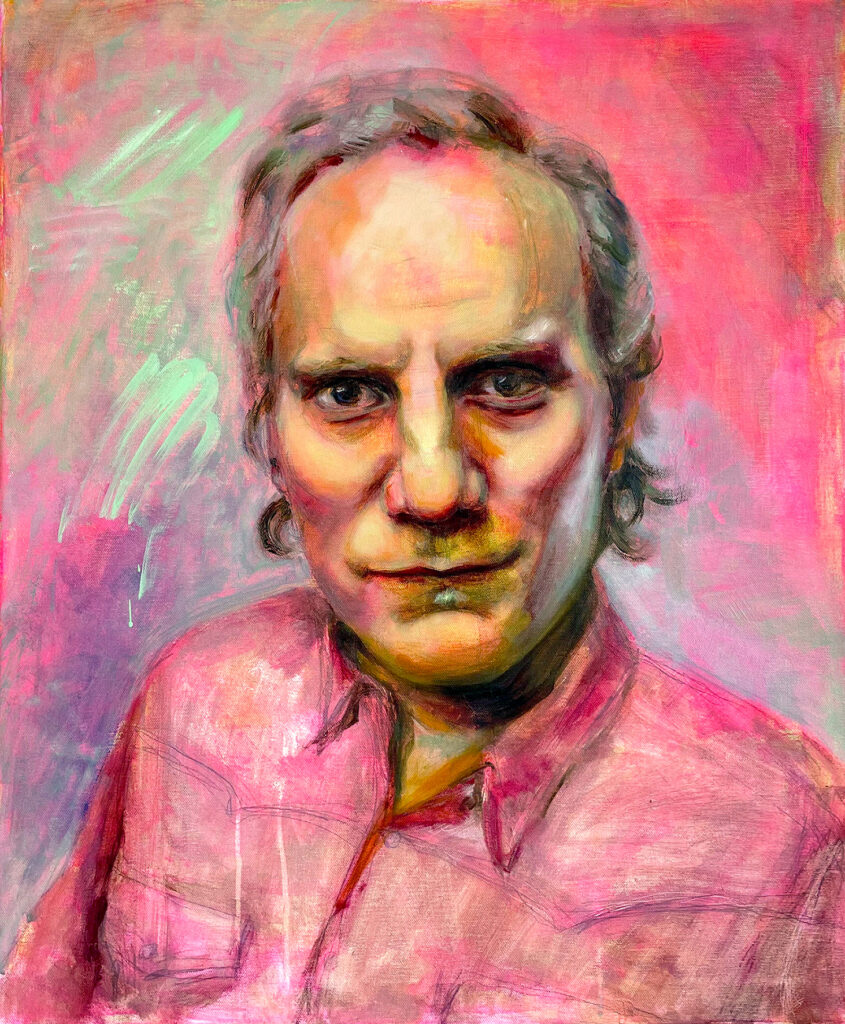
What draws her most is the gaze. A person’s expression, she believes, can reveal something words cannot quite explain, and she hopes her paintings make people stop and look a little longer. She doesn’t expect everyone to feel the same thing; in fact, she loves it when a viewer finds something in a painting she never intended, recognising a part of themselves, or simply growing curious about the person looking back at them.
After years of putting her own art aside, she is now stepping fully into it, preparing for her first solo exhibition and, at last, making the room for painting she always promised herself.
Now let’s hear from Diana about the drawing that came before everything else, why she reaches for bold colour even in difficult emotions, what she searches for in a face, and how she learned to let go of the fear of failure.
Q1. For someone discovering you and your work for the first time, how would you introduce yourself and your creative practice?
I’m a Finnish-Spanish visual artist and art director based in Helsinki, Finland. I’ve worked in graphic design for over 20 years, but painting has become an increasingly important part of my life. I mainly paint people. I’m fascinated by faces, expressions and the things we reveal without necessarily meaning to.
My work is figurative, but I’m not particularly interested in making everything look perfect. I want the paintings to feel alive. I work with oils and acrylics, often combining careful observation with bold colours and a more intuitive approach. I’m still exploring where painting can take me, and I don’t want to limit myself too early.
Q2. You work as an art director as well as an illustrator. How did these two sides of your creative life develop alongside each other?
Drawing came first. As a child, I could spend hours drawing people, completely absorbed in what I was doing. Later, I studied visual arts and graphic design, and eventually built my career as an art director. In 2011, I co-founded Ilove Creative, a design studio in Helsinki.
Over the years, I’ve worked on all kinds of visual projects, from branding and packaging to illustration and campaigns. For a long time, my professional creative work took up most of my time, and my personal art was pushed aside. I eventually realised how much I missed drawing and painting. Returning to it felt like reconnecting with something that had always been part of me.
Q3. You have a particular interest in bright colours, drawing, and painting. What attracts you to colour, and how does it influence the mood of your work?
I’ve always loved strong colours. Maybe my Spanish roots have something to do with it, although I’ve lived most of my life in Finland!
Colour is very instinctive for me. I don’t necessarily use it realistically, and I enjoy unexpected combinations. A bright pink or an acidic green can completely change the atmosphere of a painting.
What interests me is that beautiful, vibrant colours don’t always have to express happiness. Sometimes I use them in paintings that deal with fear, exhaustion or other difficult emotions. I like that contradiction.
Q4. Illustration often requires a clear visual message, while personal art can remain more open to interpretation. How do you approach these different ways of communicating?
When I’m working for a client, the image needs to serve a purpose. There is a message to communicate, an audience to consider and usually a problem to solve. I enjoy that kind of creative challenge. Painting is different. I don’t have to explain everything or guide the viewer towards one particular interpretation.
I might have a very personal reason for making a painting, but someone else can see something completely different in it. I actually like that. Once a painting leaves my hands, it starts having a life of its own.
Q5. When an idea first comes to you, do you tend to imagine the finished image straight away, or does it take shape gradually as you work?
I’m quite visual, so I often see an image in my head almost immediately. That’s something I’ve always been good at, especially in my work as an art director. But painting doesn’t always follow the original plan. I might start with a clear idea of the composition or the colours, and then something happens along the way.
Sometimes the painting needs something completely different from what I imagined. I’m learning to trust that process more. Not every decision needs to be made in advance, and some of the most interesting things happen by accident.
Q6. As someone who works across different creative disciplines, how do you keep your practice fresh without losing the qualities that make your work recognisable?
I think curiosity is important. I enjoy experimenting with different materials, techniques and colour combinations. Sometimes I work quite carefully from observation, and other times I want to paint much more freely. I don’t consciously try to maintain a recognisable style. I think it develops naturally through the choices I make and the way I see things. At this stage, I’d rather keep exploring than repeat something just because it worked before.
Q7. You work on projects ranging from packaging to branding and campaigns. How does your approach change depending on the audience and purpose?
Every project starts with understanding what we’re trying to communicate and who we’re speaking to. A brand identity needs to work consistently across many different applications, while packaging often has to make an immediate impression. A campaign might need a strong idea that catches someone’s attention in just a few seconds.
I enjoy finding the right visual approach for each project. Sometimes the best solution is very simple, and sometimes there’s room for something playful or unexpected. Whatever the project, I think good design needs both a strong idea and careful execution.
Q8. Your interests include painting, drawing, travel, and cinema. How do these experiences feed into your visual imagination?
I grew up surrounded by art, film and culture. My grandfather was a film director and owned a few small independent cinemas. I was raised by my grandparents, and conversations about films, art and culture were a natural part of everyday life, especially around the dinner table. I think that environment shaped the way I see the world.
I’ve always been drawn to visual storytelling. In cinema, I particularly love how lighting, composition or a single facial expression can tell a story without words. Travelling is another source of inspiration. I love discovering new places, observing people and seeing everyday life from a different perspective. I think all these experiences find their way into my paintings, sometimes without me even realising it.
Q9. What has working collaboratively with other creative professionals taught you about developing and communicating ideas?
I’ve worked with other creative professionals for most of my career, and I’ve learned that a good idea often becomes better when you’re willing to share it. Someone else might notice something you’ve completely missed or challenge an idea you were convinced was brilliant. Sometimes that’s frustrating, of course, but it’s also how you grow.
Collaboration has taught me to listen, to explain my thinking and not to become too attached to the first idea. Painting, on the other hand, is something I do mostly alone. I really enjoy having that freedom after so many years of collaborative work.
Q10. What has been one of the biggest challenges of building a career that combines professional design work with your own artistic interests?
Finding the time and energy for my own art has probably been the biggest challenge. When you work in a creative profession, people might assume you’re being creative all day, so why would you need more? But creating something for a client and making art for yourself are two very different experiences.
For years, work and family life came first. I kept telling myself I’d return to painting when I had more time. Eventually I understood that the perfect moment probably wasn’t going to arrive. I had to make room for it myself.
Q11. What do you hope people feel or notice when they spend time with your illustrations and paintings?
I hope something makes them stop and look a little longer. I’m especially interested in the gaze. Sometimes a person’s expression can reveal something that words can’t quite explain. I don’t expect everyone to feel the same thing or understand what I originally had in mind. In fact, I find it interesting when someone sees something in a painting that I hadn’t thought of myself. If a painting makes someone feel something, recognise a part of themselves or simply become curious about the person in it, that’s already a lot.
Q12. Has there been a project that challenged your usual way of thinking and led you somewhere creatively unexpected?
One important turning point was returning to drawing after a long break. I had developed a surprisingly strong fear of failure. The longer I avoided drawing, the harder it became to start again. Eventually I decided that it didn’t really matter if a drawing turned out badly. I could always make another one.
I remember making a self-portrait after a particularly exhausting morning with my children. Someone commented that I looked much older and sadder in the drawing than in real life. But that’s exactly how I had seen myself at that moment. It made me think about how much our emotions affect the way we see ourselves and others. That idea has stayed with me and continues to influence my paintings today.
Q13. What does creative success mean to you now, and has your definition changed since the beginning of your career?
I’ve never been particularly focused on climbing the career ladder. What has always mattered most to me is working in a kind and supportive environment where I can grow, both creatively and as a person. Of course, I’ve always wanted to do my work well, and it’s been rewarding to receive recognition for it. I’ve also had the privilege of helping build a creative community that feels like an extension of my family.
I’m genuinely grateful for all the years I’ve shared with my colleagues, the things we’ve created together and everything we’ve learned along the way. These days, success also means having the freedom to spend more time painting and sharing my work with others. I’m currently preparing my first solo exhibition, Beneath the Surface, which will take place at Innovation Home in Helsinki from November 2026 to January 2027.
It’s an exciting milestone and an important step towards building a career as a visual artist. I’d love to eventually earn a living from my art, but I don’t measure success only in professional achievements or financial terms. Being able to do something I love, keep learning and connect with people through my work means just as much to me. Perhaps my definition of success hasn’t changed that much after all. I’m simply finding new ways to pursue what matters to me.
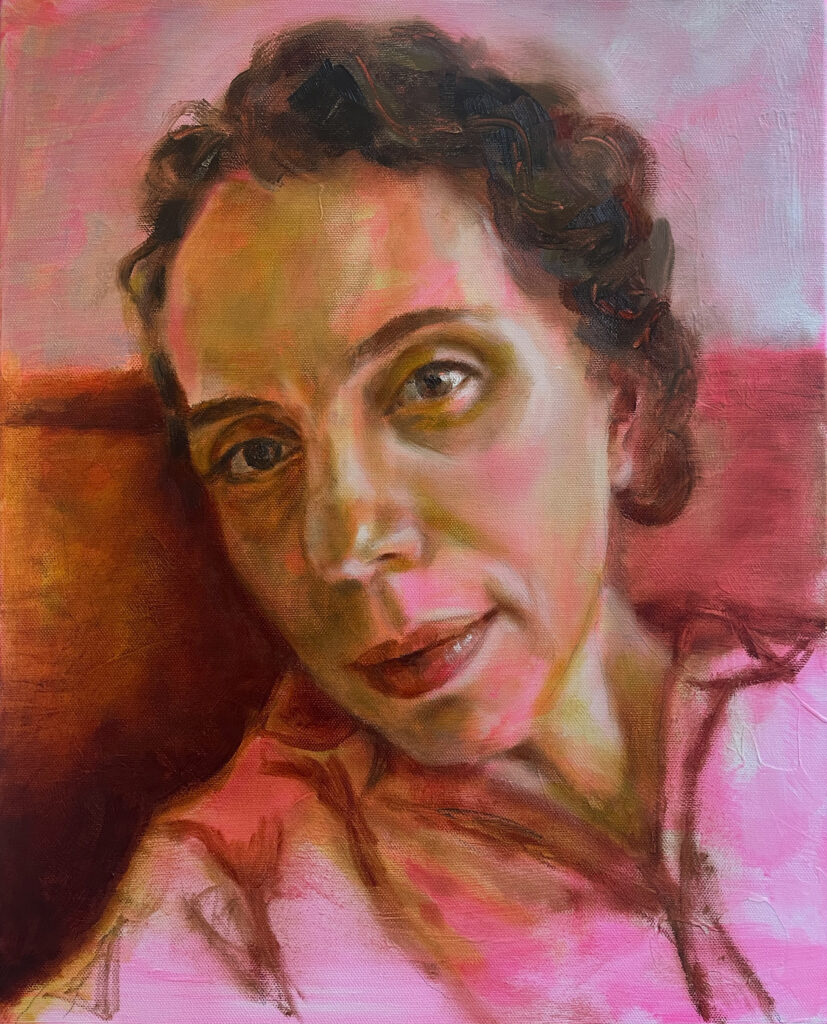
As our conversation with Diana came to a close, we found ourselves returning to a question that has quietly reshaped portraiture over the last century: does a portrait need to be perfect to be true? For generations, the measure of a great portrait was its likeness, how faithfully it captured a face. But somewhere along the way, artists began to care less about accuracy and more about aliveness, about whether a painted person could actually feel like one.
Diana belongs firmly to that shift. Her portraits are figurative, yet she has no interest in flawlessness; what matters to her is that a painting breathes.
Colour, in her hands, does the emotional work that a precise likeness never could, carrying moods far more complicated than any surface could show. In choosing feeling over finish, she joins a long line of painters who understood that the truest likeness is not of the face, but of what moves beneath it.
This openness is part of what keeps portraiture so alive in contemporary art. A painting, once finished, stops belonging solely to its maker; it begins a second life in the eyes of everyone who meets it. Diana embraces that fully, resisting the urge to dictate a single meaning and leaving room for each viewer to arrive with their own.
In a culture saturated with polished, frictionless images of ourselves, there is something quietly radical about portraits that refuse perfection and ask, instead, simply to be felt.
For art lovers and collectors, work like Diana’s offers something increasingly rare: honesty over flattery, feeling over perfection. Vivid and alive, her portraits reward the kind of slow, open looking that lets a face gradually give up what it holds, and their meaning shifts with whoever stands before them. To live with one is to live with a presence that keeps offering something back, a little differently each time you look.
Perhaps that is the enduring power of a portrait: at its best, it is less a record of how someone looked than an invitation to recognise something of ourselves. Diana may begin with colour and observation, but what she is really after is that quiet moment of connection, when a painted face stops being a stranger and starts to feel like a mirror.
Follow Diana Maria de la Encarnacion through the links below and explore more of her work and creative journey.
