
5 Inspiring Letters by Women Artists Every Artist and Art Lover Should Read
A painting can tell us a great deal about the person who created it, but sometimes, a letter can tell us even more. Behind the finished canvases, celebrated exhibitions, and names we remember from art history were women who had their own doubts, ambitions, disappointments, friendships, and dreams. They were artists, but they were also people trying to find their place in a world that did not always make room for them.
Fortunately, some of their most personal thoughts have survived in handwritten letters, postcards, and correspondence with friends, family, and fellow artists. These words offer a different way of getting to know the women behind some of the world’s most loved artworks.
From Frida Kahlo’s affectionate letters to her mother to Artemisia Gentileschi’s determination to be recognised for her work, these five collections of letters remind us that an artist’s journey is about so much more than what eventually appears on a canvas.
1. Frida Kahlo’s Letters to Her Mother: A Glimpse Into the Woman Behind the Icon
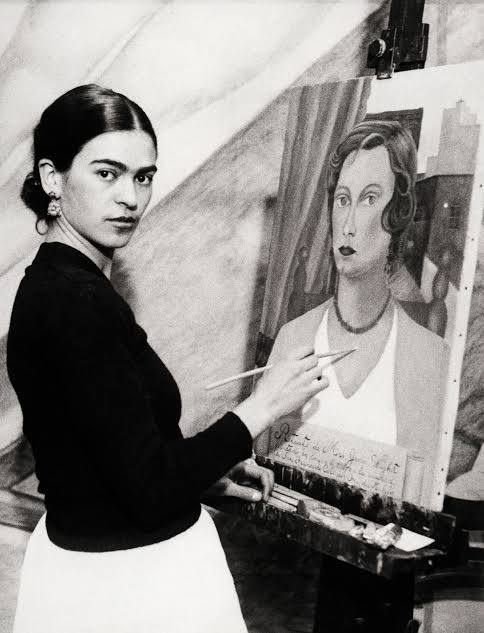
When we think of Frida Kahlo, we often picture her striking self-portraits, colourful traditional clothing, and unmistakable artistic identity. But the letters she exchanged with her mother, Matilde Calderón de Kahlo, offer a much more intimate glimpse into her everyday life.
The National Museum of Women in the Arts preserves a collection of more than 360 documents connected to Kahlo, including letters written between 1930 and 1954. Some of the most touching examples are the letters exchanged between Frida and her mother.
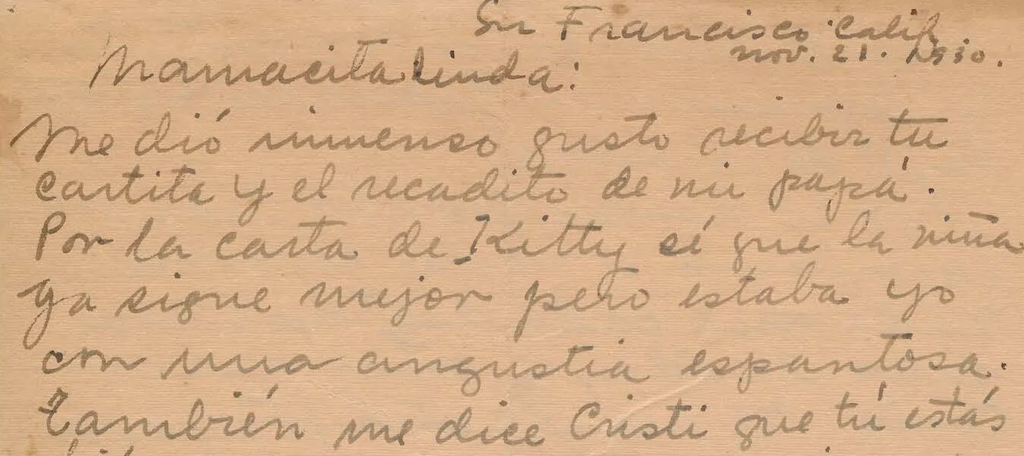
One particularly interesting letter was written on January 8, 1932, while Kahlo was in New York. She begins by affectionately addressing her mother as “Mamacita linda” and tells her about the busy weeks following the opening of an exhibition. She describes a schedule filled with invitations, social engagements, and visitors, admitting that by the end of the day she would simply fall into bed exhausted.
It is such an ordinary detail, yet it makes her feel wonderfully human. Here was an artist whose work would eventually become internationally celebrated, writing to her mother about being tired, busy, and struggling to find a moment to catch up with her family.
“The day I receive a letter from you is worth more than all the days of celebration.”
part of Frida Kahlo’s Letter to her mother.
These letters remind us that even the most recognizable artists have lives beyond their public identities. They have relationships to nurture, responsibilities to manage, and everyday moments that never make it into art history books.
Why read them: If you have ever wondered what your favourite artist was like outside the studio, these letters are a beautiful place to begin. They remind us to look beyond the artwork and appreciate the person who made it.
You can explore the original handwritten letters and their transcriptions through the National Museum of Women in the Arts’ Frida Kahlo Papers.
2. Artemisia Gentileschi’s Letters: A Woman Determined to Be Taken Seriously
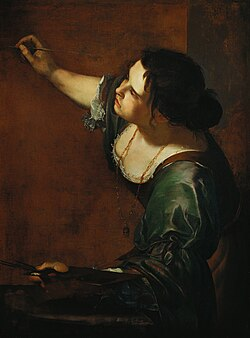
Centuries before women artists could expect equal recognition in the art world, Artemisia Gentileschi was already making her own place in it.
Born in 1593, the Italian Baroque painter became celebrated for her dramatic compositions, powerful female subjects, and extraordinary command of light and shadow. But her surviving correspondence reveals another important part of her story: the determination required to build an artistic career as a woman in seventeenth-century Europe.
In 1649, Gentileschi wrote to the Sicilian collector Antonio Ruffo while discussing her work and professional reputation. One particularly memorable line from this letter expresses a frustration that still feels familiar to many women working in creative fields.
“A woman’s name raises doubts until her work is seen.”
It is a powerful statement, especially when we consider the period in which she wrote it. Gentileschi understood that being a talented painter was not always enough. She had to convince potential patrons that her work deserved to be taken seriously.
Her other surviving letters reveal the practical realities of her career. She negotiated commissions, discussed payments, arranged the delivery of paintings, and sought opportunities beyond Naples, where she was based for much of her later life.
The National Gallery in London has explored these letters in its exhibition Artemisia: In Her Own Words, showing how her correspondence allows us to hear her voice beyond the paintings.
Why read them: Gentileschi’s letters are a reminder that talent deserves to be recognised, but artists must also learn to advocate for their work. Her determination to be judged by what she created remains an inspiring lesson for women building creative careers today.
Explore her correspondence through the National Gallery’s Artemisia: In Her Own Words.
3. Georgia O’Keeffe’s Letters: Finding Inspiration in the World Around You
Georgia O’Keeffe had a remarkable ability to find beauty in things that others might overlook. From the delicate forms of flowers to the vast landscapes of New Mexico, she transformed her surroundings into paintings that became some of the most recognisable works of American modernism.
Her letters offer a fascinating insight into the way she observed the world.
The Library of Congress holds a collection of correspondence between O’Keeffe, her husband Alfred Stieglitz, and their friend Henwar Rodakiewicz, spanning 1929 to 1947. In these letters, O’Keeffe often described the landscapes around her, including the mountains, changing colours of the sky, and the natural details that inspired her paintings.
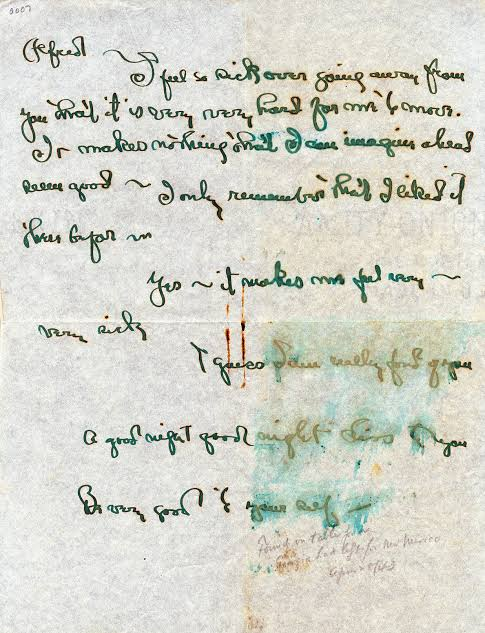
In a 1944 letter, she described Pedernal, a mountain near her New Mexico home, as appearing in the distance like a dream. This was not simply a passing observation. The mountain became a recurring subject in her artwork.
Another glimpse into her creative philosophy appears in a letter to Maria Chabot in 1944. O’Keeffe wrote:
“If you can believe in what you are and keep to your line, that is the most one can do with life.”
It is difficult to think of a more fitting reminder for an artist who developed such a distinctive visual language. O’Keeffe did not need to follow every changing artistic trend. She found her subjects, trusted her perspective, and continued exploring the things that mattered to her.
Why read them: Her correspondence encourages us to pay closer attention to our surroundings and trust our own creative instincts. Inspiration does not always arrive as a grand idea. Sometimes, it begins with noticing a mountain, a flower, or the way light falls across a room.
You can explore her correspondence through the Library of Congress Georgia O’Keeffe collections.
4. Camille Claudel’s Letters: The Courage to Keep Creating Through Uncertainty
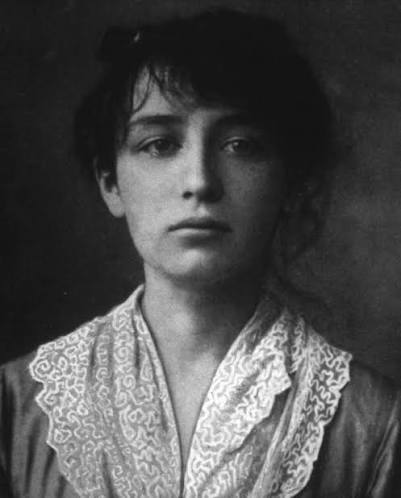
Camille Claudel was an extraordinarily gifted French sculptor whose work explored movement, emotion, and the human experience. Yet her artistic journey was often complicated by professional struggles, difficult relationships, and the challenges of being a woman sculptor in nineteenth-century France.
Her letters give us an opportunity to understand the artist beyond the sculptures that survive today.
One particularly valuable part of her correspondence is her exchange with art dealer and publisher Eugène Blot. Claudel discussed her sculptures with him, shared ideas about materials, and explored possibilities for presenting and selling her work.
In some letters, she offered proposals for new pieces. In others, she discussed possible materials and finishes. Her correspondence surrounding The Siren, for example, reveals her interest in using green onyx for the rock beneath the figure and bright metal for the flute.
These are fascinating details because they allow us to see the creative process before a sculpture becomes a finished object. We get to understand that an artwork is not always a single moment of inspiration. It involves decisions, experiments, conversations, and sometimes ideas that never make it into the final version.
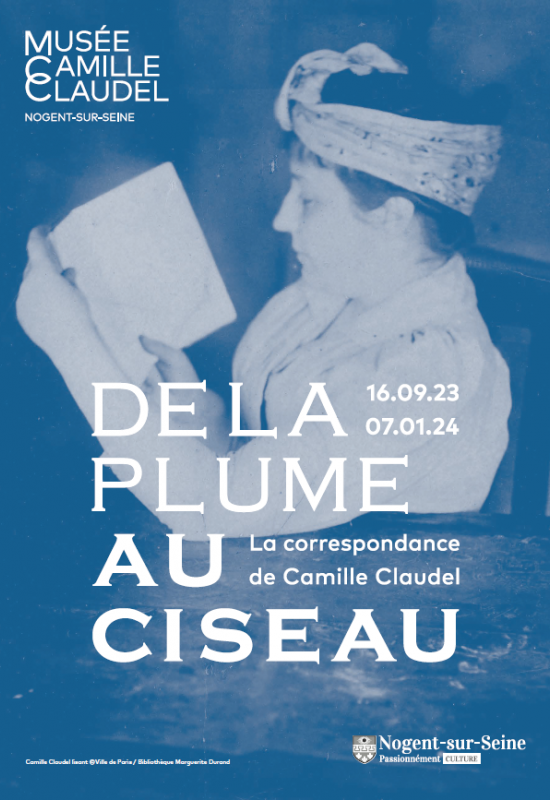
In 2023, the Musée Camille Claudel presented an exhibition titled From Pen to Chisel, bringing together letters from its collection alongside the sculptures they discussed. The museum described these writings as a way of encountering Claudel’s enthusiasms, doubts, and personal struggles.
Why read them: Claudel’s letters remind us that uncertainty is not the opposite of creativity. It is often part of the process. Even accomplished artists continue to question their ideas, explore possibilities, and make decisions along the way.
Discover more through the Musée Camille Claudel’s correspondence exhibition.
5. Emily Carr’s Letters to Her Friends: Finding Your Own Way as an Artist
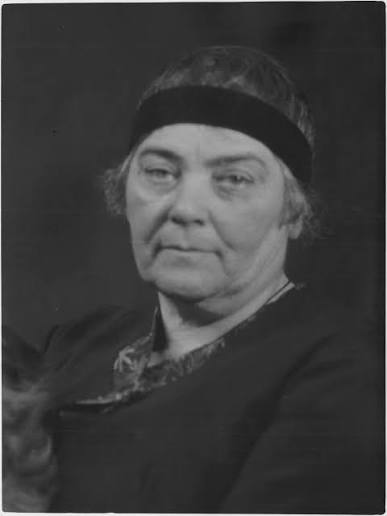
Canadian artist Emily Carr is remembered for her expressive paintings of forests, trees, and Indigenous communities of the Pacific Northwest. Her work was deeply connected to the landscapes around her, but her letters reveal an equally interesting person: observant, witty, outspoken, and completely devoted to her creative practice.
A wonderful way to explore her correspondence is through the book Dear Nan: Letters of Emily Carr, Nan Cheney, and Humphrey Toms, edited by Doreen Walker.

The collection includes 150 letters Carr wrote to her friends Nan Cheney and Humphrey Toms, alongside other correspondence relating to her life. Written between 1930 and 1945, these letters cover a particularly productive period in her career as both a painter and a writer.
What makes them special is how naturally they move between everyday experiences and her artistic world. Carr wrote about her daily activities, friendships, frustrations, and the people around her. She also spoke openly about painting, which she described as “the biggest thing in my life.”
There is something refreshing about reading an artist who did not separate creativity from the rest of her existence. Her letters reveal her warmth and humour, but also her impatience with critics and people she considered insincere.
They show a woman who was deeply invested in her work and unwilling to let other people’s opinions define her artistic identity.
Why read them: Carr’s correspondence is a lovely reminder that an artist’s life does not have to follow a predictable path. You can grow at your own pace, find inspiration in your surroundings, and remain committed to your work even when recognition does not arrive immediately.
You can find Dear Nan through University of British Columbia Press.
The Words That Stay With Us
Art allows us to connect with people we may never meet, sometimes across centuries and continents. But letters bring us a little closer. They allow us to hear an artist’s voice, understand the thoughts behind their decisions, and discover the experiences that shaped their creative lives.
These women lived in different periods, worked in different mediums, and faced their own challenges. Yet their correspondence carries a few familiar reminders: trust your perspective, keep exploring, stand up for your work, and allow yourself to grow.
Perhaps the most beautiful thing about reading these letters is realizing that the women we now celebrate as great artists were once simply women trying to create something meaningful. And maybe that is exactly why their words are still worth reading.
