
A studio where nothing is organized and that’s the point
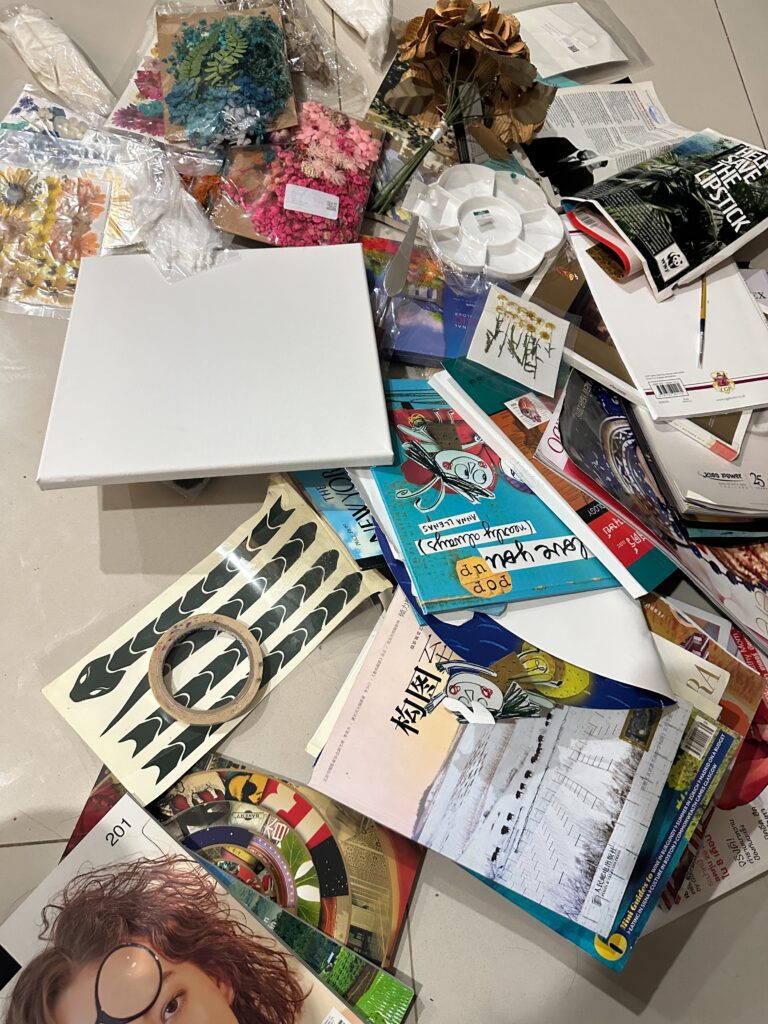
Mandi’s studio isn’t the kind of place you’d see in a design magazine. There’s no clean worktable, no rows of supplies arranged by colour, no statement piece of furniture positioned just so. Walk through the door, and you’re met with a mess. Real mess. Papers layered on top of each other, images half cut, notes written in whatever mood struck when she grabbed the pen. It looks like disorder, but she’ll tell you it’s actually where things start to make sense.
This studio visit sits down with an artist who refuses to pretend her creative process is neat or predictable. Mandi works across visual art, writing, and spiritual life coaching, and she’s built a practice around letting feelings meet awareness before they touch any material. In this conversation, she opens up about why her space looks chaotic and what that chaos actually does for her work. She talks about how collage taught her that beauty shows up in contrast rather than careful arrangement, why she keeps scissors and old book pages within arm’s reach, and how the light in a room can change how much honesty she’s capable of putting into a piece.
We get a look at how her process actually unfolds day to day. She describes mornings that start with reading and sitting rather than making, the way ideas repeat in her journals until they demand to move onto canvas, and why she needs several unfinished pieces around her so they can talk to each other. She explains what happens when she steps back from her work, sometimes leaving the room entirely to see it with different eyes. She discusses how soft light slows her down while harsh light forces her to make decisions, and what she’d actually want if she could build a studio anywhere on earth.
The interview doesn’t mention where this space sits geographically or what it smells like when you’re standing in it. That’s partly because Mandi treats her studio less like a location and more like a state she enters and exits throughout the day. The physical room matters, but what really matters is the permission she’s given herself to work without performing, to let mess exist without rushing to clean it up, and to trust that meaning will surface from fragments that don’t seem to belong together. This is a studio visit with someone who’s learned that the most honest work doesn’t come from order.
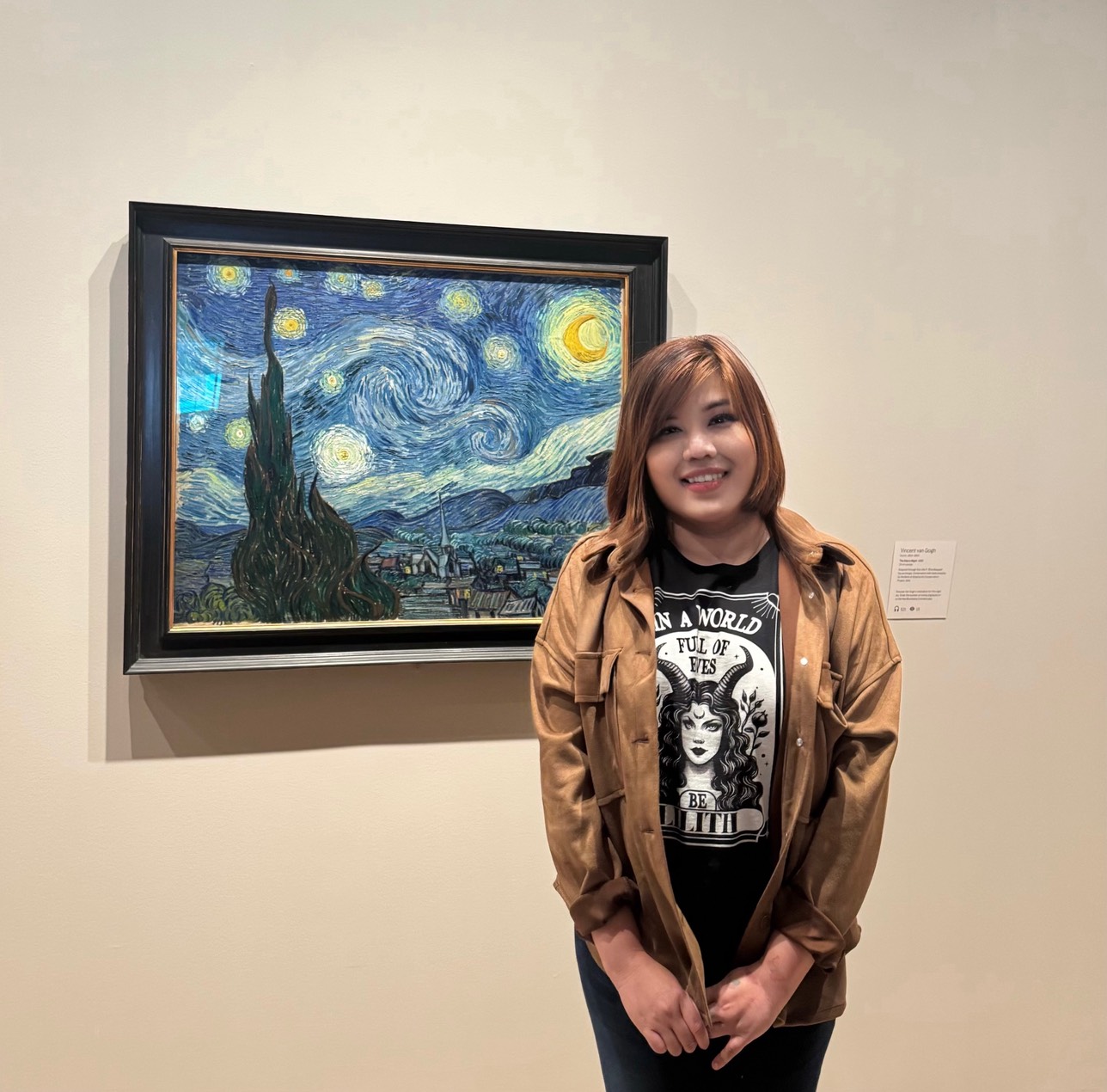
Mandi is a multidisciplinary artist, writer, and spiritual life coach whose work moves between visual art, poetic language, and inner inquiry. Her creative path has been shaped by lived experience—trauma healing, identity navigation, and personal sovereignty reclaimed through self-awareness and compassion. Rather than separating art from life, Mandi treats creativity as an embodied practice: a way of listening, remembering, and integrating the light and shadow within the human experience. Her work often explores themes of self-love, truth, power, and emotional honesty, inviting viewers and readers into a quieter, more conscious relationship with themselves.
1. Can you walk us through your studio space? What’s the first thing you see when you walk in?
If you walk into my “studio,” the first thing you’ll see is a mess. I’m not exaggerating. I don’t have a traditional studio space with clean tables and perfect light. Most of my work happens in my head and in my heart before it ever touches a surface. The physical space usually looks chaotic—papers layered on papers, images cut mid-thought, notes written in different moods and moments. But I’ve learned that messy doesn’t mean careless. Mess is where things meet each other unexpectedly. Collage art taught me this. You take fragments that don’t belong together—old images, torn textures, discarded words—and when you let them speak to each other, something honest appears. The beauty comes from contrast, not control. My inner world works the same way. It’s not a clean landscape. It’s layered, emotional, and sometimes contradictory. Creating allows me to map that inner terrain without forcing it to make sense too quickly. What looks disordered on the outside is often a reflection of deep listening on the inside. So my studio is less a room and more a process. A space where mess becomes meaning, and where “unfinished” is not a flaw, but an invitation.
2. How is the space arranged to support the way you like to work on a painting from start to finish?
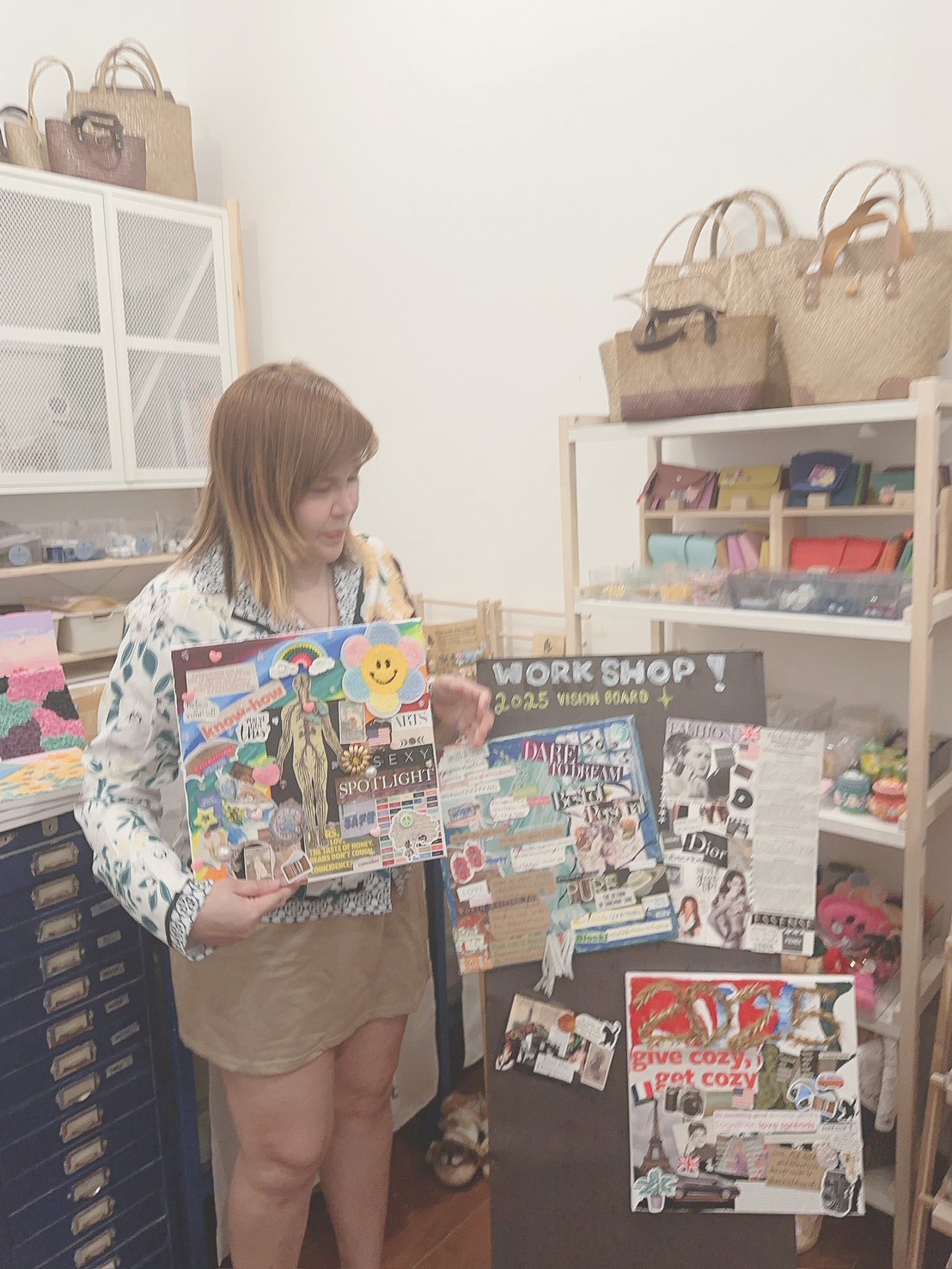
I don’t arrange my space linearly because my process isn’t linear. I don’t start with a fixed outcome and move step by step toward it. I let the work reveal itself. Since I don’t have a traditional studio, the “arrangement” is more about access than order. I keep materials within reach—images, textures, notebooks, tools—so I can respond quickly when something surfaces internally. When a feeling or an image arises, I need to meet it immediately, before the mind tries to organise or censor it. From start to finish, the space supports intuition rather than control.
A painting often begins as fragments: a colour, a memory, a sensation, a piece of paper that suddenly feels right. As the work develops, I move things around constantly—adding, removing, covering, revealing. Nothing is fixed until it is. The space allows for pause as much as action. I step back often, not to judge, but to listen. The finish doesn’t come from forcing closure; it comes when the piece feels internally resolved. In that way, the space holds the entire process—uncertainty, exploration, and clarity—without demanding speed or perfection.
3. What materials or tools do you keep closest to you while working?
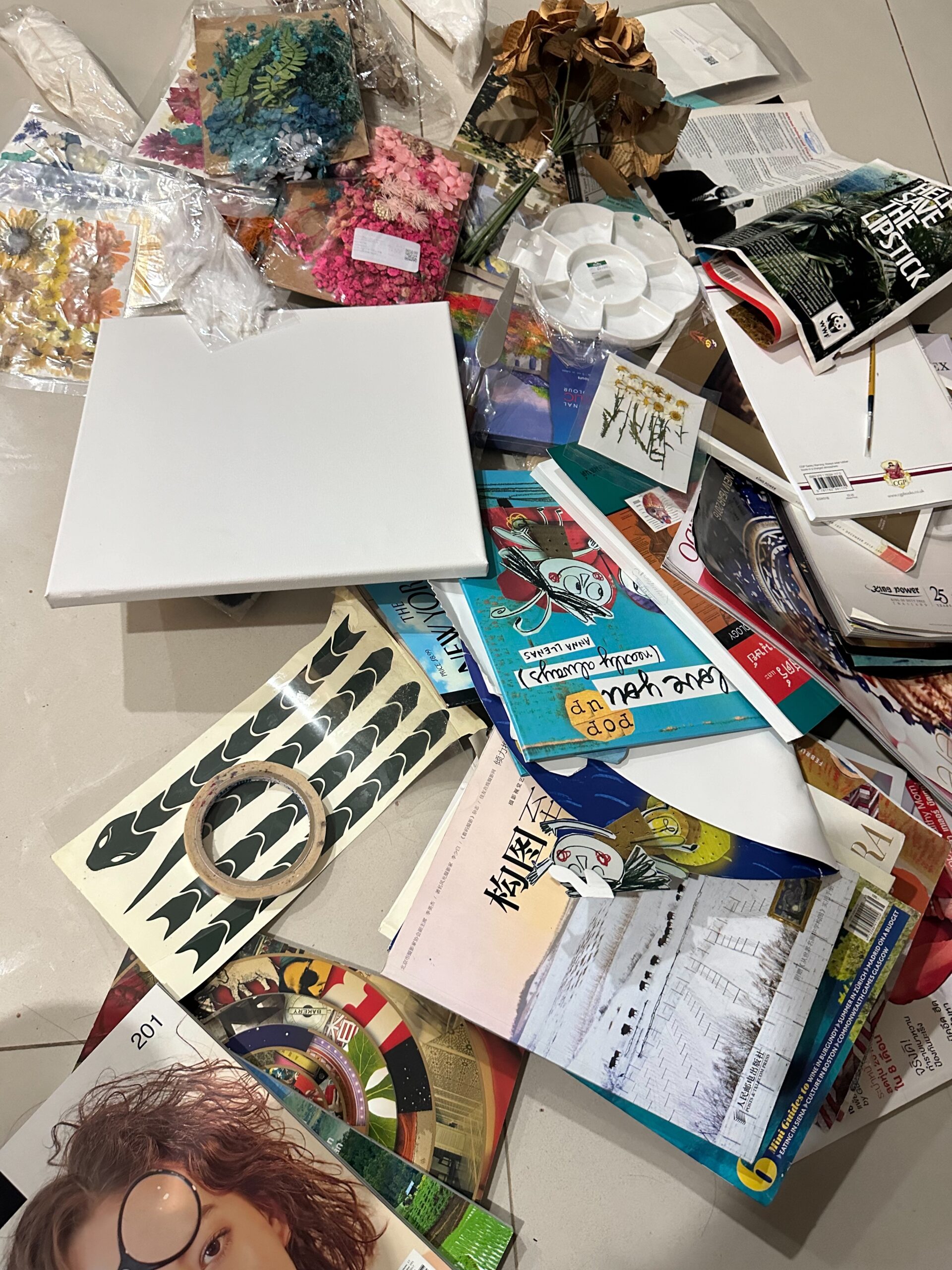
I keep the tools that allow me to respond intuitively rather than technically. My materials are chosen for how quickly they translate feeling into form. Paper is always close—sketch paper, old books, found pages, anything that already carries a history. Scissors and glue are essential, especially for collage, because cutting and layering feel like thinking with my hands. I also keep pens, pencils, and markers nearby to write, cross things out, or leave traces of thought directly on the surface.
Images matter more to me than pristine supplies. I collect fragments—photographs, symbols, textures—because they mirror how memory and emotion actually work: incomplete, layered, and associative. Sometimes the most important tool isn’t physical at all, but silence. I need space to feel into what wants to emerge rather than forcing it. These materials stay close because they let me move freely between inner and outer worlds, without interruption. The goal isn’t polish—it’s honesty.
4. Are there certain books, film stills, or notes that stay in the studio as part of your process?
Yes—there are many. I read constantly, and I write even more. Books, notes, and collected fragments are always present because they are the raw material of my thinking. I keep journals filled with observations, questions, and unfinished thoughts. I underline passages in books, tear out pages, and write in the margins. Film stills, images, and lines of text often stay with me for a long time, not as references to copy, but as emotional anchors. Each piece carries a mood, a tension, a memory.
My process is about recombination. I take these fragments—stories, images, sentences, ideas—and let them meet in a new medium. When they come together, they stop being what they were and become something else entirely. A note becomes an image. A film still becomes a feeling. A story becomes a new narrative. Nothing stays fixed in its original form. Everything is allowed to transform. That act of re-creating—of translating inner and outer influences into a new language—is where the work truly begins.
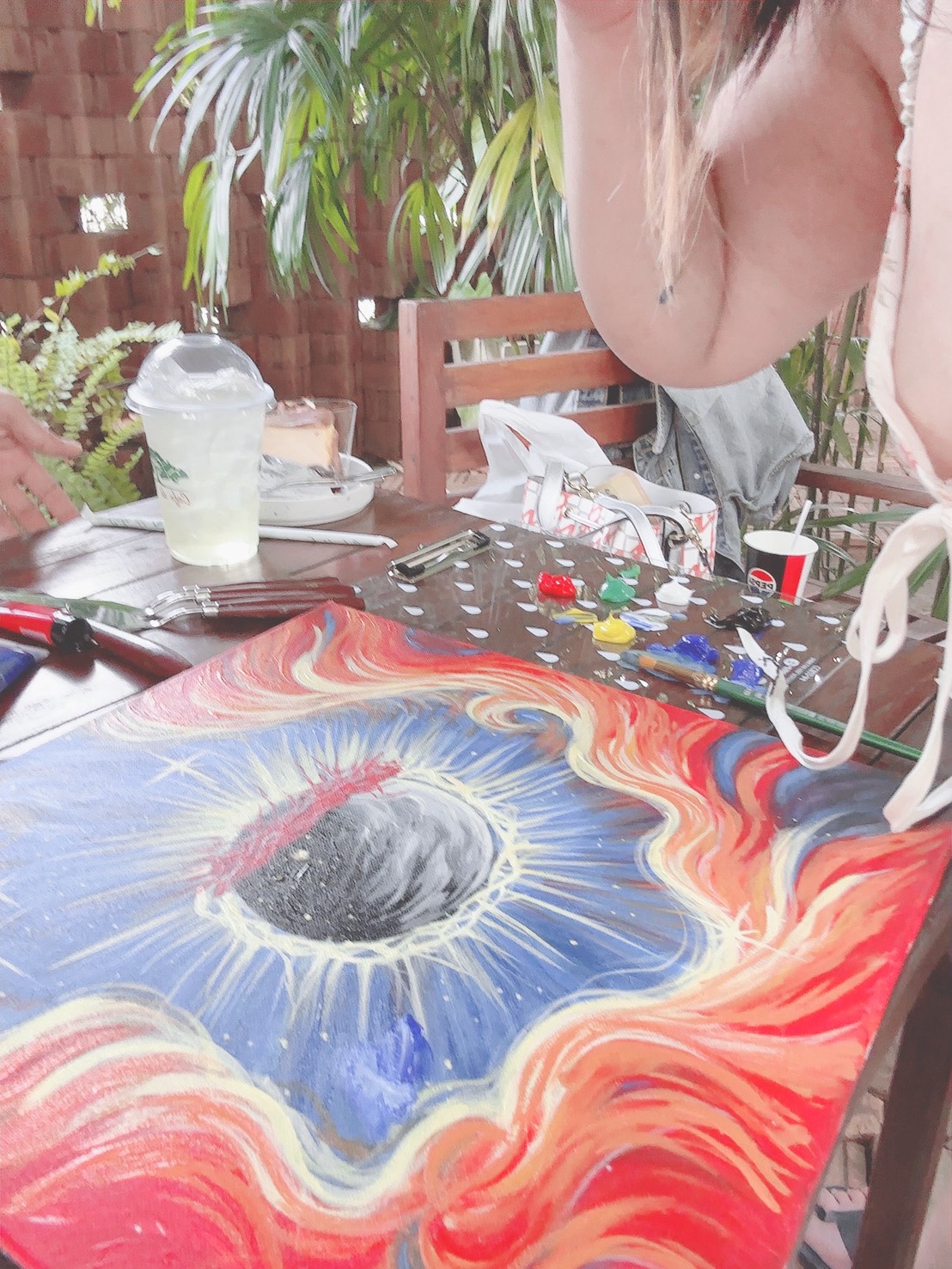
5. How do you usually keep track of ideas as they move from your journals into the canvas?
I don’t track ideas strictly or systematically. I let them move naturally, the same way thoughts and emotions move through the body. Most ideas begin as notes—sometimes a single sentence, sometimes a question, sometimes just a feeling written down before it disappears. I revisit my journals often, not to organise them, but to notice what keeps returning. Repetition is how I know something is asking to be seen. When an idea is ready to move onto the canvas, it doesn’t arrive fully formed. It shows up as an impulse: a colour I can’t stop thinking about, an image that lingers, a phrase that refuses to stay on the page.
I trust that pull more than any plan. The transition isn’t about translating one-to-one. It’s about allowing the idea to change shape. What starts as language may become texture or composition. I don’t force coherence too early. I let the canvas absorb the idea and respond in its own way. That conversation—between journal and surface—is how the work finds its final form.
6. What does a typical day in this studio look like for you?
There isn’t really a “typical” day, and that’s intentional. My studio isn’t a fixed place—it’s a state I enter and leave throughout the day. Most days begin with observation rather than making. I read, I write, I sit with thoughts before I touch any materials. Sometimes the work happens quietly in my head while I’m doing ordinary things. Creation doesn’t always announce itself; it builds slowly. When I do work, it comes in waves. I might spend hours cutting, layering, writing, or rearranging, then take long pauses to step back and let the piece breathe. Those pauses are part of the work. They allow clarity to surface without forcing it. Some days are productive on the surface; others are inward and invisible. I’ve learned not to measure progress solely by output. Even when nothing tangible is produced, something is usually shifting internally. That inner movement is what eventually shapes the work.
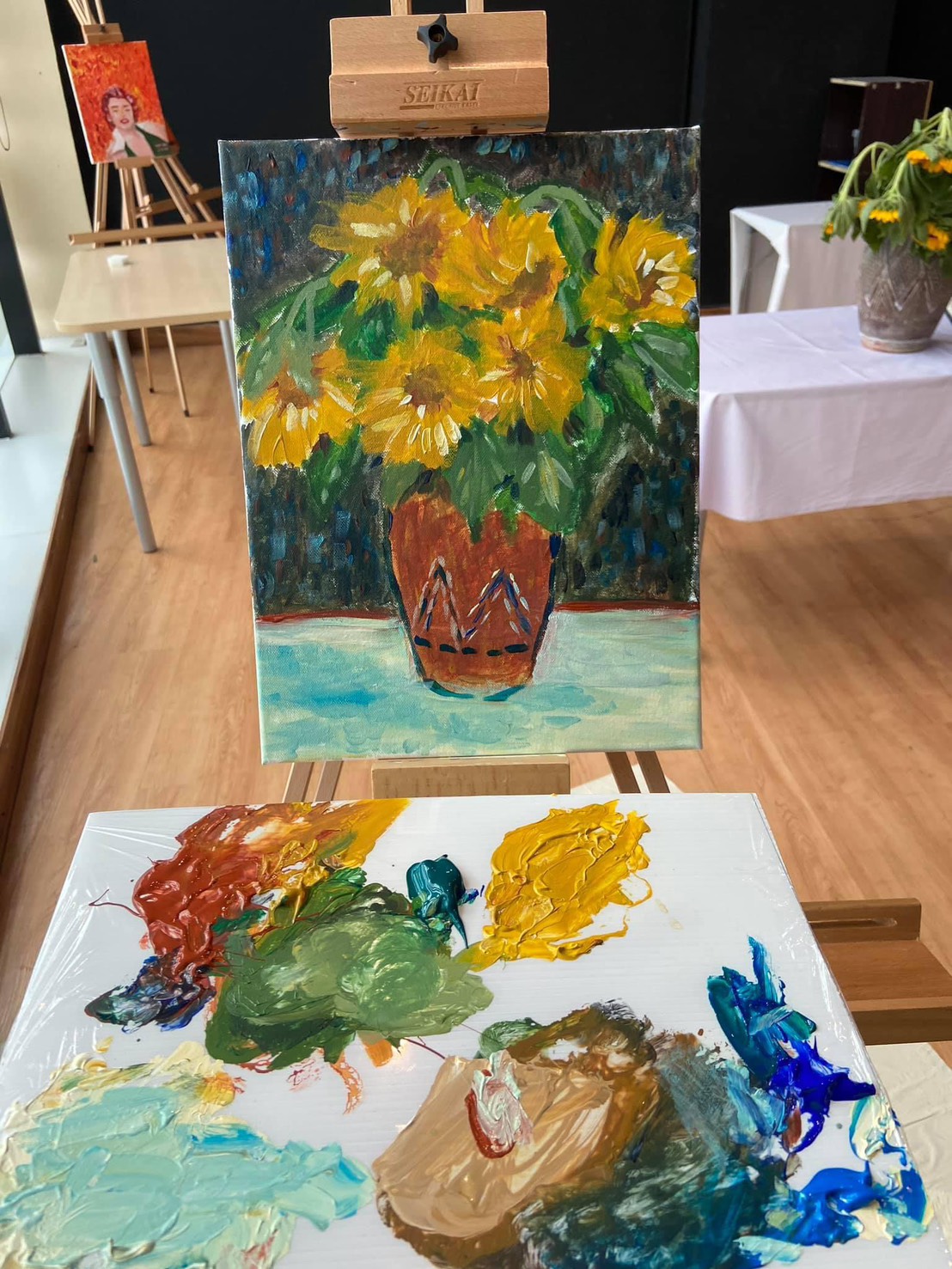
7. How does the light in this space change the way you approach a painting?
Light changes everything for me, even when the “space” is internal rather than physical. I’m very sensitive to light—natural, emotional, and symbolic. Soft light invites listening. It slows me down and allows subtle layers to emerge. In that kind of light, I work more gently, paying attention to tone, texture, and what feels unfinished but alive. Harsher or shifting light makes me more direct.
It pushes me to make decisions, to cut, to reveal, to stop hesitating. Sometimes I’ll step away from a piece and return at a different time of day to see how the light alters my relationship to it. What feels resolved in one light can feel false in another. Even when I’m not in a formal studio, I notice how light moves through my inner landscape. It affects how much truth I’m willing to face, how much softness or strength the work needs. In that way, light becomes a collaborator—it tells me when to refine and when to let go.
8. Do you have works in progress visible around the room, or do you prefer to focus on one piece at a time?
I usually have several works in progress around me, even if they’re not all physically visible at the same time. My mind doesn’t work in isolation, and neither does my art. Having multiple pieces open allows them to speak to each other. One work might be stuck, while another moves freely—and often the solution for one appears while I’m working on something else. I don’t see that as a distraction; I see it as dialogue. That said, my attention is still selective. At any given moment, one piece will ask for more presence than the others. When that happens, I give it my complete focus until it reaches a point of rest. I don’t force completion. I let each work tell me when it’s ready to move forward or to wait. So the space holds many unfinished conversations at once. That openness keeps the work honest and prevents me from rushing toward closure just for the sake of finishing.
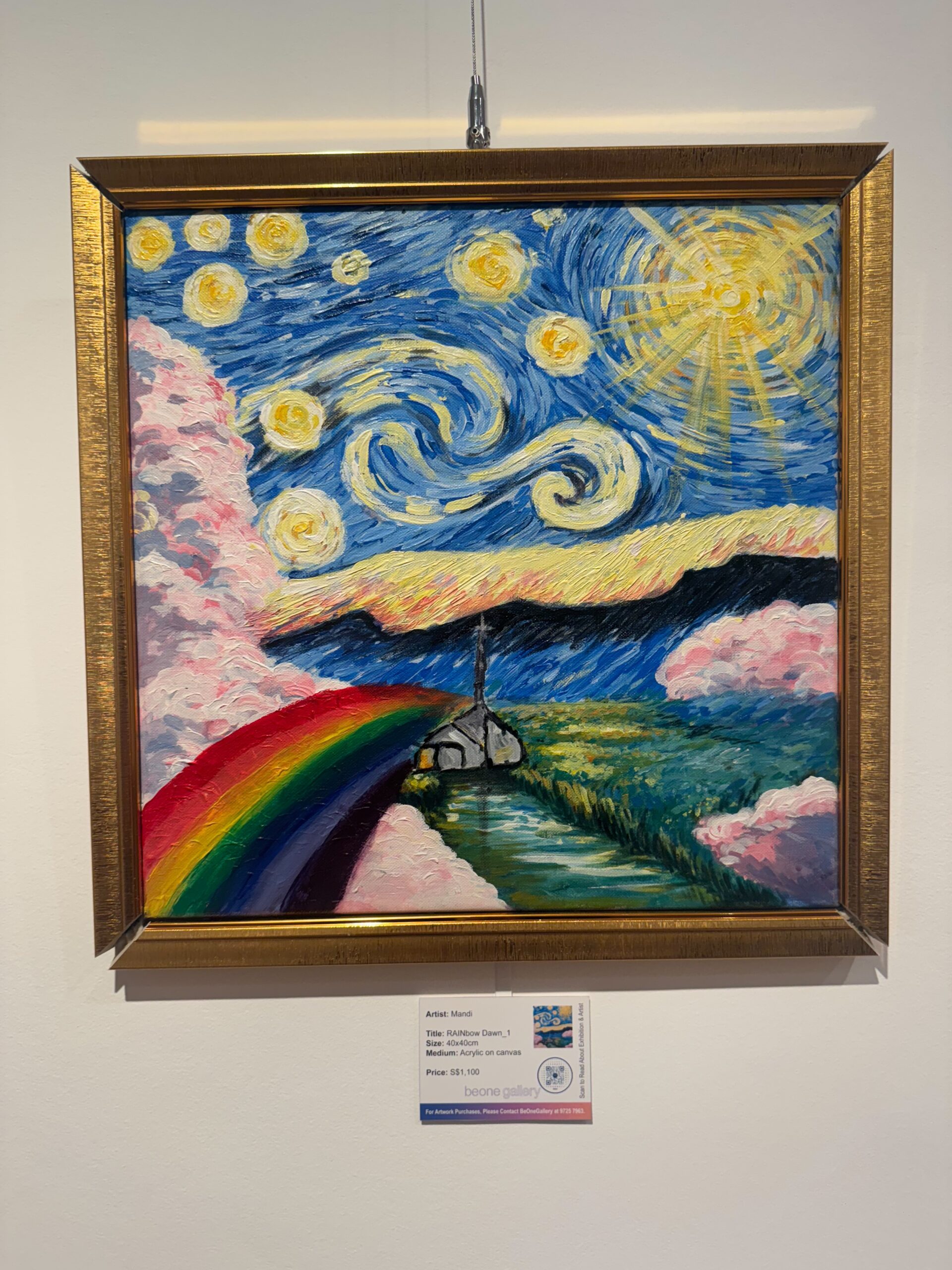
9. Is there a spot in the studio where you usually pause to step back and look at the work differently?
Yes—but it isn’t a fixed spot. It’s more of a shift in posture and attention. When I need to see the work differently, I step back physically, sometimes leaving the room altogether. Distance matters. It breaks the emotional closeness and allows me to return with clearer eyes. I might sit on the floor, lean against a wall, or stand still and let my body settle before looking again. That pause is essential. It’s where judgment softens, and listening begins. I’m not asking whether the work is “good” or “finished.” I’m asking whether it feels honest—whether it’s still alive or starting to perform. This moment of stepping back is where intuition recalibrates. It reminds me that the work doesn’t need to be controlled, only witnessed. Often, what changes the piece most happens in that quiet space between doing and seeing.
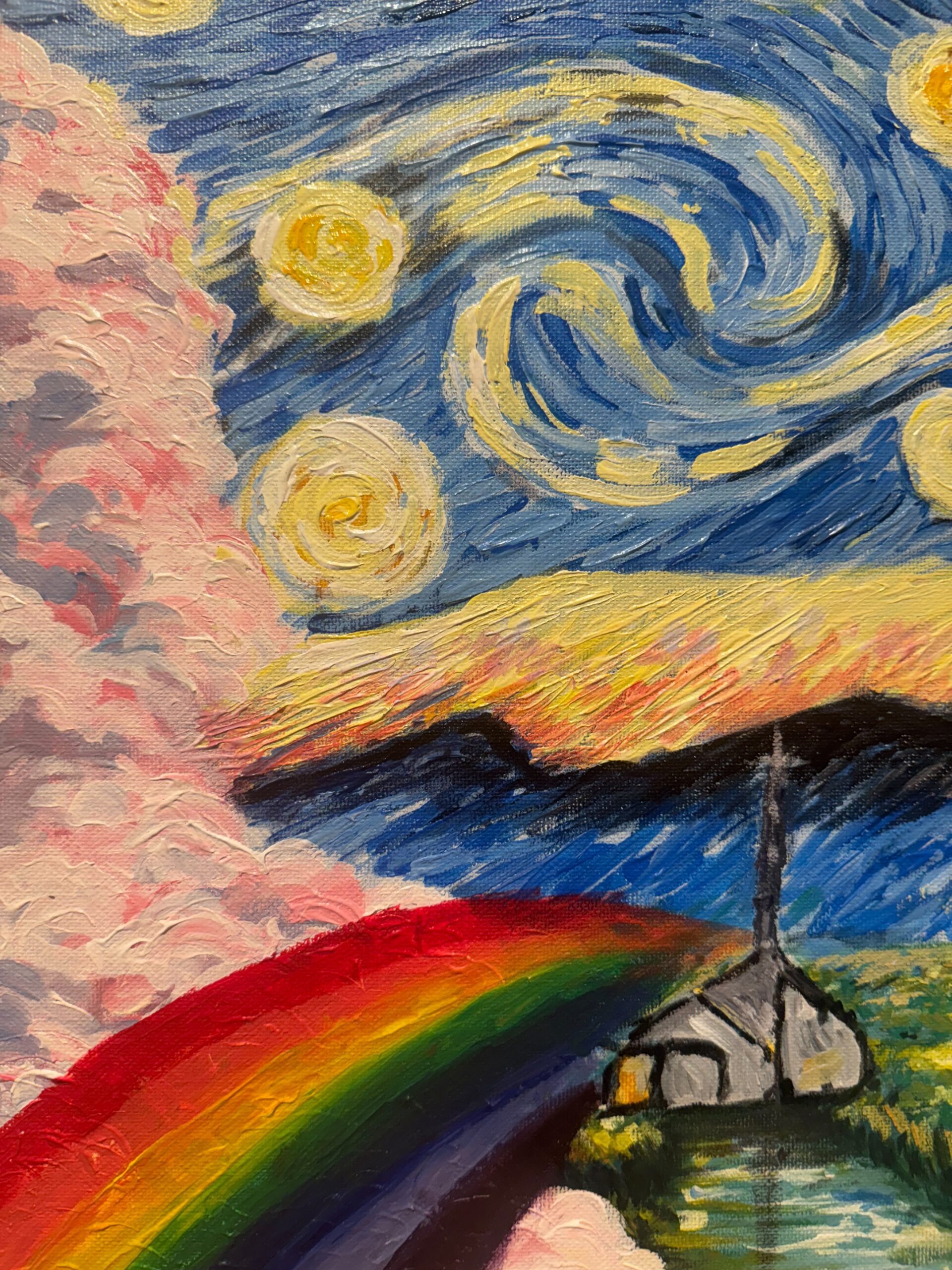
10. If you get a chance to set up your studio anywhere in the world, where would it be?
I’d choose a place that feels spacious and quiet rather than iconic—somewhere where the outside world doesn’t compete too loudly with the inner one. Ideally, it would be close to nature, with changing light and weather—maybe near water or open land, where time feels slower and less structured. I’m drawn to places where I can hear myself think, where mornings arrive gently and evenings invite reflection. That said, the location matters less than the atmosphere. I carry my studio with me. As long as there’s room to read, write, sit with silence, and make a mess without interruption, the work can happen anywhere. What I’m really seeking isn’t a perfect destination, but a sense of permission—to work at my own rhythm, to listen deeply, and to let the inner landscape lead.
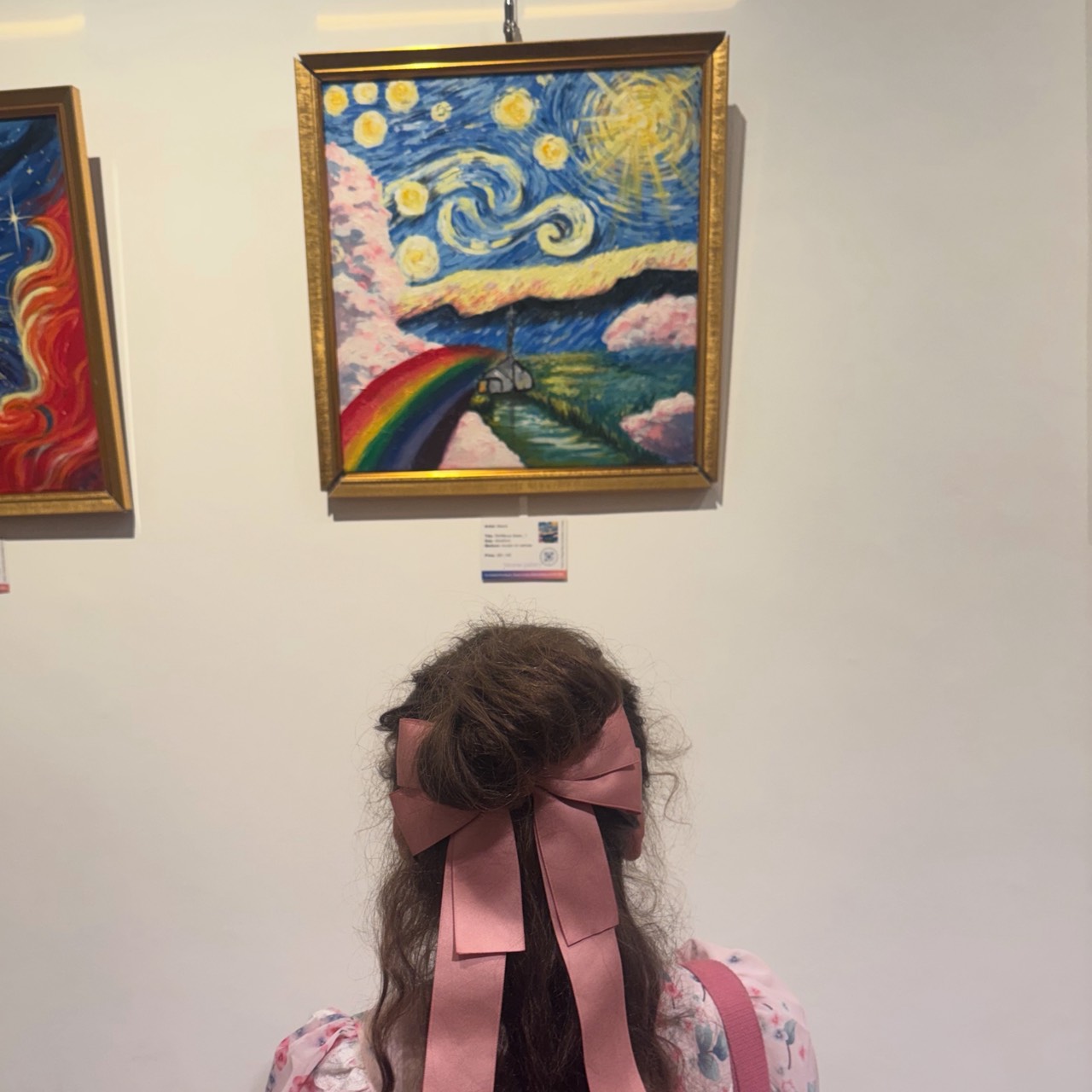
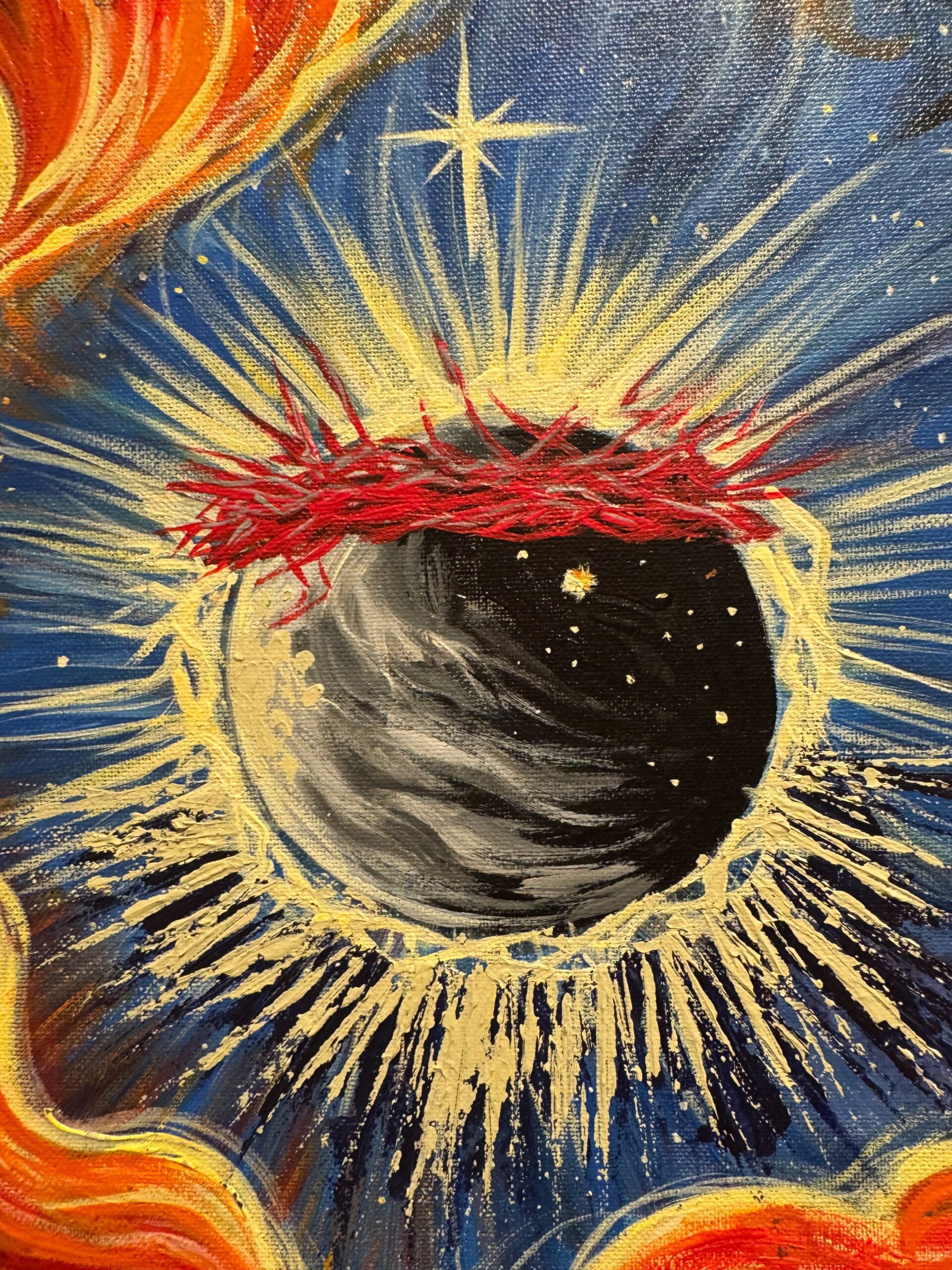
Mandi’s studio feels like a place where thinking happens out loud. It’s not polished or Instagram-ready. It’s layered with half-finished thoughts, collected fragments, and materials waiting to meet each other in ways she hasn’t planned yet. The atmosphere is one of permission rather than perfection. There’s room to pause, to sit with uncertainty, to let things stay unresolved until they’re actually ready. It feels less like a workspace designed for productivity and more like a container for whatever needs to surface, messy or not.
What we take away from this visit is that creative work doesn’t have to look a certain way to be legitimate. Mandi’s process teaches us that mess can be generative, that stepping back is as essential as making marks, and that honouring your actual rhythm matters more than maintaining an idealised version of how art should happen. We learn that materials don’t need to be expensive or specialised if they help you respond quickly to what’s rising internally.
We see that multiple works in progress aren’t a sign of scattered attention but a way of letting pieces inform each other. Most significantly, we understand that a studio isn’t just a room with good light and organised supplies. It’s wherever you give yourself permission to listen, to fragment and recombine, and to trust that coherence will arrive when it’s ready instead of when you demand it. Mandi’s space reminds us that the work begins long before anything touches a surface, and that sometimes the most productive days are those when nothing visible gets made at all.
To learn more about Mandi, visit the links below.
