
A talk About Houses, Birds and Time with Artist Rania El Osta
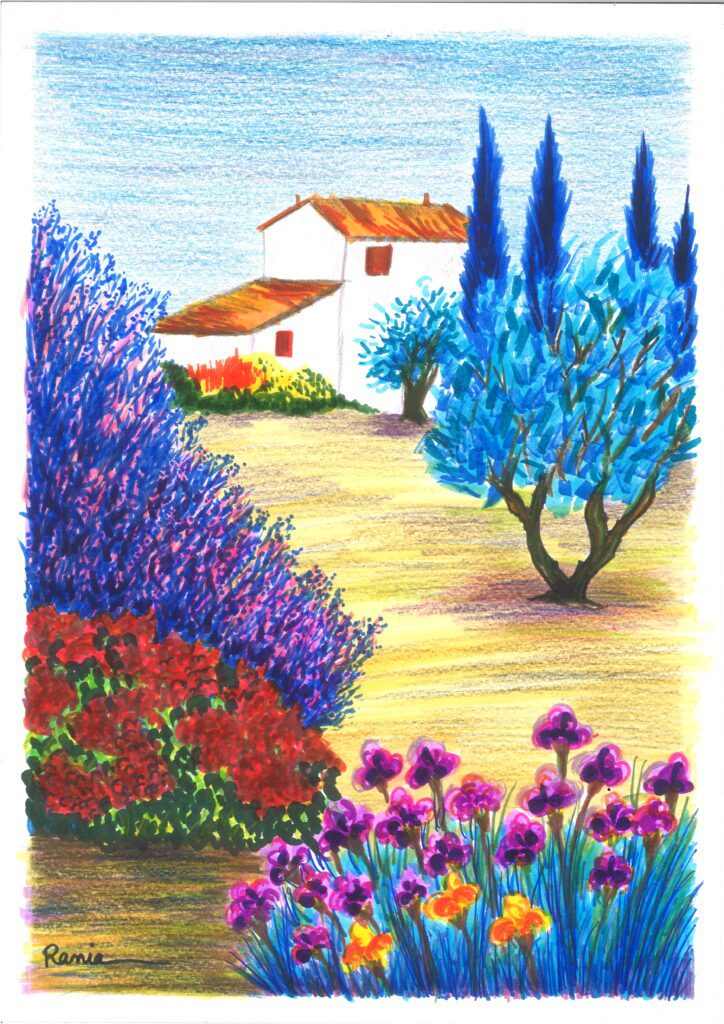
For this week’s interview, we sit down with Lebanese visual artist Rania El Osta to discuss how careful looking, memory, and lived experience shape her approach to painting. Rania El Osta does not speak about her work in grand theories or fixed statements. Instead, she talks through memory, habit, and the act of looking closely. This interview slowly explores those ideas, tracing how her background in Medical Sciences shaped her noticing of form and detail, and how that way of seeing found its way into painting. What comes through early on is that her practice is less about invention and more about attention, paying close regard to buildings, birds, and landscapes that already carry meaning before they ever reach the canvas.
Much of the conversation circles back to Lebanon’s traditional houses and the stories attached to them. Rania recalls hearing about these spaces from her grandmother and father, not as monuments, but as lived places filled with noise, routine, and family life. When she paints architectural details like windows, arches, or balconies, she responds to what those structures once held and to how they now stand, altered or neglected. There is a quiet tension in the way she describes this process, between what is remembered and what remains.
Birds enter the discussion in a similar way, not as symbols chosen for effect, but as figures that appeared naturally during difficult periods. Drawing them during times of war became a way to focus when everything else felt overwhelming. Over time, they stayed in her work, carrying ideas of movement, distance, and persistence without being forced into explanation.
Rather than presenting a fixed method, Rania talks about moving back and forth between accuracy and feeling. Observation gives her a starting point, while color shifts the atmosphere of a piece and allows emotion to surface. As her work begins to reach viewers outside Lebanon, she remains focused on what is often overlooked, the ordinary beauty of villages, houses, and landscapes, and the fact that making something careful and considered can still matter in unstable times.
By the end of the interview, what stays with the reader is not a manifesto, but a way of working grounded in patience, memory, and the decision to keep looking closely, even when circumstances make that difficult.
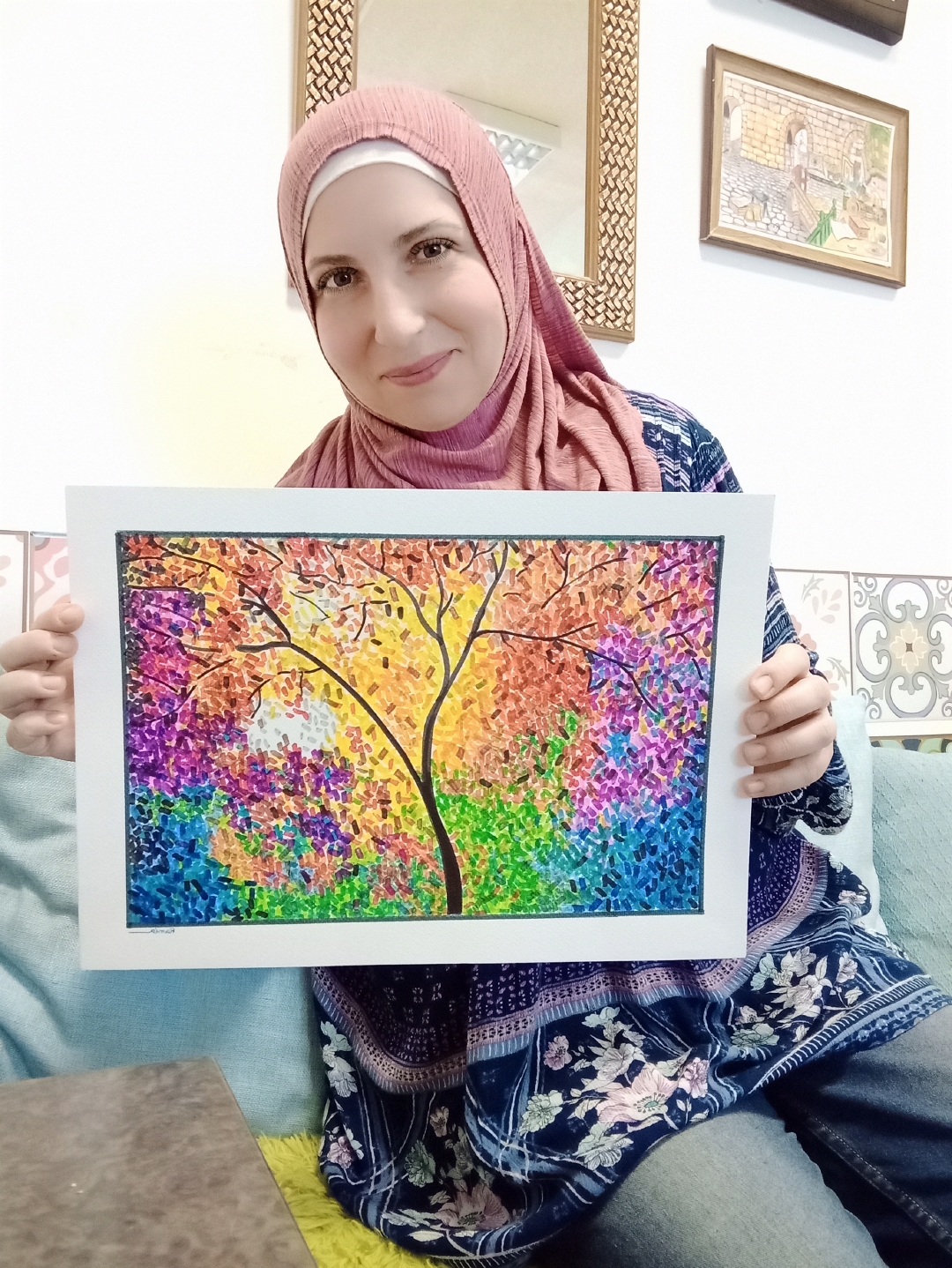
Rania El Osta is a Lebanese visual artist whose work bridges scientific precision with poetic expression. Trained in Medical Sciences, she brings a meticulous eye for detail to her paintings, while her creative practice draws deeply from Lebanon’s cultural memory, landscapes, and generational bonds. Her art often centres on birds, botanical subjects, and natural scenery, using them as metaphors for resilience, renewal, and quiet beauty. Rania’s paintings are not only aesthetic explorations but also emotional narratives—honouring feminine identity, motherhood, and the ties between generations. Her work has been featured in local exhibitions and is gaining recognition in international art circles. Rania continues to explore themes of heritage, memory, and transformation, positioning her art as both a personal journey and a cultural dialogue.
Artist Statement: My paintings are rooted in Lebanon’s heritage and landscapes, with a deep affection for the traditional houses of Beirut and beyond. I am drawn to their architectural details and timeless presence, and I capture them as living symbols of memory and resilience. Birds and natural forms often appear in my work, reflecting freedom, fragility, and continuity. They echo the rhythms of nature and the endurance of life. As an artist with a scientific background, I approach my practice with both precision and intuition. Careful observation—whether of architecture, plants, or wildlife—guides my brushstrokes, while emotion shapes the palette and composition. Ultimately, my art is an act of preservation and renewal: safeguarding the beauty of Lebanon’s heritage and natural world, while reimagining them through contemporary expression. Each canvas invites viewers into a dialogue of memory, resilience, and quiet strength.
1. How has your background in Medical Sciences shaped the way you observe and interpret the details in Lebanon’s landscapes, architecture and natural forms?
My background in Medical Sciences has trained me to observe with precision and patience. During my higher education, studying Biology taught me to pay close attention to the structures of the human body, the anatomy of plants, and the behavior of animals. That discipline of close observation naturally extends into my art. When I look at Lebanon’s traditional houses, I notice the geometry of arches, the textures of stone, and the way light interacts with their surfaces. In nature, I am drawn to the delicate anatomy of birds and the subtle variations in botanical forms.
During the war, when the news was filled with pain and loss, I found refuge in drawing birds. They gave me comfort and helped me escape the heaviness of reality.
Rania El Osta

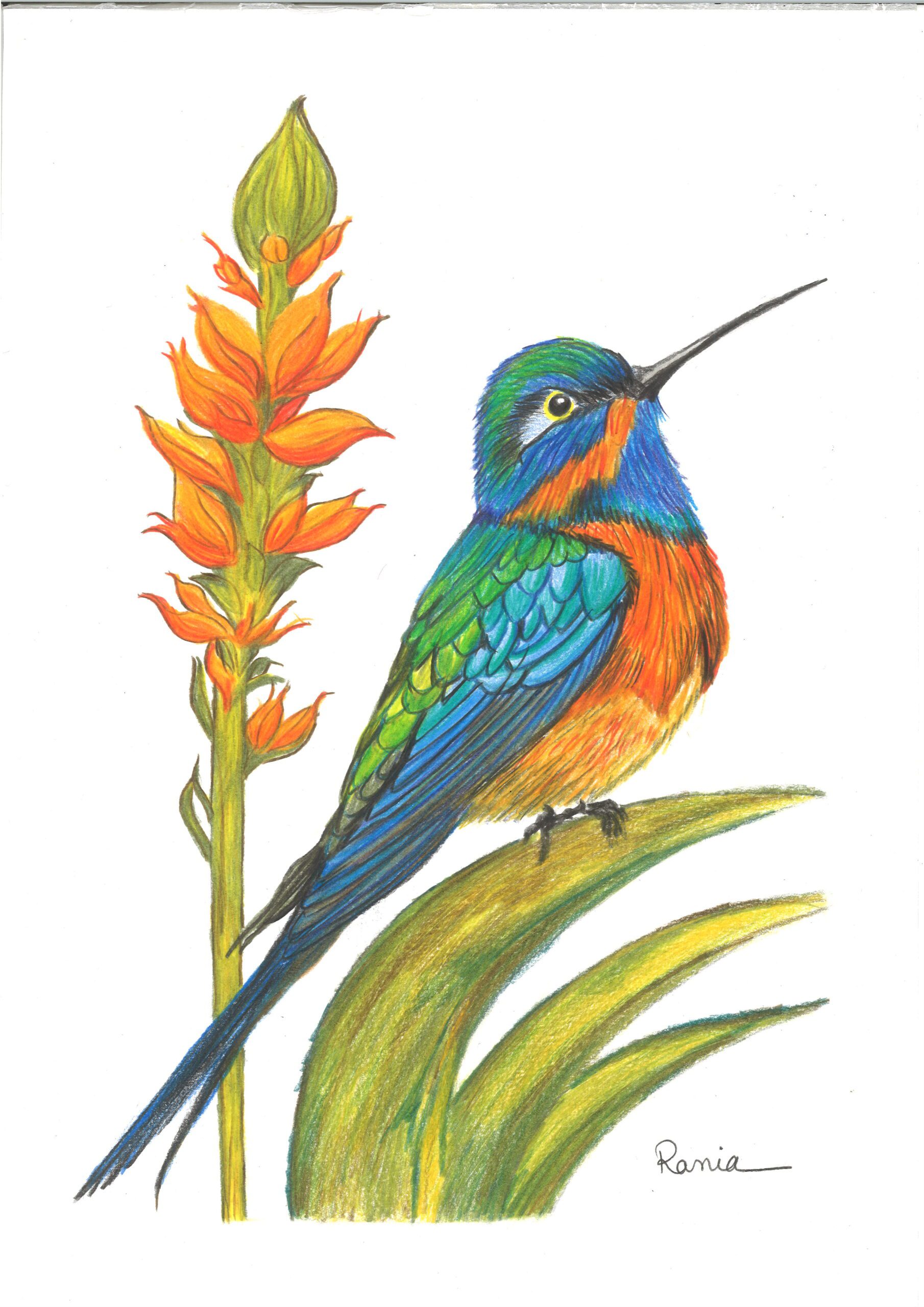
2. Birds appear frequently in your work. What draws you to them as recurring subjects, and how do they help you express themes of continuity and resilience?
Birds have always held a special place in my heart. I am drawn to their innocence and the sense of peace they carry, which makes them recurring subjects in my work. During the war, when the news was filled with pain and loss, I found refuge in drawing birds. They gave me comfort, helped me escape the heaviness of reality, and offered moments of quiet distraction from the turmoil around me. At the same time, birds embody freedom—the ability to fly anywhere, beyond borders and limitations. In my paintings, they become symbols of resilience and continuity, reminding my viewers and me that even in times of hardship, there is always movement, renewal, and the possibility of peace.
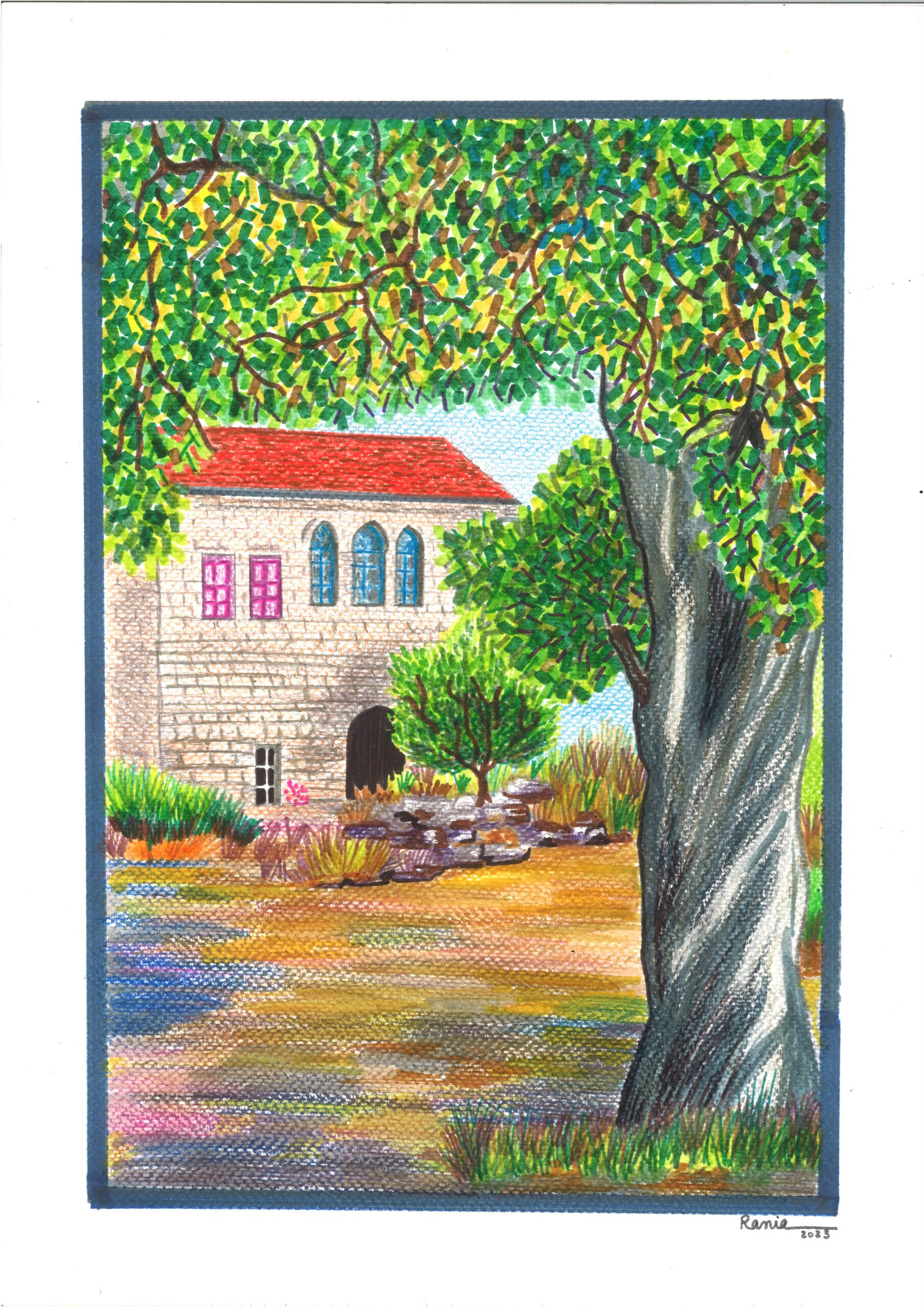
3. Traditional Lebanese houses carry layers of memory and history. What do you look for when choosing which architectural elements to portray in your paintings?
What draws me to the traditional houses of Beirut and Lebanon is the contrast between their present state and the life they once held. Many of these houses are now abandoned and in terrible shape, yet I remember them as places full of colour, voices, and stories. Each house carries a history—stories my grandmother used to tell us, memories of ancestors, and echoes of a vibrant past. When I choose which architectural elements to portray, I look for details that embody this layered memory: the arches, balconies, and windows that once framed daily life. There is an urge inside me to return life and colour to these houses through my paintings, to preserve them as symbols of resilience and continuity. At the same time, I am deeply in love with their design—the harmony of proportions, the elegance of ornamentation, and the way they reflect Lebanon’s cultural identity. For me, each canvas becomes a way to honour both the beauty of the architecture and the stories it holds.
4. Much of your work explores connections across generations. How do these familial and cultural ties influence the stories you build on canvas?
Connections across generations are central to my work. My grandmother’s stories about Beirut’s old houses first sparked my imagination, and even today, my father continues to share memories of growing up in those homes and of what family life was like inside them. These stories remind me that each house carries not only architectural beauty but also layers of lived experience and cultural identity. When I paint, I try to bring those memories back to life—restoring colour, warmth, and resilience to places that have faded with time. In this way, my canvases become a dialogue between past and present, honouring the continuity of family and heritage while inviting viewers to feel part of that shared story.
My background in Medical Sciences has trained me to observe with precision and patience. That discipline of close observation naturally extends into my art.
Rania El Osta
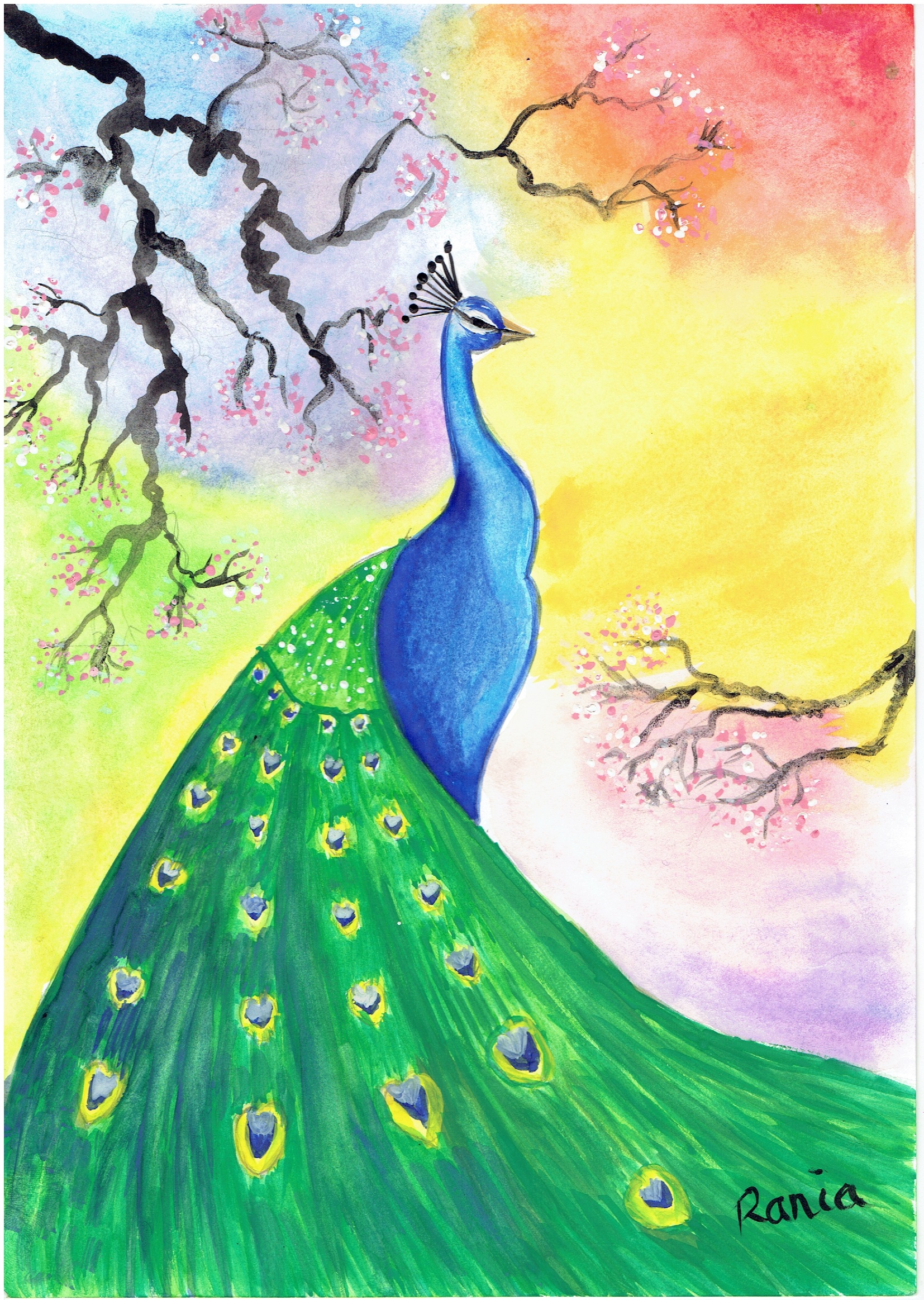
5. Your paintings often sit at the intersection of precision and intuition. How do you balance structured observation with the more instinctive side of your process?
My paintings balance precision and intuition because both are essential to my process. Precision comes from my desire to deliver the image clearly and faithfully to the observer. I want the architectural details, the birds, and the natural forms to be recognisable and authentic to their essence, so that the viewer can connect with them directly. At the same time, intuition guides me through my love of colours. Colours bring life to a painting, set its mood, and carry emotion. When I choose a palette or layer tones, it is my emotions speaking—transforming observation into feeling. This instinctive side allows me to infuse the work with warmth, resilience, or quiet strength, depending on what I want the canvas to express. In this way, structured observation ensures clarity, while intuition through colour gives the painting its soul. Together, they create a dialogue between detail and emotion, precision and poetry.
6. As your work begins to reach audiences beyond Lebanon, what aspects of heritage or landscape do you hope resonate most with viewers encountering it for the first time?
As my work reaches audiences beyond Lebanon, I hope they feel the beauty and uniqueness of our traditional houses and landscapes. These homes are more than architecture—they carry layers of memory and history, anchoring us to our ancestors and reminding us of the importance of preserving heritage. Through my paintings, I want to show that although Lebanon is a small country, often overlooked by the world, it holds immense beauty in its villages, nature, and traditional houses. Even in times of hardship and war, Lebanese people, including me, have found ways to create something beautiful from pain. For me, birds and nature embody that peace, innocence, and calmness—symbols of resilience that remind us of continuity and hope.
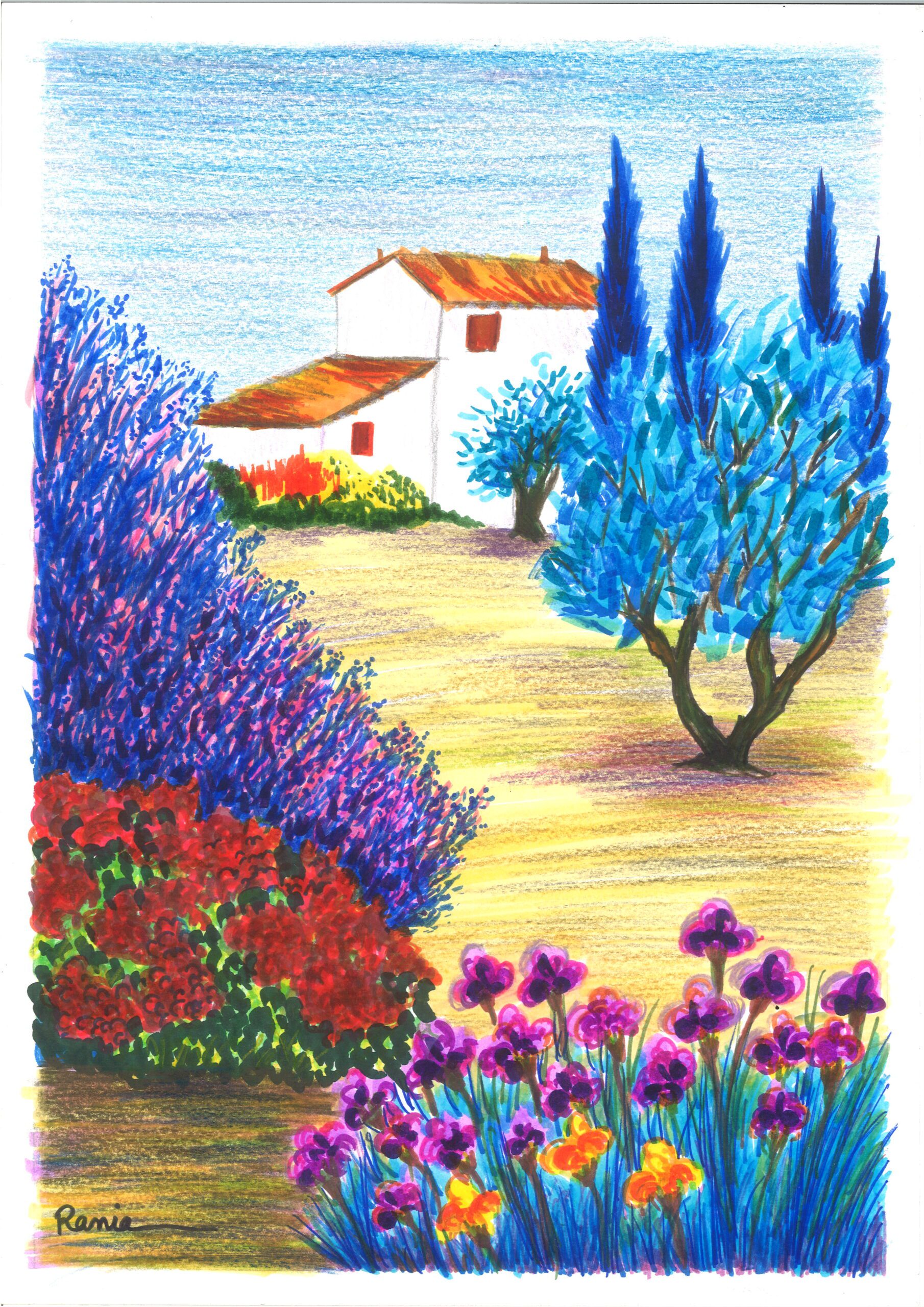
Rania El Osta’s work grows out of looking carefully and staying with what might otherwise be passed over. Her paintings return again and again to old houses, birds, and fragments of nature, not to decorate them or turn them into symbols, but to spend time with what they carry. Through her journey from Medical Sciences to painting, we learn how close observation can move between disciplines, shaping both how we see and how we remember. Her practice shows that patience, memory, and attention can be forms of resistance in uncertain times. What stays with us after this conversation is the sense that her work is built slowly, guided by family stories, lived history, and a steady commitment to noticing what still stands.
To learn more about Rania, visit the links below.
