
The Challenge of Beginning Again Is What Keeps Creative Practice Alive I Malu Urruspuru
We’ve curated enough exhibitions to recognize a pattern: most artists submit their best technical work. The piece that shows skill. The one that proves they can paint. And that’s fine, skill matters. But skill without soul is just decoration.
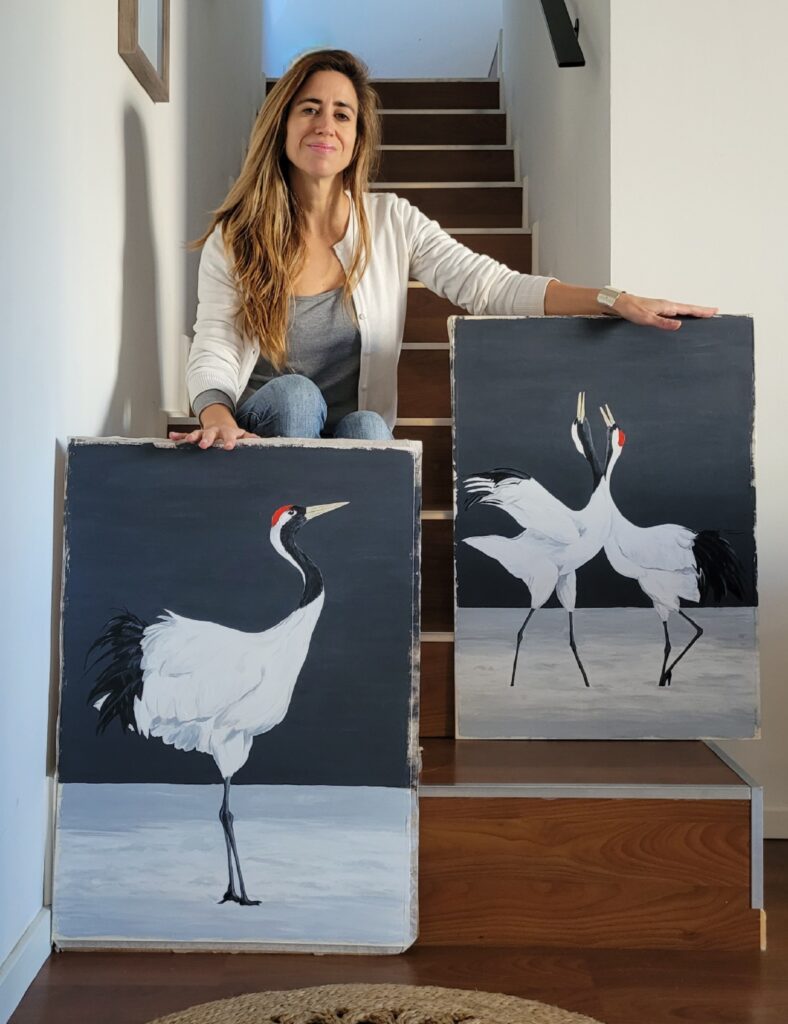
For our virtual exhibition Birds, hosted on Women in Arts Network, we selected artists who understood that birds aren’t just subjects to render they’re something deeper. Among those artists, Malu Urruspuru’s work stopped us immediately.
Not because it was polished or pristine, but because it was honest. Her birds don’t perform beauty they embody it. There’s a directness in her work, a refusal to romanticize. She paints what she sees, but more importantly, she paints what she feels. Her brushstrokes carry the memory of a childhood spent outdoors, watching animals move through the world with a purity humans have forgotten.
We selected Malu because her work operates on a truth most artists struggle to admit that returning to your creative practice after years away isn’t a failure it’s courage. That picking up a brush when life has worn you down isn’t escapism, it’s survival. That the challenge of beginning again, of facing the blank canvas over and over, is what keeps creative practice alive.
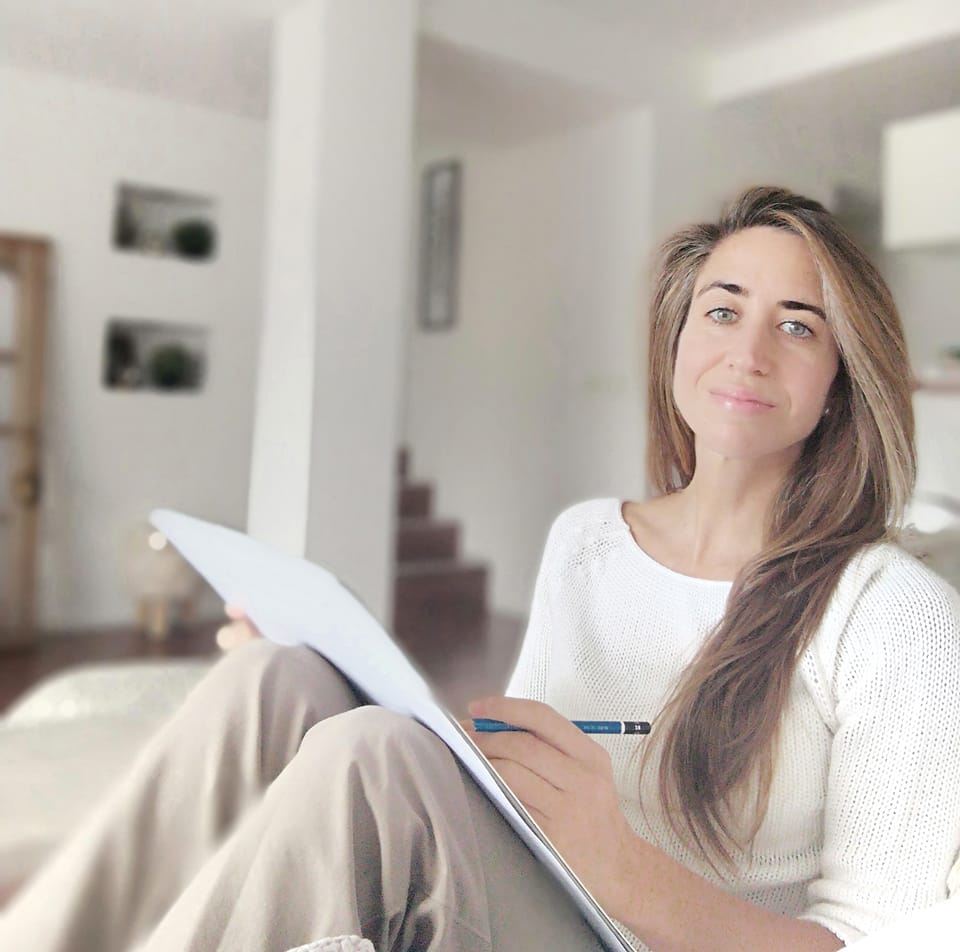
Before we hear from Malu directly, here’s what you need to know about her.
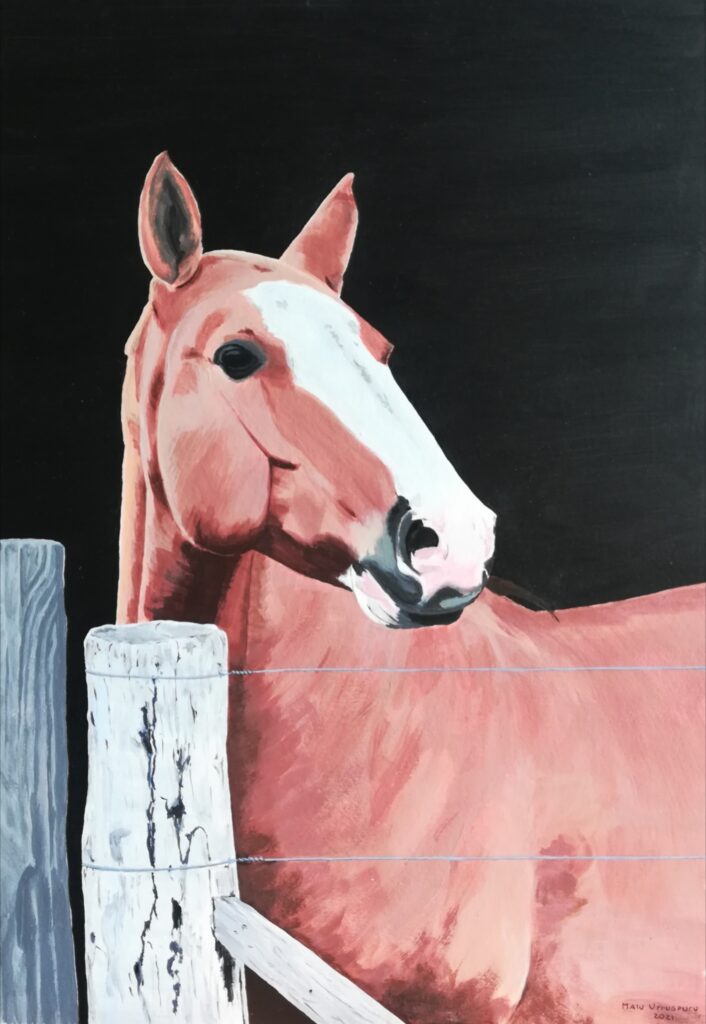
Malu grew up in the countryside, where nature wasn’t background, it was everything. Her mother loved art, and that combination turned Malu into someone who couldn’t stop observing. Horses were her companions, her teachers. She drew them constantly, learning movement and grace through their bodies.
But birds? She had a vision problem as a child. Her parents would point them out, teach her their names, but she couldn’t see the details. So maybe painting them now is her quiet revenge finally pausing, discovering their diversity, seeing what she couldn’t see before.
Like so many women, she set art aside. Life got heavy. The routine became overwhelming. Then, years later, in a workshop in Buenos Aires, she picked up a brush again not for a grand awakening, just for space. A way to breathe. And painting gave her what nothing else could: a different dimension, where time moved slower and her mind could rest.
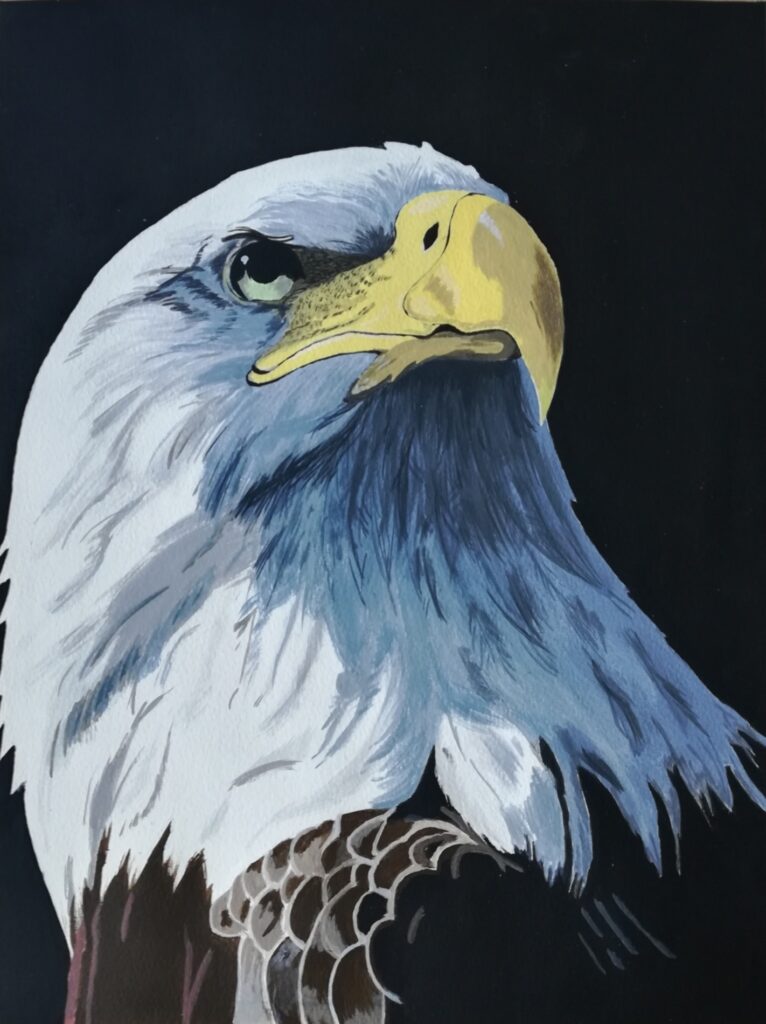
Now she works with acrylics and watercolours, painting birds, animals, faces the things that carry stories. Her process is intuitive. She either feels it or she doesn’t. And when something speaks to her, she paints it. Not to replicate, but to capture its essence.
The hardest part hasn’t been the painting; it’s been recognizing the value of her own work. Learning to exhibit, to sell, to live with imposter syndrome. But what keeps her going is simple: the satisfaction of finishing a piece makes her want to start again. To face that blank canvas. To begin again, even when she doesn’t know where it will lead.
Now, let’s hear from Malu herself about her journey, her process, and why the challenge of beginning again is what keeps creative practice alive.
Q1. Growing up in the countryside seems to have trained your eye very early. What habits or moments from those years still guide how you observe a scene before drawing or painting it today?
Living in the countryside means growing up with all five senses open to nature: its shapes, textures, and colors. Without consciously intending it, one becomes impregnated with the gentle, unspoiled environment offered by plants, animals and the land. The connection is deep, and it has undoubtedly influenced the way I look and create today. As for my inclination toward birds, I cannot say that I was a great observer in childhood. A vision problem prevented me from seeing them in detail, even though my parents made an effort to point them out to us so we could learn their names. Perhaps painting them today is a form of quiet revenge against those limitations: pausing, discovering their diversity, appreciating each feature and finally bringing them into the paper.
Q2. Horses were both a focus of study and companions outdoors. How did spending so much time with them influence the way you understand movement and form in animals now?
I suppose that influence was largely unconscious. It allowed me to understand that animals have a unique capacity to express emotions purely, without artifice. Their movement, posture and the energy they transmit speak just as much as their form. In their eyes, in particular, I discovered a direct window into their feelings, and that experience continues to guide how I observe, understand and represent animals today.
Q3. After many years, a workshop in Buenos Aires marked a return to painting. What shifted for you during that period of study that made art part of your life again?
At that time, I felt a deep need to find my own space: a hobby, a distraction that would help me take my mind off worries and a daily routine that had become especially overwhelming. During that period, in the studio, I discovered that painting had that transformative power. Painting allowed me to disconnect from everything else and transported me to a different dimension, where time seemed to flow differently. Furthermore, this process provided me with a genuine channel of expression and a satisfaction difficult to describe when faced with what I created. Ultimately, this rediscovery, almost without seeking or imagining it, was what allowed drawing and painting to return definitively to my life.
Q4. You mainly work with acrylics and watercolors. How do these materials support what you want to show when working with birds, animals, or faces?
I work with acrylics and watercolors, and honestly, I couldn’t say which I prefer; the answer probably changes depending on the material I’m using at the time. Each offers me different and complementary possibilities. Acrylics allow me to give character, firmness and presence to forms, while watercolors bring subtlety, transparency, and a lightness that works beautifully with many faces and many examples of nature. In this alternation, I find the balance I need to express what I want.
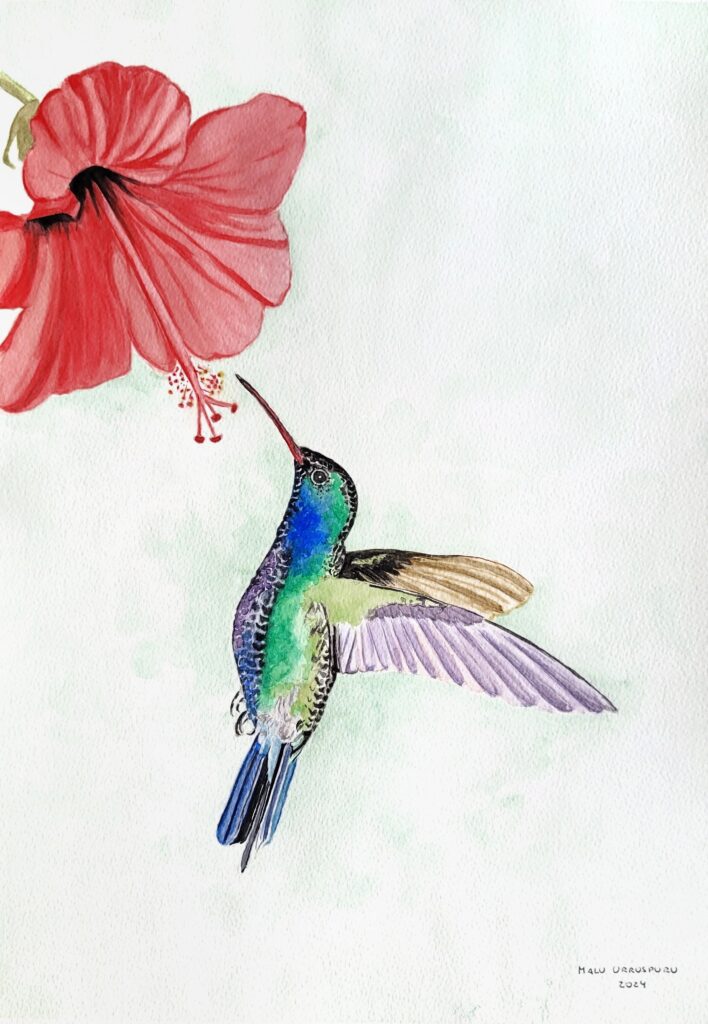
Q5. Figurative subjects appear again and again in your work. What usually tells you that a certain bird, animal, or face is worth translating onto paper?
It’s not really a rational choice, but a deeply intuitive one: you either feel it or you don’t. There are birds, animals, and faces that speak to me in a particular way. It’s not just about an aesthetic pursuit, but about the desire to go beyond form, to try to go into their essence and the stories they carry. Faces, especially, are bearers of narratives that intertwine over time and leave visible traces in every wrinkle, every gesture, every expression. That’s why, with every stroke, I seek to capture the very essence of the person, to reveal their experiences, their joys, their sorrows, and their longings, allowing the viewer to immerse themselves in the complexities of the human condition.
Q6. Looking at your journey from childhood to today, what has been most challenging about sustaining a creative practice as a woman artist, and what keeps you committed to it?
The most challenging aspect has been recognizing the value of my own work and encouraging myself to exhibit and sell it. In a way, it involved learning to live with and sometimes overcome that “imposter syndrome” that almost all of us carry with us. The commitment to the practice, on the other hand, arises naturally. Painting becomes almost a necessity. As with any creative process, the finished work generates such profound satisfaction that it immediately awakens the desire to start again. “Overcoming the blank canvas” (another challenge) to embark on a new adventure, one whose outcome you never know.
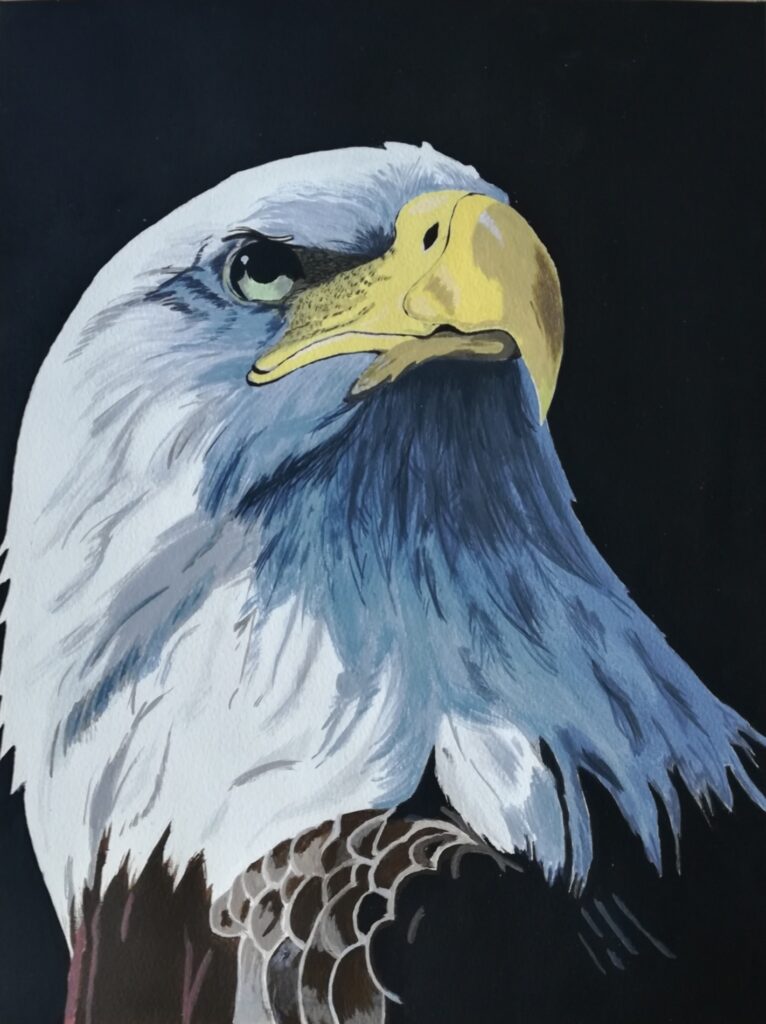
As our conversation drew to a close, here’s what became clear: creativity isn’t about never stopping, it’s about knowing how to return.
We spend so much time treating breaks in creative practice like failures. Like the years away don’t count, like stepping back means you were never serious. Malu’s story dismantles that completely. She left art because life demanded it. She came back when she was drowning and needed air. That’s not a flaw in her commitment that’s understanding what art actually does. It saves you when nothing else can.
What stayed with me most is how she turned limitation into purpose. She couldn’t see birds clearly as a child, so now she paints them not to prove she overcame something, but to finally witness what she missed. She’s not performing recovery. She’s just seeing, fully, for the first time. That’s what real creative work does it gives you access to what was always there but out of reach.
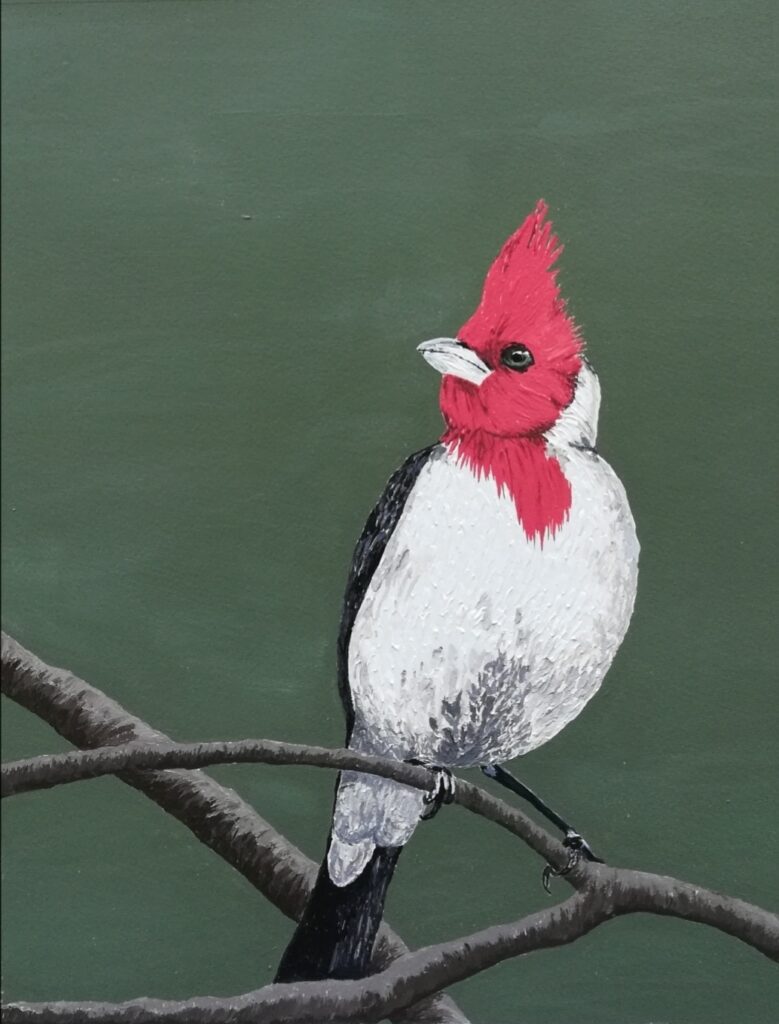
There’s also something honest in how she works. She doesn’t choose subjects through some elaborate conceptual process. She either feels it or she doesn’t. When something speaks to her, she paints it. That kind of trust in your own instinct, in what calls to you without explanation is what most of us complicate with overthinking.
And here’s the truth that cuts through everything else: the challenge of beginning again isn’t an obstacle to creative practice. It is the practice. Every blank canvas asks if you’re still capable, if it’s worth trying, if you have anything left. Facing that question over and over and starting anyway that’s what keeps you alive as an artist. Not talent. Not inspiration. Just the willingness to begin again when it would be easier to walk away. Malu’s work reminded me that returning to your practice after years away isn’t starting over. It’s coming home. And sometimes, that’s the bravest thing you can do.
Follow Malu’s work from the links below to witness how she turns birds, faces, and animals into carriers of stories that go beyond form.
