
Maryna Tsoneva Learned to Love Art From a Hermitage Book on Her Mother’s Shelf
At Women in Arts Network, for our recent exhibition Faces, we asked artists to show us what a face really holds. Not what it looks like. What sits behind it. What it carries when no one’s asking.
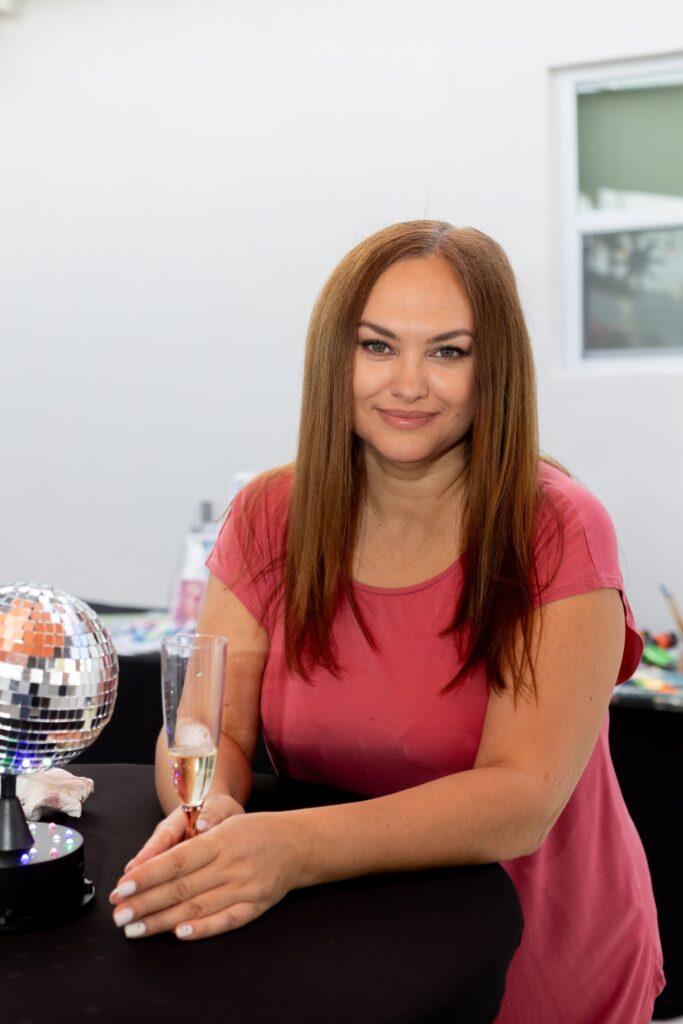
We got a lot of powerful work. But one artist made us stop scrolling entirely. And she learned to paint faces from a book she found on her mother’s shelf in Soviet Ukraine. Maryna Tsoneva is a selected artist for the Faces exhibition and honestly. Her portraits do something most paintings don’t. They look back at you.
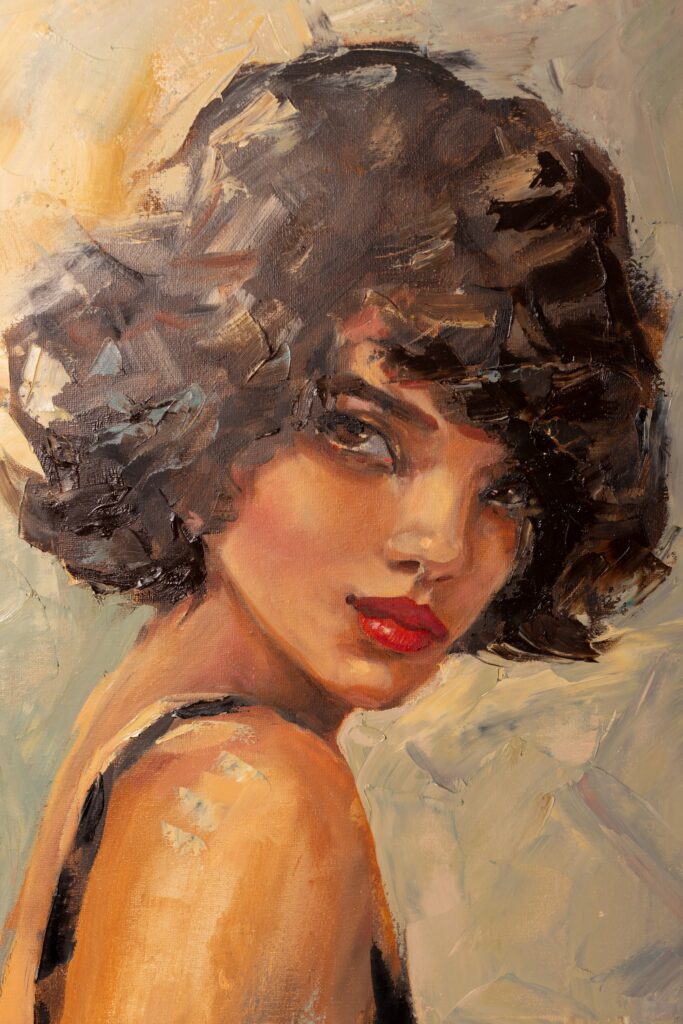
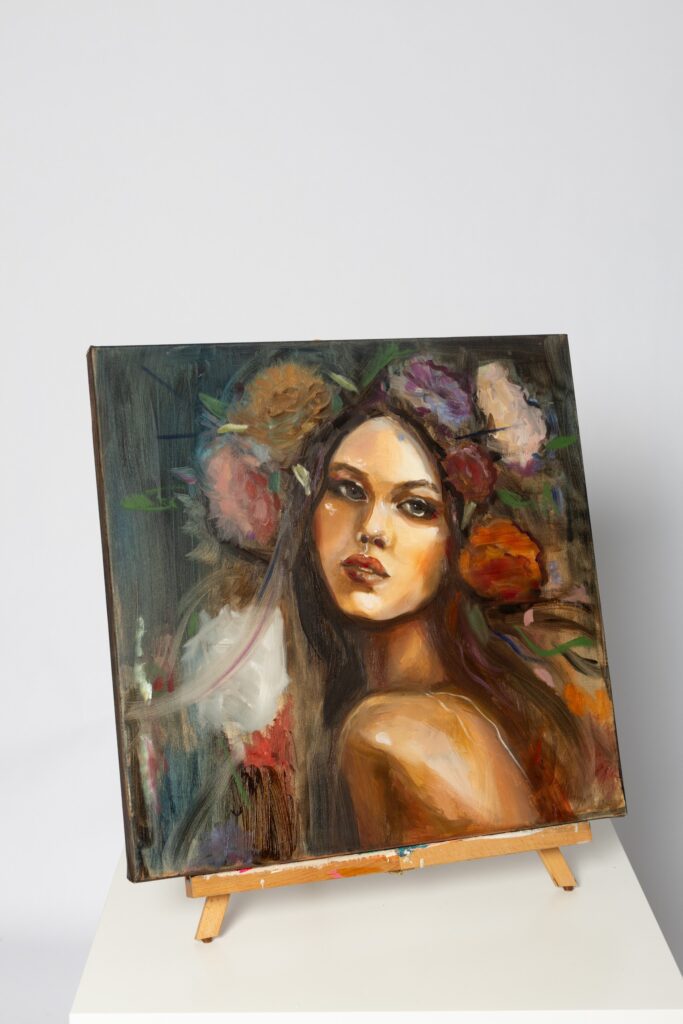
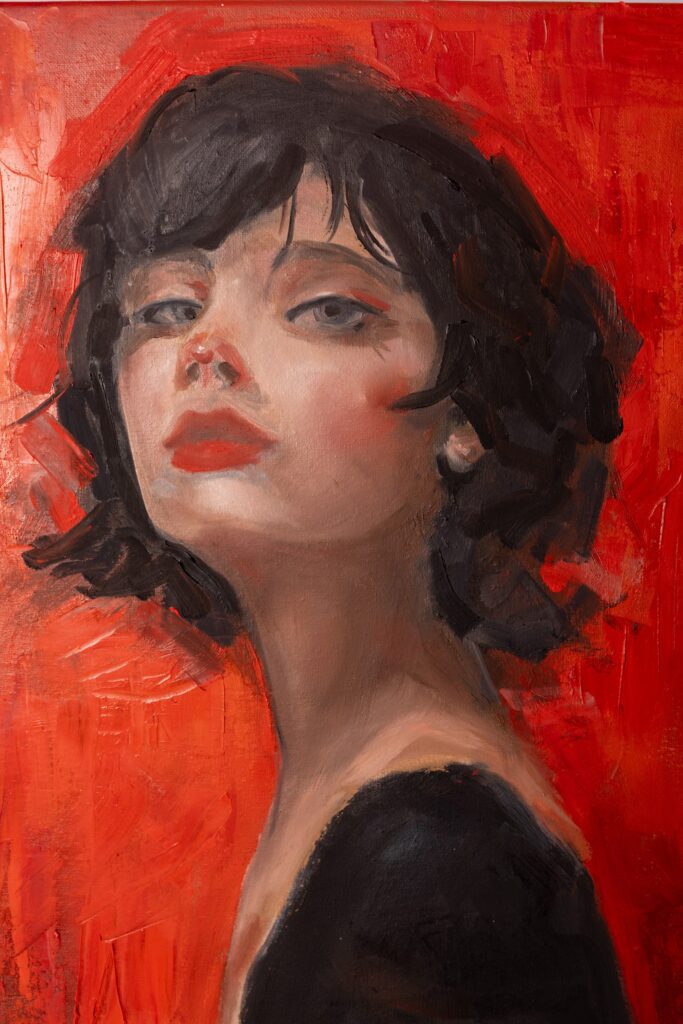
Maryna paints faces in oil and the thing that gets you is what she doesn’t do. She doesn’t overwork them. She doesn’t polish every corner. Some parts are smooth and finished and other parts are left deliberately rough, like she got to a certain point and knew that one more brushstroke would ruin whatever was alive in there. She says the most important thing in painting is knowing when to stop. And you can tell she means it because nothing in her work tries too hard. It gives you just enough to feel something and then it shuts up and lets you sit with it.
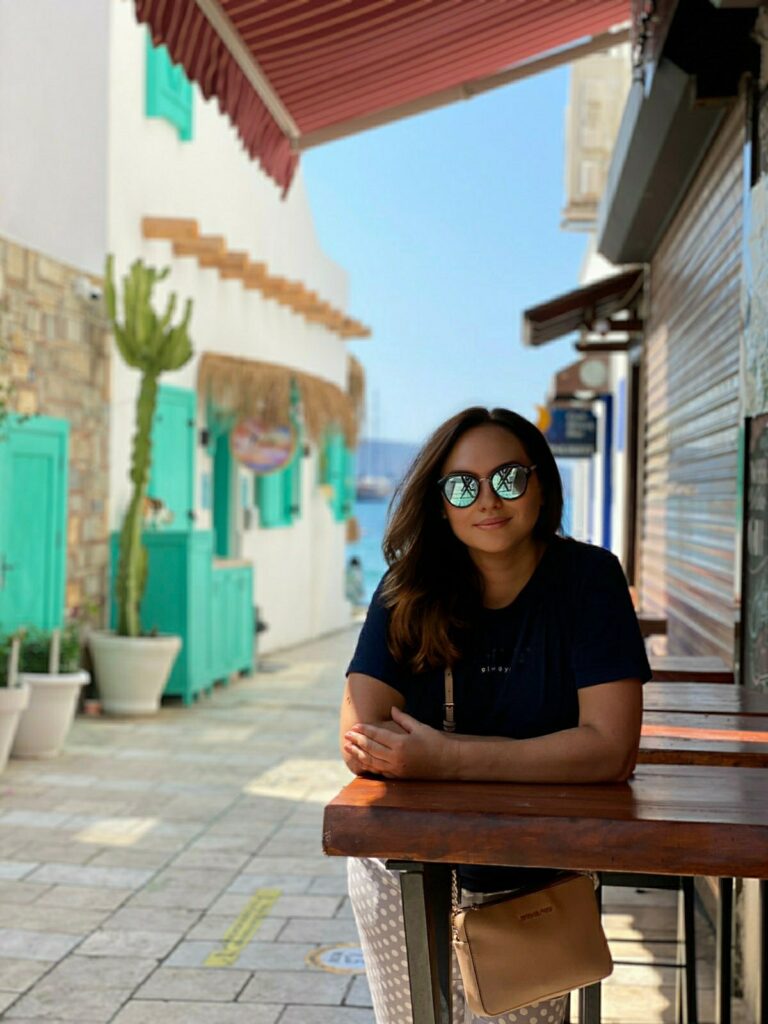
Her faces don’t try to look like someone. They try to feel like someone. There’s always this weight underneath, something the person in the painting is carrying that they’ll never say out loud. You don’t see it exactly. You just feel it. And somehow that’s more honest than any photograph ever could be.
So here’s where it gets interesting. Maryna was born in 1972 in Ukraine. Soviet era. And the world she grew up in was grey. Her word. Everyone dressed the same, lived the same, everything in short supply. But inside her home there was this one book. Big, glossy, full of the most incredible colour. Called The Hermitage.
And this is the part that gets us every time she would sit on the floor as a little girl, for hours, flipping through Raphael, Leonardo, Caravaggio, Degas, Matisse, Monet. A child in a colourless world holding the most beautiful things human beings have ever made in her lap. Something switched on in her that day and it never switched off.
And her mother made that happen. Not with some master plan to raise an artist. She just loved museums. Dragged Maryna and her sister to every single one, every holiday, every chance she got. Kept that book in the house the way you keep something you can’t live without.
She had no idea she was handing her daughter a whole different life. She was just sharing what she loved. And that’s how it always happens isn’t it. The biggest things don’t come with a warning. They come from a book left on a shelf where a curious kid can reach it.
Maryna eventually left Ukraine for the United States and that cracked everything open. New freedom, new styles, a whole different world of what painting could be. But Ukraine never left her.
She says belonging to a culture makes you unique and it shows up in the work whether you want it to or not. And here’s the thing that really got us, she’s still searching. Still learning. Still taking classes. Still saying after all these years that she hasn’t finished figuring out who she is yet. Most artists wouldn’t admit that. Maryna just says it like it’s obvious.
Now let’s hear from Maryna, about that Hermitage book, about grey childhoods and the colours that save you, about painting faces that know exactly when to stop talking, and why after decades of work she’s still not done looking.
Q1. Can you share your background where you grew up in Ukraine, what first drew you to art, and how your journey led you to where you are today as an artist?
I was born in 1972 in Ukraine, during the Soviet era. My childhood memories of that time are a contrast between the external reality and the inner world I discovered for myself. The outside world was often “grey”: people lived modestly for the most part, dressed similarly, and everything was in short supply—from food to furniture. But inside me, there was always an interest in beauty, in the details that stood out from this background: the smell of a theater foyer, the way light played through the thin walls of my mother’s porcelain cup. This love for beauty was probably nurtured in me by my mother. Our home held a large art book—”The Hermitage.” Its glossy pages became my window to another world. I could spend hours looking at reproductions of the old masters: Raphael, Leonardo, my beloved Caravaggio, Degas, Matisse, Monet, and Rubens with his provocative semi-nude figures. It was a shock to my childish imagination. My mother adored museums, and my whole childhood with my sister was spent on endless trips to them during holidays. That love is still alive in me today. There is a special magic and beauty in works of art that captivate me. This is how my love for painting was born and has remained with me forever. I fell in love with this world—and I think it’s for life.
Q2. Your work spans portraiture, landscape, still life, and abstract, how do you decide which genre best expresses a particular idea or emotion?
By nature, I am very curious, and I always enjoy trying different painting techniques and materials—charcoal, pastel, gouache, acrylic, oil… My works are very diverse; I feel my entire artistic journey is an experiment. But my unconditional love is for portraits—I am truly fascinated by faces. If landscapes are about the vibration of colors, then portraits are about emotions. Everything depends on my mood and the subject I am painting. A modern portrait is usually alla prima, while some fairy-tale or historical images call for glazing and a more classical approach. I constantly strive to learn and take masterclasses. Art is very different, especially in Europe and America. I feel fortunate to have the opportunity to see and learn about trends across different continents. I believe I am still searching for myself and remain open to the new. My style is still evolving.
Q3. Your brushwork varies noticeably between subjects, some areas remain resolved and smooth, while others are intentionally raw or interrupted. How do you decide where to withhold finish?
You know what the most important thing in painting is? Knowing when to stop! Ha-ha. I have my secrets I don’t think they’re very rational, but I can share them with you. When I like a piece and I’m satisfied, I simply finish it. When something doesn’t feel right, I always give it a second chance. I set the painting aside until the next painting session, then I fix some parts, rework others. Once the result satisfies me, I can stop. Sometimes, if something really isn’t working, I paint over the unsuccessful area. But I know for sure—if I’m happy with it, it’s time to go wash the brushes!
Q4. Since relocating from Ukraine to the United States, have you noticed shifts in scale, palette, or emotional temperature in your work that reflect that transition?
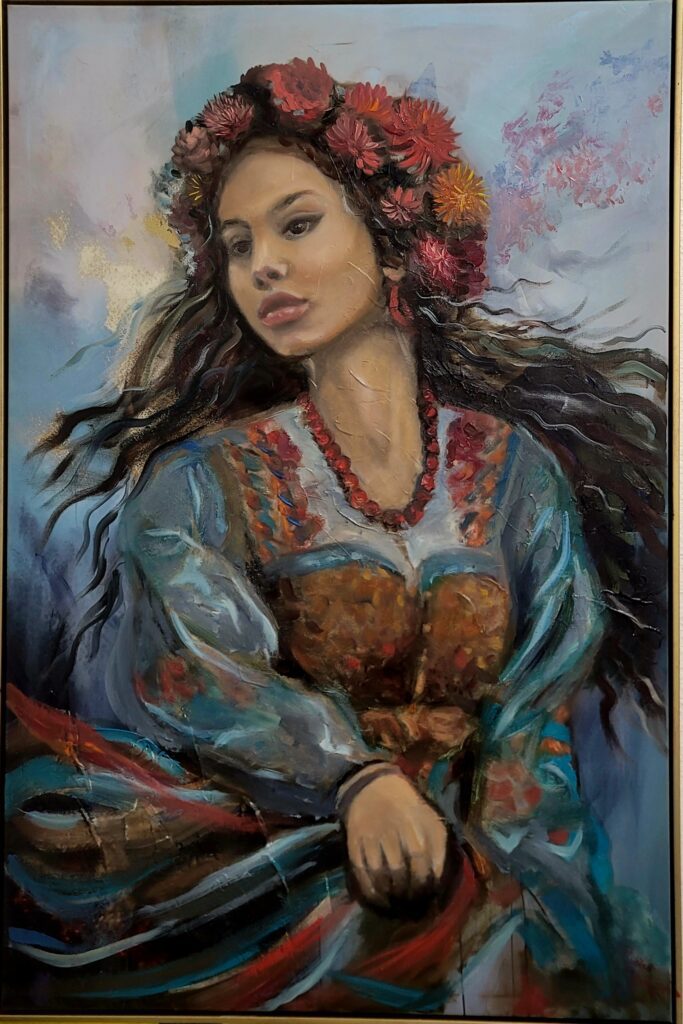
Yes, absolutely—it’s been an amazing experience. I really appreciate the openness toward painting and the diversity of styles in America. Just think of the Impressionists: they struggled to gain recognition in Europe until they found an audience in America! Now the whole world celebrates them. It’s a real melting pot here. This shift transforms your perspective and expands the boundaries of how you see the world. That said, I’m truly glad to have my Ukrainian roots. Belonging to a people’s culture makes you unique—and all of that inevitably finds its way into my painting.
Q5. In your landscapes, place feels less geographic and more atmospheric. How much of those works comes from direct observation versus memory or internalized experience?
Atmosphere always comes first in my landscapes, and I strive to convey it through my palette of colors. There is no need to depict a place realistically—that is what photography is for. Painting is about feeling and mood, because everyone who looks at a painting experiences their own unique, personal spectrum of emotions. A painting is a conductor into the world of your memories.
Q6. There is a noticeable seriousness to your practice, even when the subject is simple. How do you protect that depth in a digital environment that often Favors immediacy and surface impact?
I am drawn to simple things. They are what resonate with the soul. I feel there is a great deal of informational and digital noise surrounding us. What fills me with admiration is a still life, or a portrait that gazes back at you from the wall—simple and real. In an age of overstimulation, there is a desire to simplify everything. To listen to silence. To be in nature. That is where my inspiration is born.
Q7. Colour in your work appears emotionally calibrated rather than symbolic, rarely loud, often tempered. How do you arrive at a palette that supports mood without overpowering the subject?
I always strive for my works to be in color harmony, so that the colors sing together coherently. In portrait painting, I prefer working with a limited palette, using just a few base colors. However, lately, I’ve enjoyed experimenting with mixed media, especially when creating paintings of flowers and birds. Probably the vibrant environment of Florida and my colleagues at the gallery where I work are influencing my preferences and bringing changes. We’ll see what comes next.
Q8. Your academic background suggests a strong respect for tradition. How do you define contemporary relevance for yourself within figurative painting today?
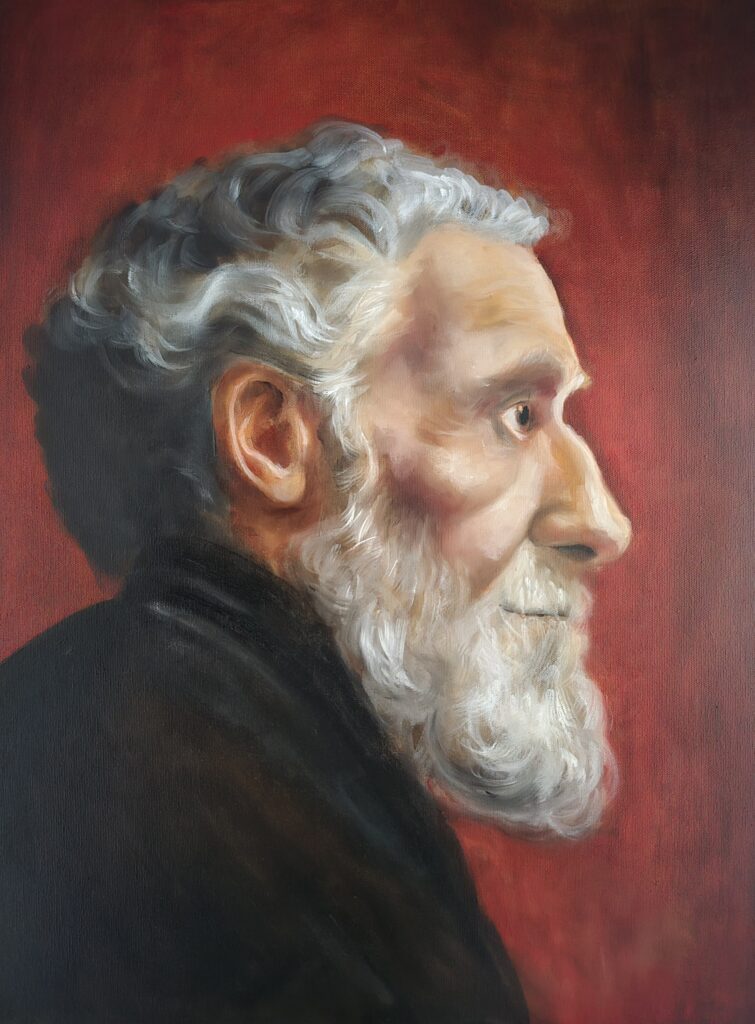
It’s wonderful to still hear the voice of figurative painting in a world dominated by abstraction. I also find the blending of styles interesting—experimentation allows us to create something new and find our own path forward. I believe the study of human nature will always remain compelling. Look at old portraits—in them you can see an entire era. To understand the present, you must look into the past. That’s why reflecting what’s real is so important. That’s how I understand figurative art.
Q9. How do you hope viewers stay with your work, quickly absorb it, or sit with uncertainty and return to it over time?
I believe every artist finds their viewer. There are always people who share similar values and culture, and with whom your work resonates. Such connections are a great motivation for my creativity and growth. In this digital world, we so need genuine dialogue—after all, we are not robots!
Q10. What advice would you give to emerging artists with strong academic training who are learning how to trust intuition without losing rigor?
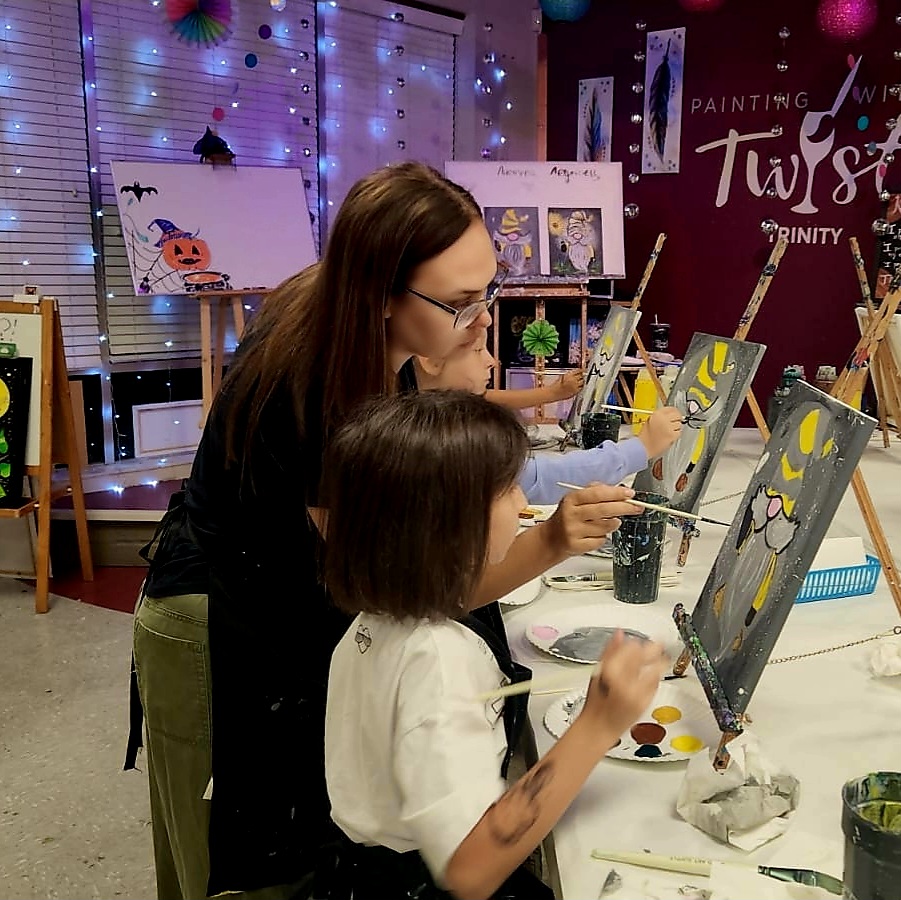
I would like to share my own experience and observation. Working with children in an art studio, I realized that the most important thing is to instill a love for creativity not to teach a child to depict an object accurately. Do not clip your own wings; trust your feelings and intuition.
As our conversation with Maryna drew to a close, we found ourselves thinking about that little girl on the floor in Soviet Ukraine, turning pages of a book that had no business being as powerful as it was.
Here’s a woman who grew up in a world where everything was grey and in short supply. No one was grooming her for an art career. No one was telling her she had talent that needed nurturing. There was just a mother who loved museums and a book called The Hermitage left on a shelf where curious hands could find it. And that was enough. That was the whole beginning. And there’s something in that for all of us.
Because how many of us have talked ourselves out of something because the conditions weren’t right? Because we didn’t have the right training or the right city or the right connections? Maryna had none of it. She had a grey world and a glossy book and a feeling she couldn’t explain. And she followed that feeling across countries, across decades, across an entire life. She’s still following it.
And here’s the part that really stays with you. She’s been painting for years and years and she still says she’s not done finding herself. Still taking masterclasses. Still experimenting. Still open. In a world that wants you to have your whole identity figured out and branded and packaged, Maryna is just quietly doing the work and being honest about the fact that she’s still growing. That’s not a weakness. That’s the bravest thing an artist can admit.
If Maryna’s journey reminds us of anything it’s that the things that change our lives the most are rarely planned. They’re a book on a shelf. A mother who loved beauty and shared it without thinking twice. A feeling in a child that nobody encouraged but nobody could kill either. You don’t need the perfect moment to begin. You just need to not let go of the thing that won’t let go of you.
To follow Maryna’s journey and see more of her work, find her through the links below.
