
How this artist carries her traditional roots into her current work

For this Thursday’s interview, we sit down with artist Elodie Martin, who shares how the gestures passed down through her family and the turns her life has taken now shape the way she works with thread. Taught to embroider at home in Arles by her grandmother and mother, she explains how those early lessons shaped her patience and quiet focus. Even when her path moved elsewhere, textiles remained close, and a life-altering accident eventually brought her back to hand embroidery with renewed intent. Since then, stitching has become a way for her to give form to memory, feeling and lived experience.
Elodie talks about how her visual arts background, her training at Studio Eyral, and her qualifications in Needle and Lunéville crochet embroidery rest on the foundation of the Arles tradition she grew up with. We learn how she balances this heritage with experimental materials and contemporary forms, a combination that has led to exhibitions, gallery work and awards, including first prize at the Linen Festival.
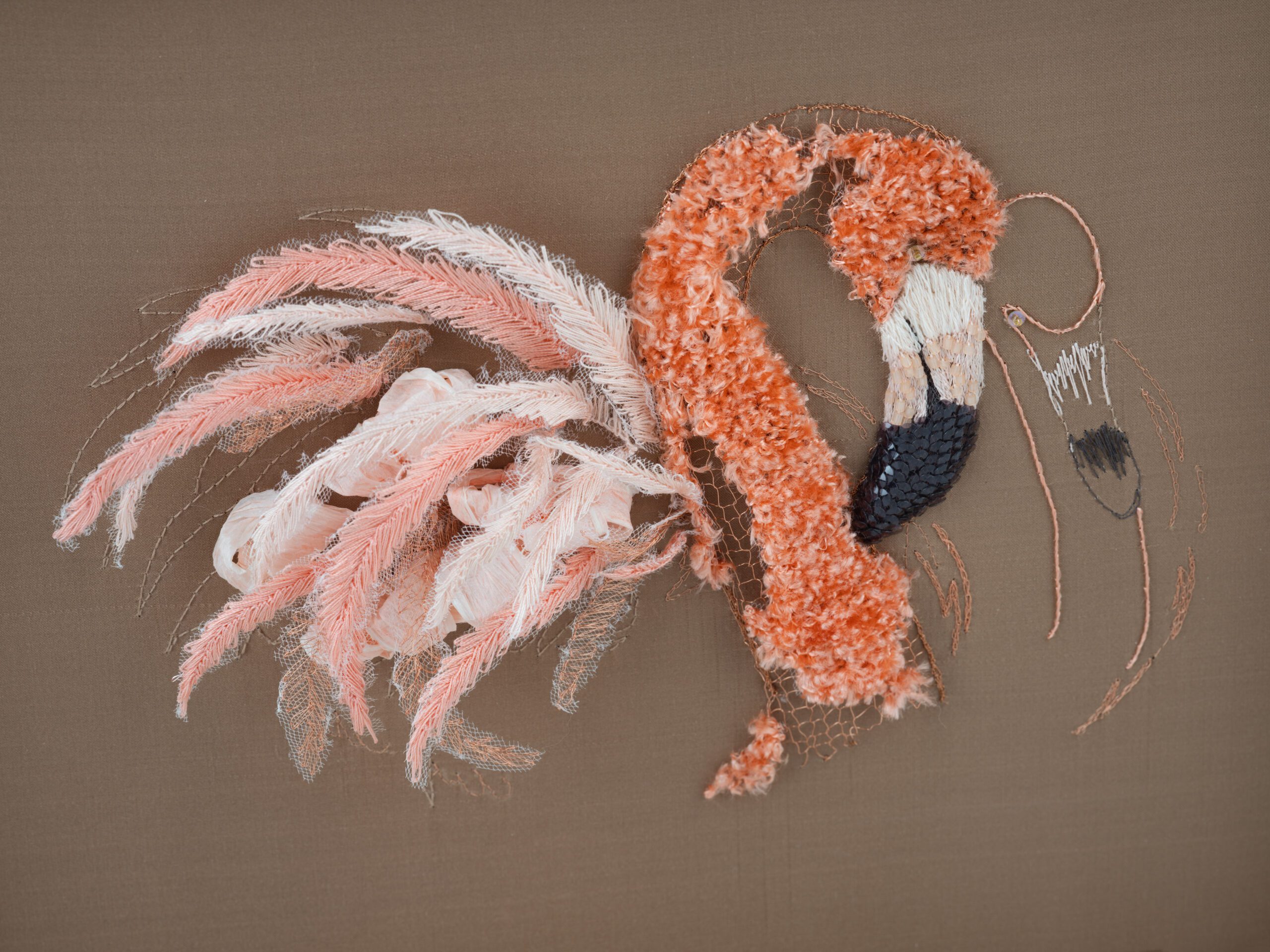
Her work, Splinters of Rose, becomes a clear window into her approach. A childhood image of a flamingo in the Camargue intertwines with themes of care and recovery linked to breast cancer. Every material carries meaning, from copper suggesting reconstruction to paper raffia expressing vulnerability, with Lunéville crochet adding moments of light and release.
Nature and human connection guide much of what she creates. The rhythms of the Camargue influence her movement and layering, while relationships marked by support and fragility settle into the structure of her pieces. She chooses between needle embroidery and Lunéville crochet according to what a feeling requires, letting each technique speak in its own way.
By the end of the conversation, we see how Elodie’s childhood, her accident, her studies, and her steady practice all come together in textiles that tell stories of endurance, care, and renewal. This interview offers a close look into that world and the quiet, deliberate way she builds meaning stitch by stitch.
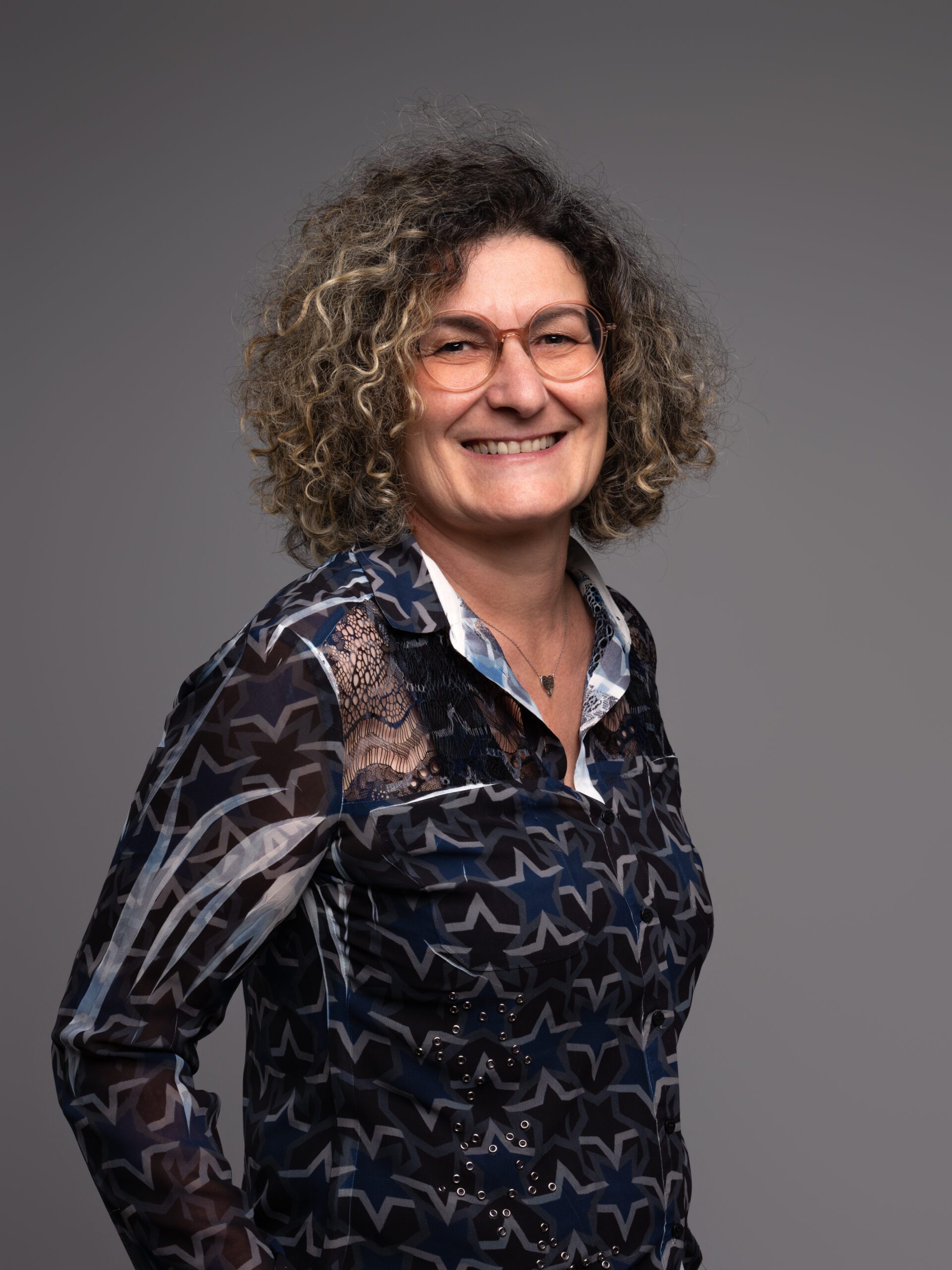
I was introduced to knitting, crocheting, and embroidery of the traditional Arles costume (France -Occitanie) by my grandmother and my mother. The art of thread quickly became an actual language for me. After training in the visual arts, I pursued another career. But I continued with textile arts as a self-taught learner. Twenty years ago, an accident brought me back to hand embroidery. This precise and repetitive gesture has become an inner necessity. Each stitch, each thread translates a pulse, a feeling. Encouraged by my surroundings, I chose to fully dedicate myself to this art.
I took online courses at the Studio Eyral school of art embroidery and obtained the Professional Aptitude Certificate in Needle and Lunéville Crochet Embroidery Arts in 2025. I also had the honour of being awarded 1st prize at the Linen Festival and of presenting my works in galleries and at exhibitions. I embroider to the rhythm of my emotions, between instinct, experimentation, and the search for unprecedented textures. I love the bold combinations of noble and raw materials. Inspired by the rhythms of life, my approach explores organic emotion. Superpositions, transparencies, everything becomes a poetic language. Through my pieces, I convey messages. It’s an invitation to slow down, to look differently, and to let nature inspire us.
1. How did learning traditional Arles embroidery from your grandmother shape the way you approach contemporary textile work today?
Learning embroidery for the traditional Arles costume from my mother has been decisive in my approach to art embroidery today. Beyond the technique, she passed on to me perseverance, precision, and a love for the gesture. Each stitch was an almost meditative moment, a space of attention and meaning. Today, in my contemporary work, this influence remains present. I respect the materials. I emphasise the hand and the detail. Even when I explore bold shapes or mixed materials, I strive to preserve that depth of gesture. This delicate intention I inherited from her. Embroidery taught me one essential thing: tradition is a solid foundation. It allows us to create differently by engaging in a dialogue with what came before us.
Fragility and strength are never separate in my work. I let them stand together and speak to each other.
Elodie Martin
2. Splinters of rose explores recovery and partnership through the figure of the flamingo. How do you translate such emotional narratives into threads and textures?
To translate the emotions in “Splinters of Rose,” I draw on childhood memories of the Camargue. The pink flamingo appeared there as a magical being, a bearer of light and balance. Today, its colour resonates with Pink October. It symbolises the fight, solidarity, and selflessness in the face of breast cancer. The materials tell this story. Cotton, rayon, and copper translate a luminous love even in pain. The neck embroidered with a needle on copper knit becomes a metaphor for a slow but determined reconstruction of an injured body. The paper raffia expresses deep vulnerability; the cracks become scars of resilience. The raised feathers on tulle, made with Lunéville crochet, open a space for breathing and letting go. Next to her, the assistant watches, discreet but essential. Each texture carries a fragment of emotion.
3. Nature and seasonal rhythms appear central to your work. How do you let landscapes like the Camargue guide the movement or composition of a piece?
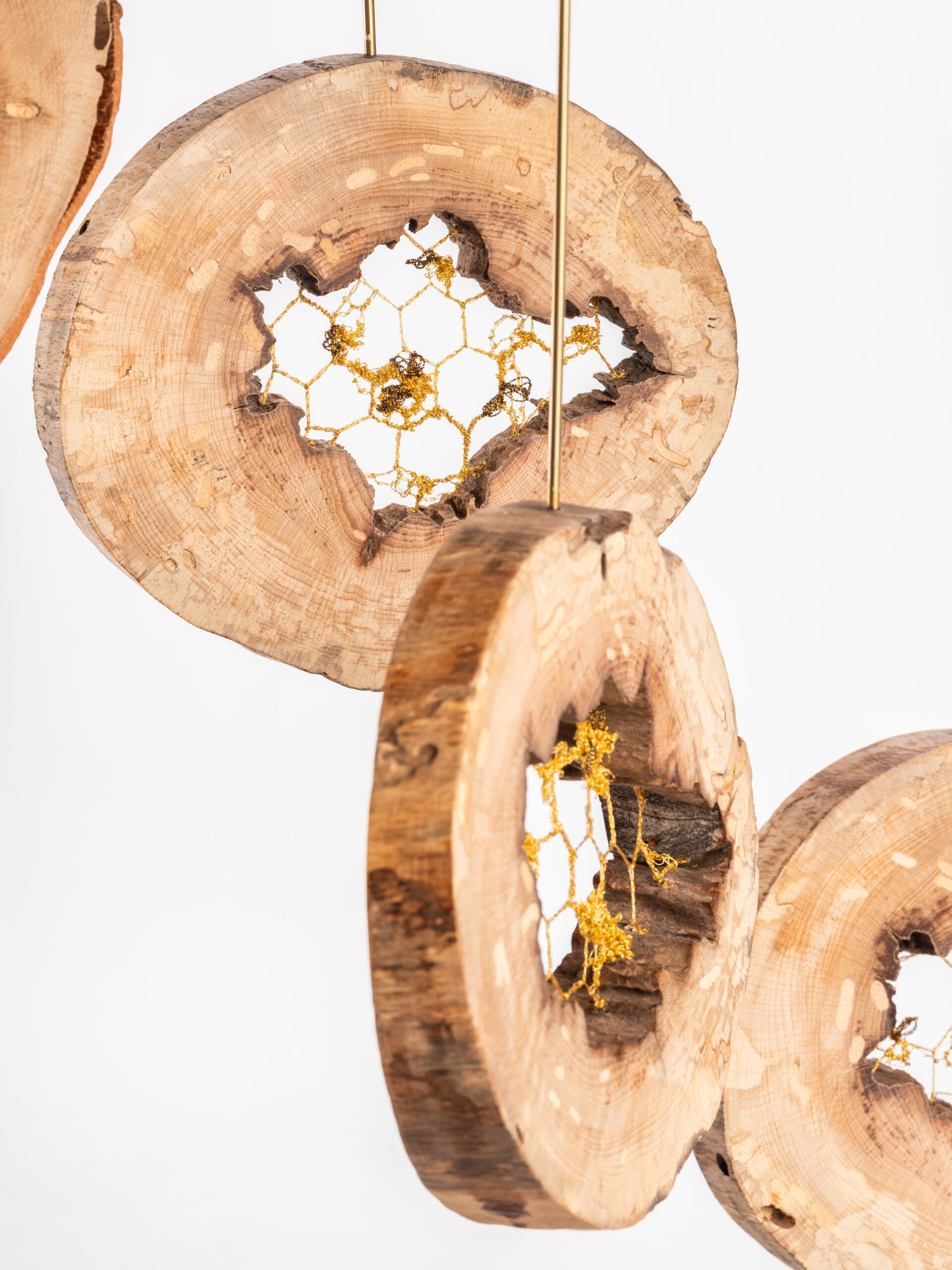
For me, nature is truly a guide. Its rhythms help me find the proper movement, understand where to leave space, and compose with the living. I embroider to the rhythm of my emotions. It’s a lot of instinct, experimentation, and a real search for new textures. I like to mix noble and raw materials. It creates a very organic dynamic. Landscapes influence me, whether they are real or internal. The light, the seasons, and the cycles play on the transparency, the superimpositions, and the breathing of the work. In this approach, human connections also matter. Presence, support, and fragility become lines, tensions, and reliefs. What I’m looking for is interaction. I like that each work invites you to slow down, to look differently, and to let yourself be inspired by nature. At the end of the day, everything comes from the living. The movement originates from there. And the emotion flows between my hands and the eyes that meet the work.
4. Your work blends needle embroidery with Lunéville crochet. How do you decide which technique best conveys a particular feeling or idea?
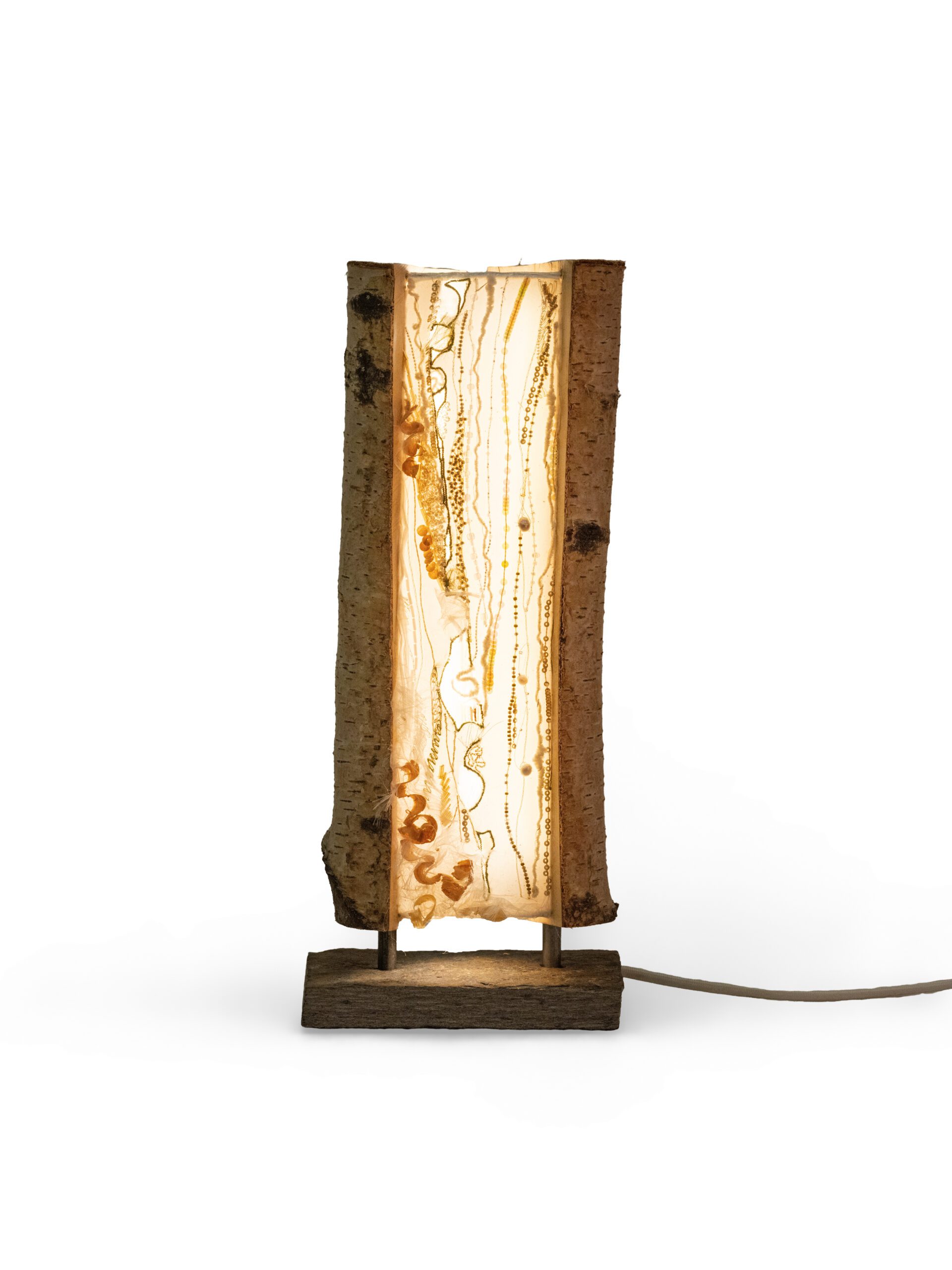
First of all, each emotion calls for a specific material and gesture. The Lunéville hook serves as my base. It creates volume, structure, and sets beads and sequins to bring light and presence. It is the gesture that establishes the emotional anchor. Needle embroidery comes next. It carries the details, the nuances, and the more intimate feelings. It is she who translates complex thoughts and confidences. You will have understood, I choose the technique according to what the emotion demands: the strength of a luminous base or the delicacy of a whisper.
Each emotion calls for a material and a gesture that match its pace.
Elodie Martin
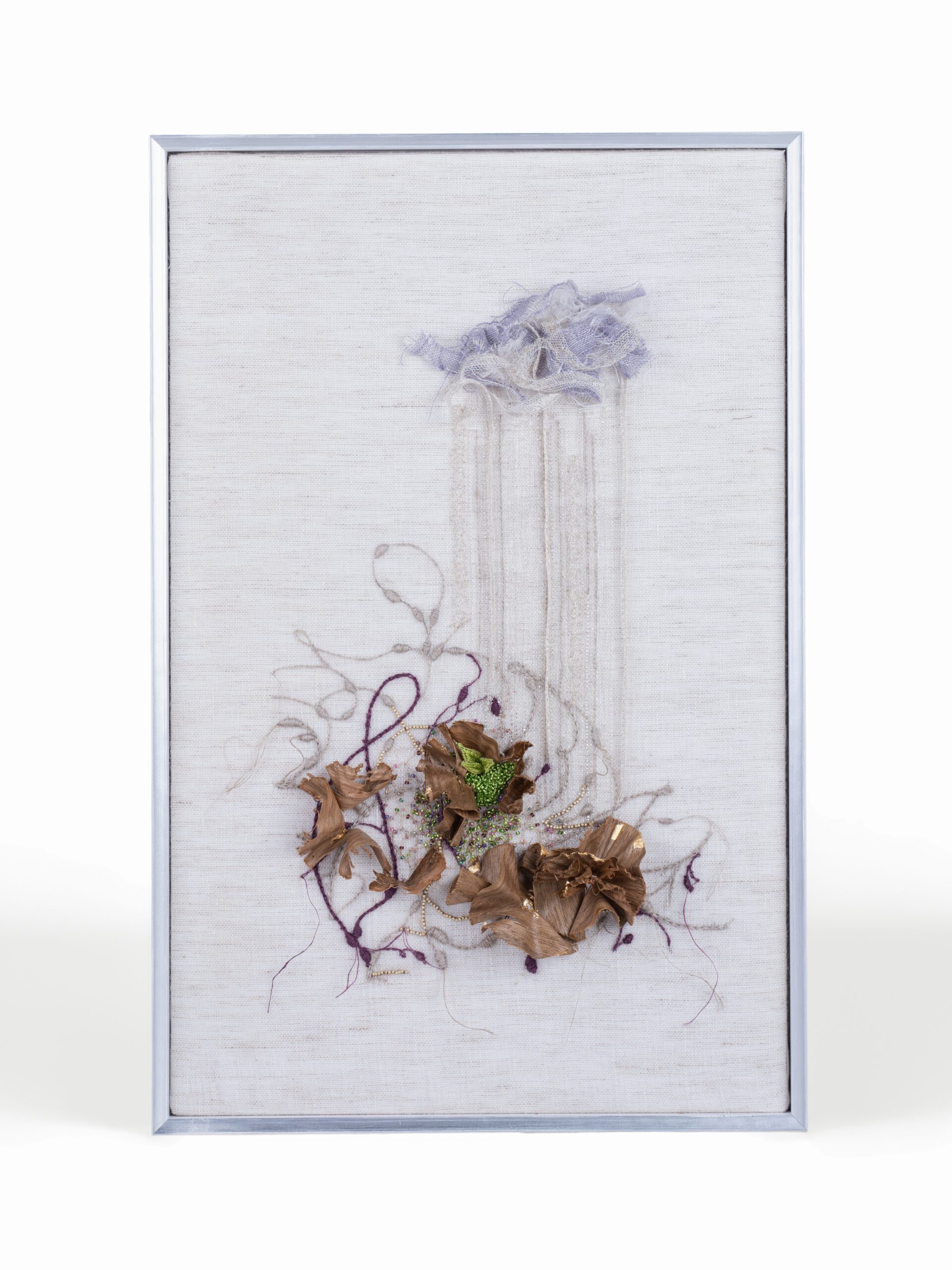
5. The relationship between caregiver and patient is subtle yet present in your pieces. How do you balance portraying fragility with strength in your textile storytelling?
Yes, this relationship is very present in my work. It is discreet but essential. For me, fragility and strength always coexist. I don’t oppose them. I make them dialogue. Fragility appears in fine materials, transparencies, or even vibrating threads. The strength lies in the structure, the rhythm, and the presence of a second motif… the one that accompanies. I am looking for a simple balance. Show the body going through the ordeal, and right next to it, the presence that supports; nothing forced, nothing spectacular, just true. In the end, it is this tension that builds the textile narrative. A fragility that stands tall. A strength that does not impose itself but watches over.
6. You often experiment with unconventional materials like copper thread and paper ribbons. How do these material choices influence both the process and the meaning of a work?
I like working with unconventional materials. For example, copper wire, paper raffia bring something else. Copper changes everything. It sets a rhythm. He resists, he guides, and finally, he forces me to slow down. He also symbolises reconstruction and solidity. Paper is the opposite. It is fragile, almost breathable. It wrinkles, tears, and reveals vulnerability. These materials really influence the process. I have to adapt to them and let their constraints guide the gesture. And they also influence the meaning. Copper speaks of strength, and paper speaks of fragility. Together they create a dialogue. This contrast nourishes the work. He tells the story of humanity, both strong and delicate.

Elodie Martin’s work shows how a thread can carry stories that grow out of real moments in a life. Her textiles come from early lessons at home, years spent learning through practice, and a return to embroidery sparked by an unexpected turning point. Through copper, paper, cotton and tulle, she touches on care, uncertainty, support and the slow rebuilding that follows hardship.
What we learn from her journey is that embroidery is not just a technique but a way of paying attention to people, places and the shifting rhythms around us. Her approach reminds us how quiet gestures can shape meaning, and how a piece of fabric can hold experiences that are shared by many.
To learn more about Elodie, visit the links below.
