
How this Artist Found Comfort in Creating

Some conversations immediately draw you in, not because they try to impress, but because they reveal a life built through curiosity and steady exploration. This interview with artist Daniela Tovar offers precisely that. A painter and illustrator with Peruvian and Spanish roots, now based in Valencia, Daniela has gathered her influences from many stages of her life. She talks about how theatre, music and design shaped her long before she committed to painting, and how those early interests continue to guide the way she builds mood, rhythm and structure in her images.
Throughout the conversation, she explains how studying with realist painter Eduardo Deza gave her a firm technical grounding, yet it was watercolour that eventually felt right for her. She recalls being drawn to its lightness and the small surprises it brings, something that continues to keep her process lively. Her studies across cities such as Lima, Madrid, Seville, Salamanca and Rome challenged her ideas again and again, urging her to rethink her approach and experiment until new methods settled naturally into her practice.
At the heart of it all is her interest in connection. Daniela speaks about moments when art helped her feel less isolated and how she hopes her work can quietly offer the same feeling to others. Painting allows her to tell her story, while illustration invites her to step into someone else’s world and collaborate in a different rhythm.
By the time the interview draws to a close, we gain a clear sense of someone who values sincerity, learning and the small moments of comfort that images can bring. Her path, her teachers and the places she has lived continue to shape the way she creates and the way she hopes others will meet her work.
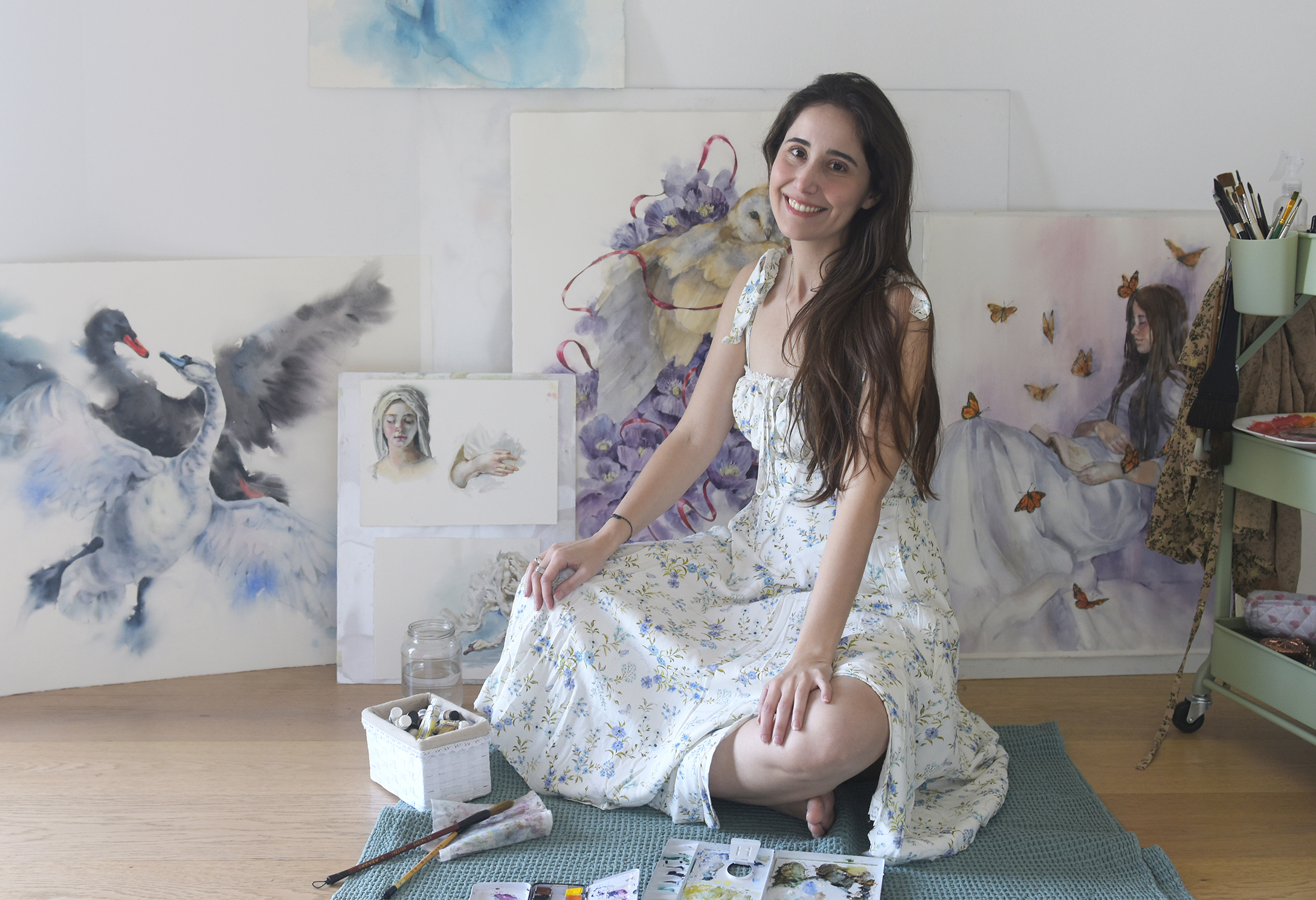
Daniela Tovar is a Peruvian-Spanish artist and illustrator, currently based in Valencia. Her work, mostly in watercolour, seeks not only to capture the beauty that surrounds us, but, above all, strives to make the intangible visible through both universal and very personal symbolism. The spark of art appeared very early in her life, although not exclusively in painting or drawing. From an early age, she was always attracted to stories and all the different ways of telling them: the written word, theatre, music, dance… Initially, she explored interior design, children’s illustration and the performing arts. All this knowledge connects and enriches her artistic proposal. Painting prevailed, however, and in the style of the Renaissance apprentices, she studied drawing and painting techniques with the Peruvian realist painter Eduardo Deza from 2016 to 2020. In her intense studies, she learned various methods, including watercolour.
In contrast to Eduardo’s emphasis on oil painting, Daniela felt that the more ethereal and subtle nature of watercolours connected better with the themes she sought to reflect. This led her to seek to enrich her knowledge by taking intensive workshops with carefully chosen masters of watercolour in Lima, Madrid, Seville, Salamanca and Rome. Each lesson represented new ways of applying the technique and, with it, a world of possibilities that she incorporated into her work. Although she identifies herself mostly as a painter, her love of storytelling led her to work as an illustrator for the Peruvian publishing house Colmillo Blanco. In addition, she has also worked for independent authors on different projects. She currently alternates between painter and illustrator, where she prioritizes a “human” approach, honoring the unpredictability and depth of our nature.
1. Your paintings often feel like an invitation into a shared story. When did you first realise that this way of connecting with people mattered to you?
I am not sure if I could name the exact moment, but I realized many years ago that we can feel quite alone in our thoughts or life situation until we see something that resonates with us, sometimes in ways we cannot explain, but we feel seen. Art has done this for me so many times and I knew I wanted to provide the same kind of experience to others.
Painting is a channel to tell my story, while illustration is the channel to tell someone else’s.
Daniela Tovar
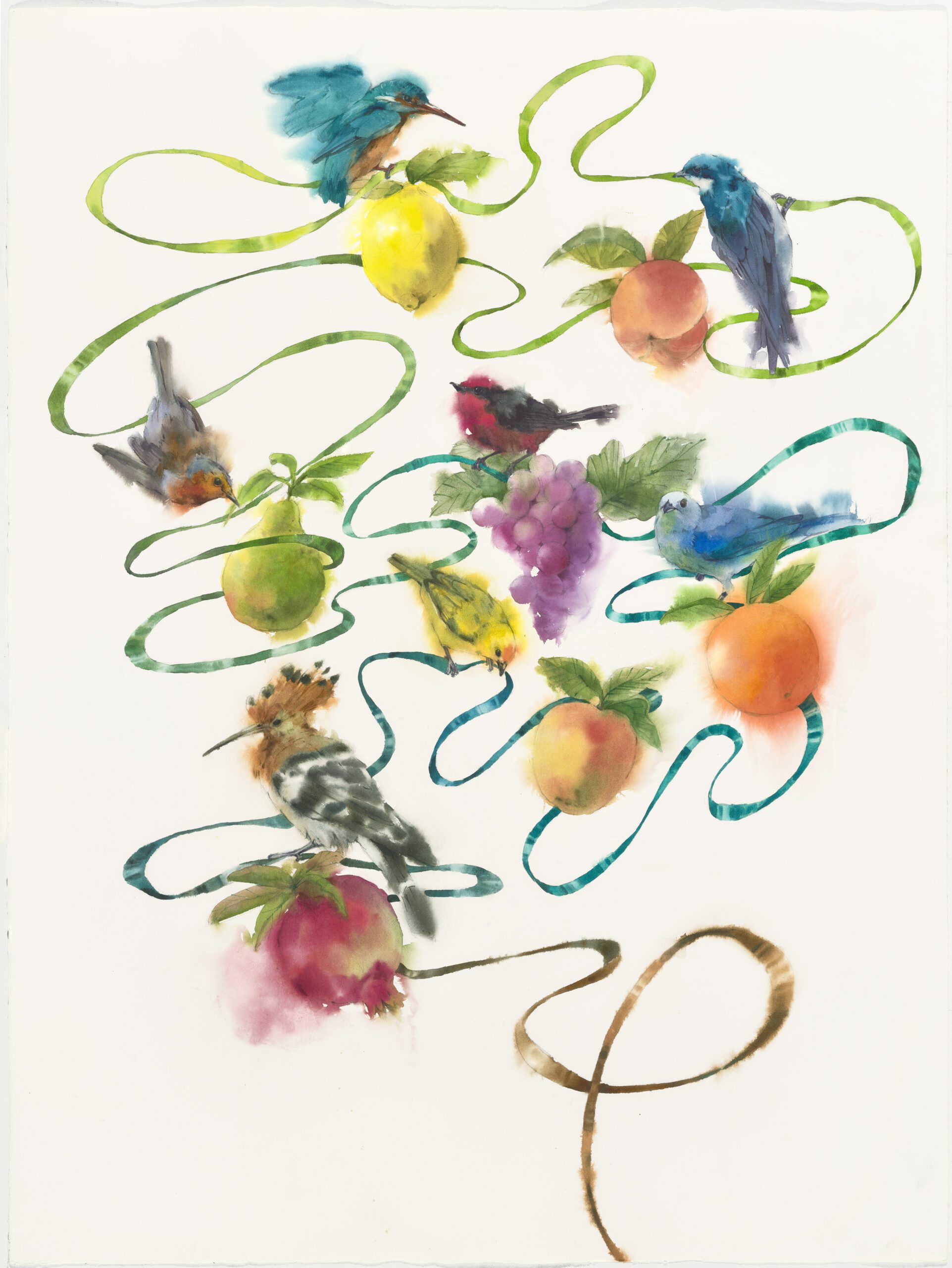
2. You’ve tried so many forms of storytelling through the years. How do those early experiences with theatre, music and design still find their way into the way you paint today?
When you practice more than one art consistently, you start noticing that they share a lot of common ground. For instance, design nurtures composition, which is crucial to any painting. Rhythm in music is also very close to a painting’s composition: how close the elements are, the repetition of forms, where the details are, and the arrangement of colours, similar to that of musical notes. Theatre, on the other hand, is all about embodying emotion, building a scene, and creating an atmosphere. All of these points are key to creating art that connects not only to the viewer but also to me. The inner work, empathy, and self-discovery theatre demands have been a great source of inspiration for my themes.
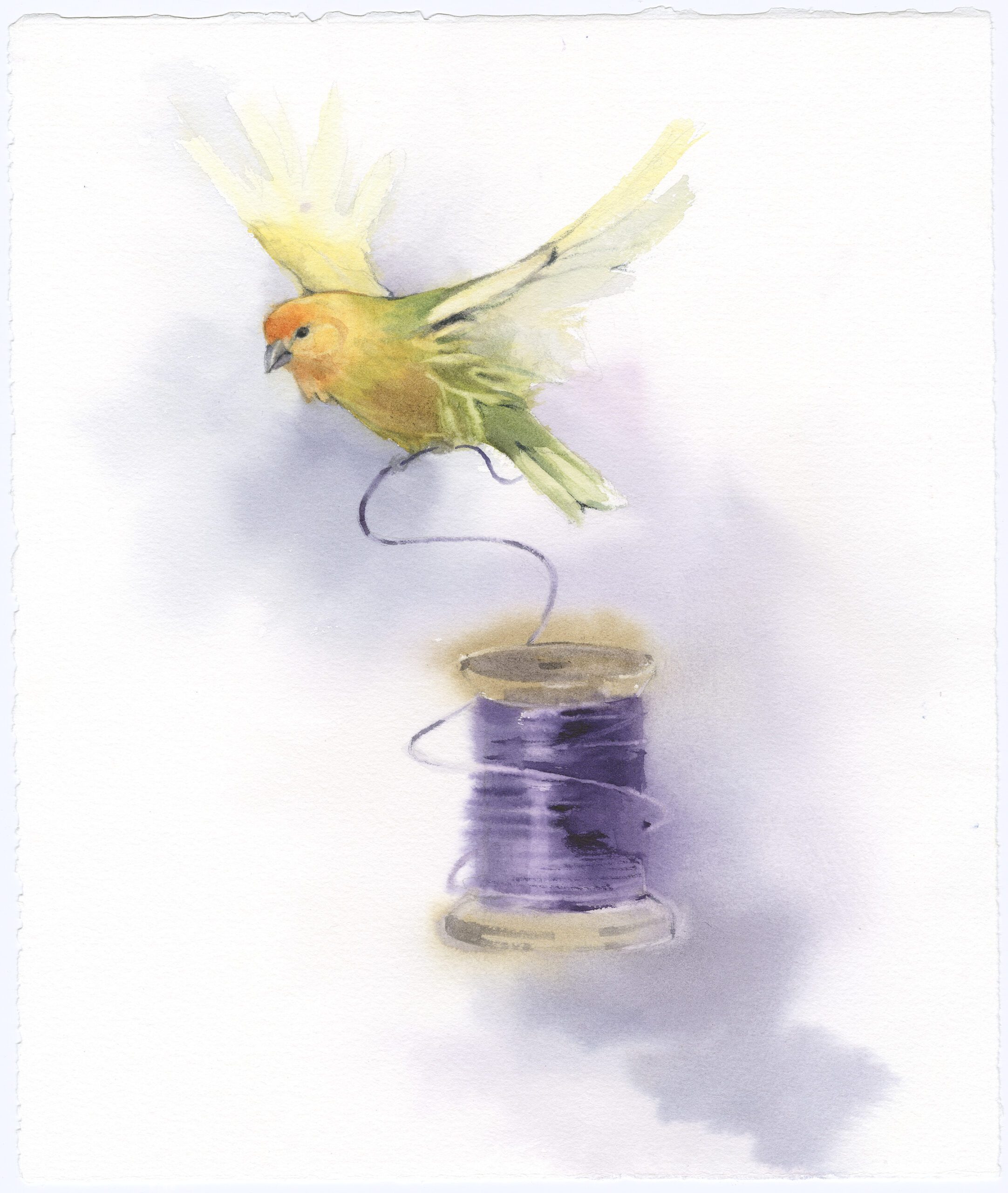
3. Even after studying with a realist oil painter, you were drawn to watercolour. What made you feel that this medium fit the themes you wanted to work with?
The simple answer is that I loved to look at watercolour paintings more than any other kind of artwork. In any museum or show I attended, they always caught my immediate attention. I think it’s something about their delicate nature, the way you can feel the artist’s hand showing through the brush strokes, so raw and honest. I also loved the more intimate watercolour formats versus the grandeur of some massive oil paintings. Somehow, I felt they were a better match for my character. Then, when I actually started painting with watercolours and understood how they worked, I was captivated by the “surprise element” that water and pigments create when they interact. This adds so much freshness to the piece and excitement to the experience.

4. You’ve travelled and learned from teachers in several cities. How did those journeys and encounters shape the way you approach your practice now?
In terms of technique, my limits expanded significantly. Learning from completely different approaches was a constant challenge. You think you know how to tackle something, and then these great teachers come up with totally unexpected plot twists that invite you to re-evaluate what you thought you knew. Usually, I did not know right away how I would fit the new knowledge into my existing practice; I just let myself be and experimented on my own until it felt natural.
Sometimes I remember something I learned back in the day that I have never tried before, and I use it to solve a painting that is stuck. I like to have a variety of resources to choose from; you never know when they may save your artwork. As for the journeys themselves, everything that nurtures your mind and heart will eventually promote the content of your art. Each of these experiences contributed to this aspect, but if I had to choose, I would say my time in Rome has a very special place in my heart and a long echo in my work.
We can feel quite alone in our thoughts or life situation until we see something that resonates with us.
Daniela Tovar
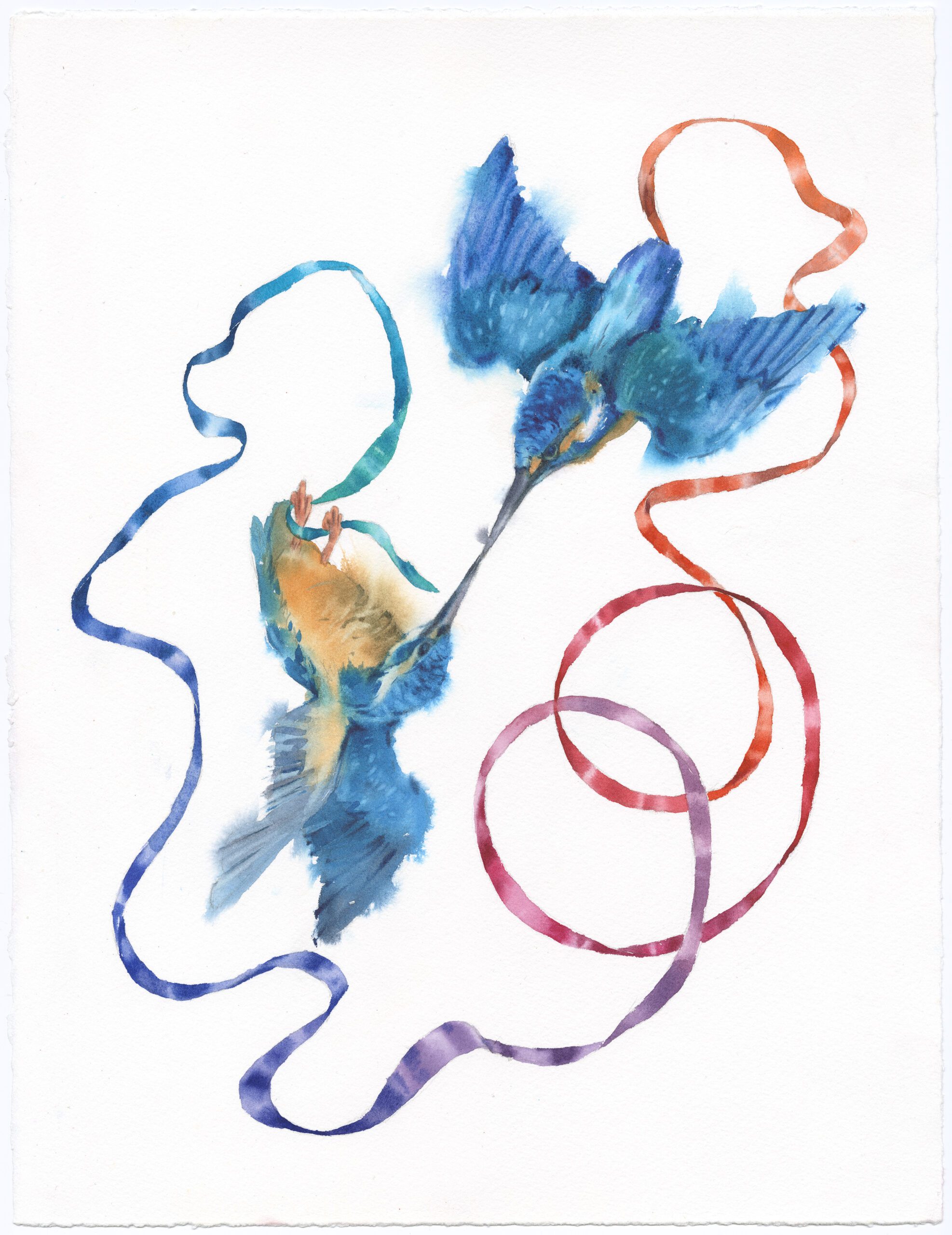
5. You’ve spoken about wanting your work to be a companion of sorts for others. What do you hope someone feels when they stand in front of one of your pieces?
Comfort is the first thing that pops to mind. My paintings present different moods and themes, so hoping for a specific feeling is quite tricky. However, if there is something I always try to convey in my work, it is a sort of warmth, even in my “darkest” paintings. If, in addition to that, someone connects on a very personal level to the painting and gets to see a part of themselves in it, that’s the best I can hope for, regardless of whether their impression matches my original intention. It’s really lovely when both the viewer’s impression and my intentions align, though.
6. You move between painting and illustration quite naturally. How do these two worlds influence each other as you develop new stories and images?
The dividing line between painting and illustration is relatively narrow; I would even say they constantly overlap, at least in my case. While painting is a very enriching experience, it can also get lonely at times because you spend a lot of time alone. Being able to work side by side with other people to illustrate a common project brings you back to earth and broadens your point of view. I feel painting is a channel to tell my truth, my own story, while illustration is a channel to tell someone else’s story, to see through other people’s eyes and open my mind. These two are sides of the same coin in the end.

Reaching the end of this conversation with Daniela Tovar, it becomes clear that her work grows from a long journey filled with curiosity, steady learning and an instinct for stories. Her paintings carry a quiet sense of companionship, shaped by experiences from her childhood interests to her technical studies and the cities that challenged her to rethink what she thought she knew.
What stands out is the way she approaches her practice as something that stays open, inviting change and allowing each new lesson to find its place over time. From her, we learn how art can become a meeting point, offering comfort without trying to direct the viewer, and how both painting and illustration offer her different ways to connect with people and their stories.
To learn more about Daniela, visit the links below.
