
Kathleen Warren on Layering Molten Wax Over Photography
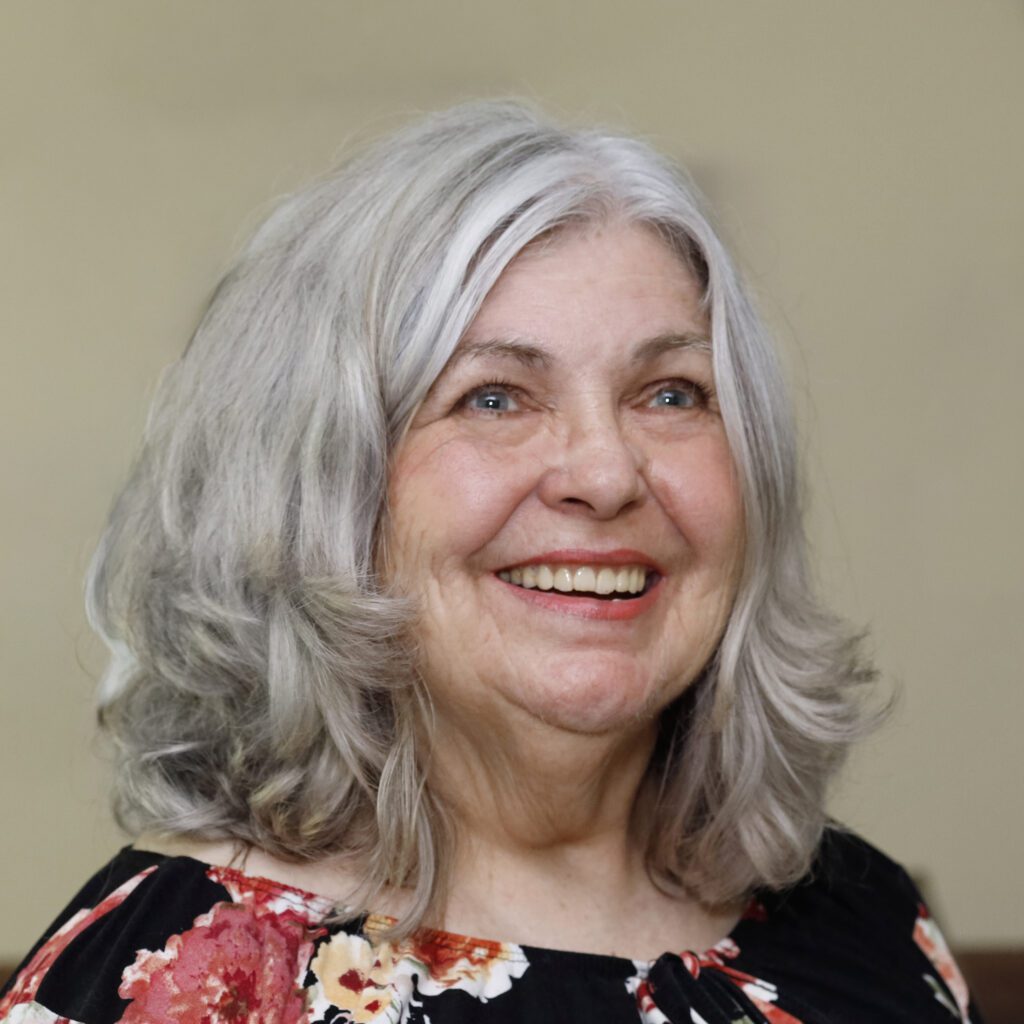
At Women in Arts Network, we didn’t plan for Faces to include someone who pours hot wax over photographs and then scrapes it back until the image underneath becomes something entirely new. But then Kathleen Warren’s work arrived and we realised this exhibition needed exactly that.
Kathleen Warren is a selected artist for the Faces exhibition and what she does with encaustic wax is unlike anything else in this show. She layers it over photography and mixed media, builds it up session after session, scrapes back, adds more, lets the surface accumulate the way memory does, slowly and unevenly, some things staying visible and others getting buried under everything that came after.
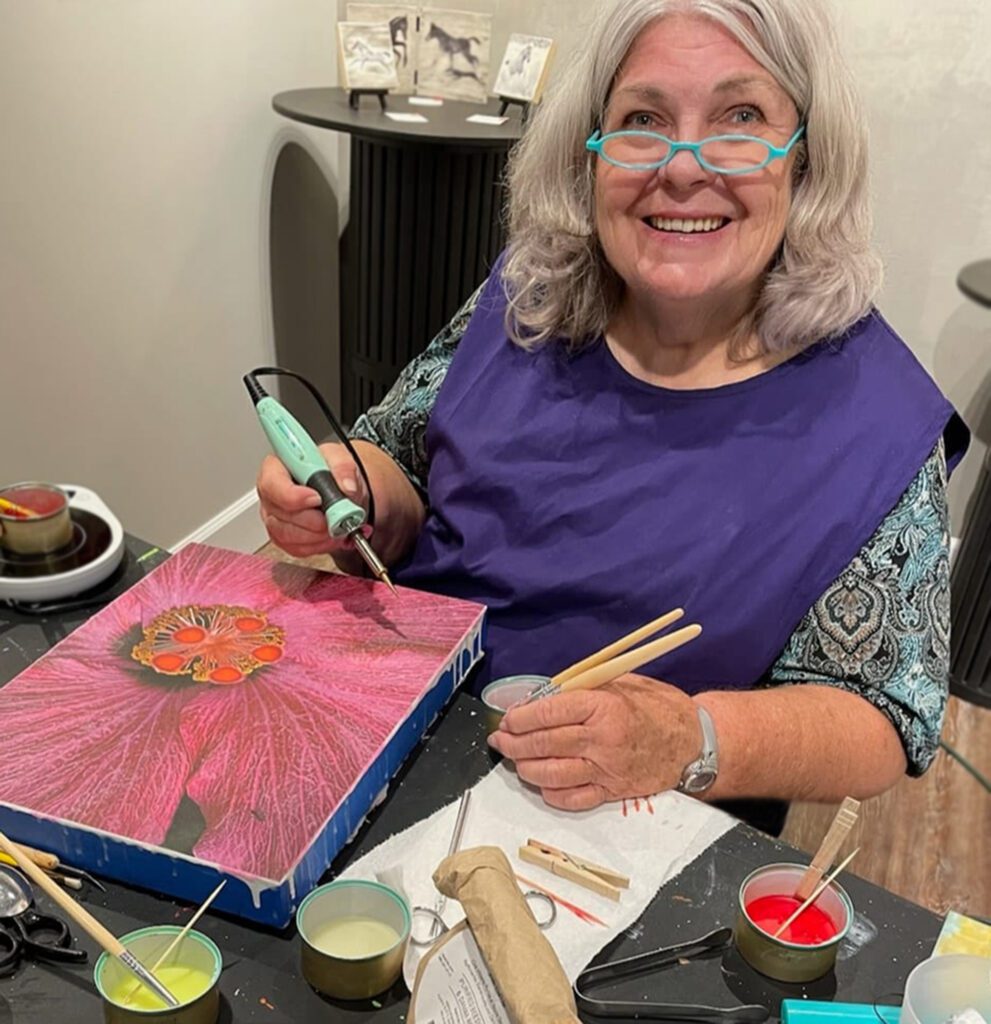
Her work takes time. That’s not a description of her process, it’s a requirement of it. She can’t rush encaustic. The wax won’t let her. Each layer needs to settle before the next one goes on. And she’s said something about that slowness that stopped us, that she has to let the art speak to her, and if she rushes it to completion the piece goes silent. Every work she makes is a conversation between her and the canvas and the conversation only works if she’s willing to listen.
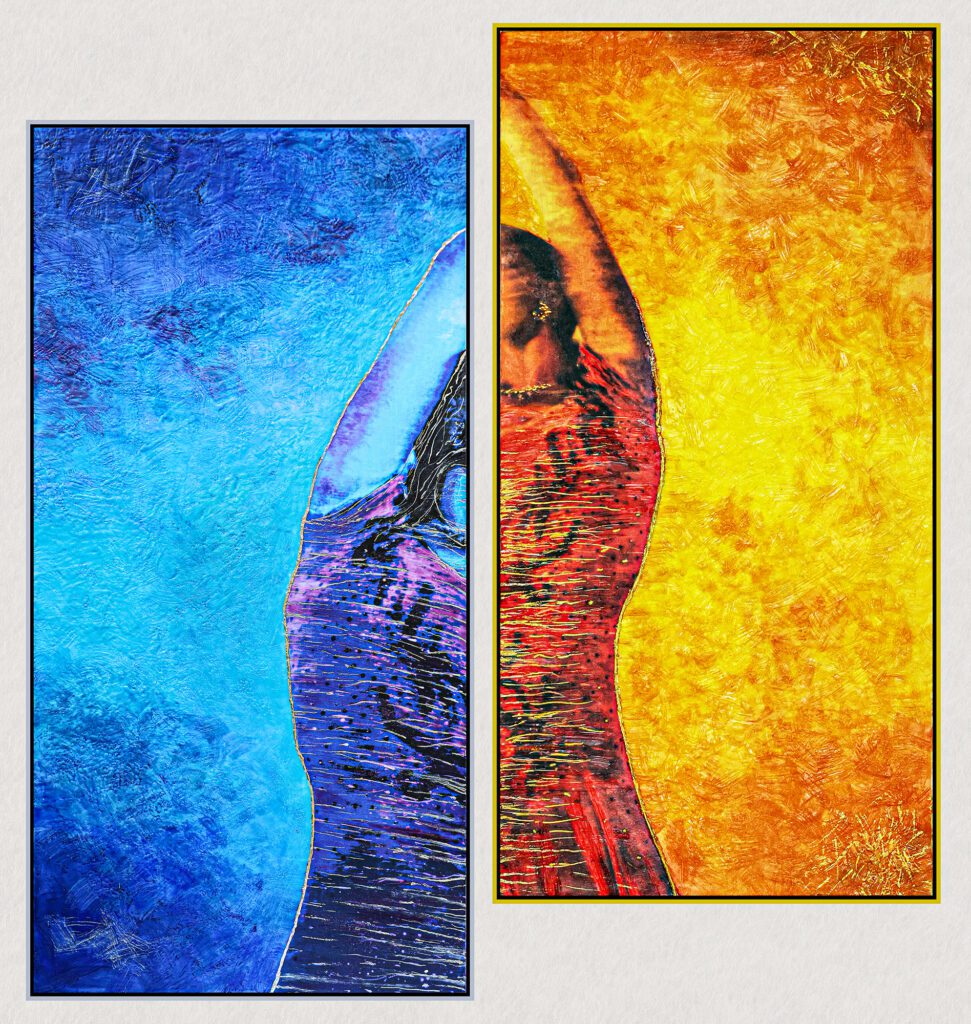
Colour in her hands feels alive. She uses warm palettes to stir emotion and cooler ones to pull you into something more uncertain. She learned that through photography and cinematography and years of repetition until choosing the right tone became instinct rather than decision.
Her compositions never sit still. They’re asymmetrical, full of gesture and movement, every element placed deliberately to pull you through a story that lives inside the surface rather than on top of it.
Kathleen didn’t start as an artist. She started as a scientist. Spent her whole career teaching biological sciences in higher education.
And the whole time she was noticing things that had nothing to do with biology. The way light hit a room. The gesture of a child across the street. The face peering out of a half-curtained window. She’s said it plainly, it’s a lifelong characteristic, I notice. She just didn’t have the medium for it yet.
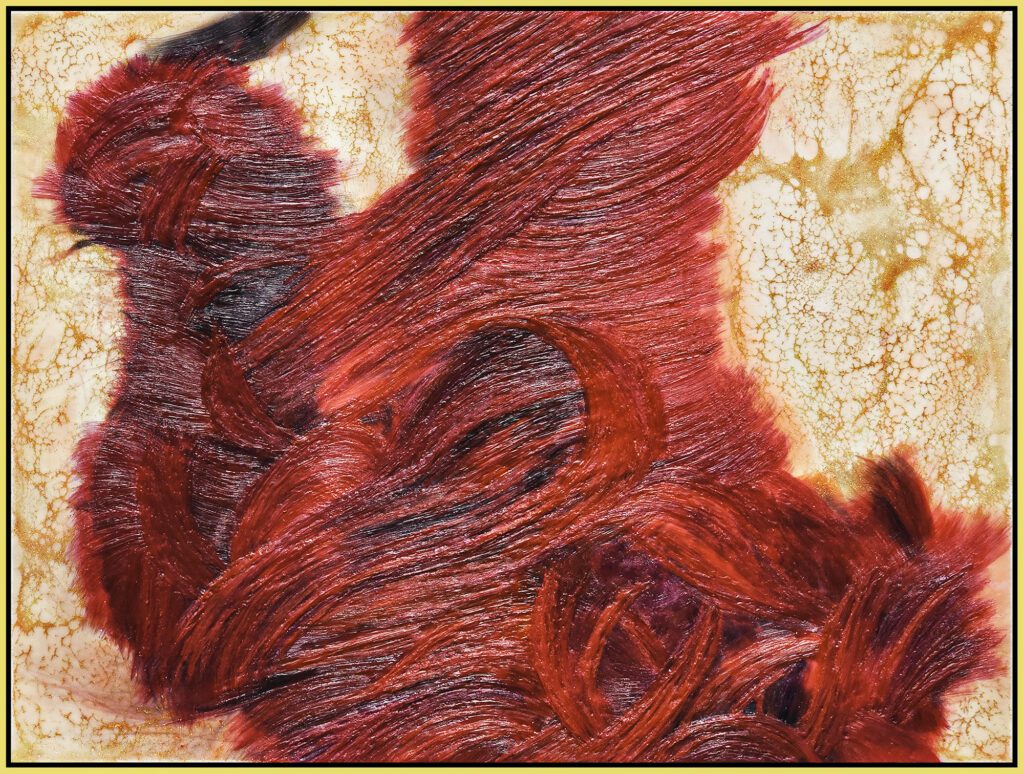
Photography gave her the first language. She got her degree while still teaching biology full time, started exhibiting, started selling. And then retirement opened a door she didn’t know was there.
She found encaustic wax and it was like the medium had been waiting for her. The slowness of it. The physical layering. The way it demanded patience and presence and willingness to let the work evolve on its own terms. It matched her.
She’s an introvert who guards her solitude like it’s sacred. She journals, meditates, prays, daydreams. She says her faith calls her to slow down at times and to be active at others. And that rhythm, that balance between stillness and action, that’s exactly how her paintings feel. Built in layers of silence and gesture that only make sense when you see the whole thing together.
Now let’s hear from Kathleen, about pouring wax over photographs and waiting for the painting to speak, about spending a lifetime noticing what everyone else walks past, and what it means to finally find the medium that matches the way your mind has always worked.
Q1. Could you share your background and formative years as an artist, and when painting shifted from something you practiced to something you understood as a lifelong commitment?
In the small town where I grew up, people knew each other and our shared stories. Art was a natural part of the curriculum in public schools, and imagination was both encouraged and nurtured by family, friends, and teachers. Activities that fostered creativity included unstructured playtime, reading literature and other fiction, creative writing including poetry, crafts, as well as visual fine art. All of these opened my mind to new people, places, times that were different from my own world. I have long noticed my surroundings, and effortlessly I see the stories and details around me. As an introvert, I crave depth in these stories, always asking “what else is there within this situation?” Due to my interest in the sciences, I pursued a career teaching biological sciences in higher education. And again, I noticed—my slides for a presentation looked different from the other scientists or I developed unique activities to help students understand difficult concepts. My art interests had turned to photography during this time, and I was able to earn my photography degree while teaching biology. I was actively showing and selling work in local galleries and juried exhibitions while still teaching fulltime. When I retired from teaching, I started to pursue photography more seriously with an inner urge to go deeper into the art aspect. Then I found the medium of encaustic wax and a return to my roots in several media other than photography. Using those media, especially the encaustic wax, brought me the realization that art in many forms, not merely visual art, is an essential part of who I am and something no longer to be pushed to the side.
Q2. Your work often unfolds through layering, scraping back, and re-assertion rather than a single decisive gesture. What does this slow accumulation allow you to discover that immediacy would not?
First, there is one technical reason for a slow accumulation with my work—encaustic wax layers and texture need to be built up over multiple sessions. But even deeper, I often explain that I must “let the art speak to me.” As I live with the work during its creation, I allow the imagery and message to permeate into my soul. After time spent listening, I find that I can now put my soul back into the art. It becomes a dialog between the artwork and my heart and mind. To me, each piece I create is a living entity that speaks to me if I take the time to listen. The piece will remain silent if I rush it to completion and fail to respect the dialog.
Q3. The colour relationships in your work feel intuitive but disciplined, never decorative. How do you arrive at a palette that holds tension without resolving too neatly?
When I was studying photography, I was taught about “palette” as a tool to indicate emotion and mood in my art. Through the eyes of a cinematographer, I learned how a warm palette can stir passion and how a cooler palette can calm or indicate mystery. As I have applied this concept over and over, both in formal instruction settings and in my personal work, choosing color became intuitive rather than conscious thought. Since photography is a vital part of my art, I use post-processing extensively for color control even before I add wax and other media. When creating a piece or series, I first conceive the story I want to tell and what I want to convey before choosing a palette. Then I will adjust colors, which is now a mostly intuitive process, to develop the piece as I see it in my mind and heart. Since I am drawn to dynamic composition and story, my choice of colors including tones and values becomes dynamic as well, often resulting that tension between elements that entices a viewer to explore further.
Q4. Looking closely at your compositions, balance rarely feels symmetrical or settled. What kind of equilibrium are you searching for emotional, spatial, or something else entirely?
Personally, I am drawn to the dynamic aspect of any subject—the how in science, the partnership with a horse in dressage, the gesture in my art. I use asymmetry because it complements and reveals movement whereas symmetry feels more static. Most often, I am telling a story that includes movement and gesture, and each element is intentionally placed to create a dynamic sense of motion within a static 2-dimensional artwork hanging on a wall. In other work, I often use the idea of “symmetrical but not symmetrical” to create visual tension and move beyond static to the dynamic. In that sense, I am searching for a spatial type of balance or subtle tension. Yet, I include elements that are not only visual but emotional signposts intended to guide the eye and mind of the viewer through the narrative. To me, the spatial arrangement leads to an emotional response.
Q5. In a cultural moment that often values speed and visibility, how do you protect the slower, less performative aspects of your practice?
In my personal life, I rely on intentional solitude. My introvert side craves solitude, not isolation which would indicate moving away from life. My solitude is a choice to move towards connecting with myself and my spiritual life. I guard this time! Specific practices within my time with my inner self include journaling, meditating, praying, and just daydreaming. I am a deeply spiritual artist, and my faith calls me to slow down at times and to be active at other times. And I need that deep thinking time that comes from within for my soul and to fill my creative well. After a lifetime of introspection and meditation, I have come to a sense of self-respect and self-esteem that leads me to inner validation rather than validation by others.
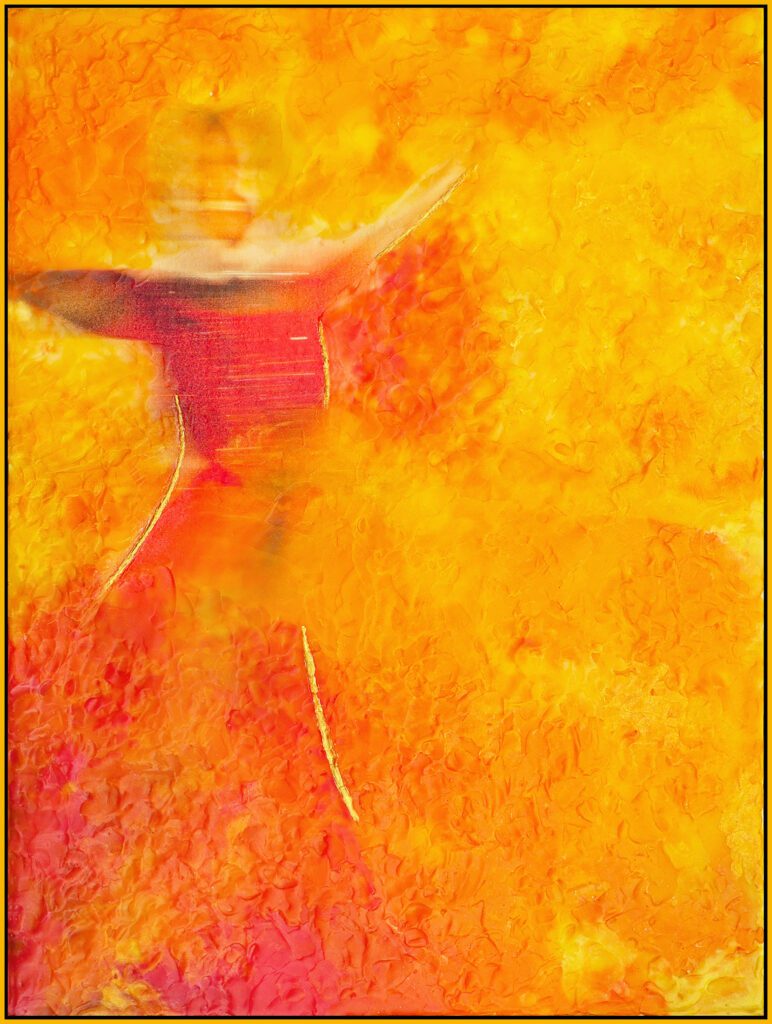
Q6. Your Instagram documentation shows fragments, close-ups, and process rather than finished declarations. How do you think about transparency versus mystery when sharing work publicly?
In my work, I value process over product. This leads me to publicly share my process which is a form of transparency. Yet, I rarely show the entire process, and I often show only parts of a piece that is in process, which is a form of mystery. And here again is a tension within my art practice! To me, showing fragments is more than just providing a teaser or a mystery, it is part of drawing the viewers into my work. As a teacher at heart, I want to inform my viewers about my process and perhaps stimulate the artist audience to explore those processes. Above all else, I want the viewer to experience the intrinsic story both of creating the work and of the work itself.
Q7. What does “risk” mean in your studio today, and how has that definition changed throughout your career?
In my earlier career, risk often was physical. I would climb up nearby objects or lie on the ground for a different viewpoint. I would try new lenses, new filters, different exposures. I risked using techniques like slow shutter speed or intentional camera movement. I also found risk in the darkroom as I explored different techniques such as using multiple enlargers for a single composite print. As I moved into digital photography, risk started to involve post-processing choices. Since I could revert to the original, it seemed safer to try new ideas with a mindset of “if I do this, what’s going to happen?” I felt more freedom to explore more challenging pieces, to play with each image. Once I began encaustic wax work, the physical aspect of risk revolved around certain techniques, including the possibility of burns or fires. As a more mature artist, I began to see the risk of taking time to let the work speak to me, risk in that the work might move in a different direction than my original idea. I found both joy and risk of exposing my soul in my art. In showing my work, the risk is more mental and emotional, will the viewer follow my narrative? Will the viewer evaluate my art as decorative, evaluating whether it will fit their décor? Or will they simply walk away and dismiss the work.
Q8. Over time, what have you learned to trust more: your eye, your instincts, or the accumulated knowledge of repetition?
At this time in my art career, I trust my instincts and intuition more. But that intuition is supported by decades of experience and experimentation. If I repeat a specific technique or apply a concept many, many times, the technique or concept becomes so ingrained in my subconscious that it is mostly automatic. These embedded and well-practiced skills now become secondary; now they are simply tools I use without conscious thought. The technical side is no longer at the forefront of my process; the expression of my ideas is primary. This shift has allowed me to let my creative instincts and intuition guide my choices in composition, color, layering, texture, and combinations while telling my story.
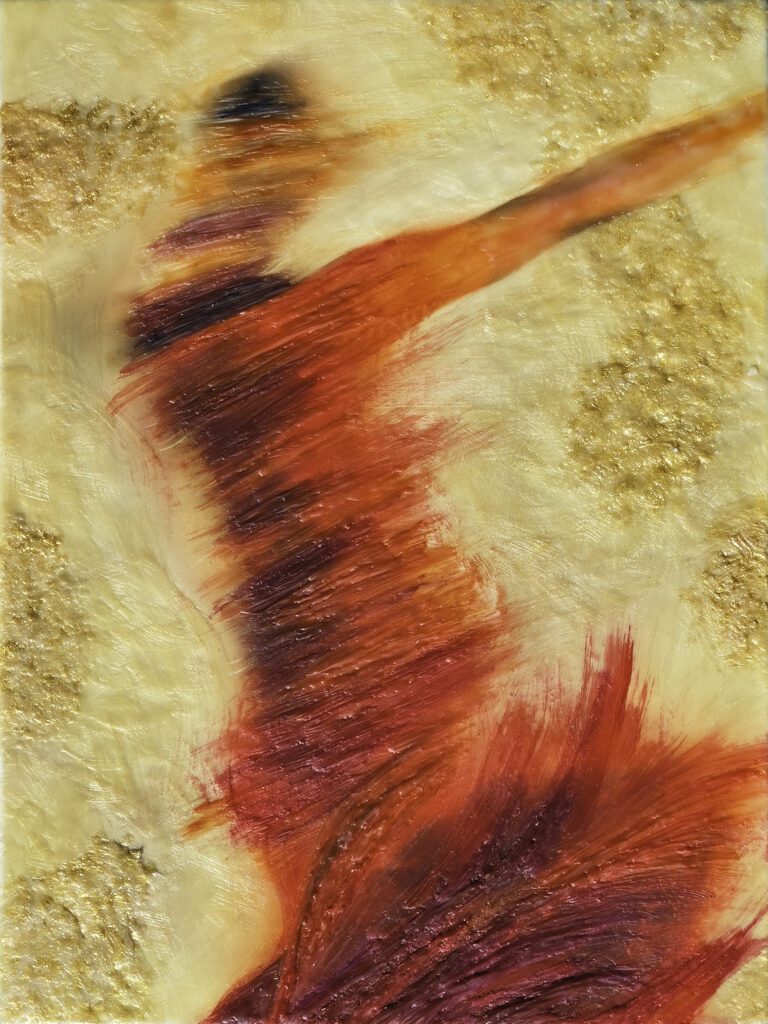
Q9. When you look back at earlier works, what do you recognize now that you couldn’t articulate then?
As I look at earlier works, two things stand out to me now: connection to my subject and noticing overlooked qualities. My best work has always emerged from a connection to the subject or to the piece itself as it evolves. This was true in my earlier art even when I didn’t recognize it. While I easily establish this link to a human or animal subject, I have come to realize the value of connection to any subject, be it inanimate object or landscape or architecture. Here, I revert to my inclinations to pause and seek a deeper understanding. As a younger artist, I didn’t consciously seek this connection, but as I look at my better work from that era I see this principle in each piece. As I look at earlier work, I also see how I notice defining details or aspects of the subject matter. This is a lifelong characteristic—I notice. I notice the face peering out of a mostly curtained window, the whiskers on a horse’s nose, the gesture of a child. These are the moments I not only notice but connect with. As a younger artist, I rarely contemplated deeper meaning within the stories I told, therefore I was unable to articulate the importance to me of noticing and connection.
Q10. What advice would you offer to artists committed to abstraction about sustaining depth and rigor without relying on external validation or trends?
I would advise artists to stay connected with your work and commit to finding your uniqueness as you continue to create. The story you tell is not necessarily about you, but it is the story that YOU want to tell rather than a story someone else wants told their way. More practically, I would recommend that every artist write about their art. Write for yourself! You will certainly need writing to share, such as a bio and artist statement, but in writing for your eyes only you can explore ideas or values that are deeply personal. Make private writing a regular practice, and with time you will see more depth of understanding on your uniqueness and expression. This is where your voice begins to emerge. Personally, when I explore more depth, then I apply more rigor to my work. I approach my art with new eyes and new commitment. Referring back to the a question, I would also advise any artist to practice their skills until you no longer focus on the skill itself but on using it as a tool. This skill-building ties into deeply thinking about your work since it is difficult to ponder meaning while the skill of how to use a particular brush or mix a specific color of paint is uppermost in your mind. I would also advise artists to set aside time to play! Play with new materials, play with ideas, play with words, play with materials used in new ways. For me, play and introspection, partly through my private writing, give a sense of inner validation that frees me from constraints of external validation.
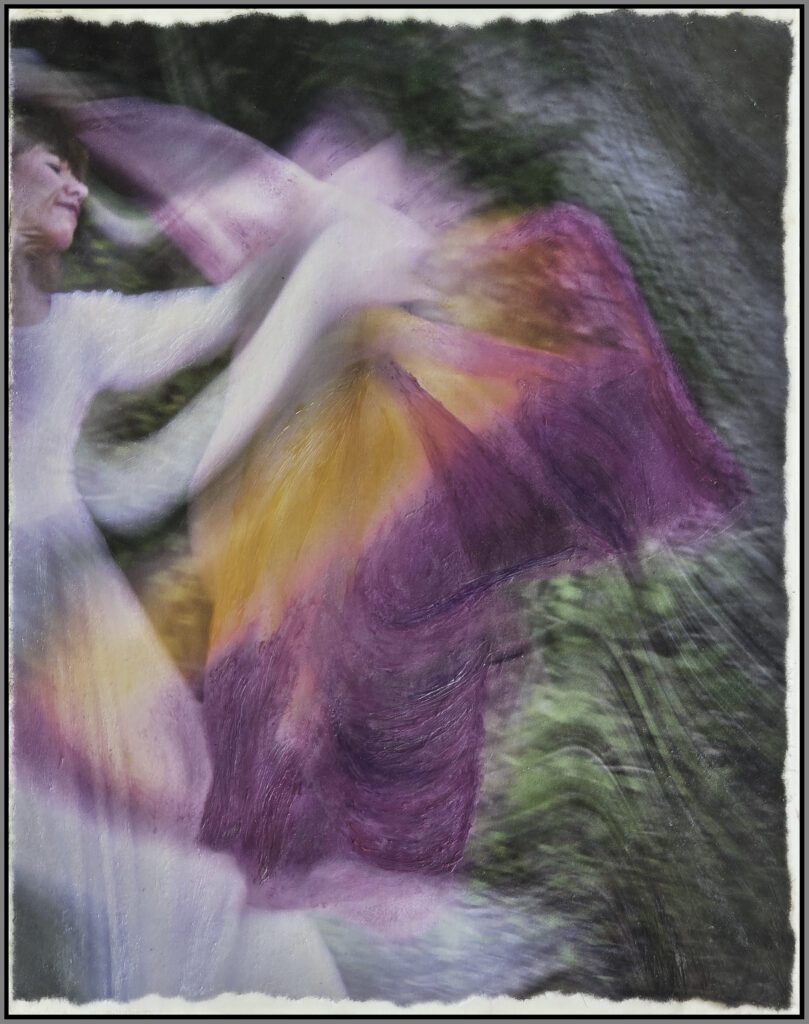
As our conversation with Kathleen drew to a close, we couldn’t shake something she said. That every piece she makes is a living thing. That it talks to her if she’s patient. And that it shuts up completely if she tries to rush it.
That hit us harder than we expected. Because honestly isn’t that how everything works? The relationship you didn’t give enough time to. The idea you killed before it was finished forming. The part of yourself you keep burying under the next deadline because stillness feels like falling behind.
Kathleen’s entire life is a refusal to do that. She gives things time. She sits with them. She trusts that what needs to come will come if she stops shoving it into a shape before it’s ready.
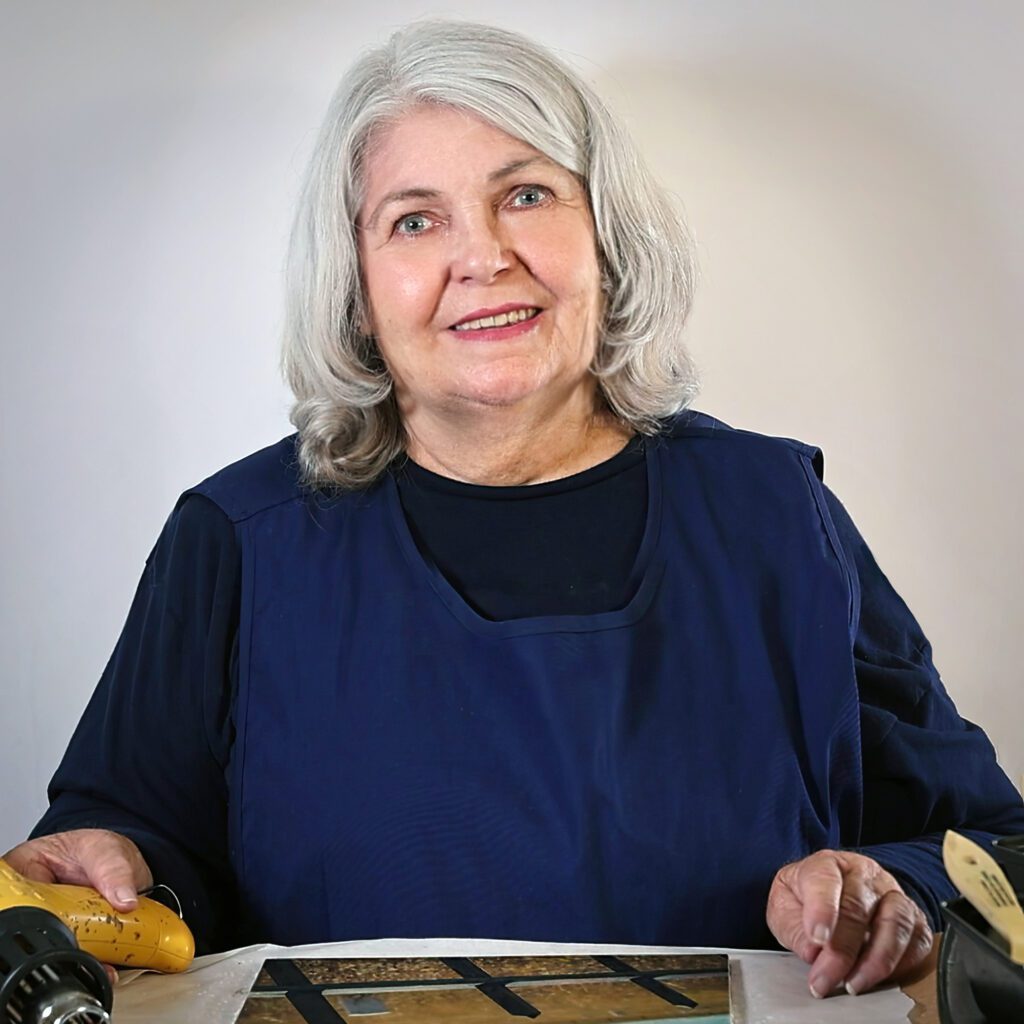
And she spent a whole career in science before she let art have the full stage. Not a detour. Not a wrong path. Those years built the woman pouring wax today. The observation. The patience. The instinct to look at something and ask what am I not seeing yet. Science taught her that. And art uses it every single day.
Her life is built the same way her paintings are. Layer on layer on layer. The teacher is still in there. The scientist. The photographer. The introvert who sits alone and journals and prays and daydreams.
Nothing got removed. It all accumulated into the person standing at the canvas right now, pouring hot wax, listening carefully, and waiting for the work to tell her what it needs.
To follow Kathleen’s journey and see more of her work, find her through the links below.
