
Marika Junikajtes Turns Black Paint into the Most Expressive Portraits You Will See
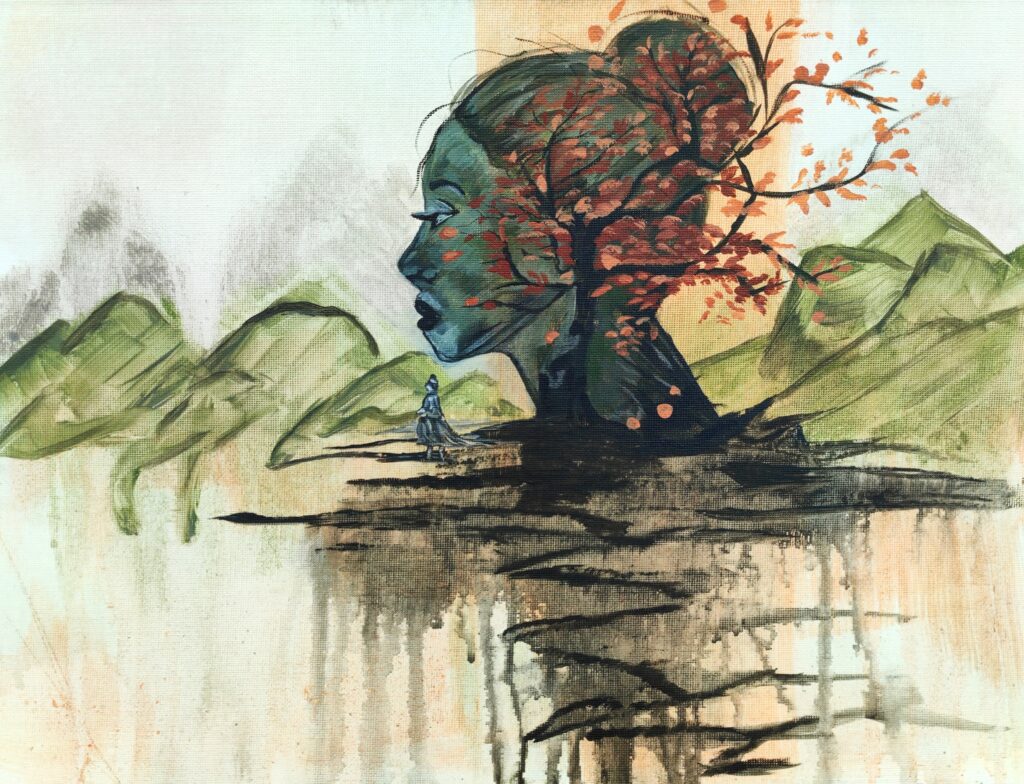
Some artists find art through years of training and school and slowly working it out. And some artists get shoved into it by something they didn’t see coming. Something that cracks them open and leaves them standing there with no words and no way to explain what just happened to them. That’s when paint shows up. Not as a hobby. As the only option left.
Marika Junikajtes is a selected artist for the Faces exhibition and we’ll be honest, her work stopped us in a way we weren’t prepared for.
Marika paints portraits but they’re not really about what someone looks like. They’re about what someone is carrying. You look at her figures and they’re quiet, they’re steady, they’re not trying to show you their pain or perform anything for you, but you feel it.
There’s something sitting underneath all that stillness, in the acrylic and the oil and the poured ink, something heavy and calm at the same time. The kind of calm that only comes after you’ve already been through the worst of it.
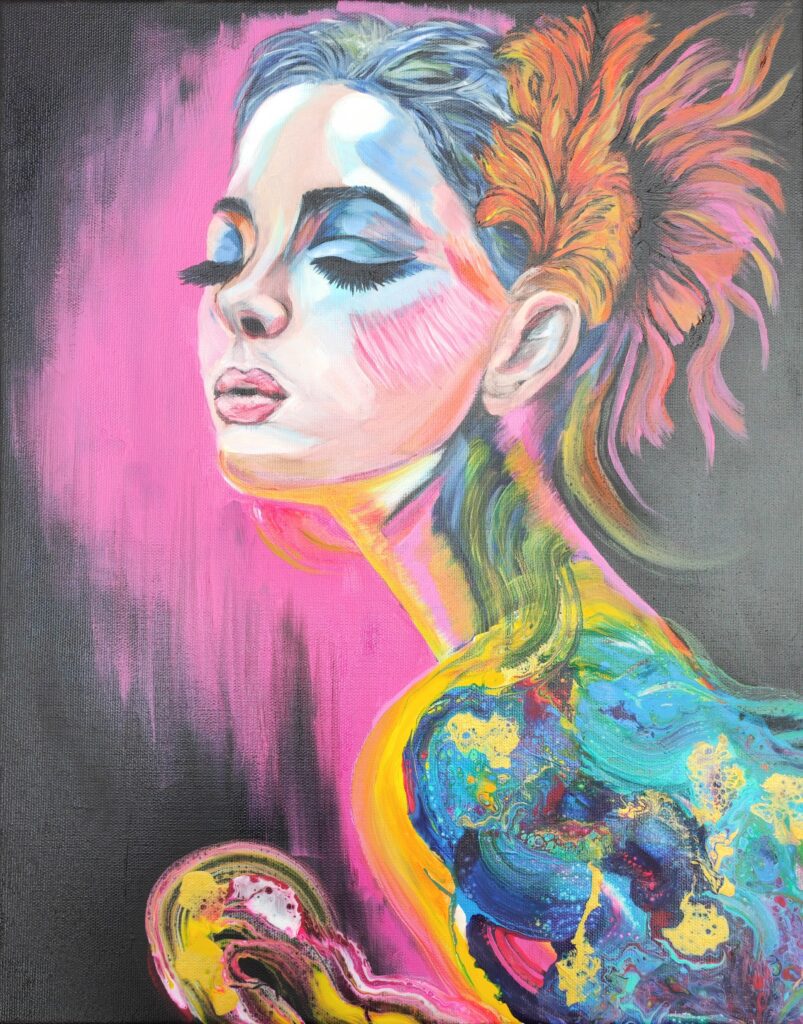
The way she works is interesting. She starts by pouring, alcohol ink, fluid acrylic, just letting things move and land where they want. She can’t control that part and she doesn’t try to. Then she picks up the brush and everything changes, strong strokes, full intention, complete precision. The paintings need both. The chaos and the control. What she surrenders to and what she decides. And somewhere between those two things is where the whole painting lives.
She paints to Chopin. For hours and hours. Forgets to eat. Completely loses track of time. And she’s said something about his music that really stayed with us, that it lets different emotions exist next to each other without making any of them win. Her paintings do the exact same thing. They’re not trying to resolve anything. They’re just holding all of it at once.
She started painting as a kid. The way children do, just freely, naturally, without anyone explaining what art is supposed to be. And then she stopped. Not because she chose to. Because life gets loud and busy and full of things that feel more urgent, and the thing that came most naturally to her just quietly got pushed aside the way it does for so many of us.
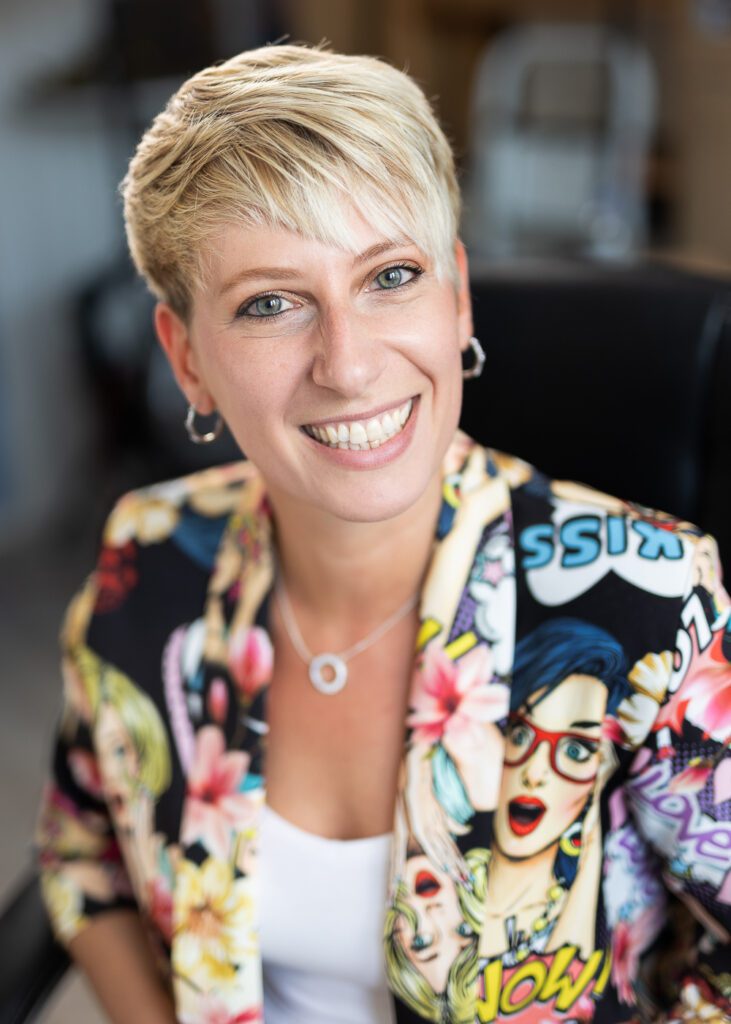
Years went by. A lot of them. And then in 2024, she lost someone. And we’re not going to say more than that because she doesn’t and she doesn’t need to. What she does say is that after that loss, words just stopped working. Everything she was feeling was too layered and too contradictory and too much all at once. Language kept trying to separate it, explain it, tidy it up. And none of it was tidy. So she picked up a brush again. Not with a plan. Not with some big artistic vision. Because something in her remembered that paint was the one language that never asked her to make sense.
That’s where the practice started. Not from a studio. Not from ambition. From a woman standing in the middle of something she couldn’t say out loud, reaching for the only thing that could hold it.
And people who live with her work, they say something that really got to us. They say the paintings change. That what you notice in them shifts depending on where you are in your own life. Something that grounded you in winter might completely gut you by summer. Things show up slowly. And the relationship you have with the work just keeps getting deeper.
Marika does that on purpose. She doesn’t want to make something that impresses you once. She wants to make something you keep coming back to. Her faces do what the best faces in real life do they don’t give you everything at once. They let you in slowly. And what you find depends on what you’re ready to bring.
Now let’s hear from Marika about loss, about picking up a paintbrush again after a lifetime away, about Chopin, and about why the most honest portrait might be the one that never tries to explain itself.
Q1. Your biography speaks about returning to painting after a deeply personal loss in 2024. How did that period change the way you relate to art not just as something visual, but as a way of expressing what words couldn’t hold?
After the loss in 2024, my relationship with painting changed fundamentally. I did not return to something familiar in the way it is sometimes described. Before that, I had last painted as a child. Intuitively, without knowing why, simply because it felt natural, expressive, and safe. Coming back to painting as an adult was a conscious decision. I knew I had to do this. It felt less like a choice and more like a calling. At the same time, it was deeply instinctive. Painting became a way to process what could not be resolved and to hold what could not be spoken. Words failed me during that period. The emotions were layered and contradictory: grief, fear, emptiness, overwhelm, often all at once. Language tends to separate and explain. Painting allowed these states to exist side by side without forcing them into order. Since then, art has become a form of connection: to myself and to the person I lost. It is my way of staying in dialogue when language reaches its limit. I do not paint to explain or to expose, but to create a space where something can remain present, even when it cannot be named. This return was not nostalgic. It was a conscious decision to work with art as a language that can hold complexity without resolving it.
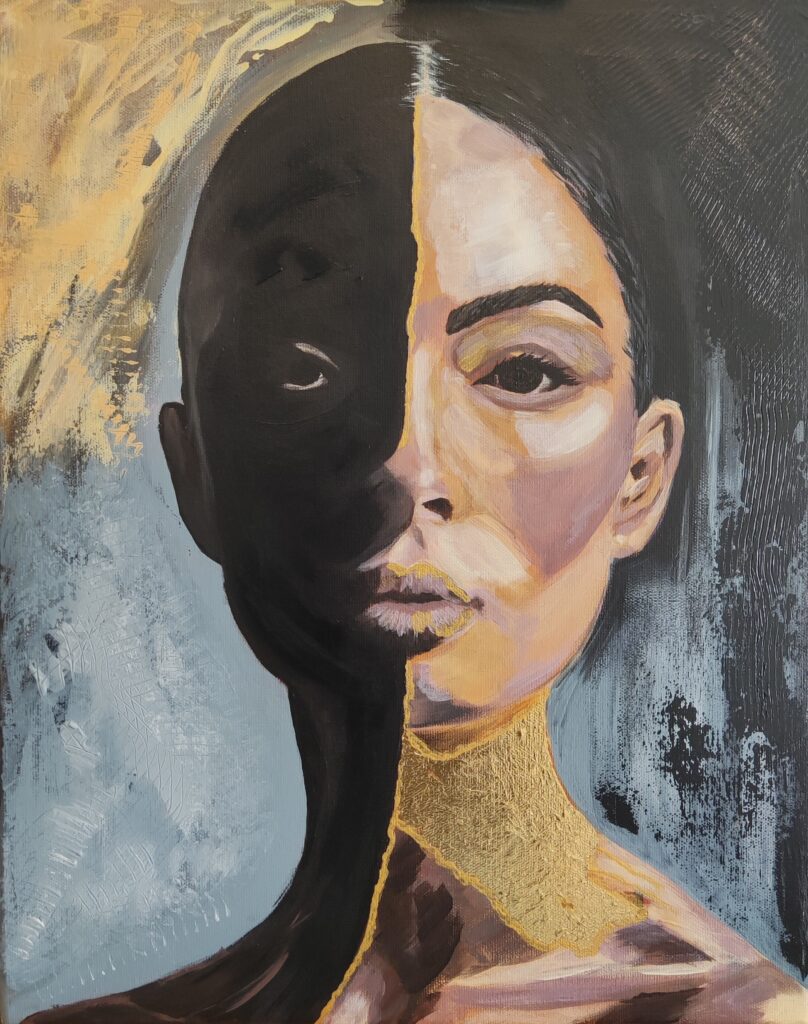
Q2. In your Strength Wears Black series, you explore dignity, vulnerability, and forward movement. How do these states coexist for you within a single portrait?
In Strength Wears Black, dignity, vulnerability, and forward movement are not separate states. They exist simultaneously, often within the same breath. Vulnerability in this series grows out of loss, transition, and the acceptance of imperfection. It is not displayed, but acknowledged. The figures do not deny what they have endured, yet they refuse to let it define them entirely. Dignity emerges from self-respect and from an inner commitment to oneself. It is a quiet form of presence. The posture remains. The gaze stays steady. Nothing collapses, nothing performs. Forward movement happens quietly. It is not marked by resolution or triumph, but by healing, acceptance, and self-empowerment unfolding at once. Within a single portrait, this coexistence becomes visible through restraint, reduction, and the use of black as a space of clarity and presence. Moving forward without applause. Not out of rebellion, but from self-respect. The figures stand in tension, carrying what shaped them. That act of holding is where movement begins.
Q3. You often combine acrylic, oil, and pouring techniques in one work, allowing the painting to guide your decisions. Can you share a moment when the material itself changed the direction of a piece?
I often use pouring techniques or alcohol ink intentionally in the background, precisely because they resist full control. That uncertainty is something I value deeply. It introduces movement, chance, and a sense of openness at the very beginning of a work. With acrylic and oil, the approach shifts. There, control becomes essential. I place strong, deliberate brushstrokes with intention. Both states need each other. A moment where the material clearly changed the direction of a piece happened while working on She Plays With Fire. I had built the background using structure paste and palette knives, with the idea of visually addressing the masks we wear. During the final refinement, an additional form appeared within the texture: a third mask, slightly blurred, not planned, but unmistakably present. It aligned so precisely with the emotional core of the piece that it felt like a moment of alignment, something revealed rather than created. From there, the work continues in dialogue. Knowing when to stop is part of the work. Sometimes the portrait remains intentionally simple, drawn almost directly over the poured background. In other works, like those in the Four Seasons series, I leave the background untouched entirely, allowing it to speak on its own. This balance between intuition and precision defines my process. I want the viewer to feel invited to look closer, to discover different layers and facets over time, and to return to the work, finding something new each time.
Q4. You’ve written that your work can change how someone feels in a space. What do you think shifts for a viewer when they encounter one of your portraits compared to something more purely decorative?
When I think of something purely decorative, I think of something that is visually pleasing and harmonious but ultimately neutral. It fills a space, it matches, and it doesn’t ask anything of the viewer. And that has its place. But it remains external. A portrait, at least in my work, enters a space differently. It doesn’t just belong to the room; it relates to the person in it. Often the first shift is subtle. A pause. A moment of grounding. The gaze finds a place to rest. Many of my portraits are created to offer a sense of inner calm or alignment. Works like Horizon of Inner Peace don’t aim to impress but to slow something down. They can act as an anchor in everyday life, a place to return to when the pace outside becomes too loud. What unfolds over time is just as important. Viewers and collectors often tell me that they continue to discover new details or emotional layers, even after months of living with a piece. The relationship deepens rather than fades. This is not accidental. I work consciously toward this kind of lasting engagement rather than immediate effect. I want my work to meet the viewer on a personal level. Sometimes it becomes a mirror, sometimes a source of comfort, sometimes simply a steady presence. When someone says, “I recognize myself in this” or “This piece supports me,” I know the work has found its place.
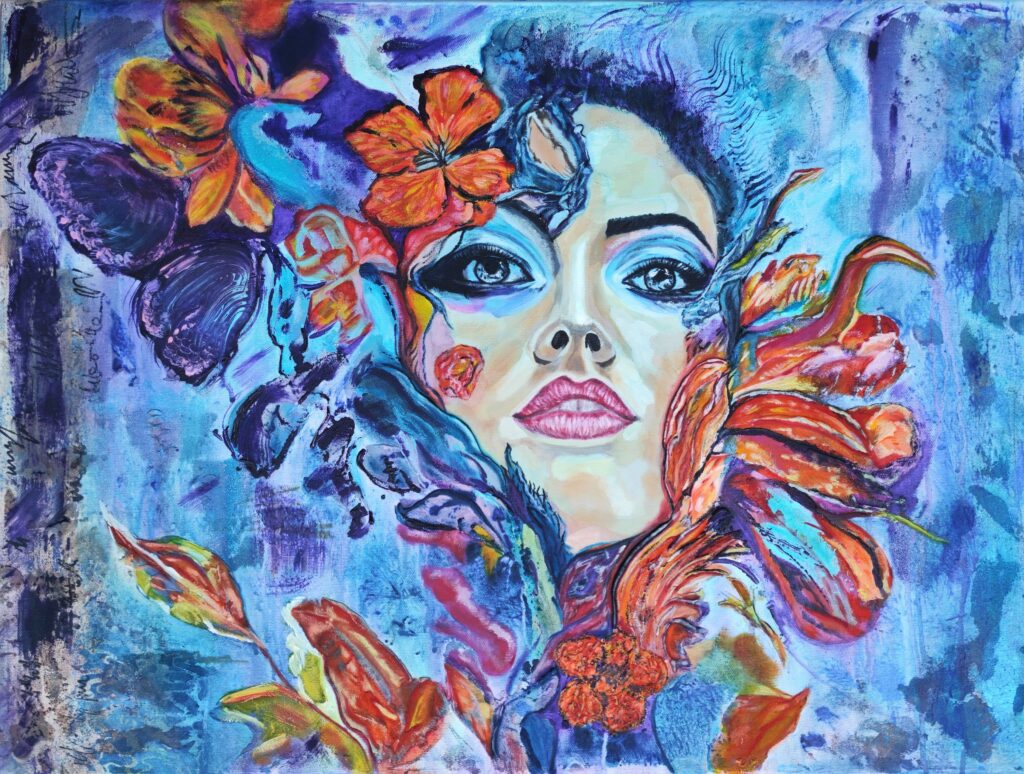
Q5. You’ve reflected publicly on where portrait art might be heading in the coming years. How do you see expressive portraiture evolving in a world shaped by filters, screens, and constant digital imagery?
We are surrounded by images more than ever before. Filters, screens, and digital platforms have changed how we see faces and how quickly we move past them. This is the visual landscape of our time. It’s simply the reality we live in. What shifts within it is what reaches us emotionally. What often gets reduced in digital imagery is presence. Impact. The emotional core of an image. We all know how different a work feels on a screen compared to standing in front of the original. Even video can only carry part of the experience. Something essential is softened along the way. Expressive portraiture, I believe, will respond to this by becoming more present rather than more perfect. A painted portrait asks for time. It doesn’t rush past you. A painted gaze can create a physical reaction: a sense of closeness, a moment of recognition, sometimes even goosebumps. It can feel warm, honest, unsettling, or grounding, much like an encounter in real life. Digital images are fast and fleeting, like moments we scroll through. A painting is simply there. It holds space over time. It allows us to pause, even while the world around us keeps accelerating. Screens can open doors, create access, and connect us globally. Expressive portraiture offers something different: a slower, deeper experience that unfolds beyond the first impression. It asks for time and presence. Over time, a relationship can form, similar to the way we relate to another person. The work doesn’t reveal everything at once. It responds differently depending on where you are, what you bring, and how often you return to it. In that sense, a portrait becomes more than an image to look at. It becomes a presence to live with.
Q6. Music, especially Chopin, plays an important role in your process. How does a particular piece of music shape the emotional flow of a painting while you’re working?
Music is already present before I begin to paint. It sets the tone, opens a space, and gently shifts me out of thinking and into feeling. From that moment on, it stays with me throughout the entire process. The emotional intensity of the music directly affects the painting in mood, rhythm, pressure, and movement of the brush. As the music unfolds, the emotional flow of the painting changes with it. Joy, melancholy, tension, release, sometimes all within the same session. I remain in that flow for hours, often losing any sense of time. Eating, drinking, and even conscious pauses fade into the background. What remains is presence. Chopin, in particular, creates a deep inner connection for me. His music carries love, depth, and an emotional complexity that allows different states to coexist without needing resolution. In that space, there is no need to decide. I remain with the process and continue working. Within that openness, my focus remains precise. Paradoxically, this surrender leads to both freedom and precision. When thought steps aside, gestures become clearer, decisions feel inevitable rather than forced. The painting finds its own rhythm, shaped by sound, emotion, and intuition moving together.
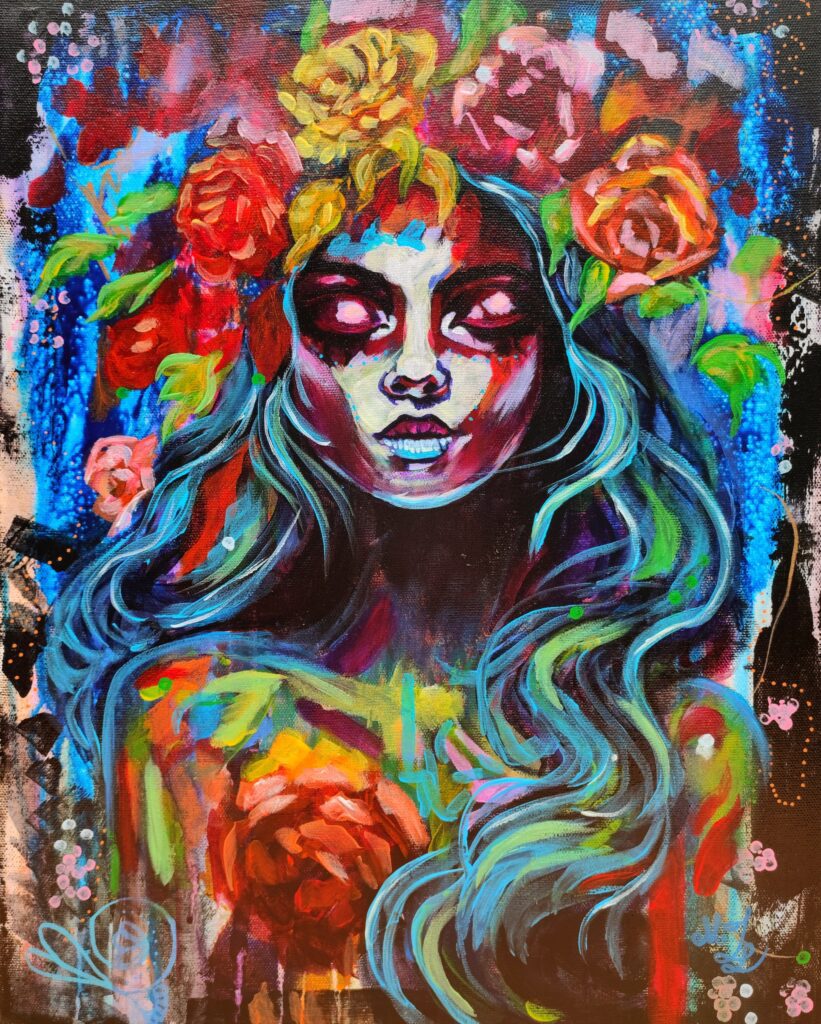
Q7. In your Four Seasons series, the seasons feel emotional rather than literal. How do you express those inner states through texture, movement, and spatial choices?
In Four Seasons, the seasons are understood as emotional states we move through over time. The series reflects how we pass through a year not only physically, but psychologically, carrying different energies, tensions, and forms of stillness within us. These states can unfold one after another, and they can also exist side by side. Texture and color are direct reactions to these inner states. The poured acrylic backgrounds introduce movement and unpredictability, which felt essential to the idea of transition. Against this, the figure creates presence and focus. Emotion shapes the surface, while the portrait holds the moment. Movement plays a central role in expressing these states. Flowing, dynamic backgrounds mirror phases of expansion, energy, and outward motion. More peaceful passages reflect moments of withdrawal and inner calm. In Lightness of Winter, movement softens. The composition becomes restrained, creating a sense of calm and inner clarity. Spatial choices support this emotional reading. Space around the figure creates focus while allowing the eye to continue moving, searching, and returning. The space remains active and attentive, giving the emotional state room to breathe. I work without illustrative landscapes or fixed seasonal narratives. Elements appear when they appear. In Lightness of Winter, the candle revealed itself during the process rather than being planned as a symbol. Moments like these remain open. The viewer is invited to respond from their experience, to recognize a familiar state, or to connect the work to a season that carries personal meaning. The series asks to be felt rather than interpreted.
Q8. You’ve mentioned that emotion often lives between tones. Beyond colour, what does “tone” mean to you, in rhythm, gesture, or the way a composition breathes?
For me, tone is not a single element. It emerges from how a painting holds together as a whole. From position, proportion, contrast, light, and density. When these elements are in balance, the work feels coherent rather than constructed. Tone becomes noticeable in rhythm. I sense it at the moment when continuing would mean overworking the piece. When the painting has said enough, the rhythm is complete. That feeling tells me when to stop. Emotion lives beyond what is fully visible. It exists in what remains suggested, in restraint, in the spaces that invite reflection rather than explanation. Feeling begins behind the obvious. In composition, tone reveals itself through contrast and space. Openness and density exist alongside each other. A work breathes when there is room for the eye to move, pause, and return. Tone, for me, is not something that can be pointed at. It is something you sense. When it is right, the painting holds presence without needing emphasis.
Q9. What kind of dialogue do you hope your work creates, between you and the viewer, or within the viewer themselves?
I don’t think of the dialogue my work creates as something I direct or control. When someone encounters one of my paintings, what matters to me is what it awakens within them. Of course, every work carries something of me, but once it exists, it becomes a space where one inner world meets another. Collectors often tell me they recognize themselves in the work, or that a painting grounds them, gathers them, brings them back into themselves. In some pieces, this can mean encountering strength or self-acceptance; in others, a sense of calm, or the memory of having carried something difficult and lived through it. I don’t aim for a uniform response. Each work opens a different kind of inner conversation. The paintings carry a clear emotional presence, but they do not prescribe how they should be read. They speak through feeling rather than explanation, leaving space for the viewer to engage on their terms. The work is not meant to be consumed quickly or resolved immediately. The dialogue deepens over time. When a work truly touches someone, the relationship does not remain static. It shifts, much like a real relationship does, shaped by experience, distance, closeness, and change. What a painting evokes today may feel different months or years later. Ultimately, I want the work to remain open enough for that kind of ongoing exchange. Not to resolve something for the viewer, but to accompany them, allowing an inner dialogue to unfold in its time.
Q10. What advice would you give to emerging artists who want to create work that is emotionally honest and intellectually grounded, especially in a world that often rewards speed over depth?
I would be careful with equating speed with a lack of depth. I work fast myself, and speed does not automatically mean superficiality. What concerns me more is the pace of life around us. The constant pressure to move faster, earn more, achieve more without patience without presence. In that rush, we risk losing the ability to truly live and consciously experience what is happening right now. For me, art became a way to counter that. A reminder to honor the small moments as much as the big ones. To stay aware that life is not guaranteed, that time is not endless. That awareness shapes my work deeply, and it’s something I believe young artists should protect rather than sacrifice. Emotional honesty begins with acknowledging your feelings and situations without trying to please everyone. It means self-acceptance. It begins with acknowledging your feelings and situations honestly, without trying to smooth them over or deny them. Staying true to yourself requires energy, but pretending to be someone else costs even more. And when that energy is gone, there is very little left to give. Being intellectually grounded, to me, includes education and theory, but it doesn’t end there. It means knowing who you are and what you stand for. Being aware of your strengths and limitations. Working from clear values and principles and remembering that at the core of all of this, we are human. It’s about treating each other with fairness, respect, and responsibility, and using language consciously rather than to manipulate. What I would not recommend is trying to do ever
As our conversation with Marika drew to a close, we found ourselves thinking about all the people out there who stopped doing the thing they loved. Not because they wanted to. Because life got in the way. Because someone needed them. Because the world kept saying there are more important things than what your hands want to make.
Marika stopped painting for years. And when she came back, she didn’t come back carefully or with a plan. She came back because she had no other choice. And what she’s built since then is proof that the thing you put down doesn’t die. It waits. However long it takes, it waits for you.
That’s not just her story. That’s a reminder for every woman who’s been so busy holding everything together for everyone else that she forgot she had something of her own that needed holding too.
And here’s what gets us about Marika. She didn’t wait until she was healed to start making. She didn’t wait until the grief made sense or the feelings got neat or the timing felt right. She just started. In the middle of all of it. And that took more courage than most people will ever understand.
Her figures stand the way she stands. Quietly. Without asking for applause. Without needing anyone to validate what they’ve been through. Just this steady, stubborn refusal to disappear. And if that’s not empowering, we don’t know what is.
So if you’re reading this and you’ve been waiting for the right moment to go back to your thing, whatever your thing is, let Marika be your sign. The right moment doesn’t exist. You just begin. Messy, scared, unsure, it doesn’t matter. You begin. Because the world doesn’t need more people playing it safe. It needs more people brave enough to pick up the brush again.
To follow Marika’s journey and see more of her work, find her through the links below.
