
Some of Her Best Work Came from Paintings She Almost Gave Up On | Nadja Eleonora Milsten
At Women in Arts Network, we’ve learned that some of the most honest work doesn’t come from artists who have everything figured out. It comes from the ones still wrestling with doubt, still putting paintings away because they can’t look at them anymore, still trying to understand what their hands are doing before their minds catch up.
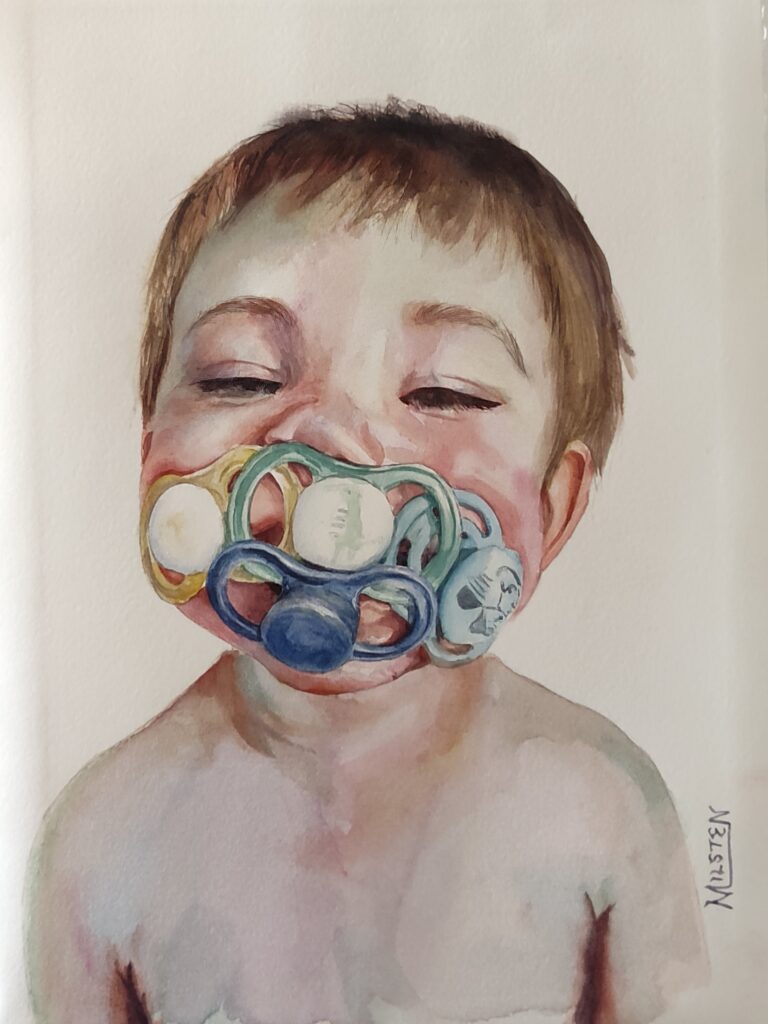
Nadja Eleonora Milsten is among the selected artists of our Faces Exhibition and there’s something about her work that feels different from the start. Her faces don’t perform for you. They’re there, but not completely. Present, but like they might dissolve if you look away.
Before we get to her interview, let me tell you what caught our attention about Nadja.
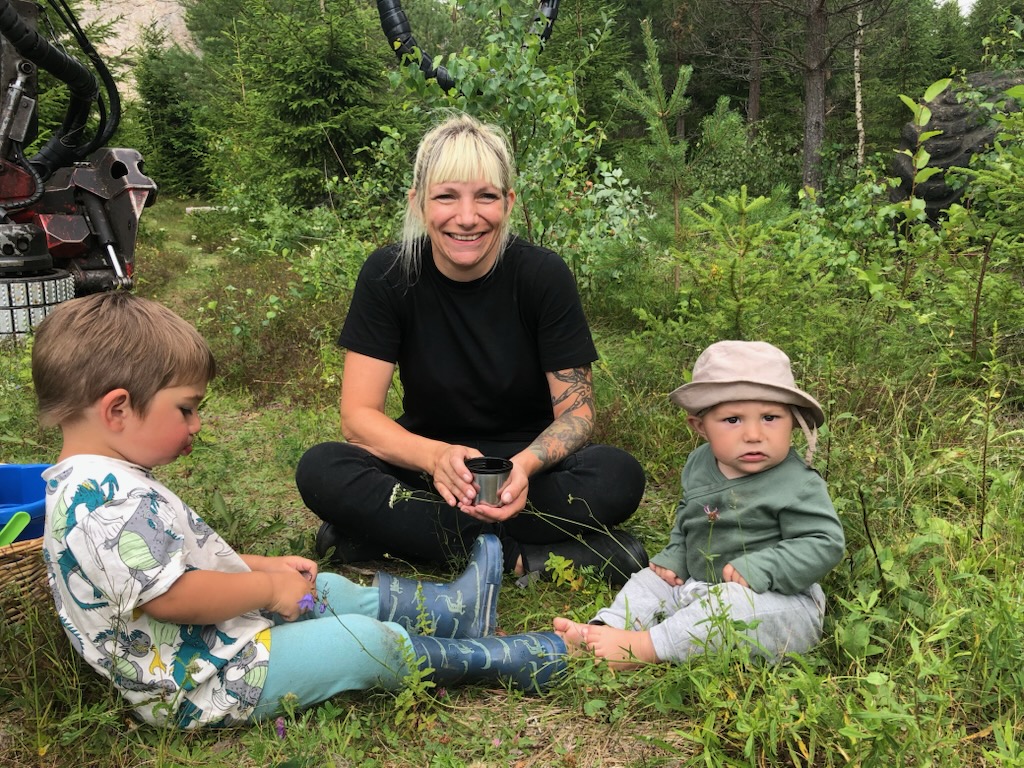
She’s been making art her whole life, never stopped, worked through every medium trying to find the one that let her actually say something. For twenty years she was painting oil portraits as a side hustle, building something that could maybe become a career. Then COVID hit, she got pregnant with her second child, and suddenly she’s thinking about her baby breathing toxic paint fumes every day. So, she made a choice that sounds small but changed everything. She put down the oils and taught herself watercolour.
Not because it was easier or more profitable. Because she wanted her kid to grow up breathing clean air.
That decision did something unexpected. She stopped painting what she thought people wanted and started painting what she actually felt. And now she talks about watercolor like it’s the only place she can rest from everything else in life.
Here’s what you need to know about how she works. Sometimes paintings flow out of her so easily she barely thinks about what she’s doing. Other times she plans everything perfectly, does all the studies, knows exactly where it’s going, and then gets to the end and hates it. Just completely can’t stand looking at it anymore.
When that happens, she doesn’t force herself to finish. She doesn’t throw it away either. She puts it in a drawer and forgets about it. Sometimes for days. Sometimes for an entire year. Then she pulls it out and suddenly it’s perfect. The thing she almost abandoned becomes something she loves.
I keep thinking about what kind of trust that requires. Trusting that time changes how you see things. That the painting you hate today might be exactly right six months from now when you’re different enough to actually see it.
She also talks about doubt in a way most artists don’t. Says it’s her companion through every ugly stage. Not something to overcome or eliminate. Just something that shows up, walks beside her for a while, and then leaves when the work is ready.
Her figures feel unfinished on purpose. For years she couldn’t decide if she wanted to paint like an impressionist or a photorealist. Then she realized neither mattered as much as making people feel something. She wants you to recognize yourself emotionally, not be impressed by technique.
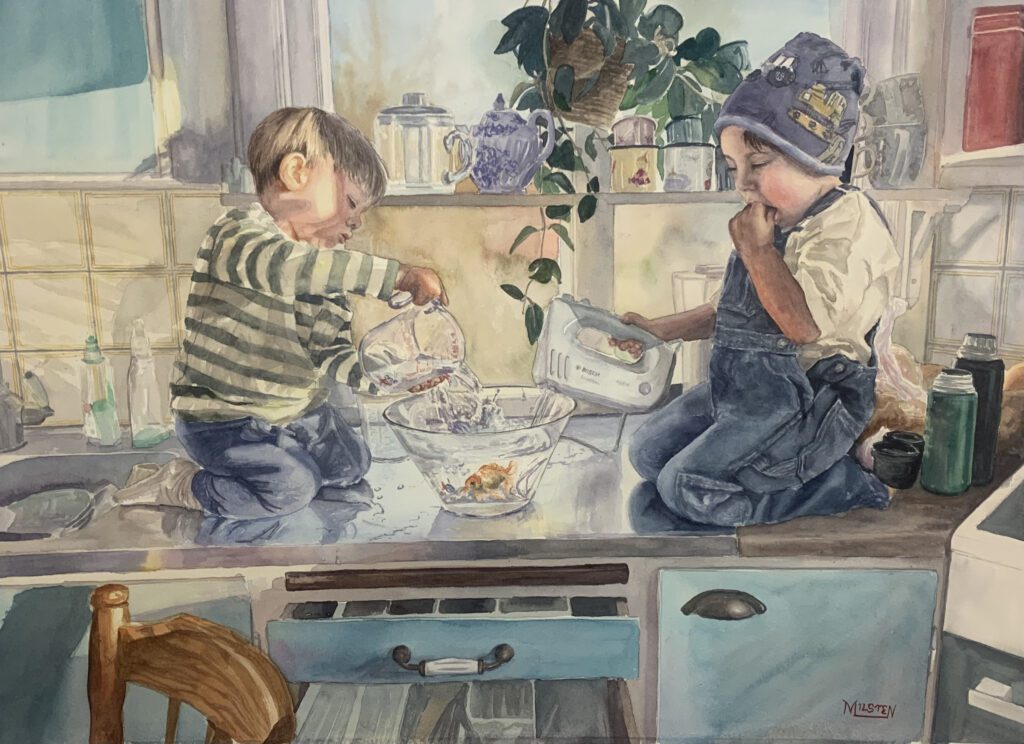
What she paints is actually pretty straightforward. Childhood, motherhood, parenting. The ordinary moments that feel enormous when you’re living them. She’s mixing her own childhood memories with her current experience as a mother and finding endless material in just being honest about what that feels like.
Now let’s hear from Nadja about what happens when you put a painting away for a year and come back to find it was right all along, and why sometimes the bravest thing you can do is trust that doubt isn’t telling you to quit it’s telling you to wait.
Q1. Can you share your background and how early experiences visual, emotional, or personal first drew you into making art as a practice of expression and reflection?
My parents have told me I started to draw very early and I have never stopped. Now I’m 41 years “old” and I have worked my way through various mediums. Twenty years ago, I wanted to make my living on painting portraits in oils, and I had this as a side hustle until Covid stopped the world. But I have to be honest and say that thanks to this I became pregnant a second time and I didn’t want my baby to grow up with the smell and the poisonous paint tubes. so, I decided to learn properly how to paint watercolour instead. I started to paint from my heart, only thinking about what I want to express. Now watercolour is my love, my passion and my rest from the mundane.
Q2. You describe your work as existing “between a gesture and a thought.” What does that feel like, when your hand and your mind are working together on the canvas?
Most of my work is made in an intuitive sense (especially in my newly started collection with faces were I really go crazy with colours) and just feeling my way as I paint, allowing myself to improvise the next step. Many times, painting, even in a realistic way, becomes meditative.
Q3. Your process is slow and you’re comfortable with uncertainty. How do you know the difference between good uncertainty the kind that helps and just being stuck?
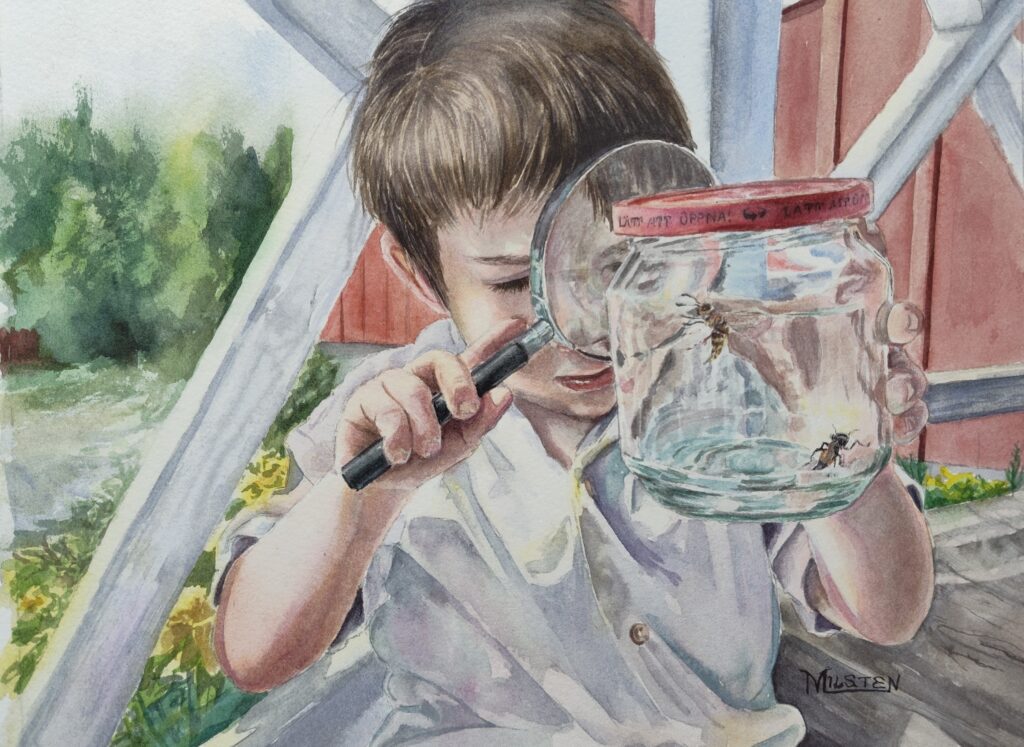
Painting highly detailed in watercolour takes time and patience. Some paintings almost seems to paint themselves and I just go with the flow, I never think about uncertainty those times. And then I have some paintings that is so well prepared, I know what I want, I have done several studies and then I just lose my interest to the painting halfway or hate the result when I’m 98 percent complete… The best thing to do is just to put the painting away for as long time as it needs (this can be two days or a whole year) and then look at it again, most times I love this painting as much as my other paintings and the final brushstrokes feels like it is only seconds of work. This feeling always surprises me, and I find myself always wonder why I put it away in the first place.
Q4. A lot of your figures feel like they’re half-there present but not fully solid. What is it about that in-between state that feels true to you?
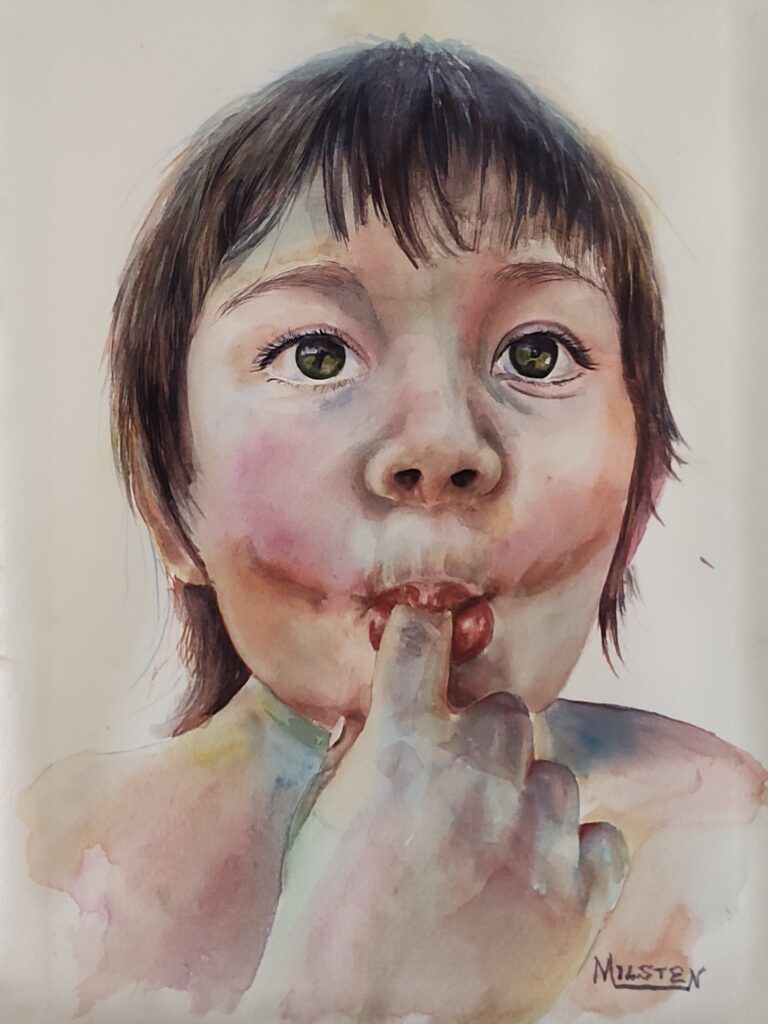
I feel that I always struggle between my two favourite art styles; impressionism and photorealism so one day I decided that the most central in my paintings should always be the feeling. I want the viewer to recognise themselves in my artwork and feel the emotions in my characters rather than say that my paintings look like photographs.
Q5. Your work feels like watching someone pay very close attention. How do you stay present when doubt or fear creeps in while you’re making something?
I rarely experience fear when I paint, the only time I do feel fear is missing an opportunity to take my reference photos. Sometimes I need to ask unknown people to model and that is the scariest part of my art as I am an introvert by heart. Doubt on the other hand is something I have learned to deal with, and it is my companion trough “the ugly stage” in my painting process. All I need is the patience to continue painting and the doubts will disappear.
Q6. There’s a kind of openness in your work, like you’re willing to be surprised by what happens. How do you let go of control without losing your way completely?
People seem always surprised that I changed to watercolour when I say I like to have control, but there is an unpredictability that I sometimes love and sometimes hate. In some paintings the finished piece is better than I first imagined. Having a good plan for the result and allowing flow and intuition to guide me to the final painting is my way to let go of total control and enjoying the visual “ride”.
Q7. You’ve said art is something that waits with you, not something you solve. What do you hope someone feels when they’re standing in front of your work?
My desire is to spread laugh, love and maybe also recognition- either in the viewer themselves or in some they care about.
Q8. How do you stay vulnerable in your work not trying to fix it or make it safer, but just letting it be what it is?
To be vulnerable in art is easy when I paint from my heart and not falling in the trap of doing what I believe other people expect me to do.
Q9. Looking across your work and writing, what question feels most constant the one you keep returning to without ever fully answering?
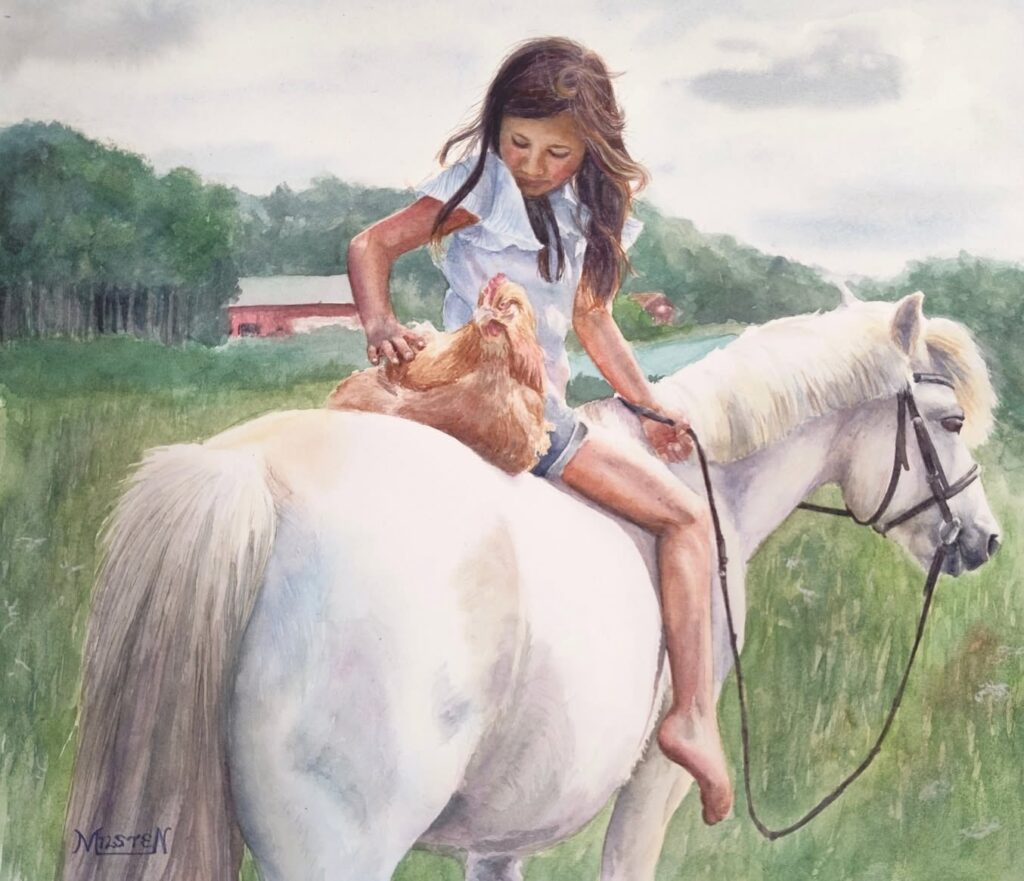
Somehow, I feel my work is about sharing my love for life. I love to depict childhood and the humour and beauty in all faces of motherhood and parenting. Combining my own childhood memories with my own motherhood gives me endless inspiration about depicting life.
Q10. What advice would you give to artists who feel drawn to quiet, emotionally attuned work, but struggle with doubt in a culture that often rewards speed, clarity, and explanation?
My best advice is to make art from your heart. Just start at the place where it feels right at the moment. Just go with the flow of your heart and allow both your heart and your art to evolve together with your soul’s mission.
As we wrapped up our conversation with Nadja, one thing kept sticking with me.
She puts paintings away for a year. Just puts them in a drawer when they’re not working. A year later, pulls them out, and suddenly they’re perfect. The thing she hated becomes something she loves. I can’t do that. Most people can’t. We either force ourselves to finish or we quit completely. Letting something sit unfinished for months feels like failure.
But here’s what she figured out. Time doesn’t fix the painting. It fixes you. Six months from now, you’re different. You’ve changed enough to finally see what was always there. The work was right. You just weren’t ready yet.
If you’re staring at something right now that feels broken, maybe it’s not. Maybe you just need to become someone different before you can see it clearly. That’s not giving up. That’s trusting yourself enough to wait.
The other thing that got me is why she switched to watercolor. She had oils working. Building a side career, making money, everything going well. Then she got pregnant and didn’t want her baby breathing toxic fumes. So she started over with watercolor.
That’s choosing what matters over what looks like success. And when she made that choice, everything shifted. She stopped painting what she thought people wanted. Started painting from her heart instead. The work got better. Not more technical. Just more alive. Because she stopped trying to prove anything.
If you’ve been making work to impress people or meet expectations, this is your permission to stop. Paint what you actually feel. Make what you actually care about. The work gets stronger when you stop performing.
Also, how she talks about doubt. Most artists treat it like an enemy. Nadja calls it her companion. It shows up during the ugly stage, hangs around, then leaves when the work is ready. She doesn’t fight it. Just keeps working and waits for it to pass.
If doubt is crushing you right now, maybe it’s not telling you to quit. Maybe it’s just walking beside you through the hard part. Keep going. It’ll leave when the work is ready.
What Nadja proves is this. The paintings you almost give up on sometimes become your best work. Not because suffering helps. Because walking away lets you see it fresh later. You notice what was always there that you couldn’t see when you were too close.
And she’s painting the simplest stuff. Childhood, motherhood, everyday moments. Nothing fancy or conceptual. Just honest about what she loves and what it feels like. That honesty hits harder than any clever idea ever could.
You don’t need a groundbreaking concept. You don’t need to be impressive. Just be honest about what you care about. People feel that. They recognize it. And that recognition matters more than all the complexity in the world.
What she taught me: you don’t need everything figured out. You don’t need to kill doubt or force things to finish. Sometimes the bravest thing is putting something away and trusting future you will know what to do with it. Sometimes growth isn’t pushing through. It’s waiting until you’ve changed enough to see clearly.
If you’re struggling right now, know this. The work you’re ready to abandon might just need time. You might just need to change a little before it makes sense. And that’s okay. Growth isn’t linear. Neither is making things.
Follow Nadja from the links below to see work that knows when to wait, and proof that the paintings you want to quit on might just need you to become different first.
