
This artist moves freely between painting, installation, and photography

Born in Senegal and based in Italy since 2009, Sokhna Mariama works across places, cultures, and ways of seeing the world. In this interview, she talks about how migration has shaped both her life and her practice, and how growing up in Dakar and later building a life in Italy continue to influence how she observes nature, identity, and human relationships. The conversation offers readers a clear sense of where she comes from and how her experiences inform her work.
Mariama shares how her early years in Dakar taught her to experience nature as part of everyday life, while her time in Italy brought distance, time to think, and new ways of understanding the world. She explains how these experiences now come together in her work, shaping how she approaches nature as memory, history, and a shared human space. She also speaks about working across different media, describing a process guided by ideas and intuition rather than fixed rules, where each project finds the form it needs.
The interview also examines Nature Evolution, her ongoing project focused on environmental awareness and collective responsibility, and Metamorphosis Light, a technique that emerged from trial, limitation, and curiosity. Mariama talks about experimenting with materials, working without artificial intelligence, and allowing the process to lead the outcome. She also explains the role of poetry and storytelling in shaping her images, and what she has learned from sharing her work through exhibitions, community projects, and intercultural walks.
Through this conversation, we gain a grounded understanding of an artist whose practice is shaped by movement, listening, and exchange. The interview shows how Mariama’s work grows through dialogue with places, people, and the natural world, inviting others to slow down, pay attention, and take part in that conversation.
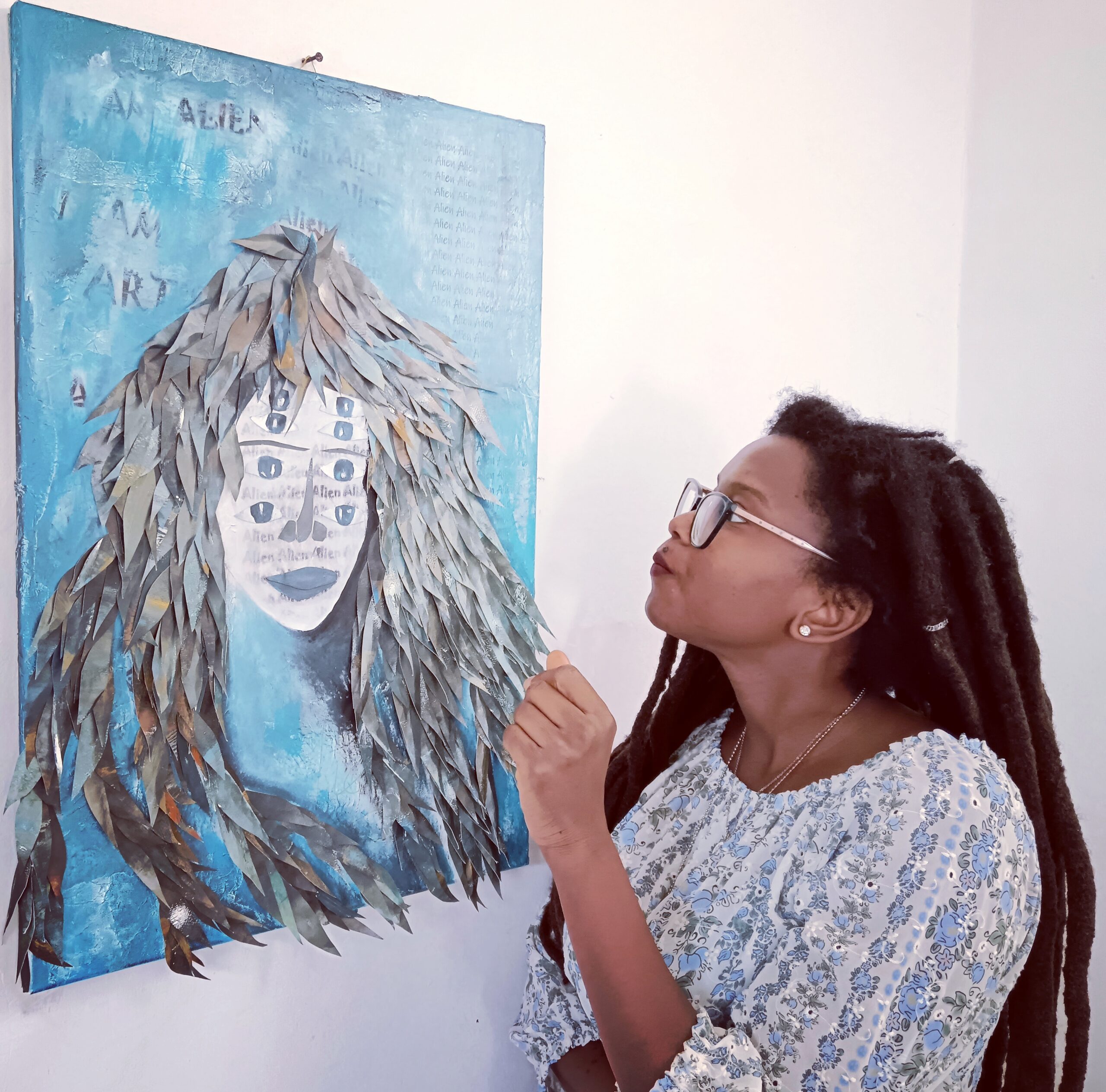
I was born in Senegal and have lived in Italy since 2009. I consider myself a citizen of the world. My migration experience is an essential part of my identity and gives depth to my artist name, Alien.
My path shows that the journey was not a wrong choice, but fertile ground from which my creative philosophy has grown.
My work is rooted in the poetic echo of the diaspora and in the spirituality of returning to the roots of humanity. In this ongoing dialogue between past and present, distance and belonging, I build an expressive language shaped by a constantly evolving hybrid vision.
Through my work, I try to translate the complexity of contemporary identity into forms and narratives. It is a migrant, fluid identity, able to look at the world from many perspectives.
1. How did your early years in Dakar and your life in Italy shape the way you observe nature and the world around you today?
My early years in Dakar taught me to perceive nature as a living, spiritual, and everyday presence. My life in Italy, instead, gave me distance, reflection, and new tools to observe the world with a more analytical, multicultural, and creative outlook.
Today I bring these two perspectives together. The sensory closeness I experienced in Africa and the awareness developed through my migration journey. This balance allows me to see nature not only as landscape, but also as a memory of humanity, an identity, and a creative guide.
When I begin a new project, it is the idea itself that suggests the medium.
Sokhna Mariama

2. Your practice moves across painting, illustration, sculpture, photography, and installation. What guides your choice of medium when starting a new project?
When I begin a new project, it is the idea itself that suggests the medium. Each concept carries a specific kind of energy. Some visions ask for the intimate gesture of painting, whether watercolour, acrylic, oil, collage, sand, or mixed techniques. Others need the three-dimensional presence of sculpture or the direct impact of photography.
I choose the artistic language that best carries the emotion I want to communicate. My practice is fluid because I follow what the work asks for. It is never something thoroughly planned or decided in advance. I like to follow my spontaneity. In this way, each medium becomes a natural extension of the message I want to bring into the world.

3. Nature Evolution spans several chapters, each touching on different layers of environmental awareness. What sparked your need to explore these themes through both visual work and public engagement?
Nature Evolution is conceived as a rebirth of nature, its redemption. It celebrates its majesty while also acknowledging its vulnerability. Just as important is the desire to transform awareness of environmental emergencies into a lived experience to better understand their seriousness.
The different chapters represent various levels of listening, from an intimate relationship with nature to collective responsibility toward the planet.
I chose to work through both visual pieces and active public involvement because ecological themes cannot remain only objects of contemplation. They need to be lived, discussed, and absorbed.
Art is my tool to create an emotional connection. Participation opens a shared space for reflection, where each person can recognise themselves as part of change and weigh their ecological footprint. It is this dialogue between vision and experience that gives the project its strength.
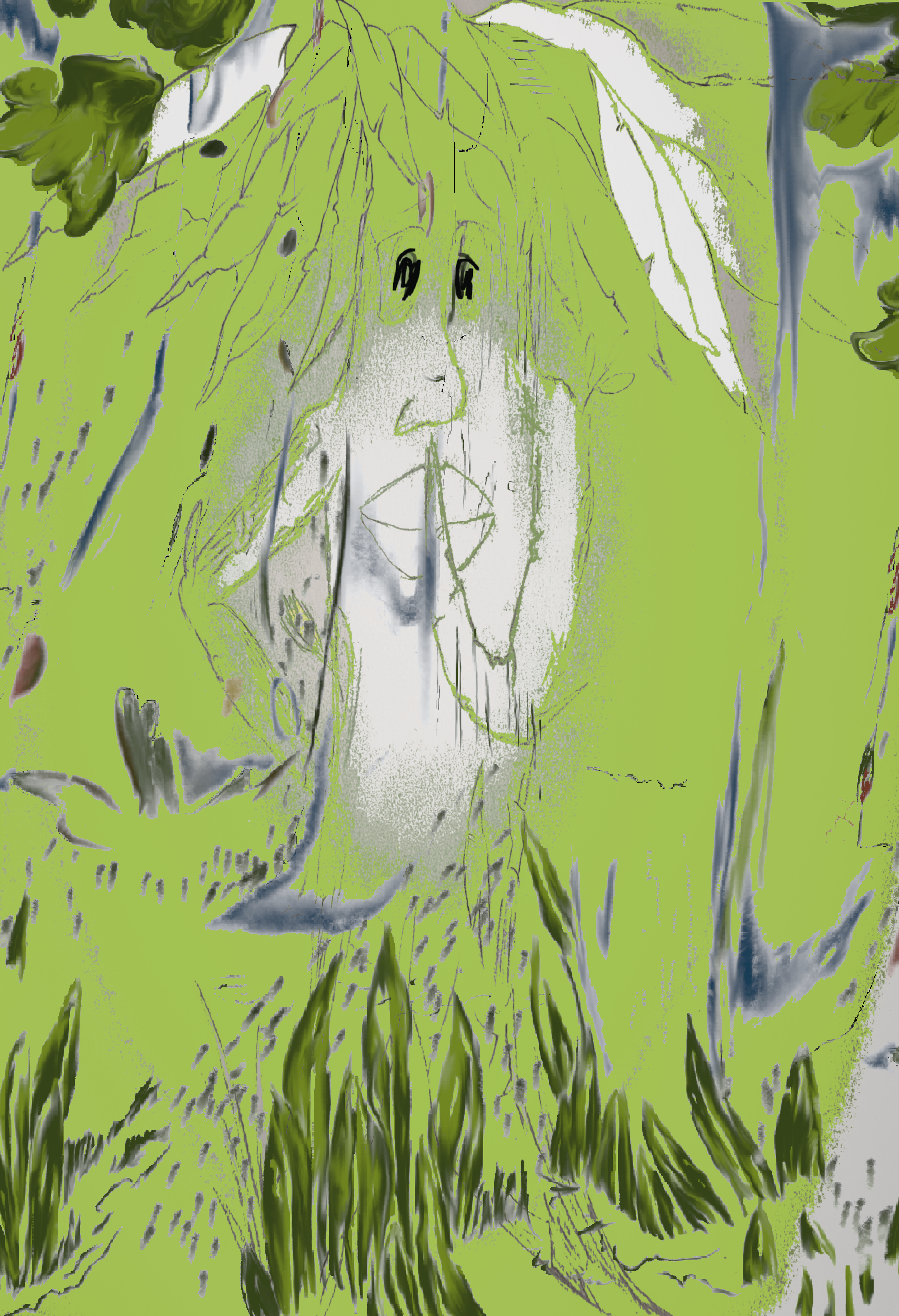
4. Metamorphosis Light is a technique that blends traditional gestures with digital processes. What prompted you to develop this method, and how has it changed the way you build images?
Metamorphosis Light was born in a rather unexpected way. At that time, my stylus for the graphic tablet broke, just as I had begun exploring digital drawing. Since I could not find a compatible replacement, something shifted inside me. Instead of stopping, I started experimenting with other methods to complete the large number of illustrations I had to submit to the Academy.
That obstacle became a creative opportunity, leading to the birth of a completely new technique.
Above all, this method came from my need to unite my roots with contemporary languages. Traditional gestures allow me to maintain a physical, intuitive, and ritual connection with the image through manual drawing—digital processes, on the other hand, open new possibilities for transformation, light, and movement.
It is a migration of creativity from manual work to digital, using basic software without AI, and then back again onto physical paper. At the beginning, it was a way to distinguish my working method. With the arrival of AI, I felt an even stronger need to stand apart, partly also out of competition, since I was completing my degree in Illustration and Comics at the Academy of Fine Arts.
I developed this method because no single technique could contain the full complexity of my inner imagery—the memory of the body, the flow of time, and the transformation of identity.
Working this way has profoundly changed how I build images. I no longer see them as static forms, but as living organisms in constant evolution. Each work becomes a passage, a living process in which physical materials and digital elements interact and strengthen one another.
My early years in Dakar taught me to perceive nature as a living, spiritual, and everyday presence.
Sokhna Mariama

5. Your projects often include poetry, storytelling, and educational elements. How do words influence the way a visual idea grows in your hands?
Words are often the starting point of my creative process. A poem, a sentence, or even a rhythm can open a vision, as if the text lights up a hidden image. Poetry was the first art form I approached, and it has remained a constant in my life.
Language helps me define the emotion, intention, and breath of a work. It acts as an invisible guide. It gives structure to thought while leaving space for imagination.
When I work, the passage from verbal language to visual language is never a simple translation, but a transformation. Words dissolve and become forms, textures, colours, and gestures.
In this way, storytelling and poetry do not just accompany my work. They shape it from within, allowing me to create images that are not only meant to be looked at, but also read, felt, and interpreted.
6. You have taken your work through international exhibitions, community projects, and intercultural walks. What has this journey taught you about how people connect with nature centered art in different places?
Bringing my work into different contexts has taught me that art connected to nature always creates a meeting point, even when cultures are far apart. Whether in international exhibitions, community projects, or intercultural walks, I have seen people respond to nature with shared curiosity and sensitivity, filtered through their own histories, experiences, and landscapes.
In some places, environmental art awakens intimate memories. In others, it sparks discussions about sustainability. Elsewhere, it becomes an invitation to quiet observation. What changes is not the theme, but how each person relates to it. The dialogue with the public has been a source of intense emotion and awareness for my creative sensitivity.
This journey has taught me that nature is a shared language, but its interpretation is deeply cultural. It is within this dialogue between what is shared and what is multicultural that my work finds its meaning, seeing how the works change through others’ eyes and how, through them, each person reconnects with their relationship to the living world.

Sokhna Mariama’s work speaks about movement, belonging, and the relationship between people and nature. Through painting, installation, photography, and shared experiences, she explores how identity is shaped by travel, memory, and place. Her journey from Senegal to Italy is not treated as a break or a loss, but as a continuous process in which different ways of living and seeing come together.
From this interview, we learn that her practice grows through attention, experimentation, and openness. She allows ideas to lead the choice of materials and methods, and she welcomes limits as part of the process. Her projects often invite participation, encouraging people to think about their role in caring for the environment and the spaces they inhabit. Her path shows how creative work can evolve through patience, curiosity, and exchange with others.
To learn more about Sokhna, visit the links below.
