
Who Is Bruna When the Studio Is Quiet?
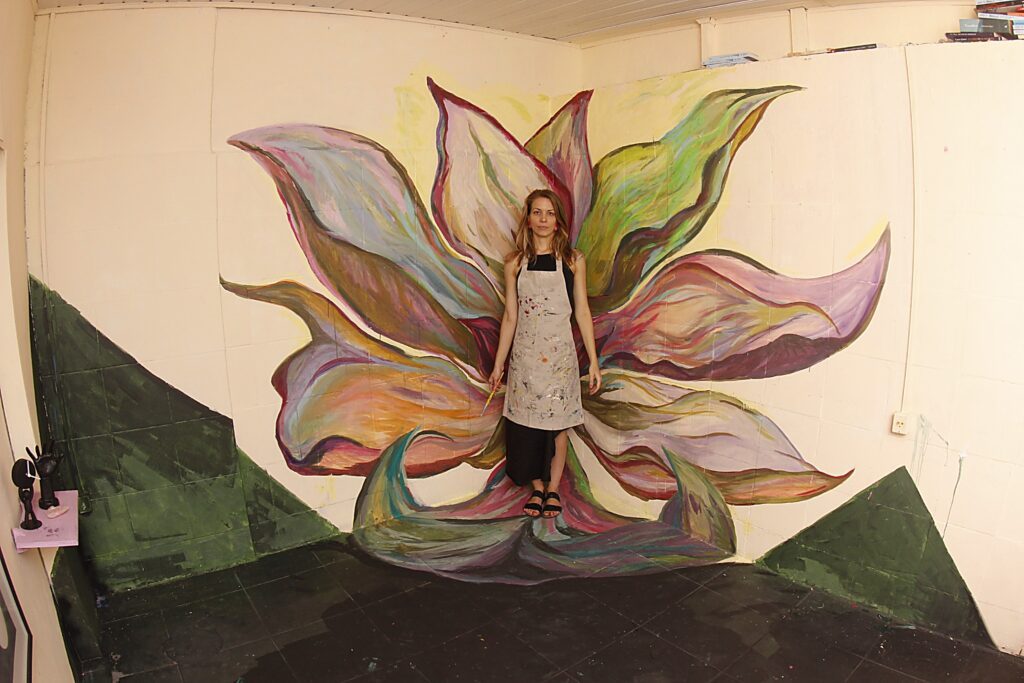
This studio visit introduces us to a Brazilian clinical psychologist and visual artist, Bruna Gazzi Costa, who moves between two practices that shape her work and her life. In the interview, she talks about how painting and psychology meet in her daily routine, how listening guides both her sessions with patients and her time with paint, and how art became a way to stay grounded during the pandemic. She shares her process, her materials, the rhythms of her studio days, and how ideas travel from sketches and journals onto canvas.
For several years, her studio was part of Barraco Cultural in Porto Alegre, Brazil, a former candy factory turned into a shared space with other artists from many fields. She worked alongside ceramists, photographers, designers, and architects, moving back and forth between her psychology office and her painting area. The room carried the light smell of acrylic paint, paper, and everyday life passing through a building that was always in use. Being surrounded by other artists, hearing footsteps, voices, and quiet moments, shaped the way she painted and thought.
In this conversation, she invites us into that space and into her way of working today, from long-weekend painting sessions to her love of early-morning light. It is a look at how art fits into a life that balances care for others with care for herself, and how a studio can be less about walls and more about presence, time, and shared experience.
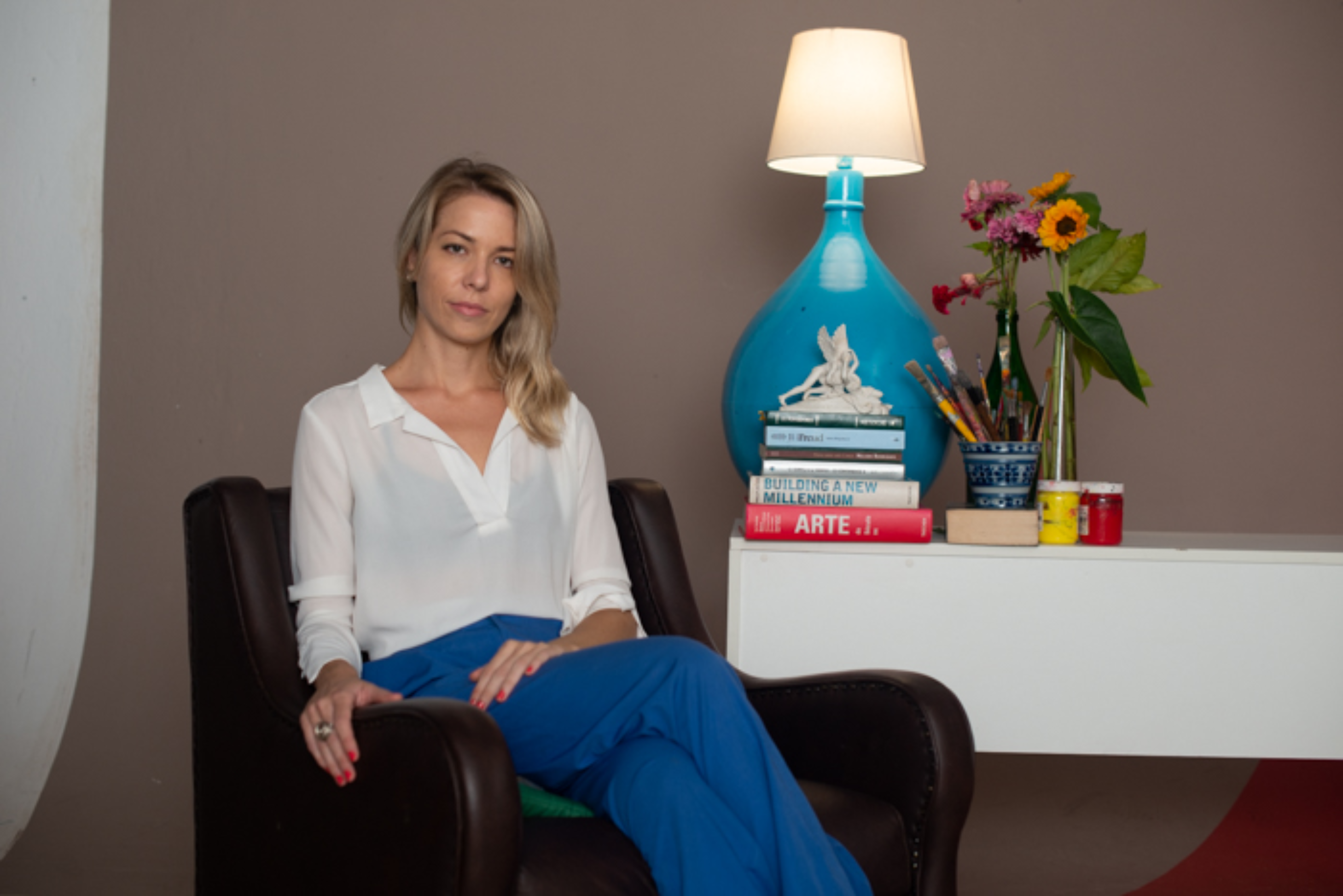
I am a Brazilian clinical psychologist and visual artist. My work arises from the encounter between emotion and matter—between what I feel and what I can transform into form, colour, and texture. My artistic practice is guided by listening—the same listening that guides me in psychology. I consider painting a pillar of health, and especially mental health. Being able to be in a place surrounded by artists during the pandemic was certainly a guarantee of sanity. Between the office and the studio, I move through listening: to stories, gestures, and what remains silent.
I am exploring art as a territory of self-knowledge, healing, and connection. Create from intimate processes, observing what emerges in the space between feeling and understanding. I seek to translate emotional states and subtleties of human experience into visual compositions that embrace the imperfect, the fragmented, and the silent. Each work is a conversation with the unconscious, a mirror of the narratives that inhabit us and, when viewed, reveal the possibility of transformation.
1. Can you walk us through your studio space? What’s the first thing you see when you walk in?
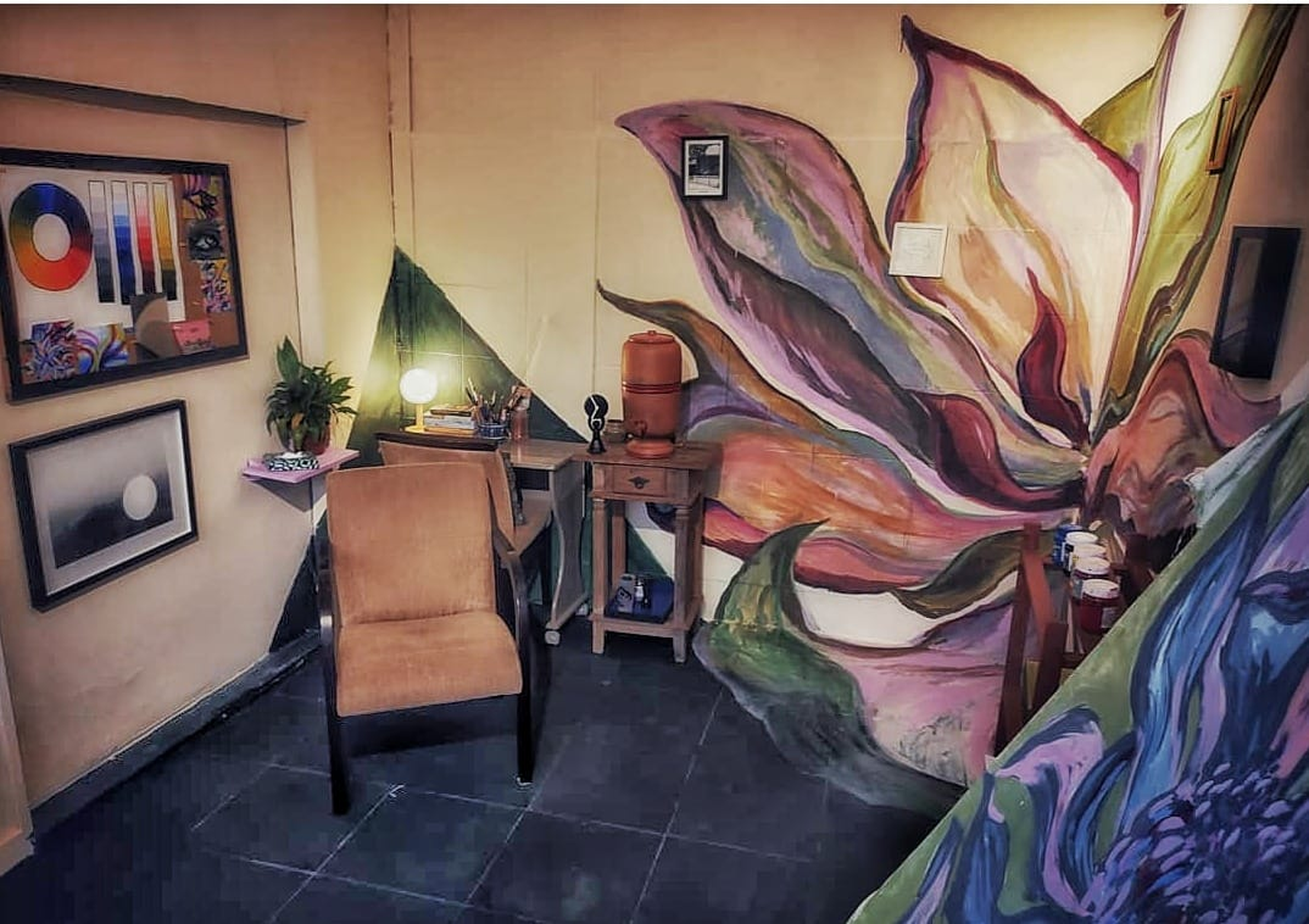
For four years, I had the unique experience of having a psychology office and painting studio within a gallery and art school. From August 2018 to September 2022, Barraco Cultural (Porto Alegre/RS/Brazil) was my second home. This old building, once home to a candy factory, welcomed several independent artists from diverse fields: ceramics, photography, fashion, illustration, architecture, and more—a true powerhouse of creativity and mental health. Between the office and the studio, I move through listening: to stories, gestures, and what remains silent.
2. How is the space arranged to support the way you like to work on a painting from start to finish?
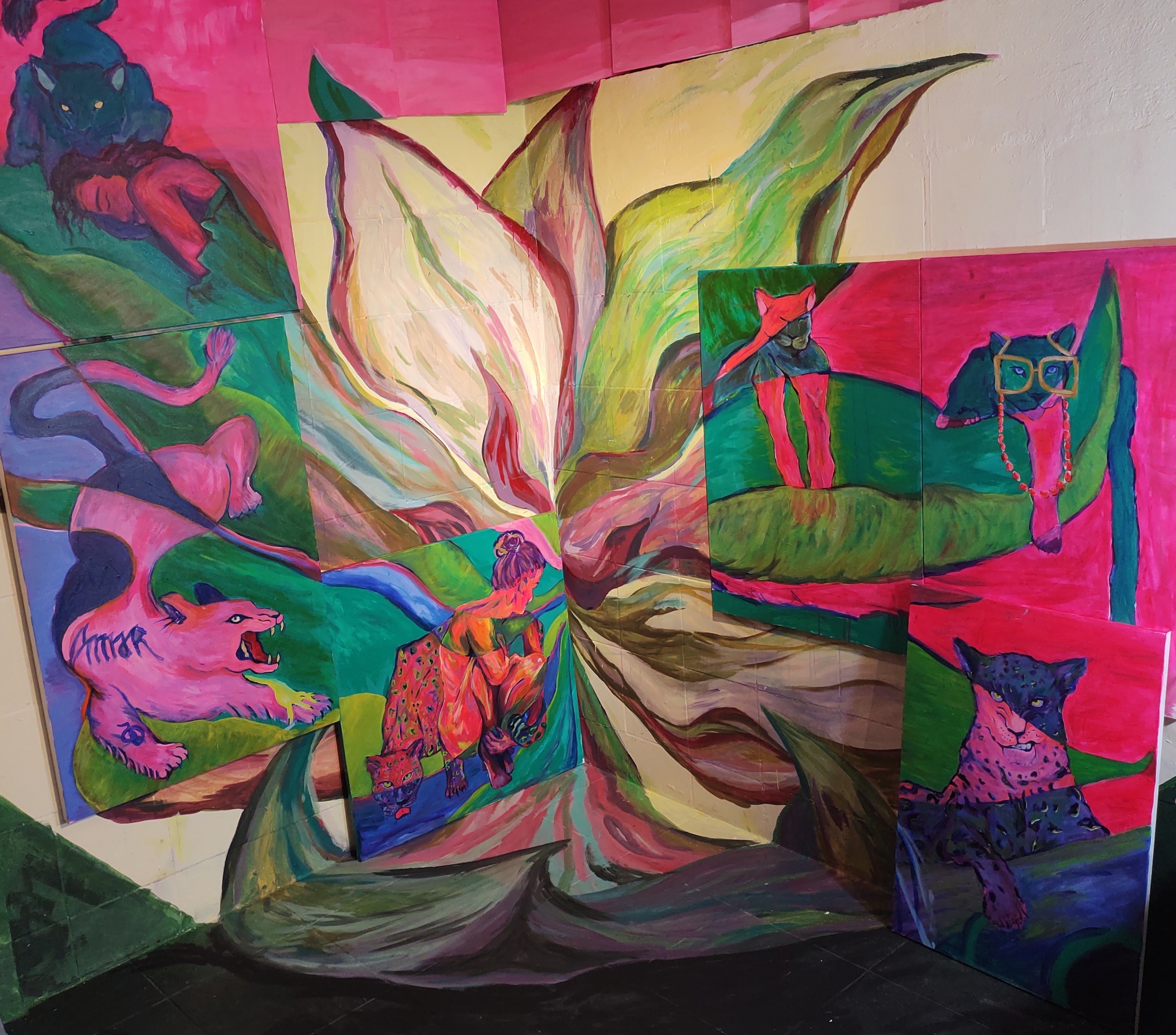
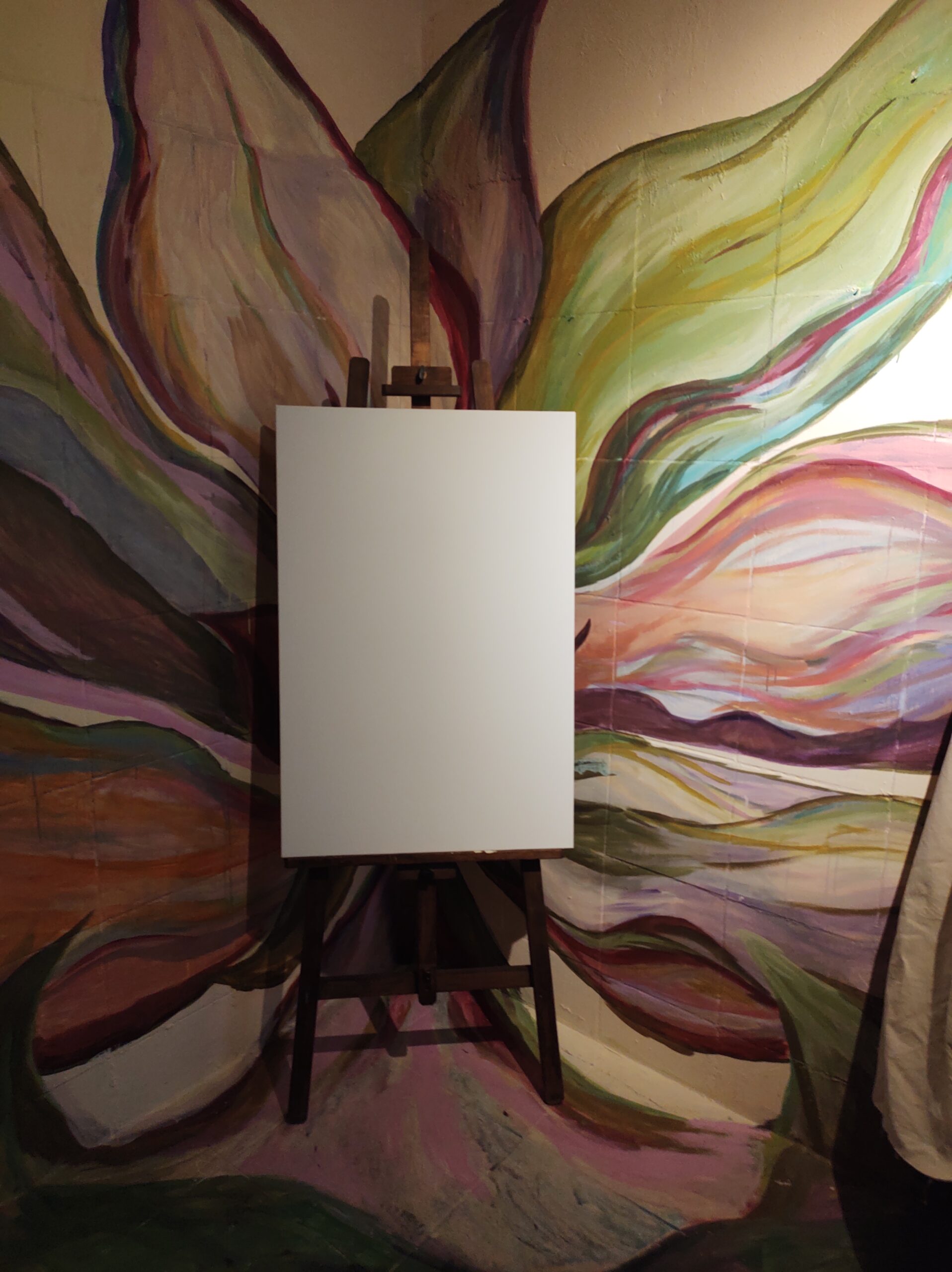
During the week, I organised the space so I could see my patients. When the weekend arrived, I cleared space on the tables and walls so I could paint. In a way, the materials were always available, so that I could access them during any break.
3. What materials or tools do you keep closest to you while working?
I work with many canvases of various sizes, from the smallest to the largest, as well as multiple brushes and paints. I’ve always preferred acrylic paints because of their quick drying time and less strong odour. Since the room I used wasn’t solely dedicated to painting, acrylic paint allowed me to work in a variety of ways.
4. Are there certain books, film stills, or notes that stay in the studio as part of your process?
I like to keep my references visible, gathered on inspiration boards. They often include images of Charmaine Olivia’s paintings, scenes from films like Vanilla Sky and Eternal Sunshine of the Spotless Mind, and quotes from Rilke’s book, such as “you must live the questions.”
5. How do you usually keep track of ideas as they move from your journals into the canvas?
I usually make pencil sketches on various types of paper until I decide to move on to canvases or walls.
6. What does a typical day in this studio look like for you?
I like to set aside a day or the weekend to do a long, extended painting session for several hours. Since my routine as a psychologist doesn’t allow me to paint every day, I need to set aside special time for it.

7. How does the light in this space change the way you approach a painting?
In my old studio, which was inside the Barraco Cultural, I only painted with artificial light. But nowadays, I always look for natural light. Although I like to paint in the early morning, sometimes dealing with insomnia, I much prefer to paint on a Saturday or Sunday morning very early, with the soft light of the beginning of the day.
8. Do you have works in progress visible around the room, or do you prefer to focus on one piece at a time?
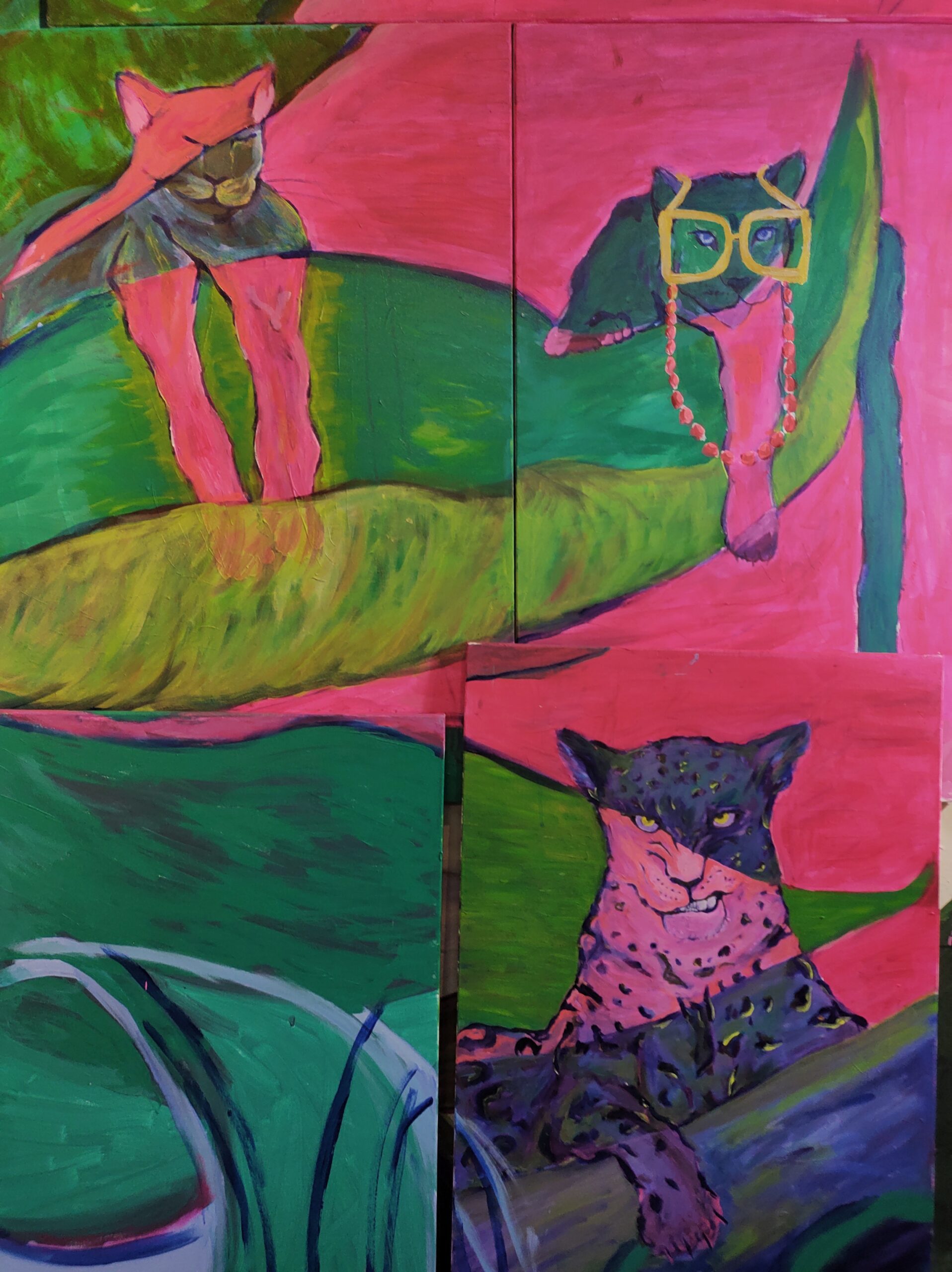
Whenever I can, I leave my paintings visible and accessible so I can return to them. I have difficulty finishing them, and having them nearby, even if it’s an old one, sometimes allows me to revisit them and add a few touches. That’s why I like to have several available while I’m painting.
9. Is there a spot in the studio where you usually pause to step back and look at the work differently?
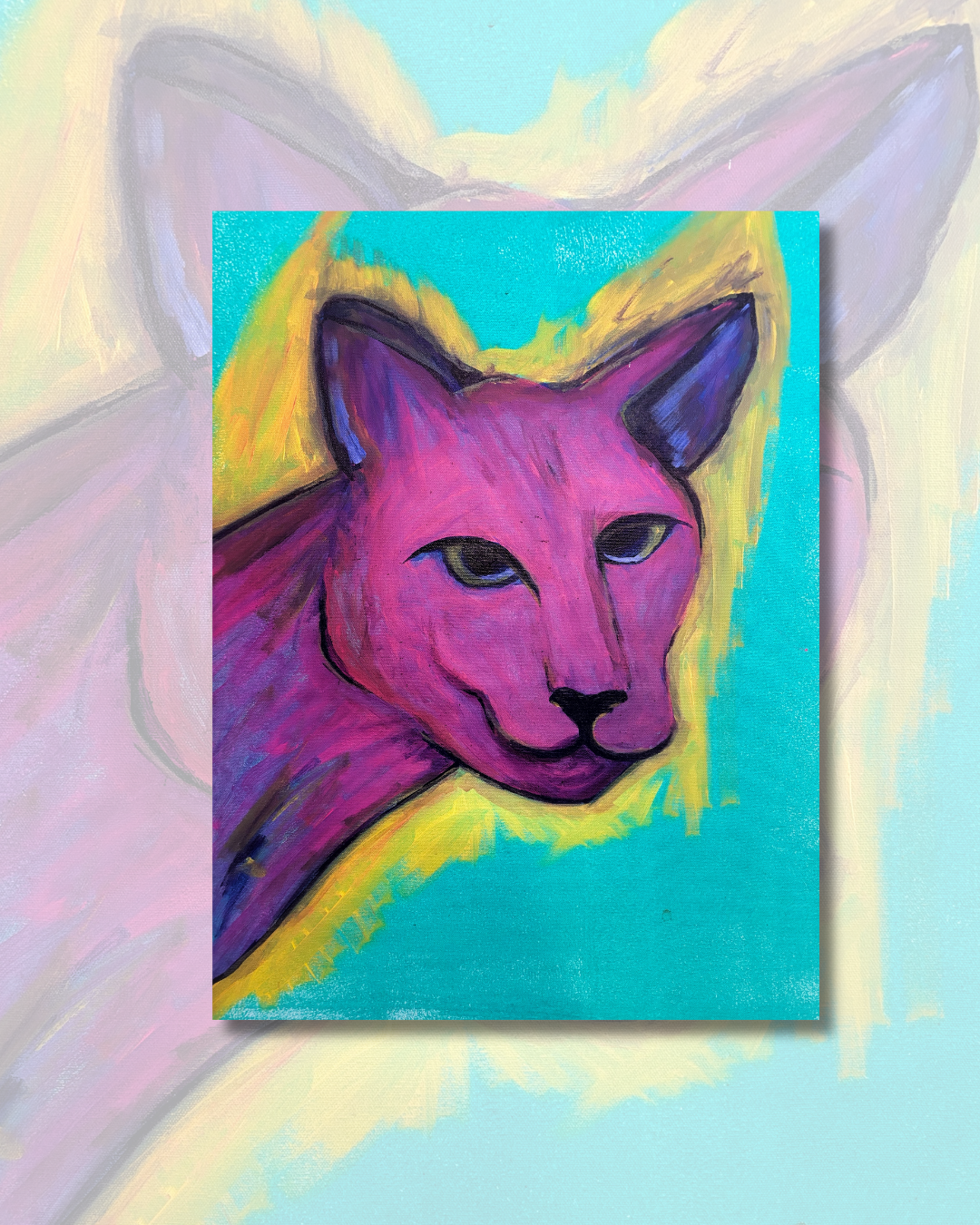
Whenever I can, I take my paintings to larger spaces than the places where I start them. I think it’s essential to be able to look at them from different perspectives of distance and positioning. Sometimes it’s also nice to put them upside down and distance myself as much as possible, to see the effects they can create.
10. If you get a chance to set up your studio anywhere in the world, where would it be?
If I could choose any place to have my studio, it would certainly be one with a view of the sea. Being able to see the different colours throughout the day would undoubtedly be very inspiring. But regardless of the place, state, or country, if I can be close to other artists, I believe it makes a difference. When I had my studio inside the Barraco Cultural and had daily contact with other artists, it was very motivating for my work, especially during the pandemic. Getting out of the isolation of the psychology office and sharing space with other inspiring people: that would be my best advice for anyone.
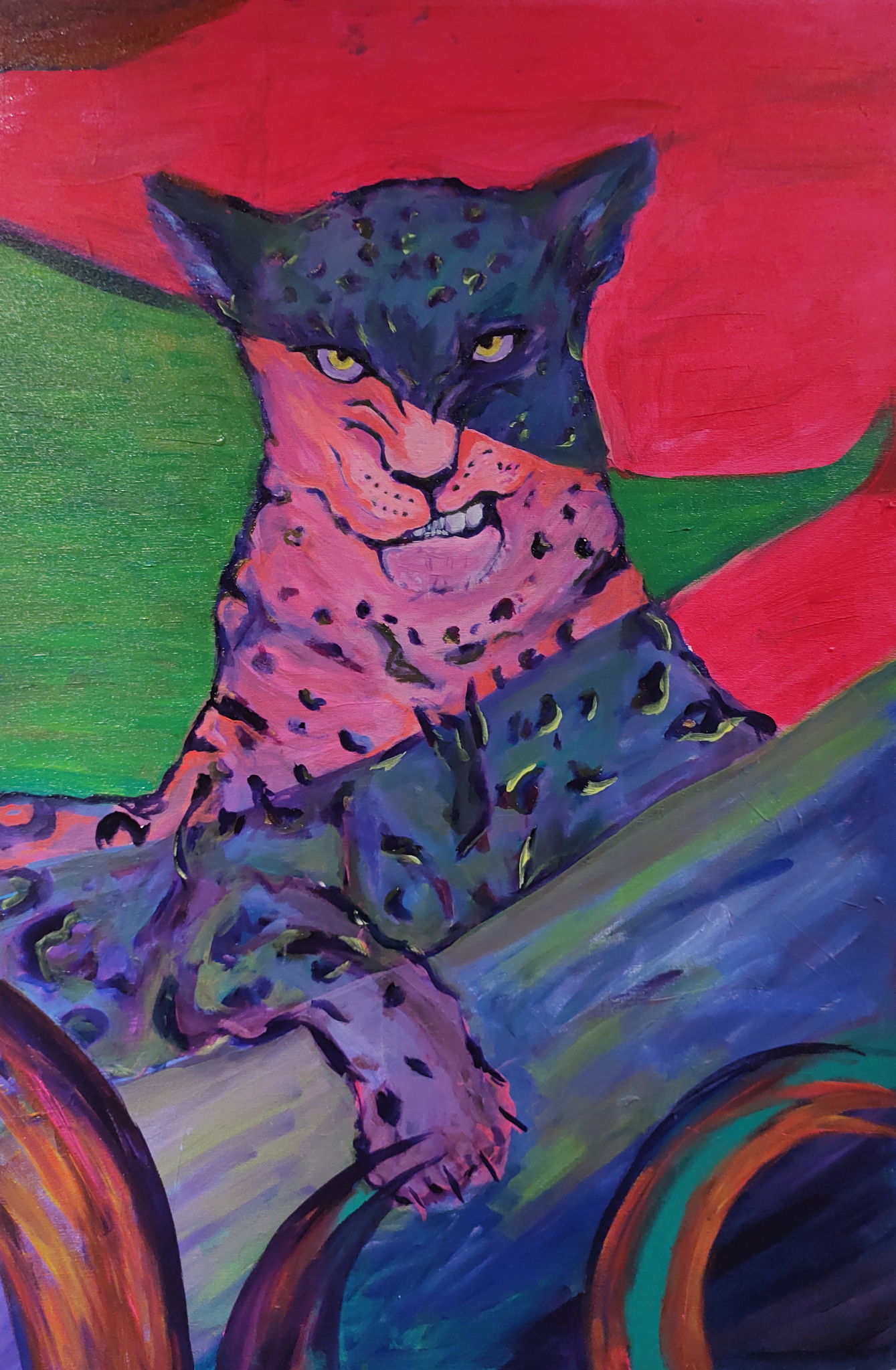
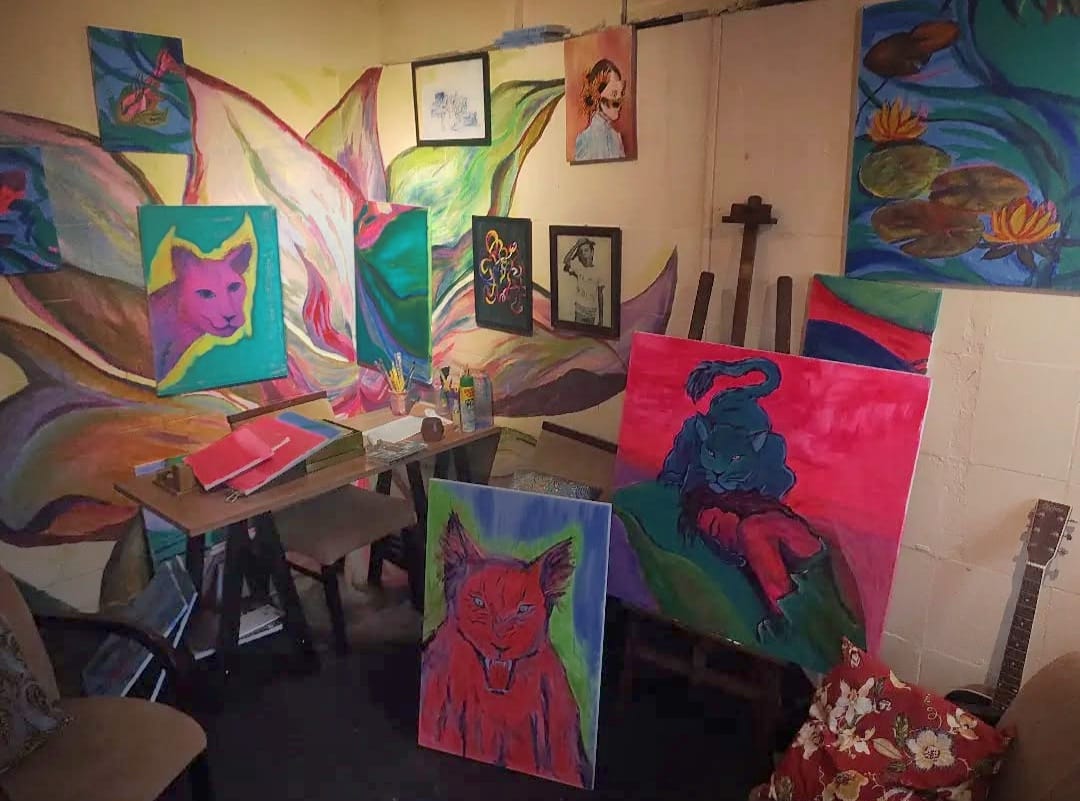
Bruna’s studio feels calm and lived in. It is not a place of rush, but of pauses. There is space to move, to step back, to leave a painting resting and return to it days or even months later. The air carries the light scent of acrylic paint mixed with paper and dust from canvases that have been handled many times. Light plays an important role, especially in the early morning, when everything is quieter, and colours appear softer. Whether inside a shared building like Barraco Cultural or in a more intimate space today, the studio feels like a crossing point between thought and feeling, work and rest, silence and attention.
As this studio visit comes to an end, what stays with us is not only the images of canvases and brushes, but the way painting exists alongside listening, care, and time. Her practice grows between psychology sessions and long painting days, between shared spaces and moments of solitude. The studio is never fixed to one place, but shaped by light, routine, and the presence of other artists. It is a space where paintings are allowed to wait, to change, and to remain unfinished until they are ready. Leaving this studio, we are reminded that making art can be a slow act, one that asks for patience, company, and the courage to stay with what is still forming.
To learn more about Bruna, visit the links below.
