
3 Ways Artists Work With Brands: Commissions, Collaborations and Licensing

As an artist, you might get a message that sounds simple enough. “Would you be interested in working with us?”
It could come from a collector who wants a painting made specifically for their home. It could be a brand interested in creating something together. Or it could be a company that has seen one of your existing artworks and wants to put it on a product.
All three opportunities can sound like collaborations. They can even be described using the same casual language in emails and DMs. But behind that friendly message, the actual arrangement can be very different.
A commission, a collaboration and a licensing deal each involve your artwork in their own way. One might mean creating something entirely new for a client, another might involve making something together with a brand or another creative, while licensing usually means giving someone permission to use work you have already created.
And those differences matter. They can affect what you are making, who owns the work, how it can be used, how long someone can use it, and how you get paid. Knowing what you are actually agreeing to before you say yes can make these opportunities much easier to navigate, and save you from plenty of confusion later.
When Someone Wants You To Make Something For Them
A commission usually begins with a request for a new, specific artwork. A collector might approach you because they love your style but want something made for a particular room. A client might ask for a portrait of their family. A hotel might want a large painting designed for one of its spaces.
The important part is that the artwork is being created because of the client’s request. That means the conversation should go beyond, “How much would you charge for this?”
Before you begin, you need to understand what you are actually agreeing to make. What is the size? What materials will you use? What is the subject? Will the client provide reference images? How many revisions, if any, are included? What is the timeline? Who pays for shipping?
Even small details can become important once the work is underway. Imagine a client commissions a painting and, halfway through, starts asking for major changes that were never discussed. If the original agreement simply said “one custom painting” without defining the scope of the work, it becomes much harder to explain where the original commission ends and additional work begins. A clear commission agreement protects both sides.
But Does The Client Own The Artwork?
This is where things can become slightly more complicated. When someone buys commissioned artwork, they are generally paying for the physical artwork itself. That does not automatically mean every possible right connected to the artwork has been transferred to them.
There is a difference between owning the painting and owning every right to reproduce, alter, publish or commercially use the image of that painting. For example, a collector might purchase an original painting for their home. That is very different from a company commissioning you to create an illustration that it plans to reproduce across packaging, advertising and merchandise.
The second situation may involve much broader usage rights, and those rights should be discussed separately. This is why artists should avoid treating every commission as simply “a painting for X amount of money.” The actual scope of the agreement matters just as much as the artwork itself.
When You And Someone Else Are Making Something Together
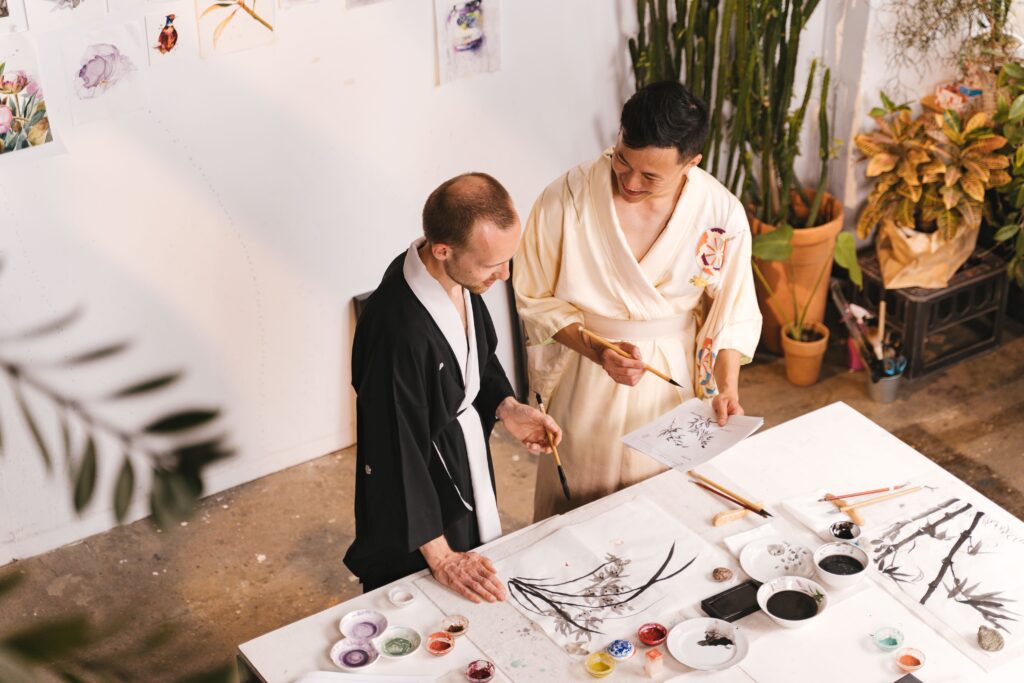
A collaboration is different because the creative process itself is shared. Perhaps a fashion brand approaches you to create artwork for a collection. Maybe you are working with another artist on a series. Perhaps a photographer, designer and painter are developing a project together.
There may not be one person simply saying, “Make this for me.” Instead, both sides are contributing something to the final result. And that creates a different set of questions.
Who is responsible for what? Who makes the creative decisions? How will both contributors be credited? Who owns the finished work? Can either person use images of it in their portfolio? Can the brand continue using the artwork after the campaign ends?
These things can feel uncomfortable to discuss at the beginning because everyone is excited about the creative idea. But that is exactly when they should be discussed. A collaboration can be wonderfully creative while still needing a very practical agreement behind it.
Not Every Collaboration Is An Equal Exchange
The word “collaboration” can sometimes make a business arrangement sound more casual than it actually is. An artist might be told that a brand wants to “collaborate” and that the exposure will be valuable. But if the brand expects the artist to create several original works, attend an event, promote the campaign and provide content for social media, there is a significant amount of work involved.
Calling something a collaboration does not automatically make it unpaid work. Before agreeing, look at what each side is actually contributing. Maybe you are providing the artwork while the other party provides production, distribution and marketing. Maybe both parties are contributing creative work. Maybe you are being paid a fee as well as receiving royalties. There are many possible structures.
The useful question is not simply, “Is this a collaboration?” It is, “What exactly is each side bringing to this arrangement, and what does each side receive in return?”
When Your Existing Artwork Becomes Something Else
A licensing deal works differently again.
Instead of commissioning you to create a new artwork or collaborating with you to produce something together, a company may want permission to use artwork you already created. Imagine you have a painting that a stationery company loves. They want to reproduce it on notebooks. A hotel might want to use one of your illustrations on its walls and promotional materials. A clothing company might want to print your artwork on a limited collection.
In these situations, the company may not need to own the original artwork. It may simply need permission to use it. That permission is what licensing is about. You are essentially allowing someone to use your intellectual property under agreed conditions.
What Exactly Are You Licensing?
This is where artists need to pay attention to the details. A licensing agreement can specify where the artwork can be used, how it can be used, for how long, and how widely it can be distributed.
For example, you might license an illustration to a company for use on greeting cards for two years in the United States. That is very different from giving the company permission to use the same artwork worldwide, across clothing, packaging, advertising, websites and social media indefinitely.
The artwork has not changed. The value and scope of the permission have. This is why phrases such as “all media,” “worldwide,” “perpetual” or “exclusive” deserve careful attention. They can significantly expand what the other party is allowed to do with your work.
Exclusive And Non-Exclusive Are Not The Same
One of the most important licensing questions is whether the permission is exclusive. With a non-exclusive license, you can generally license the same work to other parties, subject to the specific terms of your agreement. An exclusive license can restrict you from giving those same rights to someone else within the agreed scope.
Imagine you license a painting to one company for use on home décor products. If the license is exclusive for that product category, you may not be able to license the same artwork to another home décor company during the relevant period. That is a very different arrangement from simply allowing one company to use it. Exclusivity should therefore never be treated as a small line buried inside a contract. It can affect what you are able to do with your own artwork afterwards.
The Three Can Sometimes Overlap
Real-life art business arrangements do not always fit perfectly into three neat boxes. A brand might commission you to create a new artwork and then ask to license that artwork for use on its products.
An artist might collaborate with a fashion designer to create a collection and then agree to license the resulting artwork for a particular campaign. A company might initially approach you about licensing an existing painting and then decide it wants you to create a new series specifically for its project.
This is why the label used in an email is not enough. Someone calling something a “collaboration” does not tell you what rights you are giving away. Someone calling something a “commission” does not tell you whether commercial usage is included. Look at the actual arrangement.
Ask These Questions Before You Say Yes
Before accepting any of these opportunities, take a moment to get the practical details in writing. What exactly am I being asked to create or provide? Who will own the physical artwork? Who will own or control the copyright? What can the other party do with the artwork? Where can they use it? For how long? Is the permission exclusive? Can the artwork be altered or cropped? Will I be credited? Can I use the work in my portfolio and on my website? What happens if the project is cancelled? How and when will I be paid?
If the work involves reproduction, products or commercial use, ask what products and platforms are included. If the arrangement involves a new artwork, make sure the scope and revision process are clear. These questions are not about being difficult. They are about making sure that everyone understands the same deal.
Your Artwork Can Have More Than One Value
One of the biggest things artists can miss in these situations is that they are not always being paid for the same thing. There is the value of your time and creative labour. There is the physical artwork, if an original is being created or sold.
And there can also be value in the rights to reproduce or commercially use that artwork. Those things do not necessarily have to be bundled together. A company asking for permission to put your artwork on 10,000 products is not asking for the same thing as a collector buying one original painting for their home.
The more clearly you separate the artwork itself from the rights attached to it, the easier it becomes to understand what you are actually agreeing to.
Read The Deal, Not Just The Label
Commission, collaboration and licensing are useful words, but they should never be the only thing you rely on when deciding whether an opportunity makes sense. A commission is generally about creating something specifically for a client. A collaboration involves two or more parties contributing to a creative project. Licensing allows another party to use your existing intellectual property under agreed terms.
But the boundaries can overlap. What matters most is understanding what you are creating, what you are giving, what the other party is allowed to do with your work, and what you receive in return. The exciting part of an art business opportunity is often the creative idea itself. The less exciting part is the contract, the usage terms, the deadlines and the payment details.
But those practical details are what allow the creative relationship to stay creative. Because saying yes to an opportunity should not mean giving away more of your work, time or rights than you intended.
Editors Note:
Only 10 days left to submit your work for The Things We Feel, our upcoming virtual exhibition. If you have been meaning to share your work, this is your little reminder to send it in before the October 5 deadline. We cannot wait to see what you create.
