
5 Women Artists Who Helped Build The Foundations Of Modern Art
When we think about some of the most influential art movements in history, certain names immediately come to mind. Impressionism brings to mind Claude Monet and Edgar Degas, Dada reminds us of Marcel Duchamp and Tristan Tzara, while the Harlem Renaissance is often associated with the writers, musicians, and artists who transformed the cultural landscape of the 1920s and 1930s.
But art movements have never been shaped by a handful of names alone. Behind the exhibitions, experimental gatherings, artistic collaborations, and cultural conversations were countless individuals whose contributions helped these modern art movements grow into what we recognize today. Some were creating work alongside their better-known contemporaries, others were organizing spaces, teaching younger artists, and finding new ways to bring creative communities together.
Among them were women whose work was just as interesting, ambitious, and influential, even if their names did not always receive the same attention.
From an artist who helped establish one of Dada’s most important meeting places to a sculptor who opened doors for an entire generation of Black artists, these five women offer us another way of looking at art history. Their stories remind us that sometimes, to understand an art movement, we need to look beyond its most familiar names.
1. Marie Bracquemond: The Impressionist Whose Story Deserves More Attention
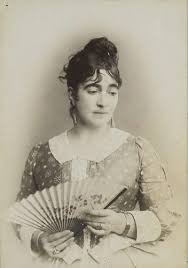
The story of Impressionism is usually told through the works of Monet, Renoir, Degas, and a few other familiar names. Women were part of this movement too, of course, with Mary Cassatt and Berthe Morisot receiving considerable attention in art history. But there was another woman whose contribution deserves a closer look: Marie Bracquemond (1840–1916).
A painter, printmaker, and ceramic artist, Bracquemond was one of the three women historically described as the great ladies of Impressionism, alongside Cassatt and Morisot. She exhibited with the Impressionists in 1879, 1880, and 1886, bringing her own understanding of colour, light, and everyday subjects to the movement.
Her artistic journey was particularly interesting because she did not begin as an Impressionist. She received academic training and initially worked in a more traditional style. However, her encounters with contemporary artists, including Claude Monet and Edgar Degas, gradually influenced her approach. Her paintings became brighter, her brushwork freer, and her interest in modern life more pronounced.
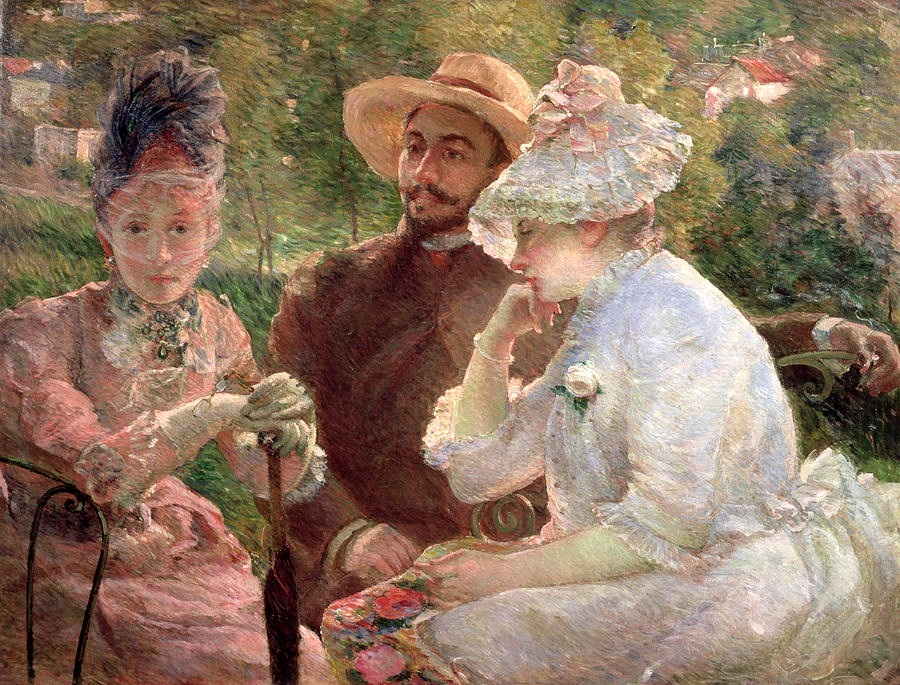
One of her notable works, On the Terrace at Sèvres (1880), captures the kind of outdoor atmosphere and modern leisure that became so closely associated with Impressionism. Her paintings often featured women in domestic and outdoor settings, but rather than treating these moments as insignificant, she brought attention to the changing light, colour, and atmosphere surrounding them.
Bracquemond’s story also reveals something about the difficulties women faced in pursuing artistic careers. Her husband, Félix Bracquemond, was an established artist, and their artistic lives often overlapped. Marie eventually withdrew from much of her public artistic activity, although the precise circumstances surrounding her later years deserve careful consideration.
For a long time, her name remained less familiar than those of her contemporaries. However, renewed interest in her work, including a major donation of works by the Bracquemond family to the Musée d’Orsay in 2024, has helped bring her artistic legacy back into focus.
It is worth remembering that Impressionism was not just a story of the men who painted its most recognizable landscapes. Bracquemond was part of that story too.
2. Augusta Savage: The Sculptor Who Helped Build A Generation Of Harlem Artists
The Harlem Renaissance was one of the most important cultural movements in American history. During the 1920s and 1930s, Harlem became a centre for Black artistic expression, bringing together painters, sculptors, writers, musicians, and intellectuals who were reshaping how African American life and culture were represented.
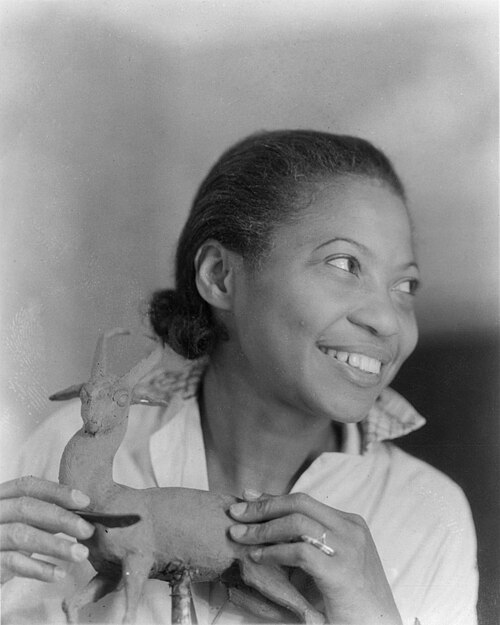
Among the women who helped make this creative environment possible was Augusta Savage (1892–1962).
Savage was a sculptor, but her influence extended far beyond her own artwork. She became one of Harlem’s most important art educators and community organizers, dedicating much of her career to creating opportunities for Black artists at a time when racial discrimination limited access to artistic education, professional networks, and financial support.
After studying art in New York and spending time in Paris, Savage returned to Harlem and established the Savage Studio of Arts and Crafts. It became a place where young artists could develop their skills and explore their creative interests.
Her work eventually grew into something much larger. In 1935, she helped establish the Harlem Artists Guild, an organization that advocated for better educational and financial opportunities for Black artists. Two years later, she became the first director of the Harlem Community Art Center, which provided accessible art education and a creative space for the neighbourhood.
Some of the artists who benefited from her teaching and mentorship included Jacob Lawrence, Gwendolyn Knight, and Norman Lewis, all of whom went on to make important contributions to American art.
Savage was also an accomplished artist in her own right. Her sculpture Gamin, created around 1929, is a particularly memorable example of her ability to capture personality and character in portraiture. Another important work was The Harp, a monumental sculpture commissioned for the 1939 New York World’s Fair. Inspired by James Weldon Johnson’s poem and the song Lift Every Voice and Sing, it celebrated the musical contributions of African Americans. Unfortunately, the plaster sculpture was never cast in bronze and was eventually destroyed.
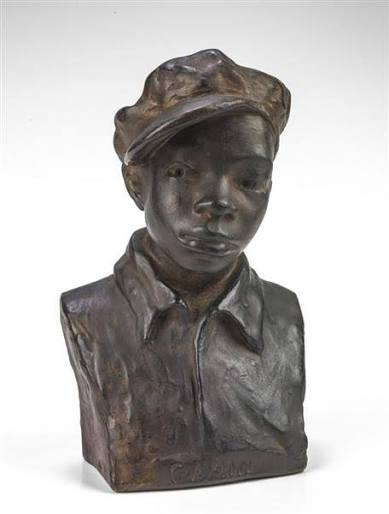
What makes Savage’s story so remarkable is that she understood the importance of creating opportunities for others, even while facing significant obstacles in her own career. Her legacy lives on not only through her sculptures but also through the artists she taught, encouraged, and helped bring into the art world.
She was not simply part of the Harlem Renaissance. She helped create the conditions in which an entire generation of artists could flourish.
3. Emmy Hennings: The Woman Who Helped Give Dada Its First Home
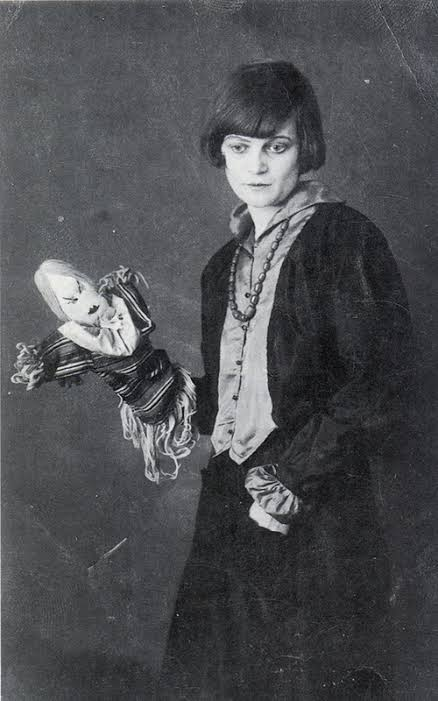
Imagine a small nightclub in Zurich during the First World War, filled with poetry readings, experimental performances, unusual costumes, music, and artists who were questioning almost everything they knew about traditional art. This was Cabaret Voltaire, the venue that became one of the starting points of the Dada movement.
While art history often remembers Hugo Ball, Tristan Tzara, and Hans Arp when discussing Dada, the story of Cabaret Voltaire would be incomplete without Emmy Hennings (1885–1948). Hennings was a German writer, poet, actress, and cabaret performer. Long before Dada became an established avant-garde movement, she had already spent years working in experimental performance spaces and literary circles. She was familiar with the unconventional artistic environments that would eventually become central to Dada’s identity.
In 1916, Hennings and her partner, Hugo Ball, co-founded Cabaret Voltaire in Zurich. The venue was conceived as a gathering place for artists, writers, musicians, and performers who wanted to experiment with new forms of creative expression. Hennings was not simply someone who supported the project from the sidelines. She performed there, recited poetry, sang, and helped establish the atmosphere that made the cabaret such an important meeting point for the emerging movement.
The performances at Cabaret Voltaire were deliberately unconventional. Artists experimented with simultaneous poetry, strange sounds, masks, movement, and combinations of different artistic disciplines. The aim was to challenge established cultural expectations and question the ideas that had shaped European society before and during the war.
Hennings also contributed handmade puppets to performances and was involved in the wider creative activity surrounding the venue. Although Cabaret Voltaire operated for only a few months in 1916, its influence extended far beyond its short existence. It became an important foundation for the development of Dada.
What is particularly interesting is how Hennings’ contribution was treated in later accounts of the movement. While Hugo Ball’s role became widely recognized, her own work as a writer and artist received considerably less attention. Today, institutions such as the Metropolitan Museum of Art and Cabaret Voltaire itself have helped bring her story into greater focus.
Hennings reminds us that the beginnings of an art movement are not always found in a painting or sculpture. Sometimes, they begin with a performance, a gathering, or a woman who helps create a space where new ideas can come to life.
4. Margaret Macdonald Mackintosh: The Artist Behind The Glasgow Style
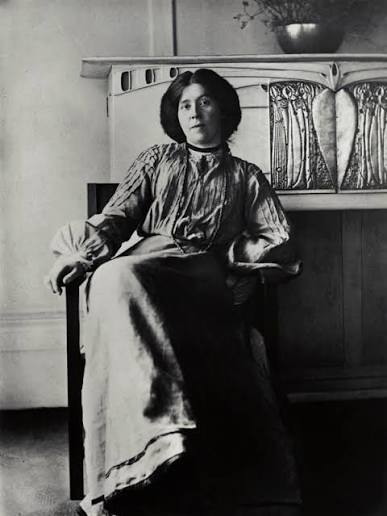
At the turn of the twentieth century, Glasgow was developing a distinctive artistic identity. Its designers and artists were experimenting with decorative forms, flowing lines, natural motifs, and unusual combinations of materials. The resulting visual language became known as the Glasgow Style, closely associated with the wider Art Nouveau movement.
One of its most important contributors was Margaret Macdonald Mackintosh (1864–1933).
Although her name is sometimes overshadowed by that of her husband, the architect and designer Charles Rennie Mackintosh, Margaret was an accomplished artist whose work played a significant role in shaping the movement’s visual character. She studied at Glasgow School of Art alongside her sister, Frances Macdonald. The sisters later established their own studio and began collaborating with artists Charles Rennie Mackintosh and Herbert MacNair. Together, the four became known as The Four, a creative group whose work helped establish the Glasgow Style.
Margaret worked across several mediums, including watercolour, metalwork, embroidery, and textiles. However, she became particularly known for her distinctive gesso panels, decorative works made using a plaster-based material that allowed her to create intricate, sculptural surfaces. Her compositions often featured elongated figures, flowing forms, flowers, and symbolic imagery. There was something almost dreamlike about the way she combined human figures with natural elements, creating decorative works that felt both delicate and expressive.
One of her most notable contributions can be seen in the interiors of the Willow Tea Rooms in Glasgow, designed in collaboration with Charles Rennie Mackintosh. Her decorative panels and artistic treatments were an important part of the visual experience of these spaces. Margaret also exhibited internationally, including at the 1900 Vienna Secession, where her work reached an audience of European artists and designers. Her designs were part of the broader artistic conversation taking place across Europe at the time.
The challenge with studying her legacy is that the exact extent of her involvement in some collaborative projects is not always documented. Yet her independent artwork and contributions to the Glasgow Style are substantial enough to establish her importance without needing to attribute every element of her husband’s work to her.
Margaret Macdonald Mackintosh was not simply an artist working alongside a famous architect. She was one of the creative minds behind a distinctive artistic language that helped define Glasgow’s place in European design history.
5. Grace Pailthorpe: The Surgeon Who Brought Psychology Into Surrealism
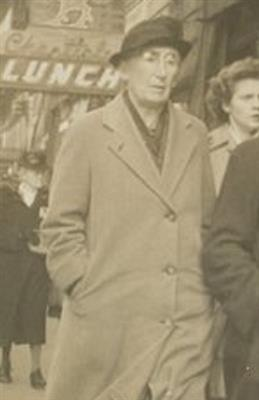
Surrealism encouraged artists to explore dreams, the unconscious mind, imagination, and the strange relationships between reality and fantasy. It was a movement that invited artists to look beyond what they could see and explore the hidden thoughts and feelings that shaped human experience.
Few artists approached these ideas quite like Grace Pailthorpe (1883–1971).
Before becoming associated with Surrealism, Pailthorpe had an unusual professional background. She trained as a doctor and worked as a surgeon during the First World War. Her medical experience eventually developed into a deep interest in psychology and the workings of the human mind.
This interest became central to her artistic practice. In 1935, Pailthorpe met the younger artist Reuben Mednikoff, who introduced her to painting. Their creative relationship developed into an unusual collaboration: Mednikoff helped her explore painting, while she introduced him to psychoanalysis and psychological interpretation.
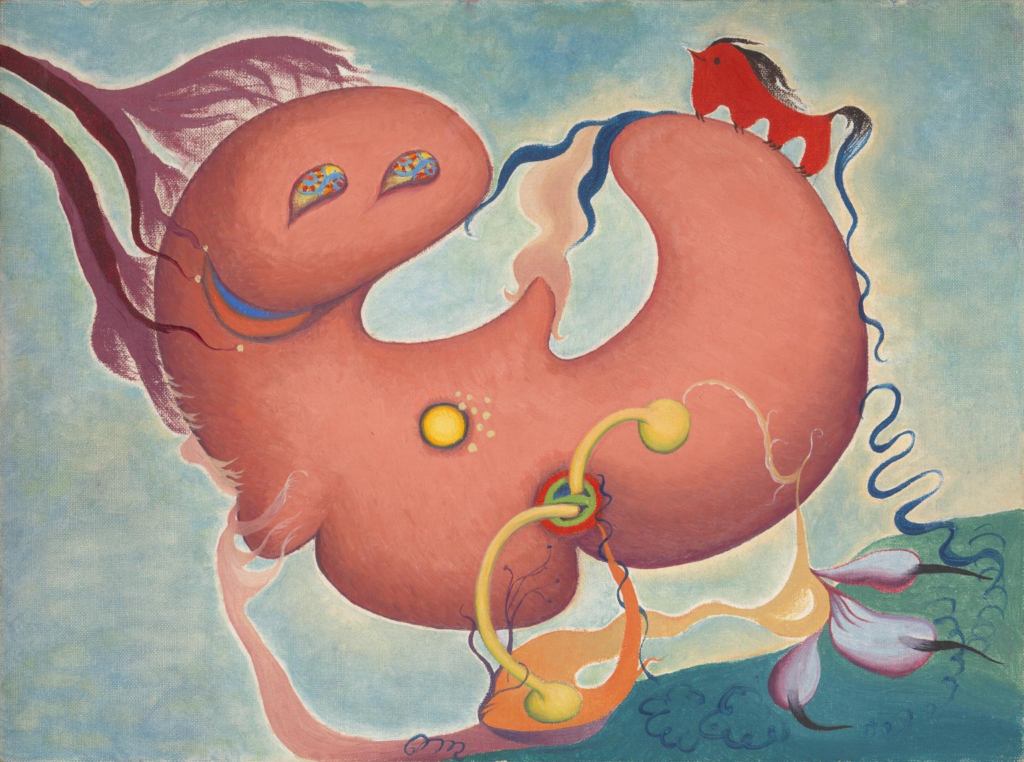
Together, they began experimenting with images that they believed could reveal unconscious thoughts, emotions, and psychological experiences. Their work often featured unusual organic shapes, bodily imagery, and forms that seemed to move between the human body and the natural world.
Pailthorpe’s background in medicine gave her approach to Surrealism a distinctive direction. She was interested in using painting as a way to investigate the unconscious, rather than simply creating dreamlike or fantastical imagery.
Her work was included in the 1936 International Surrealist Exhibition in London, where she and Mednikoff attracted attention. In fact, André Breton, one of the central figures of Surrealism, praised their contributions. However, her approach also created disagreements within the movement. Pailthorpe believed strongly in the psychological and therapeutic possibilities of art, which did not always align with the wider Surrealist group’s expectations. She and Mednikoff were eventually expelled from the group in 1940.
Their partnership continued, and they later married, developing their ideas around art and psychology over many years. Pailthorpe’s story is particularly fascinating because she entered the art world through an entirely different profession. Her medical training did not simply remain a part of her biography; it influenced the way she understood and created art.
She brought a different kind of curiosity to Surrealism, one that connected artistic experimentation with psychological research and the possibility of understanding the human mind through images.
Looking Beyond The Familiar Names Of Art History
The stories of these five women take us through very different artistic worlds, from the outdoor paintings of Impressionism to the experimental performances of Dada and the psychological explorations of Surrealism.
Their contributions were different too. Marie Bracquemond helped shape the Impressionist approach to modern life, Emmy Hennings helped establish one of Dada’s earliest creative spaces, Margaret Macdonald Mackintosh developed an influential visual language, Grace Pailthorpe brought her psychological interests into Surrealist practice, and Augusta Savage created opportunities that helped an entire generation of Black artists find their footing.
What connects them is not simply that they were women working in male-dominated art movements. It is that their individual contributions were essential parts of much bigger artistic stories. Looking back at art history, it is easy to become familiar with the same handful of names and artworks. But movements are rarely built by one person, and their histories become much richer when we begin to explore the artists, collaborators, teachers, and creative thinkers who have not always received equal attention.
Perhaps that is one of the most rewarding things about revisiting art history: there are still so many wonderful stories waiting to be discovered, and sometimes the names we have overlooked are the ones that give us an entirely new understanding of the movements we thought we already knew.
Editor’s Note:
Only one week left to submit to our latest Virtual Exhibition “Cats, Dogs and Stories” . Artists have until November 9, 2026, to share their work and be part of this heartwarming celebration of the special bond we share with our furry companions. Whether inspired by cats, dogs, or the little stories and memories that come with them, we would love to see your work. Don’t miss your chance to be part of this exhibition!
