
Some Things Don’t Need Solutions! They Need Acceptance I Severine Pineaux
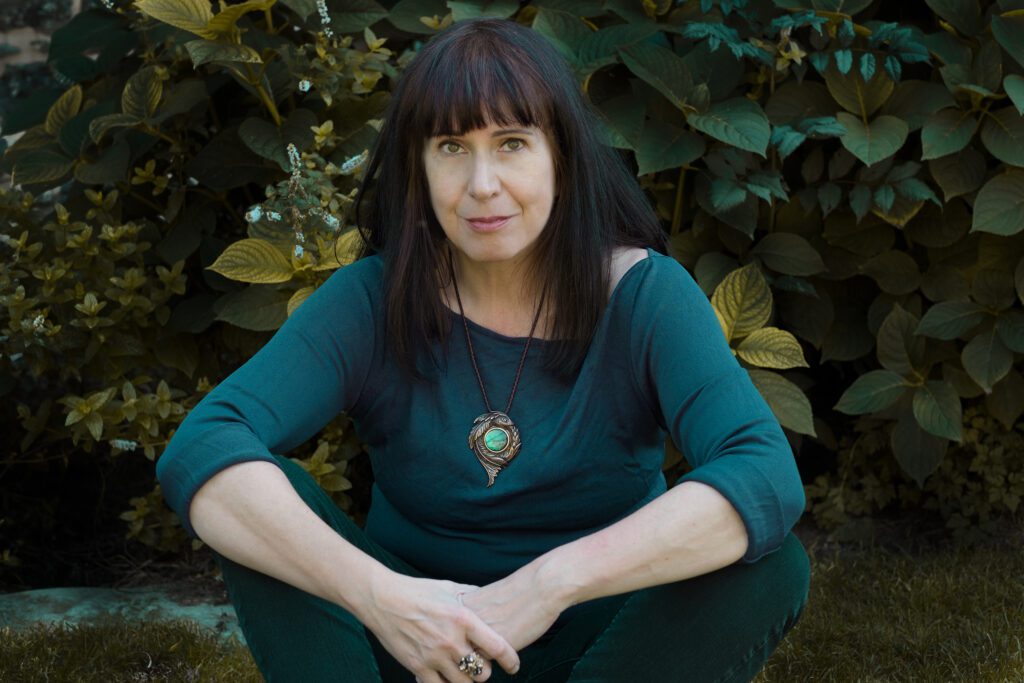
While reviewing submissions for our virtual exhibition Birds, hosted on Women in Arts Network, Severine Pineaux’s work stopped us mid-scroll and not for the reasons you’d expect.
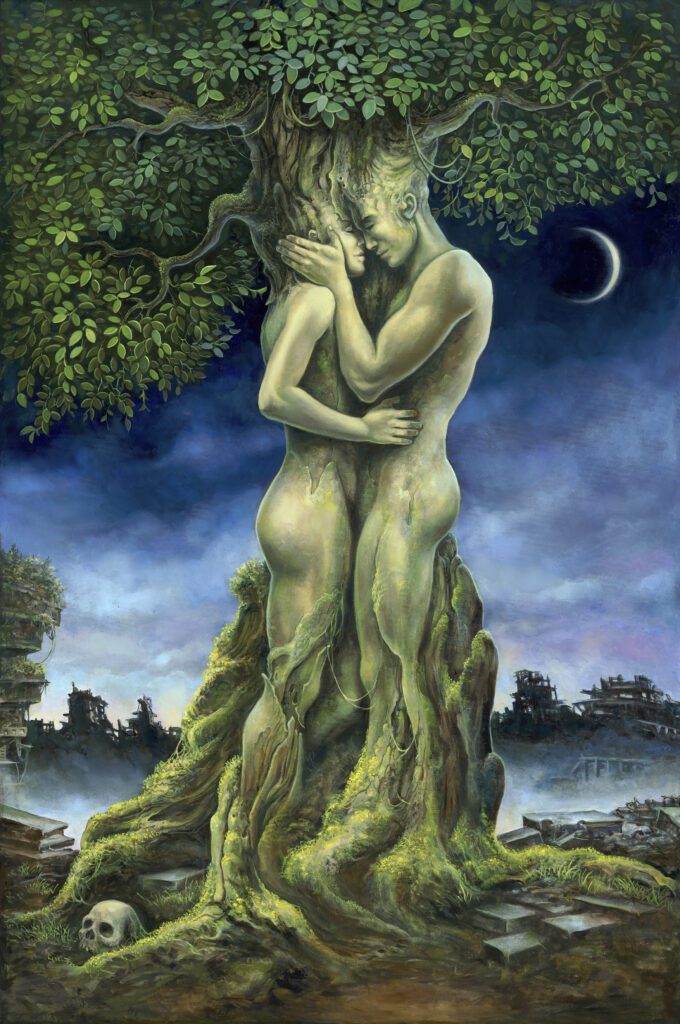
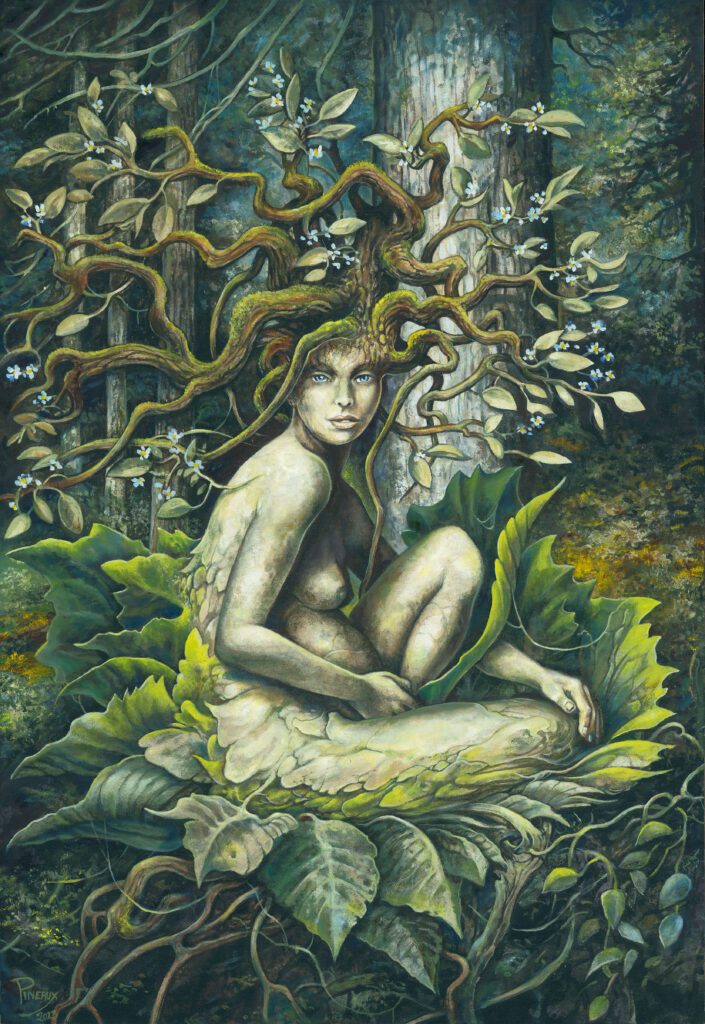
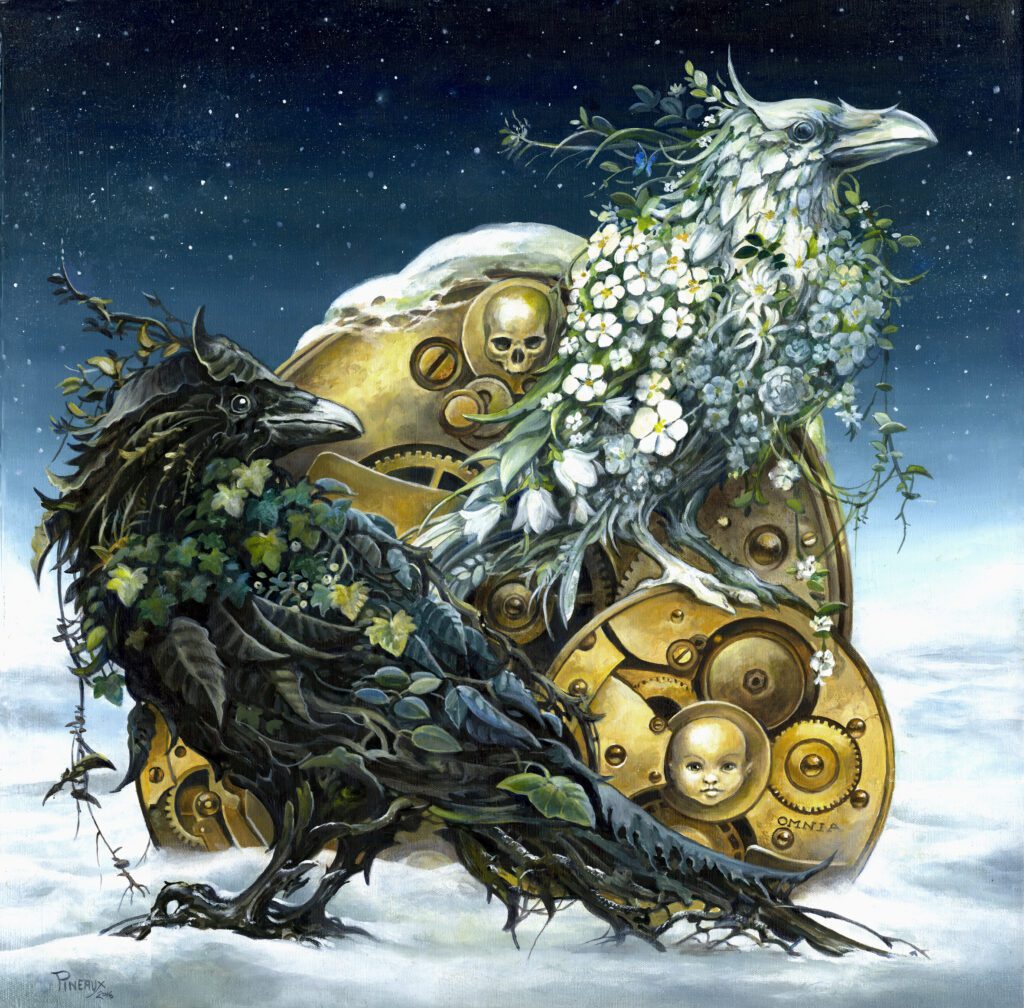
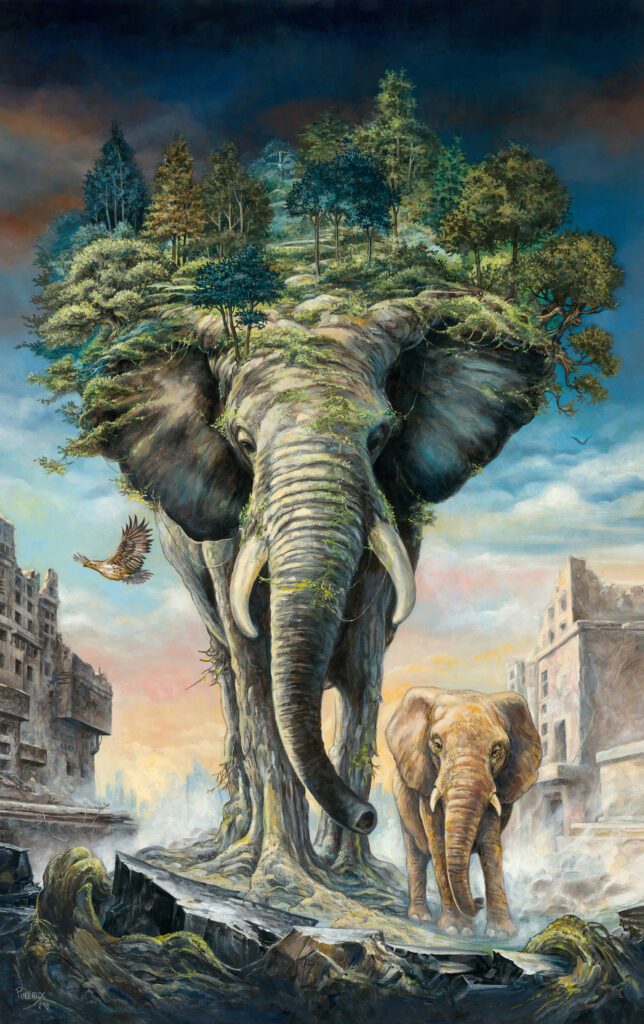
Her paintings didn’t give us beautiful birds in realistic detail or poetic interpretations of flight. They gave us something far more unsettling: trees with human faces, animals merged with mechanical parts, beings that existed in multiple states at once. At first glance, you might think you’re looking at fantasy. But the longer you stay with her work, the more you realize she’s not painting fantasy at all she’s painting truth we’re too distracted to see.
We selected Severine because her work asks something most artists won’t touch: What if the borders we see between things human and nature, past and future, shadow and light are illusions? What if fusion, not separation, is the reality we keep ignoring?
Before you get to know Severine through her own words, let me tell you a bit about her.
Severine started painting as a teenager. She worked as an illustrator for role-playing games, science fiction, horror and fantasy book covers building worlds for other people’s stories. Then in 1996, after her first child was born, she began her own creative adventure. She started publishing books where the images came first and the text followed, where paintings weren’t illustrations of a story but the story itself.
Her work lives between two worlds painting and comics, fine art and illustrated books. She refuses to let traditional art isolate itself in museums and galleries, away from popular culture. So she presents her paintings through narrative, reaching wider and often younger audiences. It’s a reverse approach: in her books, the text illustrates the images, offering interpretation rather than dictating meaning.
She lives in the Brocéliande forest in Brittany, France a land of legends where Celtic imagery remains alive, where artists of the imagination find home. The forest feeds her work. The shades of green, the sky shifting from Gray to pure blue, the reddish purple of schist and iron in the soil all of it seeps into her palette. The atmosphere is often misty, indistinct, conducive to dreaming.
Her paintings merge trees with humans, plants with animals, machines with organic forms. She evokes the links and unity of the world suggested by ancient spiritualities and contemporary science. Her work is a walk through a dream world inspired by mythology and fairy tales but also by cyberpunk and dark romanticism, where past and future intertwine.
The starting point of her art is fusion. She perceives the contemporary world as a universe of crossbreeding human cultures rapidly mixing, hybridization with machines becoming possible, our DNA revealing how close we are to other living beings, quantum entanglement abolishing distances. She translates this disappearance of borders into images.
She positions herself in the twilight zone, between shadow and light. She feels the strength of love that can link beings. She wants to believe in the possible reconciliation of humans and nature, but a grimacing skull sometimes appears in the middle of flowers. She’s fundamentally optimistic, but not naive. Many of her subjects deal with what can be reborn after apocalypse, what can exist after death. Time, cycles, renewal the eternal movement of transformation runs through all her work. Melancholic but not desperate.
And then there are her enchanted cats. Started as greeting cards, they became something else—a necessary breather between intense paintings, a joyful return to childhood. Because painting can be demanding and intense, and sometimes you need funny cats to remind you why you started creating in the first place.
Now, let’s hear from Severine herself about living between worlds, about fusion as truth, and why the twilight zone is where the most honest stories live.
Q1. Please share your bio and an artist statement to give our readers a deeper insight into your background and creative philosophy.
I started painting in my teens. After working as an illustrator for role-playing games and SF, horror and fantasy book covers, I resumed a personal creative adventure in 1996 after the birth of my first child and published these works in books in which the images precede the text and narrative, and are the inspiration behind them. My work navigates between two worlds, that of painting and that of comics and illustrated books. At present, I’m also continuing to work for the game worlds, illustrating for Sorcery TCG. I live in the Brocéliande forest, which is a great source of inspiration.
Q2. Your paintings often merge trees, animals, humans and even mechanical forms. What first drew you toward this idea of fusion as a way to tell stories?
By merging trees and humans, plants and animals, by mixing machines and plants, I evoke the links and the unity of the world suggested by ancient spiritualities as well as by contemporary science. My paintings are a walk in a dream world, inspired by mythology and fairy tales but also by cyberpunk culture and dark romanticism where past and future intertwine. The starting point of my artwork is fusion. I perceive the contemporary world as a universe of crossbreeding where human cultures are rapidly mixing, where hybridization with machines becomes possible, where we discover that our DNA is very close to that of other living beings, where quantum entanglement abolishes distances… It is this feeling of disappearance of the borders between things that I translate into images. I am located in the twilight zone, between the shadow and the light, I feel the strength of the feelings of love which can link the beings. I want to believe in the possible reconciliation of the man and the nature, but a grimacing skull is sometimes seen in the middle of flowers.
Q3. You live close to the forest of Brocéliande, a place tied to legends. How does being near that landscape shape the worlds you create on canvas?
Brittany and the Forest of Brocéliande are a land of legends in France, where Celtic imagery remains very much alive and artists of the imagination find a welcoming home. Visually, the forest and all its shades of green, the sky changing from gray to a very pure blue, and the reddish purple of the schist and iron present in the soil nourish my palette. The atmosphere is often indistinct, misty, and conducive to dreaming.
Q4. Your books sit somewhere between illustrated tale, art book and visual narrative. What role do these books play in how you share your universe with readers?
My art works, staged in my books, become actors and scenery of a paper theater.I grew up reading comic books and began my career as an illustrator. I find it unfortunate that the traditional art world isolates itself from popular culture in museums, galleries, and art books. That’s why I want my paintings to be presented through a narrative that allows them to reach a wider and often younger audience. It’s a reverse approach: in my books, it’s the texts that illustrate the images and offer an interpretation of them.
Q5. The twilight zone you describe, between shadow and light, brings a mix of gentleness and unease. How do you decide where to place that balance in each piece?
I am located in the twilight zone, between the shadow and the light, I want to believe in the possible reconciliation of the man and the nature but a grimacing skull is sometimes seen in the middle of flowers.I remain fundamentally optimistic, and many of my subjects deal with what can be reborn after an apocalypse, or what can exist after death. Time, cycles, and renewal—the eternal movement of transformation in the world—is certainly, consciously or not, a constant in my work, a melancholic but not desperate theme.
Q6. Your enchanted cats have travelled widely and reached many audiences. What keeps you interested in returning to these feline figures over the years?
I’m a crazy cat lady ,of course ! My kittens began as greeting cards, and their success led to this breeding of paper felines. Painting can be a very intense and demanding activity, and drawing funny cats between paintings is a necessary breather, a joyful return to childhood…
Q7. Your influences range from mythology and fairy stories to cyberpunk and black romanticism. How do these threads come together when you begin a new series? 1 response
I believe that all creativity is nourished by the influences of our reading, the images and films we love. In the great kitchen of our minds, these ingredients are mixed together, seasoned with our personalities, and a new work is born. I love mythology, fairy tales, legends, science fiction, and dark fantasy equally, and all of these combine unconsciously when I dream up an image or a story. All the effort and artistry then goes into bringing these dreams to life: a painting, a text…
Wrapping our conversation with Severine, here’s what became undeniable: the borders we’ve drawn between things are convenient lies, and her work won’t let us keep pretending they’re real.
Most artists pick a lane. They paint nature or technology. Past or future. Mythology or science. Severine refuses. She merges trees with humans, machines with organic forms, ancient spirituality with contemporary physics. And the longer you look at her work, the more you realize she’s not being poetic or abstract she’s being literal. Our DNA is shockingly similar to other living beings. Quantum entanglement does abolish distance. Human cultures are rapidly mixing. Hybridization with technology is already happening. The fusion she paints isn’t fantasy. It’s the world we’re living in, stripped of the categories we use to make ourselves feel separate and in control.
What struck me most is how she holds contradiction without needing to resolve it. She wants to believe in reconciliation between humans and nature, but she doesn’t pretend the damage isn’t real. A grimacing skull appears in the middle of flowers. She paints what can be reborn after apocalypse, what exists after death. She’s fundamentally optimistic but refuses to be naive. That balance between hope and honesty, between light and shadow is what she calls the twilight zone. And it’s where her most truthful work lives.
There’s also something radical in how she approaches accessibility. The traditional art world isolates itself in museums and galleries, cutting itself off from popular culture. Severine refuses that separation. She presents her paintings in books, reaching wider and younger audiences. The text doesn’t dictate the images it offers interpretation while leaving space for multiple readings. She treats her paintings like actors in a paper theatre, letting them perform their own stories. That’s not dumbing down fine art. That’s recognizing that walls between “high” and “popular” culture are just more borders that don’t serve anyone.
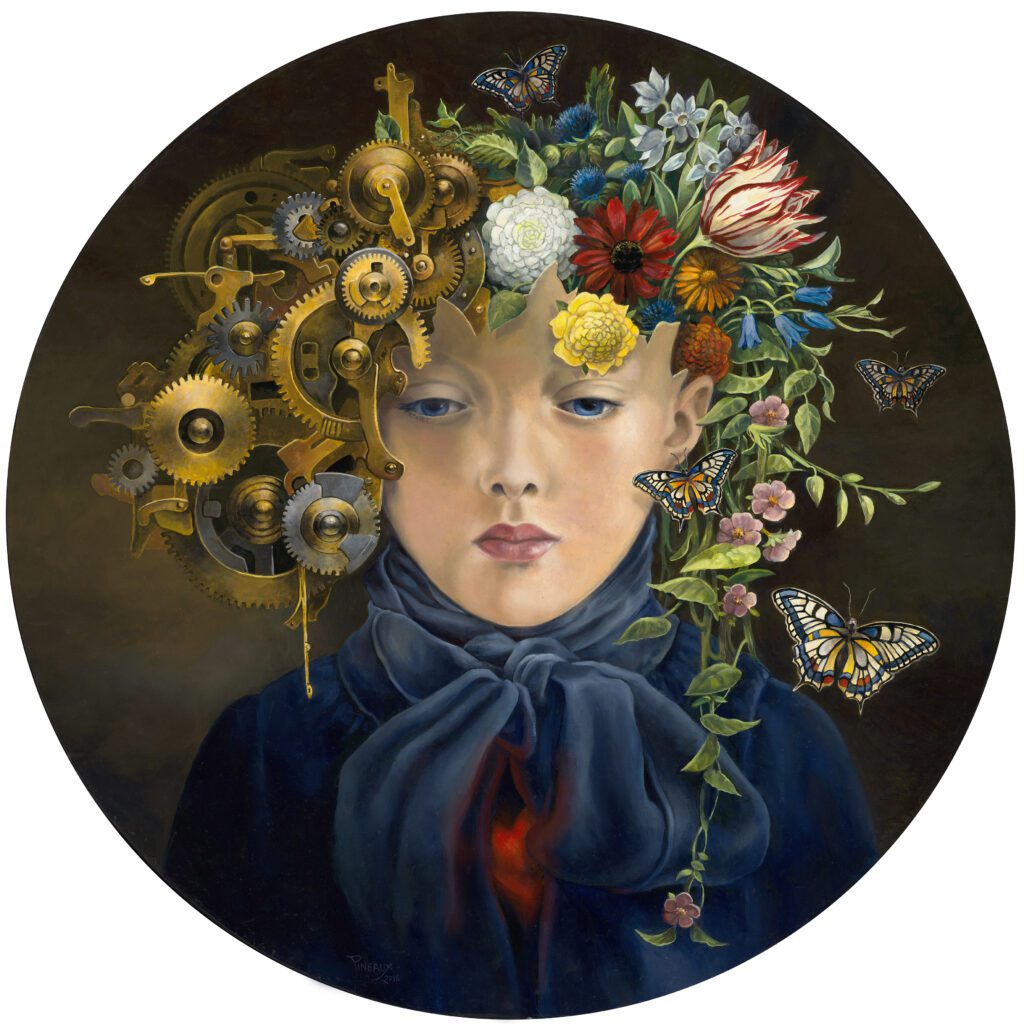
What I learned from Severine is this: fusion isn’t a stylistic choice. It’s a truth we keep avoiding because acknowledging it means giving up the illusion of separation. We’re not separate from nature. We’re not separate from technology. Past and future aren’t sealed off from each other. The clean categories we impose are useful fictions that help us navigate daily life, but they’re still fictions. Severine’s work strips them away and shows us what’s underneath a world where everything is already connected, already entangled, already transforming into something else.
Her work reminded me that the twilight zone isn’t a place of confusion it’s where clarity lives. Shadow and light aren’t opposites fighting for dominance. They’re partners in the same dance. The skull in the flowers isn’t cynicism undermining hope. It’s honesty making hope real. And fusion isn’t chaos—it’s the truth that’s been there all along, waiting for us to stop drawing lines long enough to actually see it.
Follow Severine from the links below to step into worlds where borders dissolve, where trees remember being human and machines dream of growing roots, where mythology and cyberpunk share the same breath, and where the only real separation is between those who see the fusion and those who keep insisting the walls are real.
Follow Severine from the links below to see what the world looks like when you stop separating nature from human, past from future, and let everything merge the way it was always meant to.
