
This artist reimagines Australian wildlife through detailed pencil drawings │Lenny Pelling
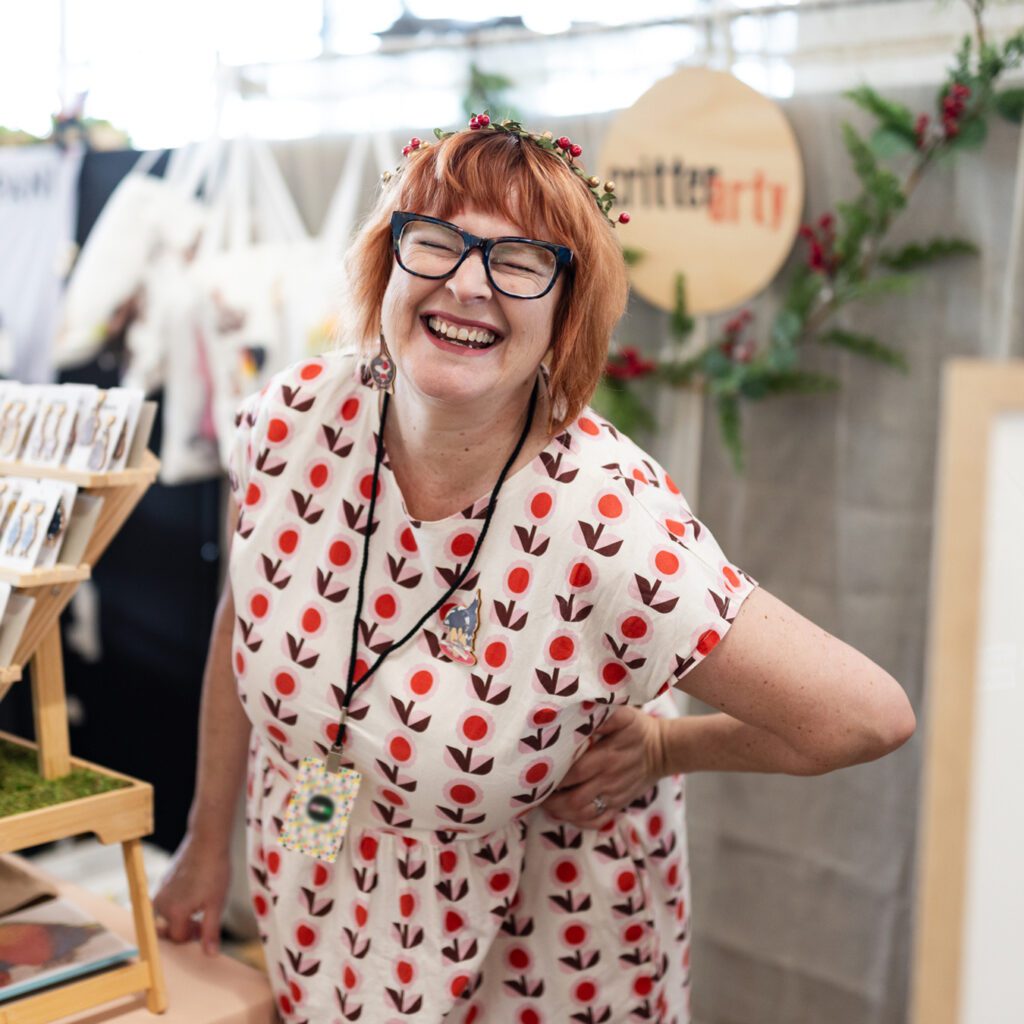
At Women in Arts Network, Flora and Fauna was never simply about animals. It was about the relationships we build with the living world around us. Few artists embody that idea more naturally than Lenny Pelling, one of the selected artists in the exhibition, whose detailed pencil drawings invite viewers to see wildlife through the lens of story, personality, and connection.
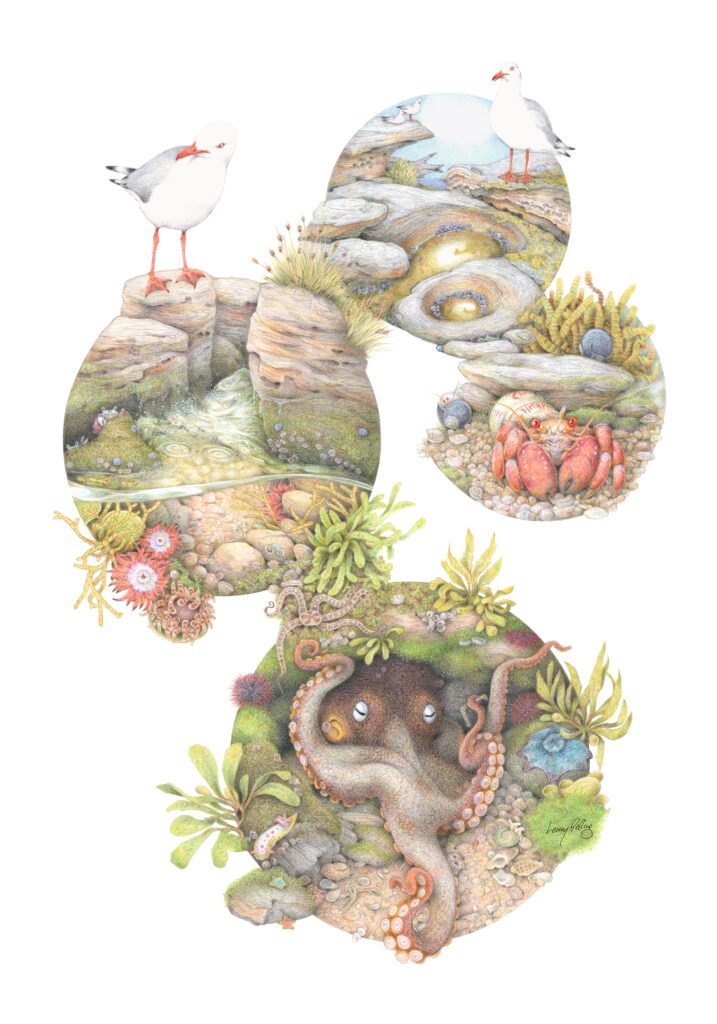
Lenny is an Australian wildlife artist but calling her that does not quite capture what she is actually doing. She draws animals in pencil with an incredible level of detail that has only gotten more intricate over the years. But what sets her apart is that her animals are not just subjects sitting there being drawn. They are characters.
They have personalities and moods and stories and something going on behind their eyes that makes you feel like you just walked in on a conversation you were not supposed to hear. There is humour in the work but it never undercuts the tenderness.
And there is tenderness but it never gets sentimental. How she holds those two things together in the same drawing is something she talks about during the interview and honestly it sounds simpler than it is.
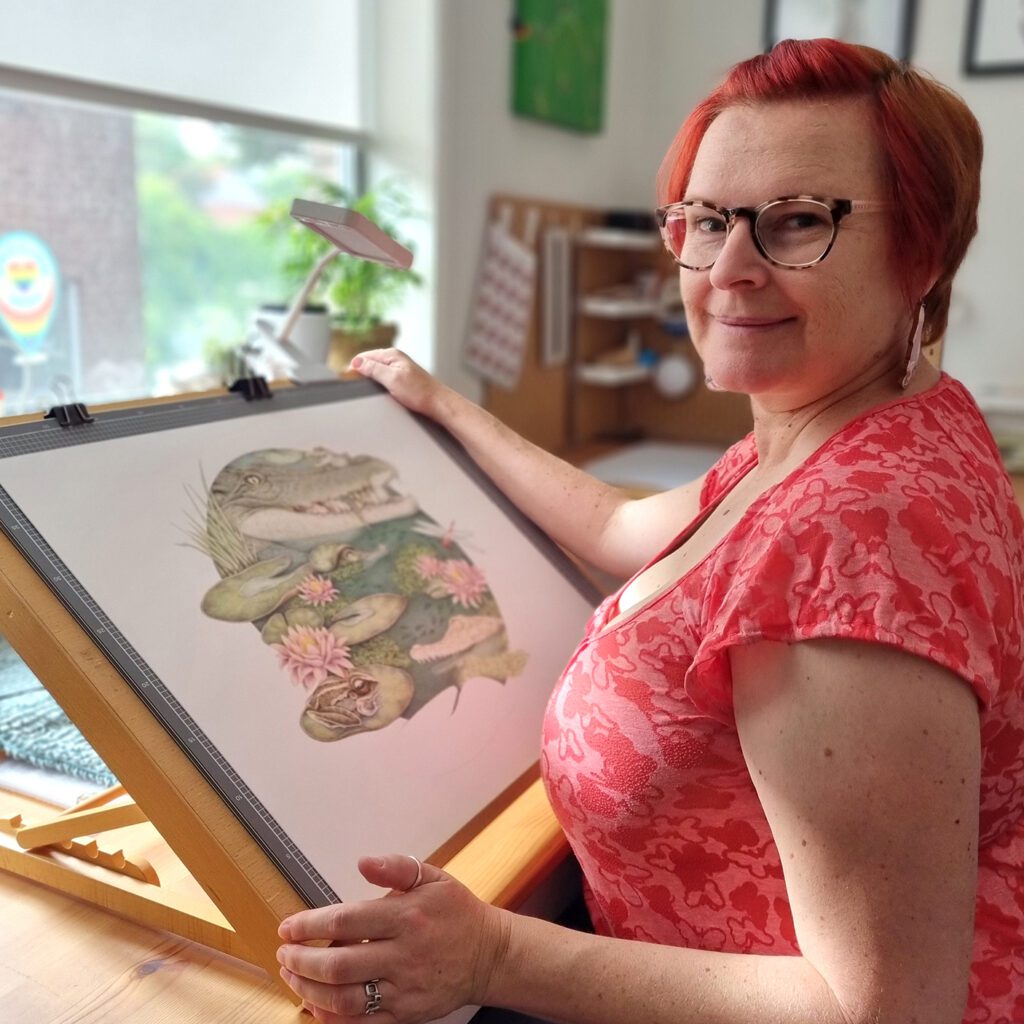
She left a corporate career in 2016 to make art full time. And the way she talks about that decision, about what it cost and what it gave back, about being happier not being able to afford holidays but getting to do what she loves every single day, that is the kind of honesty that makes you root for someone immediately.
She cares deeply about Australian wildlife conservation and her art is one entry point into that conversation. But she does not lead with guilt or alarm. She leads with love and humour and storytelling because she understands that people protect what they feel connected to and connection starts with recognition. Her drawings give you that recognition. You look at a group of skinks sunbathing together and suddenly they are not just lizards on a rock. They are neighbours catching up on a warm afternoon.
Now let’s hear from Lenny about why she gives animals human stories, what Australian wildlife teaches her every day, and why the best decision she ever made was leaving the office and never going back.
Q1. Lenny! can you share a little about your background and how you came to develop this playful, story-led approach to portraying animals?
A lot of wildlife artists want to raise awareness of their subjects and what challenges they face in a world shaped by humans. By giving them a human-like story, I want to make the viewer see themselves or people they love in the animal(s) and through love and recognition, begin to see them all around and how rich and equally valid their lives are. Plus it’s more fun for me to think of them not just as static, but alive and fully rounded.
Q2. Working with pen and pencil requires a certain level of control and commitment how does that influence your process and the final outcome of your work?
A decade ago, my work was a lot looser and quite expressive but as I’ve moved into using pencil, pretty much exclusively, and by looking in minute detail at wildlife, their behaviours, features and habitat, I have worked harder and harder to capture that intricacy and richness. I now wear glasses all the time, so it is not without a toll.
Q3. Your animals feel less like subjects and more like fully formed personalities what draws you to giving them these human-like traits?
Sometimes when walking, I’ll catch a small movement in the corner of my eye and spot a group of skinks sunbathing together or bees working to gather nectar, and I imagine them having chats about their day/kids/work like any human might do. It feels irresistable to highlight that they go about their day (or night) and their actions have meaning. I also grew up loving ‘Wind in the Willows’ and feeling deeply for the characters when they felt lonely or frightened. It cemented the feeling they all our lives are lived more similarly than we think.
Q4. There’s a beautiful balance of humor and tenderness in your work how do you approach making something playful without losing emotional depth?
While ultimately, I want people to learn to value and conserve wildlife and the environment, I don’t want the message to be negatively felt. I love to use humour to win over hearts and make people smile, to point out the ridiculous and tease.
Basically, it’s more fun for me to work that way. Sometimes, though, sweetness and sadness creep into a piece when it feels right to use it. You can’t truly know how lovely happiness feels if you don’t have some moments of depth and darkness to compare it to. Feeling a full range of emotion is very human.
Q5. You focus on Australian animals both “furred and feathered,” “great and small.” What is it about Australian wildlife specifically?
In Australia, we have astonishing variety in our wildlife and environment. Delicate beauty, hard scales, sharp teeth, large nocturnal eyes, loud sqwaking, and bright colours; there is so much to draw from, and it suggests such a range of personality traits and potential stories to me. On the grimmer side, Australia has, perhaps the worst record for species extinction on Earth, so if I can do something, in my own way to bring what we still have to the front of people’s minds, I have to.
Q6. Your style feels clean, detailed, and expressive how has your technique developed over time to support this kind of storytelling?
Sometimes, the idea or story comes to me first, sometimes the image with the story evolving in my mind as I draw. I like to think of it as the animal talking to me. Sometimes it will start with a silly visual joke, sometimes something more deeply meaningful or even autobiographical.
The more into the visual storytelling I have become, the more detailed my drawing style has too. It’s immensely fulfilling to take time and learn about an animal in the preparation stage and then build something that expresses that learning visually. All parts of the process, not just the drawing are interesting to me.
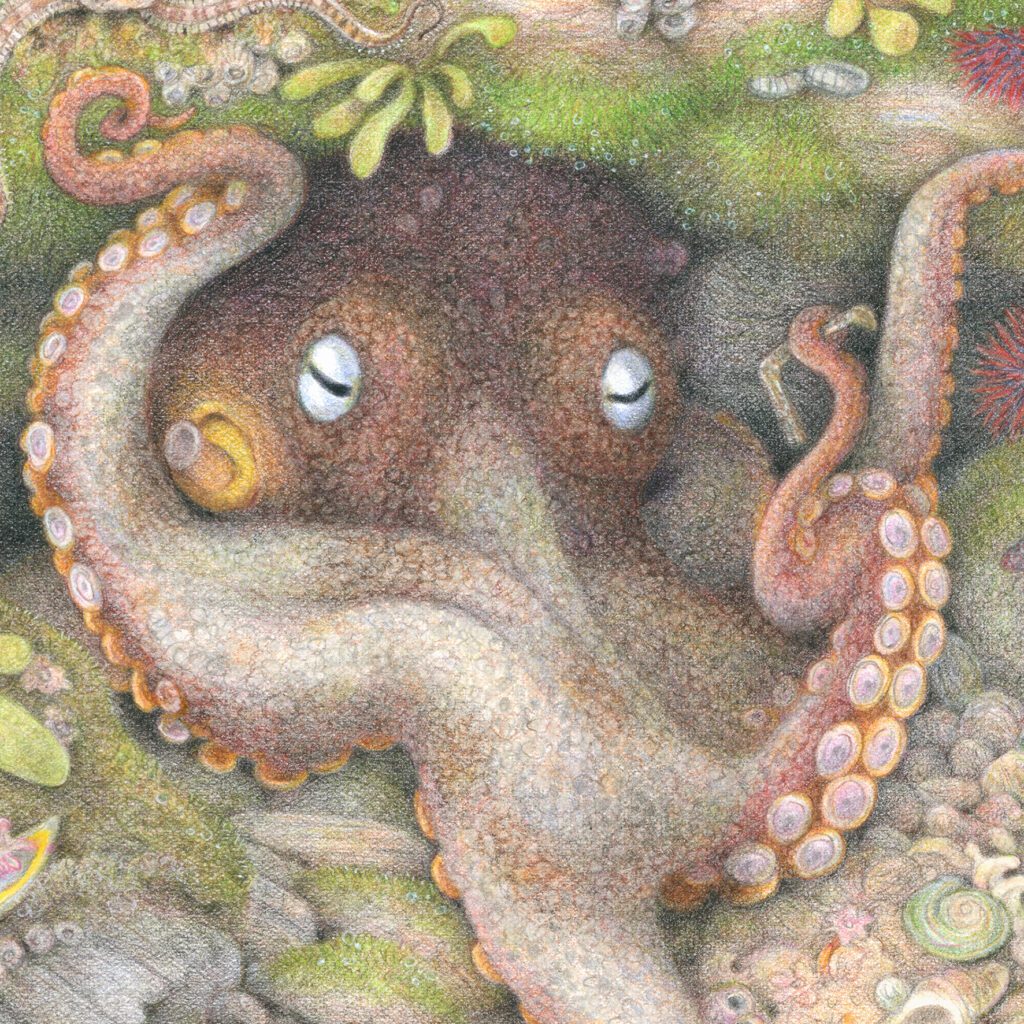
Q7. You create prints, cards, stationery, magnets, tea towels, calendars, and even fabric designs. How did you expand from just prints to all these products?
Over many years and with lots of trial and error. It’s still an evolving range. Not everyone can afford an original artwork, so it’s just good sense, if you want to make your art a full time gig, to diversify a bit and create pieces that are accessible.
All of the items I have developed for my range are certified Australian made and, where possible reflect eco-credentials that align with my values and aims as a wildlife artist. I don’t want my business to a huge thing. I’m not aiming to be a squillionaire. I just want to support myself to make art all the time.
Q8. Looking back at 2016 when you left the office, what surprises you most about the journey?
Well, it was a journey to get to the point of jumping ship. I had realised, almost immediately, that working in a corporate environment was not my natural habitat, but I stuck it out, learned some things, and left all most in time not to be terribly damaged.
It did take about 6 months of soul searching to get over the transition, but now, when asked by people who would love to quit their job and be creative, I know that it was the absolute best decision. It’s amazing how much happier you can feel not being able to afford holidays, but getting to do what you want all the rest of the time.
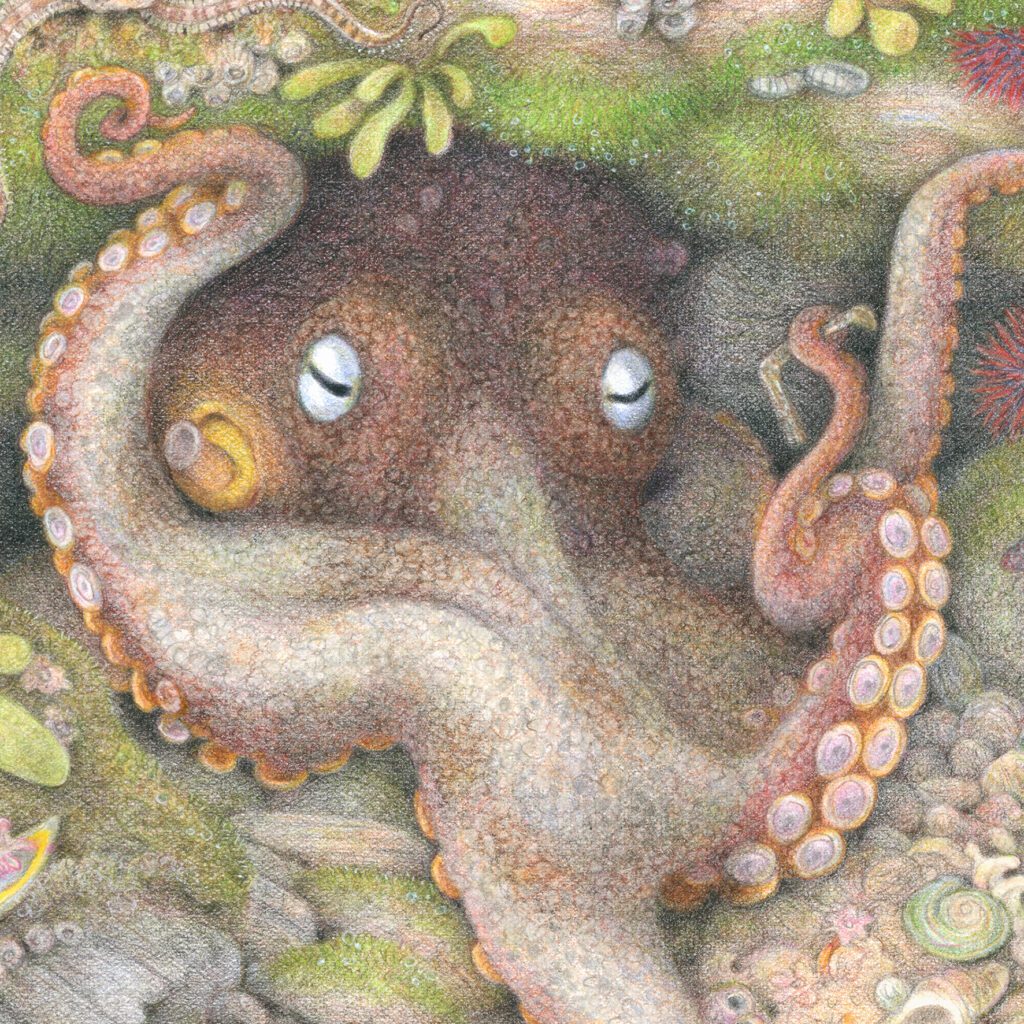
Q9. You also create custom portraits of people’s pets how different is it to capture a real animal’s personality compared to creating your own characters?
I get the pet’s family member to help me. It’s quite a collaborative process at the start. I ask about the family dynamic, favourite memories, behavioural quirks etc. It’s not just about capturing a likeness. It’s about getting the pet owner to see what makes their pet unique and what they share. It’s very personal, not just a picture.
Q10. Your work blurs the line between humans and animals—what do you think this says about how we relate to the natural world?
We humans think about everything in relation to us. What can we change to make life more comfortable? What do we need to get rid of that’s in our way? We think of ourselves at the apex of everything. It’s a survival instinct, sure. But I also think it’s our greatest failing. I like to use my visual storytelling to put a little pause into the movements we make through our world. A little pause, and a look, and a listen. The fact that we mostly hear our own voices, means I can use that human voice to get the point across.
Q11. Your work also contributes to wildlife awareness and support how important is it for your art to have that kind of impact beyond the image itself?
It’s immensely important. I have had a lot of practice doing what I do, and feel I do it pretty well, but there are experts out there in wildlife conservation and habitat loss and all sorts of elements that come into play to protect what we have. I feel very proud to talk about, champion and help fund organisations that make a difference on the ground. My work is just one entry point into that conversation and awareness.
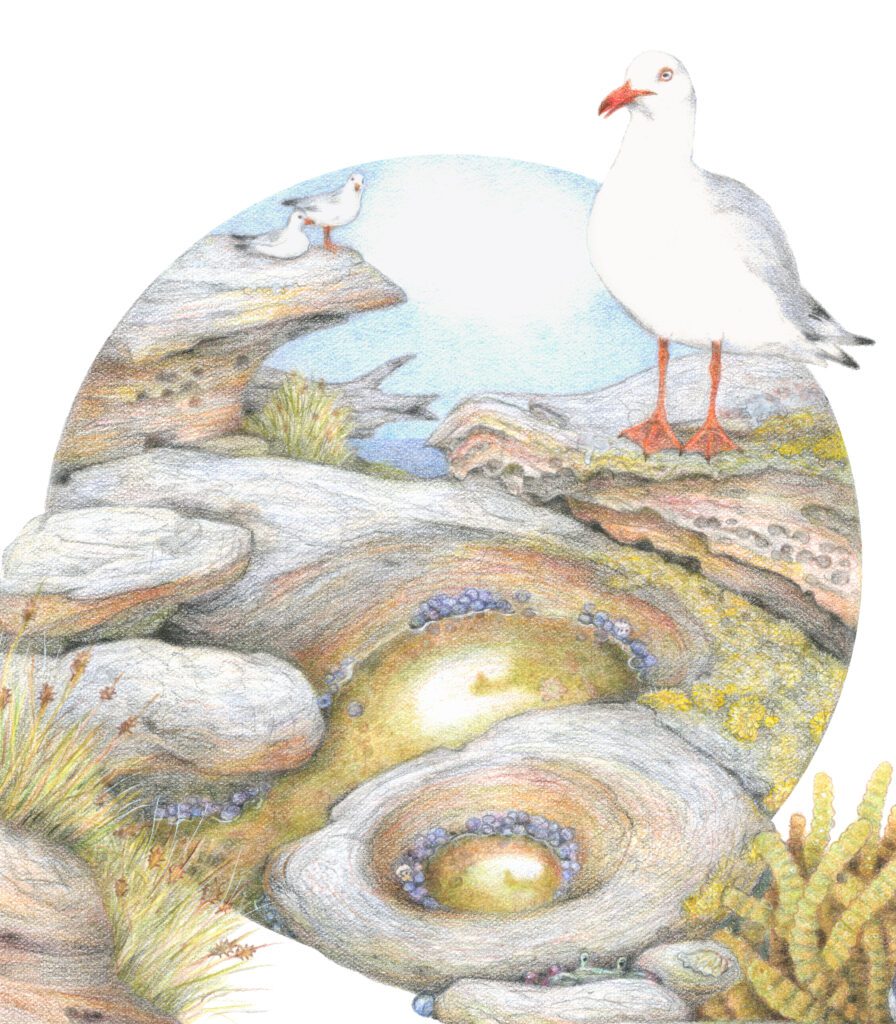
Q12. What does success look like for you building a connection with people through your characters, or something more personal in your creative journey?
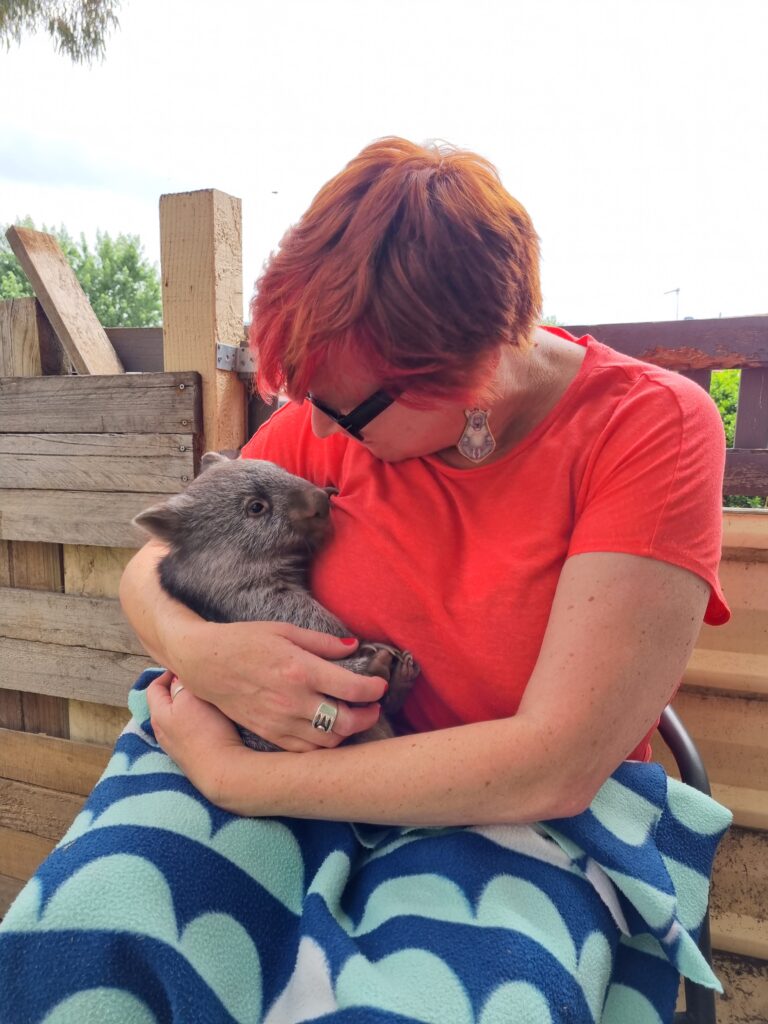
There are lots of things that give me a sense of success. In the simplest terms, it’s very nice to support myself with my work and not have to split my focus with a dreaded ‘day job’. Being brave and sharing my work with people who don’t know me is also part of my success. I am not very socially brave/comfortable, but it always amazes me how comfortable I am waffling on about how fast wombats run or some such.
Q13. What advice would you give to artists who want to build a practice that feels both playful and meaningful at the same time?
Finding meaning in something you do is very personal, so there is nothing I can advise on that, apart from if it doesnt come right away, don’t stop looking. The most useful thing I learned, is to be really intentional about creating a space and time to work. If you have to unpack or pack up everytime you feel like or need to work, it’s that much easier not to.
Make a dedicated space, no matter how small, that is ready to go whenever an idea strikes. Also, make time. To get into a flow state, where good work happens, you first have to research, learn, play and experiment. If you’re getting interrupted every 10 minutes, you won’t get to the good part where your brain switches off the overthinking part.
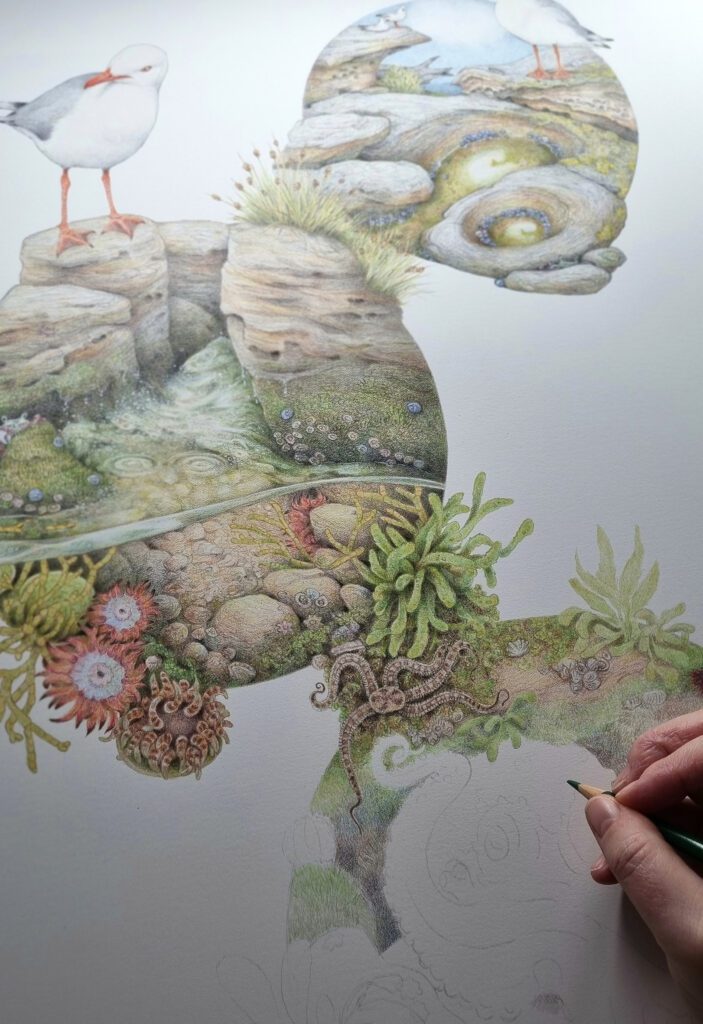
As our conversation with Lenny came to a close, we kept thinking about attention. And how much of it the natural world is constantly competing for.
We live in a time when people spend more hours looking at screens than looking out windows. More time scrolling past images than noticing what is happening in their own backyards. Most people can name global celebrities faster than they can name the birds living on their street.
Lenny understands that reality. And instead of responding with anger or guilt or alarm, she responds with storytelling. That choice matters. Because wildlife conservation often asks people to care about animals they barely notice. It asks them to protect habitats they have never visited and species they may never encounter.
That’s a difficult emotional leap for most people to make. Lenny bridges that distance by making wildlife feel familiar. Not by turning animals into humans, but by reminding us that they have lives unfolding alongside ours whether we notice them or not.
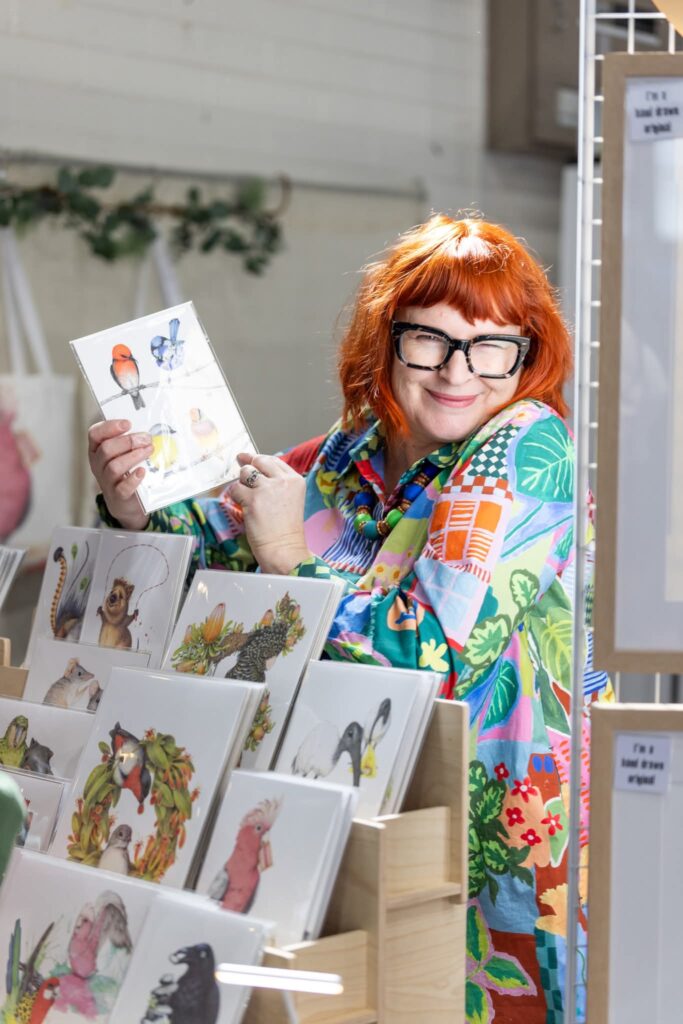
The skinks sunbathing together. The birds going about their day. The wombats navigating their own routines. The bees working from flower to flower. These moments feel small until someone points them out. Then suddenly they’re everywhere.
We think there is something valuable in that for artists too. A lot of artists spend years worrying about finding their style. Lenny’s work is a reminder that style often appears when you become fully committed to what genuinely fascinates you.
For anyone collecting her work, the drawings offer something that lasts far beyond the first impression. The technical skill draws you in initially. Then you notice the joke. Then the character. Then the small details hidden throughout the composition. And eventually you realise you’re no longer just looking at an animal. You’re thinking about the life behind it.
That’s a rare thing for artwork to achieve. Because long after people stop talking about techniques or materials or trends, they remember how a piece made them feel.
And Lenny’s work leaves people feeling a little more curious, a little more attentive, and a little more connected to the living world around them than they were before.
Follow Lenny Pelling through the links below and discover why some of the most meaningful stories in nature have been happening around us all along.
