
How 20 years of oil painting shaped Gala Gilan’s contemporary figurative art
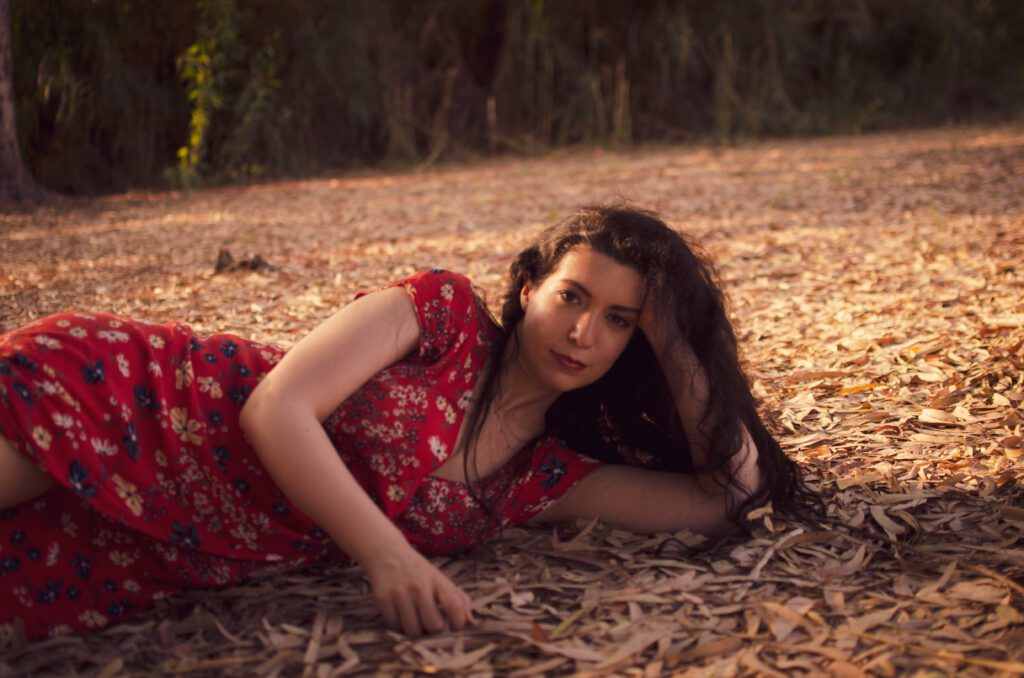
At Women in Arts Network, Flora and Fauna gave us the opportunity to discover artists approaching nature from many different perspectives. Gala Gilan’s work offered something quietly distinctive—a contemporary realist practice where portraiture, landscape, and emotion exist in delicate balance, inviting viewers to slow down and look beyond appearances.
Gala is one of the selected artists for Flora and Fauna, and for more than two decades she has been using realism not simply to recreate the visible world, but to explore the emotional spaces that exist beneath it. For her, technical precision is never the destination.
It is a language that allows atmosphere, memory, and quiet human connection to emerge naturally within each painting.
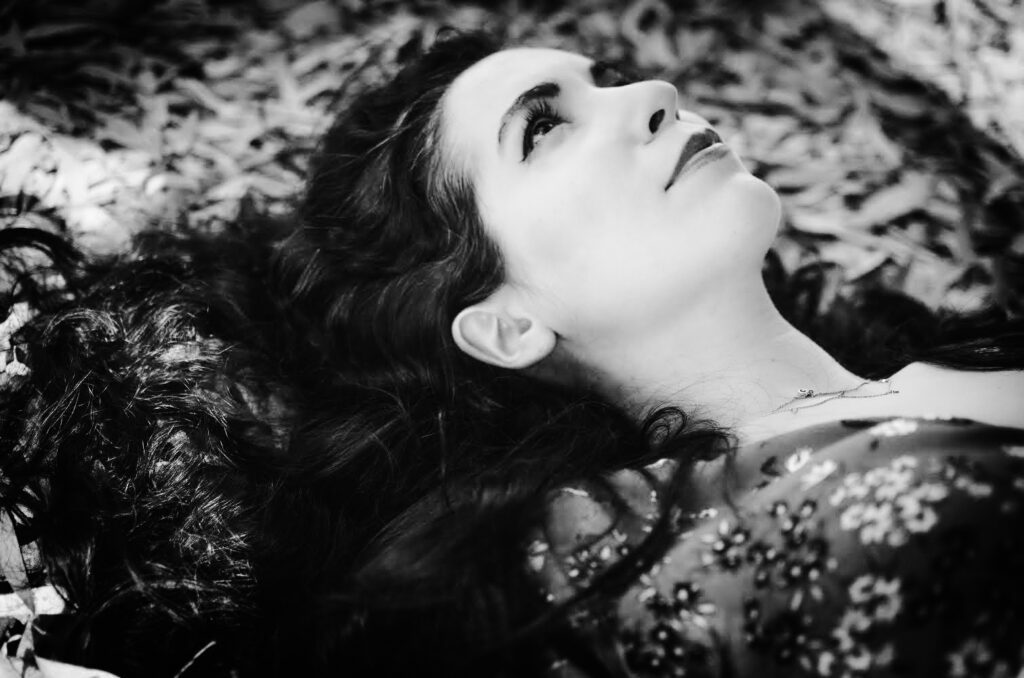
Her artistic journey began during her early teens, when drawing and painting became a refuge through a difficult period in her life. What started as a deeply personal escape gradually became a lifelong commitment, one that continues to shape her work today.
Over the years, she has remained devoted to refining her craft while resisting the pressure to follow trends, choosing instead to build an artistic voice rooted in honesty and observation.
Light plays a defining role throughout her paintings. Rather than simply revealing form, it creates mood, shapes emotion, and transforms familiar faces and landscapes into moments that feel suspended in time. Whether painting someone close to her or constructing a more symbolic narrative,
Gala leaves room for mystery, allowing viewers to bring their own memories and experiences into the work.
The result is a body of paintings that feels both timeless and deeply contemporary works that invite us to pause, look carefully, and rediscover the quiet power of observation in an increasingly fast-moving world.
Now let’s get to know Gala through our conversation about realism, portraiture, light, emotional storytelling, and why the oldest traditions of painting continue to offer new ways of seeing.
Q1. Can you share a bit about your journey into art and when you realized it would become your career?
I was always creative, but I truly discovered art during a difficult time in my early teens. I started drawing and painting as a way to escape, and it quickly became clear to me that this was what I wanted to dedicate my life to. Most people thought it was just a childish phase, but 20 years later, I still feel exactly the same.
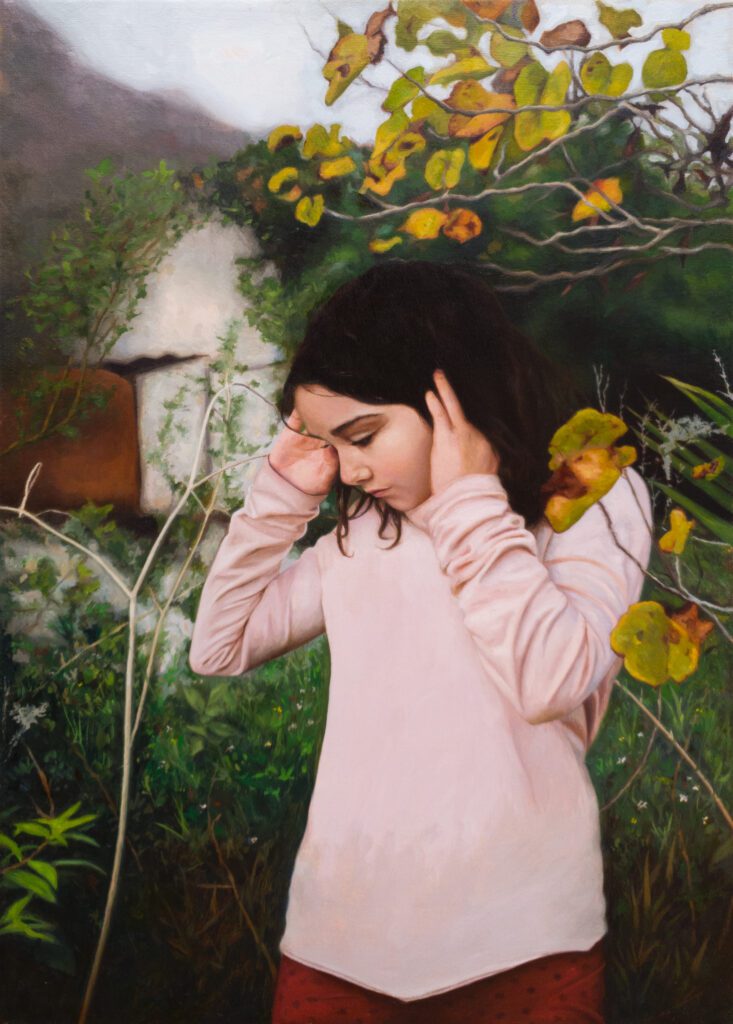
Q2. Your work is rooted in realism, how do you balance technical precision with emotional depth?
For me, technical skill is a tool rather than a goal. I work hard to build a convincing image, but what interests me most is creating an emotional atmosphere and a sense of presence. I try to use technique in service of feeling. Allowing the painting to remain alive, human, and slightly mysterious rather than becoming a purely technical exercise.
Q3. Light plays an important role in your portraits, what interests you most about using it to reveal character?
Light is often the first thing that captures my attention and makes me want to paint a subject. I believe it plays the most important role in creating the atmosphere and emotional tone of a painting. Because of that, light can tell us a great deal about the subject. Not only how they look, but also how they feel and how we experience their presence.
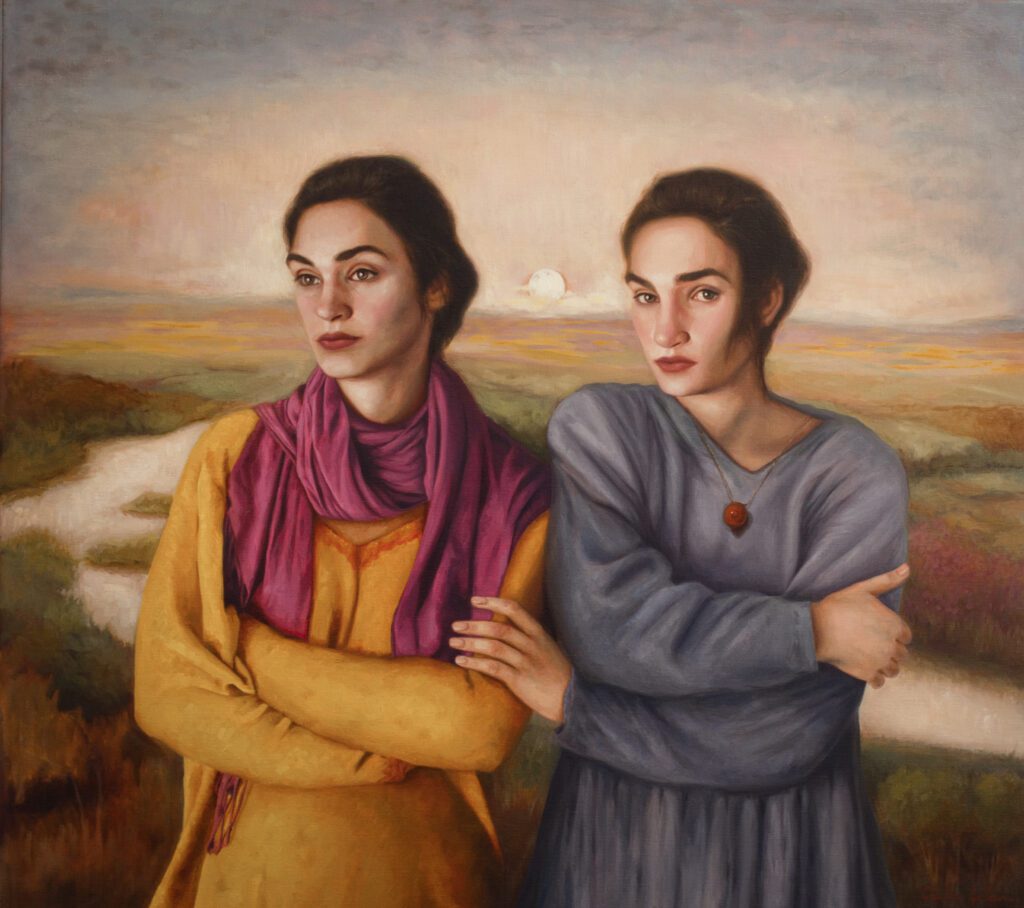
Q4. Many contemporary artists move away from representational painting, yet you continue to engage with it. what keeps you drawn to it?
I don’t see realism as a limitation, I see it as a language. It allows me to create a believable world where subtle emotions, atmosphere, and symbolism can feel deeply convincing. I’m less interested in reproducing reality than in using it to express something that can’t be put into words.
Q5. When painting someone close to you, how do you decide what belongs in the painting and what remains private?
I never try to tell someone’s whole story. I’m interested in capturing a feeling or a moment rather than revealing personal details. Even when I paint people close to me, I want the work to leave space for mystery and for the viewer’s own interpretation.
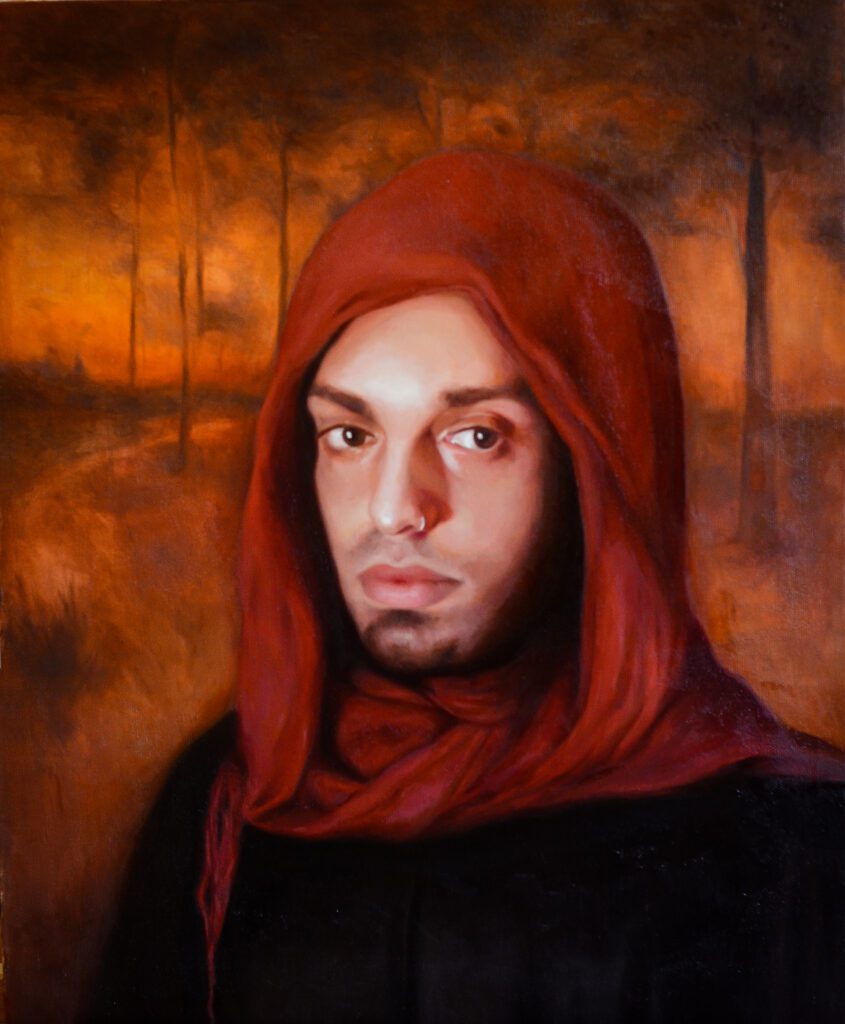
Q6. In Witness, what does the idea of witnessing mean to you, both as an artist and as a person?
While I was painting Moran (my husband), the images of the California wildfires were constantly on my mind. They shaped the atmosphere of the painting and led me to think about someone whose role is simply to witness history as it unfolds; to observe, remember, and carry those moments forward. That became the meaning of “Witness” for me.
Q7. Many portraits aim to capture how a person looks. Were you more interested in capturing how this person feels to you?
Yes. With Witness, I wasn’t trying to create a perfect likeness of Moran. I wanted to paint the feeling of looking at him in that moment; the quiet presence he had, and the story my imagination began to build around him.
Q8. Portraiture has existed for centuries, yet people continue to paint people. What do you think we are still searching for through portraiture?
Every person is infinitely different, yet somehow deeply familiar. I think portraiture is one of the ways we explore that paradox. We look at another face hoping to understand not only who they are, but something about the experience of being human.
Q9. In a culture dominated by photographs and social media images, what can a painted portrait reveal that a photograph cannot?
In many ways, a painted portrait is the opposite of social media. Social media is immediate; painting is slow. Social media encourages us to keep scrolling; a portrait asks us to stay and look. Spending dozens of hours with one face changes the way you see a person, and in my opinion, also the way you experience reality.
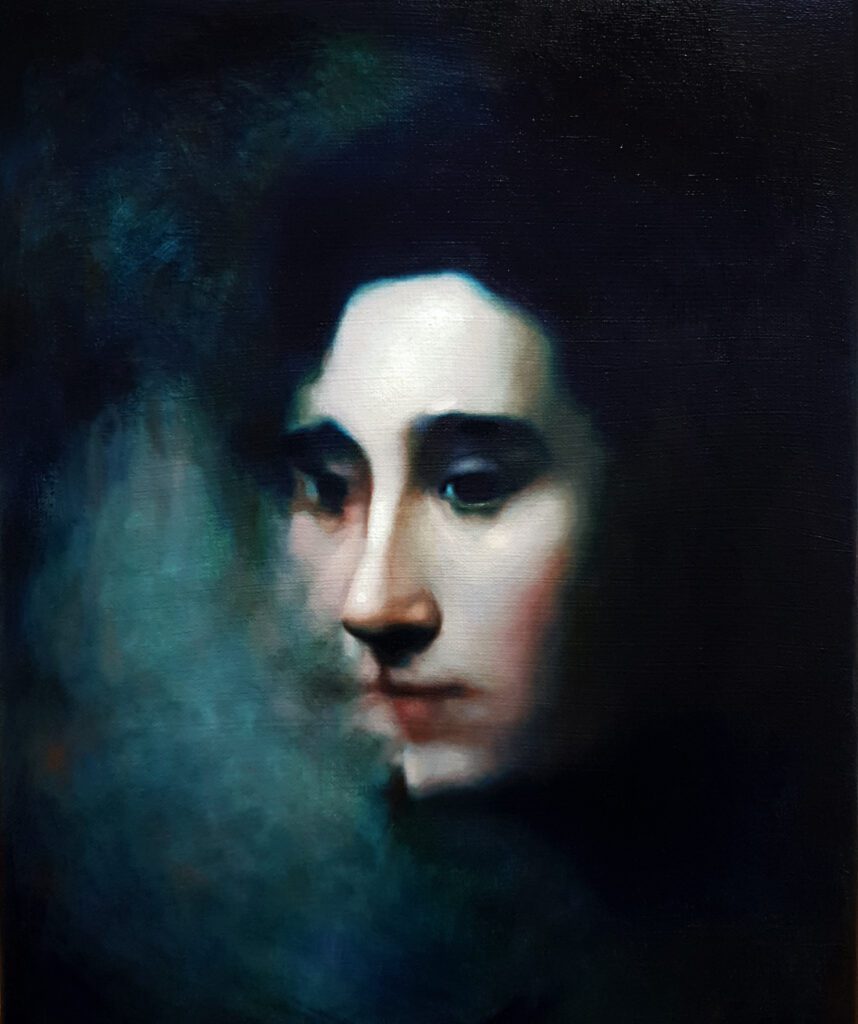
Q10. Realist painting has experienced a renewed appreciation in recent years. How do you see your work contributing to that conversation?
To be honest, I don’t really think about contributing to a movement. I paint this way because it’s the language that feels most natural to me. I do think that perhaps after decades of constantly searching for the next new thing, people are rediscovering that tradition isn’t the opposite of innovation. Some of the most original ideas can grow from the oldest foundations.
Q11. What challenges do contemporary figurative painters face when working in a world saturated with images?
The challenge is creating something that can hold a viewer’s attention in a world designed to distract it. A painting can’t compete with the endless stream of images, so it has to offer something different: depth, silence, and the reward of spending time with it.
Q12. Looking back, what achievement feels meaningful not because of recognition, but because of what it taught you as an artist?
I think the most meaningful achievement was realizing that I didn’t need to chase trends or paint what I thought people wanted to see. Finding the confidence to follow my own artistic voice, which I still struggle with at times. It taught me that growth as an artist comes from becoming more honest, not more fashionable.
Q13. What advice would you give to emerging artists who are trying to find a balance between mastering their craft and discovering their own voice?
I think people worry too much about finding their voice. My advice would simply be: keep painting. If you stay curious and honest with yourself, your voice will emerge naturally over time. You can’t force it. You discover it by doing the work.
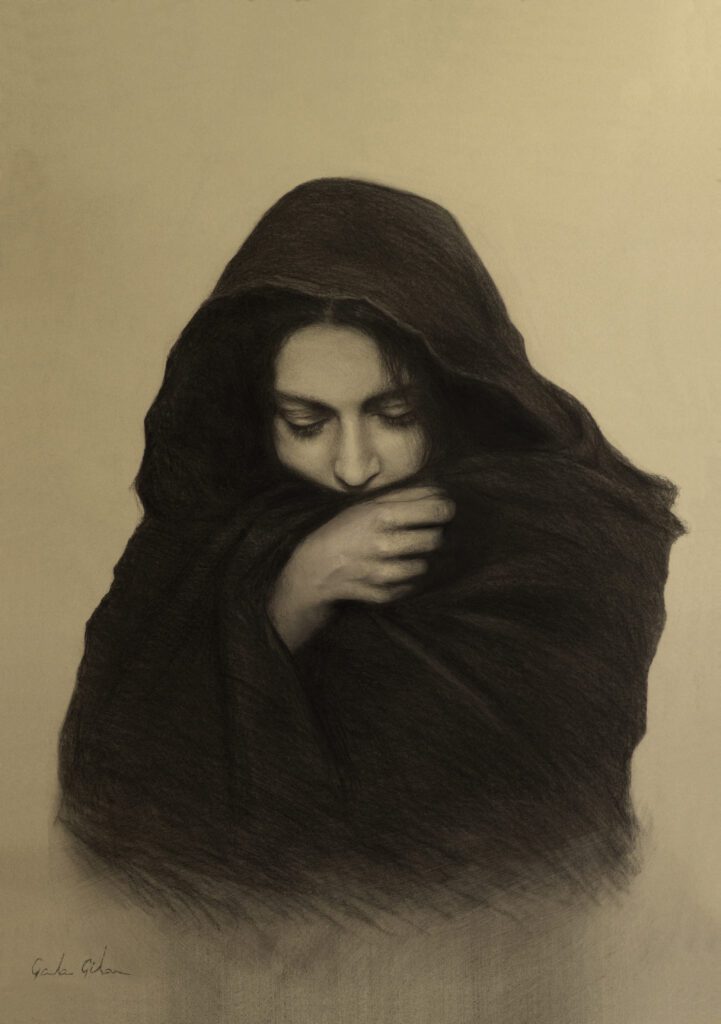
As our conversation with Gala came to a close, we found ourselves thinking about attention. Not the kind measured in seconds, likes, or endless scrolling, but the kind that asks us to stay with something a little longer. That is what Gala’s paintings quietly ask of us.
In a world overflowing with photographs and images that disappear almost as quickly as they appear, she has chosen a medium that cannot be rushed. Every portrait is built slowly, every decision considered, every layer inviting us to look beyond a person’s appearance and toward something less tangible. Not a biography, not a complete story, but a feeling that lingers long after we’ve looked away.
There is often pressure, to constantly reinvent we or chase whatever feels new. Gala’s journey suggests that originality doesn’t always come from abandoning tradition. Sometimes it comes from understanding a centuries-old language so deeply that it becomes entirely your own.
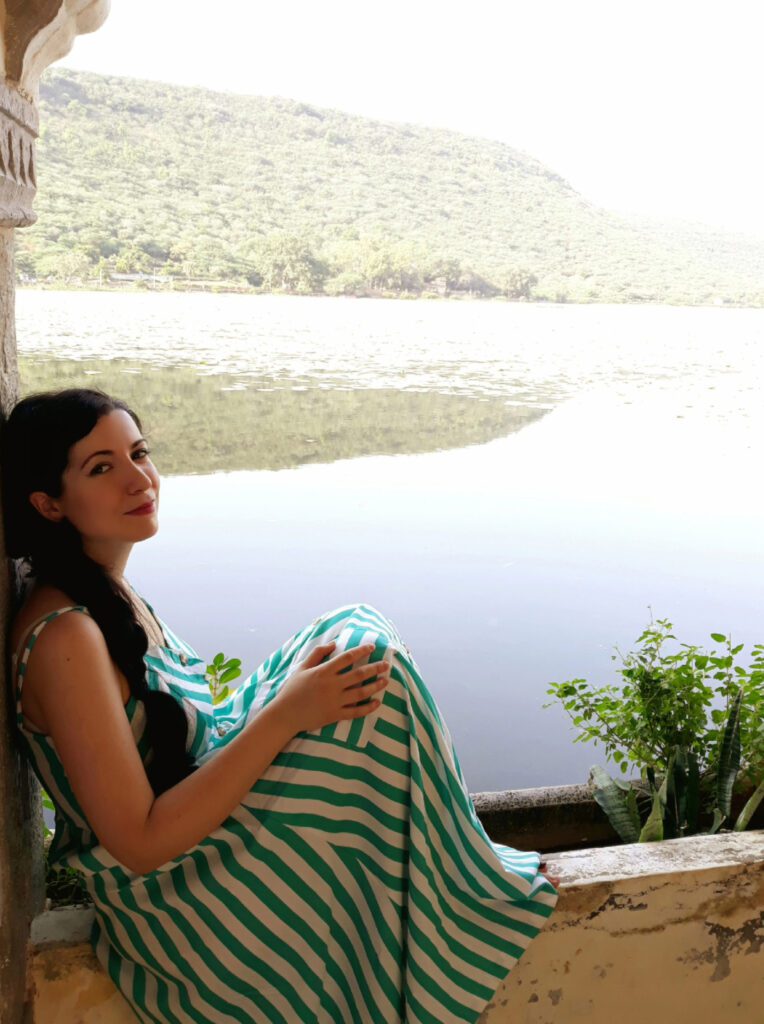
In a culture where everything is explained, shared, and instantly understood, Gala deliberately leaves questions unanswered. She trusts the viewer to complete the story, to bring their own memories, emotions, and experiences into the painting. That openness is what allows the work to keep changing over time, revealing something different with every encounter.
For collectors and art lovers alike, Gala’s paintings offer an experience that deepens with time. Their quiet beauty may be what first catches your attention, but it is their emotional richness that invites you to return. The subtle shifts of light restrained expressions, and carefully built atmosphere continue to reveal new meanings, making each painting feel less like a fixed image and more like an ongoing conversation one that changes with every viewing.
Perhaps that is what stayed with us most after speaking with Gala. Her work reminds us that painting isn’t simply about capturing what we see. Sometimes its greatest power lies in helping us notice what we feel.
To follow Gala Gilan’s journey and explore more of her work, find her through the links below.
