
How to Price Your Art Without Guessing

Pricing your art can feel strangely uncomfortable. You can spend 30 hours making a painting and still have no idea what number belongs next to it. You might look at other artists online and think, Should I be charging that much? Or you might worry that if you price your work too high, nobody will buy it.
So you choose a number that feels “safe.” Maybe it is $100 because you are still emerging. Maybe it is $250 because that sounds reasonable. Maybe you ask a friend what they think it is worth. And then you hope you got it right.
The problem is that guessing makes pricing harder to defend, especially when someone actually asks, “How much is this?” You do not need a perfect formula for pricing art. There is no universal equation because artwork prices are influenced by things like medium, size, production costs, career stage, demand, exhibition history and market recognition.
But you can build a pricing system that gives you a logical starting point. For emerging artists, that is often much more useful than trying to figure out what your work is “worth” in some abstract sense.
Start With Your Actual Costs
Before thinking about what collectors might pay, figure out what the work costs you to produce.
Make a simple list:
- Materials
- Canvas, paper or other surface
- Paint, ink, clay or other media
- Framing
- Printing
- Packaging
- Any specialist production costs
- Your time
Your time matters too.
Artfinder, an online marketplace for original art, recommends starting with an acceptable hourly rate, multiplying it by the hours spent creating the piece, and then adding material costs.
For example:
Materials: $80
Frame: $70
Time: 15 hours × $20/hour = $300
Base cost = $450
That $450 is not necessarily your final retail price. It is your starting point.
And this is important: your hourly rate does not have to be the same as the hourly rate you would charge for freelance work. You are creating a pricing structure for your art practice, so choose a rate that is realistic for your current career stage and then review it as your career develops.
Check What Similar Artists Are Charging
This is the part many artists skip. They calculate their costs, choose a number they personally feel comfortable with, and stop there. Instead, spend some time researching your market.
Look for artists who are reasonably comparable to you in:
- Medium
- Size
- Career stage
- Exhibition history
- Audience
- Type of work
- Geographic or online market
You do not need to compare yourself with an internationally established artist simply because you use the same medium.
If you are an emerging painter with a handful of group exhibitions, comparing your $400 painting with a $20,000 painting by an artist represented by major galleries will not tell you much.
Artfinder specifically recommends comparing works by artists with similar professional success and looking at size, style and medium.
Artsy similarly notes that primary-market prices for living artists are influenced by factors including career stage, medium, scale, exhibition history and recognition.
A simple research exercise
Choose 10 artists who are somewhat comparable to you.
Create a spreadsheet like this one:
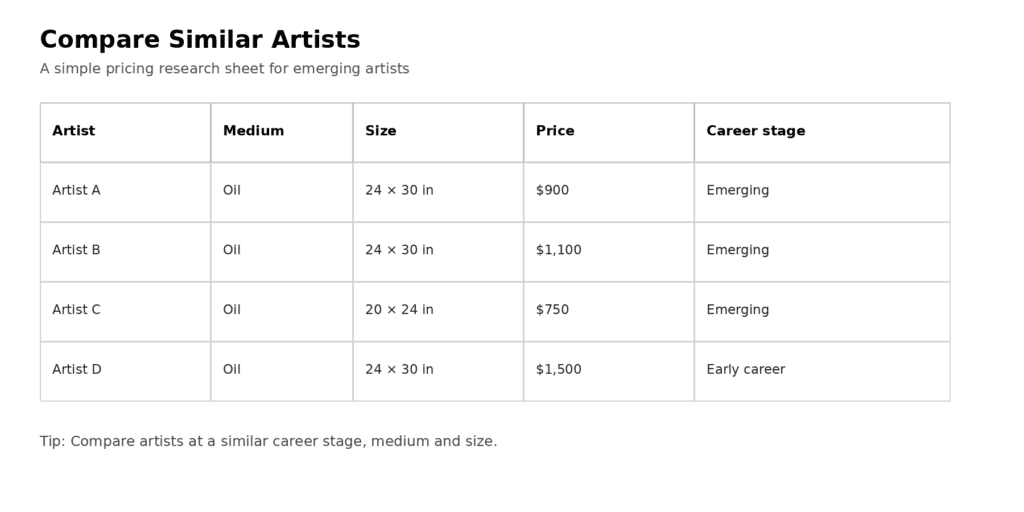
You are not trying to copy their prices.You are looking for a reasonable range.
If comparable artists are consistently selling similarly sized paintings for 700–1,500, pricing yours at $75 simply because you feel nervous about charging more may be a sign that you are underpricing yourself.
Build a Price Formula You Can Repeat
Now combine your production costs with your market research.
Let’s say you have calculated:
Materials: $100
Framing: $150
15 hours of work × $25: $375
Your base cost is:
$625
Your comparable-artist research suggests similar works are generally selling between $800 and $1,400.
You could reasonably position your work around 900–1,000, depending on your experience, demand and the specific piece. The exact number is less important than having a reason for it.
A gallery-oriented approach can also require you to price higher than your direct-sale calculation because commissions may come out of the retail price. One emerging-artist pricing guide from The Corner Store Gallery recommends adding materials, framing and time, then using roughly double the resulting base price as a simple way to account for a typical 40–50% gallery commission. It is a rule of thumb, not a universal formula, but it demonstrates why artists need to think about where a work will be sold.
For example:
Base cost: $625
If you simply doubled it:
Retail price: $1,250
A 50% gallery commission would leave you with:
$625
That gets you back to your base calculation.
Of course, gallery agreements vary, and you should always check the actual commission and expenses before setting your retail price.
Do Not Have a Different Price for Everyone
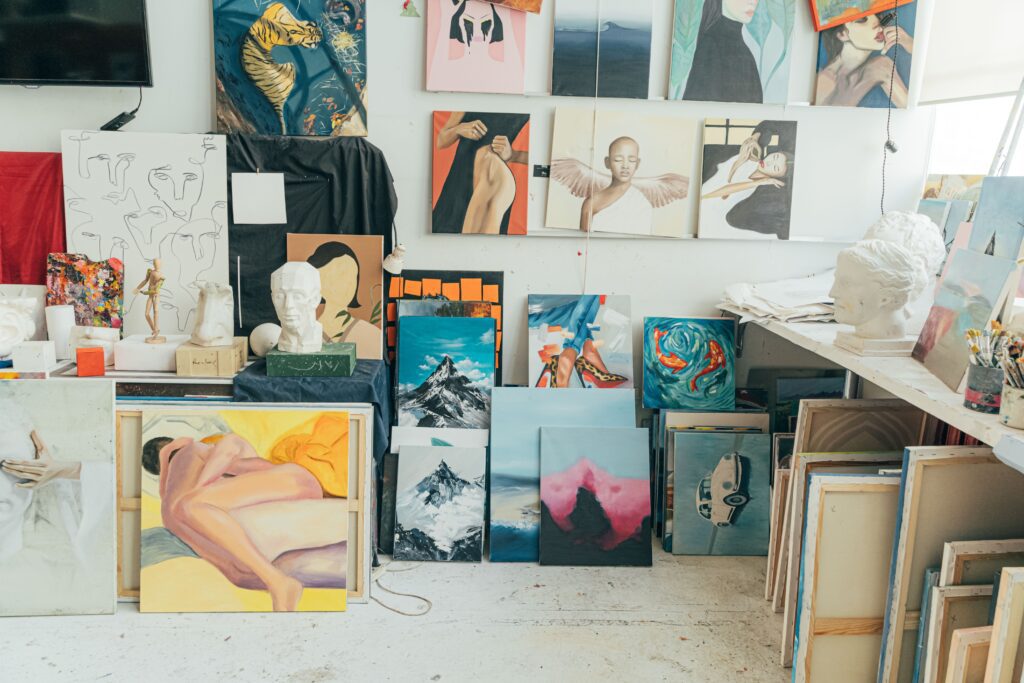
One of the easiest ways to create problems for yourself is to price the same type of work differently depending on who asks.
A friend gets it for $300. A collector gets quoted $500. Your Instagram says $450. A gallery sees $700. This makes it much harder to build a coherent market for your work. Instead, establish a system.
That does not mean every painting of the same size must cost exactly the same forever. A particularly complex piece may justify a higher price. But there should be a recognizable relationship between your prices.
Consistency is one of the most useful things you can give buyers, and yourself.
Price by Size, But Do Not Ignore Complexity
Size is a useful pricing variable because larger work generally requires more materials, more physical space and often more time.
You can create a simple size structure:
Small: 250–450
Medium: 500–900
Large: 1,000–2,000+
These are only example ranges, not industry standards. Within each range, consider the actual work. A 24 × 30-inch painting that took you 8 hours should not automatically cost exactly the same as a 24 × 30-inch painting that took 60 hours and required expensive materials.
You can also account for unusual production costs, detailed craftsmanship, expensive framing or technically demanding processes. The goal is not to make pricing complicated. It is to prevent size from becoming the only thing determining price.
What About Prints and Editions?
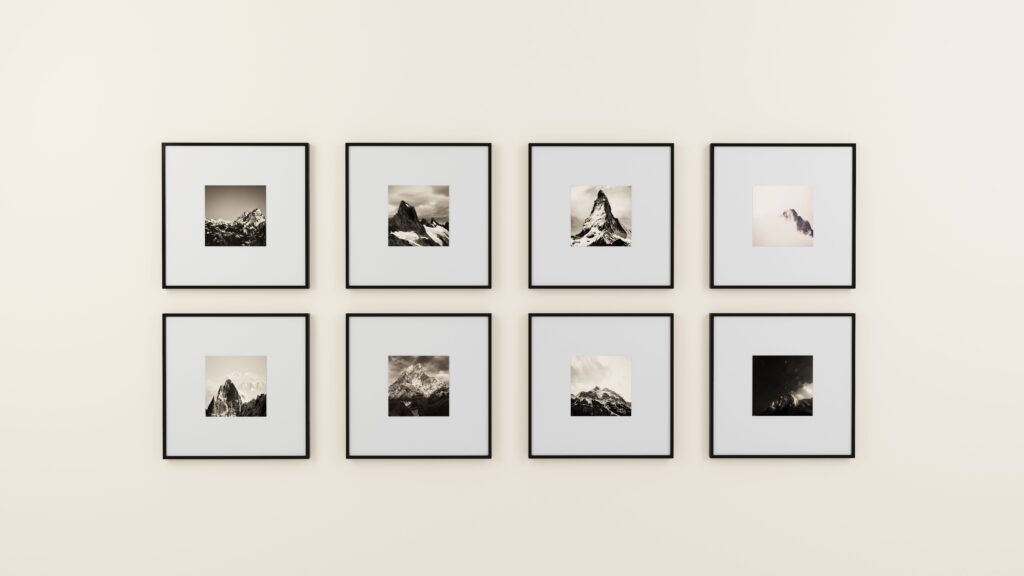
Do not price a limited edition by simply dividing the original painting’s price by the number of prints. There are additional costs involved in producing an edition, including printing, proofing, paper, packaging and sometimes certification.
For example, imagine an edition of 20 prints:
Printing and production: $300 total
Packaging: $100 total
Your production time: $200
Total edition-related cost:
$600
You have spent $30 per print before considering profit, platform fees or your creative value. You might then price each print at 75–150 depending on the quality, size, edition size and your market.
The smaller the edition, the more scarcity can factor into the pricing structure. Just make sure your edition numbering and total edition size are clear and consistent.
Remember the Costs That Come After the Price
Your listed price is not always the amount that ends up in your pocket.
Depending on where you sell, you may have:
- Gallery commission
- Online marketplace commission
- Payment processing fees
- Framing costs
- Packaging
- Shipping
- Taxes
- Exhibition fees
- Promotional costs
For example, Artfinder currently deducts a 40%, 45% or 50% commission depending on the seller plan. That means an artist selling a $1,000 work through a platform with a 40% commission does not receive $1,000.
This is why you should ask yourself:
“How much do I need to receive from this sale?”
Then work backwards. If you need to receive $600 after a 40% commission:
$600 ÷ 0.60 = $1,000 retail price
That one calculation can save you from accidentally selling work below your intended income.
Keep Your Prices in a Simple Spreadsheet
You do not need expensive art-business software to manage this. A Google Sheet or Excel spreadsheet is enough.
Create columns for:
Artwork | Size | Medium | Materials | Hours | Base Cost | Retail Price | Commission | Net Income | Date Sold
Then add every piece you sell. After six months, you will have something far more useful than a random collection of prices: your own pricing history. You can see which sizes sell, which price points get inquiries, which pieces take too long to make and whether your prices are actually covering your costs. That is real data about your practice.
When Should You Raise Your Prices?
Do not wait until you suddenly become “famous.” Instead, look for evidence that your practice is developing.
You might consider a moderate increase when:
- You are consistently selling most of your available work.
- You have developed a stronger exhibition history.
- You have received meaningful press or recognition.
- Your work has entered notable collections.
- Demand is increasing.
- Your production costs have increased.
- You have developed a stronger professional track record.
Artfinder suggests that artists who consistently sell the majority of their output over an extended period consider increasing their hourly rate or applying around a 10% increase to existing prices.
A move from $500 to $550 or $600 is much easier to support when your career has genuinely progressed. And keep your increases measured. Artsy reports that galleries often view price increases as something that should reflect career development and growing recognition rather than simply being arbitrary jumps.
The Awkward Part: Actually Saying the Price
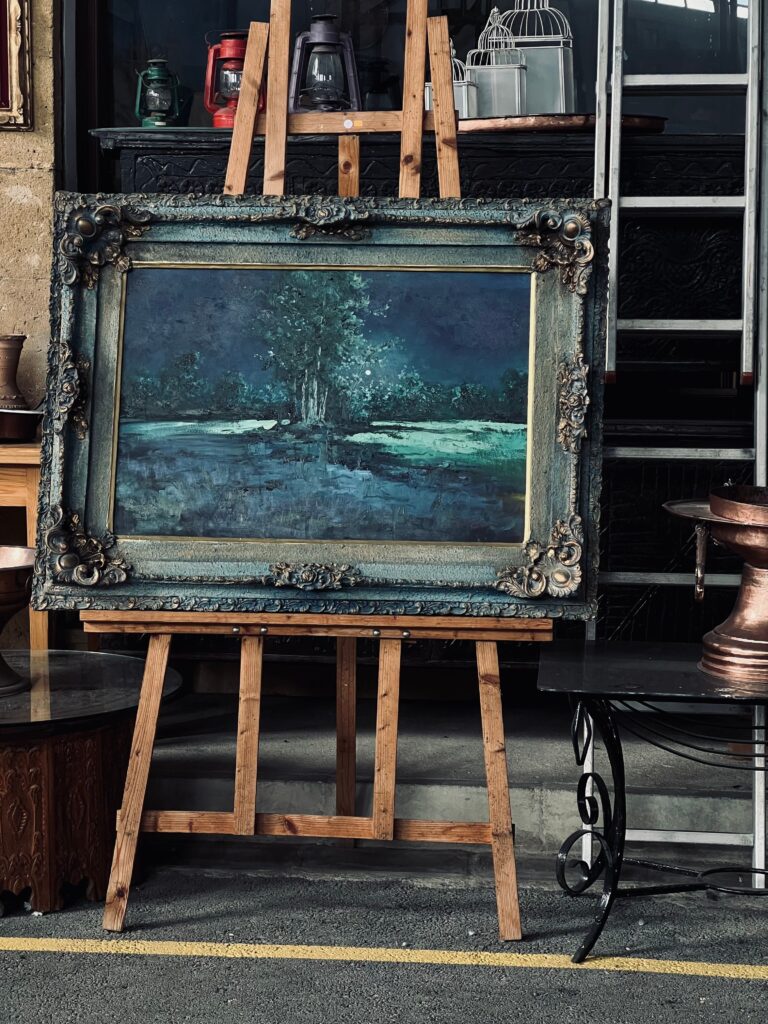
This is where pricing becomes emotional.
Someone messages:
“How much is this painting?”
And suddenly you want to write:
“It’s $600 but I’m not sure if that’s too much, I can do less if you want.”
Don’t. You don’t need to convince the buyer that your price is reasonable before they have even reacted to it.
Try:
“Thank you for your interest! This piece is $600, including the frame.”
Then stop. You are not being arrogant. You are giving someone information.
If a buyer asks how you arrived at the price, you can explain your system: materials, size, time, production costs and your current market position. That is much stronger than saying, “I just felt like $600 sounded right.”
Your Price Does Not Have to Be Permanent
One price does not define your artistic worth forever. Your career will change. Your audience will change. Your materials will cost more. Your work will evolve. You may exhibit more, receive awards, gain representation or begin selling consistently. Your prices can evolve too.
What matters right now is that you have a number you can defend without apologizing for it. So before putting a price on your next piece, ask yourself five questions:
1. What did this work actually cost me to produce?
2. What is my time worth at my current career stage?
3. What are comparable emerging artists charging?
4. What will I actually receive after commissions and fees?
5. Can I say this price out loud without immediately offering a discount?
If you can answer all five, you are no longer guessing. You are pricing. You do not need to believe that your painting is worth an enormous amount of money just because you made it. You simply need to build a pricing system that respects the work, accounts for the business behind it, reflects where you currently are in your career and gives you room to grow.
The goal is not to find the one magical number that proves your art is valuable. The goal is to choose a price you can stand behind.
Editor’s Note
There are only a few days left to submit to The Beauty of Still Life Virtual Exhibition. If still life inspires you, we’d love to see your unique perspective, whether through everyday moments, memories, objects, or symbolism.
The deadline is August 30, 2026. Don’t miss your chance to be part of this celebration of still life and the beauty found in the details of everyday life.
