
How Payal Jain Transformed Three Decades of Fashion into Textile Art

At Women in Arts Network, Spring Through My Eyes gave us the opportunity to meet artists who each brought their own perspective to the idea of renewal. Payal Jain approaches it through something deeply connected to her own background: textiles.
Her work brings together fashion, art, Indian craftsmanship, and generations of knowledge, showing how tradition can continue to evolve without losing what makes it special.
Payal grew up in a home where creativity was simply part of everyday life. Art, music, architecture, literature, travel, and nature all surrounded her from an early age, shaping the way she saw and understood the world.
Fashion eventually became the place where all of those influences could come together, but she has always thought of herself as an artist first, with textile becoming her own language of expression.
For Payal, fabric is never just material. Growing up in India gave her access to an extraordinary world of weaving, dyeing, printing, and embroidery, and she remains fascinated by the stories held within these traditions. An old textile carries the hands of the people who made it, the knowledge passed down through generations, and memories that can survive long after its original moment has passed.
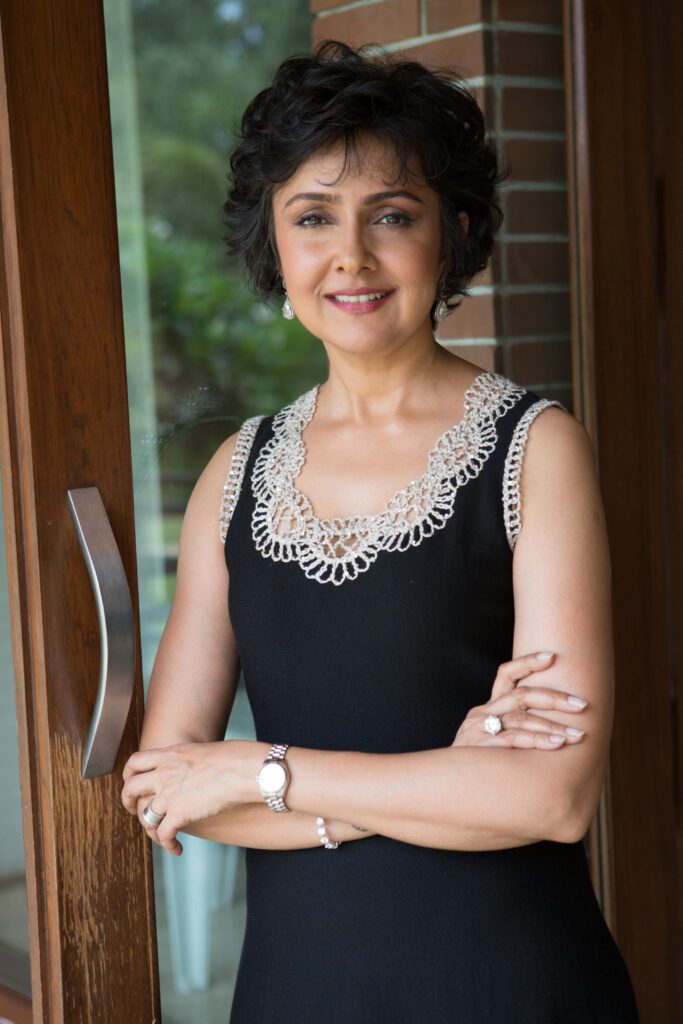
That respect for the human hand has shaped more than three decades of Payal’s work. Her relationships with weaving and craft communities across India have become an important part of her practice.
Rather than simply borrowing traditional techniques, she works closely with artisans, building collaborations around a shared respect for materials, process, and the knowledge behind them.
Over time, her creative language has also moved beyond garments. Payal’s textile sculptures and installations allow fabric to occupy space in a completely different way, bringing together bamboo, metal, wood, paper, yarn, and reclaimed textiles.
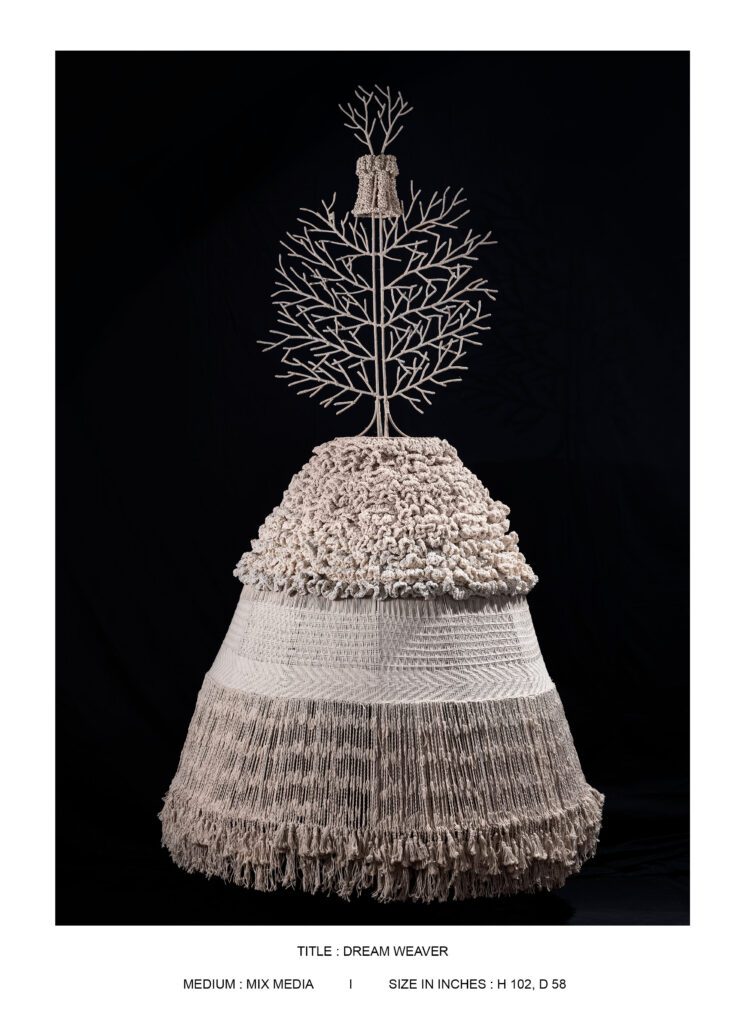
The boundaries between fashion, craft, and fine art become much less important when all of them can contribute to the same idea.
Yet even as her work continues to change, Payal remains deeply connected to the traditions that shaped it. She isn’t interested in changing a craft simply for the sake of making it look new. Instead, she looks for ways to bring heritage into the present while respecting the techniques, processes, and knowledge at its heart.
Now, let’s get to know Payal Jain through our conversation about textiles, craftsmanship, fashion, art, tradition, and the creative journey that continues to bring these worlds together.
Q1. Payal, growing up surrounded by art and music, when did you realize fashion could become your own creative language?
I don’t think there was ever a defining moment. Looking back, I feel every experience from my childhood was quietly preparing me for this journey. I grew up in a home where art, music, architecture, literature and nature were part of everyday life. Museums, performances, travel and conversations around the dining table nurtured my imagination long before I understood the language of design. For me, Fashion was never about garments.
It became the medium through which I could bring together everything I loved, art, textile, culture, craftsmanship and the individuality of the human spirit. I have always seen myself as an artist, and textile became my first language of expression. I create because it is the calling of my soul. Fashion simply became the language through which that calling found its voice.
Q2. You’ve described textiles as your canvas. What is it about fabric that continues to inspire you?
Textile has always been my greatest love. I often say that I feel blessed to have been born in India, where every region carries its own extraordinary textile vocabulary. Every weave, dye, print and embroidery is a repository of knowledge passed down through generations. To me, fabric is never merely a material. It carries memory, identity and the imprint of the human hand.
When I hold an old textile, I often wonder about the people who wove it, dyed it, embroidered it and lived with it. It is this invisible narrative that continues to fascinate me. Every thread carries a memory, and every textile reminds us that beauty is created through patience, intention and love.
Q3. You’ve spent years collaborating with artisans across India. What have those relationships taught you?
Working alongside artisans has been the greatest education of my life. Design school teaches technique, but artisans teach wisdom. They have an intuitive understanding of material that cannot be learnt from books. They know how a yarn will behave, how a weave will respond, how a colour will mature over time. More importantly, they have taught me humility.
For over three decades, I have had the privilege of working with weaving and craft clusters across India. These relationships have never been transactional; they have been collaborations built on trust, mutual respect and a shared love for creation. They reminded me that excellence is not achieved through speed. It is nurtured through patience, discipline and generations of accumulated knowledge.
Q4. Your recent textile sculptures move beyond garments. What inspired this shift into installation and fine art?
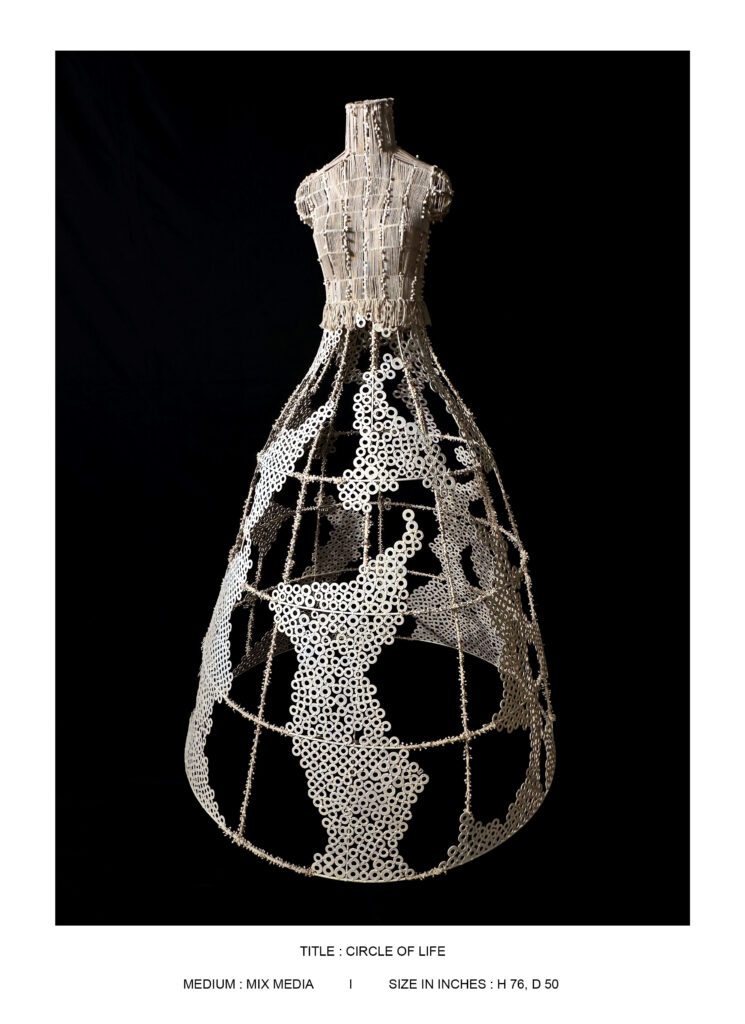
After more than three decades in Fashion, I felt an urgent need to step away from the familiar language of the runway and return to the reason I began creating in the first place. There were emotions I wanted to express that could no longer be contained within garments alone. I wanted textile to occupy space differently, to breathe, to invite contemplation and to exist as an artistic medium in its own right.
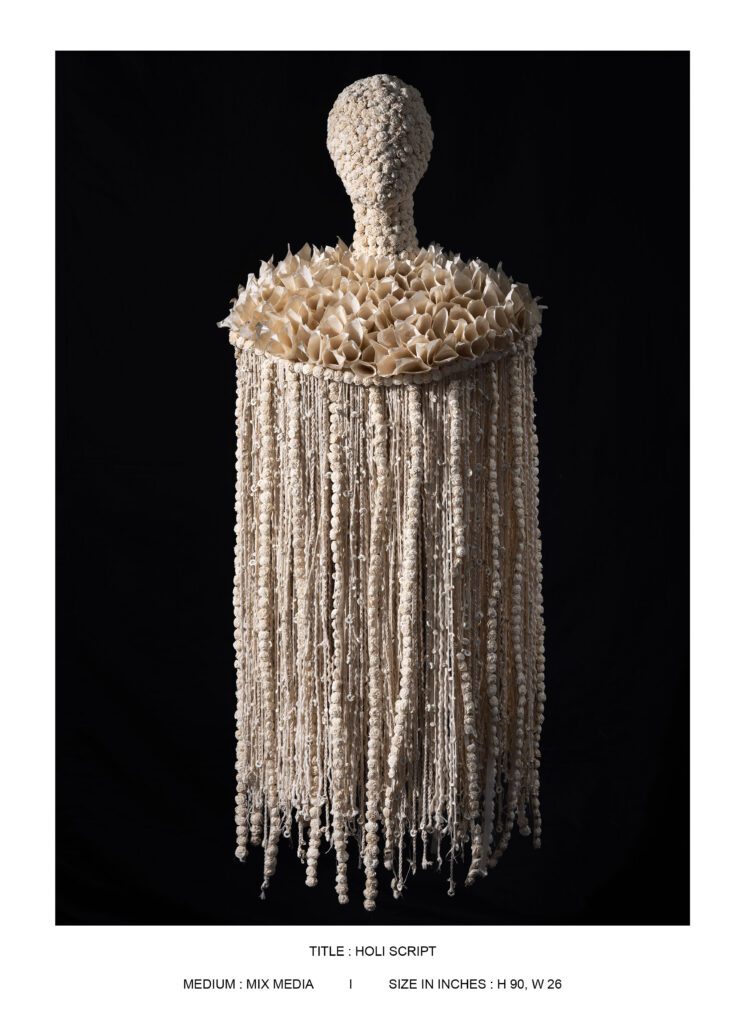
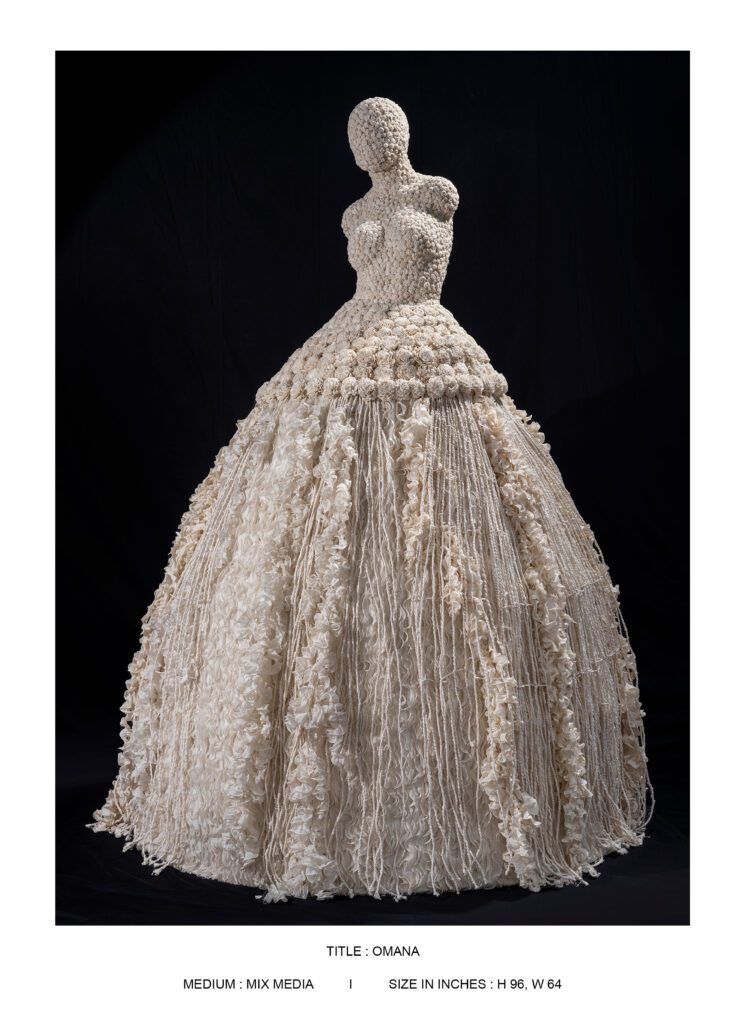
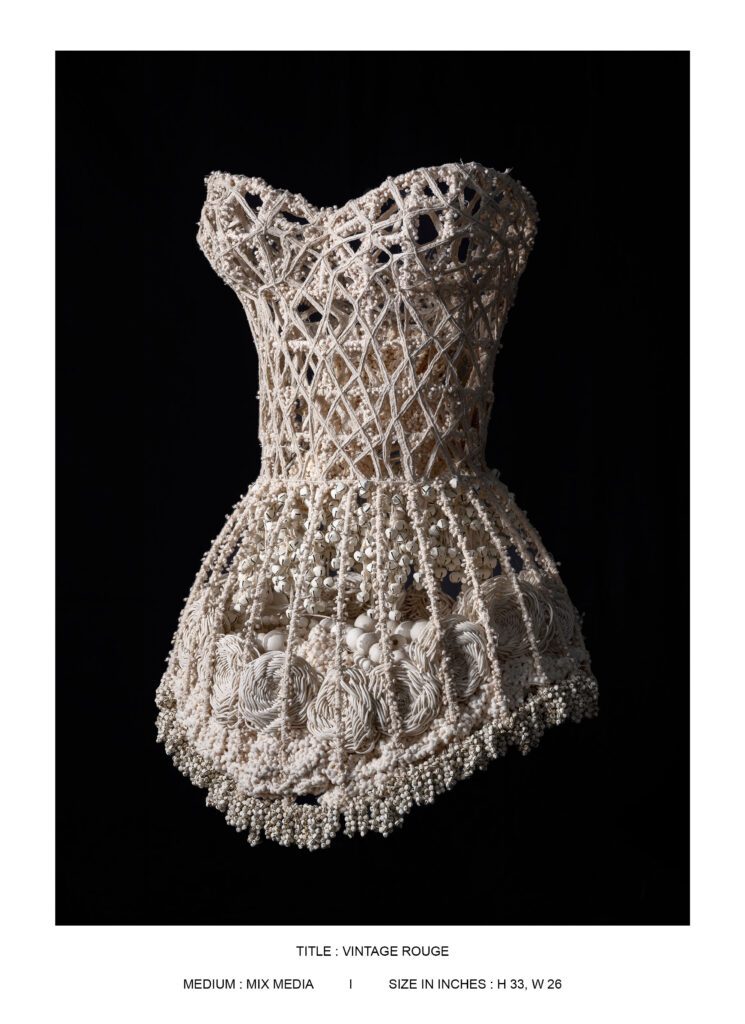
That became the genesis of Soul of a Woman. Working with bamboo, metal, wood, paper, yarn and reclaimed textiles allowed me to dissolve the boundaries between Fashion, Art and Craft. The sculptures became expressions of memory, identity and the many dimensions of womanhood, while remaining deeply rooted in the textile traditions that have shaped my life’s work.
Q5. Your exhibition Soul of a Woman explores identity through textiles, sculpture, and fashion. What inspired this body of work?
Completing thirty years in Fashion naturally became a moment of introspection. Rather than looking ahead to the next collection, I found myself looking inward, reflecting on the journey that had shaped me, the people who had believed in me, the artisans who had walked beside me and the countless experiences that had found expression through textile.
Soul of a Woman was born from that reflection. This exhibition was never about garments alone. It was about energy, spirit and story. It became a tribute to the many dimensions of womanhood, her strength and vulnerability, her resilience and grace, her silence and her joy. Through thirty sculptural installations, I revisited three decades of my work, transforming fashion into a language of contemporary art while remaining deeply connected to India’s extraordinary craft traditions.
Q6. With every collection, how do you decide what should be reinvented and what should remain untouched?
I have never believed in reinventing tradition simply for the sake of novelty. Every craft carries an essence that deserves to be honoured. The technique, the integrity of the process and the wisdom embedded within it should remain untouched. What can evolve is the way we interpret it for our times.
My role as a designer is not to change tradition, but to create a dialogue between heritage and contemporary expression. When that balance is achieved with sensitivity and respect, tradition continues to remain alive rather than becoming a relic of the past.
Q7. Fashion moves in seasons, while craftsmanship develops over generations. How do you navigate that tension?
I have always believed that true craftsmanship exists outside the rhythm of seasons.
Fashion may evolve every few months, but craft follows the rhythm of human hands, and that rhythm cannot be hurried. It asks us to slow down, to value process over speed and meaning over novelty. To me, that is the essence of luxury. Time. Patience. Intention. These are qualities that never go out of fashion.
Q8. What role do artists and designers have in preserving cultural knowledge while moving it forward?
I believe we are custodians of an extraordinary inheritance. India’s crafts and textiles represent centuries of collective knowledge, and with that inheritance comes responsibility. Preservation alone is not enough. Traditions remain alive only when they continue to evolve and find relevance in contemporary life. As designers, we have the privilege of creating that bridge, honouring the wisdom of the past while imagining new possibilities for the future. Every collection becomes an opportunity to ensure that these remarkable traditions continue to live, breathe and inspire generations to come.
Q9. After more than thirty years in design, has your definition of success changed?
Completely. In the early years, success was often measured through collections, shows and recognition. Today, I see it very differently. Success lies in creating work with purpose. It is knowing that our collaborations have helped sustain artisan communities, revived disappearing crafts, inspired young designers and encouraged people to look beyond fashion as something transient. If my journey has contributed, even in a small way, to celebrating India’s textile heritage and leaving it stronger for the next generation, I would consider that my greatest achievement.
Q10. What has working alongside artisans taught you about creativity, patience, and excellence?
They have taught me that mastery is quiet. It does not seek attention. It reveals itself through discipline, repetition and an unwavering commitment to excellence. Watching an artisan spend days, sometimes weeks, perfecting a single detail has transformed my understanding of creativity. Inspiration may spark an idea, but it is patience that gives it form. The human hand carries an intelligence that no machine can replicate, and I remain in awe of that every single day.
Q11. What advice would you give to young designers seeking a career that is both creative and culturally meaningful?
First, become a student of life before becoming a student of Fashion. Travel. Visit museums. Listen to music. Read poetry. Study architecture. Spend time in craft villages. Learn from weavers and artisans. Observe nature. Everything you experience becomes part of your creative vocabulary. Most importantly, discover your own voice.
Don’t chase trends or try to imitate someone else’s success. The world doesn’t need another designer following the same path. It needs individuals who create with authenticity, purpose and compassion. And never forget that creativity is a privilege. Use it to leave behind something meaningful, something that celebrates humanity, nurtures our cultural heritage and makes the world a little more beautiful than you found it.
As our conversation drew to a close, we found ourselves thinking about how much more a material can carry when we take the time to understand where it comes from. For Payal, textiles are not simply beautiful surfaces or materials for creating garments. They carry stories, cultural memory, generations of knowledge, and the hands of the people who have worked with them.
There is something especially valuable about that perspective in today’s art world, where the boundaries between fashion, art, and craft continue to shift. Payal’s work shows that these categories don’t always need to be kept separate. A textile can move from clothing into sculpture or installation, while still carrying the craftsmanship and history that shaped it.
Her relationship with artisans also brings another important part of that conversation into focus. Craftsmanship takes time, and the knowledge behind a traditional technique cannot simply be recreated overnight.
By continuing to work closely with artisans and bringing their skills into contemporary design, artists and designers can help these traditions remain part of the present rather than becoming something we only look back on.
At the same time, Payal doesn’t approach tradition as something that should remain frozen. She believes there is a difference between changing its essence and finding new ways to express it. That balance between respect and experimentation is what allows heritage to remain relevant while still feeling alive.
For art lovers and collectors, this makes her work especially meaningful. Beyond the beauty of the textiles, there is a much larger story of people, place, craftsmanship, culture, and time. The work becomes a meeting point between what has been passed down and what an artist chooses to create from it today.
And perhaps that is one of the most interesting things about contemporary art: sometimes moving forward doesn’t mean leaving the past behind. It can mean looking at what we have inherited with fresh eyes and finding a new way to carry it forward.
