5 Ways to Build a Healthier Relationship With Social Media as an Artist
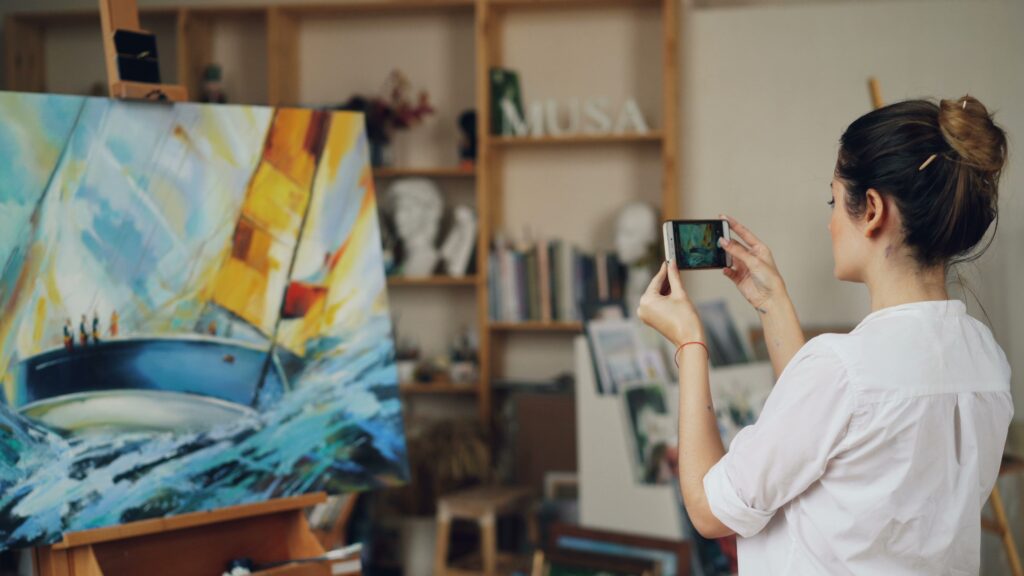
For artists today, social media can feel almost impossible to separate from the creative life. It can help you discover opportunities, meet other artists, share your work with people across the world, find collectors, announce exhibitions, and slowly build a community around what you create. A single post can sometimes put your work in front of someone you never would have reached otherwise.
But there is another side to being an artist online. You open Instagram to share a new piece and end up scrolling through dozens of artists who seem to be doing more than you. Someone has just announced a residency. Someone else sold out an exhibition. Another artist has thousands of followers and posts every day. Before you know it, what started as a simple social media check has left you questioning your own progress.
The problem is not necessarily social media itself. It is the relationship we develop with it. When every post starts to feel like a test of whether your art is good enough, every number becomes a measurement of your worth, and every quiet day feels like failure, social media can begin taking more from your creative practice than it gives back.
The good news is that you do not have to disappear from the internet to protect your creativity. You can learn to use social media as a tool without allowing it to become the place where you measure your value as an artist.
Social Media Should Support Your Art, Not Control It
A healthy relationship with social media does not mean never checking your notifications, never caring about engagement, or pretending that visibility does not matter. If you are building an art career, visibility can be important.
Instead, it means deciding what role social media is allowed to play in your creative life. Your studio should remain the place where you make decisions about your art. Social media can help you share those decisions with the world, but it does not need to make them for you.
Here are five ways to create a healthier, more balanced relationship with being an artist online.
1. Decide What You Actually Want Social Media to Do for You
One of the easiest ways to become overwhelmed by social media is to use it without knowing what you are using it for.
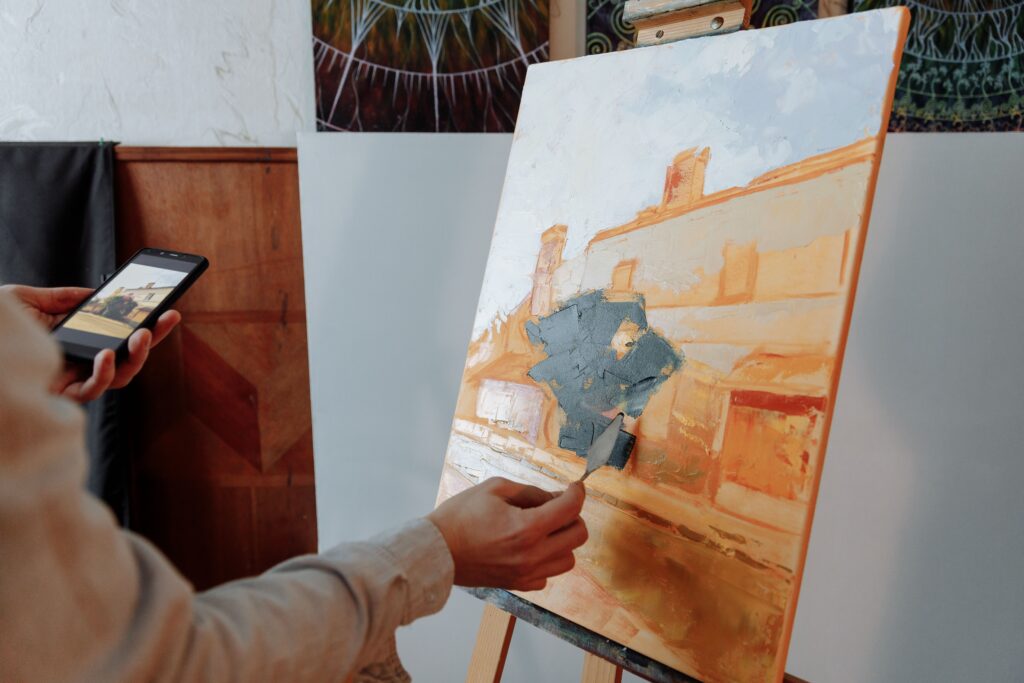
Are you trying to reach potential collectors? Find exhibition opportunities? Connect with other artists? Document your creative process? Promote your shop? Simply share your work with people who enjoy seeing it?
Your answer will determine what you need from the platform.
For example, an artist selling original paintings may want their profile to make it easy for potential buyers to understand what is available, while an artist primarily interested in networking may care more about connecting with curators, organisations, and other artists.
You do not need to chase every possible benefit at once.
Try this:
Write down three things you want social media to help you achieve. Then let those goals guide what you post and who you follow.
If your main goal is finding opportunities, spend more time looking for open calls, residencies, galleries, and organisations. If your goal is connecting with your audience, focus on conversations and sharing the thinking behind your work.
This also gives you permission to ignore trends that do not serve your goals.
You do not have to make every trending Reel, jump on every audio, or turn your studio into a daily content machine simply because other artists are doing it.
Your social media should fit your art practice, not the other way around.
2. Stop Using Other Artists’ Careers as a Measuring Tool
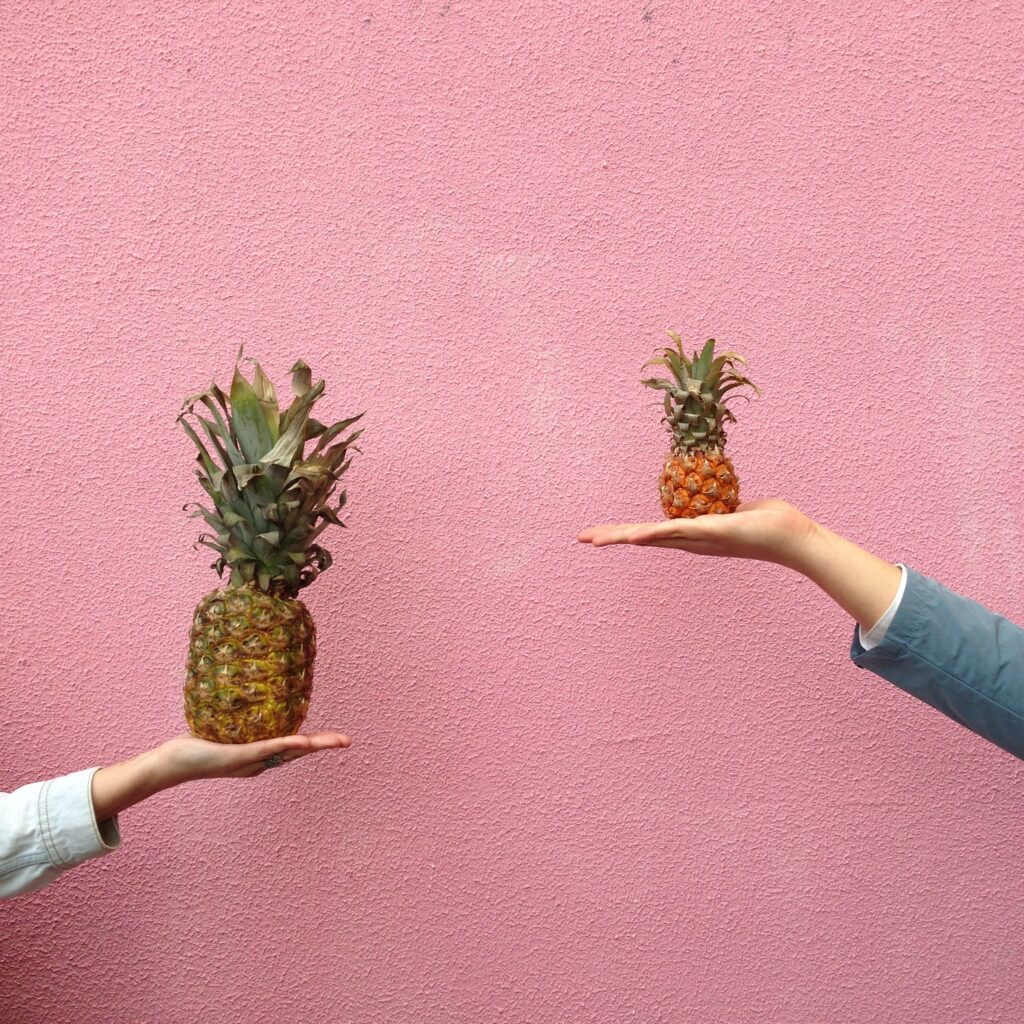
This is one of the hardest parts of being an artist online. You can genuinely be happy for another artist and still feel a little disappointed when you see their success. You can admire someone’s work while secretly wondering why they are getting opportunities that you have been waiting for.
That does not make you a bad person. It makes you human. The problem begins when comparison becomes a constant habit.
Remember that social media shows you announcements, not the entire story. You see the exhibition opening, but not the years of applications that came before it. You see the sold-out collection, but not the pieces that did not sell. You see the residency photograph, but not the uncertainty that existed before the acceptance email.
Try this:
When you notice yourself spiralling after seeing someone else’s success, ask:
“Am I inspired by this, or am I using it as evidence that I am behind?”
If the answer is the second, step away.
You can also intentionally curate your feed. Mute accounts that consistently make you feel inadequate, even if you like the artists behind them. Follow artists whose work genuinely inspires you, educators who teach you something useful, organisations that share opportunities, and people who make being creative feel exciting rather than competitive. You are allowed to protect your attention.
3. Create Before You Consume
One small change can make a surprisingly big difference to an artist’s relationship with social media: make something before you start looking at what everyone else is making.
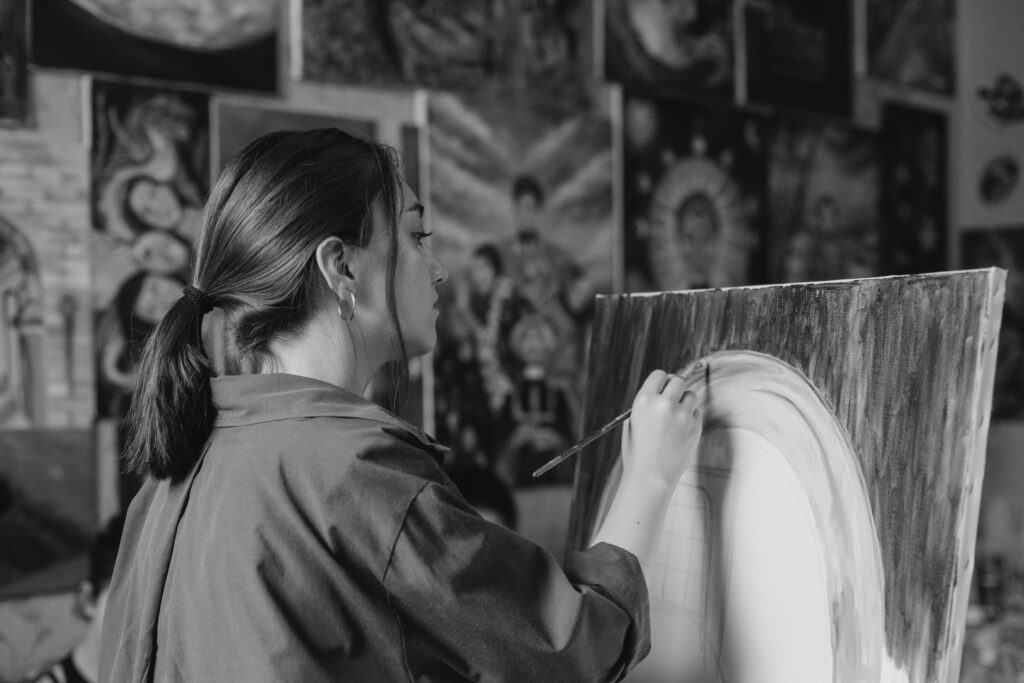
Scrolling through other people’s work before entering your studio can fill your head with other people’s colors, styles, ideas, careers, and expectations before you have had the chance to listen to your own.
You may sit down intending to paint something you have been thinking about for days and suddenly find yourself wondering whether it is “good enough” compared with what you just saw online.
Try this:
Create a simple rule for yourself:
Studio first, scrolling later.
It does not have to mean completing an entire painting before opening your phone. Even 30 minutes of drawing, painting, writing, sketching, photographing, or experimenting before consuming other people’s content can help you begin from your own ideas.
You can also separate your creative time from your browsing time. If you need social media for research, give yourself a specific purpose:
- Save references for a particular project.
- Look for artists working with a certain medium.
- Research a gallery or open call.
- Find colour or composition references.
Then leave.
The goal is not to stop looking at other people’s work. Artists need to look, learn, and stay curious. The goal is to make sure consuming never completely replaces creating.
4. Stop Letting Numbers Decide How You Feel About Your Art
Likes, views, comments, shares, followers, saves, social media gives you an endless stream of numbers to look at.
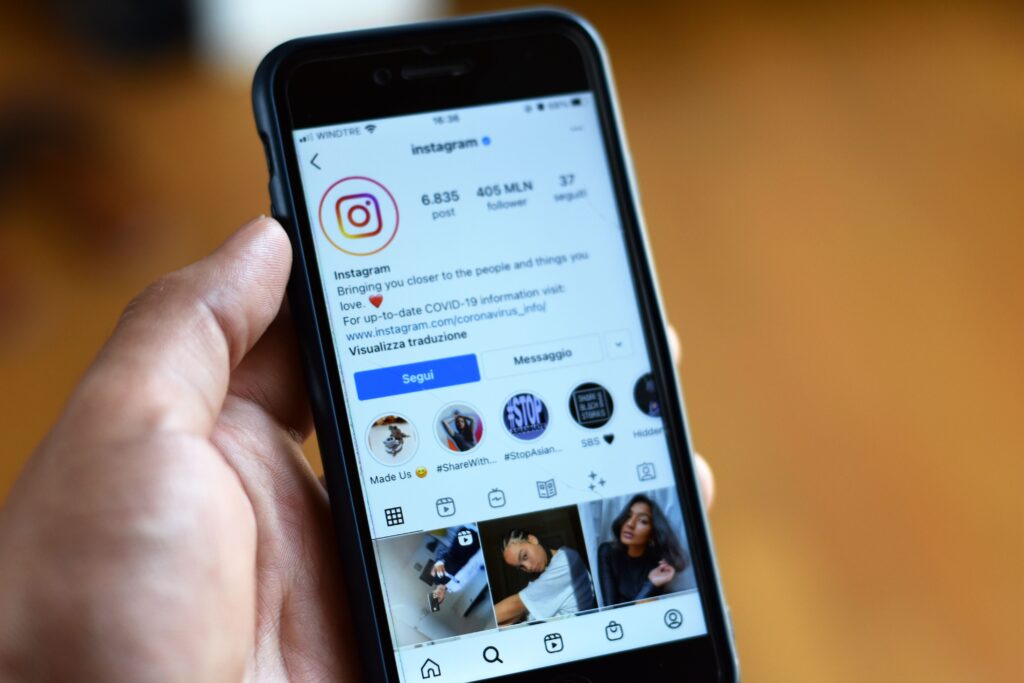
And numbers can be useful. They can tell you what your audience responds to and help you understand which kinds of content are reaching people. But they cannot tell you whether your art is meaningful. A painting might receive 30 likes and stay with someone for years. Another post might receive thousands of views and be forgotten tomorrow.
Sometimes the algorithm simply does not show your work to many people. Sometimes your audience is online at a different time. Sometimes a quiet post is followed by an unexpectedly successful one.
Try this:
Instead of asking only, “How did this post perform?”, ask:
- Did I communicate what I wanted to communicate?
- Did I enjoy making this?
- Did someone leave a thoughtful comment?
- Did this post reach the kind of person I want to reach?
- Did it help someone discover my work?
- Am I proud that I shared it?
These questions give your work a context that a like count cannot.
You can still check your analytics. Just try not to check them immediately after posting and repeatedly throughout the day. Give your work time to exist without constantly judging its performance.
5. Give Yourself Permission to Be Offline
Perhaps the healthiest thing an artist can do with social media is remember that being unavailable online does not mean being irrelevant.
You do not need to post every day to prove that you are a serious artist. You do not need to document every sketch. You do not need to turn every studio moment into content. Sometimes the best thing you can do for your creative life is put your phone away and go live it.
Take a walk. Visit a museum. Read something unrelated to art. Cook dinner. Talk to a friend. Sit somewhere and notice what is around you. Spend an afternoon making something that nobody will ever see. These things may look unproductive from a social media perspective, but they can give your creative mind the experiences, observations, and quiet it needs.
Try this:
Create a realistic offline routine. It could be one evening a week without social media, an hour every morning without your phone, or simply keeping your phone away while you work.
You can also decide when you will not post. If you are travelling, exhausted, grieving a rejection, deep in a project, or simply tired, you are allowed to disappear for a little while. You do not owe the internet constant access to your creative life.
And when you return, your art will still be there.
Read our article on 13 Art Side Quests You Can Complete On A Weekend, all of these 13 activities give you time to be offline, to reflect, and to take a break from the never-ending social media race.
A Healthier Online Life Can Make More Room for Your Art
Social media is not going away, and artists do not need to abandon it to protect their wellbeing. It can be an incredible place to find community, opportunities, inspiration, and people who genuinely care about what you make. But it works best when you remember what it is: a tool, not a verdict.
Your follower count is not your career. A quiet post is not a failed painting. Someone else’s success is not proof that you are falling behind. And taking a week away from your feed does not erase the work you have spent years building. Your creative life exists far beyond a screen.
There are ideas you have not explored yet, places you have not visited, conversations you have not had, materials you have not tried, and pieces you have not made. There is still so much waiting for you outside the endless scroll.
So let social media help you share your work, find your people, and discover new possibilities, but do not let it become the place where you decide whether your art, or you, are enough. Sometimes, protecting your creativity simply means putting the phone down and returning to the reason you started making art in the first place.
Editor’s Note:
As we think about building a healthier, more meaningful relationship with social media, we also invite artists to consider the spaces where their work can exist beyond the constant scroll. The Things We Feel, our upcoming virtual exhibition, offers a space to pause, connect, and share the emotions and experiences that shape your creative practice. If you are ready to let your work speak beyond social media and become part of a shared artistic experience, we invite you to submit your work to The Things We Feel Virtual Exhibition. The open call is currently accepting submissions until October 5, 2026.
