
Linda Edwards Turns Saddleworth’s Landscapes &Traditions into Painted Stories
At Women in Arts Network, Love, Life and Everything She Creates gathered a wide range of women artists, every one bringing her own perspective on life, love, and what it means to create. Each of them embraced the theme in her own way, drawing on the places, people, and moments closest to her heart.
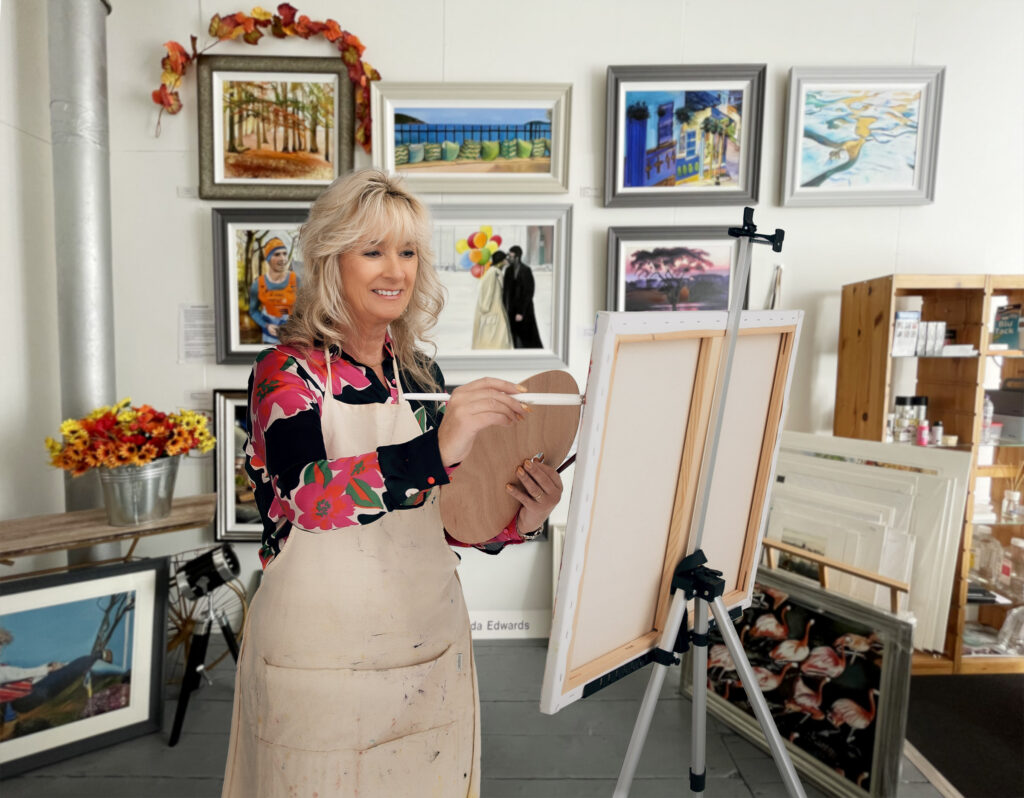
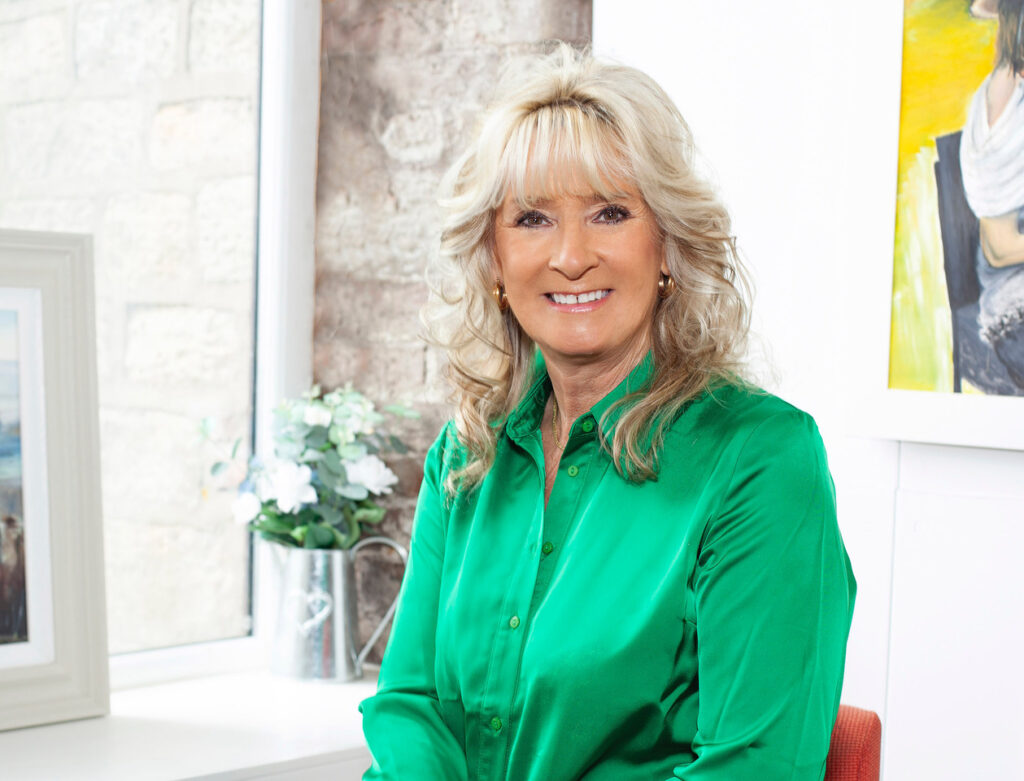
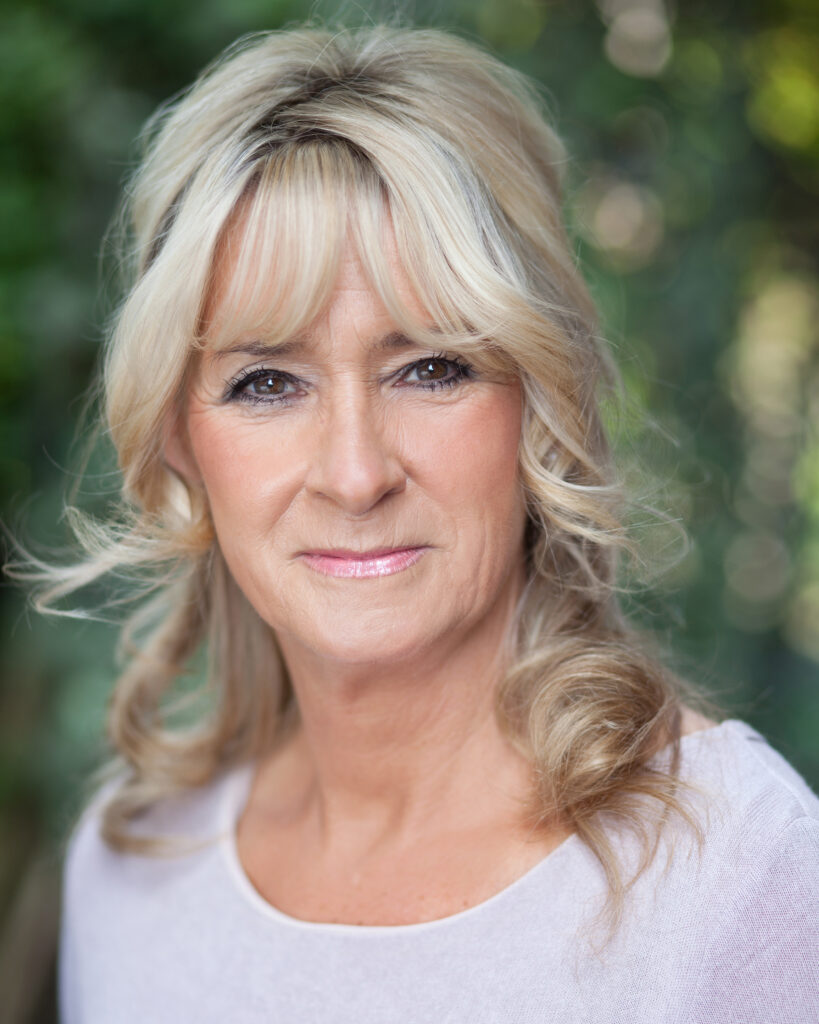
Among the artists selected for this exhibition is Linda Edwards, a British painter who takes the ordinary world most of us rush past, a quiet street, a shift in the light, an old local tradition, and turns it into something worth holding onto.
Linda was born in Stockport and has lived in Saddleworth for over thirty years, now settled in the village of Uppermill. She loved art from the time she was a girl, shaped early on by the great masters she studied, Constable, Rembrandt, Breughel, Salvador Dalí, and the Salford-born L.S. Lowry. What stayed with her was the way each of them could bring a canvas alive with colour and light. More than anything, they taught her to really look at the world, not just glance at it.
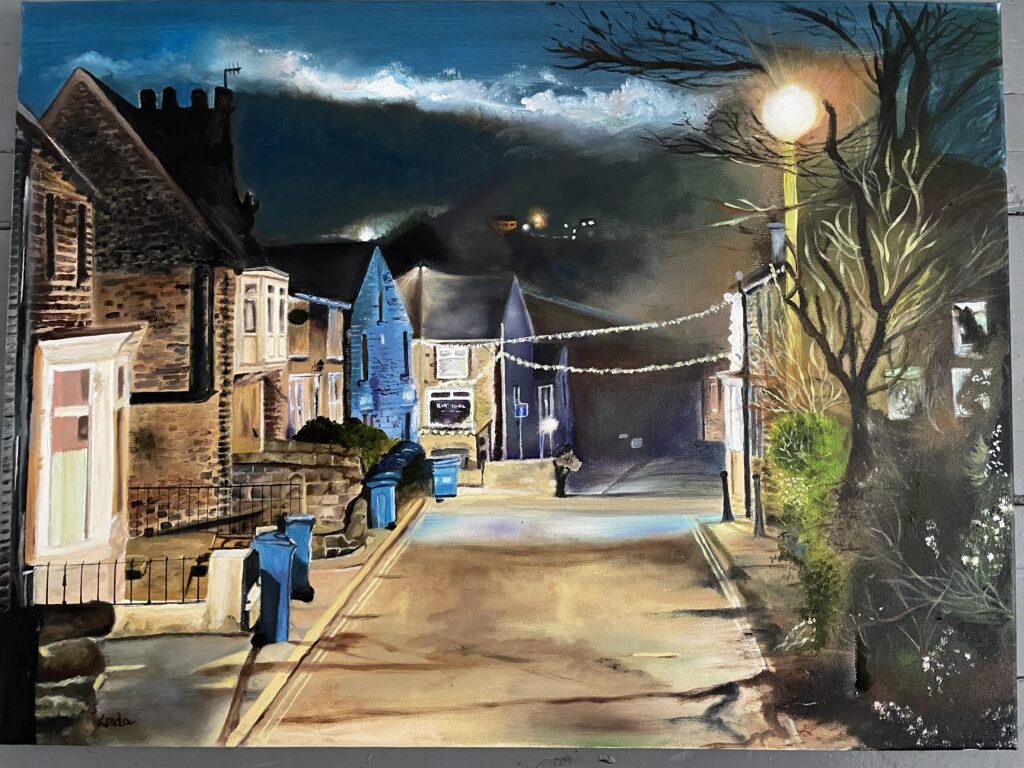
What draws her most is often a feeling rather than an event. A familiar street on a hushed December evening, festive lights just beginning to shimmer, the whole scene quiet and almost contemplative. She wants you to step right into that moment, to feel its atmosphere and imagine what happened just before or just after. Her own words say it best, she paints colour and light “to enlighten the soul.”
Though she never boxed herself in, her work has carved out a real place. She has exhibited across the UK and internationally, from Manchester Art Gallery and the Royal Cambrian Academy to Art Basel Miami and the Venice Biennale, steadily building a body of work that is unmistakably hers, yet always rooted in the everyday beauty of the place she loves.
Now let’s hear from Linda about the masters who taught her to really look, why she thinks of herself as a visual storyteller, what makes an ordinary moment worth painting, and her advice for artists still finding the stories they want to tell.
Q1. Could you take us back to the beginning of your journey and share what first inspired you to become an artist?
I honestly think I was always an artist, even before I realised it. I particularly loved analysing the work of the great masters. From a very young age I was fascinated by colour, light and the ability to create something from a blank piece of paper. I was always drawing, painting and observing the world around me.
My journey to becoming a full-time artist has been rather unconventional. I trained in Manchester and became a teacher, eventually becoming a headteacher, and later I followed another passion and became an actress. Looking back, I think all of those experiences have found their way into my painting.
Teaching taught me to communicate, acting taught me about people, emotion and storytelling, and painting has given me the freedom to bring all of those things together. Eventually I realised that painting wasn’t something I simply wanted to do, it was something I needed to do. It had always been there.
Q2. You’ve spoken about being inspired by artists like Constable, Rembrandt, Salvador Dalí, and L.S. Lowry at an early age. What was it about their work that stayed with you?
I think it was their ability to make you feel something. They were all very different artists, but each had such a distinctive way of seeing the world. Constable’s landscapes made me appreciate the beauty of light and atmosphere, while Rembrandt showed me how powerful light and shadow can be. Dali opened my eyes to imagination, abstract and surrealist art.
Lowry, particularly because of his connection to the North, showed me that ordinary streets, people and everyday life can become incredibly compelling subjects. That Northern life could become great art. I think I’ve carried a little piece of all of them with me. They taught me to look, rather than simply see.
Q3. You describe yourself as a visual storyteller, capturing moments in time. What usually catches your attention and makes you feel, “This needs to become a painting”?
It’s usually a moment rather than a subject. I might be walking somewhere I’ve walked a hundred times and suddenly the light catches a building, or a person walks into a pool of sunlight, or the sky changes and completely transforms the landscape. Observing the ordinary. Those are the moments that stop me in my tracks.
I’m fascinated by the fact that a moment can exist for only a few seconds and then disappear forever. Painting allows me to hold onto it. I want the viewer to look at one of my paintings and feel as though they’ve stepped into that moment, to almost hear the sounds, feel the atmosphere and imagine what happened just before or just after. For me, that’s where the storytelling begins.
Q4. You work mainly in oils but also explore charcoal and pastel. Does changing your medium change the way you approach a subject?
Absolutely. Oils are where I feel most at home. I love their richness and the fact that I can manipulate the paint, build up layers and really play with light, shadow and texture. Charcoal and pastel are much more immediate. There’s something wonderfully instinctive about them. You can’t always control them in the same way, and sometimes the happy accidents are the most exciting part. Changing medium can actually make me look at a subject differently.
It takes me out of my comfort zone and stops me becoming too predictable. I think an artist needs that sense of exploration. Although the medium changes, my starting point is always the same, I’m looking for the character, atmosphere and emotion within the subject.
Q5. In Street Life (Moorgate Street, Uppermill), the quiet evening atmosphere becomes just as important as the place itself. What drew you to that particular moment?
It was the light and the stillness. Moorgate Street is so familiar to me, but on that particular evening it suddenly had a completely different personality. There was no bustle, no crowds, only the gentle promise of the season ahead. Festive lights shimmered delicately along the street indicating the Christmas season.
There was a beautiful warmth in the light, and the street had become quiet and almost contemplative. I loved that feeling of the day winding down, nothing dramatic happening, yet somehow the moment felt significant. That’s often what attracts me to a subject. It isn’t necessarily the event, it’s the feeling surrounding it. I wanted the painting to make the viewer pause for a moment and experience that same sense of quiet before celebration begins.
Q6. Your painting Manchester Old and New brings together different sides of the city. What inspired this work?
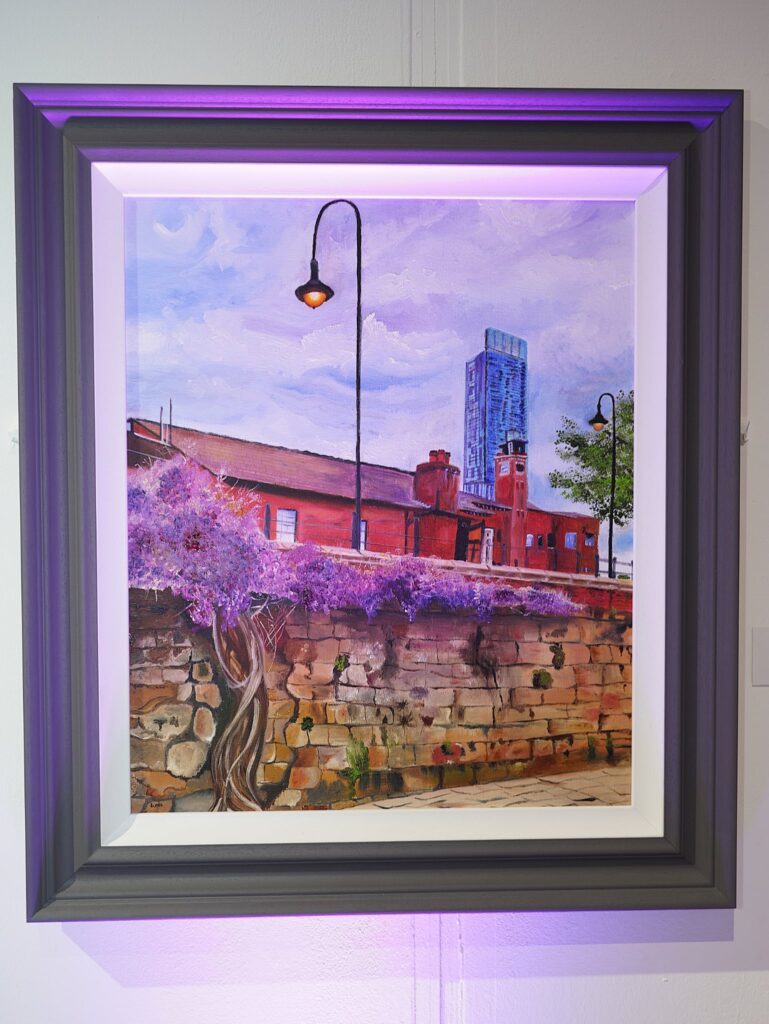
Manchester has always been an important part of my story. I trained and worked there and it’s a city that has continually reinvented itself while somehow retaining its very distinctive character.
I wanted Manchester Old and New to reflect that contrast, the history, architecture and memories of the city alongside its modern energy and constant evolution.
Manchester is a city of change, but it has a soul. You can walk through it and see layers of history sitting alongside something completely new. That tension between the past and the present really fascinates me, and I wanted to capture that on canvas.
Q7. Many of your Saddleworth paintings celebrate local traditions and places. What keeps you returning to your local community as a source of inspiration?
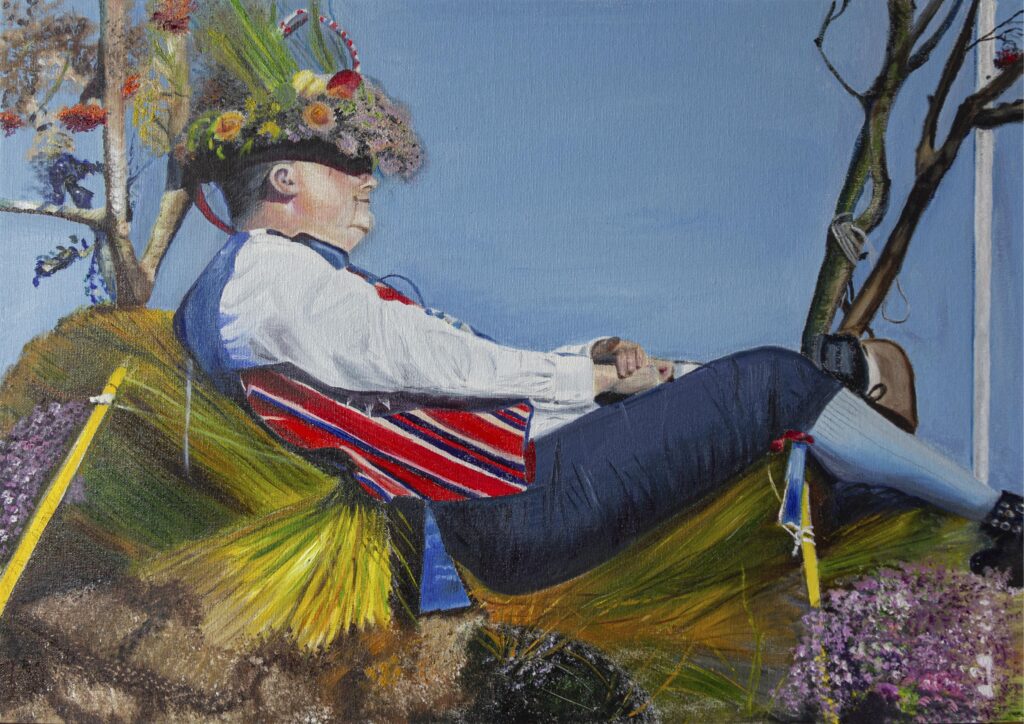
Saddleworth is home, and after living here for more than 30 years, I still find myself seeing something new in it. I love its landscape, its character and, perhaps most of all, its people. There is something very special about the traditions here, the characters, the Morris dancers, the old stone buildings, the village streets and the sense of community.
They are part of our identity and I feel very strongly about recording them before they disappear or change.
I suppose my paintings are a kind of visual diary of Saddleworth. I want to capture not just what it looks like, but what it feels like to live here.
And I love the fact that someone can look at one of my paintings and say, “I know exactly where that is. I’ve walked down that street.” Or that I’ve captured a local tradition on canvas. That connection means a great deal to me.
Q8. Works like Autumn Leaves and Forest Glade celebrate the changing landscape in very different ways. What continues to inspire you about the natural world?
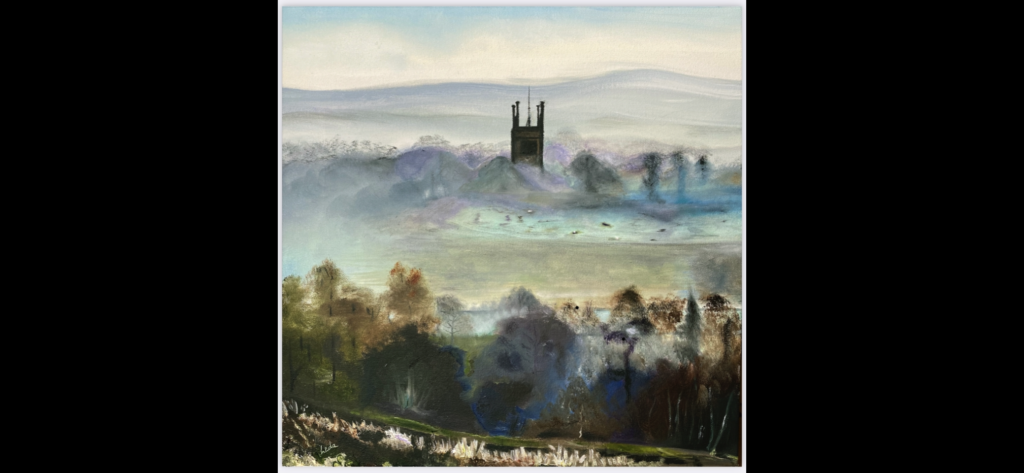
Nature never stands still, and I think that’s what fascinates me most. The same landscape can look completely different depending on the time of day, the season, the weather or simply the way the light falls. I’m particularly drawn to those dramatic changes — the golden glow of autumn, mist over the hills, sunlight breaking through trees or a stormy sky over the moors.
There is something almost magical about the fact that nature creates these extraordinary compositions without trying. The landscape is constantly painting itself. My job is to notice it and try to capture that feeling before it changes.
Q9. You work across landscapes, portraits, and abstract painting. Do you think artists today have more freedom to move between different styles and subjects?
I think we’re incredibly fortunate to have that freedom. I’ve never wanted to put myself in a box labelled “landscape artist” or “portrait artist”. I’m simply an artist, and I want to follow wherever my creativity takes me. For me, realism and abstraction aren’t opposites. Even in a realistic painting I’m thinking about shape, movement, colour and emotion, and sometimes an abstract idea will develop from something I’ve seen in the real world. I think the most important thing is to remain curious and allow your work to evolve rather than feeling you have to fit into a particular category.
Q10. Your work has been exhibited both in the UK and internationally. Have audiences in different places connected with your paintings in different ways?
Yes, and that is one of the most wonderful things about art. You can paint something very personal to you and then discover that it means something completely different to someone on the other side of the world. A painting of Saddleworth might immediately evoke memories for someone who lives locally, while someone who has never visited might simply respond to the light, colour or atmosphere.
I love that. I don’t necessarily want to tell the viewer exactly what they should feel. I want to give them the opportunity to bring their own memories and experiences to the painting. Art can cross borders in a way that words sometimes can’t.
Q11. As someone who paints everyday moments, what do you think makes an ordinary scene worth turning into a work of art?
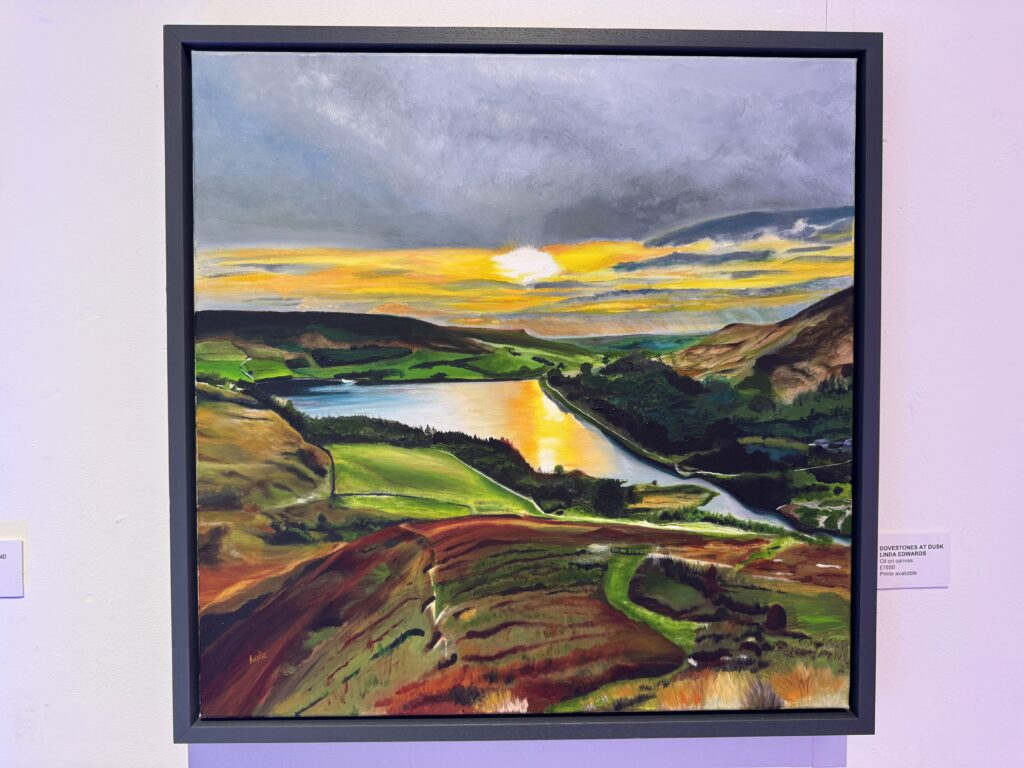
I think we’re often so busy living our lives that we don’t notice the beauty in the ordinary. It might be someone sitting alone with a cup of coffee, a couple walking down a street, the evening sun hitting an old stone wall or the way people gather together at a local event.
None of these things sound extraordinary, but sometimes the light, the atmosphere or the emotion makes them incredibly special. I love taking something that might otherwise be forgotten and giving it a permanent life on canvas. Painting makes me stop and look and hopefully my work makes other people stop and look too.
Q12. Is there a subject or place you’ve always wanted to paint but haven’t yet found the right moment to explore?
There are so many! I think that’s one of the exciting things about being an artist, there is always another place, another face or another story waiting to be painted. I would love to spend more time painting in places that are completely unfamiliar to me. I’m fascinated by different cultures, architecture and the way light behaves in different parts of the world.
Travelling gives me a completely different visual vocabulary, and I’m always collecting ideas, sometimes without even realising it.
But I also have subjects much closer to home that I haven’t explored fully. Saddleworth has an endless supply of stories, characters and landscapes, and I know I’ll never run out of inspiration here. I think the hardest part isn’t finding something to paint — it’s finding the time to paint all the things that are constantly catching your eye!
Q13. What advice would you give to artists who are still discovering the subjects and stories they want to tell through their work?
I would say don’t try too hard to find your “style” or decide what kind of artist you think you should be. Paint what makes you feel something. Follow your curiosity. If something catches your eye, explore it. If you’re fascinated by a particular person, place, memory or subject, paint it even if it doesn’t fit neatly with what you’ve done before and don’t be frightened of experimenting or getting things wrong.
Some of the most interesting discoveries in art come from the paintings that don’t quite work. They teach you something about where you want to go next. Most importantly, look. Really look. Take time to notice the light, the people, the little details and the moments that other people might walk straight past. Your story is already there. You just have to be brave enough to tell it.
Talking to Linda left us thinking about the moments we lose. The light that falls across a building for a few seconds and then shifts. A street that empties out on a winter evening and turns quiet and strange. A person stepping into a patch of sun. A local tradition that has been passed down for generations and could, one day, simply fade. The small, passing things most of us feel for a second and then walk away from.
Because so much of life happens in those fleeting moments, and so much of it slips by unnoticed. We are busy, our heads are down, our eyes are on the next thing. Linda’s whole practice pushes the other way. She stops, and she looks, the way the old masters taught her to as a girl, and she holds onto what she sees.
Not to freeze time or to defeat it, but to treasure it, to catch a moment and give it a lasting home on canvas. She wants you to step inside that moment and feel its atmosphere, to almost hear the street and imagine what happened just before or just after. That, to her, is where the storytelling begins.
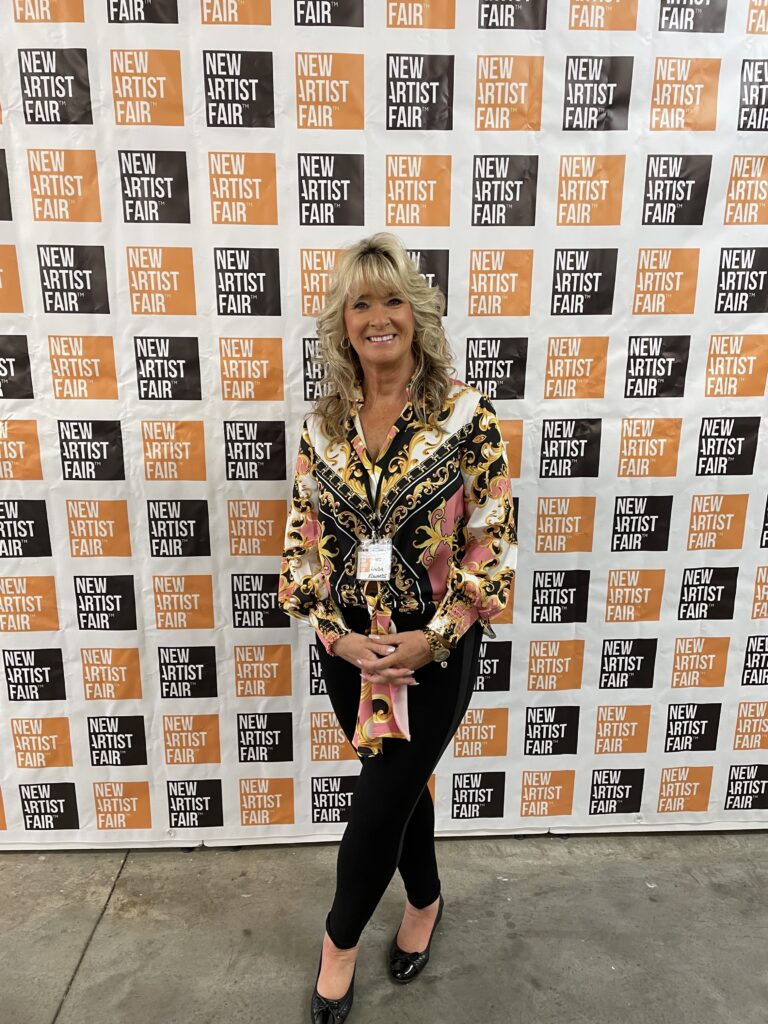
We think every artist needs to hear the other thing her work insists on, too. That you do not have to pick one lane. Linda is a painter of landscapes and portraits and abstracts all at once, and she has refused, across a whole career, the pressure to choose one of those and let the rest fall away.
She learned from the great masters without ever trying to be them, carrying a piece of each and then going off to find her own way of seeing. To her, realism and abstraction were never opposites, and the healthiest thing an artist can do is stay curious, keep exploring, and let the work grow instead of forcing it into a box. Your story, she believes, is already there. You just have to be brave enough to tell it.
For art lovers and collectors, Linda’s work brings something rare into a space. A painting rooted in a real place and a real moment, carrying a particular quality of light that keeps drawing you back. Someone who knows her corner of Saddleworth will see their own memories looking back at them, while someone who has never set foot there will simply feel the warmth and the colour and the calm. Living with her work means living with a small window onto a moment someone cared enough to save, and a quiet daily reminder to notice the ordinary beauty right in front of you before it slips away.
Follow Linda Edwards through the links below and see her work for yourself.
