
This Artist Left Her Career in Marketing to Rediscover Her Love of Painting│Sarah Rutherford
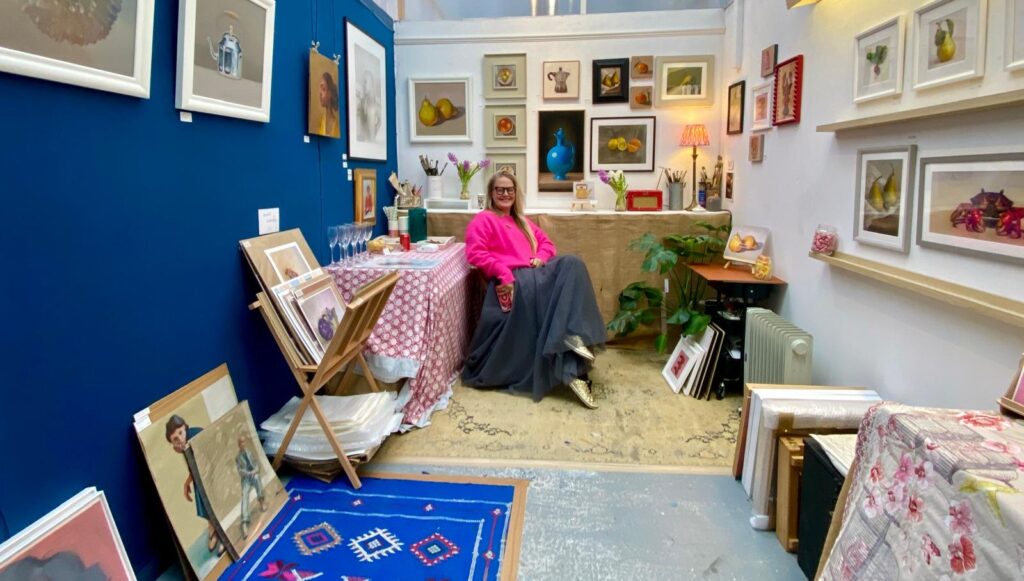
At Women in Arts Network, Portraits brought together artists drawn to the most human subject in all of art: the face. Each of them approaches it in her own way, less interested in a simple likeness than in everything that lives behind it, the identity, the memory, the emotion, and the quiet contradictions that make a person who they are.
Among them is Sarah Rutherford, a British painter who looks past the surface of a face to find the real, layered human underneath.
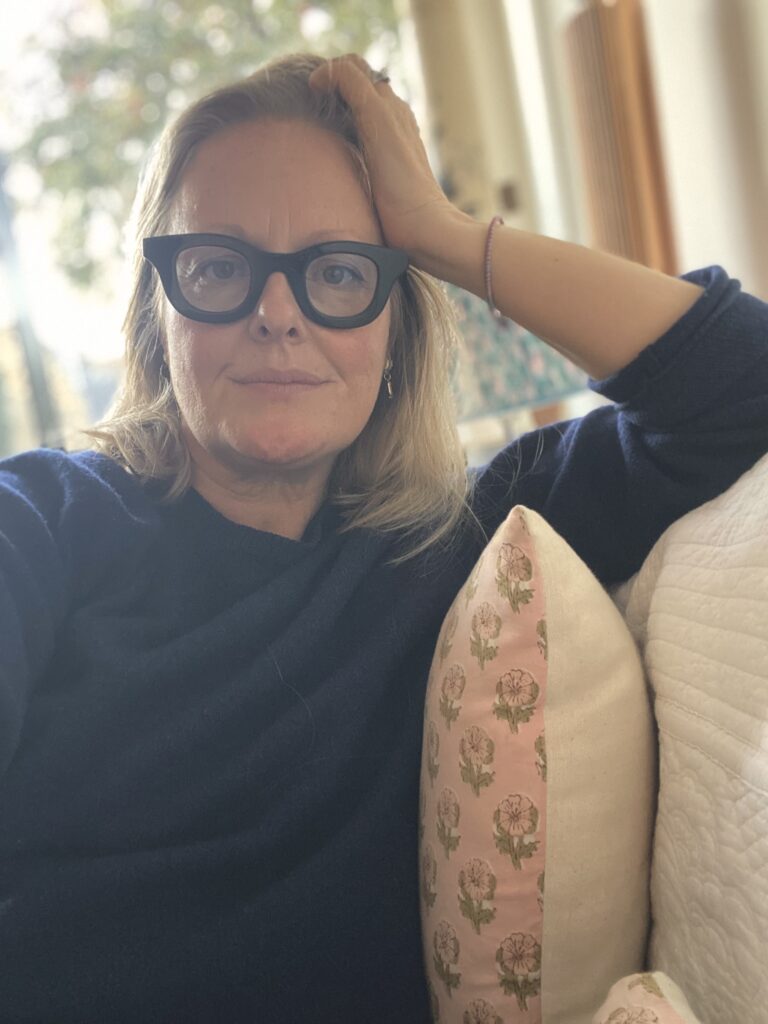
Sarah’s path to painting was never a straight line. She trained at Chelsea College of Art, but stepped away in her twenties to build a career in marketing, returning only in her forties, after having children and realising how much she had missed it. She rented a small studio near her home in Wimbledon, South West London, and spent every spare minute relearning her craft, painting anything and everything, but mostly the people closest to her.
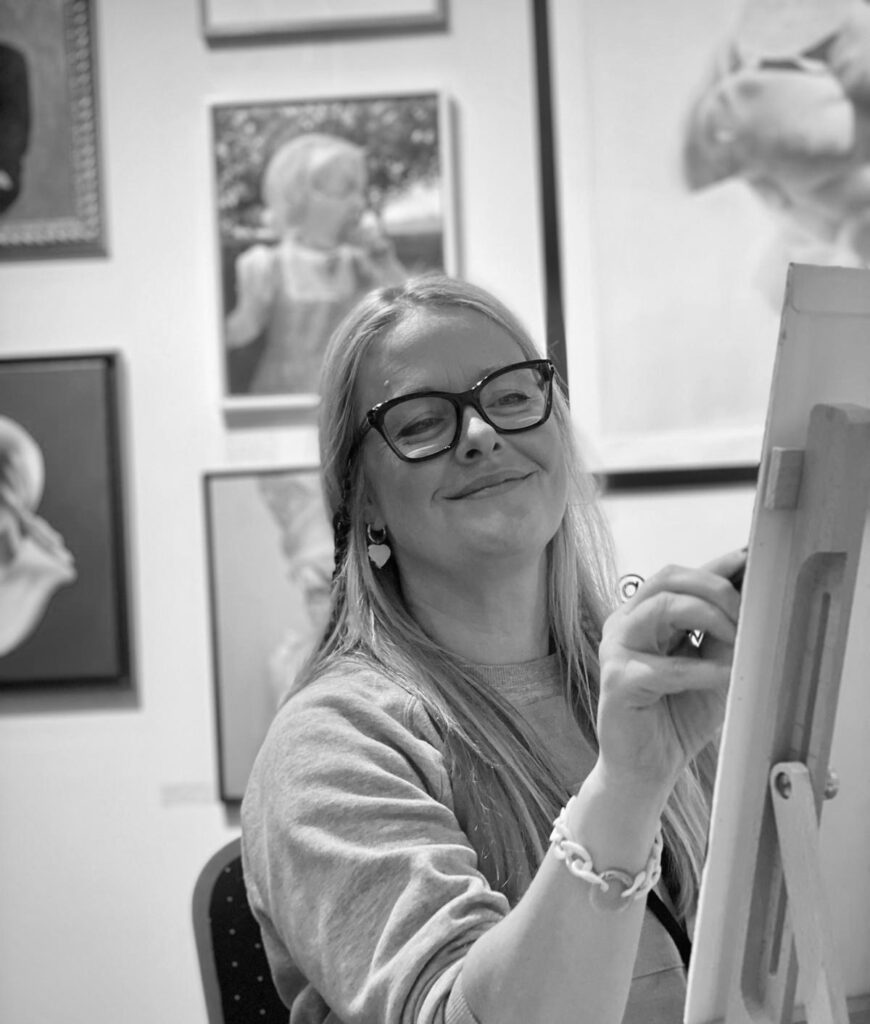
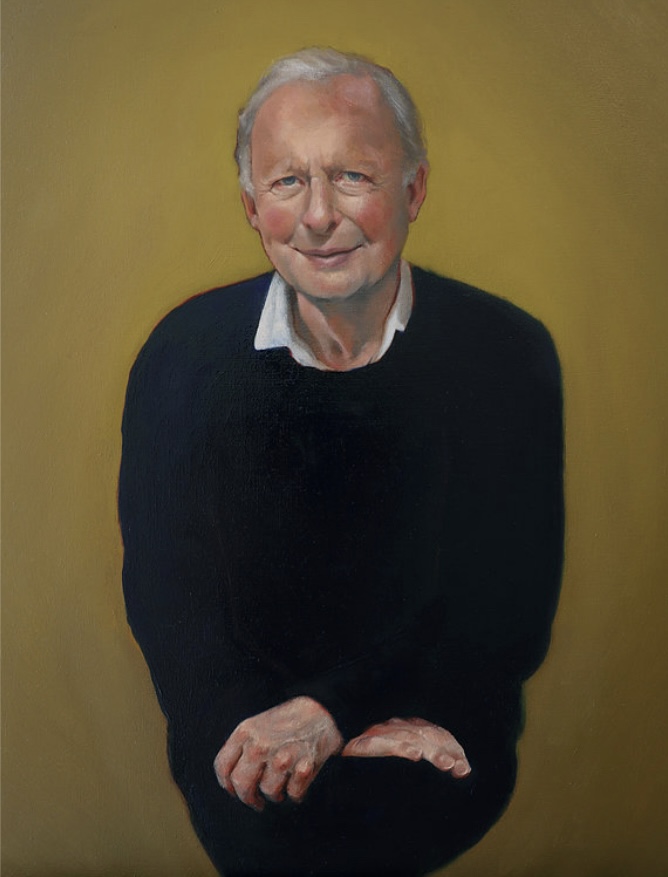
She works primarily in oils, across both portraiture and still life, and there is a quiet confidence to everything she makes. Her portraits carry a real sense of presence and focus, while her still lifes feel calm, considered, and full of feeling. What makes her work so appealing is a certain tension she holds on the canvas, a desire for precision pulling against an instinctive love of looseness and abstraction, which gives the finished piece both clarity and a subtle, living energy.
Her process begins long before the brush ever touches the surface. She maps out a rough design of each piece in her head or on paper, thinking carefully about the relationship between her subject and the colours around it, an echo of her years spent working in design. She often builds her work in series of three to five pieces, so she can explore a single idea more fully.
And she approaches each portrait the way she would a conversation, entirely unique to the person in front of her, searching not for the face on the surface but for the human beneath, a realness that no single trait could ever sum up, because we are all, she says, nuanced and many-layered.
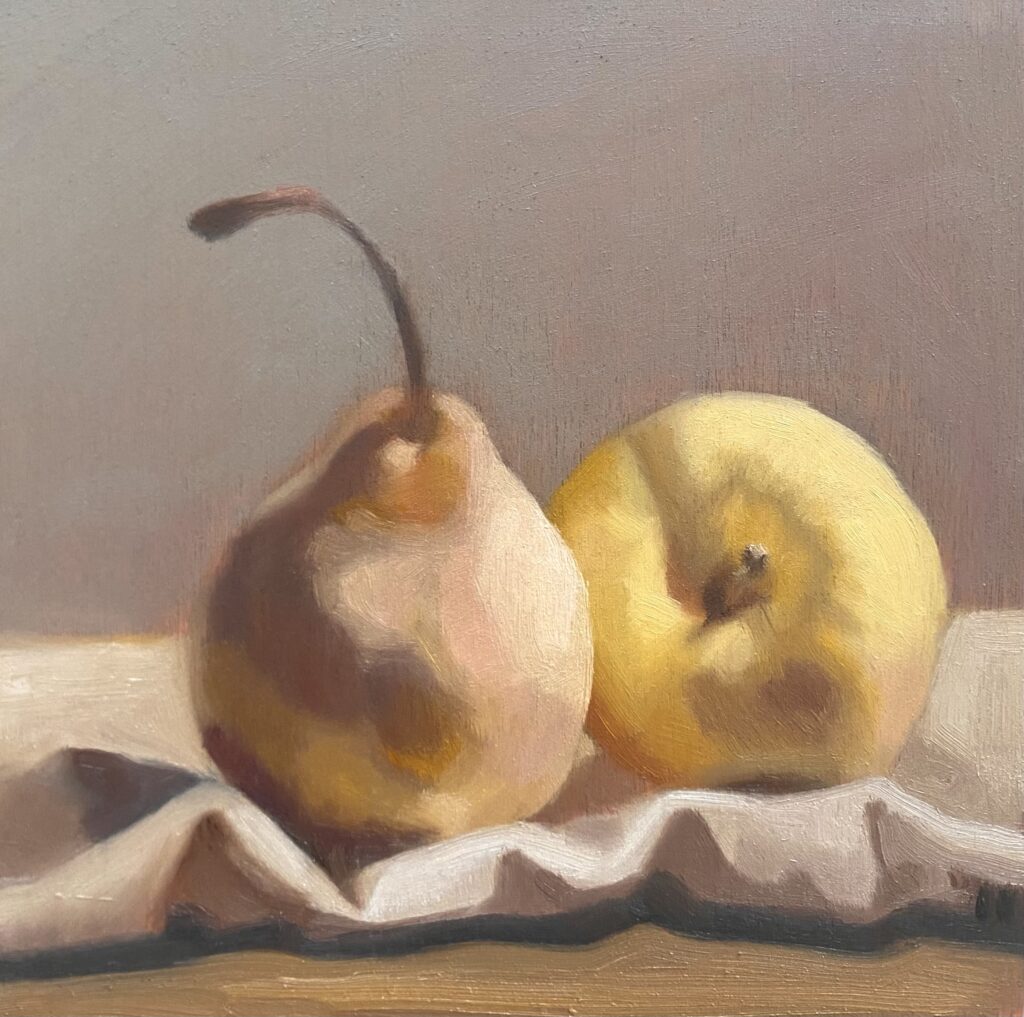
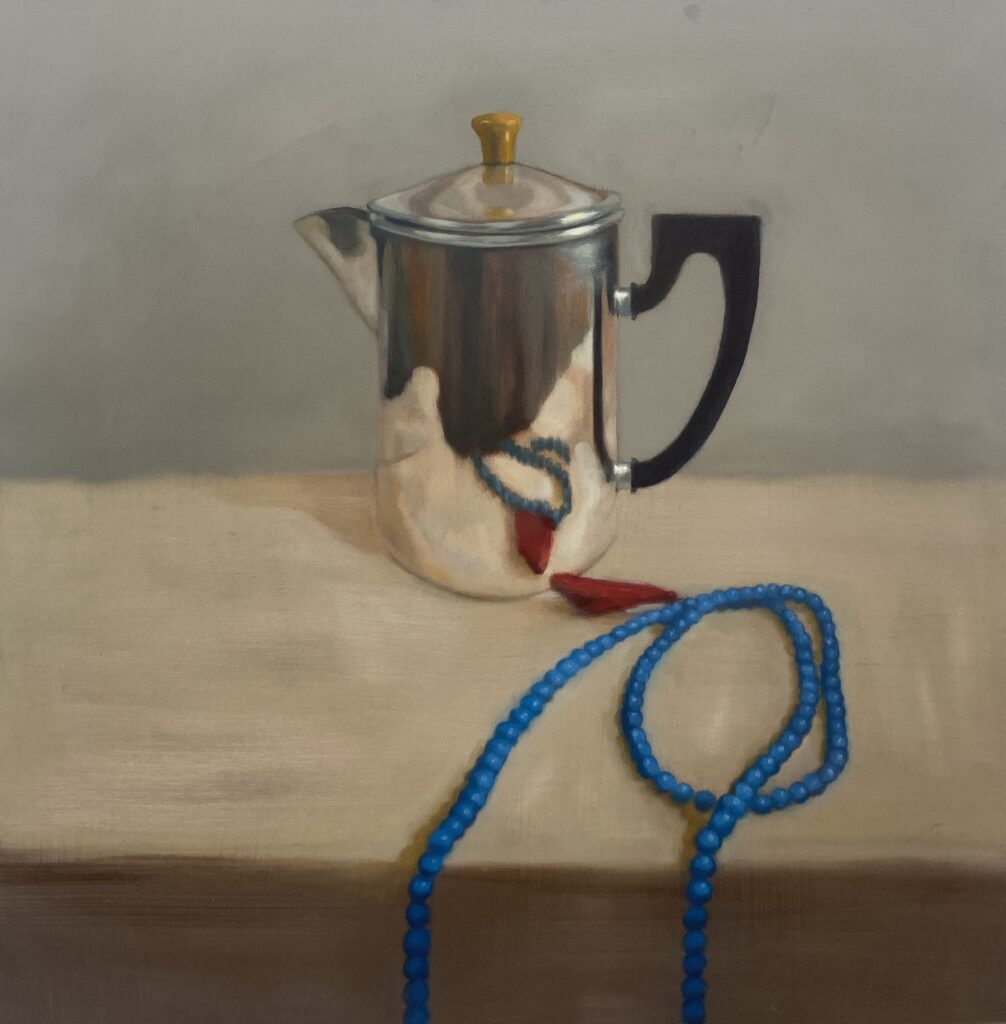
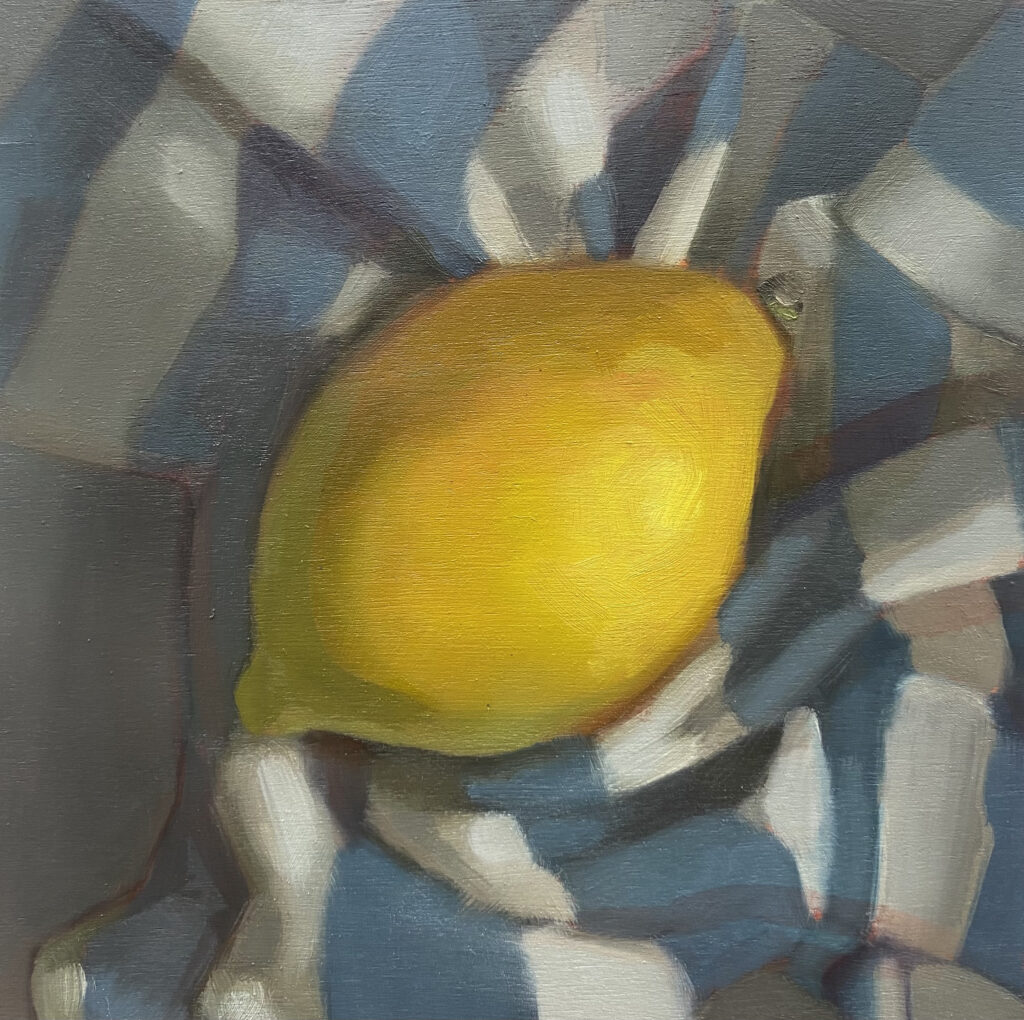
That same patient attention runs through her still lifes. She loves painting old, found, and handmade objects, what she calls “things with soul.” In a modern world she finds increasingly sterile, she seeks out objects with history and a human story, turning familiar forms into quiet compositions that reward a slower, closer gaze.
For Sarah, meeting someone in person reveals what a photograph never could. We edit our lives in pictures, she says, especially now, in the age of filters, but sitting with a person lets you unravel all their depths. Her work is widely exhibited across the UK, at art fairs and galleries from Wimbledon to Petworth Park, and she was recently shortlisted by the Royal Society of Portrait Painters and appeared on this year’s Portrait Artist of the Year.
Now let’s hear from Sarah about stepping away from art and finding her way back, what she hopes to capture in a face, why she is drawn to objects with soul, and her thoughts on letting a style evolve rather than holding onto one fixed look.
Q1. Sarah, can you take us back to the beginning and share how your journey as an artist started?
I actually stepped away from painting and drawing in my 20’s to pursue a career in marketing, returning only in my 40’s after having had kids and realising how much I’d missed it. I rented a small studio space away from home and spent every spare minute relearning my practise. I would draw and paint anything and everything, but mostly I found I was painting friends and family.
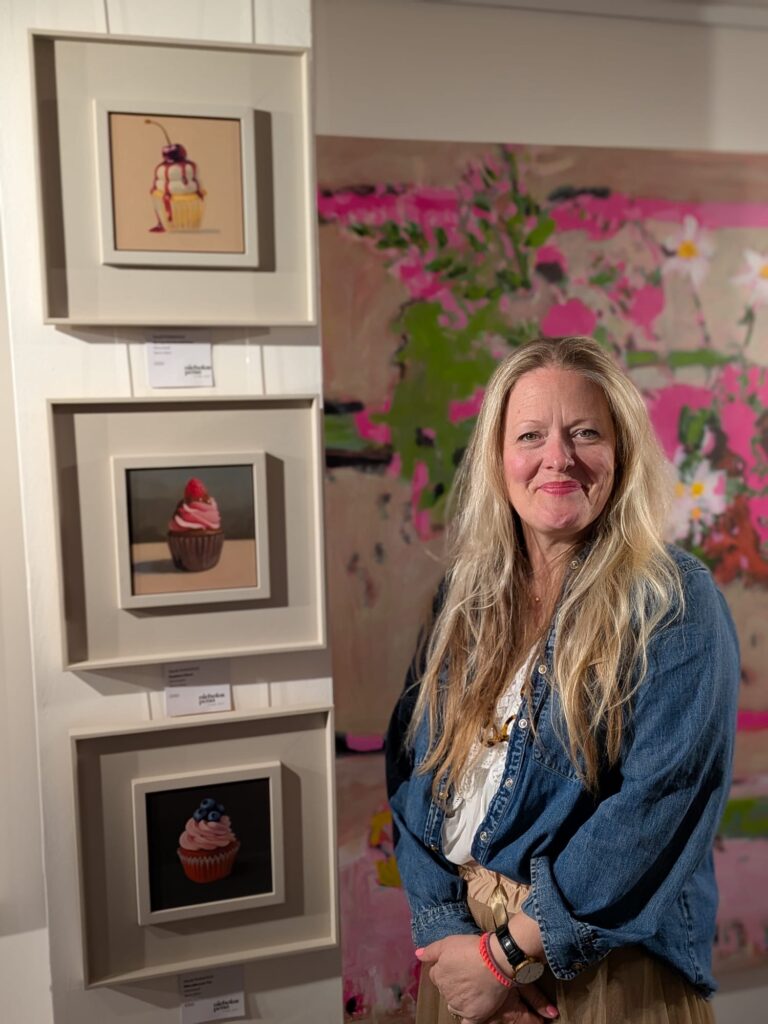
Q2. You describe portrait painting as a way of capturing both character and a moment. What do you look for when you are trying to capture someone’s personality?
I like to look for true sense of someone – not always the person that lies on the surface but the human beneath. I want to find a realness that’s not always defined by a singular character trait – after all we are all nuanced and multi-layered people.
Q3. You’ve painted everyone from children to public figures. Does the personality of the subject change the way you approach each portrait?
I approach every portrait in the same way I would approach a conversation with that person; entirely unique to that person.
Children are less concerned by their self-image than adults. I find that adults are often concerned about someone else might see them – about how I might capture them. But honestly, I see beauty and depth in everyone I meet, and I feel that’s what I want to pull out in their portrait. How I start their portrait will depend on the tone and essence of how i see them.
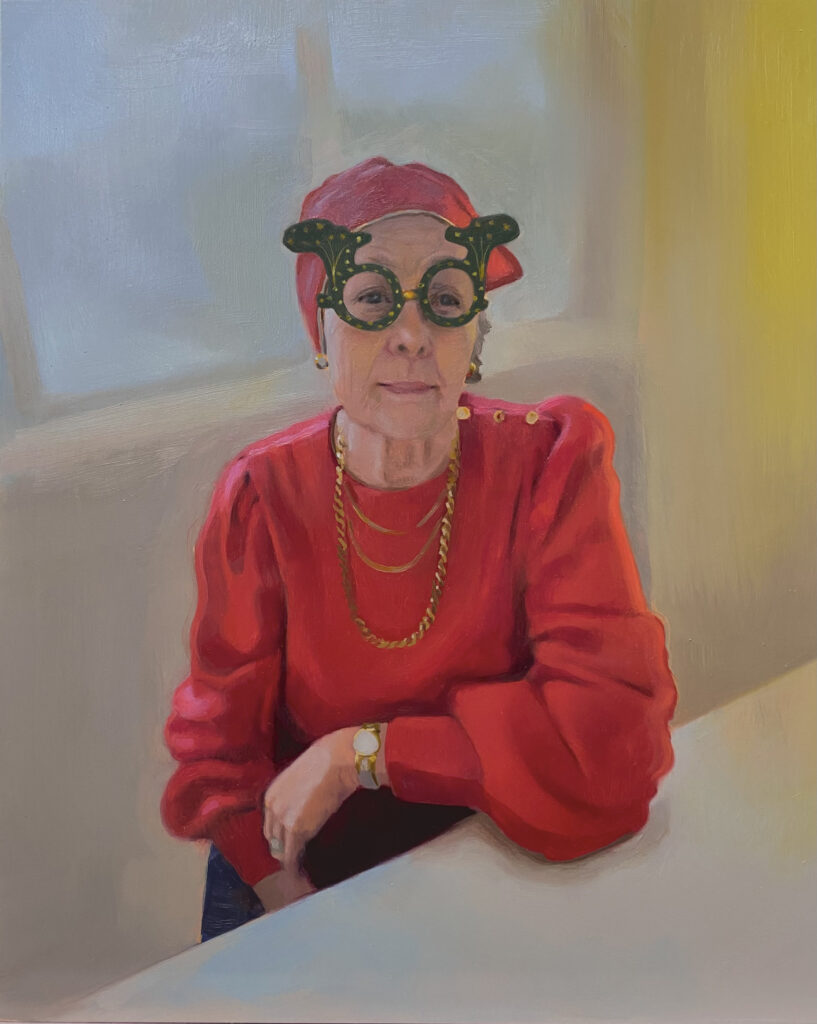
Q4. There is a quietness to works such as Our Morning Coffee and The Garden Jug. What do you enjoy about finding beauty in such familiar things?
I enjoy painting old, found and handmade objects – or ‘things with soul’. In today’s modern, sterile world I seek out objects with history and human story. It gives me a sense of peace and reassurance of returning to humanity rather than turning away from it.
Q5. Works such as Pink Cowboy and Red on a Winters Day feel more pared back than a traditional detailed portrait. What attracted you to reducing the amount of detail?
When I painted these, I had just moved to some new studios (Wimbledon Art Studios) and met with some wonderful artist friends. I was inspired to adopt a loser approach to my work, so I did this small series where I reduced my palate and painted with one larger-than-usual brush. It was incredibly freeing and I’ve adopted that same approach in many of my subsequent works.
Q6. You have worked across design, advertising, portrait commissions, still life, and gallery exhibitions. How has moving between these different creative worlds shaped the artist you are today?
I always start out with a rough ‘design’ of the piece in my head or mapped out on paper. Before I start something I think about the relationship between the subject and the surrounding colours – which I suppose is an echo of working in design years ago. I often create work that will sit in a series of 3-5 pieces. I like ‘chunking out’ my work in this way – so I can explore something more thoroughly… I also happen to know galleries tend to like it so they can sell a whole series to a collector rather than a one-off.
Q7. When painting someone you’ve met in person, what can you understand about them that a photograph cannot show?
So much! We edit our lives in our photographs – especially these days with filters etc. when you meet someone you understand them so much more and unravel all their wonderful depths. A single photograph can never give you that.
Q8. You now work with galleries and art fairs as well as private collectors. What have you learned about building an audience for your work?
That it’s so important to work with good people – people you feel a connection with. My galleries are such wonderful people; so hardworking and believe in my work, making me feel so supported. I actually find that my repeat buyers / collectors tend to be seeking the same things I am – they’re also looking for ‘realness’, honesty, calm and humanity.
Q9. The art world often talks about developing a recognizable style. How important has it been for you to let your style evolve rather than deliberately hold onto one particular look?
This question always bothers me and buzzes around my head like an anxious bee. I like to jump from one idea to the next year to year, and yet I worry that suddenly critics will think you’re ‘inconsistent’. But we’re all human, and our interests lie in many directions – I want to explore them all. If that makes me inconsistent then so be it I guess!
Q10. Looking back at your return to painting, what achievement has made you feel most proud of the career you have built?
I think being shortlisted by the Royal Society of Portrait Painters this yr was a HUGE confidence boost. My goal for next year is to exhibit with them. I also appear on this year’s season of Portrait Artist of the Year – singularly the most nerve-wracking experience of my life.
Q11. After years of painting both people and everyday objects, what are you still curious to discover through observation?
My work to date has very much focussed on singles subjects in both portraiture and still life. I’m recently interested in working bigger, bringing in more complex compositions and trying to push a narrative of relationships between people / still life and their environments.
Q12. What advice would you give to artists who are trying to build a professional career while still protecting the part of their practice that is purely their own?
I made a conscious decision to become ‘a professional artist’ a while ago, and with it came a sort of detachment to the personal aspect of my work. I moved away from being a ‘hobbyist’ to focussing on how to build a career. I’m definitely no role model in being ‘professional’ – but this shift made me think about everything I was doing through a more critical lens. “Would I buy my own work?” is a question I often ask myself.
has always sat at the centre of portraiture: how much of a person can a painting truly capture? For much of its history, the portrait was a way to record a likeness, to fix how someone looked so that it might outlast them. But over time, artists have come to ask more of the genre, looking past the surface of a face toward the character, emotion, and quiet complexity that a likeness alone can never hold.
Sarah’s work belongs to that deeper tradition, and feels especially relevant in the world we live in now. We are surrounded by images of ourselves, endlessly taken, filtered, and smoothed into something more flattering than true. Her portraits move in the opposite direction. By painting from life rather than from a photograph, she searches for the realness beneath the surface, the layered, many-sided person we so rarely allow others to see. Her approach also gently challenges the idea that a face has to be perfected to be worth painting. Sometimes an image feels most honest precisely when it refuses to flatter.
This openness is part of what keeps portraiture alive in contemporary art. Artists keep returning to the human face, but they come to it with different questions and different intentions. Some pursue a single, recognisable style; others move freely between ideas, letting their work evolve from one year to the next. Sarah belongs firmly to the second kind. She resists the pressure to settle into one fixed look, moving between portraiture and still life, between fine detail and looser, more abstract brushwork. Rather than measuring herself against a single signature, she lets curiosity lead, and there is a quiet wisdom in that. A style, like a person, is allowed to keep changing, and the most honest artists are often the ones still willing to grow.
For art lovers and collectors, work like Sarah’s offers a different kind of relationship with a painting. Instead of giving everything away at a glance, it rewards time and attention, returning a sense of calm, honesty, and genuine human connection that feels increasingly rare. Whether it is a face full of quiet depth or a humble, handmade object with a story of its own, her work asks only that you slow down and really look. Fittingly, those who collect it tend to be seeking the very things she is.
Perhaps this is one of the enduring strengths of portraiture: it gives an artist a familiar subject through which to explore something far larger, who we are beneath the surface, and how much of that can ever truly be seen. A face may be where Sarah begins, but it is rarely where the story ends.
Follow Sarah Rutherford through the links below and explore more of her work and artistic journey.
