
5 Self-Portraits By Women Artists That Show How Women Saw Themselves
What does it mean to paint yourself? For some artists, a self-portrait is a way to preserve a likeness. For others, it becomes an opportunity to express an identity, challenge expectations, or tell a story that might otherwise go unheard.
Throughout art history, women have used self-portraiture to do all these things and more. At a time when many faced barriers to artistic education and professional recognition, representing themselves could also be a way of establishing their presence in a world that did not always welcome them as artists. Over the centuries, women continued to find new ways to portray themselves, moving between the roles society expected them to fulfil and the identities they chose to claim.
From the carefully considered self-portraits of Renaissance painters to the experimental photographs and personal statements of later artists, these five works offer a glimpse into how self-representation has evolved. Together, they remind us that a self-portrait is never simply a picture of a face. It can also be a statement about who gets to tell their own story.
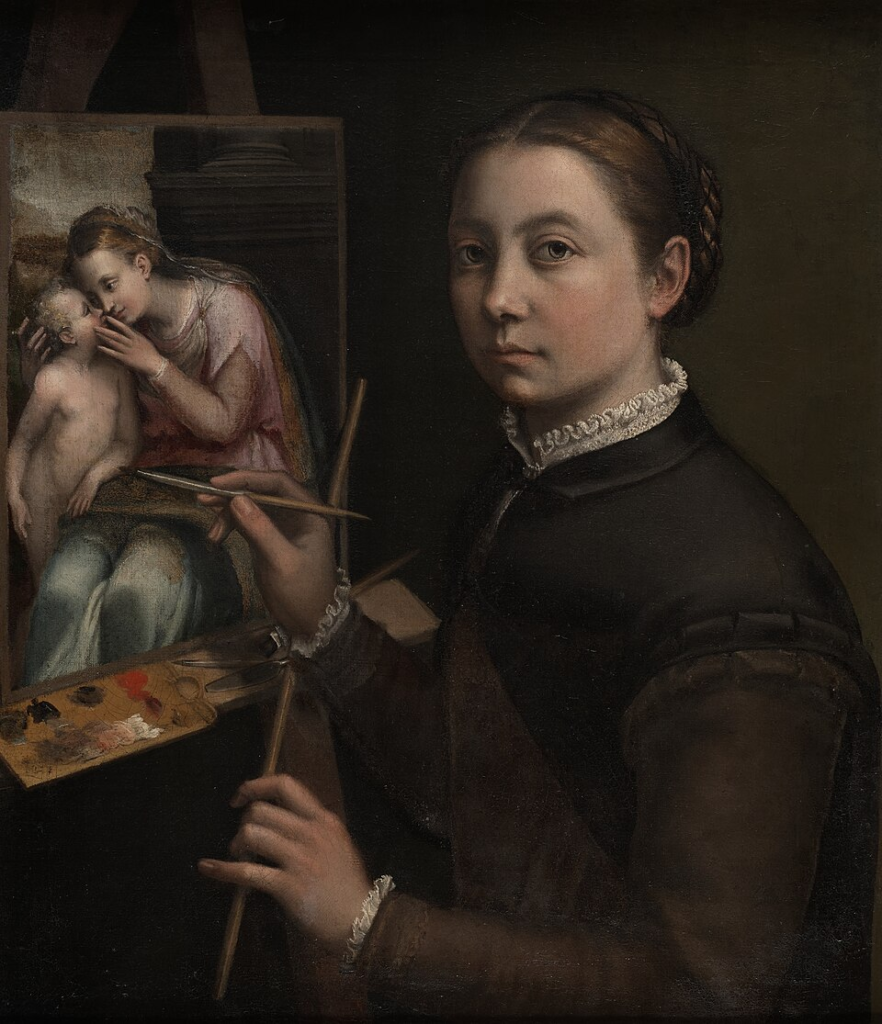
1. Sofonisba Anguissola, Self-Portrait at the Easel, 1556
In the sixteenth century, becoming a recognised professional artist was far from straightforward for women. Access to artistic training and the professional networks that helped male painters build their careers was often limited. Yet Sofonisba Anguissola found a way to establish herself as an accomplished artist, gaining recognition during her lifetime.
In Self-Portrait at the Easel, Anguissola depicts herself working on a painting of the Virgin Mary and Christ Child. She gazes outward from the canvas, brush in hand, presenting herself not merely as a woman being observed but as an artist engaged in her craft. Her composed expression and restrained clothing reflect the conventions of her time, while the act of painting makes her professional identity unmistakable.
The portrait is particularly meaningful because Anguissola places her artistic practice at the centre of her representation. Rather than relying on beauty, fashion, or social status alone to define her image, she shows us what she does and what she is capable of creating.
Her self-portrait offers an early example of a woman using art to establish her identity as a working artist. In a period when that identity could be difficult to claim, the simple act of depicting herself at the easel carried considerable significance.
2. Artemisia Gentileschi, Self-Portrait as the Allegory of Painting (La Pittura), c. 1638–1639
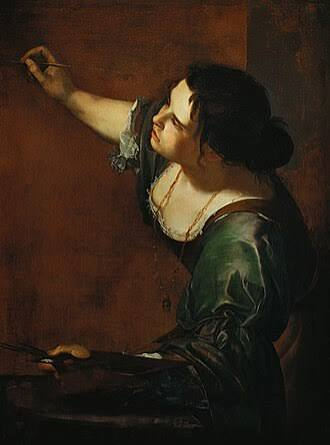
More than eighty years after Anguissola’s self-portrait, Artemisia Gentileschi offered an especially bold interpretation of what it meant to represent herself as an artist.
In Self-Portrait as the Allegory of Painting, Gentileschi depicts herself actively working, with a brush in one hand and a palette in the other. Her body leans into the act of painting, and her attention is directed towards a canvas beyond our view. She appears focused, physically engaged, and entirely absorbed in her work.
What makes this painting particularly remarkable is its allegorical meaning. In classical artistic tradition, the concept of Painting, known as La Pittura, was personified as a woman. Gentileschi brings these two identities together, portraying herself as both the artist and the embodiment of painting itself.
This was a clever and significant choice. In a profession often treated as a masculine pursuit, Gentileschi claimed a place for herself within the very tradition that defined the art of painting. She did not simply show that she could paint; she represented herself as the personification of the art form.
Through her pose, expression, and command of the composition, Gentileschi presents artistic skill as an essential part of who she is. Her image is not passive or ornamental. It is active, purposeful, and unmistakably professional.
3. Élisabeth Vigée Le Brun, Self-Portrait in a Straw Hat, 1782
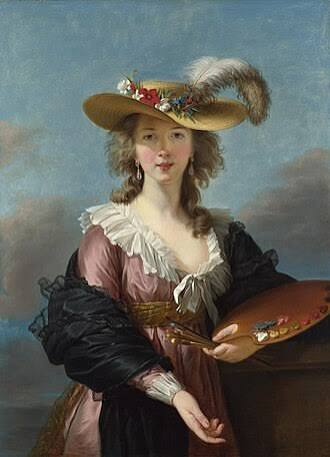
By the late eighteenth century, Élisabeth Vigée Le Brun had established herself as one of Europe’s most sought-after portrait painters. Her career brought her into royal circles, including that of Marie Antoinette, and she became known for portraits that combined technical skill with an appealing sense of personality.
In Self-Portrait in a Straw Hat, Vigée Le Brun presents herself as both an elegant woman and a skilled professional. She looks directly at the viewer, holding a palette and brushes, while her fashionable clothing and relaxed pose give the painting a sense of ease.
The image brings together two aspects of her identity that are sometimes treated as opposites: femininity and professional ambition. Vigée Le Brun does not abandon the conventions of fashionable portraiture to demonstrate her seriousness as an artist. Instead, she uses those conventions to construct an image in which her appearance and artistic abilities coexist.
The painting also engages with the artistic tradition that came before her. Her pose was modelled on Peter Paul Rubens’s celebrated portrait of Susanna Lunden, allowing Vigée Le Brun to position herself in conversation with an established male master. She even explored similar effects of natural light, using the painting as an opportunity to demonstrate her technical abilities.
Her self-representation therefore works on several levels. She presents herself as a woman of taste, a participant in elite society, and an artist confident enough to associate her image with the work of a celebrated predecessor.
Compared with the earlier examples, the painting reveals another way women could establish their identities in art history: by navigating the expectations of their time while making their professional achievements visible.
4. Claude Cahun, Self-Portrait, c. 1928
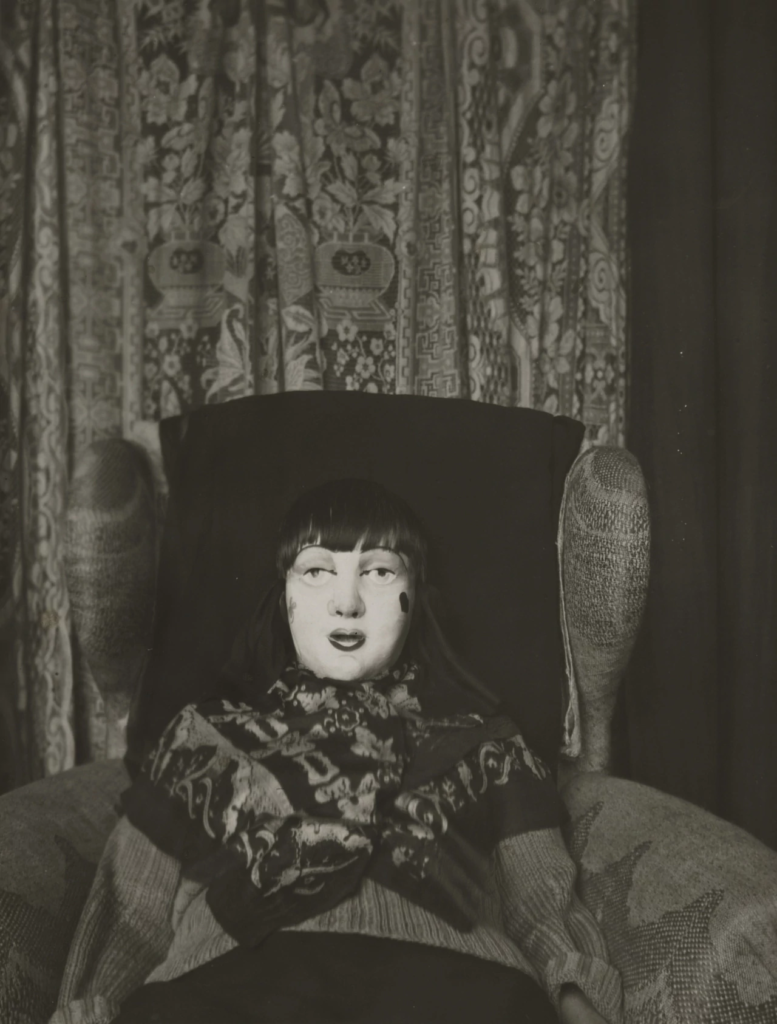
Claude Cahun’s self-portraits offer a strikingly different approach to how artists can represent themselves. Working in the early twentieth century, Cahun challenged conventional ideas about appearance, identity, and the relationship between the person in front of the camera and the image presented to the world.
Rather than creating a portrait that communicated a single, recognisable identity, Cahun experimented with costumes, hairstyles, poses, and theatrical transformations. Their photographic self-portraits often make it difficult to settle on one definitive version of who they are. Instead, the images invite viewers to question how identity is constructed and how much of what we recognise as the self is shaped by social expectations.
This approach was particularly striking in a period when conventional ideas about femininity strongly influenced how women were expected to present themselves. Cahun’s work resisted the assumption that appearance had to communicate a stable or easily understood identity. Through photography, they explored the possibilities of becoming, performing, and reinventing the self.
Cahun’s work also expands our understanding of self-portraiture beyond painting. Photography becomes a space for experimentation, allowing the artist to control not only how they are seen but also how that image unsettles the viewer’s expectations.
Placed alongside the earlier self-portraits in this article, Cahun’s work represents a different kind of artistic freedom. The question is no longer simply how a woman can establish herself as an artist or challenge conventional beauty. It becomes a question of whether identity itself needs to fit within familiar categories.
Cahun, who used a gender-neutral name and challenged conventional gender roles, reminds us that self-representation can be an act of exploration rather than definition. Sometimes, the most revealing portrait is one that refuses to offer a single, final answer about the person it depicts.
5. Sarah Biffin, Self-Portrait, 1842
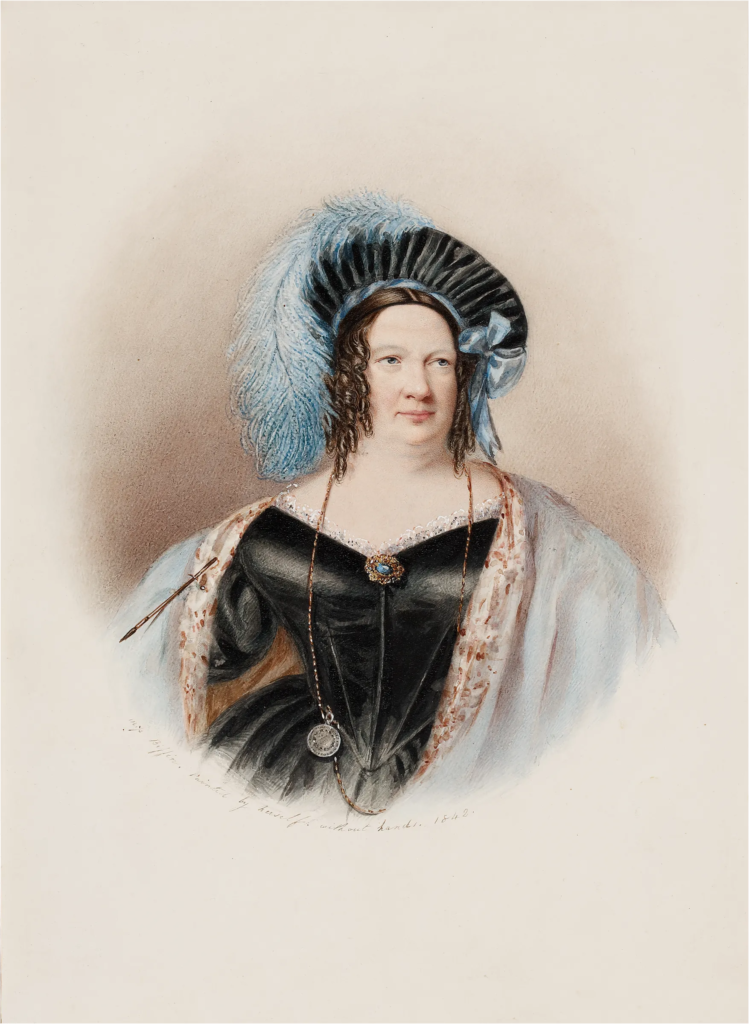
Some of the most compelling stories in art history belong to artists whose names have gradually faded from public memory. Sarah Biffin was one such artist. Born in England in 1784 without arms and legs, she developed an extraordinary career as a professional miniature painter, learning to write, sew, and paint using her mouth. Despite the considerable barriers she faced, Biffin became a recognised artist who exhibited her work and received prestigious awards during her lifetime.
In her 1842 self-portrait, Biffin presents herself with the visual language of a professional artist. Dressed elegantly, she displays a medal recognising her achievements, while a miniature painting brush is pinned to her clothing. These details direct our attention towards her skill, experience, and professional accomplishments.
Rather than allowing her portrait to be defined solely by her physical disability, Biffin presents herself as an artist with a career and a reputation to uphold. Her choice of clothing, the medal, and the brush all contribute to an image of professional identity. She claims the same visual space that other artists used to communicate their status and achievements.
Biffin’s story also complicates the way we think about recognition in art history. She achieved considerable success during her lifetime, yet her work became less familiar to later generations. Her story is a reminder that being celebrated in one’s own time does not guarantee a lasting place in the historical record.
Placed at the end of this selection, Biffin’s self-portrait brings the discussion of women’s self-representation back to a central question: who gets remembered as an artist? Her painting is not simply a record of how she looked. It is evidence of how she chose to present her professional identity, and a reminder that women have found ways to claim their place in art history under vastly different circumstances.
Biffin’s portrait deserves to be seen not as an unusual footnote, but as the work of an accomplished artist who understood the importance of showing the world what she could do.
How Women’s Self-Representation Evolved Over The Years
Looking at these five works together reveals a rich and complicated history. Anguissola presented herself as a skilled painter at a time when women had limited access to professional artistic opportunities. Gentileschi took that professional identity further, connecting herself to the very idea of Painting. Vigée Le Brun brought together artistic authority and fashionable femininity, while Cahun challenged the assumption that identity must fit within familiar categories. Biffin, in turn, used her self-portrait to communicate her professional achievements in a world that often defined people by their physical appearance.
These works do not tell a simple story in which each generation became progressively freer than the one before it. Women artists have always worked within different circumstances, and their choices were shaped by education, class, patronage, culture, and personal experience. Nevertheless, these self-portraits show how artists have used representation to negotiate, question, and sometimes challenge the expectations placed upon them.
They also remind us that representing oneself is never just about appearance. Every choice, from pose and clothing to setting and symbolism, can shape how an artist wishes to be understood.
A self-portrait allows us to meet an artist through the image they chose to create. It gives us a glimpse of how they saw themselves, how they wanted to be seen, and what they believed was worth showing to the world. For women throughout art history, that opportunity has carried particular significance. Their self-portraits have recorded professional ambition, challenged artistic conventions, explored identity, and made room for stories that could not always be expressed elsewhere.
The five works explored here remind us that self-representation has never had just one form. It can be quiet or assertive, carefully composed or deeply personal, rooted in tradition or determined to question it. Together, these artists show us that claiming space in art history is not only about creating a work of art. It is also about deciding how we wish to be seen, and making sure our stories are part of the picture.
