
How Babette Hinterleitner Blends Manga, Illustration, and Fine Art into Her Visual Language
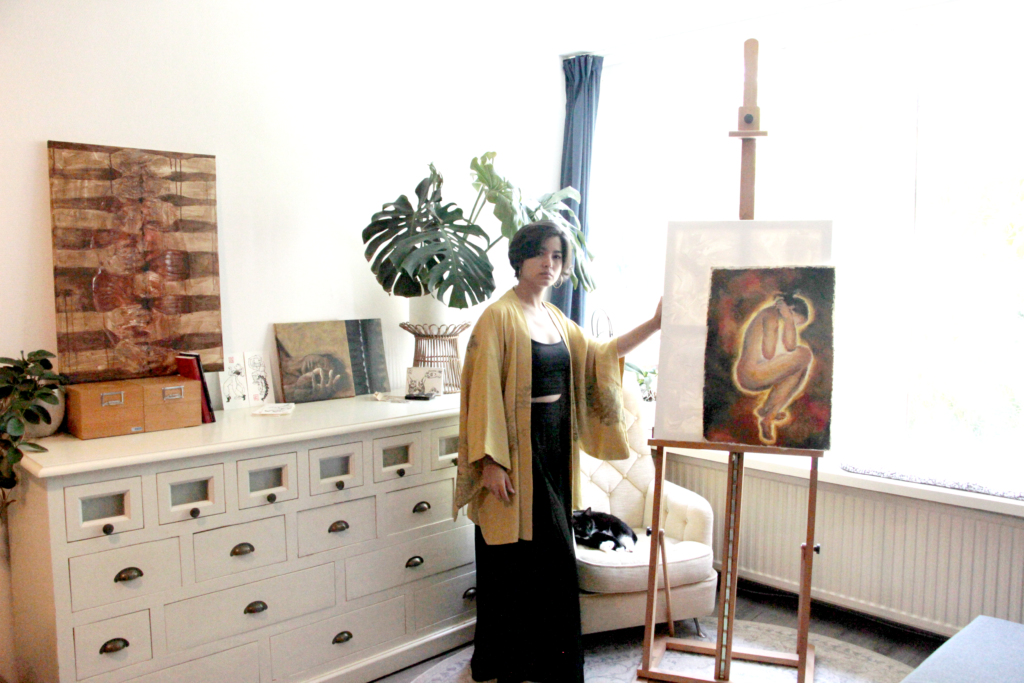
At Women in Arts Network, Portraits gathers artists who find, in the human subject, a way to explore far more than a likeness. Each one approaches the face, and the feeling behind it, in her own way, turning portraiture into something personal, searching, and new.
Among the artists selected for this exhibition is Babette Hinterleitner, a self-taught Filipina-Austrian painter who makes portraits of a different kind, not of faces, but of the emotions we carry quietly and rarely manage to say aloud.
Babette came to art by a long and winding road. A naturally curious mind, she first set out to understand the world through science, economics, and psychology, and to shape it through design. Raised in Germany in a Filipina-Austrian working-class family, where stability and a steady career came first, she kept her art quietly in the background for years. It was only once she had built that security that she finally allowed it to move to the centre of her life.
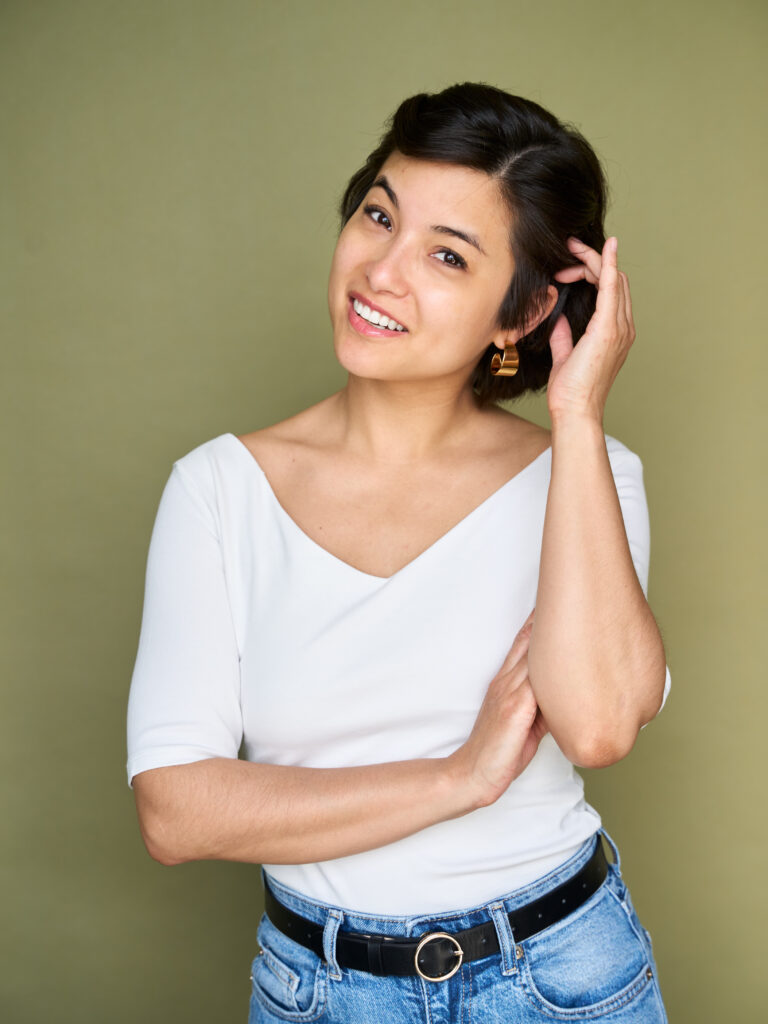
Entirely self-taught, she works today as a painter, printmaker, and digital and visual artist, moving freely between painting, lithography, collage, drawing, and digital work. Each medium gives her a different way of catching what she is after.
Her visual language draws on several worlds at once, the bold storytelling of comics and manga, the flowing shapes of Alphonse Mucha, and the quiet restraint of Chinese and Japanese ink painting. What binds them, for her, is the power of line, the way a few simple strokes can hold a whole feeling and say a great deal with very little.
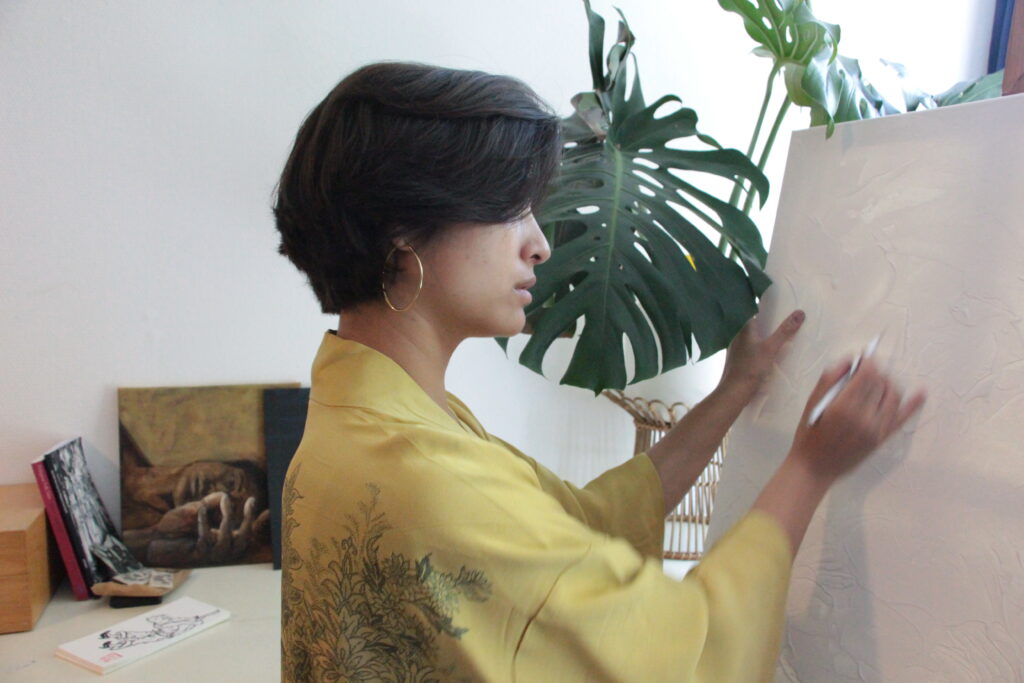
Her process lives somewhere between control and instinct. The groundwork she plans with care, the composition, the contrasts, the colour, before handing the rest over to intuition. The feeling, the metaphors, the textures arrive from a more instinctive place, and she knows a piece is finished not by thinking but by sensing it.
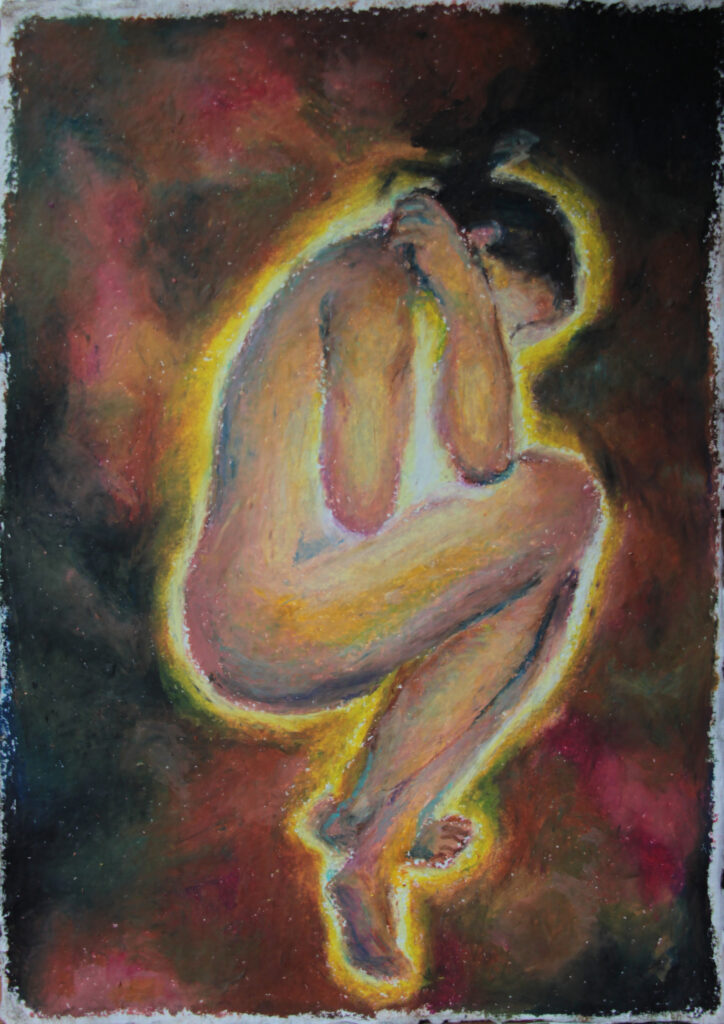
Beneath the layers of paint lie the simple lines she began with, the hidden bedrock of everything on top. And when it comes to choosing a medium, she rarely decides in advance; she follows wherever the image seems to want to go.
What she is always reaching for, though, are the unspoken emotions, the feelings that move beneath the surface of a life and rarely find words. Sadness, longing, hope: these she gives visible form, shaping them into images meant to leave a viewer feeling seen, understood, and quietly uplifted.
Many of her works wear a single feeling as their title, each one an attempt to name and hold an emotion we usually keep to ourselves. To stand before one is to recognise something you may never have put into words.
And though she came to art entirely on her own terms, her work has begun to find its place, painted on commission and featured in gallery curations, reaching people far beyond where it was made.
Now let’s hear from Babette about the long, winding road that led her to art, how she gives visual form to feelings words can’t hold, what improvisation and the stage taught her about connection, and why it is never too late to begin.
Q1. Could you take us back to the beginning of your creative journey and share what first brought you toward art?
I have always liked to create and tell stories. Some of my earliest memories are sitting on my bedroom floor, playing with Smurf figurines, inventing new stories for Smurfette, and trying to make paper-mâché mushroom houses for them. Looking back, that creative urge stayed with me through every phase of my life.
From playing with Barbie dolls, hand-sewing mattresses for them, and building Lego worlds, to doodling fantasy characters and later painting, there was always some form of creation happening in the background of what I saw as the main stage of my life. It was something I couldn’t keep my hands and mind away from, but also not something I pursued seriously. I never really saw it as a career path, as my family’s culture encouraged different routes instead.
Q2. After studying science, economics, psychology, and design, when did you realise art needed a bigger place in your life?
My path was a long journey driven by pure curiosity. As a child, I always wanted to experience the world with all my senses, underlined by how my father used to tell me to look with my eyes, not my fingers. That need to understand the world first led me to study science, economics, and psychology, while design and training became my ways of actively shaping it. Creativity was always there in the background, quietly connecting all those dots.
Coming from a Filipina Austrian working class background and raised in Germany, academic success and a traditional career were seen as the only real ways out. Stability and security were paramount, while things like mental health or artistic fulfillment were not really on the radar.
Art was always there in the back of my mind, urging to splurge out, but I felt so much in the mode of needing to arrive first that I pushed it back.
I simply did not allow my heart to pursue what it was beating for before my mind was at rest. The realization that art was meant to be central only hit me once I built that safety and felt secure enough to let my heart take over.
Q3. You once struggled to call yourself an artist. What helped you overcome that doubt and embrace your identity?
Claiming that identity was hard because art is deeply vulnerable. Showing a piece of work inherently unveils something about the creator, even if it was not intended, in my opinion. Growing up in an environment where safety meant keeping your head down, securing a stable life, and making sure your mind was secure first, being that vulnerable felt unsafe. Building personal and financial security was the necessary foundation, but the real turning point was surrounding myself with the right people.
People had actually been encouraging me for a long time, but I could not accept it while I was still focused on surviving and arriving. It was only after my mind was finally at rest and I found trustworthy people, I could genuinely listen to their encouragement that I could drop my guard, let go of the doubt, and allow myself to see myself as an artist.
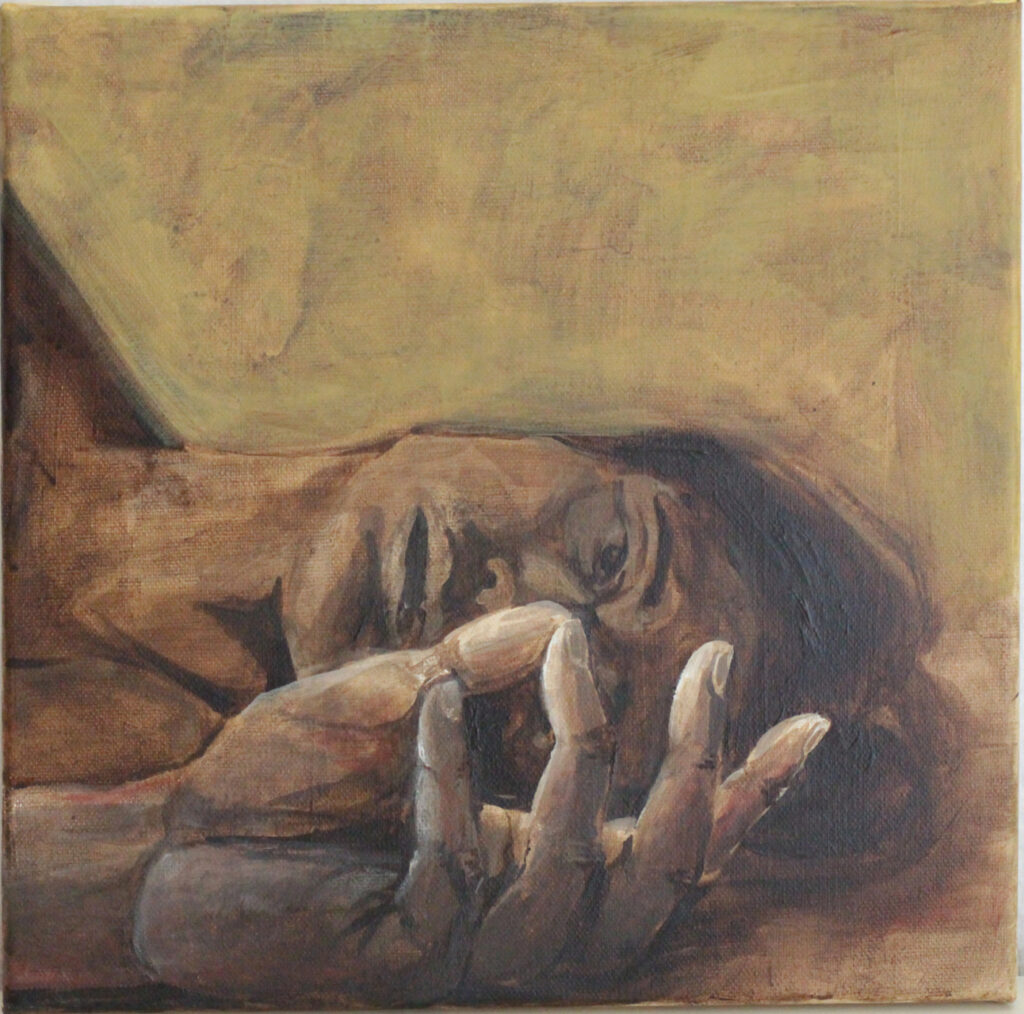
Q4. Your work gives visual form to emotions that are difficult to express in words. What inspired you to explore this inner world?
My practice grew out of years of pushing my feelings aside just to manage and keep moving forward. Even though or because I am deeply sensitive, suppressing my emotions became a survival strategy, a mix of deeply ingrained habits, subconscious protection, and conscious efforts to hold everything together. Over time, that pressure pot cooked those unexpressed feelings and memories into complex shapes I struggled to understand with words alone.
When I occasionally drew my feelings as a visual journal, I realized how many people share that same humble bafflement toward their own emotions. People connected with those shapes immediately, asking for prints or reaching out to tell me how seen they felt. Seeing those visual notes resonate so deeply with others gave me the confidence to trust that instinct and explore it further.
Q5. In Self Doubt, you explore reason and intuition. How do these two forces guide your creative process?
Intuition plays a big role in my practice, perhaps even more than in any other area of my life. In my art, intuition and reason are in a much deeper and more honest dialogue with each other. The way I understand it, intuition is essentially refined instinct or gut feeling. There are aspects of a painting that I approach purely through reason, such as planning the composition, adjusting value contrast, and choosing the color palette. From there, the process moves into intuition and gut feeling.
The initial sketch of a theme, the visual metaphors, and the choice of textures come from an intuitive space. But when it comes to sensing if a piece needs rework or knowing the exact moment a painting is complete, that feels like pure instinct to me. For me, refining that raw instinct into true intuition is both a personal belief and an ongoing goal.
By training my mind and making conscious design choices over and over, I hope to build enough awareness around my subconscious to have a better conscious dialogue with my creative process. I love the state of flow that comes with that instinctual way of painting. In my experience, those fluid moments are often what lead to the pieces that resonate most deeply with others, which is why I value intuition so much in my work.
Q6. From comics and manga to Alphonse Mucha and East Asian ink painting, how have your influences shaped your visual style?
As a kid, the first artworks I really encountered were the Asterix and Obelix comics. My father collected them, so they were always around. From there, I discovered anime on TV, including Mila Superstar, and later Mulan. I still remember the gorgeous opening sequence of Mulan, with the clouds spiraling toward the Great Wall. Those images stayed with me. What I was drawn to in all of these traditions was the power of line. The linework could be lively, bold, expressive and full of movement. With just a few lines, you could capture a whole personality or tell a story. I loved that this could be done with such simple and accessible tools.
A pencil and a piece of scrap paper could be enough to create an entire world. At the same time, I became fascinated by the precision of minimalist painting, the idea that you can strip something back to the essential and, with very little, still communicate a feeling, a story or a character. That is something I still feel strongly in my own work. Especially during the sketching stage, I use simple lines to capture the feeling or character I want. I almost feel like I am carving the image out around the shapes I want to catch. These lines often disappear underneath layers of paint, but they remain the foundation of the painting, the bedrock underneath everything else.
When I paint live, those lines become much more visible and apparent, so that connection to the original drawing process remains on the surface. Alphonse Mucha was a later discovery for me. I was immediately drawn to the softness of his work, his organic shapes and his gentle colour palettes. I love the way his figures seem to be draped within the frame, and the way their poses create a direct connection with the viewer. T
hat sense of organic movement and relationship with the audience has gradually found its way into my own work as well, although I sometimes consciously move away from it. So, while these influences come from very different visual traditions, I think they meet for me in the same place: line, movement, character and the ability to say a lot with very little. Those ideas have stayed with me from the things I loved as a child, but over time they have become part of my own visual language.
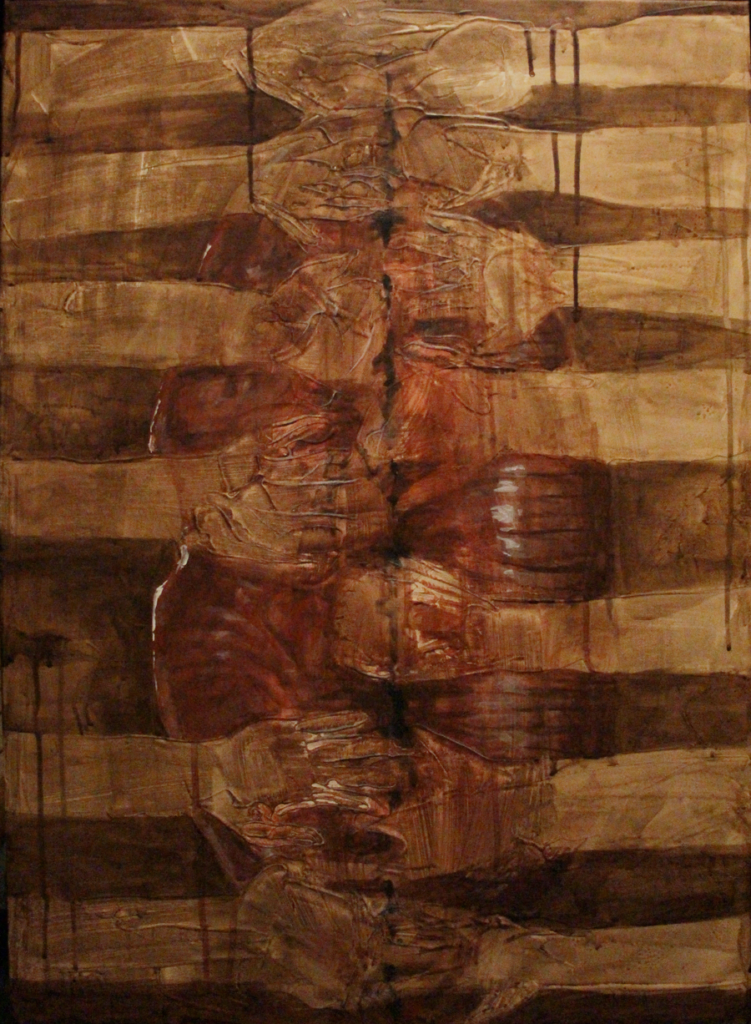
Q7. Your work explores sadness, longing, and hope. How do you balance personal exploration with connecting to viewers?
I am trying to understand them myself, but I am also very aware of their universal humanness and the connection they can create between people. I am lucky to have improvisational theatre in my life as well. Through it, I get to play with and discover a wide range of emotions, not only my own, but also those of my fellow actors. I get to experience emotion with all my senses, through the skin, the eyes and the ears, and I have learned that every expression has the potential to resonate.
The most authentic ones seem to resonate the strongest. I think that has also influenced the way I paint. I have received feedback that the paintings that come from this raw place of feeling, where I am reaching out through that raw emotion, through the canvas, trying to connect, much like I do in theatre, are the strongest for me. That really resonates with me. I am not necessarily trying to create a specific emotion in the viewer.
I am trying to be honest about what I am feeling and exploring, and to reach out through the canvas from that raw place of emotion. Then I trust that something genuine can find its way across and connect with something in someone else. I hope that stays true. 😉
Q8. You work across painting, lithography, collage, drawing, and digital art. How do you choose the right medium for each idea?
I am afraid this is mostly an instinctual decision for me so far. It feels like my mind is trying to reach out with invisible arms toward the visualization in my head, trying to catch it. When they grasp it, sometimes it feels like they are grasping something concrete, something that needs texture, creases and layers of thick material. Other times, I am feeling out the shape and it feels much more like dipping my hands into water.
As if there is an oil layer floating on the surface that I could somehow transfer onto paper. Or sometimes the image feels like something that needs to be sprayed or sprinkled onto a screen. I think there is a technical skill component that feeds into this feeling. The more familiar I become with a medium, the more naturally I can sense what it can do and what kind of image or emotion it might hold. But there is definitely still a logic behind these decisions that I have not completely cracked yet. For now, I am happy to trust that instinct and follow where the image seems to want to go.
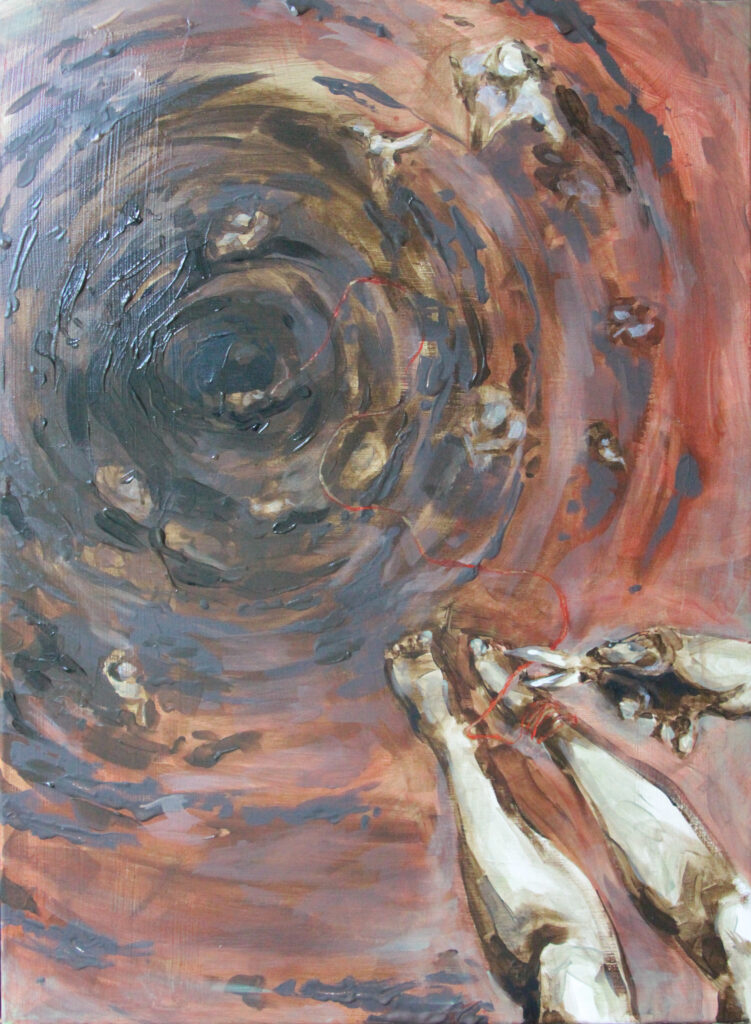
Q9. How has improvisation and performing on stage influenced the way you express emotions through visual art?
I think improvisation has taught me to allow rawness, but not to let it become a stallion that rides away with you on its back. You have to find a way to feel out what you are feeling with enough clarity that you can communicate it, whether delicately or bluntly, while still leaving enough authentic, raw edges for your own experience and personality to remain visible. Sometimes you need to be bold.
Allowing yourself to feel something fully, and then showing and expressing it, does not come easily every day. Improvisation has taught me that you cannot always wait until you feel completely ready or in control. Sometimes you just have to step into it and trust that something will come. It has also taught me that you cannot not be interpreted. You can stand completely still on a stage for a minute, and people will already be seeing a story.
You cannot fully control which story they see. I think that is something I bring back into my visual art as well. I can be very intentional about what I put into a painting, but once it reaches the viewer, it becomes partly theirs. I can try to communicate clearly, but I also have to leave enough space for their own interpretation and experience.
Q10. Do you think the art world is becoming more welcoming to artists who take unconventional paths into art?
I am not deeply enough embedded in the art world yet to feel that I can fully judge this. I can only share what I observe from my own experience. I think we are living in a world that is more connected across distances than ever before, with more creative tools, knowledge and transferable skills available to more people than ever. We can share what we create with much larger audiences, and people can discover things they love more easily and, increasingly, actually access and engage with them. At the very least, I think this means that the world of creating is expanding.
There are more ways to learn, more ways to make, more ways to share, and more ways for an audience to find you without necessarily following a traditional path. Whether that means the art world, in the more traditional sense of galleries, institutions and the established art market, is becoming more open to artists without a traditional art school background, I honestly cannot say. I hope it is, and I think the expanding world of independent creation is certainly making it harder to define what a traditional artistic path has to look like.
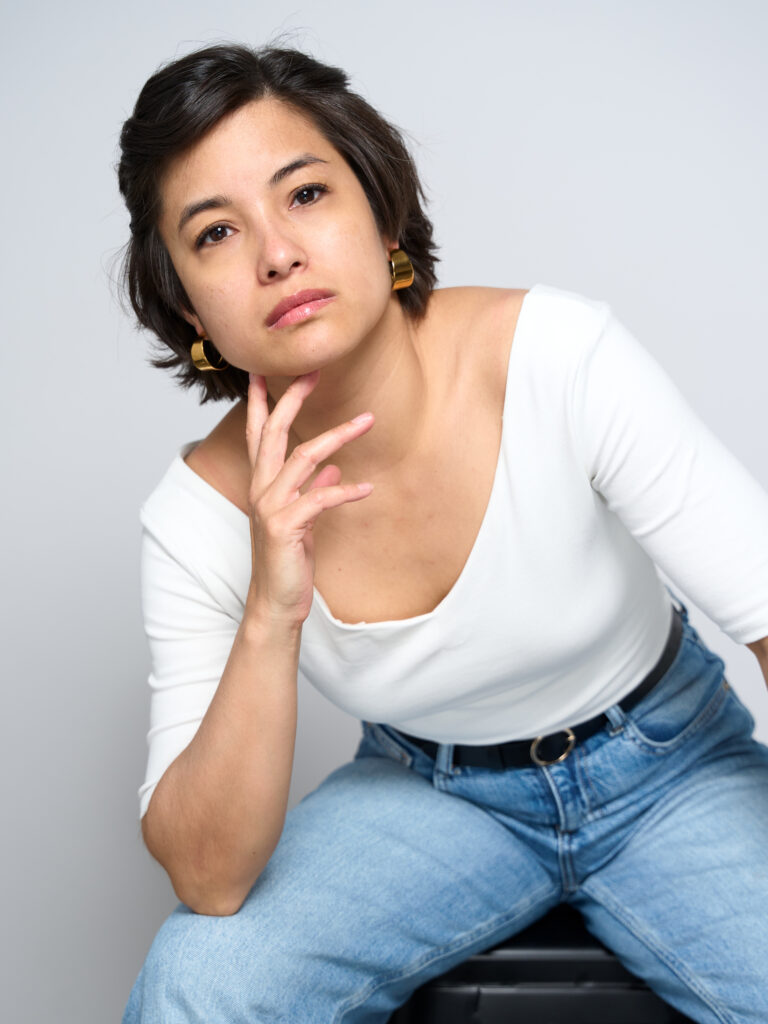
Q11. As art becomes a bigger part of your professional life, what does success mean to you?
Someone once told me that art is only art when it is shared. I don’t fully agree with that, because I think something can still be art when it is created in private. But I do understand the point. There is something beautiful about sharing and connecting, which art so often allows us to do. That kind of connection cannot really happen in secret. There is an improvisational theatre performance I will always remember. It was not necessarily our best or most memorable performance, but there was one scene where we interviewed a couple who had been married for decades.
We asked them about their relationship and what they remembered about each other when they first met. They didn’t remember much anymore, and you could see that they felt a little uncomfortable about that. So we started playing them as their younger selves. We gave their relationship a loving twist, with a wink, declaring our love for each other and suggesting that perhaps they didn’t remember all the details, but that didn’t mean they had forgotten what mattered. After the performance, the couple came back onto the stage and hugged us, with tears in the corners of their eyes.
They thanked us for being so kind and for showing them their relationship in that way. That stayed with me. We had made a fun little scene, but they had seen their love in it. That is something I will always love about making art: the possibility of touching someone’s heart, sometimes in a way you could not have planned. That is what I want to achieve with my paintings too. So for me, success would be having more of those moments of connection. And, of course, I would love to become successful enough that my art can sustain me and give me the freedom to keep creating, so I can have more opportunities to make those connections.
Q12. What would you tell artists who feel they have started too late or are waiting for permission to call themselves artists?
I don’t think there is such a thing as starting too late. Your life will have given you experiences, observations and stories that can feed your art. There will always be things left to learn, but there are also things you have gathered along the way that someone starting earlier simply cannot have yet. And perhaps calling yourself an artist doesn’t have to be something you wait for someone else to grant you. Who made those rules, really?
Maybe you can simply allow yourself to say it and see what happens. I have a ballet studio closeby, and there are women there in their seventies who absolutely kick ass. I adore watching them. There is something wonderful about seeing someone still curious, still learning and still willing to start something new. So perhaps there isn’t a right time. Maybe there is just the moment when you give yourself a little permission to begin.
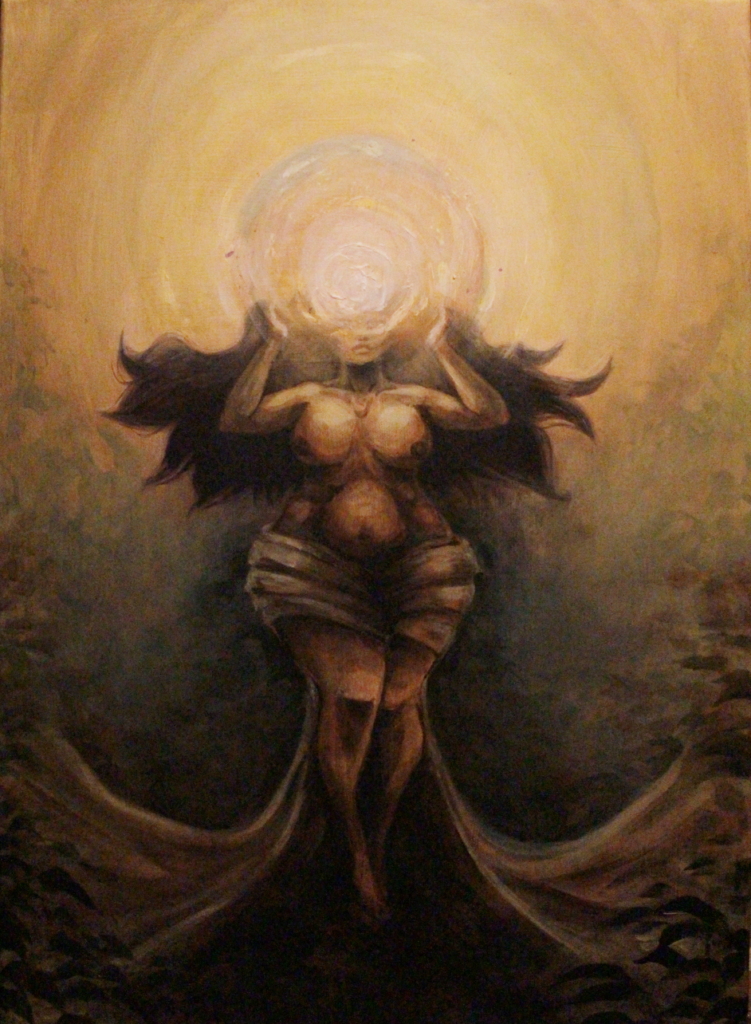
As our conversation with Babette drew to a close, we found ourselves thinking about all the feelings we carry but can never quite name. The ache with no word. The hope that won’t settle. The tangle of emotion too complex for any sentence to hold. For centuries, the portrait captured how a person looks; Babette turns it inward, toward everything a face keeps hidden.
Babette’s work belongs to that quieter, inward tradition. She gives visual form to emotions we so often struggle to put into words, sadness, longing, doubt, hope, shaping them into images that others recognise with a jolt. She is not trying to manufacture a particular feeling in the viewer.
She is trying to be honest about her own, reaching out through the canvas from a raw and genuine place, and trusting that something true will find its way across. In that sense, each piece is a portrait of an inner world, hers, and somehow also ours.
There is a larger question running through her story, too, one the art world is still working out: who gets to call themselves an artist, and what a creative path is allowed to look like. Babette came to art the long way round, through science and psychology and years of believing it could only ever be something on the side.
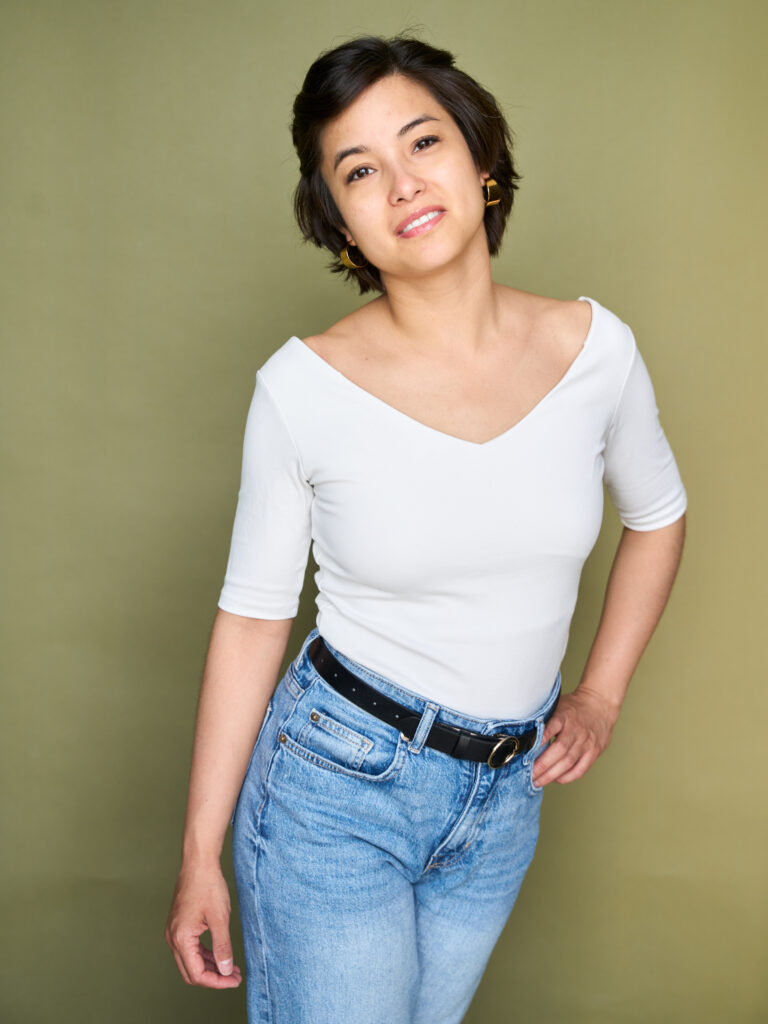
Her journey is a quiet argument that a winding road is not a disqualification but a gift, that the experiences gathered along the way become the very material of the work. In a world with more ways than ever to make and share, she reminds us that the title of artist is not something we must wait to be granted. Sometimes it is simply something we allow ourselves to claim.
For art lovers and collectors, Babette’s work offers a rare kind of recognition. These are images that reach past the eye and toward the heart, that make people feel seen in emotions they had never quite found words for. Rooted in the expressive power of line and drawn from a place of real feeling, her paintings invite you to bring your own story to them, because once a work reaches you, she believes, it becomes partly yours. To live with one is to live with a quiet companion, a reminder that the feelings we carry in private are rarely as solitary as they seem.
Perhaps that is the enduring power of a portrait: whether it captures a face or a feeling, it tells us we are not alone in it. Babette may begin with her own inner world, but what she is really offering is a mirror, and the quiet reassurance that someone, somewhere, has felt it too.
Follow Babette Hinterleitner through the links below and explore more of her work and creative journey.
