
Nora González Uses Imaginative Details to Give Her Figures New Stories
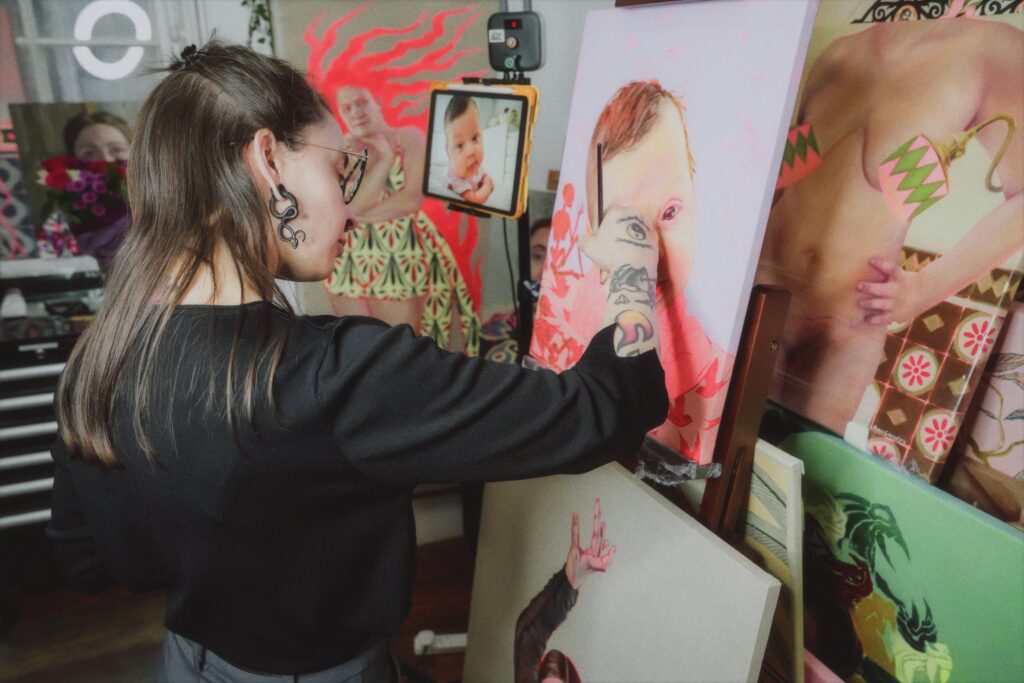
At Women in Arts Network, our Portraits exhibition brought together artists who look to the human figure to understand something deeper about who we are. Each sees the face and body differently, but all are drawn to what lies beneath the surface.
Among our many selected artists is Nora González, an Argentine artist whose dreamlike figures explore eye contact, expression, and the quiet language of the body.
Born in Buenos Aires in 1983, Nora now lives and works in Dublin. Painting has been her way of channelling her inner world since she was very young, and she went on to build that early instinct on serious foundations, studying practical and theoretical painting, human and animal anatomy, colour theory, art history, and even image and gender analysis and museum exhibition techniques. In 2022 she left Argentina for northern Italy, and since 2023 she has made her home in Dublin. She describes her work simply and strikingly as “the result of the emotional echoes of the body.

Her paintings explore human behaviour, emotion, and communication, both spoken and unspoken, the gestures, the eye contact, the body language through which we reveal ourselves. She returns again and again to female figures, children, and strange, impossible architectural spaces, dreamlike settings that lift her subjects out of the ordinary world and leave them open to interpretation.
She works across a wide range of media, oil, acrylic, graphite, and ink, on both canvas and paper, choosing each according to where she is and what a piece seems to call for.
Her process is at once intuitive and carefully built: a painting begins to take shape through photography sessions, sketches, and digital editing, and from there she follows the work closely, letting new shapes, colours, and elements emerge, trusting that something true, sometimes rising from the unconscious, will find its way in.
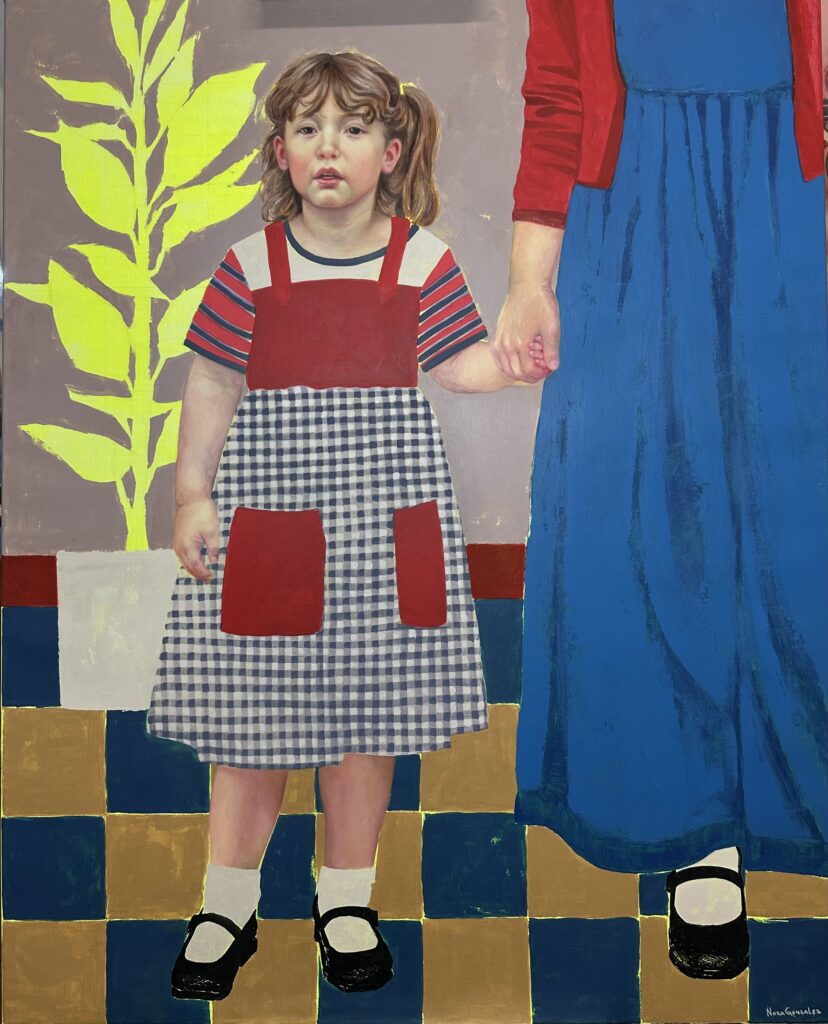
That intuitive approach rests on real discipline, too, grounded in her study of anatomy, colour theory, and the history of art. Her work has been exhibited across both Argentina and Ireland, from group shows in Buenos Aires and Mar del Plata to exhibitions in Dublin, including one organised by the Argentine Embassy in Ireland, where one of her paintings now hangs.
She has received a special mention from a jury for her work, and her practice has been featured in a Spanish art magazine, steadily earning recognition across two continents.
Alongside her painting, Nora has spent twenty-five years as a tattoo artist, creating original designs shaped by classical art and by traditional American and Japanese tattoo styles. In Dublin, she now continues to develop both disciplines side by side.
Now let’s hear from Nora about how art became a way of knowing herself, why she paints children and female figures, how she works between observation and dream, and what she hopes viewers discover about themselves in her work.
Q1. Nora, painting has been a way to explore your inner world since childhood. How has your relationship with art evolved as you have grown as an artist?
Actually, it hasn’t changed that much. For me, painting, drawing and writing are ways of expressing myself and getting to know myself better. Through art, I can discover things about myself, reflect on my own experiences and work through different stages of my life. That is still the main purpose of my work.
Q2. Your paintings explore eye contact, facial expressions, and body language. How do you decide which details carry the most emotional weight?
I don’t decide in advance which details will carry the most emotional weight. When I start a painting, I have a basic idea, a sketch, but as I develop it, new shapes, colours or elements begin to appear. Sometimes the original idea takes a different direction from the one I expected. That’s when I look at the work as a whole and try to understand what has emerged. I let myself go with the process because I feel that sometimes something comes from the unconscious, almost like a message.
Q3. You often work with female figures and children. What draws you to these subjects and what do they allow you to explore?
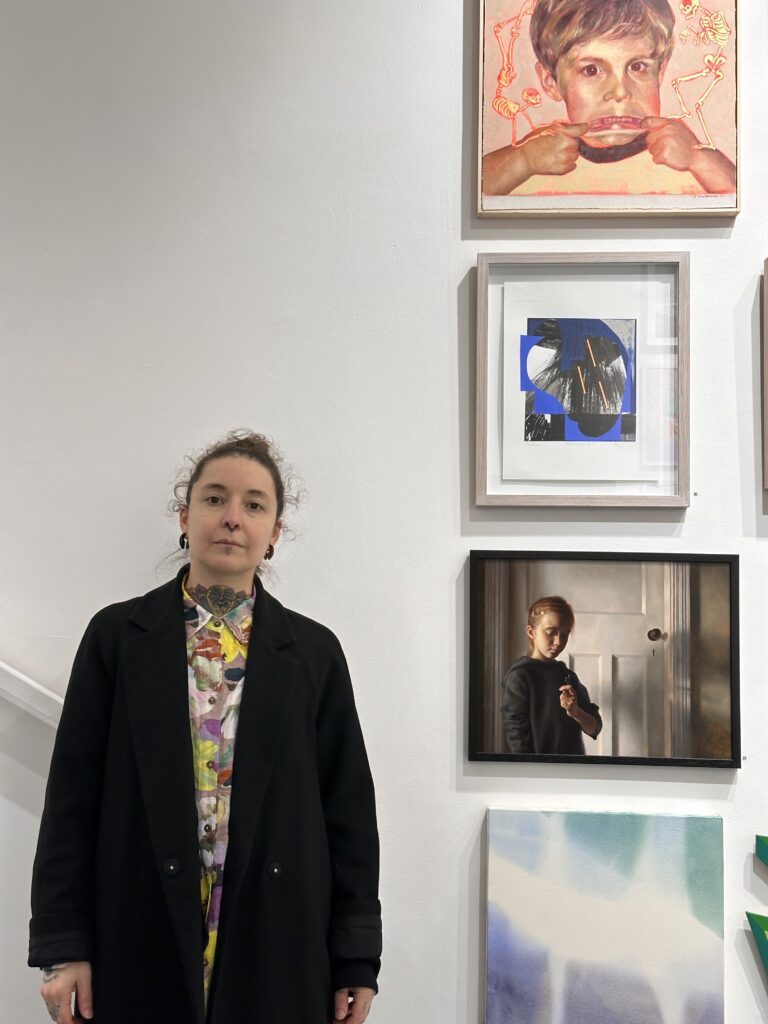
I think children tend to act more authentically than adults because they haven’t yet developed as many prejudices or learned behaviours. Of course, their upbringing and environment already begin to influence them, but they are still developing their personalities.
As for female figures, I don’t have a clear answer. Perhaps I find them more visually interesting, or perhaps it has something to do with the fact that women sometimes pay more attention to other women than to men. I could explore other reasons, but I prefer not to make generalisations.
Q4. You work with oil, acrylic, graphite, and ink. How do you choose the medium for a particular work?
I think any medium can express an emotional atmosphere. My choice depends more on the circumstances and where I am than on the idea itself. If I’m outdoors or travelling, I enjoy using pencils, pens and markers. However, when it comes to painting, I need my studio. I don’t really feel comfortable painting outside it.
Q5. Your paintings sometimes place figures in impossible architectural spaces. What draws you to these environments?
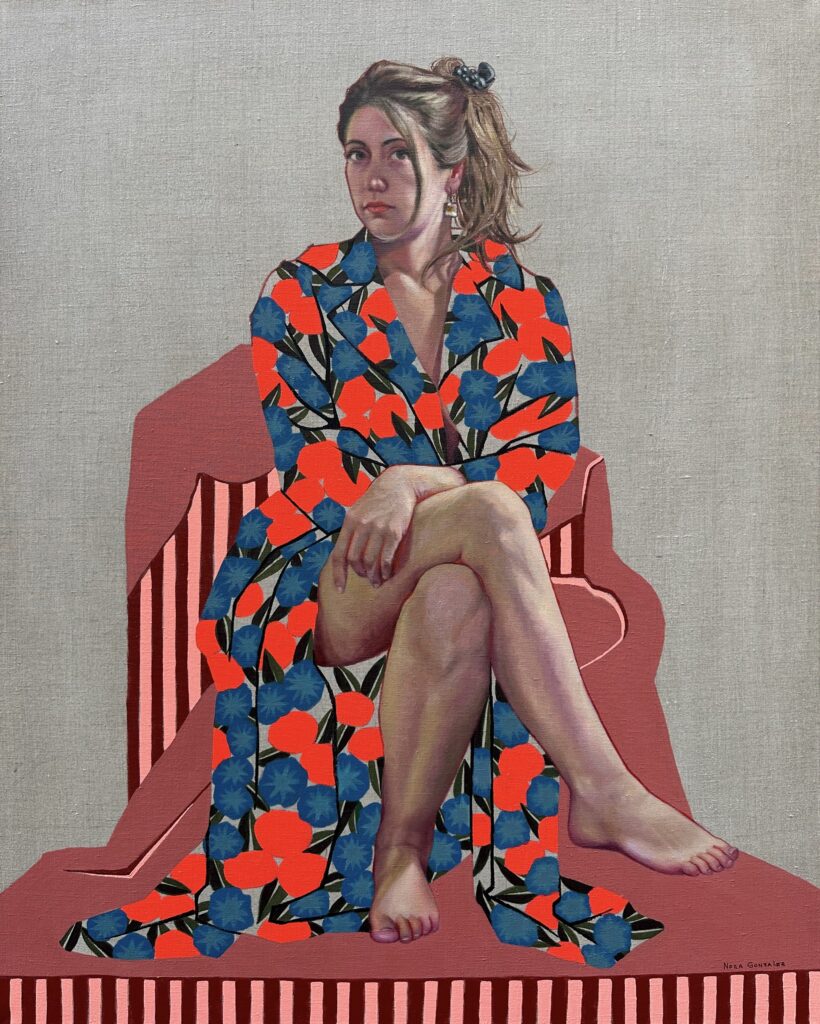
I like playing with shapes and placing figures in spaces that don’t exist in the reality we know, creating more dreamlike environments. I think the setting influences how we perceive a figure, but every viewer interprets the work differently. I love hearing what my paintings bring out in different people.
Q6. Tattooing and painting can both carry personal meaning. How does your approach differ between these two practices?
Although the two disciplines are connected, they are very different. Tattooing is a service I provide, and my intention is for the person to leave with something they genuinely want, rather than imposing my own ideas or meanings on them. My style and technical skills are present in the drawing, but the concept mainly belongs to the person choosing it.
I also have my own designs, which express my ideas, and sometimes people choose those. However, most people come to me with an idea of their own. Painting, on the other hand, is a space of freedom, unless I’m working on a commission. It’s where I can express myself fully.
Q7. Your work moves between careful observation and surreal imagery. Has finding a balance between these approaches been a gradual process?
It’s an ongoing process. Little by little, I’m finding new ways to express myself and bring these two approaches together. I feel that I’m still exploring.
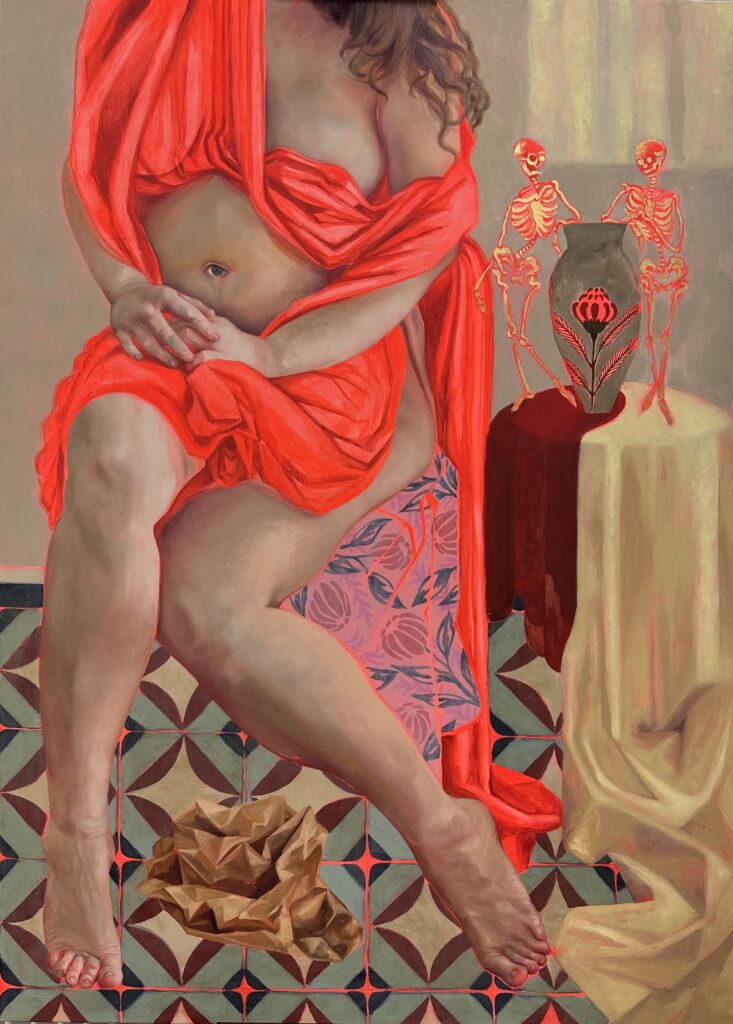
Q8. You also study anatomy and colour theory. How do these foundations support the more intuitive side of your work?
Anatomy and colour theory are the foundations of my work. I’m still studying them and discovering new possibilities. The more I learn, the more tools I have to develop my ideas.
Q9. Your work has been exhibited in Argentina and Ireland. How does it feel to share your art with audiences in different cultural settings?
I feel very grateful for the opportunities I’ve had and for the chance to share my work with people from different places.
Q10. Is there an aspect of human behaviour or emotional experience you feel increasingly drawn to explore?
For now, I work with personal themes and experiences from my present life or the recent past. There isn’t one particular subject I’m especially interested in exploring. These are processes that evolve along with me and rarely repeat themselves in the same way.
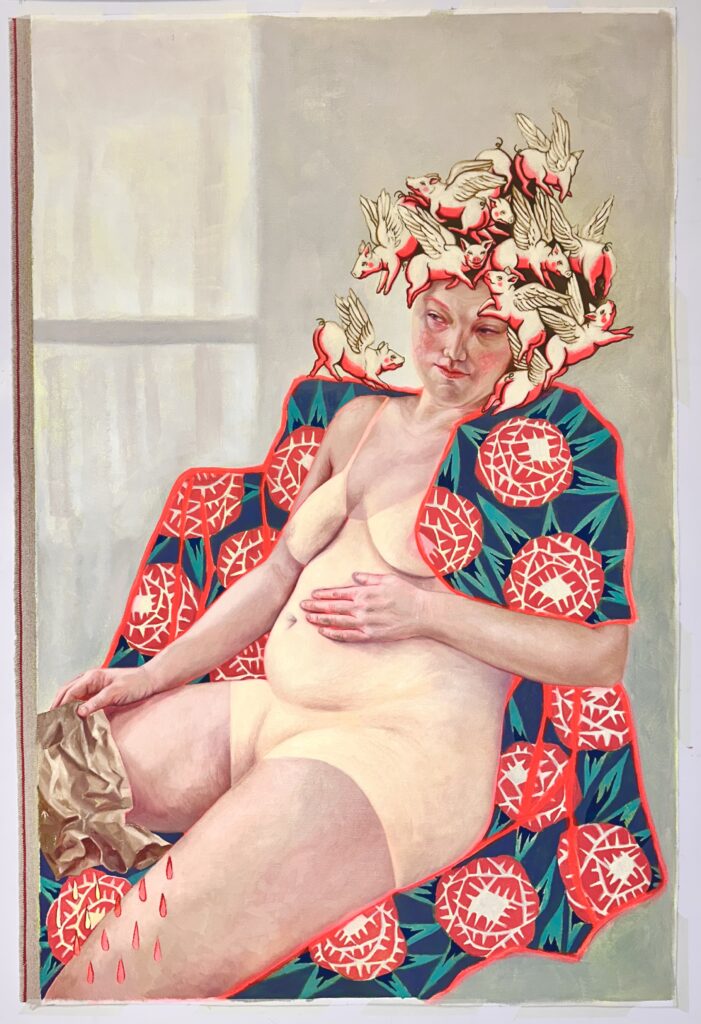
Q11. When viewers encounter your paintings, what do you hope they begin to notice about themselves?
I would like my work to encourage people to look inward and discover something about themselves. I know not everyone stops to reflect on what they see, especially nowadays, when we are surrounded by images and information. But I like to think that a painting can spark that curiosity.
Q12. What does creative success mean to you now, and how has that definition changed?
Yes, it has changed. I used to associate success with the final result. Now, I find it in the process itself and in the way that process becomes part of my everyday life.
Q13. What advice would you give artists balancing more than one creative discipline while developing their own visual language?
I would encourage them to spend time getting to know themselves, beyond art. To explore their inner world and study subjects such as emotional intelligence, neuro-linguistic programming, neuroscience or any other field that helps them understand themselves better and grow as human beings.
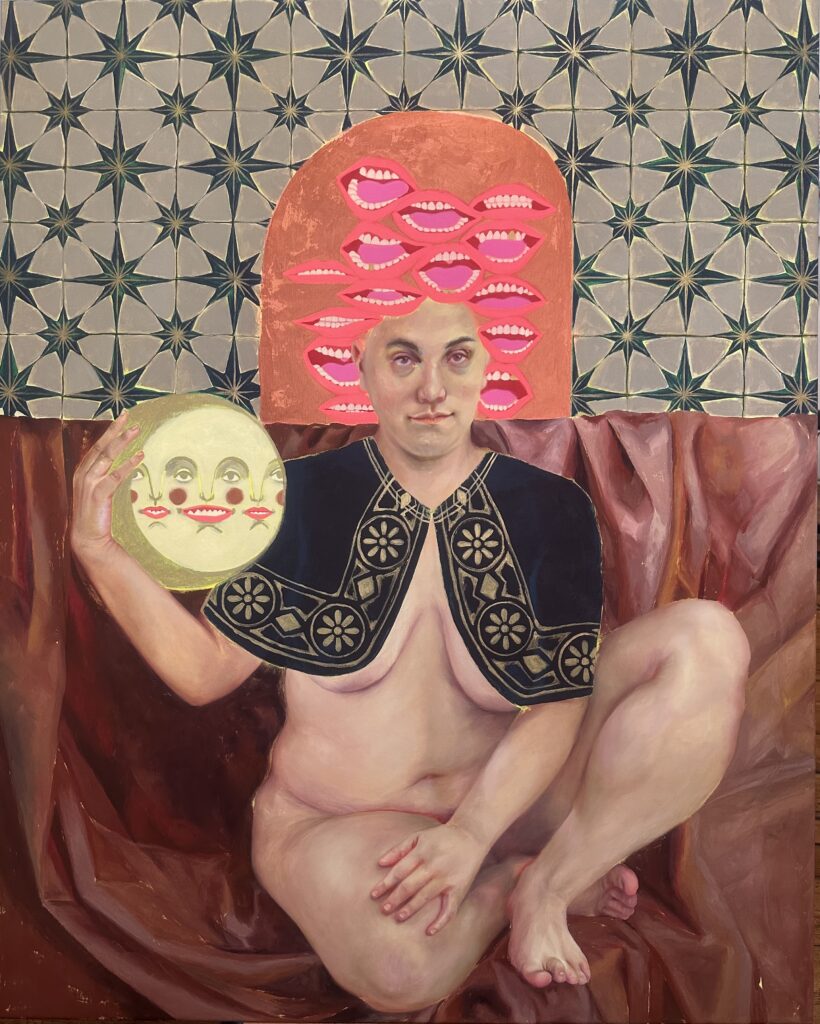
As our conversation with Nora came to a close, we found ourselves returning to one of the quieter powers of the human figure in art: its ability to turn our gaze back on ourselves. For much of its history, portraiture set out to record other people, to fix a likeness, to preserve a face. But there has always been a second current running beneath it, the sense that when we look closely at another person, we are also, somehow, looking at ourselves.
Nora’s work lives entirely in that current. Her figures are less documents of specific people than openings into feeling, psychological rather than factual, built to be sensed as much as seen.
By setting them in strange, dreamlike spaces, she loosens them from the ordinary world and invites a more intuitive kind of looking. In doing so, she joins a long tradition of artists who have used the figure not to describe a person, but to explore what it means to be one.
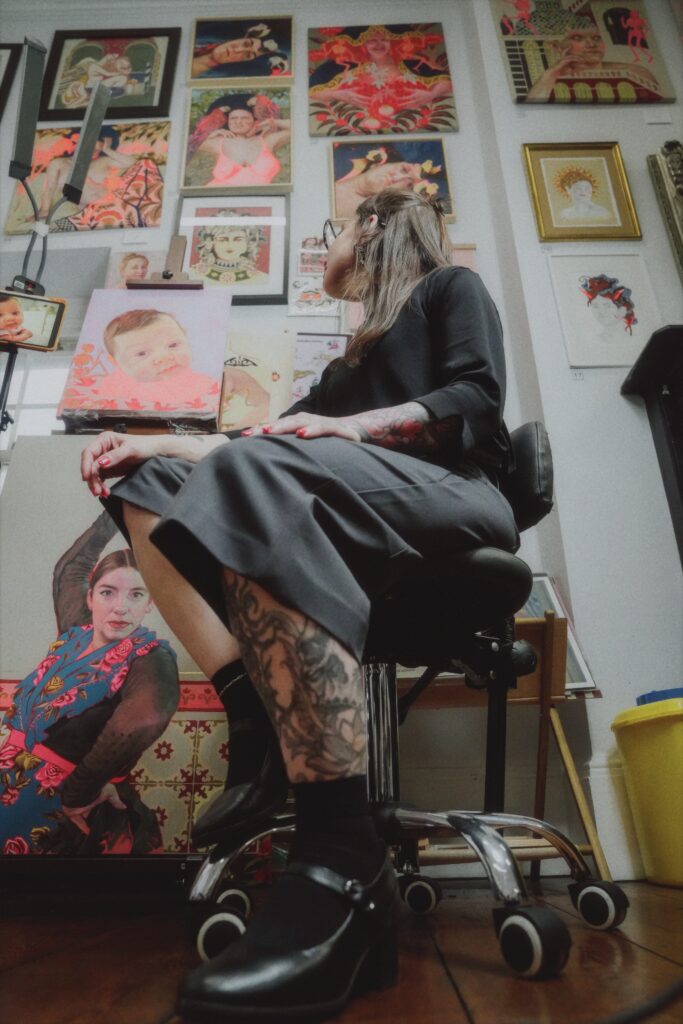
This is part of what keeps the figure so alive in contemporary art. A painting like hers doesn’t hand over a single meaning; it begins a quiet conversation with whoever stands before it, and each viewer completes it differently. That feels especially vital now. In a world so flooded with images that we rarely pause on any of them, work that asks us to slow down, to look inward, and to notice our own emotions and gestures is its own gentle act of resistance.
For art lovers and collectors, Nora’s work offers something both beautiful and quietly searching. Grounded in real study yet open to the dreamlike and the uncertain, her figures reward a slower, more reflective kind of attention, and they tend to mean something different to everyone who meets them. To live with one is to keep a soft invitation nearby, to pause, to look again, and to see a little of yourself in the figure looking back.
In the end, maybe that is what the human figure has always offered art: a mirror held at arm’s length. We study another person’s face, and quietly, we meet our own. Nora’s paintings work exactly this way. They begin with a look, a posture, a small human gesture, but they lead somewhere far more personal, drawing each of us to turn our attention inward. Hers is work built on a simple belief, that to truly understand another person is already to begin understanding yourself.
Follow Nora González through the links below and explore more of her work and creative journey.
