
This Artist Builds Abstract Faces From Layers of Pink, Purple, and Orange | Lisa Matway
At Women in Arts Network, every now and then an artist comes into Faces and reminds us that this exhibition was never really about how faces look. It was always about what faces carry. What they hold. What they refuse to let go of even when everything around them is changing.
Lisa Matway’s work carries something we weren’t expecting. And it starts with a conversation between a wife and her husband about what Parkinson’s disease is doing to his face.
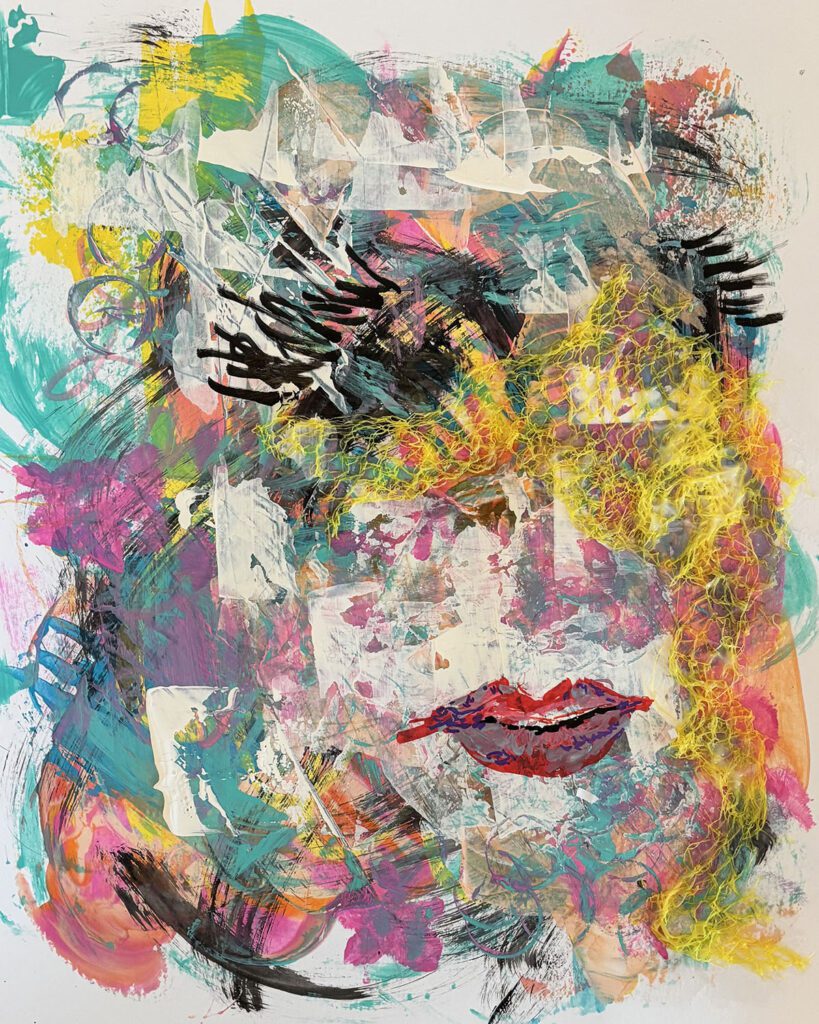
Lisa is a selected artist for the Faces exhibition, and her paintings are abstract faces layered in pink and purple and orange and bold vivid colour that practically vibrates off the canvas. They’re not quiet. They’re not subtle. They are loud and alive and full of energy on purpose. Because the faces, she’s painting are the faces Parkinson’s is trying to silence.
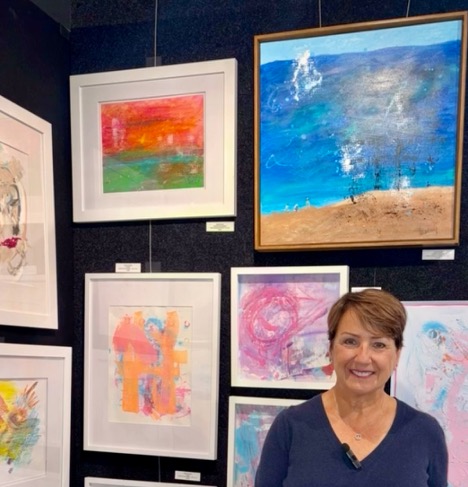
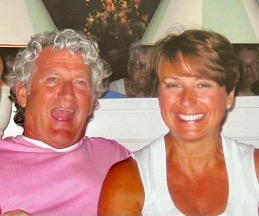
Here’s what you need to know. In 2018, Lisa’s husband Jerry was diagnosed with Parkinson’s disease. And one of the things Parkinson’s does, one of the crueller things, is it changes the facial muscles. The ability to smile, to raise your eyebrows, to blink, to show any expression at all, it slowly becomes harder. The medical community even has a phrase for it. The face freezes. But the person behind it doesn’t. The personality is the same. The humour is the same. The love and the fight and the life are all still there. They just can’t get to the surface anymore.
Lisa paints that gap. The distance between what the face shows and what the person inside is actually feeling. And she fills it with colour so vivid and so unapologetic that there’s no way you could ever look at one of her faces and think there’s nothing happening inside.
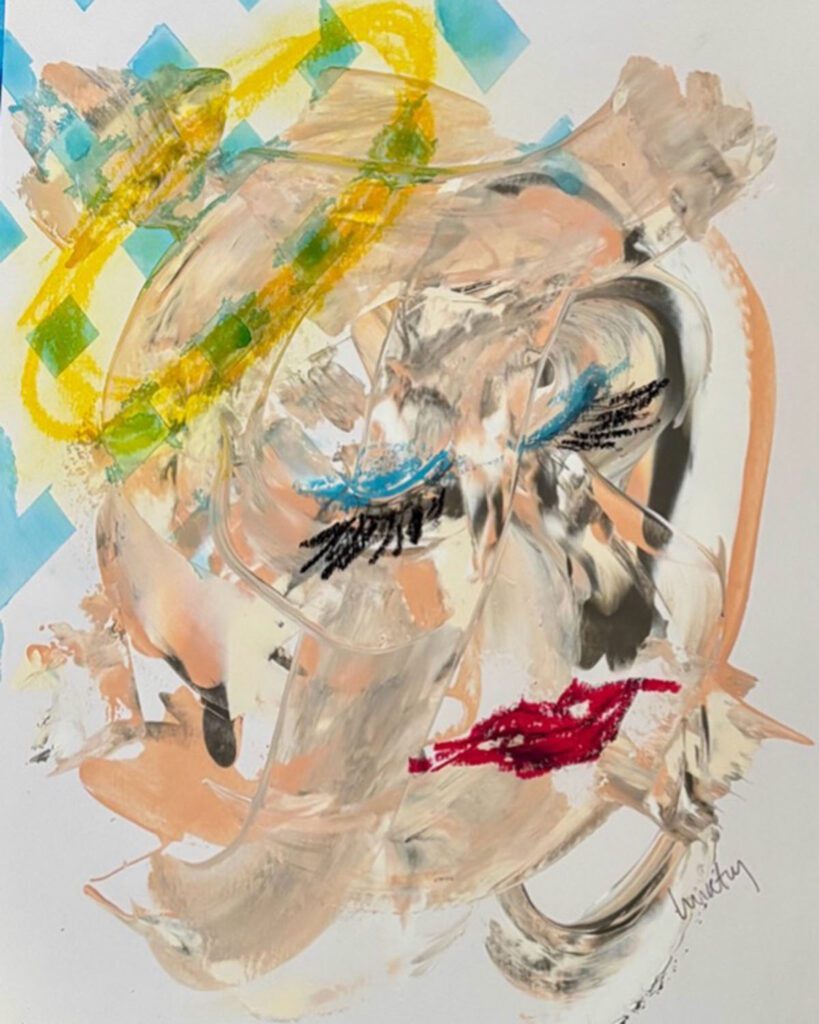
The exaggerated eyes. The bold mouths. The layers and textures built up until the surface practically pulses. Every choice she makes is saying look closer. He’s still here. They’re all still here.
She didn’t start as an artist. She started as a wife processing something enormous. After the diagnosis, she and Jerry had long conversations about how Parkinson’s was changing not just his body but their relationship. It was getting different. Deeper.
And the emotions were piling up with nowhere to go. Lisa picked up a brush not with a plan but because she needed to release what they were both holding. What came out were sketches and oil pastels, random marks that were abstract and emotional and raw.
Over time the work evolved, became more specific, started incorporating recognisable elements, a face, a set of eyes, a sunset, a glass of wine, things they’d experienced together that felt universal enough for others to connect with.
Together they built modart4pd, their creative studio and advocacy platform. They raise funds for Parkinson’s organisations. Every painting starts with Jerry sharing what he’s experiencing and Lisa translating one feeling at a time onto canvas.
Jerry was always a man of movement, tennis, marathons, and even now he moves every day. Lisa calls the work art that moves because it carries his refusal to be still and her refusal to look away.
They’re private people who made the brave decision to go public because they believed their story could help someone. They know some people will see a painting and not the story behind it. That’s a risk they accepted. Because if even one person feels less alone because of their work, that’s the whole point.
Now let’s hear from Lisa, about painting what Parkinson’s tries to freeze, about vivid colour as an act of resistance, about the conversations between a husband and wife that become art, and why the most honest face might be the one that has to fight hardest to be seen.
Q1.Can you share your background and how modart4pd began, including the personal experiences that led you to combine art with advocacy around Parkinson’s?
modart4pd is the creative initiative of husband-and-wife team, Lisa Matway and Jerry Overton (matway overton design). When Jerry was diagnosed with Parkinson’s in 2018, their world shifted. The days became a mix of strength and stillness, fear and love. For a long time, they didn’t know how to express everything they were feeling. They began having long conversations about how Parkinson’s was changing not just Jerry’s body, but their relationship, which was different, deeper. Lisa started painting — not to escape, but to feel differently — to release the emotions they both had been holding onto and see them take form in color and brushstrokes. Their conversations let to pieces of art, capturing their experiences followed by reflection — in paint on paper and canvas. They also wanted a way to give back, to raise funds for Parkinson’s organizations (Michael J Fox, NeuroChallenge, Davis Finney, Parkinson’s Foundation). modart4pd (matway overton design art 4 pd) was born.
Q2. What did the phrase “art that moves” mean to you when you first started the studio, and how has that meaning evolved over time?
Jerry has always lived a life rooted in motion—from competitive tennis to marathon running. Even as Parkinson’s affects his balance and coordination, his relentless commitment to daily movement continues to inspire Lisa’s creative process. Each piece Lisa creates is “art that moves” – reflecting Jerry’s perseverance for movement, fluidity, rhythm, and balance, fused with her own emotions – a space where emotion and energy meet.
Q3.Your art is described as reflecting disruptions, adaptability, and resilience can you share an example of a piece that embodies adaptability in daily life?
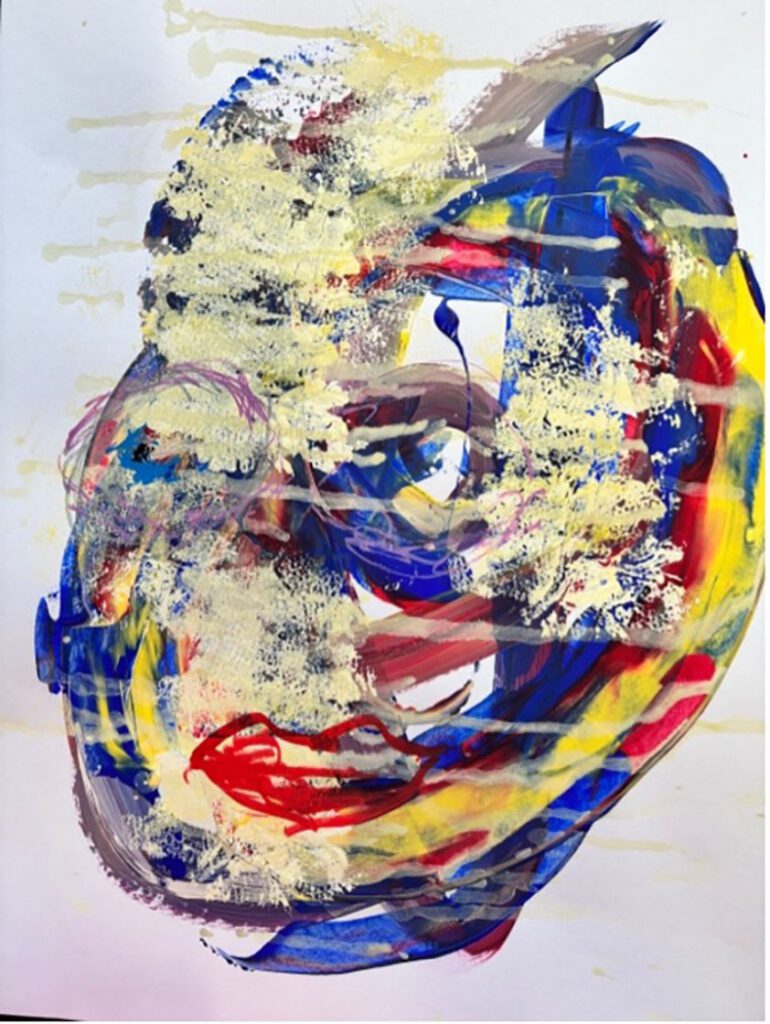
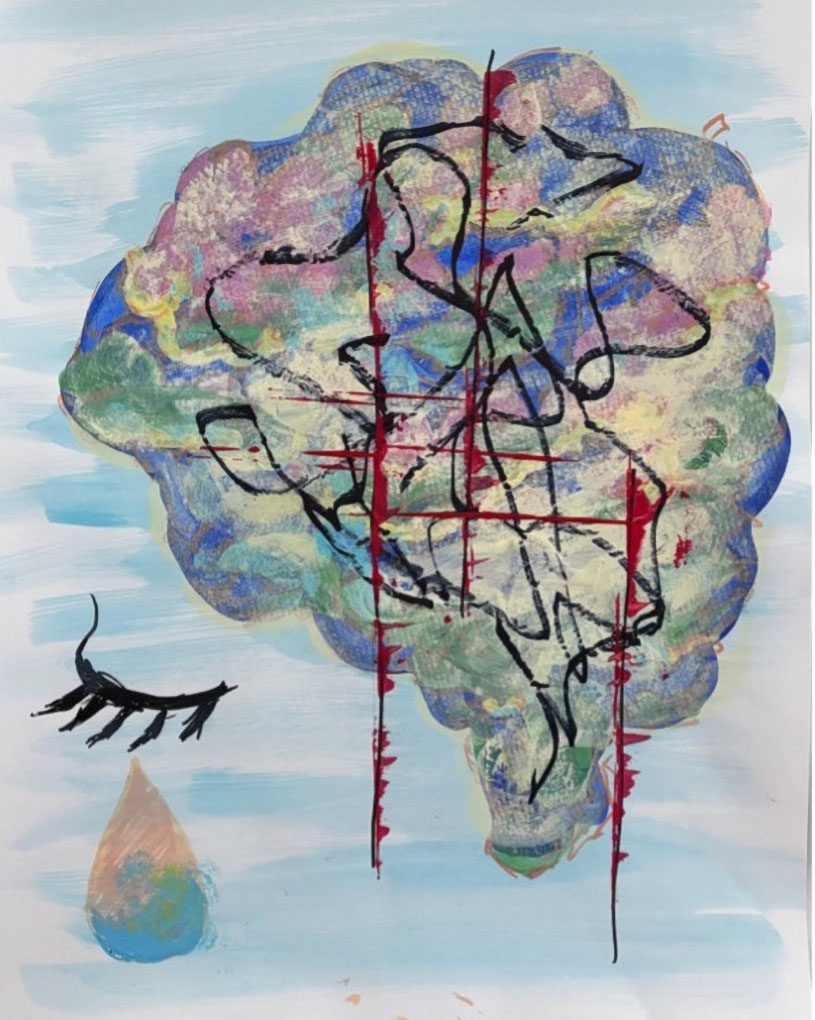
One day, Jerry was describing how his medication made him feel like he was in a fog. This impacted his daily activities, like reading and walking, even his facial expressions. One of Parkinson’s symptoms is changes in the facial muscles, which makes smiling, raising eyebrows, blinking, and showing expression difficult. Lisa began painting faces to try to capture this change, while still trying to convey that the person with Parkinson’s still has the same personality, the same vigor and love for life. That’s why Lisa uses such vivid colors, layering for depth, and accentuating the eyes and mouth to show that fun, love and laughter remain. Two pieces that resulted are “brain fog” and “frozen bitch face” (which is a recognized phrase in the Parkinson’s community).
Q4. When Jerry was diagnosed with Parkinson’s in 2018, how did that moment change your role not just personally, but creatively?
Initially, we each processed the diagnosis differently. There were moments of fear, of stillness, of learning how to breathe through the unknown. The impact took time to evolve. They began having long conversations about how Parkinson’s was changing not just Jerry’s body, but their relationship, which was different, deeper, and their emotions. When Lisa first started painting, it was for fun, for release. When she and Jerry decided to do something with the artwork, to give back to the Parkinson’s community, modart4pd took on new meaning.
Q5. How did the idea of translating Jerry’s lived experience into visual art first take shape?
Lisa and Jerry were baffled about how to even begin using their art to give back. Lisa started researching and found so many great organizations doing this, so she learned through them. The next question was how to describe the art. That’s when the connection to movement and energy was made, with the assistance of the powers of AI. Lisa uploaded a few samples of her art into AI tools, to see how they described her art. Movement, energy and emotion were always referenced, and that’s when she made the association to the Parkinson’s experience.
Q6. Can you describe your role in the creative process, how do Jerry’s experiences or feelings become visual decisions on the canvas?
The visuals for each piece relate to the change or challenge Jerry is feeling and discussing. At times, it can be overwhelming to hear all that he is experiencing, to imagine it. Initially, Lisa wanted to capture it all at once. She has found, by focusing on just one topic, one feeling at a time, the complexity of the messages (emotions, movement, energy, resilience) flow more clearly across the canvas.
Q7. How do you balance honesty about difficult realities with the desire to create work that feels hopeful or uplifting?
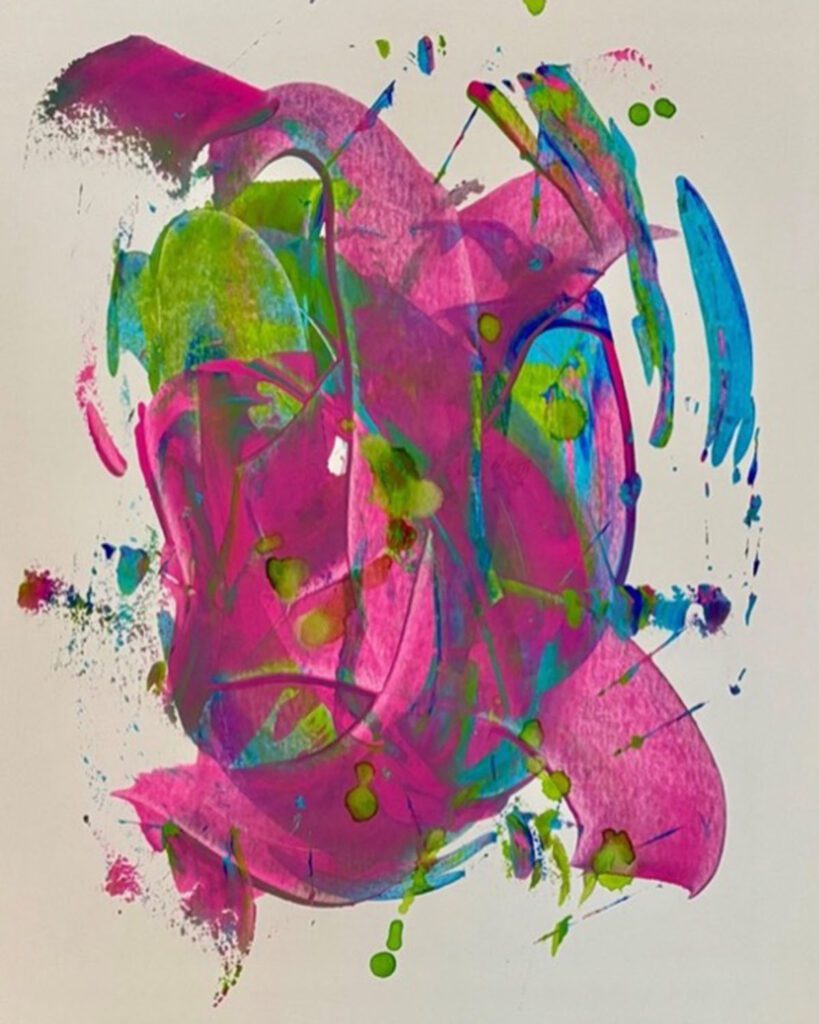
Lisa and Jerry always had a different opinion about the use of color. Lisa was always more neutral – black, white, grey, camel. Jerry, having a career in fashion, always loved bold, bright colors. To balance the difficult realities of life with PD and honor the heart and soul of the person inside, Lisa knew she needed to use color. The vivid colors, in addition to the use of layers and textures for depth, accentuated with caricature-like eyes and mouths, show that fun, love and laughter remain.
Q8. When viewers interpret movement or energy in your pieces, do you prefer they see it as literal physical motion or as metaphorical emotional motion or both?
Hopefully, viewers interpret the movement and energy as both. That is the intention. Each piece has so much to say.
Q9. As a partner and collaborator, how do you protect your own emotional well-being while working with such personal subject matter?
This whole endeavor provides an outlet, a release. Each piece brings tears, provides comfort, and is made with love.
Q10. How does sharing your story publicly shape the way you think about vulnerability, identity, and your role as an artist?
Jerry and Lisa talked a lot about going public with their story, especially as they were designing the modart4pd website. They are both private people. However, they wanted to help others in some way. To do this, they felt the best way to show understanding, and relatability, was to reveal their story. It’s a story relevant to the Parkinson’s community, as well as anyone facing a serious health issue. Lisa and Jerry work hard to have strength, community, release, and life-balance every day, and they want to help others find that in some way. Their art tells very personal stories. Going public with it was difficult. They know some people will look at the pieces as a “painting,” without understanding the underlying story, or even that a story exists. It’s a risk but one they felt worth taking. If they help just one or two people, they will feel they made an impact.
Q11. Looking back at older works and the pieces you’re making now, what’s the most significant change you’ve noticed in your visual language or emotional focus?1 response
Lisa started with some sketches on paper with oil pastels. Her marks were random, yet very emotional and abstract. While the abstract, emotional, and random themes continue, she has gotten more specific by incorporating a recognizable, relatable “thing” in each piece – a face, a set of eyes, a sunset, a flower, a fruit, a glass of wine, a beach — something that she and Jerry experienced together, but that she feels is relatable to others as well.
Q12. What advice would you give to artists who want to create work rooted in lived experience, especially when it involves health challenges or deeply personal stories while staying grounded, honest, and hopeful?
Take a chance, release your emotions, and make art in whatever form. Share your art, talk about your art and your stories, your emotions, and your inspirations. You never know how it will make you feel and how you will impact others.
As our conversation with Lisa drew to a close, something she said kept echoing. That each piece brings tears and comfort and is made with love.
Tears and comfort and love. All three. In every single painting. That’s not a creative process. That’s a woman sitting at a canvas processing the biggest thing in her life one brushstroke at a time and somehow turning private pain into something generous enough to help strangers.
Because that’s what Lisa and Jerry decided to do with this. They didn’t keep it between themselves. They didn’t paint quietly and hang things on their own walls. They went public. They built a platform. They raised money for organisations that are fighting the same fight Jerry fights every morning when he gets out of bed and moves even though moving is the hardest thing his body does.
And we keep thinking about those faces Lisa paints. The frozen ones filled with colour. The still ones bursting with life. Because that’s not just about Parkinson’s. That’s about anyone who’s ever felt invisible. Anyone whose outside stopped matching their inside. Anyone who’s been looked at and misread because the surface went quiet even though everything underneath was still loud and alive and full of feeling.
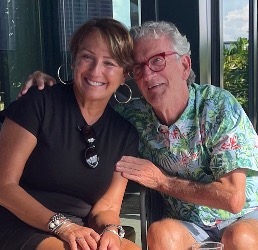
Lisa paints for Jerry. But her work speaks to all of us. Because we’ve all had moments where we needed someone to look past what they could see and find what was actually there. And Lisa’s entire practice is built on that act. Looking past the frozen face. Past the stillness. Past what Parkinson’s puts on the surface. And painting what’s really underneath in the loudest, most vivid, most unapologetic colours she can find.
If their journey teaches us anything it’s that the most meaningful art doesn’t come from the studio. It comes from the living room. From the hard conversations. From the mornings that are harder than the last ones. From two people who decided that what they were going through wasn’t just theirs to carry but theirs to share. And that sharing it, honestly and colourfully and without holding back, might be the most useful thing their pain could become.
To follow Lisa and Jerry’s journey and see more of their work, find them through the links below.
