
From Crete to the Kitchen Table, Cheryl Bailey Paints Still Life’s Full of Warmth & Memory

At Women in Arts Network, our exhibition The Beauty of Still Life set out to honour the beauty we so often overlook, the everyday objects and small, quiet pleasures that make up a life. The response was wonderful, with submissions arriving from women artists around the world, each finding her own meaning in the simplest of things, a bowl, a bloom, a shared meal, a quiet corner of home. From them, a remarkable group of artists was chosen.
One of many selected artists is Cheryl Bailey, an Australian painter whose warm, memory-rich still lifes remind us that the ordinary table is one of the loveliest subjects of all.
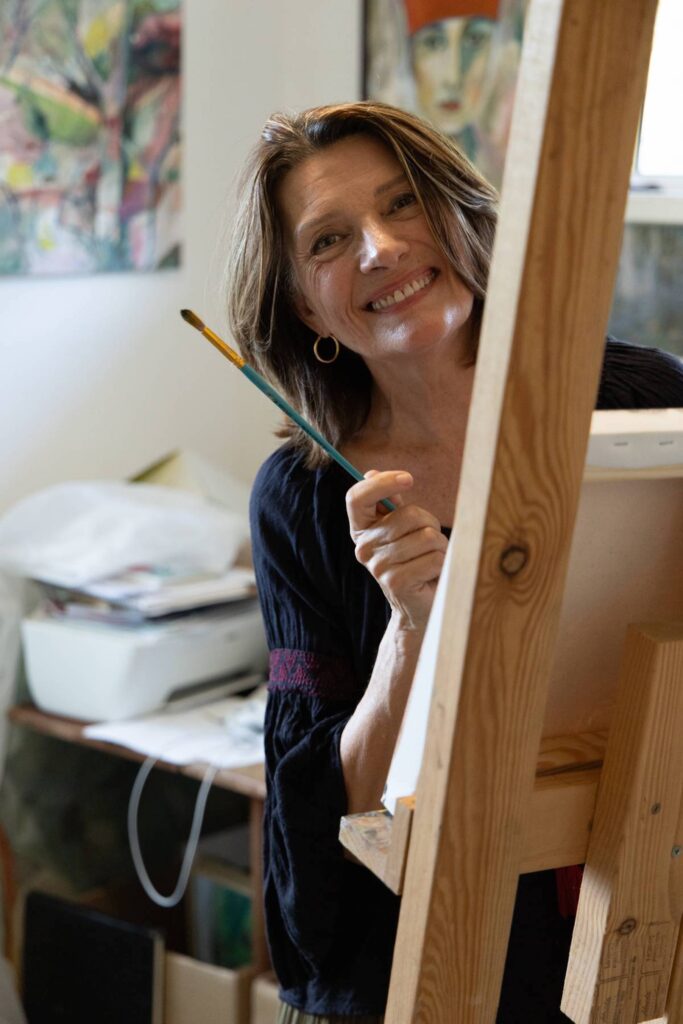
Cheryl holds advanced diplomas in both Fine Art and Art Therapy, and alongside her own practice she teaches painting to people living with disability. Art, she says, has always been at the heart of her life. Over the years her work has grown in two directions at once, through the new places that inspire her landscapes, and the simple pleasures of daily life that find their way into her still lifes.
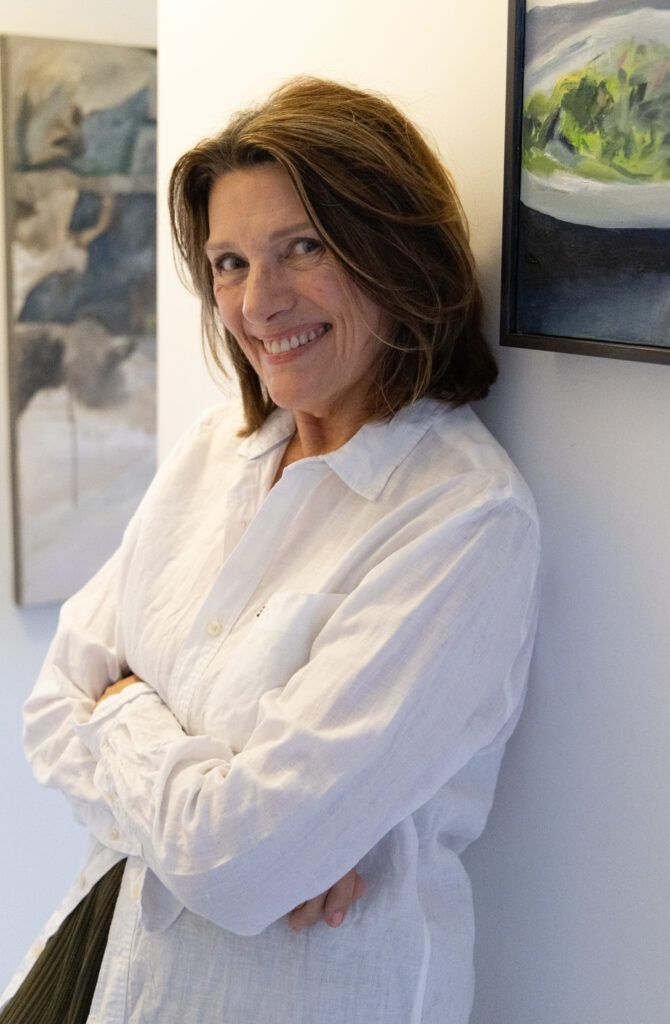
The longer she paints, the more she sees that inspiration is everywhere, in the changing light, a beautiful meal, an unfamiliar street, and even in the ceramic bowls made by her daughter, a potter whose work she loves to paint.Travel runs deep in her work. When she journeys, she feels transported, her senses heightened by new sights, sounds, and flavours, and residencies in places like Crete, Penang, and Morocco have left her with vivid sense memories that later find their way onto the canvas.
In her landscapes, she is less interested in painting exactly what she sees than in capturing the atmosphere and emotional essence of a place, suggesting rather than defining, so that a painting holds not just how somewhere looked, but how it felt to be there.
Her still lifes, by contrast, are warmer and more representational, and here she turns to oils for their richness of colour, texture, and detail. A beautiful meal becomes far more than a meal; it carries the mood and the memories bound up with it, the pleasure of a shared table, the warmth of a moment worth keeping.
Across both subjects, whether a vast landscape or a simple arrangement of food, she is ultimately painting a feeling, and reaching for a connection with whoever is looking.
That belief in art as feeling is deepened by her work as an art facilitator and therapist, where she has seen how making art can give people a voice when words are hard to find. It is not about a perfect or beautiful result, she says, but about the process of discovering something of yourself, a reminder she carries back into her own painting: to trust her instincts and let the work unfold organically.
Now let’s hear from Cheryl about the places that have stayed with her, how she paints not just what she sees but what she feels, the difference between her landscapes and her still lifes, and why she believes every kitchen deserves a beautiful still life.
Q1. Could you tell us a little about your background and how your journey as an artist has evolved over the years?
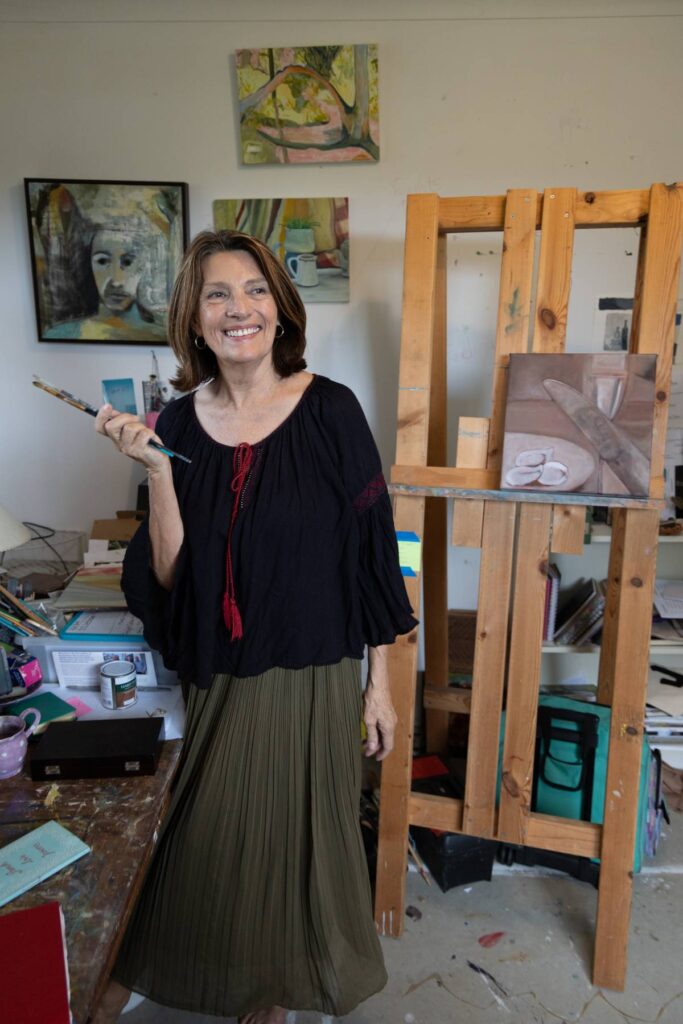
I am an Australian artist with an Advanced Diploma of Fine Art and an Advanced Diploma of Art Therapy. Alongside my own painting practice, I teach painting to people living with disability. Art has always been at the heart of my life. Over the years, my artistic journey has evolved through the discovery of new places, which inspire my landscapes, and the simple pleasures of everyday life, which find their way into my still life paintings.
The longer I paint, the more I realise that inspiration is everywhere in the changing light, a beautiful meal or an unfamiliar place.
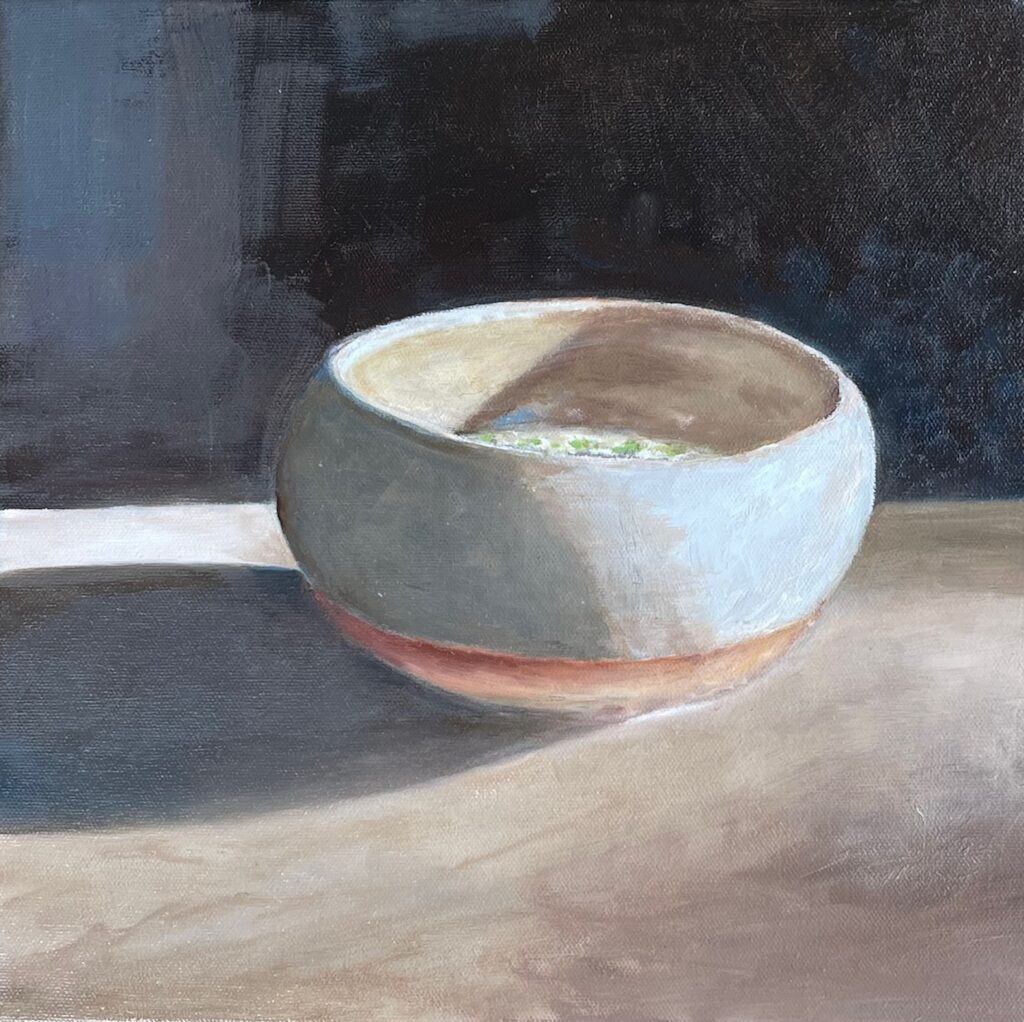
My daughter is a ceramist, her bowls inspire me to paint. I find myself increasingly drawn to capturing not just what I see, but what I feel.
Q2. Your paintings draw on memories of places you have visited. What makes certain places stay with you long after you return home?
When I travel, I feel transported into another world. New sights, sounds, flavours and experiences heighten my awareness of everything around me. Last year, during my art residency in Crete, it was the food, the colours and the warmth of the people that left a lasting impression. These experiences become sense memories that stay with me long after I return home, finding their way onto my canvas.
Q3. You have described feeling most alive in unfamiliar places. How do these sensory experiences influence the way you interpret a landscape?
I think these experiences make me more receptive to my surroundings. I am drawn not just to the physical landscape, but to the feeling of being there the distinctive scents, unexpected colours, sounds and atmosphere all contribute to that experience. I find myself responding to these sensory details and translating them onto the canvas, trying to capture not only what a place looks like, but what it feels like to be there.
Q4. You have painted in different environments, including during an artist residency in Penang. How does working somewhere unfamiliar shape your approach to painting?
Working in an unfamiliar environment makes me more adventurous and open to possibilities. I find myself looking at things differently, responding to unexpected colours, shapes, light and textures and food. There is an excitement in not knowing exactly what I will discover each day.
Being somewhere new takes me out of my comfort zone and encourages me to trust my instincts, experiment and allow the place itself, whether it was an artist residency in Malaysia, Morocco, Crete or the USA, to influence my painting.
Q5. You use acrylic and oil paints to interpret landscapes and places from memory. What does each medium allow you to express?
I work with both acrylic and oil paints, although I approach each subject quite differently. In my landscapes, I use line, shape and colour to explore the environment, often suggesting rather than defining. I am less interested in painting exactly what I see in nature and more interested in capturing the atmosphere and emotional essence of a place — how the landscape makes me feel.
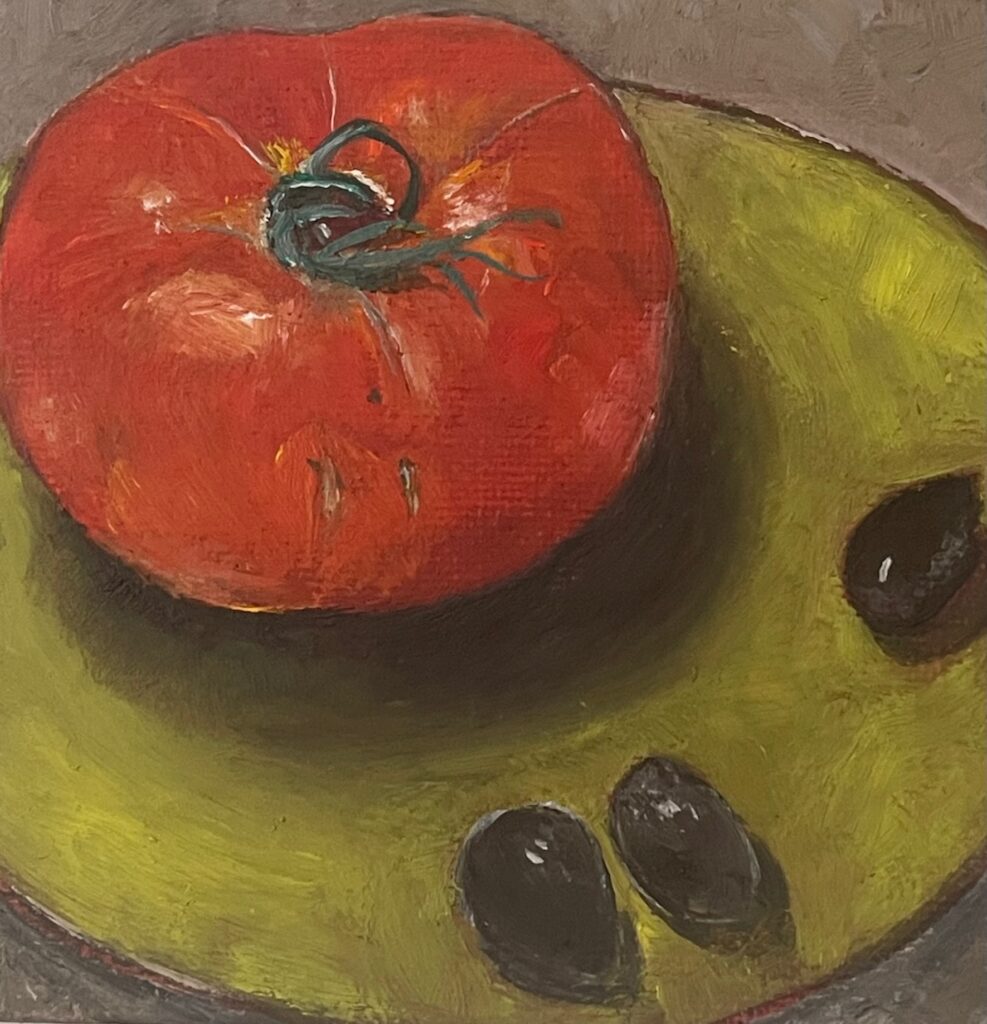
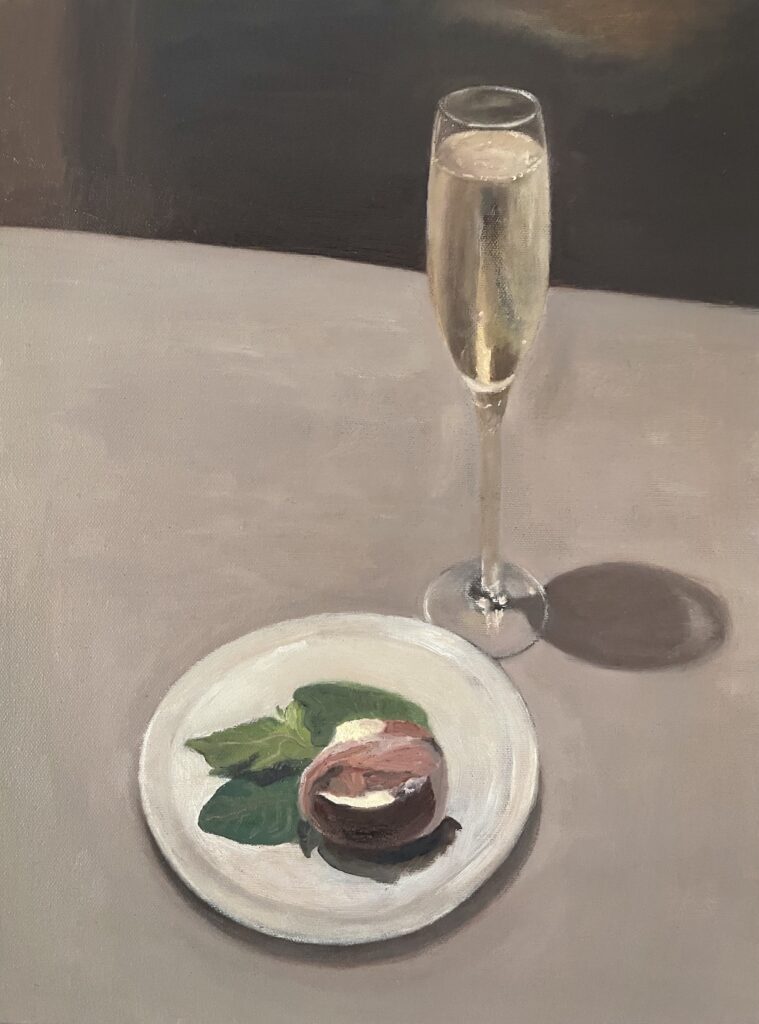
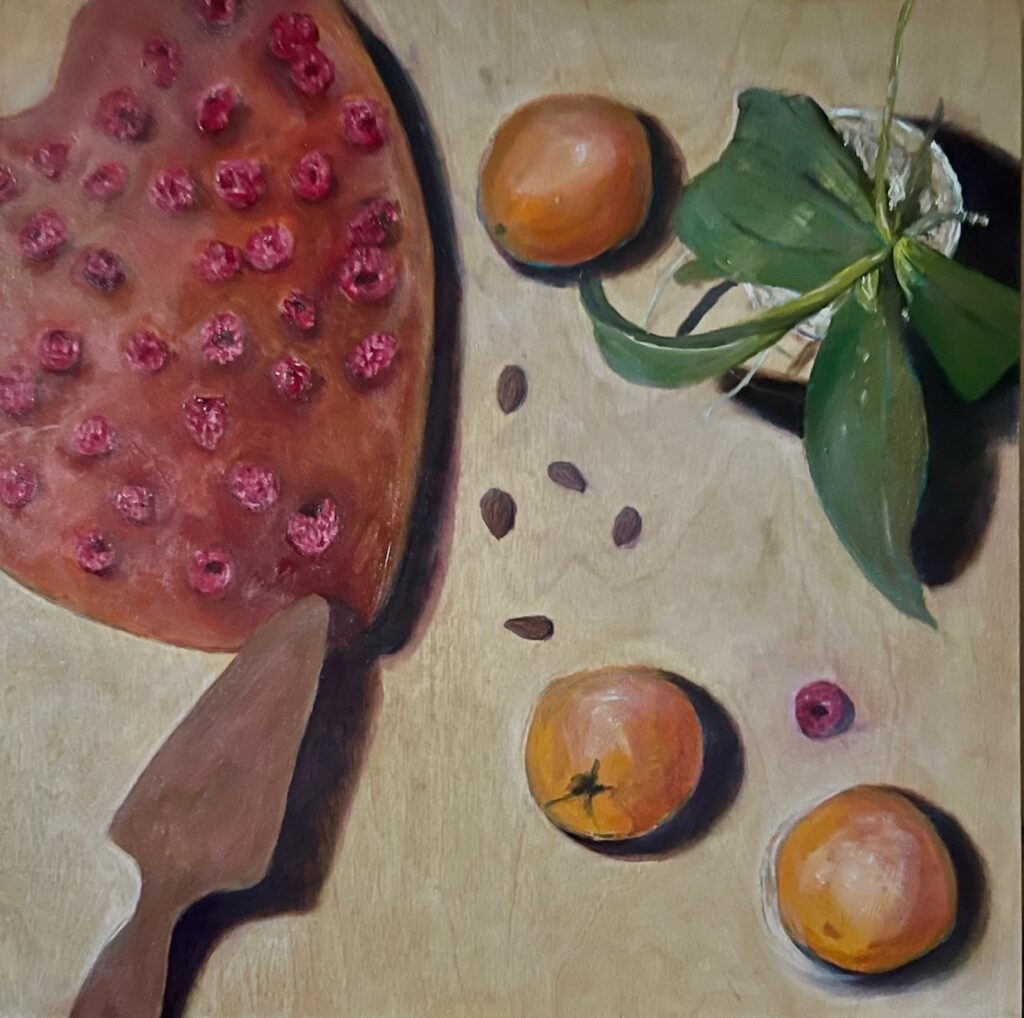
My still life paintings are more representational. Working in oils allows me to explore the richness of colour, texture and detail, capturing not only the beauty of a delicious meal but also the mood and memories associated with it.
Whether painting a landscape or a still life, I am ultimately trying to convey a feeling and create a connection with the viewer.
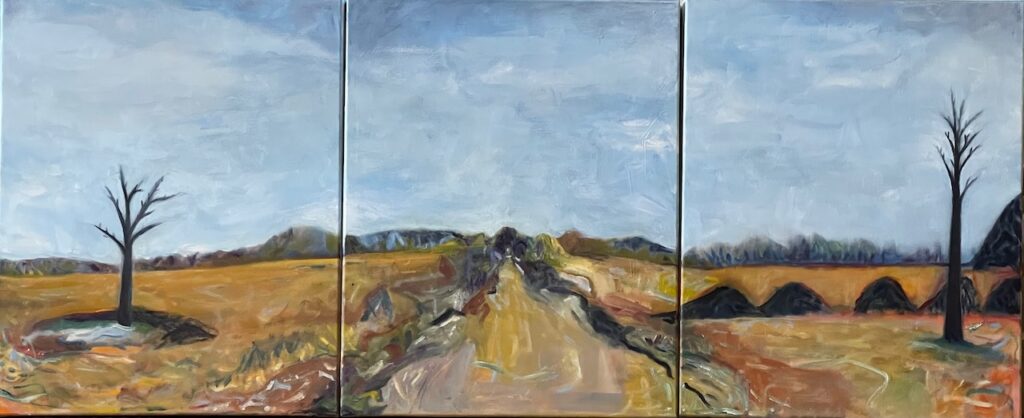
Q6. In Missouri Winter, you explore a landscape across connected panels. What drew you to this format and shaped your approach?
I was drawn to the triptych format because it allowed me to explore the landscape in three connected parts, creating a sense of both continuity and separation. Missouri Winter is a special place held in my memory, and dividing the composition gave me the opportunity to explore different aspects of the vast scene.
Rather than treating the landscape as a single view, I could play with the balance of shapes, colour and space across the three panels. I enjoyed the way the format creates a gentle pause for the viewer, inviting the eye to move between the panels and experience the landscape as a whole.
Q7. Your exhibition Between Here and There explores identity, belonging, and travel. What does the space between leaving and arriving mean to you?
For me, the space between leaving and arriving is a time of emptiness and possibility. When I travel, I feel that I step outside my familiar surroundings and become aware of the world around me. I notice things I might otherwise overlook — shadows, unfamiliar colours, sounds, flavours and the small details of everyday life.
There is also a sense of being between two worlds: carrying memories of home while absorbing the experience of somewhere new. As an artist, I find this so inspiring. It makes me feel more curious about my environment.
My paintings often emerge from this in-between space, where memories, experiences and emotions come together. In a way, Between Here and There is not just about travelling from one place to another, but about how those journeys change the way I see the world — and perhaps how I see myself.
Q8. Alongside painting, you work as an art facilitator and art therapist. How has this experience shaped your understanding of personal expression?
Working as an art facilitator and art therapist has deepened my understanding of how important art is as a form of personal expression. I see how making art can give people a voice, particularly when words are difficult to find. It’s not about creating a finished or beautiful artwork, but about the process of exploring and discovering something about yourself.
I have learnt that everyone has a unique way of seeing and responding to the world, and that there is no right or wrong way to express that. This has also influenced my own painting practice. It reminds me to trust my instincts, and allow my work to develop organically.
Ultimately, I believe that art gives us a way to communicate, and share something of ourselves with others.
Q9. What role do galleries, curators, and artist communities play in helping regional artists reach new audiences and develop their careers?
I think galleries, curators and artist communities play an important role, particularly for artists working in regional areas. Galleries provide opportunities to exhibit our work and introduce it to audiences we might not otherwise reach. Curators bringing different artistic voices together.
Artist communities are essential, especially in regional areas, as they offer connection and the opportunity to share ideas with others who understand the challenges and rewards of an isolated creative life. Ultimately, it is about creating opportunities, building relationships and finding the people who connect with and respond to your work.
Q10. When you revisit paintings inspired by places you have travelled to, do they bring back the experience or transform your memories?
I think it is a little of both. When I look at these paintings, I am transported back to the place, but perhaps through a heightened memory of the experience. The act of painting allows me to hold onto a particular moment — the quality of the light, the colours, the atmosphere and how I felt being there. In a way, the memory becomes frozen in time.
Q11. What would you like viewers to take away from your paintings about memory, travel, and the places that shape who we are?
I hope viewers come away with a sense of how our shared experiences and the places we visit become a part of who we are. For me, travel is about more than seeing new places; it is about the moments, encounters, flavours, colours and feelings that stay with us long after we have returned home. These memories become part of our personal story, shaping the way we see the world.
Through my paintings, I hope to evoke something of that connection, whether it is the delight of a shared meal or an overseas trip, I hope to prompt viewers to recall their own meaningful places and experiences. Ultimately, I would love people to feel that, even when we leave a place behind, a little piece of it stays with us. And on a more practical note, I believe every kitchen deserves a beautiful still life — something that brings colour, warmth and a little reminder of the pleasures of everyday life.
As our conversation with Cheryl came to a close, we found ourselves returning to the quiet promise at the heart of still life: that the ordinary things of everyday life are worth pausing over, and worth keeping. For centuries, the tradition has found meaning in the simple, a meal, a bowl, a table, and Cheryl carries that spirit forward with real warmth.
Her work belongs to a living, personal understanding of what still life can hold. A beautiful meal, in her hands, is never just food; it carries the mood, the memory, and the warmth of the moment it came from. By painting not only how things look but how they feel, she turns the everyday into something tender and lasting. Her approach gently reminds us that beauty doesn’t have to be grand or faraway, it is often right there on the kitchen table.
This is part of what keeps still life so alive today. The subjects may be simple, but each artist brings her own memories and feeling to them. For Cheryl, a painting is a way of holding onto a moment, the quality of the light, the colours, the atmosphere, almost freezing it in time, so that a little piece of a place or an experience stays with us.
In a world that rushes us past our own small pleasures, there is something quietly radical about an artist who asks us to stop and savour them.
For art lovers and collectors, Cheryl’s work offers something warm and genuinely personal. Rich in colour and feeling, her paintings reward a slower kind of looking, and they tend to stir memories of our own, a shared meal, a favourite place, a moment we’d almost forgotten. To live with one of her still lifes is, as she puts it, to keep a little reminder of the pleasures of everyday life close at hand, bringing colour and warmth into the room.
Perhaps that is the enduring gift of still life: it teaches us that the ordinary is quietly extraordinary, and worth holding onto. Cheryl may begin with a simple meal or a humble bowl, but what she’s really painting is memory, feeling, and the warmth of being alive to the small, beautiful things around us.
Follow Cheryl Bailey through the links below and explore more of her work and creative journey.
