
5 Controversial Paintings by Women That Changed Art History
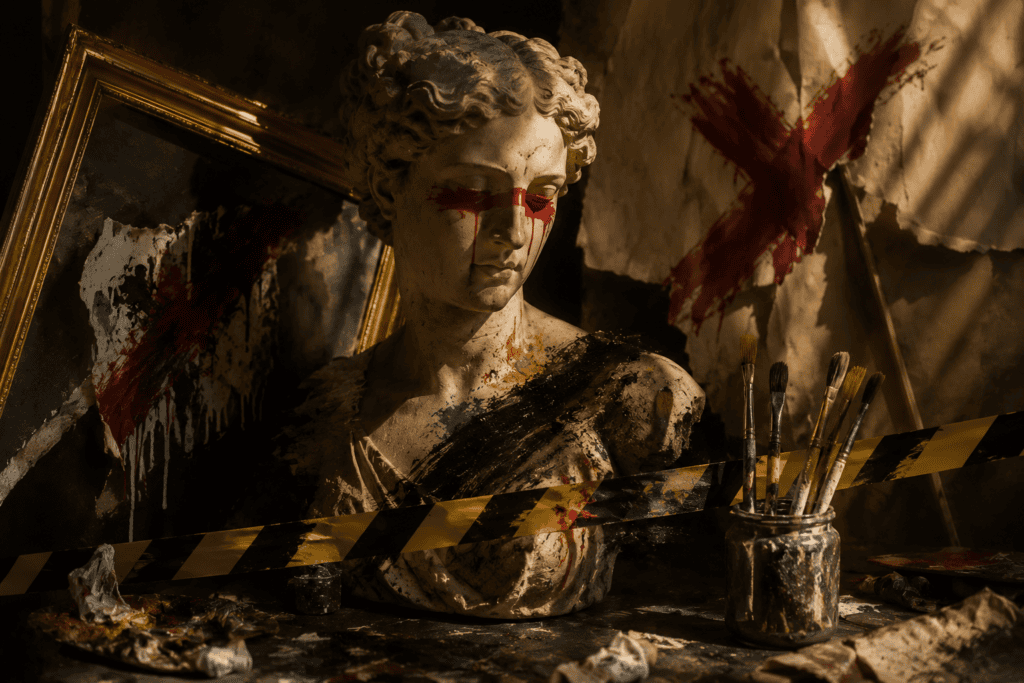
What does it take for a painting to cause outrage, divide critics, or keep the art world arguing for decades, sometimes even centuries? A subject no one expected to see on canvas? An artist who refused to follow the rules? Or an idea so uncomfortable, provocative, or ahead of its time that audiences simply didn’t know what to do with it?
Throughout art history, some paintings have done far more than hang quietly on museum walls. They have been criticized, censored, mocked, rejected, and fiercely debated. Some challenged social norms, while others forced viewers to confront subjects they would rather ignore. And in many cases, the controversy surrounding the artwork became almost as famous as the painting itself.
For women artists, creating work that pushed boundaries often came with even greater consequences. They entered subjects, spaces, and conversations that women were rarely expected, or even allowed, to explore. Through bold ideas, unconventional perspectives, political statements, and deeply personal experiences, these artists challenged assumptions about what women could paint, whose stories deserved to be seen, and who had the authority to shape art history.
Some audiences were shocked by what these paintings revealed. Others questioned whether the artists had the right to tell certain stories at all. A few works were dismissed when they first appeared, only to become major cultural talking points years later. And some continue to divide critics and viewers today.
The five paintings on this list could not be more different in style, subject, or history. But each one caused people to stop, react, argue, and reconsider what art could say and who was allowed to say it.
Here are five controversial paintings by women artists and the fascinating stories behind the works that kept the art world talking.
1. Judith Slaying Holofernes (c. 1614–1620) by Artemisia Gentileschi
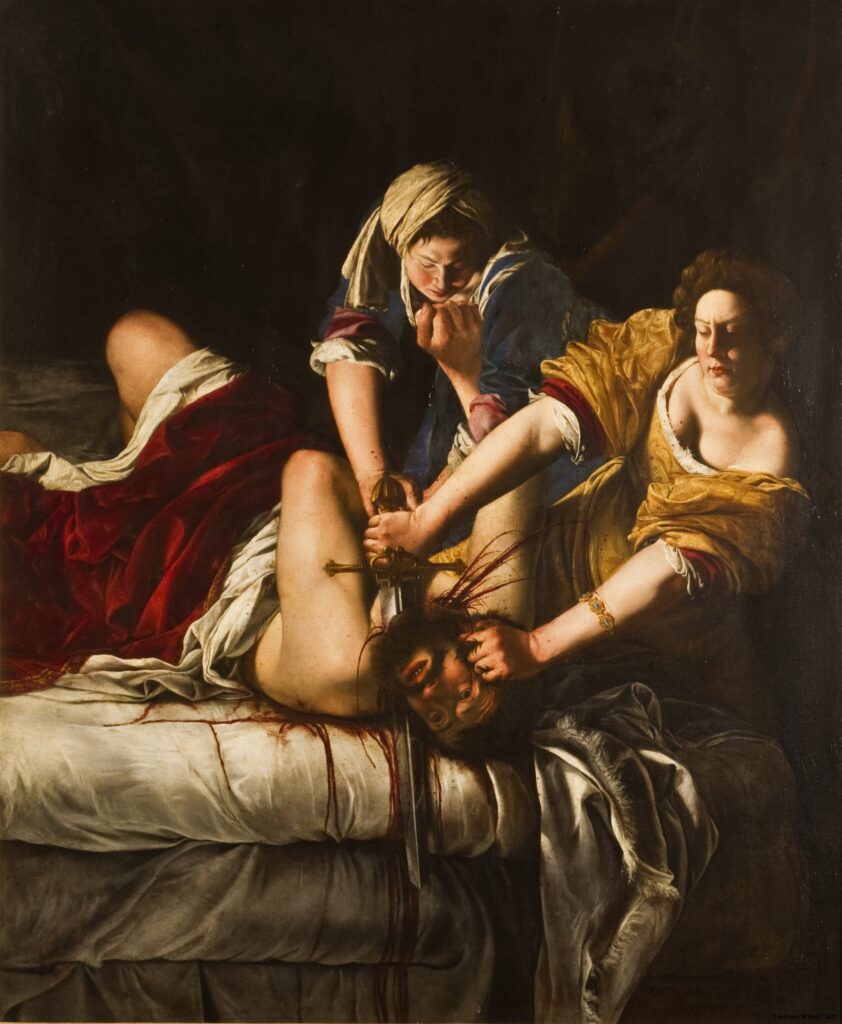
Few paintings by a woman have challenged expectations as boldly as Judith Slaying Holofernes. At a time when women artists were largely expected to paint portraits, still life, or religious scenes with grace and restraint, Artemisia Gentileschi created one of the most graphic and emotionally intense depictions of violence in Western art. Its unflinching portrayal of female strength and revenge has fascinated—and unsettled—viewers for centuries.
The painting captures the biblical heroine Judith and her maidservant, Abra, as they behead the Assyrian general Holofernes. Rather than softening the moment, Gentileschi presents it with striking realism. Blood spurts from Holofernes’ neck as Judith leans into the act with determination, her sleeves rolled up as if fully committed to the task. The dramatic lighting, rich colors, and physical struggle make the scene feel immediate, placing the viewer in the middle of one of the Bible’s most dramatic stories.
The painting’s controversy extended far beyond its violence. Created only a few years after Gentileschi endured a highly publicized rape trial, many viewers and later critics interpreted the work as a personal act of revenge against her attacker. While that reading has persisted for centuries, modern scholars caution against reducing the painting to autobiography alone. Instead, they argue that it reflects Gentileschi’s extraordinary command of Baroque storytelling and her ability to reinterpret a familiar biblical narrative through the perspective of a woman. In an era when female artists were rarely granted the same recognition as their male counterparts, the painting challenged both artistic conventions and societal expectations.
Today, Judith Slaying Holofernes is celebrated not only for its technical brilliance but also for its powerful reimagining of a story that had been painted countless times before. Gentileschi transformed Judith from a passive heroine into a decisive figure of courage and agency, creating an image that continues to inspire discussions about gender, power, justice, and representation in art.
More than 400 years after it was painted, Judith Slaying Holofernes remains one of the defining masterpieces of the Baroque period. It is housed in the Uffizi Galleries, where it continues to draw visitors from around the world as one of Artemisia Gentileschi’s most celebrated and influential works.
2. The Roll Call (1874) by Elizabeth Thompson
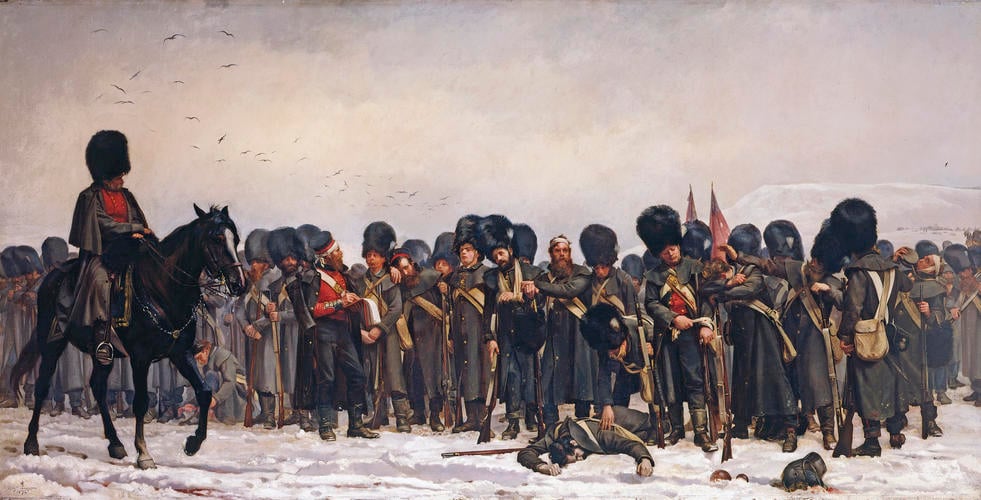
When Elizabeth Thompson unveiled The Roll Call in 1874, the controversy wasn’t caused by violence or scandal—it was caused by the artist herself. At a time when history painting and military subjects were considered the domain of men, Thompson challenged convention with a large-scale war painting that impressed critics, captivated the public, and forced the art world to reconsider what women artists were capable of achieving.
The painting depicts a line of exhausted British soldiers standing in the snow after the Crimean War. Their uniforms are worn, their faces are weary, and several lean on one another for support as an officer calls the roll to account for those who survived. Rather than glorifying battle with dramatic combat scenes, Thompson focused on its quiet aftermath, capturing the physical and emotional toll of war with remarkable realism and empathy.
The painting’s debut at the Royal Academy was met with extraordinary attention. Crowds gathered to see it, and visitors reportedly lined up to catch a glimpse of the work. While many praised Thompson’s technical skill and honest portrayal of soldiers, others questioned whether a woman should be painting military history at all. The genre had long been dominated by male artists, and Thompson’s success disrupted those expectations. Although she was celebrated, she was also scrutinized in ways her male contemporaries were not, with some critics expressing surprise that a woman could produce such a commanding work.
By replacing heroic battlefield spectacle with a deeply human moment of resilience and loss, Thompson expanded the possibilities of both military painting and women’s artistic careers. Her achievement helped open doors for future generations of women working in genres that had long excluded them.
More than 150 years later, The Roll Call remains one of Elizabeth Thompson’s most celebrated works. It is part of the collection of the Royal Collection Trust, where it stands as a lasting reminder that challenging artistic conventions can be just as powerful as challenging history itself.
3. Self-Portrait on The Sixth Wedding Anniversary (1906) by Paula Modersohn-Becker
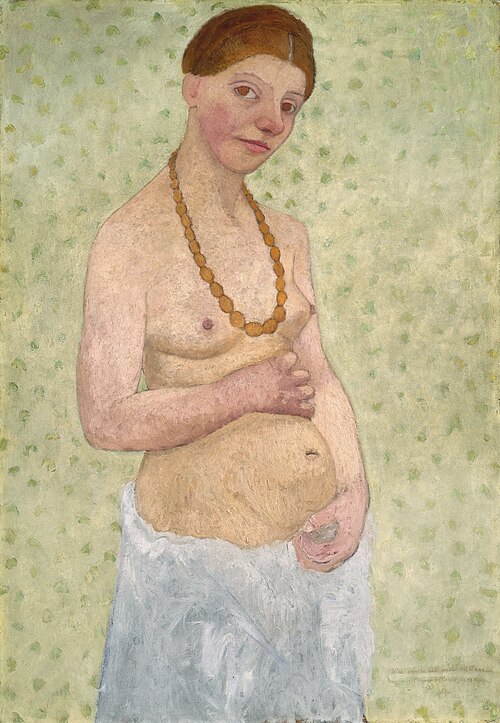
When Paula Modersohn-Becker painted Self-Portrait on The Sixth Wedding Anniversary in 1906, she did something almost unheard of in Western art. She portrayed herself nude, meeting the viewer’s gaze with quiet confidence, at a time when women were almost always the subjects of nude paintings—not their creators. The painting challenged long-standing ideas about who could depict the female body and how it should be seen.
In the portrait, Modersohn-Becker stands against a warm, earthy background with her hands resting gently over her abdomen. Although she was not actually pregnant when she painted it, she chose to portray herself with the appearance of pregnancy, creating an image that blends femininity, motherhood, and self-reflection. There is no attempt to idealize her body or make it conform to traditional standards of beauty. Instead, she presents herself with honesty and dignity, inviting viewers to see her as both artist and subject.
When the painting was created, it quietly defied artistic conventions that had shaped European art for centuries. Female nudes were common, but they were almost always painted by men and designed for the male gaze. Modersohn-Becker reversed that tradition by painting her own body on her own terms. While the work did not cause public protests, it challenged deeply rooted expectations about women’s roles in art and was far ahead of its time. Its significance became even clearer after her death, as critics and historians recognized how radically it redefined female self-representation.
Today, the painting is regarded as one of the earliest and most important feminist statements in modern art. It opened new possibilities for women artists to explore identity, the body, and motherhood from their own perspectives rather than through inherited conventions. What once seemed unconventional is now celebrated as a groundbreaking act of artistic independence.
Today, Self-Portrait on Her Sixth Wedding Anniversary is recognized as one of Paula Modersohn-Becker’s most influential works. It is housed in the Neue Pinakothek, where it continues to be admired for the courage, originality, and quiet confidence that made it one of the most remarkable self-portraits of the early twentieth century.
4. My Birth (1932) by Frida Kahlo
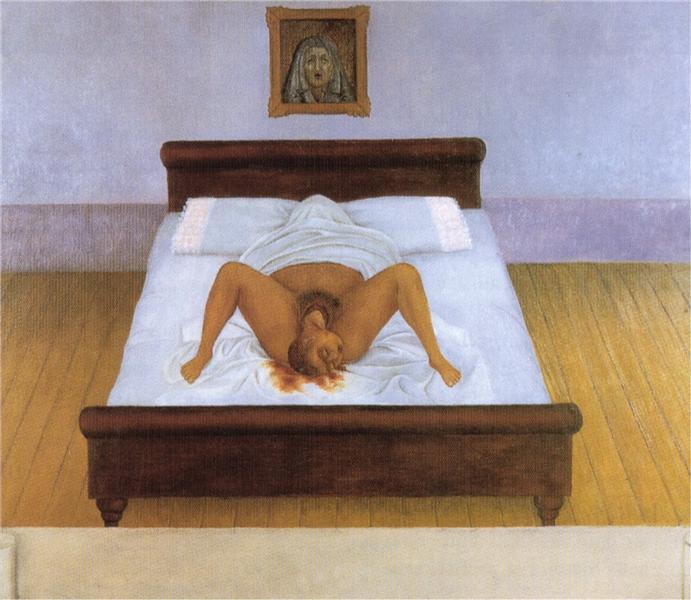
Few paintings confront the realities of birth and loss as fearlessly as My Birth. Painted by Frida Kahlo in 1932, the work broke one of art’s longest-standing taboos by depicting childbirth with startling honesty. At a time when motherhood was often romanticized in art, Kahlo presented it as an experience shaped by pain, grief, vulnerability, and mortality, creating an image that many viewers found deeply unsettling.
The painting shows a woman lying on a bed in the middle of childbirth, her face completely covered by a white funeral shroud. Emerging from beneath the sheets is an infant with Frida Kahlo’s own features, while blood and physical details are rendered with striking realism. Above the bed hangs a small image of the Virgin of Sorrows, adding a layer of religious symbolism that connects suffering, motherhood, and faith. The scene is intimate yet haunting, blurring the boundaries between birth and death.
The painting was created shortly after Kahlo endured a series of devastating personal losses, including the death of her mother and the trauma of a miscarriage. Rather than hiding those experiences, she transformed them into a work that challenged cultural expectations surrounding women’s bodies and motherhood. Its graphic imagery shocked many viewers, particularly because such deeply personal female experiences were rarely acknowledged in fine art. Over time, My Birth came to be recognized not as an attempt to provoke for the sake of controversy, but as an unflinching exploration of grief, identity, and the physical realities of womanhood.
Today, My Birth is celebrated as one of Kahlo’s most courageous and emotionally complex paintings. It expanded the visual language of modern art by giving space to subjects that had long been ignored or idealized. Its honesty has inspired generations of artists to approach deeply personal experiences with the same fearless authenticity.
Now housed in the Dolores Olmedo Museum, My Birth remains one of Frida Kahlo’s most powerful and emotionally fearless works. Decades after it was painted, it continues to challenge viewers while standing as a lasting testament to her willingness to transform deeply personal pain into unforgettable art.
5. Open Casket (2016) by Dana Schutz
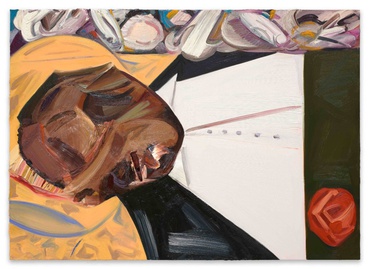
Unlike the other paintings on this list, Open Casket is a contemporary work. Yet despite being created in 2016, it has already secured a place in art history as one of the most debated paintings of the twenty-first century. Painted by Dana Schutz, the work ignited an international conversation about race, representation, artistic freedom, and the responsibilities of artists when portraying historical trauma.
The painting is based on the widely circulated photograph of 14-year-old Emmett Till, whose brutal murder in 1955 became a defining moment in the American Civil Rights Movement. Schutz depicts Till’s face in an expressive, abstract style, preserving the emotional weight of the image without recreating it literally. Thick, gestural brushstrokes and distorted forms emphasize grief and loss, making the painting less about realism and more about the lasting impact of violence.
When Open Casket was exhibited at the 2017 Whitney Biennial, it immediately became the center of intense public debate. Critics argued that, as a white artist, Schutz should not depict the suffering of a Black victim in such a personal way, while others defended the painting as an expression of empathy and artistic freedom. Protesters gathered inside the museum, petitions called for the work to be removed, and the controversy quickly spread beyond the gallery into newspapers, academic circles, and social media. Rather than reaching a clear conclusion, the debate raised enduring questions about who has the right to tell certain stories and whether art can ever fully represent another person’s pain.
Although it is the newest painting in this collection, Open Casket has already had a profound influence on contemporary art discourse. It has become a defining example of how a single artwork can reshape conversations about ethics, representation, and the role of museums in presenting difficult histories. Few modern paintings have generated such sustained discussion, making it an important reference point for artists, curators, and critics alike.
Part of the collection of the Institute of Contemporary Art, Miami, Open Casket continues to provoke discussion among artists, historians, and audiences alike. Its influence has already extended far beyond the gallery, proving that art history isn’t shaped only by time, it is also shaped by the conversations, questions, and challenges a single painting can inspire.
Controversy has followed art for centuries, but only a handful of paintings have managed to do something more: change the conversation entirely. The five works on this list were created in different periods, places, and circumstances, yet each pushed against the expectations of its time and left the art world with questions that could not easily be ignored.
What makes these paintings so fascinating isn’t simply that they shocked audiences or attracted criticism. It’s what happened after. They opened conversations about power, identity, gender, war, ethics, and representation. They challenged who gets to create art, whose experiences are considered worthy of being seen, and how far an artist can go when confronting difficult subjects.
Some of these controversies have faded with time, while others remain surprisingly relevant today. We may look at these paintings differently than their original audiences did, but the questions they raised have never completely disappeared. That is what makes them worth returning to.
Art does not always need to be comfortable, easy to understand, or universally admired. Sometimes, its greatest impact comes from making people disagree, ask difficult questions, and reconsider ideas they once accepted without question.
So, which of these paintings surprised you the most? And which controversy do you think had the greatest impact on art history?
Perhaps that is the lasting power of controversial art. The debate doesn’t end when we walk away from the painting. It follows us, changes with each generation, and keeps the conversation alive long after the artist has put down the brush.

5 Paintings By Women Artists That Challenged The Conventions Of Their Time
October 6, 2026 at 5:31 am[…] If you enjoyed this feature on 5 Women Artist who challenged the conventions and limitations of their time, you might as well like our article on 5 Controversial Paintings by Women Artists that Changed Art History. […]