
This Artist’s Flower-Crowned Women Carry Stories of Heritage and Renewal │Dominika Luszcz
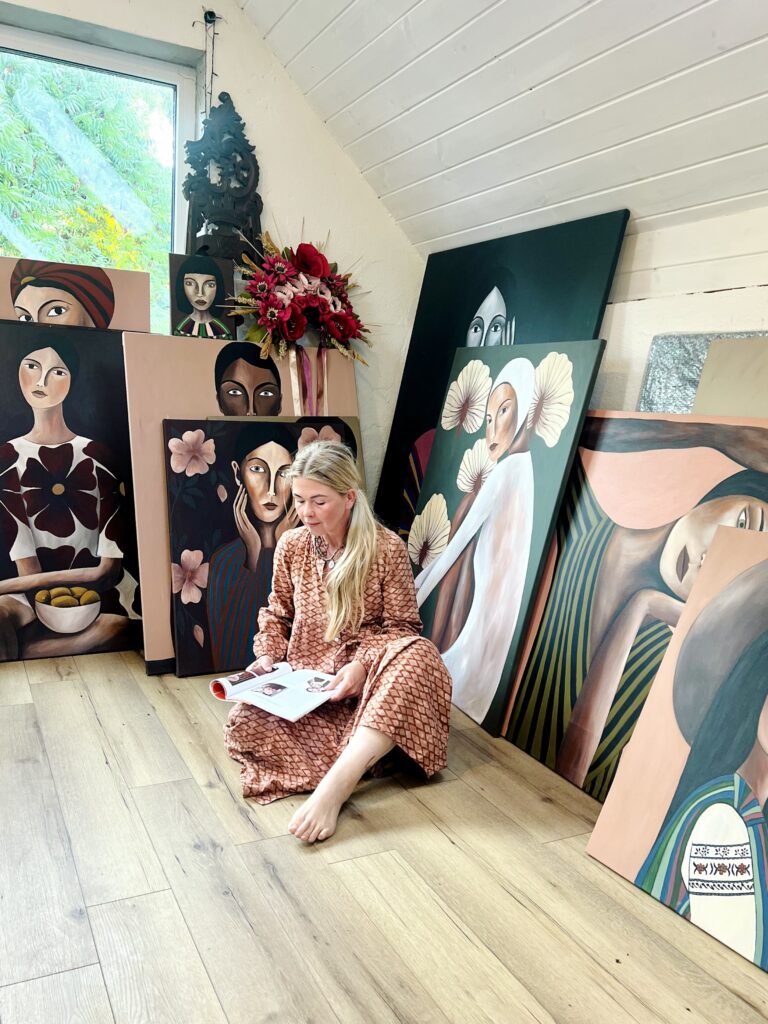
At Women in Arts Network, our Love, Life and Everything She Creates exhibition brought in hundreds of submissions from artists creating from every part of their lives. Work about motherhood, identity, memory, joy, reinvention. And among all of it, Dominika Luszcz’s paintings landed on our desk and something shifted.
Here were these portraits of women standing perfectly still in flower wreaths and hand-embroidered folk textiles, colours pulled straight from the earth, and we thought, this is it. This is what love, life and everything she creates actually looks like when an artist has lived it. Not performed it. Lived it.
Dominika is a selected artist for the Love, Life and Everything She Creates exhibition and her paintings do something that most folk-inspired work doesn’t manage. They don’t feel like nostalgia. They don’t feel like costume or museum or somebody else’s past. They feel alive. Present. Like these women in their embroidered garments and handmade wreaths are standing right here in front of you, holding centuries of tradition in their posture without saying a word about it.
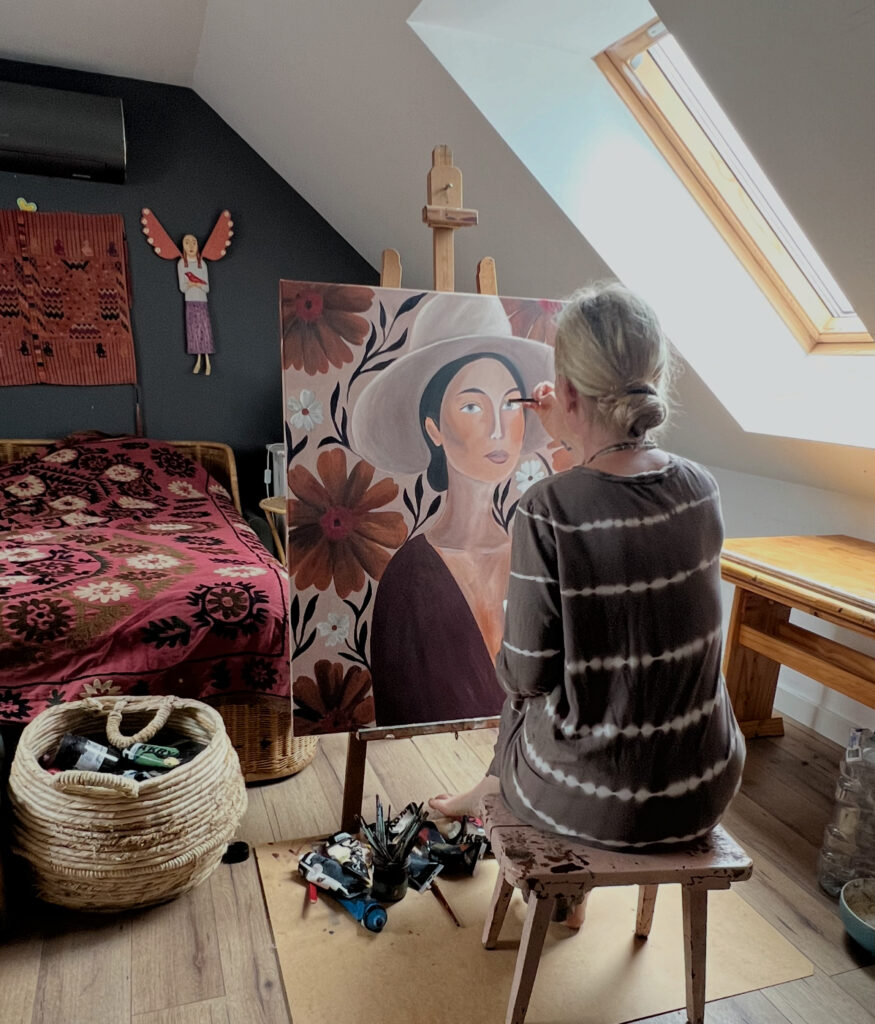
She paints women in flower wreaths. Richly detailed folk textiles. Embroidery and patterns that carry the fingerprints of hands you’ll never meet. Earthy palettes warm ochres, deep greens, muted florals colours that feel like they were mixed from the countryside itself. And the women don’t pose. They don’t perform. They hold this extraordinary stillness that sounds simple until you stand in front of it and feel how much it contains.
The story behind the work is the kind you don’t forget easily. Dominika grew up in 1980s Poland, travelling across countries in a caravan with parents who bought, sold, and traded handmade objects. Folk art was the family business before it was ever her subject matter.
Now let’s hear from Dominika, about what the flower wreath really holds, the journey from a caravan to Chicago to a Polish village, and what her paintings say about belonging that words simply cannot.
Q1. Could you share a little about your background and what first inspired you to become an artist?
I grew up in Poland, and my first inspiration came from traveling to different countries with my parents in a caravan during the 1980s. They made a living buying, selling, and trading handmade objects, so I was surrounded by traditional crafts, folk art, and beautiful handmade pieces from an early age.
Those experiences sparked my love of art and craftsmanship. Later, I earned a BFA from Columbia College Chicago, where I developed my own artistic voice. Today, my paintings explore identity, vulnerability, and the influence of Polish folklore while reflecting the appreciation for handmade traditions that first inspired me.
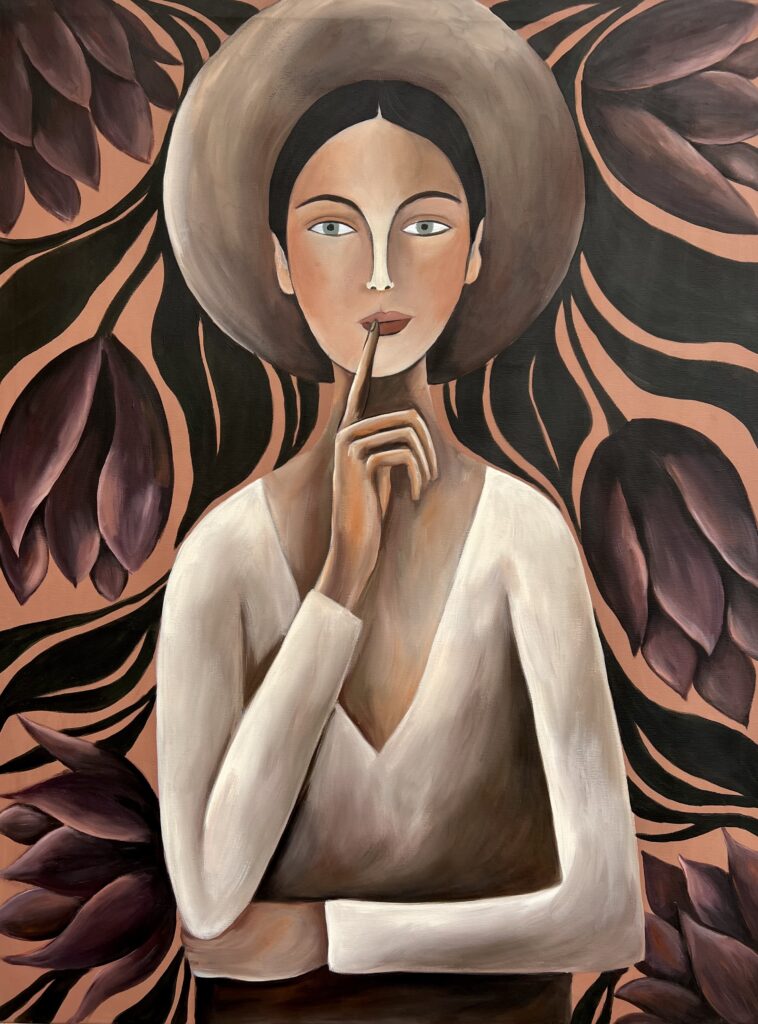
Q2. After studying Fine Arts and living in big cities, you chose to return to a small village in Poland. How did that decision change the direction of your work?
Returning to a small village in Poland changed the direction of my work in a profound way. After years of living in big cities, I began working hands-on with the soil alongside my family. That direct connection to the land gave me a much deeper appreciation for nature, the changing seasons, and the traditions of rural life. These experiences naturally found their way into my paintings. You can see their influence in the folk-inspired textiles, floral motifs, and a color palette that has become much more earthy and organic.
Q3. Your paintings of women wearing flower wreaths have become one of your most recognizable series. What first inspired these portraits?
My flower wreath portraits were inspired by discovering Polish folklore after I returned to Poland and moved to the countryside. Although I grew up in Poland, I spent much of my life in cities, and it wasn’t until I began living close to nature that I truly connected with rural traditions.
For me, the wreath symbolizes femininity, nature, renewal, and a sense of belonging. It also reflects my own journey of reconnecting with my roots, so these portraits are not only celebrations of cultural heritage but also deeply personal.
Q4. Your paintings celebrate Polish traditions while feeling contemporary. How do you balance historical inspiration with your own creative voice?
I balance the two by treating Polish traditions as a source of inspiration rather than something to be reproduced exactly. I respect their history, but I reinterpret them through my own artistic voice. While folk costumes, flower wreaths, and textiles reference tradition, the emotions, compositions, and simplified forms are entirely my own. My goal is to create paintings that honor cultural heritage while feeling relevant and meaningful today.
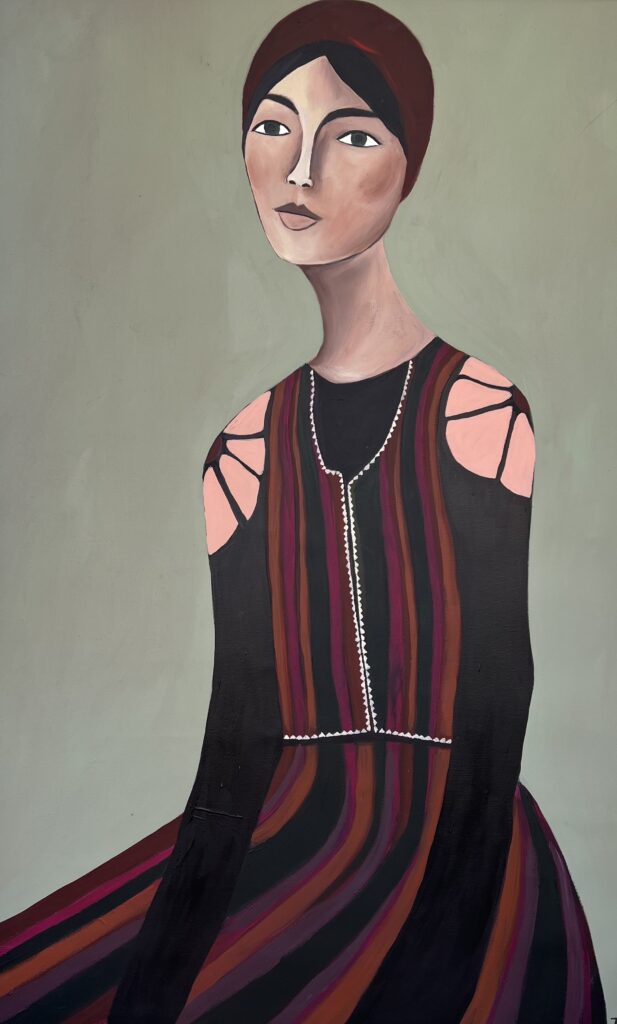
Q5. Many of your figures appear calm and confident. What qualities are you hoping to communicate through these women?
I hope these women communicate quiet strength, resilience, vulnerability, and self-acceptance. They may appear calm, but beneath the surface they carry memories, emotions, doubts, hopes, and quiet transformations. I believe that in stillness, everything happens.
Q6. Your color palettes are rich but harmonious. How do you develop the colors for a new painting?
I find color inspiration everywhere. I’m especially drawn to vintage clothing, rugs, and textiles from different countries, and I often bring pieces home from my travels. Sometimes a palette begins with the clothes I’m wearing or an unexpected color combination I notice in everyday life.
I like each painting to feel unique while still belonging to the same body of work, so I often carry colors from one painting into the next. This creates a sense of continuity and connection, while allowing every piece to have its own personality.
Q7. Traditional costumes are beautifully detailed throughout your paintings. What stories do these garments tell that words cannot?
Traditional costumes tell stories about where we come from and who we are. I love the handmade details, patterns, and embroidery because they carry the history of the people who made and wore them. In my paintings, these costumes are more than beautiful clothing. They help express a sense of identity, belonging, and a connection to the past in a way that words often cannot.
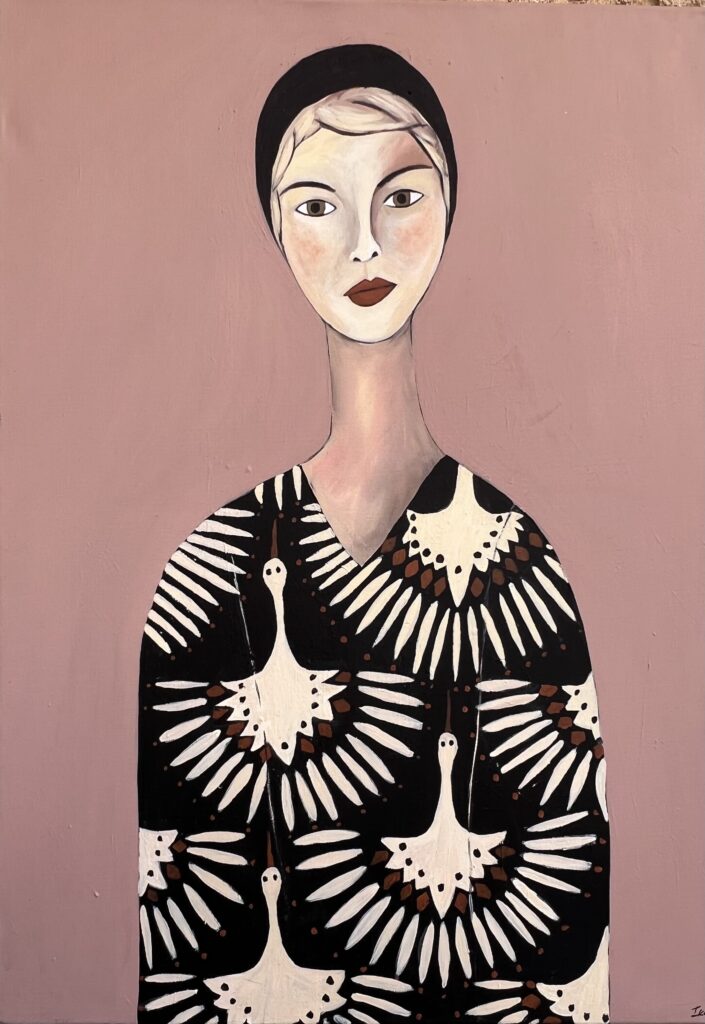
Q8. Flowers, forests, lakes, and changing seasons appear throughout your work. What role does nature play in your storytelling?
Nature is at the heart of my storytelling because it has become such an important part of my own life. Since moving to the countryside, I’ve developed a much deeper connection to the land through gardening and working with the soil. Flowers, fields, lakes, and the changing seasons are more than just settings in my paintings—they symbolize growth, renewal, and our connection to nature. I hope they encourage viewers to slow down, notice the beauty in everyday life, and reconnect with themselves.
Q9. When beginning a new painting, what usually comes first, the folklore, the figure, or the composition?
Most of my paintings begin with the figure because my main goal is to express an emotion or psychological state. The person comes first, and everything else develops around them. Occasionally, though, a painting begins with a piece of fabric, a vintage textile, or a pattern that inspires me. In those cases, the colors and textures help shape the mood before the figure finds its place.
Q10. Your work brings centuries-old traditions into a contemporary setting. What do you think folk art can offer modern audiences?
I think folk art reminds us where we come from. In today’s fast-paced world, it’s easy to lose touch with our roots and our sense of identity. Folk traditions connect us to our history, culture, and the generations before us.
I hope my paintings encourage people to appreciate that heritage while also seeing that these traditions can still feel meaningful and relevant today.
Q11. How have collectors outside Poland responded to the cultural stories in your paintings?
The response has been incredibly rewarding. Many people with Polish roots tell me that my paintings remind them of their ancestors, their childhood, or the traditions they grew up with. They often say they can see a part of themselves in my work. At the same time, many collectors without Polish heritage connect with the emotions in the paintings. Even if they don’t recognize the cultural references, they relate to the themes of identity, belonging, resilience, and the quiet emotions that are universal.
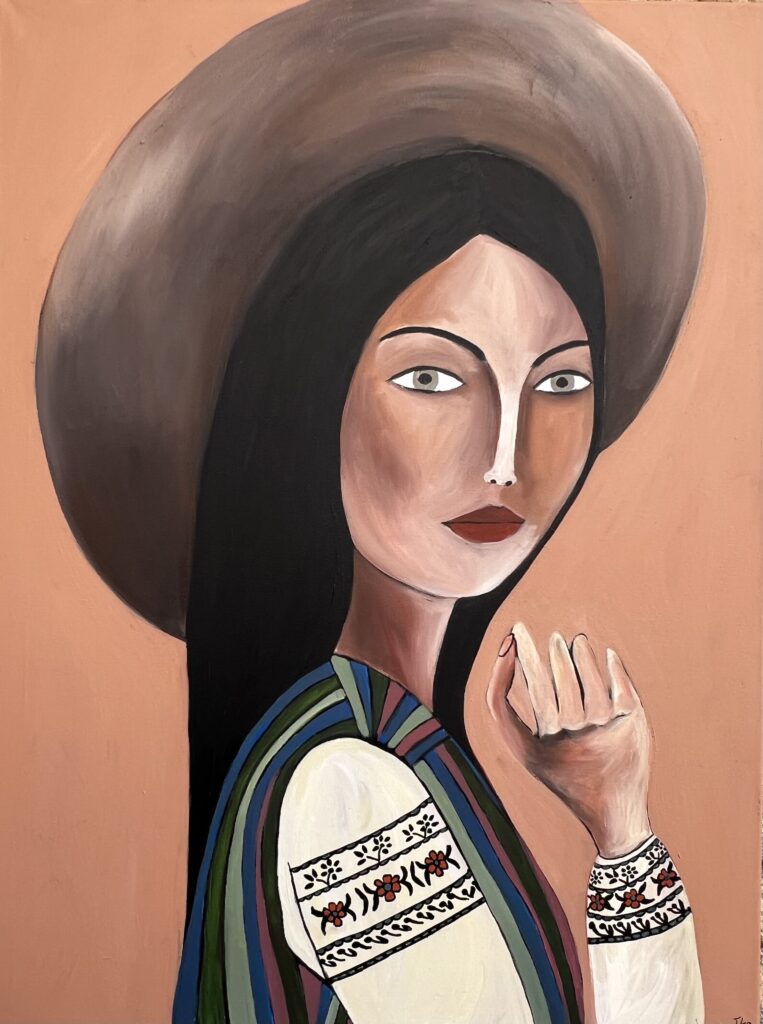
Q12. Do you think people are becoming more interested in reconnecting with their cultural roots through art?
I think art has a unique way of helping us reconnect with our roots because it speaks through emotion rather than words. A painting can bring back memories, spark curiosity, or create a sense of familiarity that people may not even realize they were missing. It reminds us where we come from and helps us better understand who we are. At the same time, art can introduce us to other cultures, showing that while our traditions may be different, many of our emotions and experiences are shared.
Q13. How has your definition of success changed since you first began sharing your work professionally?
When I first started sharing my work professionally, I thought success meant exhibitions, publications, and recognition. While I’m still grateful for those opportunities, my definition of success has changed over time. Today, success means creating work that feels honest and meaningful. If one of my paintings moves someone to tears, reminds them of their roots, or helps them connect with an emotion they couldn’t put into words, that is the greatest success I could hope for.
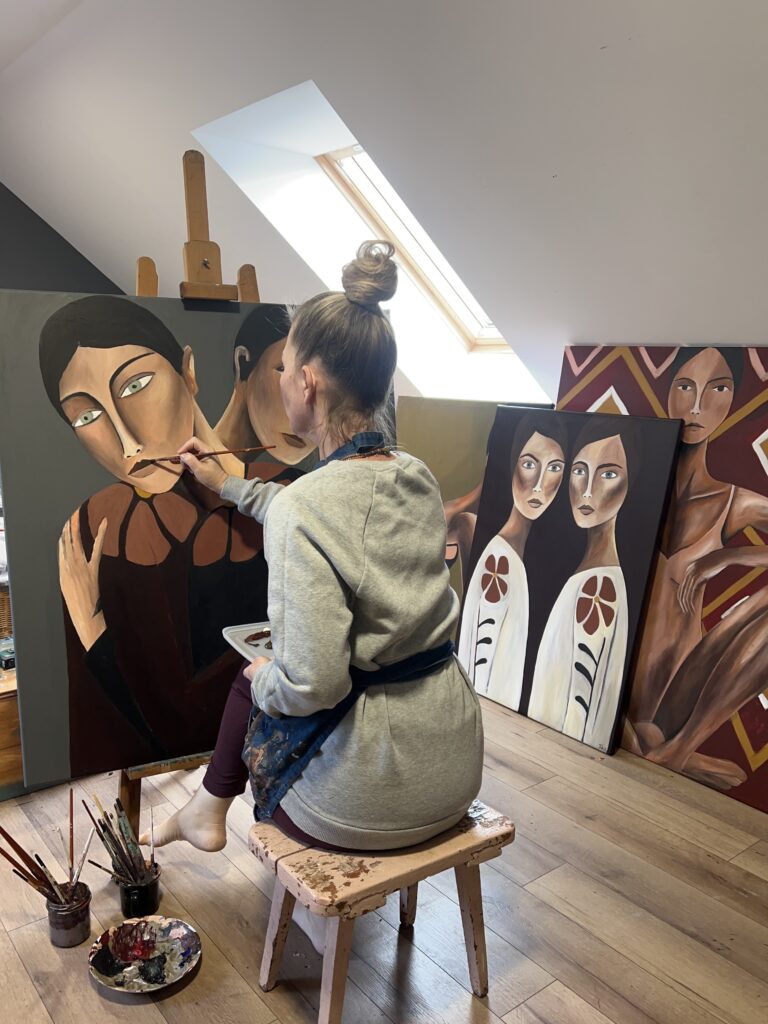
Q14. As your series of folk-inspired portraits has grown, what have you discovered about your own relationship with Polish heritage?
As this series has grown, I’ve become much more aware of the richness of Polish traditions and how important they are to my own identity. Growing up in the United States, I often felt different because my values and way of thinking were shaped by my Polish upbringing. At the time, I didn’t always appreciate that difference, but today I see it as one of my greatest strengths. Creating these paintings has helped me reconnect with my heritage and see it as something to celebrate. It has also inspired me to share these traditions with my son, so that he grows up knowing where he comes from and, no matter where life takes him, will always feel proud of his roots.
Q15. What advice would you give artists who want to draw inspiration from their own heritage without simply repeating tradition?
I would encourage artists to be curious about their heritage rather than trying to copy it. Learn the stories, traditions, and craftsmanship behind it, then allow those influences to become part of your own artistic voice. The goal isn’t to recreate the past exactly as it was, but to build on it and create something honest, personal, and meaningful that reflects who you are today.
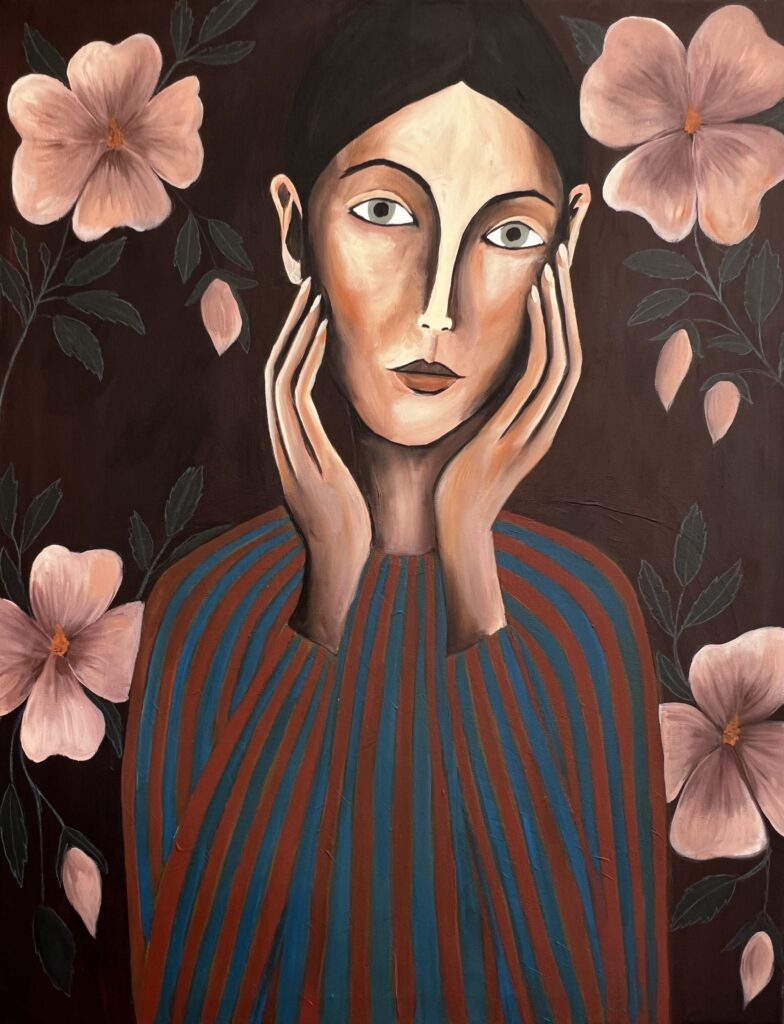
As our conversation with Dominika came to a close, one thing became very clear to us. This is not an artist who paints Polish folklore. This is an artist who left home, crossed oceans, built a completely different life, and then one day turned around and walked all the way back to the soil she grew up on. And the paintings she makes now carry the full weight of that circle the leaving, the distance, the ache, and the homecoming that changed everything.
That’s what runs through all of Dominika’s work if you look closely enough. Not tradition for tradition’s sake. Not folklore as decoration. But the slow, quiet, sometimes painful process of figuring out where you belong. She grew up surrounded by handmade objects her parents carried across borders.
She left Poland. She built a life somewhere else entirely. And then she went home. Put her hands in the soil. And started painting women who hold in their stillness everything she spent years trying to understand about herself.
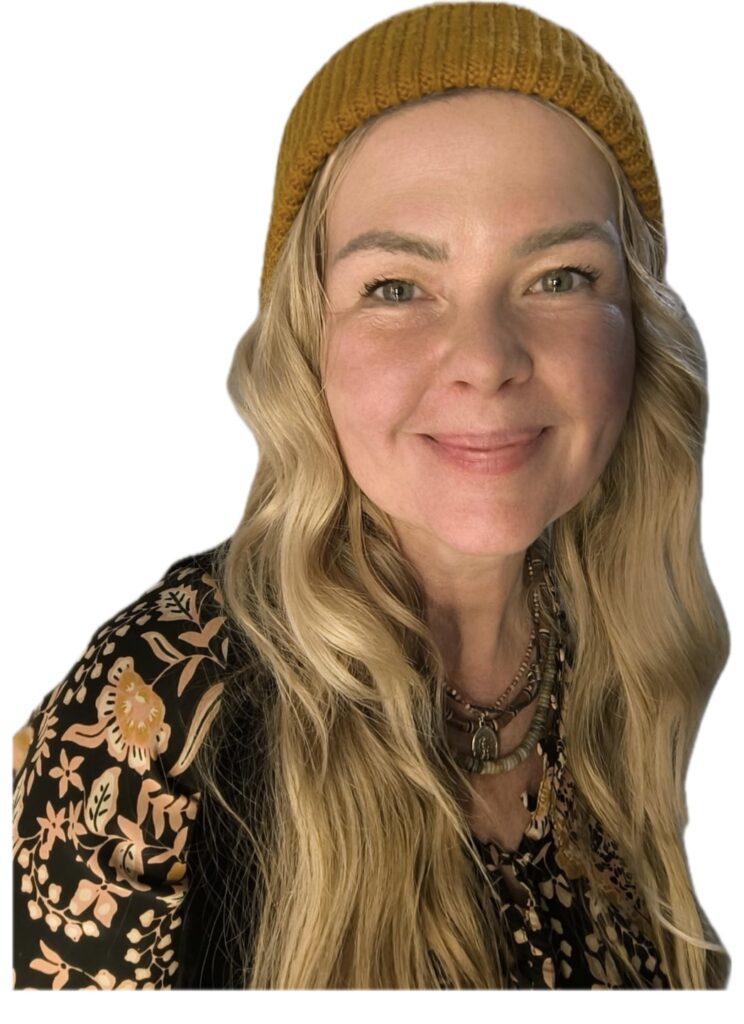
The flower wreaths aren’t accessories. The embroidered costumes aren’t pretty details. The earthy palettes aren’t aesthetic choices. Every part of these paintings carries weight. The weight of women who made those garments by hand. The weight of traditions passed down through kitchens and fields and hands that nobody documented. The weight of choosing to honour all of that instead of leaving it behind.
For anyone thinking about living with Dominika’s work, know that these are paintings that get quieter the longer you look at them. Not louder. Quieter. The kind of quiet that makes you think about your own roots, your own grandmother’s hands, the things from your own childhood that you maybe stopped paying attention to and suddenly wish you hadn’t. That’s not a common thing for a painting to do. Most art wants your attention. Dominika’s art gives you back your memory.
Collectors with Polish heritage will see their own history in these paintings immediately. But collectors with no connection to Poland at all will feel something too. Because the need to belong somewhere, the ache of leaving, the relief of returning, the pride of finally understanding where you come from none of that belongs to one country. It belongs to everyone.
To see more of Dominika Luszcz’s work and follow her journey, find her through the links below.
