
This artist builds expressive faces from layered delivery boxes ┃Limor Dekel
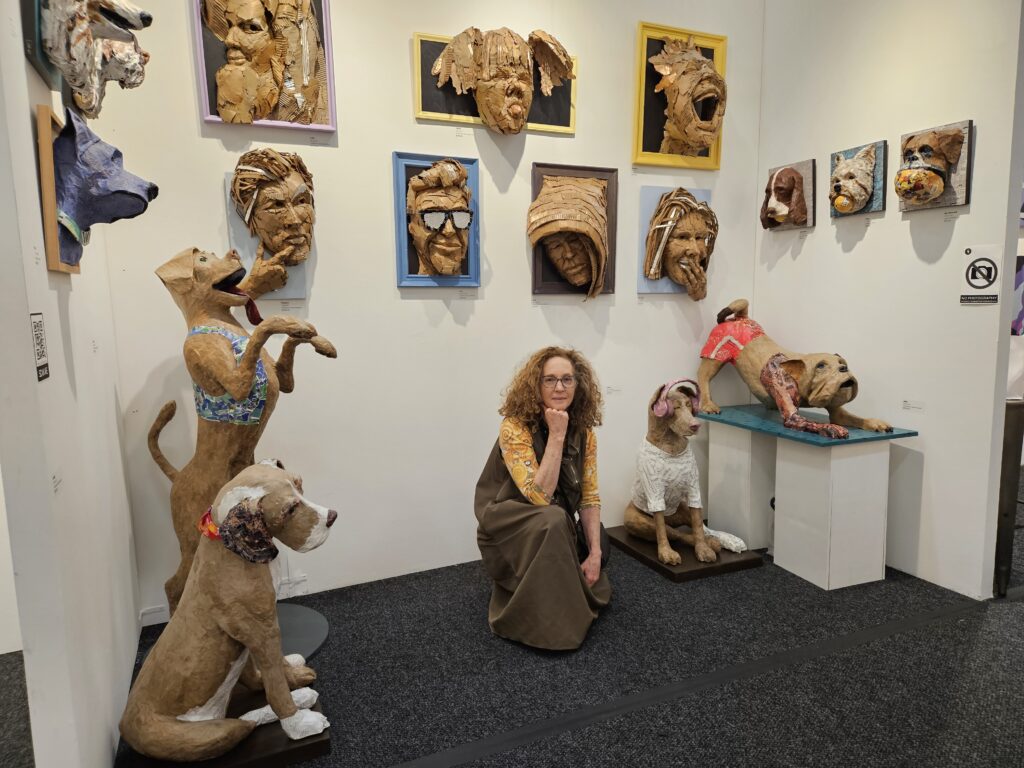
At Women in Arts Network, we love it when an artist walks into Faces and makes us question what a face can even be made of. Not just what it holds emotionally. What it’s physically built from. What materials can carry the weight of human expression.
Limor Dekel builds faces out of cardboard. And they carry more expression than most faces made from marble.
Limor is a selected artist for the Faces exhibition and her sculptures stop people for a reason that takes a second to land. You see the face first. The expression. The energy. The gesture. And then you realise what you’re looking at is layered cardboard and repurposed paper and suddenly the whole thing means something different. Because this material was garbage yesterday. And today it’s looking back at you with more life in it than you were expecting to feel on a Tuesday afternoon.
She’s a sculptor who works with cardboard, paper, and wood, building forms through layering and shaping and adding colour with the kind of care and craftsmanship you’d expect from someone working in bronze. Because that’s her training.
She studied ceramic design at the Bezalel Academy of Art and Design in Israel. Learned form and technique from one of the best art schools in the region. Spent years working with clay and understanding what it means to build something with your hands that holds together physically and emotionally.
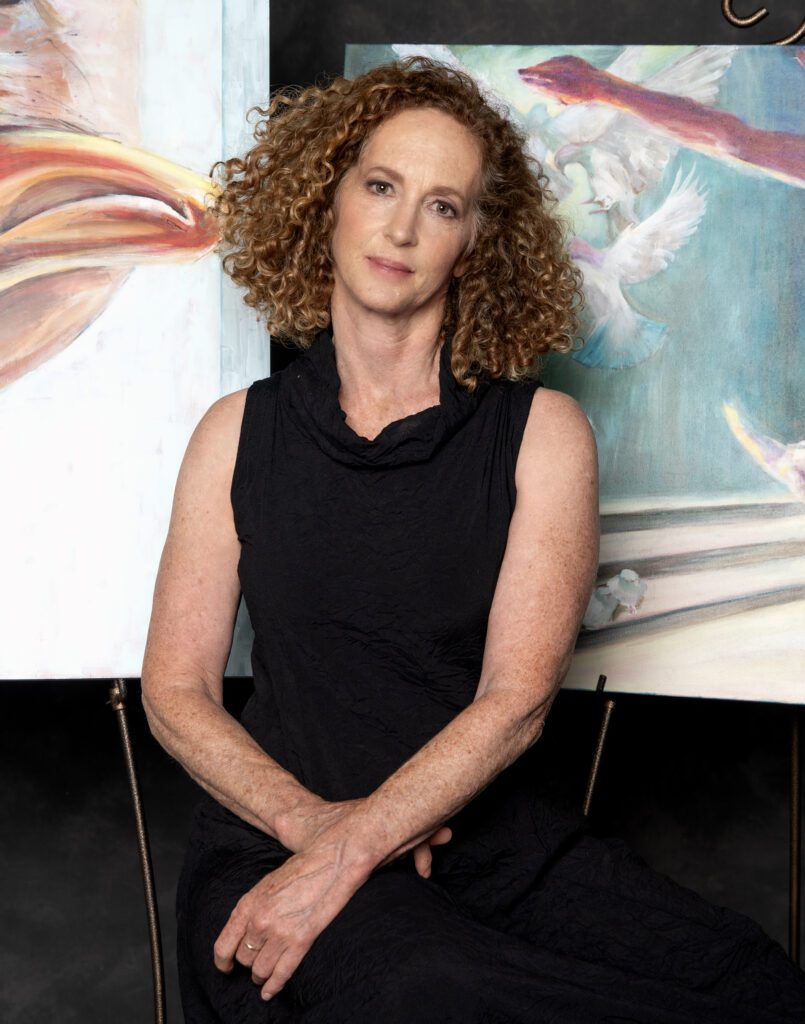
And then the pandemic hit and everything changed. She was teaching ceramics to high school students who suddenly couldn’t get materials at home. But delivery boxes were everywhere. So she improvised. Substituted cardboard for clay. And discovered something she wasn’t expecting. The students were freer with cardboard. Less afraid. Less precious.
The material was so everyday, so disposable, that nobody worried about messing up. And Limor felt that freedom too. It liberated her. She could experiment without the cost, without the environmental weight, without the kiln. Everything she’d learned from ceramics still applied. She just didn’t need fire anymore.
There’s something poetic in there that she’ll tell you about. Her mother’s maiden name, Papierczyk, is Polish for a person who works with paper. Some things are apparently written in the blood.
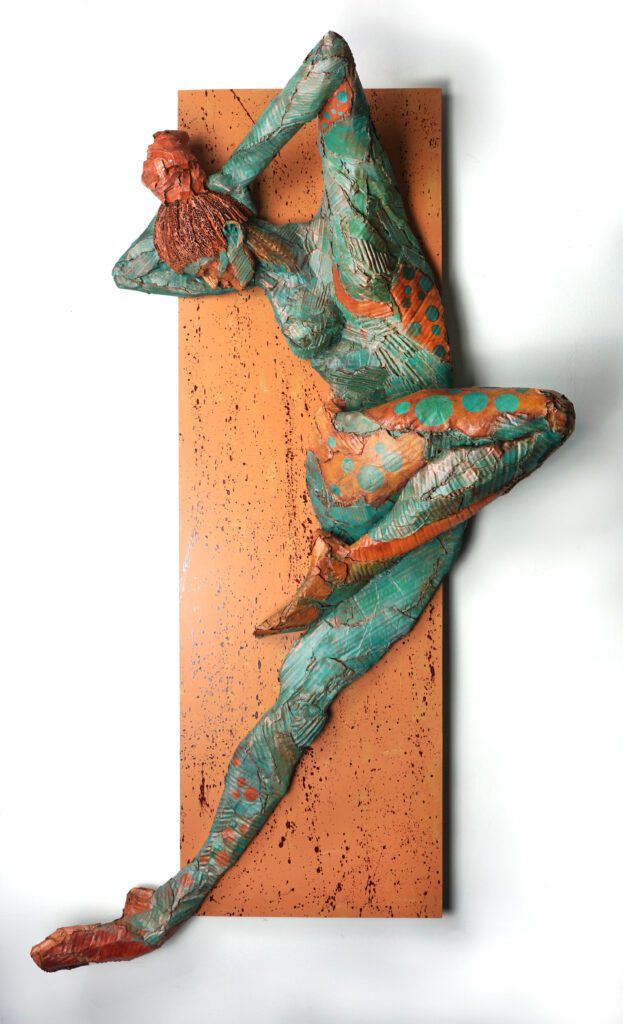
Limor grew up in Israel surrounded by art and culture and a passion for life that she says runs through everything she makes. She danced from a young age, ballet and modern, and even though she shifted to visual art at fifteen that sense of bodies in motion and gesture and physical energy never left her work.
She served in the Israeli military as a young officer, an experience that taught her discipline and observation and the ability to read people from every background. She taught for years before becoming a full-time studio artist and that transition meant learning to trust her own voice again after years of serving everyone else’s.
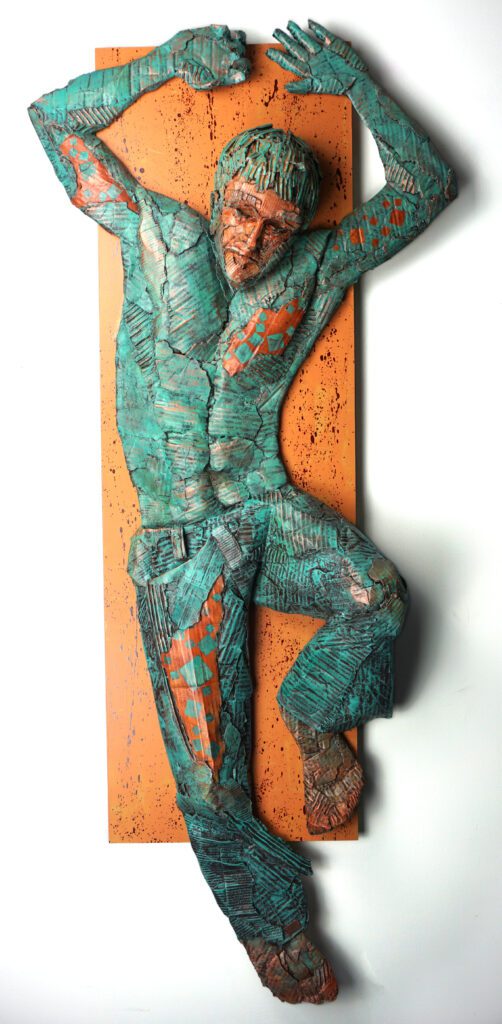
Her work is about human energy. She says it plainly. She only creates something if it sparks something inside her. Dancers, figures, faces, animals, all of it buzzing with vitality and colour and this sense that the sculpture is barely holding still.
Now let’s hear from Limor, about making faces from things people throw away, about a name that means paper, about ceramics and cardboard and the pandemic that accidentally set her free, and why the humblest material in the room might be the one carrying the most truth.
Q1. Can you share your background, where you grew up and how your early life in Israel influenced your artistic path?
Growing up in Israel to artistic parents, I absorbed Israeli cultural values—a passion for life, risk-taking, open debate, strong social connections, and a deep appreciation of the land and its diverse population. My first artistic passion was dance. Starting at a young age I studied ballet and modern dance. At age 15, however, my passion for dance was superseded by my passion for visual arts; I changed my focus and concentrated on studying sculpture, drawing and painting. I didn’t lose, however, my interest in dance; much of my work now focuses on dance, bodies in motion and people.
Q2. Your time serving as an officer in the Israeli military is unusual for an artist. How has that experience shaped your approach to discipline, observation, or emotional expression in your work?
Creating art isn’t just inspiration, its the hard and often frustrating process of turning inspiration into reality. Even though I might not have appreciated it at the time, I can see now that experiencing the structured environment of military service enhanced my self discipline skills, skills that I now apply in my creative process. At age 19 in the IDF, I was a young officer responsible for rounding-up reserves who had been called for duty – men from diverse social and economic backgrounds who were often twice my age (and were often trying to avoid service). Interacting successfully with this diverse group required me to sharpen my observational skills and my ability to understand different perspectives, all of which, I believe, lead to personal growth and an enhanced the depth of artistic expression. And finally, from an emotional perspective, the exposure to loss and conflict has sensitized me to the complexities of human emotions, infusing my work with a deeper sense of empathy and introspection.
Q3. After your early training, you studied ceramic design at Bezalel Academy of Art and Design. What aspects of that education have stayed with you in your current practice?
My education at Bezalel deepened my understanding of form and the place of art in human culture and history. In addition to drawing and design concepts, it also provided strong skills in ceramic techniques. Learning the necessary skills needed to work with clay developed a strong appreciation for craftsmanship, where in my current practice I take care to create pieces that are carefully crafted with attention to details.. With the exception of techniques that are unique to working with clay, virtually everything I learned at Bezael applies to my current work with paper, wood and cardboard. The new media employ additive techniques similar to those in ceramics but without the need for firing. I find this change has liberated my creativity. This shift has enabled me to explore sculptural forms with greater freedom and flexibility, allowing me to express my artistic vision without the constraints of traditional ceramic processes.
Q4. Your current sculpture work frequently uses cardboard and repurposed paper. What drew you to use materials that are often seen as lowly or throwaway, and what do they allow you to express?
I taught ceramics at a local high school during the pandemic. As the students worked from home, it was difficult for them to acquire the materials they needed for our projects. I had to be creative and try to utilize materials that were accessible to the students. As they say, necessity is the mother of invention. Delivery became a big thing during the pandemic and and cardboard delivery boxes were available in virtually every household. Accordingly I began to experiment with my classes by substituting cardboard for clay. The students liked it. In fact, as cardboard was such a ubiquitous and normally “throw-away” material, I found that the students felt more free to create than they had with clay – they weren’t worried about “messing up” and ruining anything. From an early age, I learned to love nature and be resourceful with what it offers. Over the years I became concerned about the environment and was excited to work with repurposed otherwise-discarded materials. And like my students, I feel more free to explore new ideas without the pressure of high cost of supplies, and environmental impact of toxic gasses, dust and high electricity consumption. Interestingly, there is a familial connection to paper through my mother’s maiden name, Papierczyk, a Polish name which translates to ‘a person that works with paper’. This ancestral tie may explain my inherent connection and creative exploration with paper-based techniques in my current artistic practice.
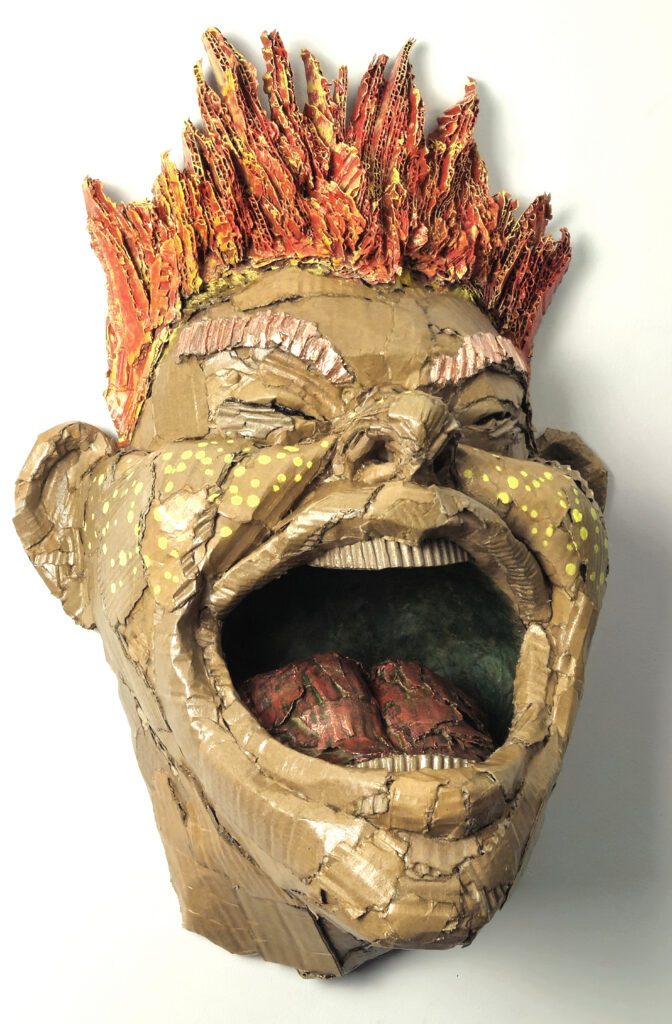
Q5. Your work includes animals, human figures, fantasy, portraiture, and landscape. What common ideas or concerns do you see running through such varied subject matter?
The common, underlying thoughts in my art is the human energy . I choose the subject matter only if it sparks something in me. The subject matter has to sustain my interest and energy through the process of bringing the piece to life. I use color to support the energy and mood that I want to convey. As a curious, creative, energetic and passionate individual, I feel the need to visualize my thoughts and feelings. I use my very broad set of skills and media to visualize my interest in the human spirit and passion, concern for nature, and above all, vitality.
Q6. In Belly Dancer you mention personal dance history playing into the work. How often do your paintings reflect lived experience, and how do you decide when to bring personal narrative into an artwork?
Honestly, this is not something I am consciously aware of. I create art that is authentic to me–my experiences, thoughts and feelings. Sometimes an image I come across will spark a memory and sometimes a memory will spark a search for the right imagery. Many of my dynamic figurative pieces are of gestures that I was never able to achieve as an young dancer.
My understanding of the hard work, passion, discipline and perseverance that requires to achieve the gesture, is the personal narrative and life experience.
Q7. When you begin a new work whether a portrait, sculpture, or landscape do you start with a visual idea, a story, a mood, or something else?
My starting process relates to the way that I share my work, which is primarily through art shows. The majority of my venues are outdoor juried art shows where artists display their work in 10’x10′ booths. Large crowds of people pass through the booths to view the art. The artist needs to present their message succinctly to a large crowd of people. To achieve this, I often start my projects by planning a series of artwork with a common theme, media and technique. Since I like to experiment with new techniques, I make sure that each piece in the series has the same visual elements, but I vary the mood, gesture, color, etc. That way, even though each artwork is unique, I am able to speak about them as a group and the art viewers are able to grasp my artistic voice by viewing the collection as a whole.
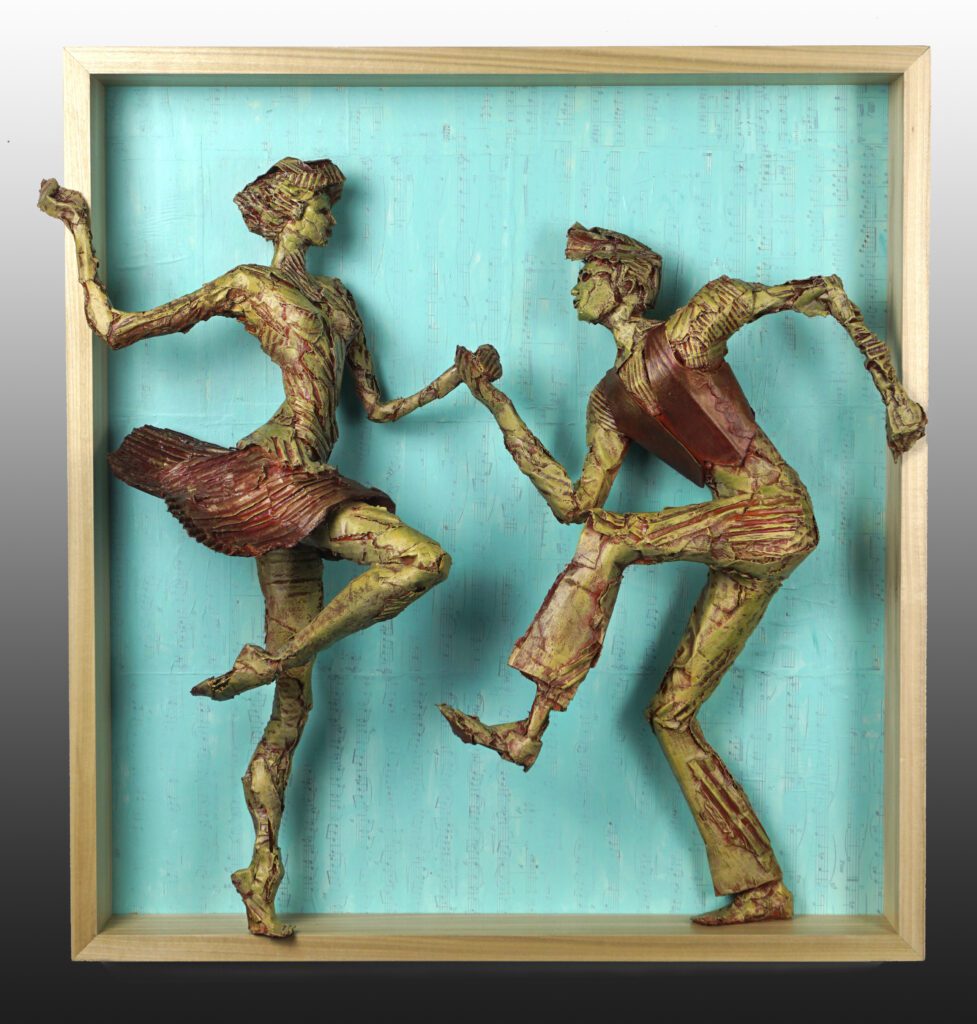
Q8. You do custom commissions, such as sculpted dogs based on people’s photos. What do you learn about your own practice when adapting your style to another person’s story?
People commission me because they like my style. I make a point to understand what it is they are looking for in the piece before I start so I can better hit their mark. Sometimes I find it easier to create something with set goals rather than finding it within myself. Commission work is not something that I would want to do exclusively, but many of the commissions turn out to be interesting projects.
Q9. How has your perspective on art and meaning changed since you first transitioned from design and teaching into full-time studio work?
When I first transitioned to be a full time studio artist I was all over the place, in terms of theme. As a teacher, as I mentioned above, I had to meet the needs of many students and taught multiple art forms. In the studio, it was only me. I had learn to trust my inner voice and narrow my choices, but still satisfy my own artistic vision and energy. Instead of gearing myself to the needs of my students, to be authentic in my art I had to learn again to be me. I had to find my passion and my media and to create works that make sense to others and still satisfies my own vision.
Q10. What advice would you give to artists who want to experiment with unconventional materials or multidisciplinary paths, but feel unsure about shifting direction mid-career?
Trying something new requires courage and playfulness. I learned that I enjoy challenges and solving problems. Repeating myself bores me. If jumping into the cold water headfirst feels too risky, try putting your toes in first, then the legs, and hopefully the rest of the body will follow. I see making art as a deeply personal journey–a journey in my control. The studio is where I’m god. We all have negative voices in our heads and fears that are holding us back. When fear creeps in, I often ask myself what happens if I fail? The world won’t end. Life is too short to hold back.
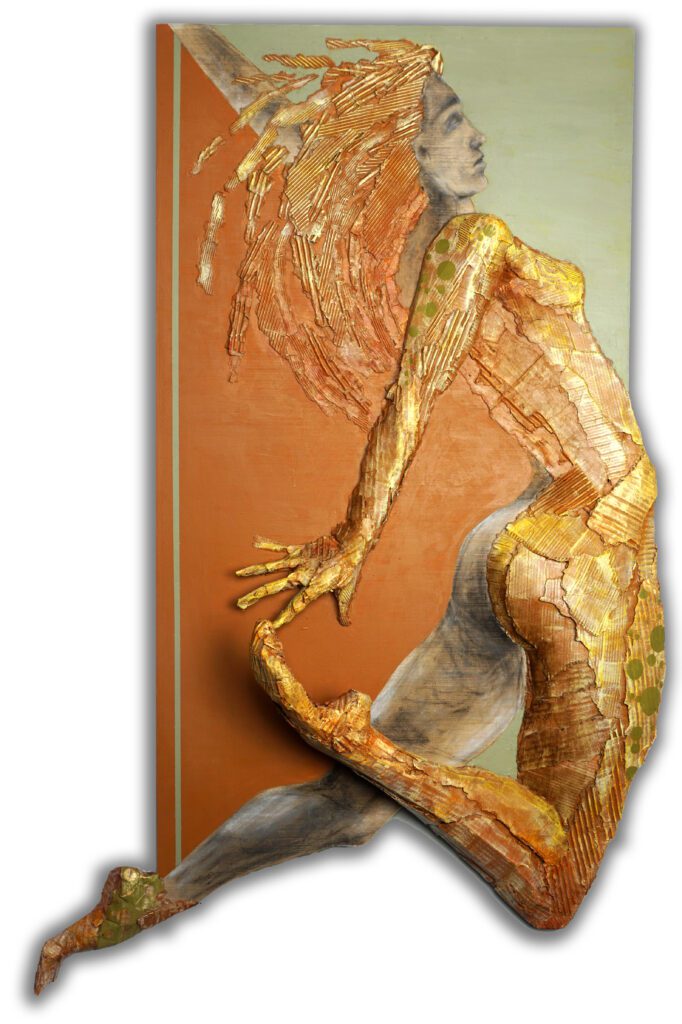
As our conversation with Limor drew to a close, one thing kept sitting with us. That the material everyone throws away is the one she builds faces from. And those faces have more life in them than most things made from materials a hundred times more expensive.
There’s something important in that. Not just for artists. For anyone who’s ever looked at what they have and thought it’s not enough. Not good enough. Not fancy enough. Not the right stuff to make something meaningful from. Limor had clay taken away from her by a pandemic and was left with a pile of delivery boxes and a room full of teenagers who needed to create.
And instead of seeing a limitation she saw a liberation. The material was so humble that nobody was afraid of it. And fear, it turns out, was the only thing standing between her students and their best work. Between her and hers.
She trained at one of the best art schools in Israel. She served in the military. She danced ballet. She taught ceramics for years. She has every credential and every skill, and she chose the humblest material on earth not because she had to but because it gave her the most freedom.
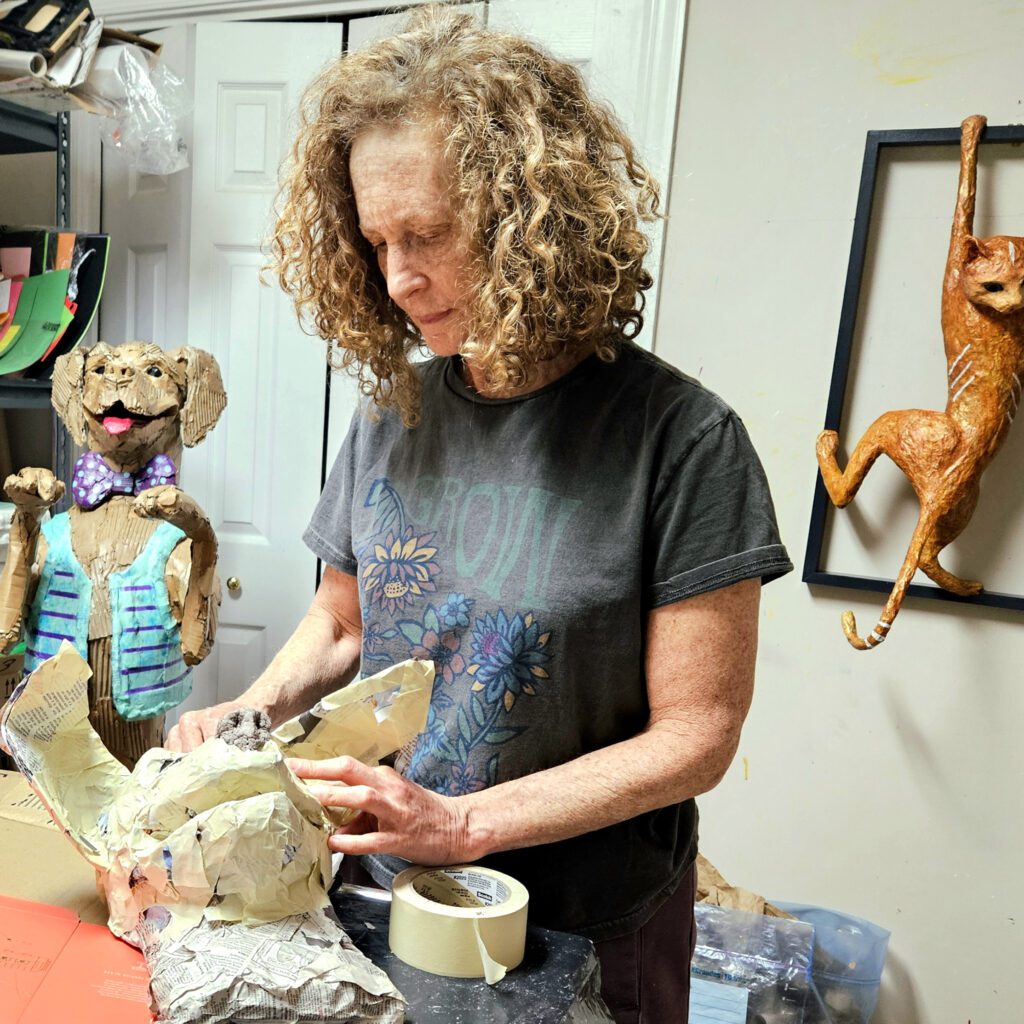
That tells you everything about who she is. Someone who values what a material can say over what it costs. Someone who trusts the work more than the presentation. And her mother’s name means paper worker. Sometimes life writes the story before you even know you’re living it.
For anyone who collects or lives with art, Limor’s work offers something rare. A piece that starts a conversation every single time someone sees it. Because the first question is always what is that made of and the answer, cardboard, changes the way they see everything else about it. The expression hits different when you know it was built from something disposable. The craftsmanship means more when you understand what it took to make this material hold that kind of emotion. And the story behind it, the pandemic, the students, the Polish name, the dancer turned soldier turned ceramicist turned sculptor of thrown-away things, that story gives the work a depth that only grows over time.
If Limor’s journey teaches us anything it’s that you don’t need expensive things to make something priceless. You need vision. You need courage. And you need the willingness to see possibility in the thing everyone else already gave up on.
To follow Limor’s journey and see more of her work, find her through the links below.
