
How Art Inspires Lifelong Learning
Every artist begins somewhere, long before anyone notices their work.
No matter how many years they’ve been creating, how many exhibitions they’ve been part of, or how many people admire their work, they rarely believe they’ve learned everything there is to know. Instead, they keep experimenting. They keep asking questions. They keep making work that challenges them in new ways.
Maybe that’s because art was never meant to have a finish line.
Unlike subjects where success is measured by reaching the correct answer, art invites us to stay curious. One painting leads to another technique. One sketch reveals a weakness worth exploring. One conversation with another artist sparks an entirely new way of seeing the world.
In many ways, becoming an artist also means becoming a lifelong learner.
And the beautiful part is that this learning isn’t limited to improving your craft. It shapes how you observe, think, solve problems, connect with people, and understand yourself. Every artwork becomes more than something you create. It becomes evidence of something you’ve discovered along the way.
Whether you’re just opening your first sketchbook or have been creating for decades, art has a remarkable way of reminding you that growth is never really over.
Growth Happens Through Creating
It’s easy to think of learning as something that happens before you begin.
You watch tutorials. Read books. Take classes. Practice techniques.
Those are all valuable, but some of the most meaningful lessons only appear once you’re actually making the work.
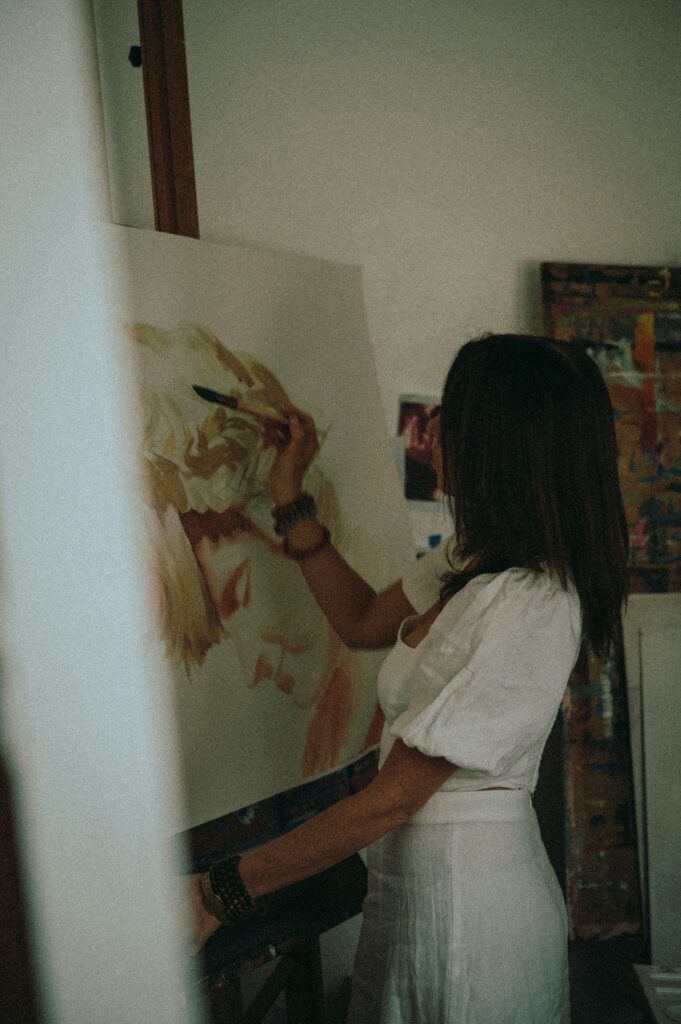
You might’ve started a painting feeling completely confident, only to realize halfway through that your composition isn’t working. Or maybe you’ve spent hours trying to capture light exactly as you imagined it, only to discover that the colors needed something entirely different.
Those moments can feel frustrating, but they’re also where learning quietly begins. Every artwork asks a different question.
How do you simplify without losing emotion?
How do you guide someone’s eye through the composition?
How do you communicate an idea that feels clear in your mind but difficult to express on paper?
No course can prepare you for every creative challenge you’ll encounter because every piece asks something unique of you.
In the words of Pablo Picasso,
“I am always doing what I cannot do yet, in order to learn how to do it.”
That’s what makes art such an incredible teacher. You don’t simply learn before creating. You learn because you create.
Why Curiosity Makes Better Artists
If there is one quality that connects artists across every discipline, it isn’t perfection.
It is curiosity.
Curious artists pay attention in ways that others often don’t. They notice how afternoon light changes the colors of a building. They become fascinated by the folds in fabric, the texture of old walls, or the quiet expressions people wear while waiting for a bus. Even ordinary moments become opportunities to observe. That habit of paying attention slowly builds something much bigger than inspiration. It builds knowledge.
The more curious you become, the more connections you start making between different ideas. A photograph inspires a painting. A poem influences a sculpture. A museum visit changes the way you approach color. A conversation introduces you to a culture you’ve never explored before.
Learning stops feeling like a task. Instead, it becomes part of everyday life.
That’s one of the reasons artists continue evolving throughout their lives. They aren’t only collecting techniques. They’re constantly collecting experiences.
There Are No Perfect First Drafts
Nobody enjoys making work that doesn’t turn out the way they imagined.
You might spend days on a piece only to realize something feels off. Maybe the perspective doesn’t work. Maybe the colors compete instead of complementing each other. Maybe the final result simply doesn’t capture what you hoped to express.
It’s tempting to label those pieces as failures, but often, they’re the ones that teach us the most. When everything goes according to plan, we celebrate but when it doesn’t, we investigate.
We ask questions. We experiment with different solutions. We discover what doesn’t work and, more importantly, why.
That process strengthens artistic judgment in a way that success alone never can.
“The creative process is a process of surrender, not control.” — Julia Cameron
Many artists can point to a painting they never exhibited or a sketchbook they almost threw away because they disliked it at the time. Looking back, those same pieces often mark important turning points in their creative journey. The art piece may never leave the studio, but the lesson it teaches you stays forever.
Life Skills You Learn Through Art
People often think lifelong learning in art is about becoming technically better. Drawing more accurately, understanding perspective, mastering anatomy, or learning a new medium.
Those things matter, but they’re only one part of the story. Art teaches patience when progress feels slower than you’d like. It teaches resilience after rejections, creative blocks, or projects that don’t meet your expectations. It teaches observation in a world that constantly competes for your attention.
Many artists begin creating because they want to improve their skills. Over time, they realize the practice has been shaping them just as much as they’ve been shaping the work.
Without noticing, they become more thoughtful and more observant. More comfortable with uncertainty. Those are lessons that extend far beyond the studio.
Why Artists Never Stop Learning
One of the biggest misconceptions about becoming an artist is that experience eventually replaces learning. In reality, experience often creates even more curiosity.
The more you understand about art, the more you realize how much there still is to explore. A watercolor artist might become interested in printmaking. A photographer may begin studying painting to better understand composition. A sculptor could find inspiration in architecture, fashion, or nature.
Creative growth rarely follows a straight line. Instead, it branches outward in unexpected directions. That’s one of the reasons many artists continue experimenting throughout their careers. They aren’t abandoning what they already know. They’re expanding it.
Every new material, process, collaboration, or challenge adds another layer to their understanding of both art and themselves.
Inspiration Beyond the Studio
Some of the most important lessons artists learn happen when they aren’t creating at all.
They happen while wandering through a museum and noticing how another artist solved a problem you’ve been struggling with, during conversations with fellow creatives who see your work from a completely different perspective or while reading a novel, watching a film, listening to music, or traveling somewhere unfamiliar.
Art has always been connected to the world around it. The more experiences you collect, the richer your creative practice becomes. That’s why lifelong learning isn’t just about improving your technique. It’s about staying open to ideas beyond your own discipline.
When you allow yourself to learn from different places, your work becomes more layered, more personal, and more original.
Other Artists Can Become Your Greatest Teachers
It’s easy to feel like becoming a better artist is something you have to do alone, but creativity has always grown through shared knowledge.
Artists learn from mentors who generously pass on their experience. They learn from peers who challenge them to think differently. They learn from younger artists whose fresh perspectives question old habits.
Every creative community has something to offer. Sometimes it’s practical advice on materials or techniques. Other times, it’s simply the reassurance that someone else has struggled with the same doubts you’re facing. Constructive feedback, thoughtful conversations, and even observing how others approach their work can reveal possibilities you might never have discovered on your own.
Learning doesn’t always mean finding the right answer.
Sometimes it means hearing a question you hadn’t considered before.
That’s one of the greatest gifts of being part of an artistic community: it reminds you that growth is rarely a solo journey.
How Technology Is Changing Art Education
Not long ago, learning a new artistic skill often meant enrolling in a class, finding a mentor, or spending hours in a library. Today, knowledge is far more accessible.
Artists can watch demonstrations from creators across the world, join online workshops, explore virtual museum collections, and connect with communities that share techniques, critiques, and encouragement.
This has opened incredible opportunities for artists at every stage of their journey.
Real learning doesn’t happen because you’ve watched someone else create. It happens when you try, adjust, make mistakes, and try again. Resources can guide you. Practice is what transforms information into understanding.
Why Staying Curious Matters
Expertise does not mean having all the answers. This is something artists often discover during their journey.
The ones who continue growing are usually the ones who remain curious enough to ask better questions. What happens if I use fewer colors? How can I simplify this composition? What story am I really trying to tell? Could I approach this idea in a completely different way?
Questions like these keep creativity alive.They prevent artists from repeating the same work simply because it feels comfortable. Curiosity encourages experimentation, and experimentation leads to growth. That’s why lifelong learning isn’t about chasing perfection. It’s about protecting your sense of wonder.
The moment you believe there’s nothing left to discover is often the moment your work stops evolving.
The Creative Journey Never Really Ends – That’s the Beauty of It
One of the most comforting truths about being an artist is that you never have to arrive.
There will always be another technique to explore. Another artist whose work shifts your perspective. Another book, exhibition, conversation, or life experience that changes how you create.
Some lessons appear quickly. Others take years to understand. Both are equally valuable.
Over time, you may notice that your greatest achievements aren’t just the finished artworks hanging on a wall or shared online. They’re the skills you’ve developed, the confidence you’ve built, the resilience you’ve earned, and the curiosity you’ve chosen to keep alive. Those things stay with you long after a project is complete, that’s why art inspires lifelong learning so naturally. Every blank page invites exploration instead of certainty.
Every finished piece quietly asks, “What will you discover next?”
As Vincent Van Gogh has written,
“I am seeking. I am striving. I am in it with all my heart.”
And maybe that’s the real reward of a creative life.
Not reaching a point where you’ve learned everything, but waking up each day knowing there’s still something beautiful left to learn.

ExoWatts
July 9, 2026 at 11:24 amGreat content! Keep up the good work!