How the Art Market Works in 2026: A Practical Guide for Artists
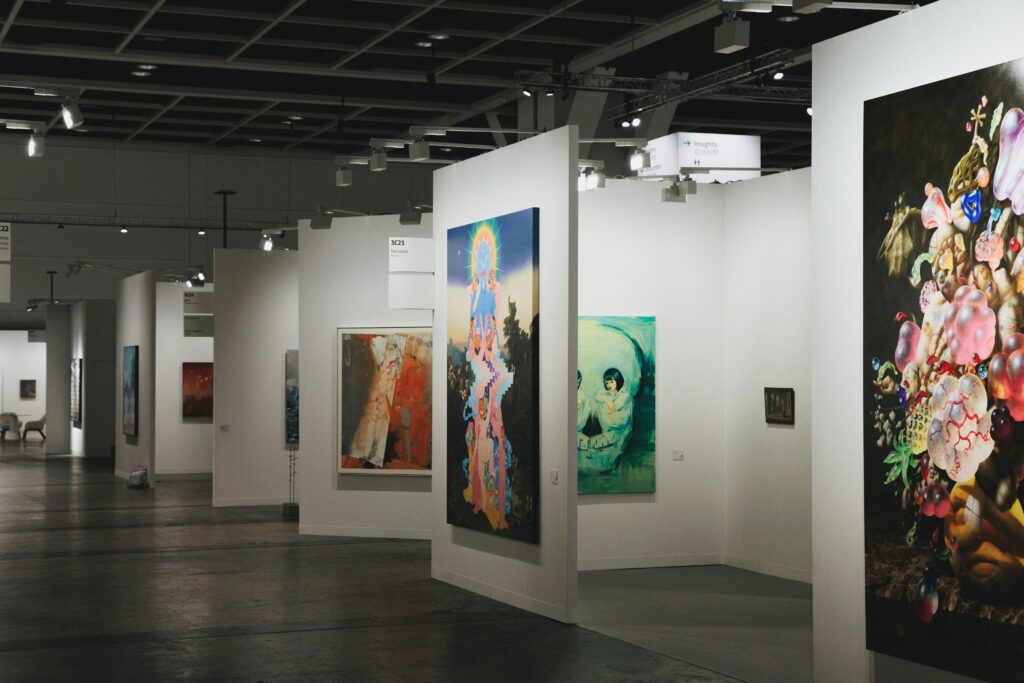
Making great art is only one part of building a creative career. At some point, every artist begins asking the same questions: Who buys art? Why do some artists sell consistently while others struggle? How do galleries decide who to represent? Is social media more important than exhibitions? These questions all lead to one topic that can seem confusing at first: the art market.
Many emerging artists imagine the art market as an exclusive world of luxury galleries, wealthy collectors, and million-dollar auctions. While that side certainly exists, today’s market is much bigger and far more accessible than it was even a decade ago. Artists now sell through galleries, online marketplaces, personal websites, art fairs, Instagram, licensing agreements, commissions, and print shops. Collectors discover artists in countless ways, and many buyers never step inside a traditional gallery.
Understanding how this ecosystem works doesn’t make your art less authentic. Instead, it helps you make informed decisions, find the right audience, and build a sustainable creative practice. Knowing the business side of art allows you to spend less time guessing and more time creating with confidence.
This guide explores how today’s art market works, who the key players are, what trends are shaping the industry, and how artists can position themselves for long-term success.
The Art Market Is Bigger Than Ever
The global art market continues to represent one of the world’s largest creative industries.
Did You Know?
The global art market generated $59.6 billion in sales in 2025, marking a return to growth after two years of decline. Art Basel
One reason for this turnout is diversification. The art market is no longer dependent on galleries and auction houses alone. Digital technology has dramatically expanded how artists connect with audiences, allowing buyers to discover work from almost anywhere in the world.
Today, someone might first encounter an artist through an Instagram reel, subscribe to their newsletter, purchase an affordable print online, and eventually invest in an original painting years later. Collecting has become a gradual relationship rather than a single transaction.
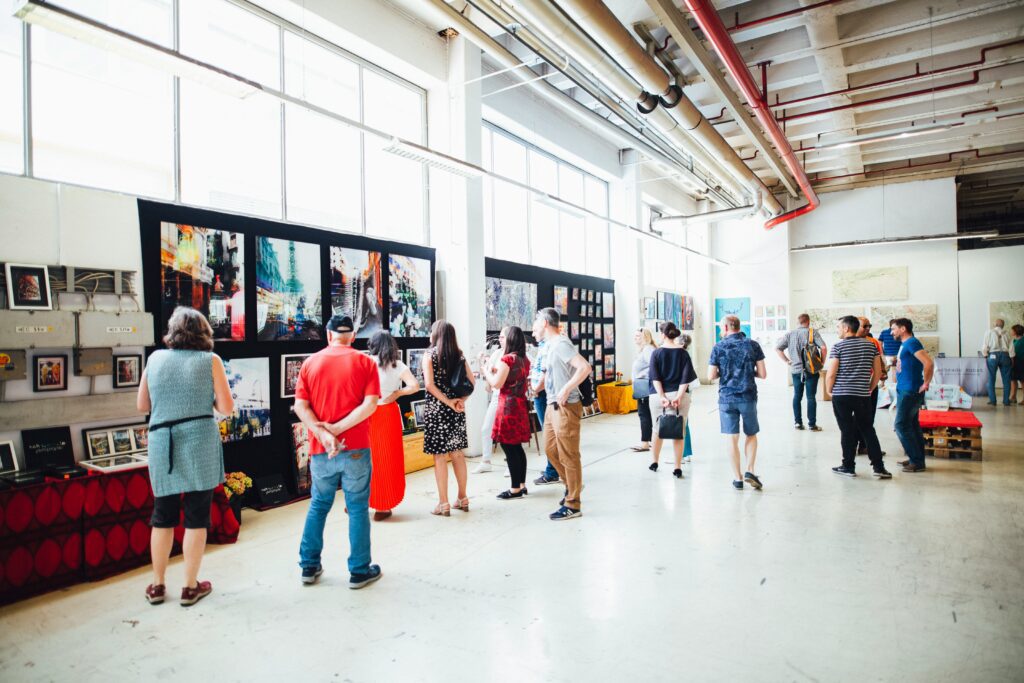
This evolution has created more opportunities for independent artists while also increasing competition. Visibility alone is no longer enough. Artists who communicate clearly, present their work professionally, and consistently engage with their audience often stand out alongside those with exceptional technical skills.
Who Makes Up the Art Market?
The art market is an interconnected network rather than a single industry. Every participant plays a different role in helping artwork move from the studio to collectors and institutions.
Artists
Artists are naturally at the center of the market. Beyond creating work, many now manage marketing, pricing, shipping, client communication, social media, and business administration. The rise of independent creative careers means artists often wear multiple hats, especially early in their journey.
Collectors
Collectors vary enormously. Some purchase art simply because they love living with it, while others focus on building significant collections or supporting emerging talent. Today’s collectors are often younger than previous generations and are increasingly comfortable discovering artists online. Many are interested in learning about an artist’s process, values, and story before making a purchase.
Galleries
Commercial galleries remain an important part of the art ecosystem, but their role has evolved. Instead of acting solely as places where art is displayed, galleries often help artists build long-term careers through exhibitions, collector relationships, marketing, pricing strategies, and participation in international art fairs.
Representation is still valuable, but it is no longer the only path to professional success. Many artists successfully balance gallery relationships with direct online sales and independent projects.
Auction Houses
Auction houses typically operate in the secondary market, meaning they sell artworks that have already been purchased before. Major auction houses often influence public perception of an artist’s market value because high-profile sales attract international media attention. However, auction prices represent only a small portion of the broader art economy and are rarely relevant to emerging artists in the early stages of their careers.
Museums, Curators, and Institutions
Museums and cultural institutions rarely function as commercial sellers, yet they significantly influence an artist’s reputation. Exhibitions, acquisitions, grants, and institutional recognition often increase visibility, strengthen credibility, and open doors to future opportunities with collectors and galleries.
Curators also play an increasingly important role by introducing artists within broader cultural conversations rather than simply selecting visually appealing work.
The Rise of Online Art Sales
One of the biggest transformations in today’s art market has been the rapid growth of online sales.
- Worth $10.5 billion in 2024
- Still 76% higher than before the pandemic (2019)
- Dealer online sales accounted for 22% of total dealer sales in 2024.
Collectors have become increasingly comfortable purchasing artwork without seeing it in person, particularly when artists provide detailed photographs, transparent pricing, accurate dimensions, and stories that help buyers connect emotionally with the work. Online sales now include everything from original paintings and sculptures to digital artwork, limited-edition prints, photography, ceramics, textiles, and mixed-media pieces. For many emerging artists, an online presence functions as a permanent global exhibition that remains accessible every day of the year.
A professional website, active social media profile, and consistent visual identity can often become just as important as participating in local exhibitions.
The Impact of Social Media on Art Business
Social media has transformed discovery within the art world. Before, many artists depended almost entirely on galleries, exhibitions, and personal introductions. Today, artists regularly build international audiences before ever securing gallery representation. Platforms such as Instagram, Pinterest, YouTube, and LinkedIn allow artists to share studio processes, finished works, exhibitions, and personal insights that help audiences develop genuine connections.
Importantly, followers are not the same as collectors. A large audience may increase visibility, but sustainable careers are usually built through trust, consistency, professionalism, and meaningful relationships rather than viral moments.
Collectors often appreciate artists who share their creative process honestly, communicate clearly, and maintain a recognizable body of work over time. Successful artists treat social media as one part of a larger professional strategy, not the strategy itself.
Today’s Buyers Value Authenticity
Modern collectors are increasingly interested in the stories behind the art. They want to understand what inspired a series, how materials were chosen, what themes the artist explores, and how the work fits into a larger creative journey.
This doesn’t mean artists need dramatic personal narratives or carefully manufactured brands. Instead, authenticity has become a competitive advantage. Artists who consistently communicate their ideas, document their progress, and present their work thoughtfully often build stronger relationships with collectors over time.
In today’s market, people are investing not only in objects but also in artists whose vision they believe will continue to evolve.
Pricing Your Artwork with Confidence
Pricing is one of the most challenging aspects of being a professional artist. Many creatives worry that their work is either too expensive to sell or too affordable to be taken seriously. The reality is that pricing should be thoughtful, consistent, and backed by clear reasoning rather than emotion.
What affects the price?
- Materials
- Size
- Time invested
- Exhibition history
- Collector demand
- Experience
- Market positioning
There is no universal formula, but several factors should always be considered. The size of the work, materials, time invested, level of experience, exhibition history, demand, and market positioning all contribute to a fair price. Artists should also remember that pricing is part of their professional identity. Frequently raising and lowering prices without a clear reason can confuse collectors and make it difficult to build trust.
It’s also important to research artists working in similar mediums, career stages, and markets. This provides valuable context without encouraging direct comparison. The goal is not to copy someone else’s prices but to understand where your work fits within the broader landscape.
As your portfolio grows and demand increases, your prices can grow with it. A gradual, consistent pricing strategy is often more sustainable than dramatic increases after a single successful exhibition or sale.
Building Multiple Income Streams as an Artist
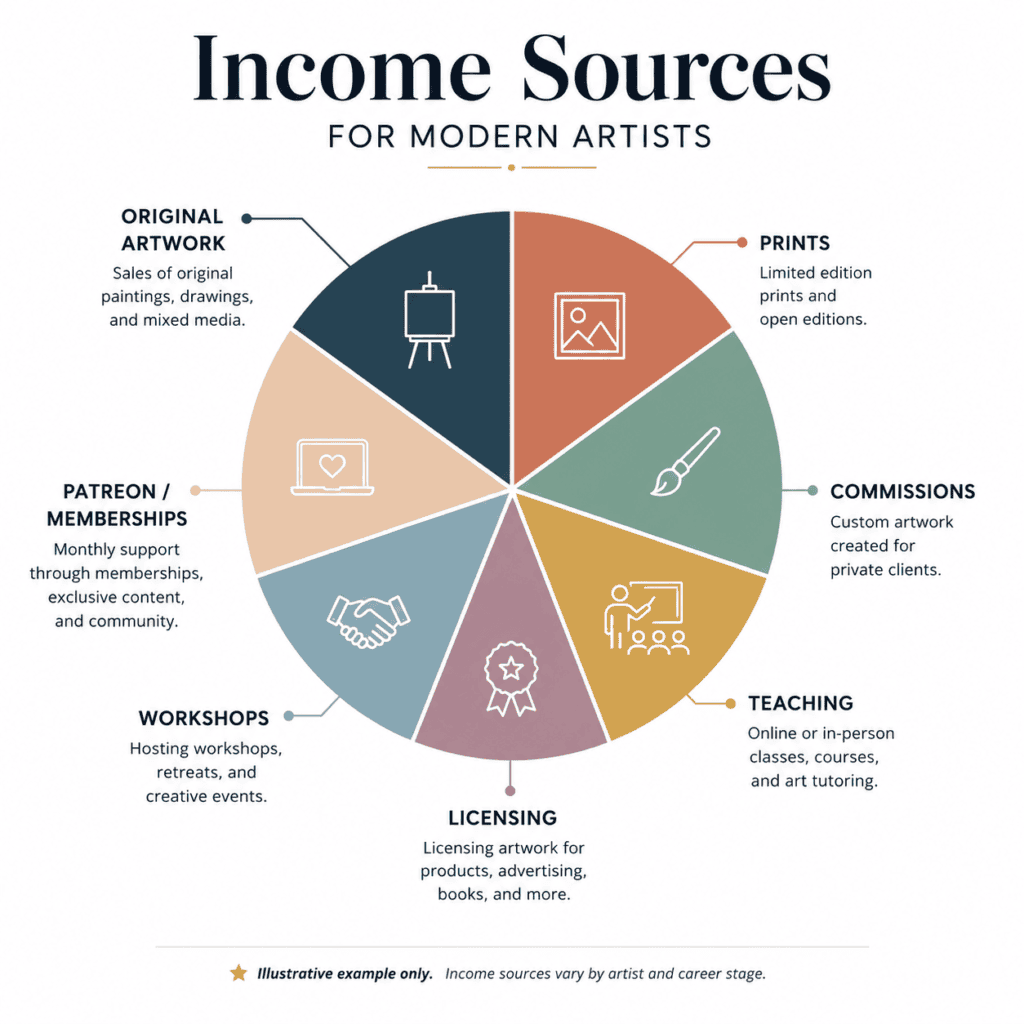
One of the biggest changes in today’s art market is the way artists earn a living. Relying solely on original artwork sales is becoming less common. Instead, many successful artists build careers through multiple complementary income streams that support both their creativity and financial stability.
Original works may remain at the center of an artist’s practice, but they are often accompanied by limited-edition prints, commissions, workshops, teaching, licensing, public speaking, brand collaborations, artist residencies, grants, crowdfunding, and digital content.
This shift doesn’t mean artists are “commercializing” their work. Rather, it reflects the reality that creative careers are increasingly entrepreneurial. Diversifying income allows artists to continue making meaningful work without depending on a single source of revenue.
Many collectors also discover artists through one offering before investing in another. Someone might first purchase an affordable print, attend a workshop, or follow an artist’s newsletter before eventually collecting an original piece. Every interaction has the potential to build a long-term relationship.
Why Consistency Matters More Than Trends
Every year brings new artistic trends, viral aesthetics, and popular styles. While staying informed is valuable, constantly changing your work to match what’s currently selling can make it difficult to build a recognizable artistic voice.
Collectors often return to artists whose work feels cohesive and authentic. They appreciate seeing ideas develop over time rather than completely changing direction with every new trend. Professionalism also plays a significant role in building trust. Responding to inquiries promptly, presenting high-quality images, writing clear artwork descriptions, packaging work carefully, and communicating openly all contribute to a positive experience for buyers.
In many cases, collectors recommend artists to friends and fellow collectors because of the overall experience as much as the artwork itself. Reputation grows slowly, but it can become one of an artist’s greatest assets.
Common Art Market Myths
Many misconceptions prevent artists from approaching the market with confidence.
One common myth is that success depends on being represented by a prestigious gallery. While gallery representation can certainly open doors, many artists build thriving careers independently through direct sales, online platforms, art fairs, and commissions.
Another misconception is that social media popularity automatically leads to sales. Visibility is helpful, but genuine relationships, professionalism, and a strong body of work usually have a greater impact on long-term success. Some artists also believe they need to wait until their work is “perfect” before sharing it. In reality, collectors often enjoy following an artist’s growth over time. A consistent creative practice and willingness to keep improving are often more valuable than perfection.
Finally, many assume that business knowledge somehow diminishes artistic integrity. In truth, understanding contracts, pricing, marketing, and client relationships gives artists greater control over their careers. Learning the business side of art doesn’t make creativity less meaningful—it helps protect and sustain it.
Understanding What Collectors Want
Technical skill certainly matters, but collectors often consider much more than the finished piece. Many are interested in consistency across an artist’s portfolio. They look for a recognizable visual language, thoughtful concepts, and evidence that the artist is developing a long-term practice rather than creating isolated works. Documentation also matters. Professional photography, accurate dimensions, certificates of authenticity where appropriate, exhibition history, and an updated portfolio help collectors feel confident in their decisions.
An artist statement can also provide valuable context. Rather than explaining every detail, a well-written statement offers insight into the ideas, materials, or themes that shape the work. It gives collectors another way to connect with the artist behind the piece.
Ultimately, people are not only collecting objects, they are investing in creative journeys they believe have lasting value.
Looking Ahead: The Future of the Art Market
The art market will continue to evolve alongside technology, cultural shifts, and changing collector habits. Digital platforms will remain important, younger generations will shape new collecting trends, and artists will have more opportunities than ever to build audiences across borders.
At the same time, one thing is unlikely to change: people will always seek art that moves them. Whether it hangs in a museum, a family home, a corporate office, or a digital collection, meaningful art continues to create emotional connections that technology alone cannot replace.
For artists, this means balancing creativity with curiosity. Staying informed about the market while remaining true to your vision allows you to adapt without losing the qualities that make your work uniquely yours.
Your Takeaway: Building a Sustainable Art Career
The art market can seem complex at first, but at its core, it is built on relationships, creativity, and trust. Galleries, collectors, online platforms, exhibitions, and new technologies all play a role, but none of them replace the importance of consistently creating meaningful work.
Understanding how the market functions isn’t about chasing trends or treating art like a product. It’s about making informed decisions that support a sustainable creative career. The more artists understand pricing, presentation, networking, and the evolving ways people discover and collect art, the better equipped they are to navigate opportunities with confidence.
Success in today’s art market rarely happens overnight. It grows through persistence, professionalism, and a commitment to both artistic development and lifelong learning. While the market will continue to change, artists who remain adaptable, authentic, and informed will always have the strongest foundation for building a lasting career.
