How to Start Making Art Before You Feel Ready
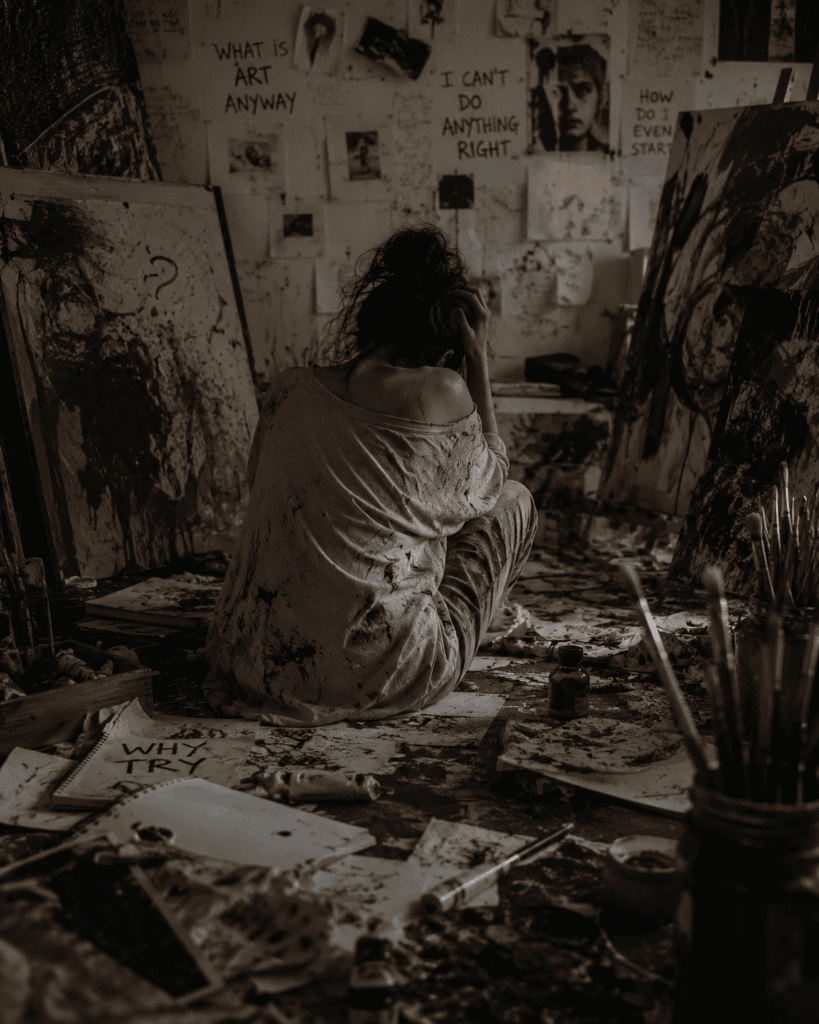
Start Small. Start with Fear. Start Anyway.
There is a very specific kind of fear that exists before making art. It appears quietly.
Sometimes it sounds practical: I’m not talented enough.
Sometimes it sounds crueler: What if I fail?
Or worse, what if I try my hardest and still create nothing good?
For many people, this fear becomes so loud that the artwork never even begins. Sketchbooks remain empty. Paint stays sealed inside tubes. Ideas live only inside the mind, untouched and unrealized.
The fear of beginning is not proof that someone is incapable of creating. If anything, it often means the opposite. Art matters to us precisely because it asks for vulnerability. To create something is to reveal a part of yourself without knowing how it will be received. That uncertainty can feel terrifying. Whether someone is picking up a paintbrush for the first time at sixteen or returning to creativity after decades away from it, the fear remains surprisingly universal.
What people rarely talk about is that courage and fear are not opposites in the creative process. They frequently exist together. Many artists do not create because they are fearless. They create despite fear. They learn how to move alongside doubt, instead of waiting for it to disappear completely.
But art has never belonged only to the confident. Sometimes it belongs most deeply to the uncertain people who begin anyway.
First, Know This: Almost Everyone Is Afraid to Begin
One of the biggest misconceptions about artists is that they begin with confidence. In reality, many begin with hesitation, insecurity, and self-doubt. Fear often arrives before skill does. It appears before the first drawing, before the first poem, before the first badly mixed color on a canvas.
The important thing to understand is that fear is not evidence that you should stop. Fear is often simply evidence that something matters deeply to you.
Vincent van Gogh once wrote, “If you hear a voice within you say ‘you cannot paint,’ then by all means paint, and that voice will be silenced.”
It is one of the most honest artistic quotes ever spoken because it acknowledges something many people experience privately: the inner voice that constantly questions our ability before we have even started.
That voice exists for beginners and professionals alike.
The Fear Usually Comes Before the Art Does
Even artists now celebrated around the world struggled profoundly with self-doubt. Georgia O’Keeffe destroyed artworks she disliked and feared not being taken seriously. Frida Kahlo painted through physical pain and emotional devastation while questioning her own place in art. Japanese artist Yayoi Kusama battled loneliness, hallucinations, and fear for much of her life, yet continued creating work that later transformed contemporary art forever.
None of these artists waited to become fearless before creating.
Fear can come from many places. Sometimes it is fear of judgment. Sometimes it comes from childhood experiences where creativity was criticized or dismissed. Sometimes it is perfectionism disguised as high standards. Many people are not actually afraid of making bad art. They are afraid of what bad art might “say” about them as a person.
But creating poorly at first is not a failure. It is participation. Every skilled artist carries hundreds of imperfect drawings, failed experiments, abandoned ideas, and unfinished works behind the pieces people admire today.
Nobody begins beautifully, and perhaps that is comforting.
“What If I’m Not Good Enough?”
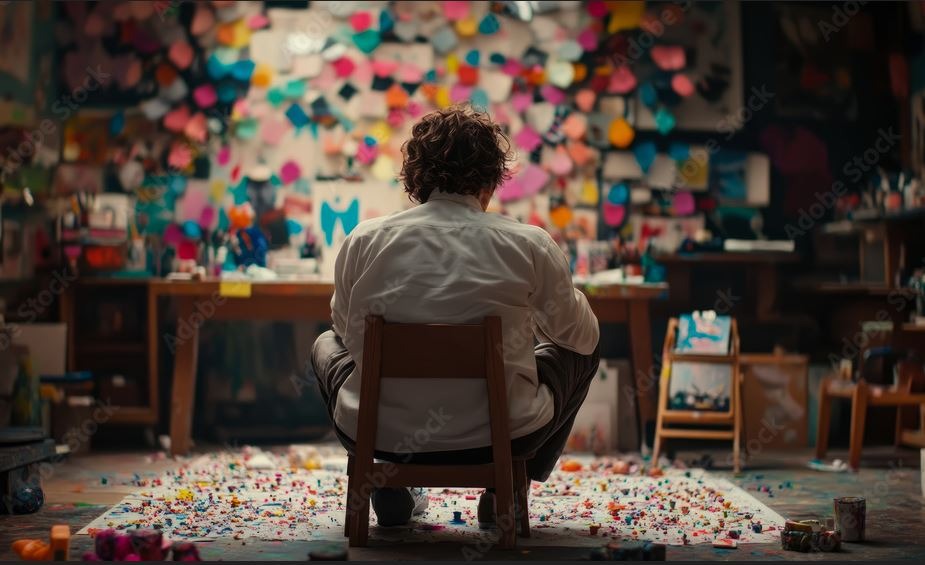
People often romanticize creativity as sudden inspiration, but most art actually begins in very ordinary ways.
A single line on paper.
A badly proportioned sketch.
A photograph taken absentmindedly.
A melody hummed quietly into a phone recording at 2 a.m.
The beginning is usually small.
Fear convinces people that starting art requires certainty, expensive materials, natural talent, or some grand transformative moment. In reality, art often begins with permission. Permission to make something unfinished. Permission to be average at first. Permission to create privately before sharing publicly.
Many young artists stop themselves before they even begin because they expect immediate excellence. They want the first painting to look professional. But creativity does not work that way. Art is not a performance you suddenly master. It is a relationship built slowly over time.
Pablo Picasso once said:
“Every child is an artist. The problem is how to remain an artist once we grow up.”
Children create without constantly measuring the outcome. They draw strange proportions, impossible animals, bright purple skies, and stories that make no logical sense. Somewhere along the way, many adults lose that freedom. They become so afraid of creating badly that they stop creating entirely.
But the first step does not need to be impressive to matter.
A person buying their first sketchbook matters. Someone attending a pottery class despite feeling embarrassed matters. A woman returning to painting at fifty after abandoning it in childhood matters. Creativity does not expire because time has passed.
Sometimes beginning simply means allowing yourself to be a beginner again.
What If You Create Anyway, Even While Doubting Yourself?
What is truly strange about art is the fact that self-doubt never goes away completely. Many successful artists speak freely of their self-doubt while creating. The difference is that experienced artists learn not to obey doubt every time it appears.
Writers continue writing while feeling uninspired. Painters continue painting while believing the canvas looks terrible halfway through. Musicians continue practicing through frustration. Fear and creation coexist far more often than people realize.
This is important because many beginners assume that “real artists” create with constant confidence. They envision professional artists waking up every morning filled with inspiration and certainty. However, the truth is often a far cry from that vision.
Art does not require emotional perfection before it can exist.
In fact, many people begin creating precisely because they are trying to understand themselves. Sketching can become a form of observation. Painting can become a conversation with emotion. Photography can become a way of noticing beauty in ordinary life. Creativity often helps people survive difficult emotional periods because it transforms feelings into something visible.
This is why fear should not always be treated as an obstacle to eliminate. Sometimes fear simply becomes part of the process. The goal is not to never feel afraid again. The goal is to continue creating even when fear quietly sits beside you.
Some days it may mean creating something beautiful. Other days, it may simply mean showing up.
Both matter.
Comparing Your Art Is Not The Answer
One of the hardest parts of beginning art today is the constant visibility of other people’s work. Social media allows emerging artists to discover incredible creativity from around the world, but it also creates endless opportunities for comparison.
A beginner opens Instagram and immediately sees artists with perfect lighting, polished portfolios, sold-out exhibitions, years of technical skill, and thousands of followers. Suddenly, their own unfinished sketch feels embarrassing in comparison.
But comparison distorts reality.
What people often see online is not the beginning of someone’s journey but the middle or even the result of years of practice. We compare our uncertainty to someone else’s curated confidence. We compare our first attempt to another artist’s thousandth.
And comparison creates paralysis.
Many artists stop creating not because they lack talent, but because they become convinced they are already behind. They believe everyone else arrived at creativity naturally, while they alone struggle awkwardly through the learning process.
But awkwardness is part of learning.
The internet rarely shows the failed sketches, abandoned drafts, ruined canvases, emotional breakdowns, or years of repetition behind artistic growth. Yet those hidden moments shape every artist more than polished outcomes ever do.
There is also another danger in constant comparison: losing your own voice before it fully forms. If one consumes more art than he produces, his inspiration will start to depend on imitation instead of relying on his own intuition.
That is why preserving the initial stage of creativity is crucial. Everything does not have to be shown immediately.
Some art should remain private while it grows. Some ideas need quietness before exposure..
Allow Yourself Imperfection on Purpose
Perfectionism has quietly stopped more people from making art than lack of talent ever has.
Many aspiring artists spend years waiting for the “right” moment to begin. They wait until they have better materials, more free time, more confidence, more knowledge, more certainty in their abilities. But perfectionism is deceptive because it disguises itself as preparation. It convinces people they are being responsible or realistic when, in reality, they are simply postponing vulnerability.
What is Perfect Anyways?
Art does not emerge from perfection. It emerges from practice.
Every artist grows through repetitions, through difficult tries, through failure, through uncompleted works, and frustrations that no one sees. The works on display in the gallery or the carefully curated pieces online represent only a very tiny portion of a bigger process full of failures. What people admire is often built upon years of imperfection hidden underneath the final result.
There is also a very human quality about imperfect art. Perfect images might seem far removed, almost unattainable, while the flaws found in imperfect art are able to express emotions in a much more honest way. The roughness of a line, the hesitation inside a brushstroke, the visible searching within a composition, these things remind us that there is an actual person behind the artwork, trying to translate feeling into form.
The truth is, nobody becomes an artist overnight. Becoming an artist happens quietly through consistent acts of returning. Returning to the sketchbook after a bad drawing. Returning to the canvas after disappointment. Returning to creativity even after doubting yourself repeatedly.
And perhaps that is what making art really is: not creating perfectly,but continuing despite imperfection.
Final Step — Begin Before You Feel Completely Ready
Stop Waiting for The Perfect Moment
Perhaps the most beautiful thing about beginning art is that nobody can truly grant permission except yourself.
There is no official moment when someone suddenly becomes “allowed” to create. No invisible gate opens. No certainty arrives announcing that fear has permanently disappeared. Most artists simply begin before they feel fully ready, and through the act of creating, they slowly become the person they were waiting to be.
Art changes people in quiet ways.
A person who starts sketching every night begins noticing light differently. Someone learning photography starts paying attention to shadows, movement, texture, and ordinary beauty. A writer begins collecting overheard conversations and fragments of emotion throughout the day. Creativity reshapes how people experience the world itself.
And perhaps that is why beginning feels so frightening. Starting art is not only about making something. It is also about allowing yourself to change.
There will always be reasons to postpone creativity. Lack of time. Fear of failure. Fear of judgment. Fear of not being original enough. Fear of not improving fast enough. But waiting for complete confidence often means waiting forever.
The truth is that many artists never fully stop doubting themselves. They simply stop allowing doubt to influence their decisions.
And maybe that is courage.
Not the absence of fear, but the willingness to continue despite it.
Every artist you admire once stood at the beginning, too. They once stared at empty pages, untouched canvases, and uncertain ideas. They once made awkward work. They once questioned themselves deeply. The difference is not that they were fearless. The difference is that they began.
So if you have been waiting for a sign to start creating, know that this is enough:
Your first attempt does not need to justify your existence as an artist.
It only needs to exist.
And sometimes, that first imperfect step quietly changes everything.
