
Kavya Sharma Redefines Textile Art Through Embroidery, Drawing, and Installation
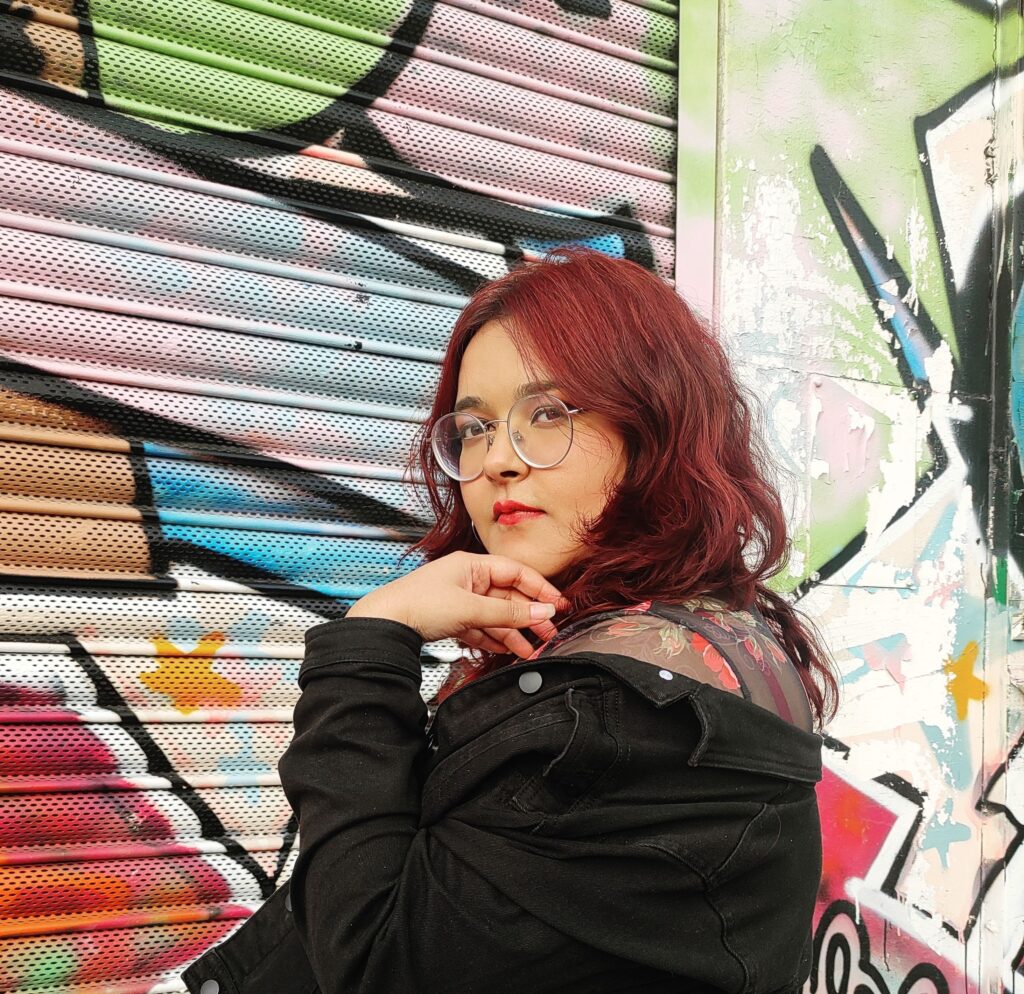
At Women in Arts Network, Love, Life and Everything She Creates brought together artists who turn their most personal experiences into something the rest of us can share. Kavya Sharma is one of our selected artists. Her work stitched, drawn, and layered does exactly that. She takes private pain and turns it into something we can see, hold, and understand.
Kavya grew up in a small city in India. She was a shy, quiet child, and drawing became her way of saying what she couldn’t put into words. Her mother still keeps the little drawings, handmade cards, and small creations she made when she was around three years old. That, Kavya feels, is where it all began.
The urge to create never left her. She studied Craft Design and Textiles at the Indian Institute of Craft & Design in Jaipur, and later completed a Master’s in Sustainable Design at Kingston University in London. Working with textiles, communities, and traditional crafts changed the way she saw art. It became a way to hold onto stories and bring people closer together.
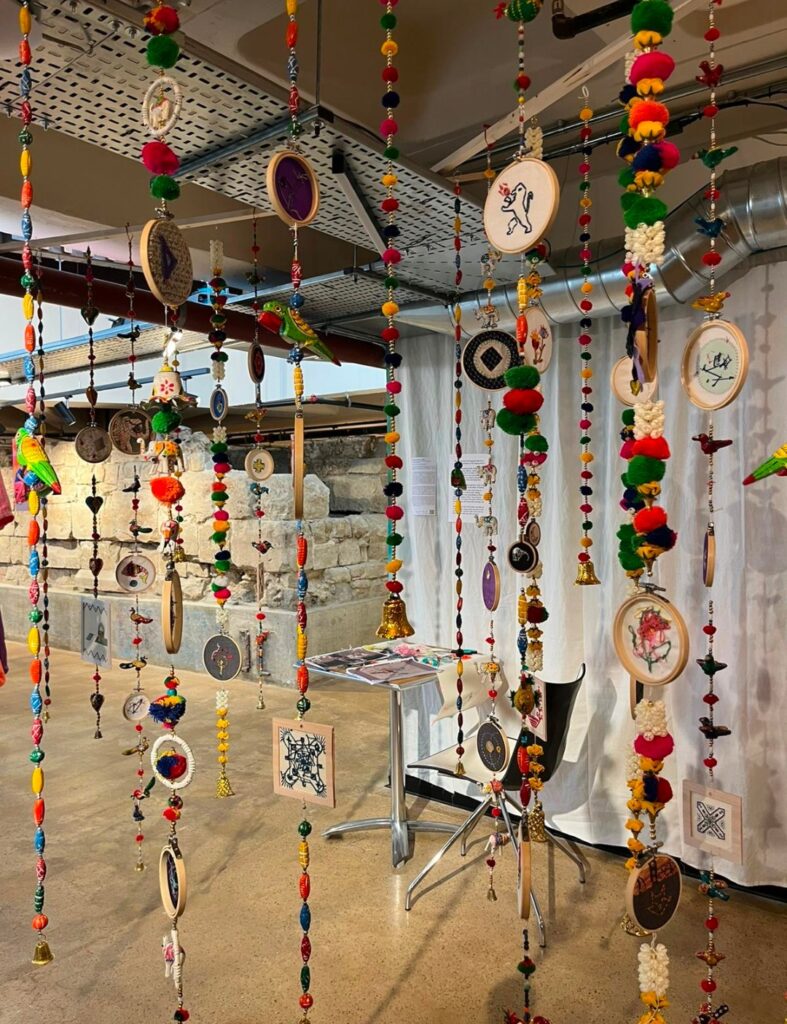
Today her work brings together textiles, embroidery, drawing, and installation. But she doesn’t see these as separate things. Each one simply says something different. Drawing captures a feeling in the moment. Embroidery takes time, repetition, and care. Textile holds memory in a way paper never can. And installation lets you step right inside the work. She never begins by picking a medium. She starts with an idea, and lets the work show her how it wants to exist.
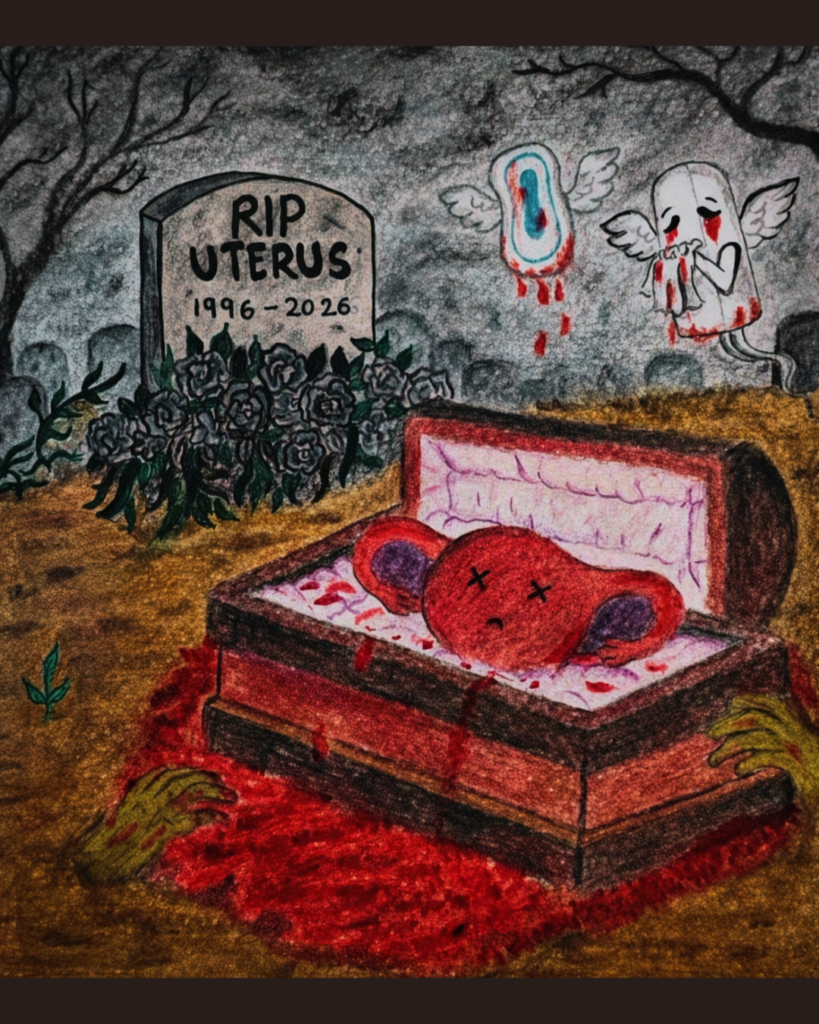
You can see this most clearly in the way she turns her own life into art. Much of her work grows from her personal experiences, including her journey with chronic illness told not as a medical story, but as an emotional one. Making the work becomes its own kind of healing: a way to sit with hard memories, to care for them, and to slowly give them a shape. Bit by bit, she takes pain that was so often dismissed and turns it into something that can be seen, shared, and understood.
Let’s get to know Kavya through our conversation about the childhood that gave her a voice, why she lets an idea choose its medium, and her advice for trusting slow work in a fast world.
Q1. Kavya, could you share a little about your background and what first inspired you to become an artist?
I grew up in a small city in India, where I was a very shy and introverted child. Drawing became my way of expressing thoughts and emotions that I often struggled to put into words. My mother still keeps the tiny drawings, handmade cards and little creations I made when I was around three years old, and looking back, I think that’s where my relationship with art truly began. As I grew older, that instinct to create stayed with me.
I went on to study Craft Design (Textiles) at the Indian Institute of Craft & Design in Jaipur and later completed a Master’s in Sustainable Design at Kingston University in London. Working with textiles, communities and traditional crafts expanded my understanding of art as a way of preserving stories and building connections.
Today, my practice combines textiles, embroidery, drawing and installation to explore themes of memory, the body, care and women’s lived experiences, often drawing from my own journey with chronic illness while creating space for conversations that resonate beyond my personal story.
Q2. Your practice combines textiles, embroidery, drawing, and installation. How did you begin working across these different mediums?
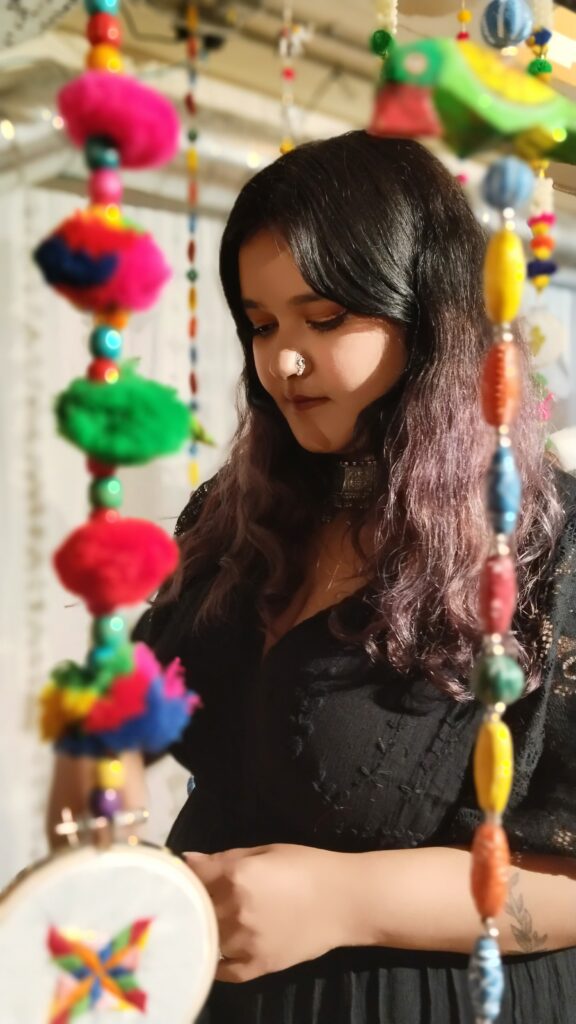
I don’t see these mediums as separate, they each communicate something different. Drawing allows me to capture an immediate emotional response, while embroidery asks for time, repetition and care. Textile carries memory in a way paper cannot, and installation lets the work become immersive.
Rather than choosing a medium first, I begin with an idea and let the work decide how it needs to exist. Combining these processes allows me to build layered narratives where each material contributes its own emotional and symbolic language.
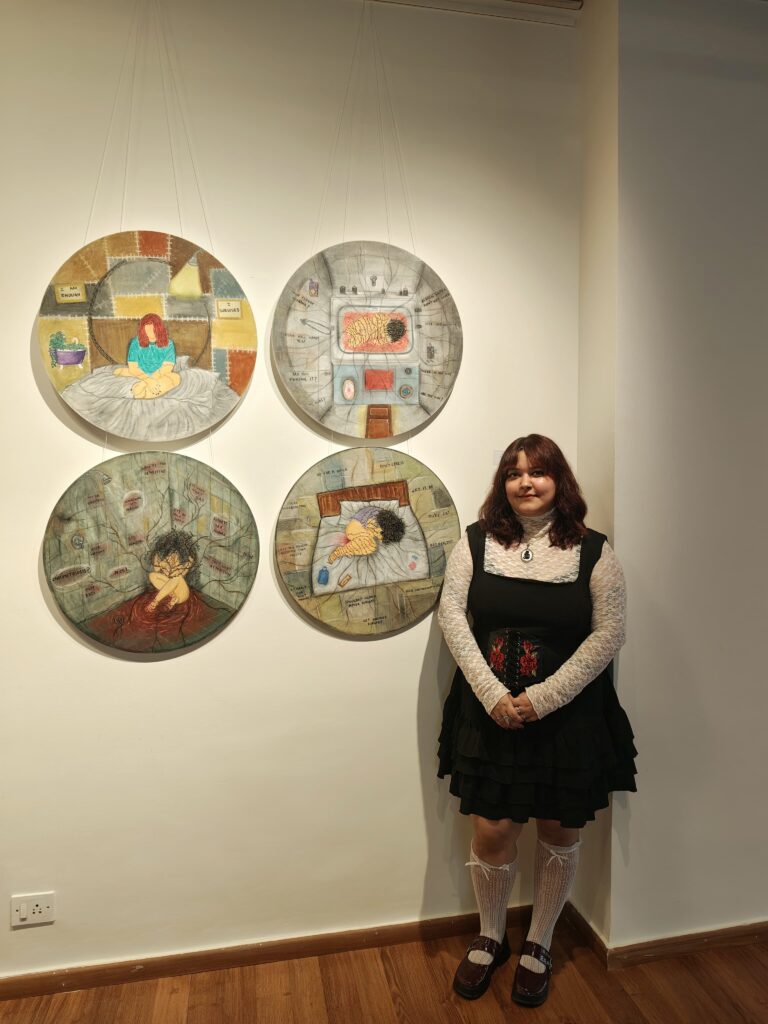
Q3. Many works in A Life in Circles combine stitched elements with painted or drawn surfaces. How did this series develop?
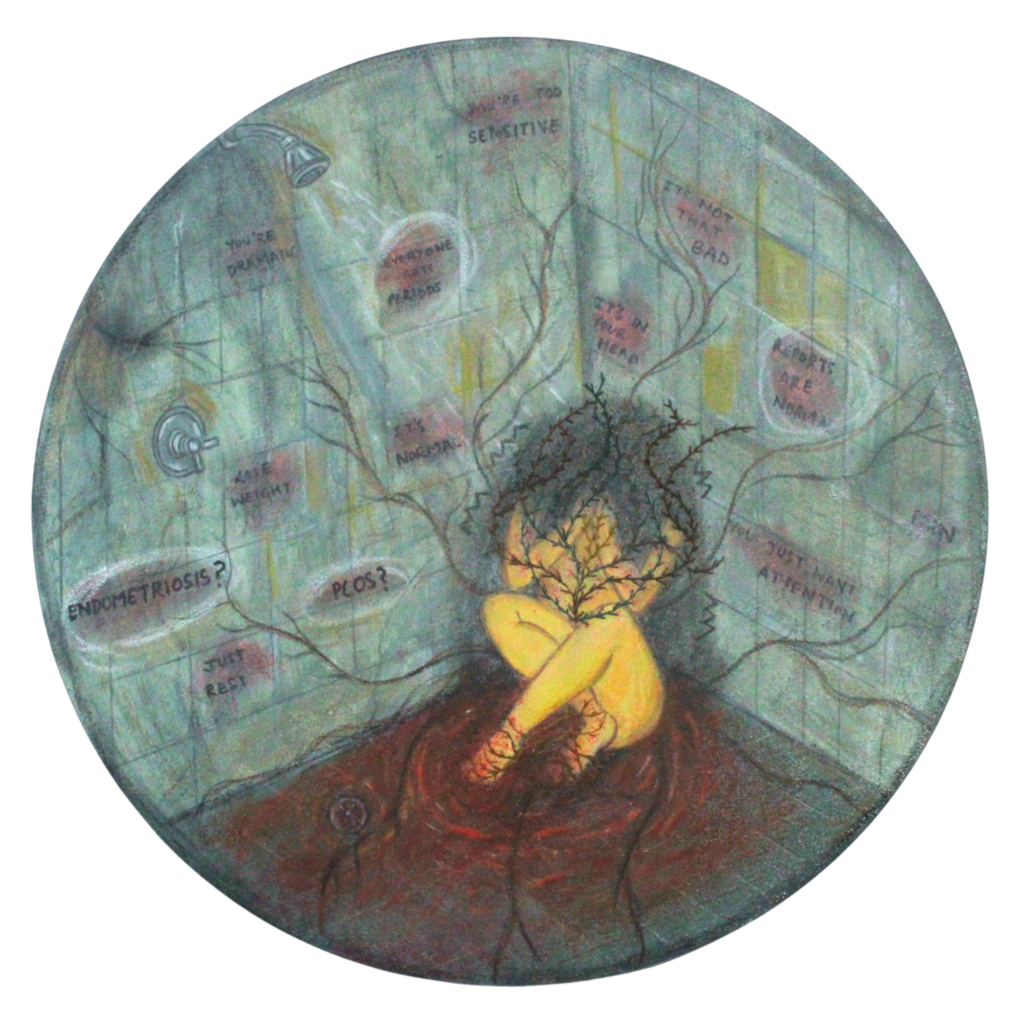
A Life in Circles emerged after my hysterectomy and excision surgery, the third surgery I had undergone in four years at the age of 29. I wanted to look back at more than a decade of living with endometriosis, adenomyosis and PCOS, not as a medical timeline but as an emotional one. The series follows different moments, from first experiencing symptoms to reaching a breaking point and finally beginning recovery. Drawing records memories quickly, while embroidery became a slower act of reflection and healing. Together they allowed me to transform painful experiences into something that could be witnessed, shared and understood.
brp_del_th:null;
brp_del_sen:null;
delta:null;
module: photo;hw-remosaic: false;touch: (-1.0, -1.0);sceneMode: 8;cct_value: 0;AI_Scene: (-1, -1);aec_lux: 0.0;aec_lux_index: 0;albedo: ;confidence: ;motionLevel: -1;weatherinfo: null;temperature: 37;
Q4. Some of your embroidered works feel deeply intimate, while others seem to speak to shared experiences. Is finding that balance important to you?
Very much so. My work begins with personal experience, but it isn’t only about me. I hope that by being honest about my own story, others can recognise parts of themselves in the work. Issues like chronic illness, women’s health and invisibility are deeply personal but also collective. That balance allows the work to move beyond autobiography and create space for empathy, awareness, conversation and connection.
Q5. How do you decide when a piece should be stitched, painted, drawn, or combine several techniques?
The concept always comes first. Some emotions require the immediacy of drawing, while others need the slow rhythm of stitching. If the work speaks about memory, healing or repair, embroidery often becomes essential because the process itself carries those meanings. I combine different techniques when a single medium can’t fully express an experience. Rather than seeing textiles, drawing and installation as separate disciplines, I think of them as different languages, each offering its own way of telling a story.
Q6. Do your ideas usually begin with a visual image, a personal memory, or a material you want to experiment with?
Usually they begin with a memory or a question that stays with me. I collect photographs, sketches, written notes and fragments before I begin making my piece. As I work, the materials begin shaping the direction of the piece. It’s a conversation between memory, research and creating rather than a fixed plan.
Q7. Alongside making your own work, you’ve also led creative workshops. How has teaching influenced your artistic practice?
Teaching has reminded me that creativity is fundamentally about connection. Working with participants from different backgrounds has shown me how making can build trust, encourage conversation and create community. Those experiences have strengthened my interest in participatory practice and reinforced my belief that art can be a space for collective care as much as individual expression.
Q8. Textile art has gained increasing recognition within contemporary art. How have you seen perceptions of the medium change?
There is much greater appreciation for textile practices today than when I first began studying them. More museums, galleries and biennales are recognising textile artists, particularly those engaging with themes of identity, feminism, labour and ecology. What’s encouraging is that people are beginning to see textiles not simply as decorative objects but as powerful contemporary artistic languages capable of addressing urgent social and personal issues.
Q9. Has there been a piece that challenged you emotionally or changed the direction of your practice?
A Life in Circles was the most emotionally demanding body of work I’ve made. Revisiting years of pain, medical dismissal and surgery required me to confront memories I had spent years trying to move beyond and forget. At the same time, it completely transformed my practice. It made me realise that vulnerability can be a powerful artistic tool and encouraged me to embrace personal narratives rather than distance myself from them.
Q10. Do you think textiles offer a different way of telling stories than painting or drawing?
Absolutely. Textiles carry an immediate sense of touch, labour and time. Every stitch records a gesture, intention and emotion making the process visible within the finished work. Historically, textiles have also been closely connected with domestic spaces, women’s knowledge and everyday acts of care.
Using embroidery allows me to reclaim those histories while creating narratives that feel intimate, embodied and deeply human.
Q11. Craft has often been separated from fine art, even though both require imagination and skill. Do you think that conversation is finally changing?
I think it is changing, although there is still work to be done. Contemporary artists are increasingly using textile and craft techniques to address complex social, environmental, political and personal themes, challenging outdated hierarchies between craft and fine art. For me, craft is not simply a technique, it’s a way of thinking and expressing. It values slowness, material knowledge, care and human connection, all of which are incredibly relevant in contemporary practice.
Q12. Looking ahead, is there a story or body of work you’ve been wanting to create but haven’t yet had the opportunity to explore?
I’m interested in expanding my research into women’s health and textile traditions across different communities. I want to explore how embroidery, mending and other handmade practices function as forms of care, healing and knowledge passed between generations. Alongside this, I hope to create a new body of work documenting my own experiences with mental health.
Just as A Life in Circles grew from my experience of chronic illness, I want to explore anxiety, depression and emotional resilience through textiles, drawing and installation.
My hope is to create work that not only reflects my personal journey but also encourages more open conversations and greater awareness around mental health.
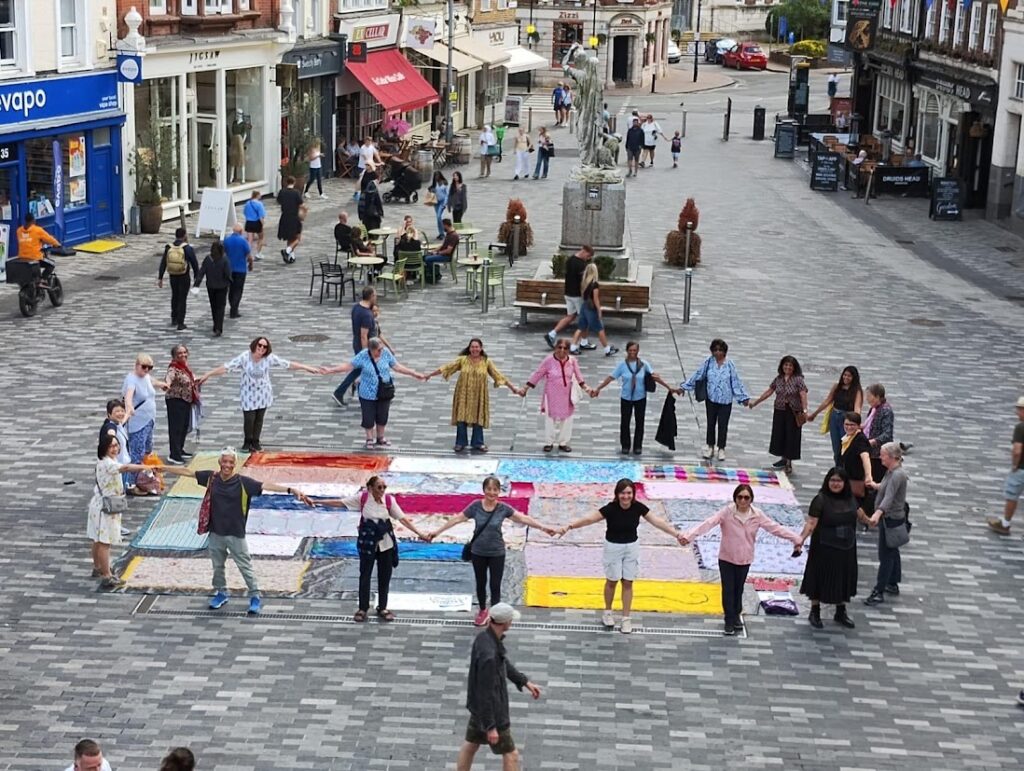
I’m also interested in creating larger participatory installations that invite people to contribute their own stories, transforming individual experiences into collective archives.
Q13. What advice would you give to artists who are learning to trust slow, thoughtful processes in a world that often expects quick results?
Don’t mistake slowness for lack of progress. Some ideas need time to mature, and some materials ask us to slow down and pay attention. It’s easy to compare yourself to the constant pace of social media, but meaningful work often develops quietly over months or even years. Trust your process, remain curious, and remember that depth usually comes from patience rather than speed.
As our conversation with Kavya came to an end, we kept coming back to the stitches, and to everything they hold: pain, memory, and the quiet work of healing.
So much of what we go through stays hidden. Pain. Illness. The quiet struggles no one else can see. We are often expected to keep these things to ourselves, to heal in private and simply carry on. Kavya’s work does the opposite. Stitch by stitch, she gives those invisible feelings a shape.
She takes what hurt the most and turns it into something we can actually see. There is courage in that. And there is comfort too. She is not asking for pity. She is making room for understanding, for empathy, and for the reminder that we are rarely as alone as we feel. Her work shows us that naming our pain, and making it visible, can be a kind of healing all its own.
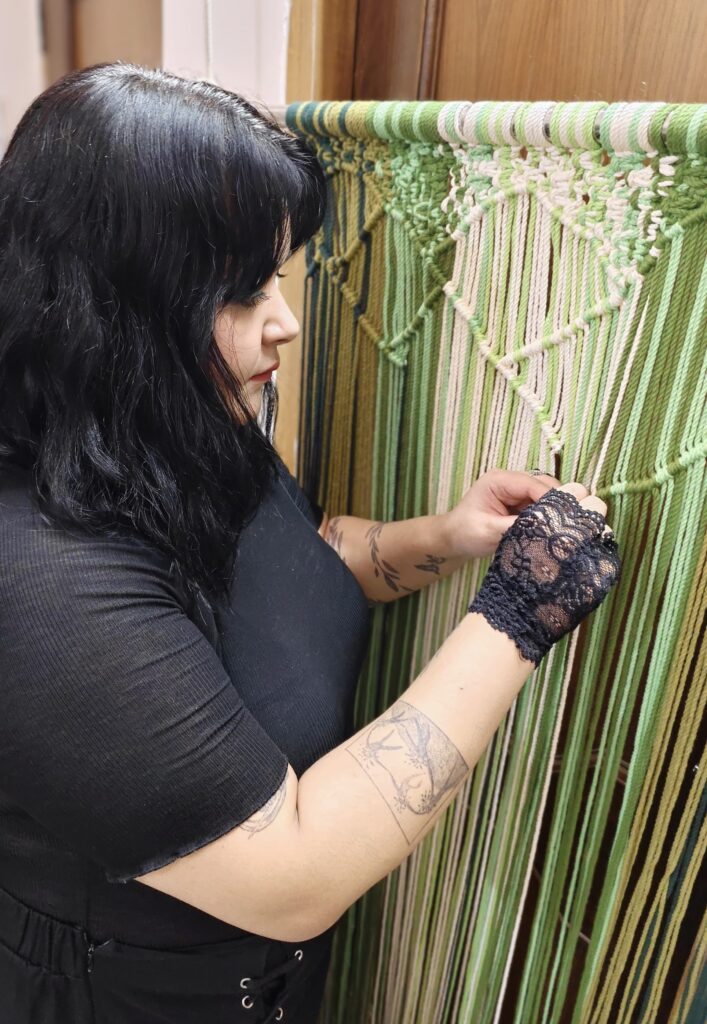
It is also worth noticing the world this work arrives in. We live at the speed of the feed. Everything is wanted right now, and fast is often mistaken for good. Kavya’s work moves the other way. Embroidery cannot be rushed. It asks for hours, patience, and care, and that slowness is the whole point.
For a long time, textiles were seen as simply pretty, or brushed aside as “women’s work.” Kavya is part of a new generation changing that. In her hands, thread becomes a serious way to speak about real and difficult things. Her work is a gentle reminder that depth comes from care, not speed.
For art lovers and collectors, that is what makes her work so special. Every stitch holds a gesture, a feeling, a small moment of time. The care and the effort stay right there in the finished piece. Her work carries touch and memory in a way few things do — intimate, honest, and quietly strong. To live with one of her pieces is to keep that honesty close. A gentle, daily reminder to slow down, to notice what usually goes unseen, and to find strength in being tender.
Follow Kavya Sharma through the links below and see her work for yourself.
