
5 Self-Portraits by Women Artists That Redefined Identity in Art
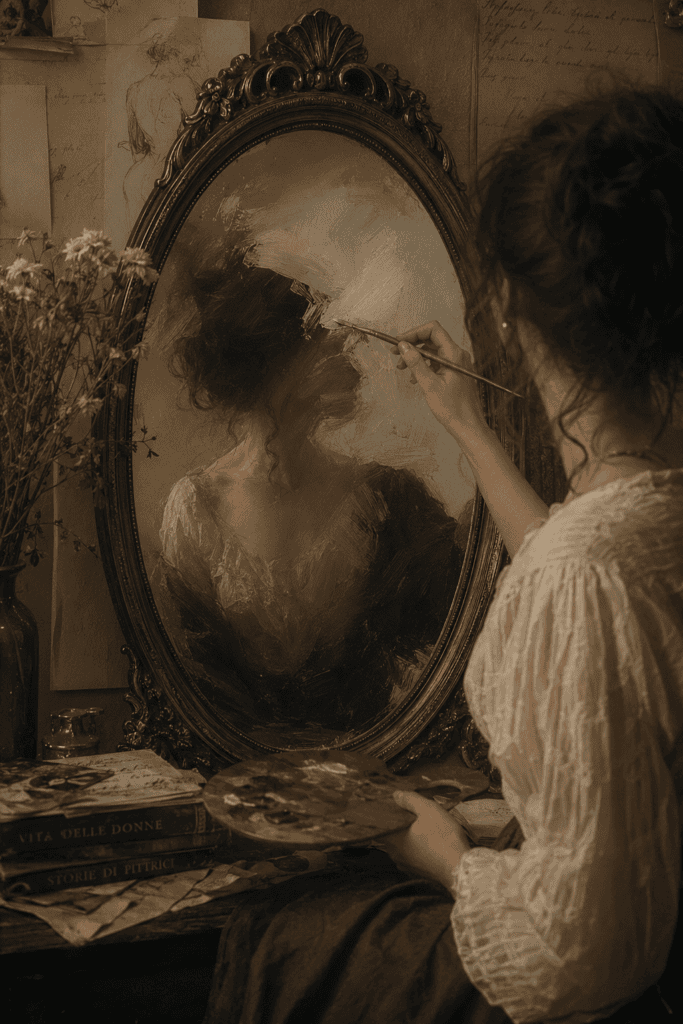
For much of history, women were often the subjects of great works of art, but rarely the artists behind them. They appeared as muses, queens, saints, wives, and symbols, their stories interpreted through someone else’s eyes while their own creative voices remained unheard. The art world celebrated their beauty and presence, yet offered few opportunities for women to shape how they themselves would be remembered.
For the women who did become artists, painting a self-portrait became far more than an artistic exercise. It was an act of authorship, a way of claiming space in a world that rarely made room for them. For perhaps the first time, they could decide how they wished to be seen. Every choice, from the clothes they wore to the expression they held and the objects that surrounded them, became part of a story only they could tell.
Some painted themselves to prove their skill in a profession dominated by men. Others used self-portraiture to explore identity, resilience, motherhood, ambition, grief, or independence with remarkable honesty. Rather than simply recording their likeness, these artists transformed the self-portrait into a powerful statement of who they were and what they believed.
Today, these paintings offer us far more than a glimpse of the faces behind the brush. They introduce us to women who challenged expectations, claimed their place in art history, and refused to let others define their legacy. From the Renaissance to the twentieth century, these five extraordinary self-portraits remind us that sometimes the boldest statement an artist can make is to turn the canvas toward herself.
What Is a Self-Portrait?
Every self-portrait begins with a simple idea. The artist turns the canvas toward themselves. But what emerges is rarely just a reflection. A self-portrait is a carefully considered statement, shaped by the artist’s choices, experiences, and intentions. It allows them to decide not only how they look, but also how they wish to be understood.
Throughout art history, self-portraits have become some of the most revealing works an artist can create. They capture moments of confidence, uncertainty, ambition, joy, grief, and transformation. For women artists especially, the genre offered something that was often difficult to find elsewhere: complete authorship over their own image. Rather than being defined by someone else’s perspective, they could present themselves exactly as they wanted the world to see them.
Why Did Women Paint Self-Portraits Throughout History?
For centuries, becoming a professional artist was far more difficult for women than it was for men. Many were denied formal training, excluded from prestigious art academies, and given fewer opportunities to secure important commissions. In a world where their talent was often questioned before it was even recognized, painting themselves became one of the most accessible and meaningful ways to be seen.
A self-portrait required no patron or commissioned sitter. The artist herself was always present, making it the perfect space to experiment, refine her technique, and showcase her abilities. But these paintings soon became much more than studies in skill. They became declarations of confidence, independence, and identity. Through them, women could challenge expectations, celebrate their achievements, or reveal deeply personal experiences that might otherwise have remained unheard.
Across different centuries and artistic movements, women continued to reinvent the self-portrait in their own ways. Some painted themselves as accomplished professionals, while others explored themes of resilience, emotion, loss, or self-discovery. Together, these works tell a remarkable story of women who refused to let others define them. Here are five self-portraits that not only captured the artists behind the brush, but also helped shape the course of art history.
1. Self-Portrait at an Easel by Sofonisba Anguissola (c. 1556)
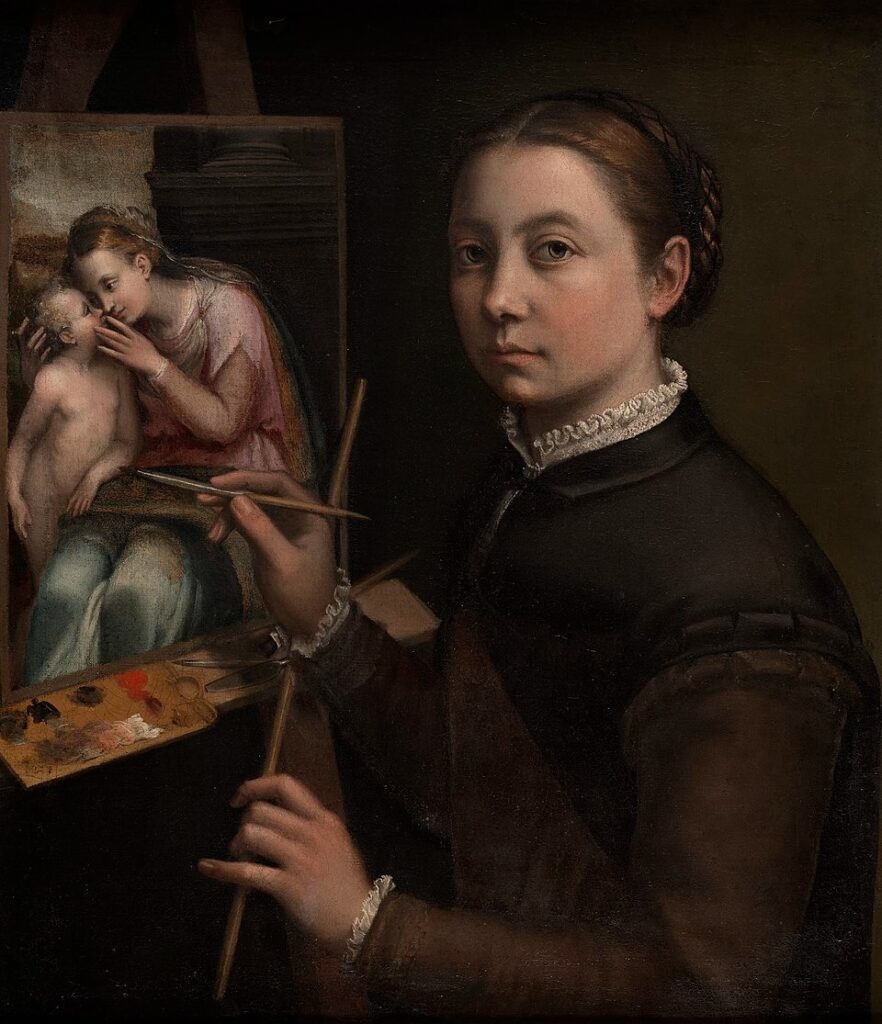
When Sofonisba Anguissola painted Self-Portrait at the Easel around 1556, she was making a quiet but powerful statement. During the Renaissance, women had limited opportunities to pursue professional artistic careers, and few were recognized for their talent. Rather than portraying herself as a noblewoman or simply recording her appearance, Anguissola chose to present herself in the act of painting. It was her way of declaring that she was not just worthy of being painted, but capable of creating great art herself.
In the painting, Anguissola sits before an easel, carefully working on a small devotional image of the Madonna and Child. She is dressed in elegant but modest clothing, reflecting the expectations placed on women of her social standing. Her gaze is calm and focused, directed toward her work instead of the viewer. There are no grand gestures or dramatic symbols. Instead, the composition draws attention to her confidence, skill, and dedication, allowing the simple act of painting to become the portrait’s strongest message.
Born into a noble family in Cremona, Italy, Anguissola was fortunate to receive an artistic education at a time when most women were denied one. With the encouragement of her father, she developed her talent for portraiture and went on to become one of the first internationally celebrated women artists, later serving at the Spanish royal court. This self-portrait reflects the determination that shaped her career, capturing an artist who understood the importance of presenting herself as a professional in a world where women were rarely seen that way.
Today, Self-Portrait at the Easel is recognized as one of the earliest and most influential self-portraits by a woman artist. It helped redefine how women could be represented in art, shifting the focus from passive subjects to active creators. More than four centuries later, it continues to inspire artists by reminding us that sometimes the most revolutionary act is simply claiming the space to create.
2. Self-Portrait as the Allegory of Painting by Artemisia Gentileschi (c. 1638–39)
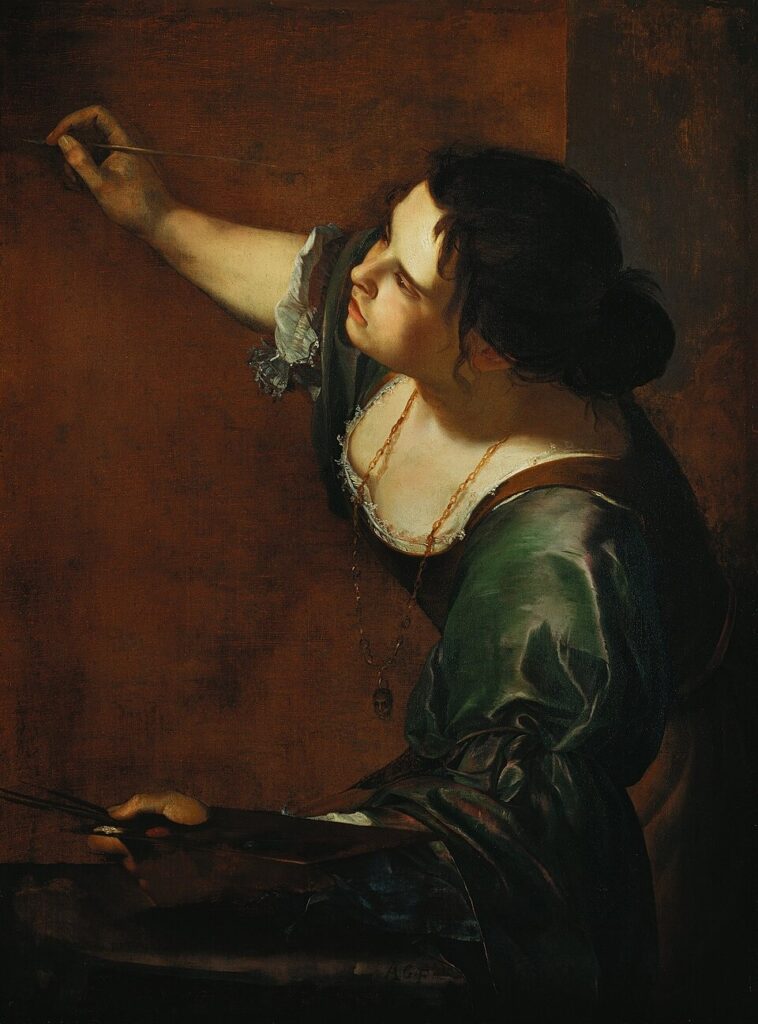
Artemisia Gentileschi’s Self-Portrait as the Allegory of Painting is one of the boldest self-portraits in art history. Instead of simply painting her own likeness, she portrayed herself as the personification of Painting itself, known in Italian as La Pittura. According to art theory of the time, Painting was represented as a woman, making Artemisia uniquely positioned to embody both the artist and the allegorical figure in a single work. The painting was not just a display of technical skill. It was a confident declaration of her place in the art world.
Unlike many formal portraits of the seventeenth century, this composition is full of movement and energy. Artemisia is shown in the middle of painting, her body leaning forward with a brush in one hand and a palette in the other. Her sleeves are rolled up, loose strands of hair frame her face, and light falls dramatically across her figure against a dark background. Rather than posing for the viewer, she is completely absorbed in her work, making the creative process the true subject of the painting.
Artemisia built her career during the Baroque period, overcoming challenges that would have discouraged many artists. Despite working in a profession dominated by men and facing personal hardships throughout her life, she established herself as one of the most accomplished painters of her generation. Known for her powerful depictions of biblical and mythological women, she consistently painted female figures with strength, intelligence, and determination. This self-portrait reflects those same qualities, presenting an artist who refused to let others define her identity or her abilities.
Today, Self-Portrait as the Allegory of Painting is celebrated as a landmark in art history. It challenged traditional ideas about authorship and artistic authority by placing a woman at the very center of creativity itself. More than three centuries later, the painting continues to symbolize confidence, resilience, and the enduring power of women to shape both art and history on their own terms.
3. Self-Portrait by Élisabeth Vigée Le Brun (1790)
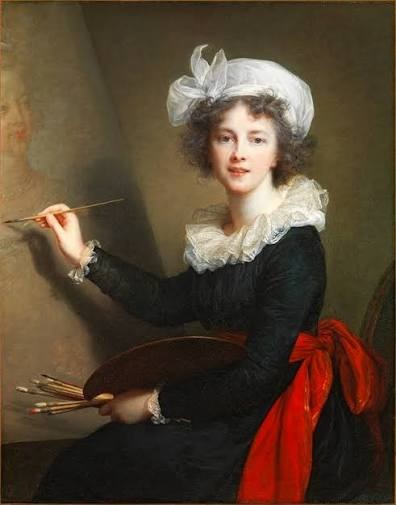
By the time Élisabeth Vigée Le Brun painted her Self-Portrait in 1790, she had already earned a reputation as one of Europe’s most celebrated portrait artists. Working during a period when women faced significant barriers in the art world, she used self-portraiture to present herself as both an accomplished painter and a confident professional. Rather than emphasizing status or wealth, the painting highlights the person behind the brush, showing a woman whose talent had already secured her place among the leading artists of her time.
The portrait is warm, elegant, and remarkably engaging. Vigée Le Brun is shown holding her palette and brushes while looking directly at the viewer with a relaxed smile. Dressed in refined yet practical clothing, she appears approachable rather than distant, creating a sense of connection that was uncommon in many formal portraits of the eighteenth century. The balanced composition, soft lighting, and confident pose reflect the grace and technical mastery that became hallmarks of her work.
Born in Paris, Vigée Le Brun displayed exceptional artistic talent from an early age and went on to become the official portrait painter of Queen Marie Antoinette. Despite restrictions placed on women artists, she built an extraordinary international career, painting members of European royalty and aristocracy across several countries. This self-portrait reflects not only her success but also her belief that women belonged in professional artistic circles. By presenting herself with confidence and dignity, she challenged long-held assumptions about who could achieve recognition as a great artist.
Today, Self-Portrait remains one of the defining images of a woman artist in the eighteenth century. It celebrates artistic excellence without sacrificing individuality, proving that confidence and creativity could exist side by side. Vigée Le Brun’s portrait continues to inspire because it reminds us that talent, perseverance, and self-belief can leave a lasting mark on history, even in the face of social barriers.
4. Self-Portrait by Käthe Kollwitz (1924)
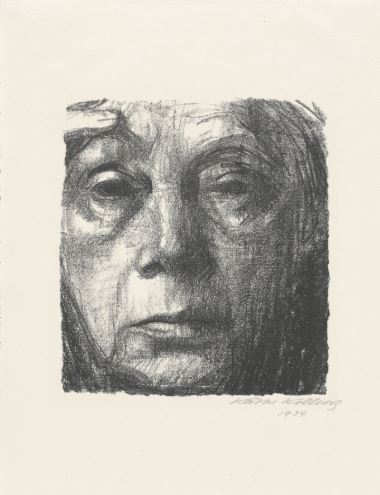
Unlike many artists who used self-portraits to celebrate their achievements or social status, Käthe Kollwitz painted herself with striking honesty. Created in 1924, this self-portrait came after years marked by personal loss and the devastation of the First World War. Rather than hiding her emotions, Kollwitz embraced them, using the portrait to reflect on grief, resilience, and the realities of being human. It is less about how she looked and more about what she had lived through.
The portrait is simple yet deeply expressive. Kollwitz depicts herself with a thoughtful, almost solemn expression, her face marked by age and experience. There are no elaborate backgrounds, luxurious clothing, or decorative details competing for attention. Every line and shadow draws the viewer toward her face, where quiet strength and vulnerability exist side by side. The restrained composition gives the portrait an emotional depth that lingers long after the first glance.
Throughout her career, Kollwitz focused on themes of poverty, war, motherhood, and social justice. Her work was shaped by compassion for ordinary people and by personal tragedy, including the loss of her son during World War I. These experiences transformed her art into a powerful voice for empathy and human dignity. This self-portrait reflects that journey, presenting an artist who chose truth over perfection and emotion over idealization.
Today, Self-Portrait is regarded as one of Kollwitz’s most moving works and a powerful example of how self-portraiture can reveal inner strength rather than outward appearance. It expanded the possibilities of the genre by showing that identity is not only defined by how we look, but also by the experiences that shape us. Her honest portrayal continues to inspire artists to embrace authenticity and vulnerability in their own creative practice.
5. Self-Portrait with Cropped Hair by Frida Kahlo (1940)
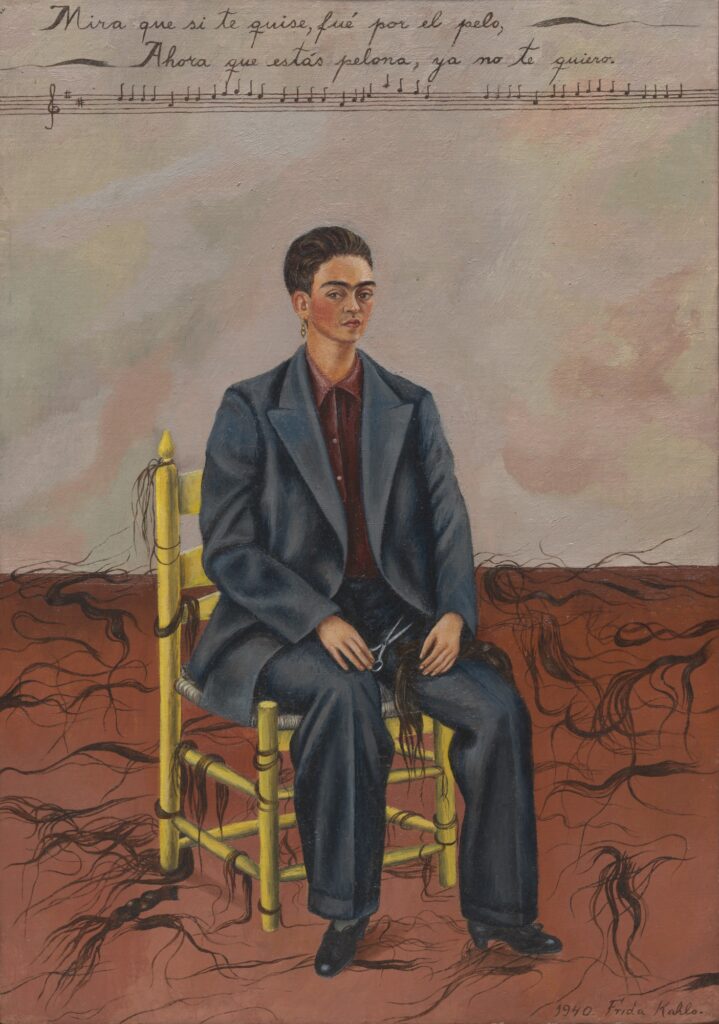
Few self-portraits are as instantly recognizable or as deeply personal as Frida Kahlo’s Self-Portrait with Cropped Hair. Painted in 1940 following her divorce from fellow artist Diego Rivera, the work marked a turning point in Kahlo’s life. Instead of portraying herself in the colorful dresses and elaborate hairstyles for which she had become known, she deliberately rejected those familiar symbols. The painting became a powerful expression of independence, resilience, and the search for identity beyond the expectations placed upon her.
In the portrait, Kahlo sits alone on a wooden chair wearing an oversized men’s suit. Her freshly cut hair is scattered across the floor, while she holds a pair of scissors in one hand. The contrast between her masculine clothing and the strands of hair surrounding her creates a striking visual statement. Every element of the composition carries symbolic meaning, suggesting a break from traditional ideas of femininity and the roles society often assigned to women.
Throughout her life, Kahlo turned to self-portraiture as a way of processing physical pain, emotional hardship, and personal transformation. She once said, “I paint myself because I am so often alone and because I am the subject I know best.” Across dozens of self-portraits, she explored themes of identity, culture, disability, love, and loss with remarkable honesty. Self-Portrait with Cropped Hair reflects this fearless approach, capturing a moment when she chose to redefine herself on her own terms rather than through the eyes of others.
Today, the painting stands as one of the most influential self-portraits in modern art. It challenged conventional ideas of gender, beauty, and self-representation, inspiring generations of artists to embrace authenticity over expectation. More than eighty years after it was painted, Kahlo’s portrait continues to remind us that identity is something we create for ourselves, not something the world defines for us.
Why These Self-Portraits Matter Today
Centuries after they were created, these self-portraits continue to resonate because they speak to something timeless. They are not only records of the artists who painted them, but also reflections of courage, ambition, resilience, and self-belief. Each work captures a moment when a woman chose to define herself through her own eyes, leaving behind a story that continues to inspire generations of artists and art lovers alike.
Together, these paintings remind us that self-portraiture is about much more than appearance. It is about identity, voice, and the freedom to shape your own narrative. While the world around these women has changed, their determination to be seen, heard, and remembered remains just as powerful today as it was when they first picked up a brush.
Painting a Legacy That Lives On
The history of art is filled with remarkable portraits, but these five works stand apart because they gave women the opportunity to become both the artist and the subject. Through self-portraiture, Sofonisba Anguissola, Artemisia Gentileschi, Élisabeth Vigée Le Brun, Käthe Kollwitz, and Frida Kahlo challenged conventions, celebrated their individuality, and claimed a place in history on their own terms. Their paintings continue to remind us that some of the most powerful stories are the ones artists choose to tell about themselves.
As more women continue to shape the art world today, these self-portraits remain lasting symbols of confidence, creativity, and self-expression. They encourage us to look beyond the surface and appreciate the experiences, emotions, and identities behind every brushstroke. Each painting is more than a reflection. It is a legacy that continues to inspire artists, collectors, and art lovers around the world.
Which of these self-portraits resonates with you the most? Is there another woman artist whose self-portrait deserves a place on this list? Share your thoughts in the comments below. We’d love to hear from you.
