
If You Think Success Means Staying in Your Lane, This Artist Proved It Wrong I Martine Jansen
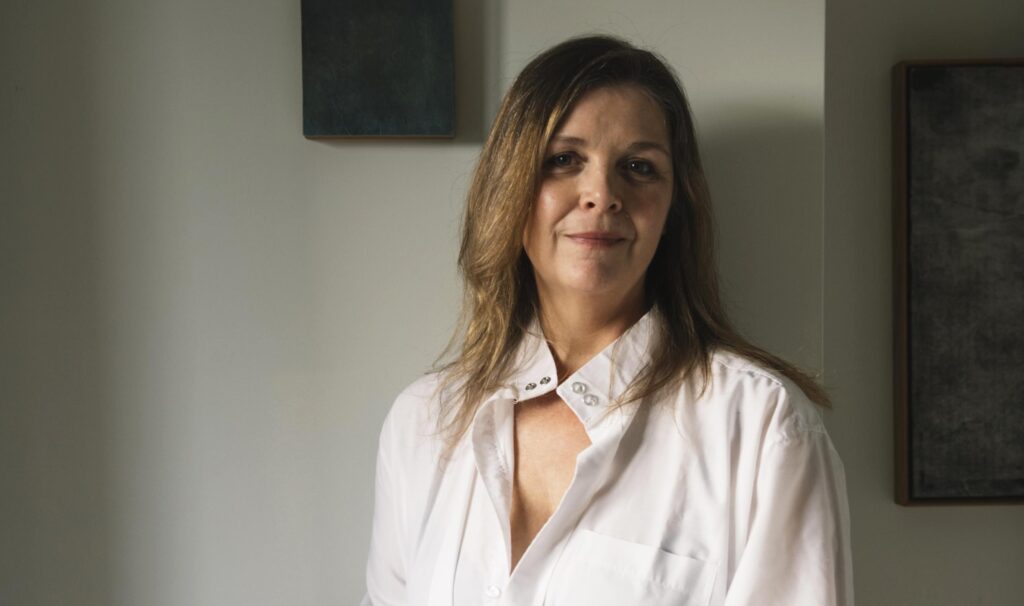
We’ve been selecting artists for exhibitions long enough to recognize when someone’s work isn’t trying to be anything other than what it is. No performance. No over explanation. Just honesty. For our virtual exhibition Birds, hosted on Women in Arts Network, that’s exactly what caught our attention about Martine Jansen.
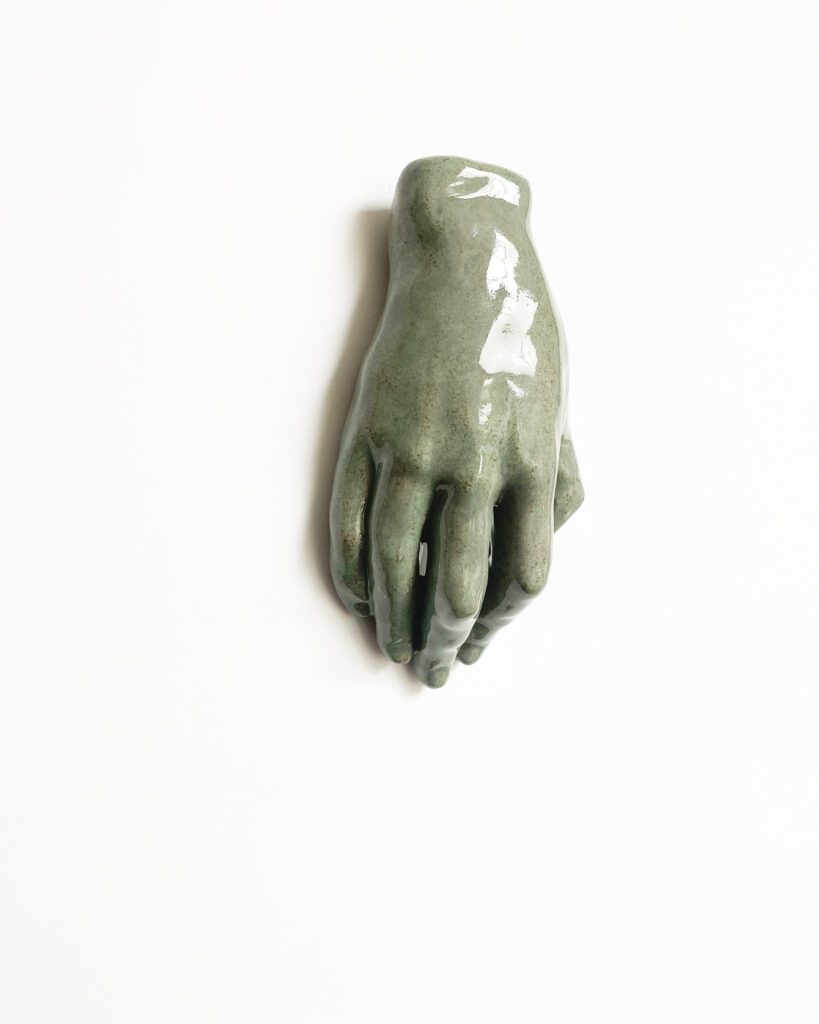
Her work doesn’t fill space it creates it. She paints with pastels, grinding them down and layering colour so slowly that depth builds naturally, not forcefully. Her sculptures address the body and social fractures without any drama attached. There’s a quietness running through everything she makes, like she’s figured out that silence can hold more weight than shouting ever will.
We selected Martine because her work operates on restraint as strength. She strips things down to what matters, leaves space for interpretation, and trusts that what she doesn’t say will land harder than what she does.
She lives and works in Mechelen, Belgium. Started in graphic arts, spent years as a designer, then became internationally recognized for something unexpected porcelain artist dolls under MJBdolls. Realistic, figurative sculptures that attracted worldwide attention. That was her world for a long time.
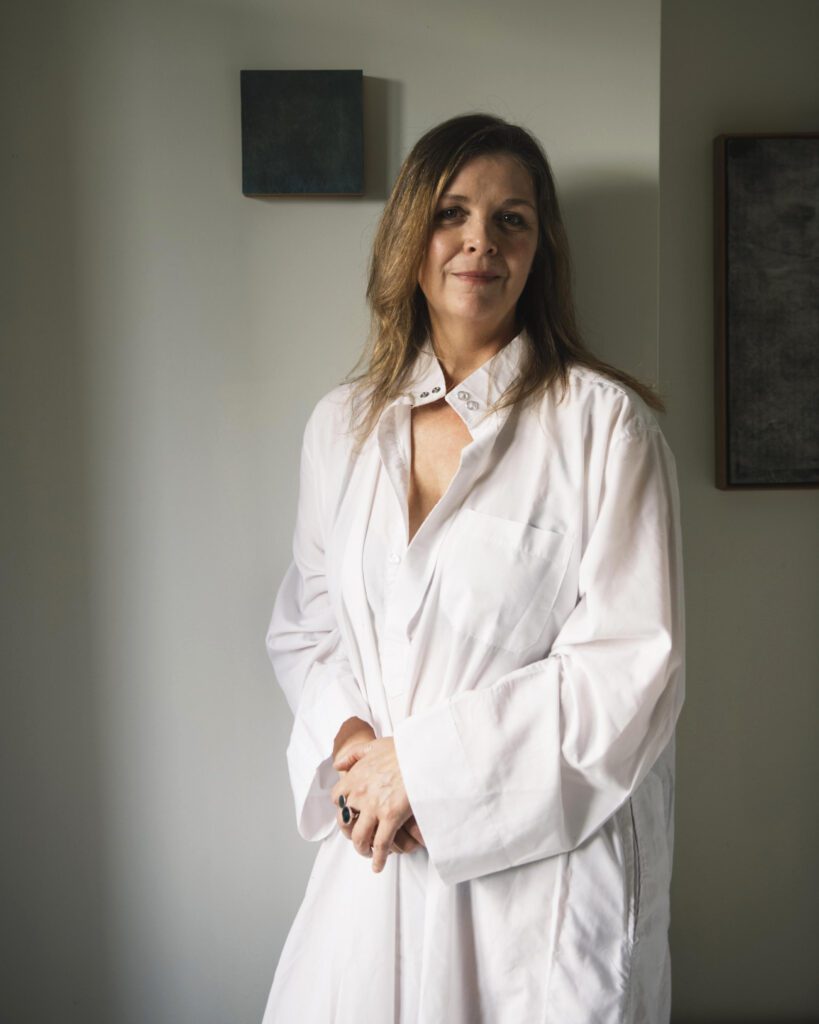
Then her practice evolved. Not dramatically, but gradually toward abstraction, toward exploring the balance between simplicity and complexity. She began building paintings layer by layer, fascinated by how much you can remove before something loses its meaning. She calls her approach “poetic representation with an urge for repetition,” where repetition becomes meditation, a way to uncover rhythms that feel both universal and personal.
She refuses to limit herself to one medium. Painting and sculpture feed each other in her practice. Her paintings hold stillness layers of color creating presence through absence. Her sculptures give weight to the body tangible, direct, saying things without words. These aren’t separate practices competing for her attention. They’re two parts of the same conversation.
Light pulls her constantly. Morning especially, but also dusk, the shifting tones of water. She notices what most people walk past that gray isn’t one shade but hundreds, that colours don’t just change but transition through infinite variations. Her abstract work captures these moments, holding them in composition.
When she makes sculptures, they often start from social themes news she’s read, disturbances she feels about the world. She doesn’t lecture. Her process requires patience. Grinding pastels, building layers like making a collage without glue. Sometimes she works on something so long she destroys it and starts over, searching for the right balance in composition and color.
She went through difficult years creatively lost, questioning everything, unable to find footing. She compares that time to being inside a chrysalis, transforming but unable to see what she’d become. Now she’s emerged. She’s found peace, and with it, a creative flow that keeps her in the studio for hours with what she calls voracious enthusiasm.
Now, let’s hear from Martine herself about refusing to create just to please, about why silence sometimes overwhelms more than noise, and what it means to move freely between abstraction and form.
Q1. Please share your bio and an artist statement to give our readers a deeper insight into your background and creative philosophy.
I am Martine Jansen (1969), living and working in Mechelen, Belgium. After studying graphic arts in Brussels, I began my career as a graphic designer. As an artist, I initially explored figurative visual art and gained recognition for my realistic porcelain artist dolls, which attracted worldwide interest and appreciation. Over the years, my work has gradually evolved towards abstraction, driven by my fascination with the balance between simplicity and layering. Each piece is a search for harmony and contrast, built up layer by layer to reveal both depth and complexity. I describe my work as a form of “poetic representation with an urge for repetition.” Repetition, for me, is a meditative force—a way to uncover patterns and rhythms that feel both universally recognizable and deeply personal. My background in graphic arts remains present in the precise lines, defined shapes, and carefully constructed compositions. My sculptures often arise from social themes that resonate with me. These are everyday events I read about in the news or things that disturb me in our current society. I translate the thoughts that occupy me around these topics into an image. Creating art is a natural process for me. I’m involved with it daily. If not in the studio, then in my mind. I never start with the intention of pleasing. Creating art is a deeply personal process, and I will never “produce” it simply to please. The artworks I create emerge from within myself and are therefore both strong and vulnerable. I describe my work as tranquil and poetic, with a certain layering. And the viewer often experiences it that way as well. My work invites the viewer to pause, observe, and form a personal interpretation. I strive to create images that are both powerful and understated, evoking a sense of poetry and timelessness.
Q2, Your practice moves between still, layered paintings and bodily sculpture. How do you decide when an idea belongs to one medium rather than the other?
I find both practices equally fascinating. I don’t necessarily want to be tied down to one style. For me, it’s very natural and organic to work with different techniques. I don’t want to simply paint or sculpt. One enhances the other. It gives me freedom. “Between abstraction and form. Stillness prevails in my paintings. Layers of colour, a presence through absence. In my sculptures, the body emerges — present, tangible, imbued with meaning. Two worlds, opposed yet connected, nourish each other’s language. This is my language.”
Q3. Light appears as a quiet starting point in your process, especially the tones of the morning. What does that early light give you that other moments of the day do not?
Inspiration is everywhere and always. I’m sensitive to impressions in my surroundings. The colors of the morning light, for example, can be very inspiring. But so can the glow of a sunset, the nuances of the sea. There are so many nuances in the light. I find that very moving. Gray isn’t just gray. It consists of hundreds of shades. Blue transitions into pink. If you look long enough, you’ll see an infinite color palette. In my abstract work, I create such a snapshot of color into a composition.
Q4. After years of working with porcelain dolls under MJBdolls, what shifted in your thinking when you moved toward freer figurative sculpture?
As an artist, I initially found my way in figurative visual art. I gained fame with my realistic porcelain artist dolls, which attracted worldwide interest and appreciation. As a logical consequence, I initially created highly figurative sculptures. Over the years, my work has increasingly evolved towards abstraction, driven by my fascination with the balance between simplicity and layering. Each work arises from a quest for harmony and contrast, in which I build layer upon layer to reveal both depth and complexity. The sum of all these phases in my life means that I now master various techniques, which also gives me the freedom to use them in my current work. The different disciplines reinforce each other and enrich my artistic practice. Several turbulent and difficult years in my life left me rudderless in my creative process for a while. It made me restless, and I constantly questioned everything. Looking back on that period, I compare it to a butterfly in the making. Once it emerges from its chrysalis, the butterfly can emerge and fly. Now that I’ve found peace of mind, I’m literally in a creative flow. And that translates into hours of studio work with voracious enthusiasm and a great deal of satisfaction.
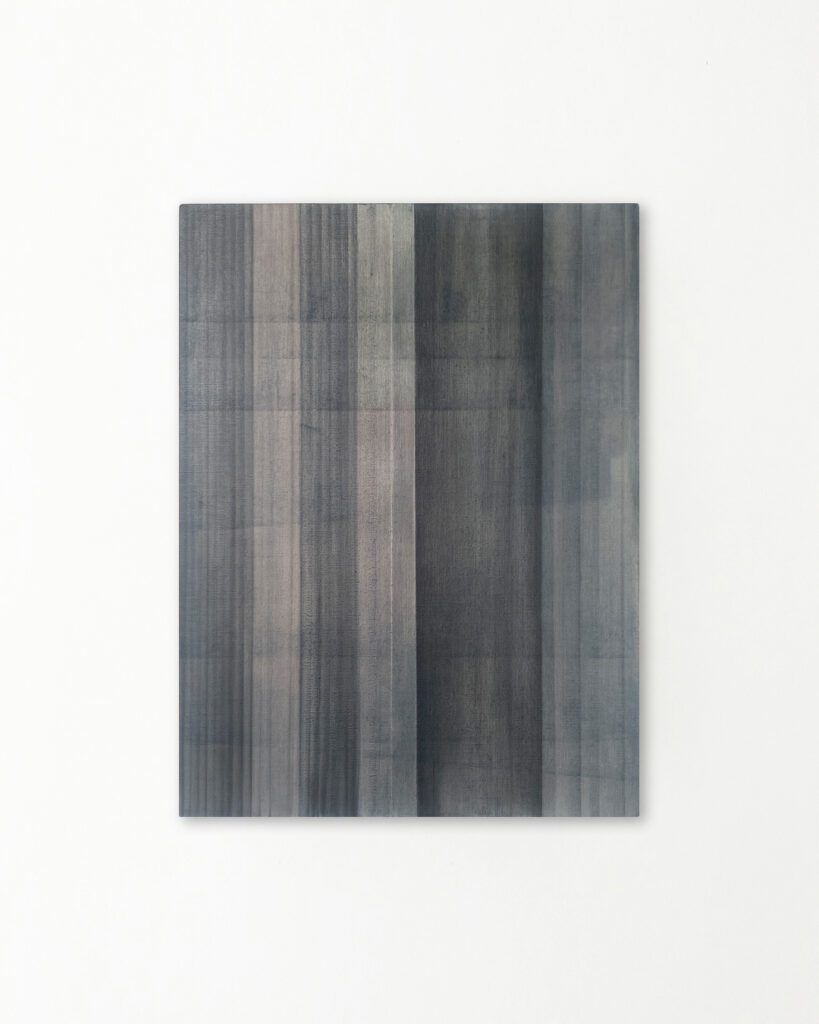
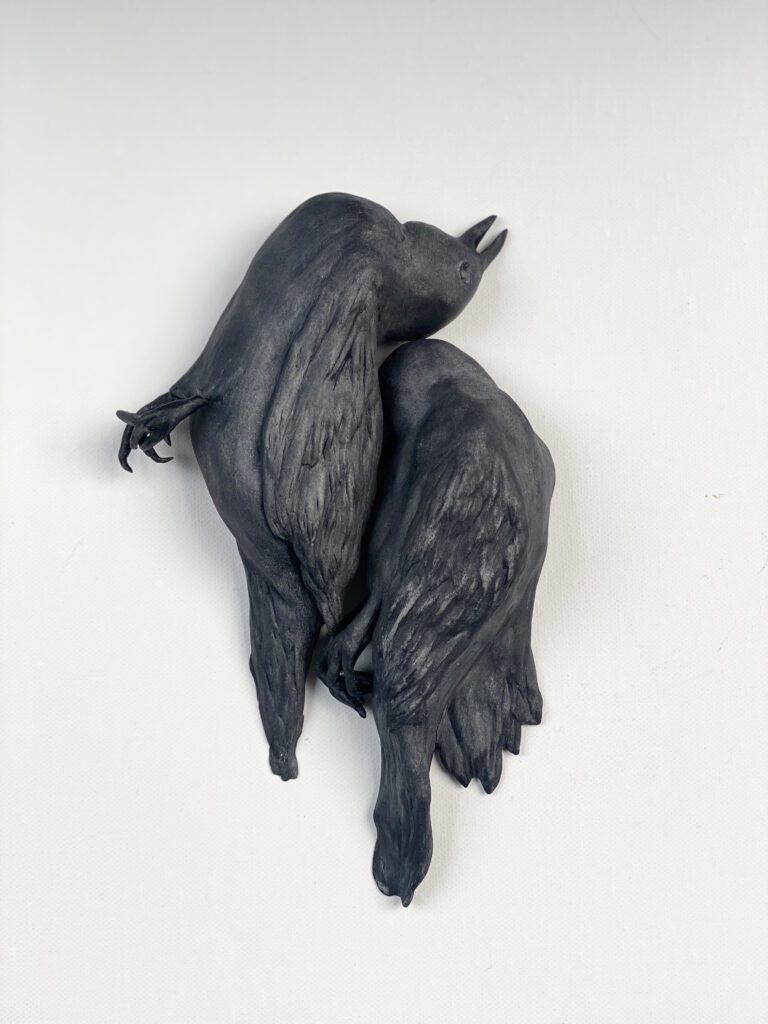
Q5. In The Trace We Leave, loss is shown without drama. What led you to choose silence as the central tone of that work?
I don’t need to shout, to loudly proclaim my opinion. I find it more powerful to convey an impression in which the viewer can express their own feelings or thoughts. Silence can sometimes be overwhelming. In “The Trace We Leave,” I show without words the impact of our interaction with nature. Without judging, yet simultaneously judging.
Q6. Your pastel technique is slow and built through grinding and layering. How does this pace influence the way an image develops?
Because I work slowly and in layers, I create depth in my work. Think of it as a kind of collage, but without the glue. I find it a fascinating process that can be difficult to stop. So, sometimes I destroy a piece and start over. The trick is to create composition and balance in color.
Q7. Looking back at exhibitions ranging from Moscow to New York and now recent shows in Belgium, what has changed most in how you see your work today?
Actually, not much has changed, if you ask me personally. When I exhibit, I only show work I fully support. That I’m proud of. It doesn’t matter whether it’s in New York, Brussels, or my studio. What I do notice is that the art world has often become more commercial and superficial. Art shouldn’t be viewed as a commercial product. At least, that’s my opinion.
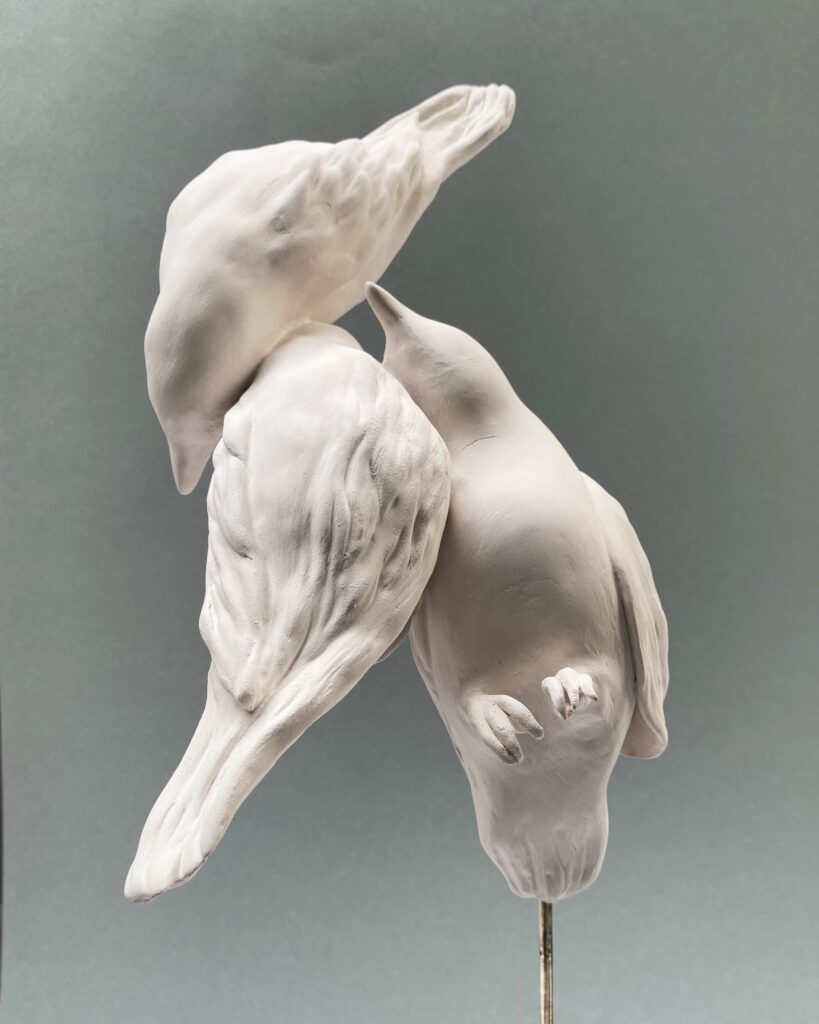
As we concluded our conversation with Martine, one thing became clear: the art world has confused volume with value for far too long.
Martine’s work exists on a completely different frequency. She addresses environmental destruction, social fractures, humanity’s relationship with nature but she doesn’t shout about any of it. In “The Trace We Leave,” she shows impact without commentary, lets silence do the work that most artists try to force through explanation. That restraint isn’t weakness. It’s confidence. It’s trusting your work enough to let it speak without you standing next to it translating.
What hit me hardest is how she talks about evolution. She built an entire career around porcelain dolls. Worldwide recognition. Financial success. An established identity people knew her for. Then her work started shifting toward abstraction not because she rejected her past, but because she’d outgrown it.
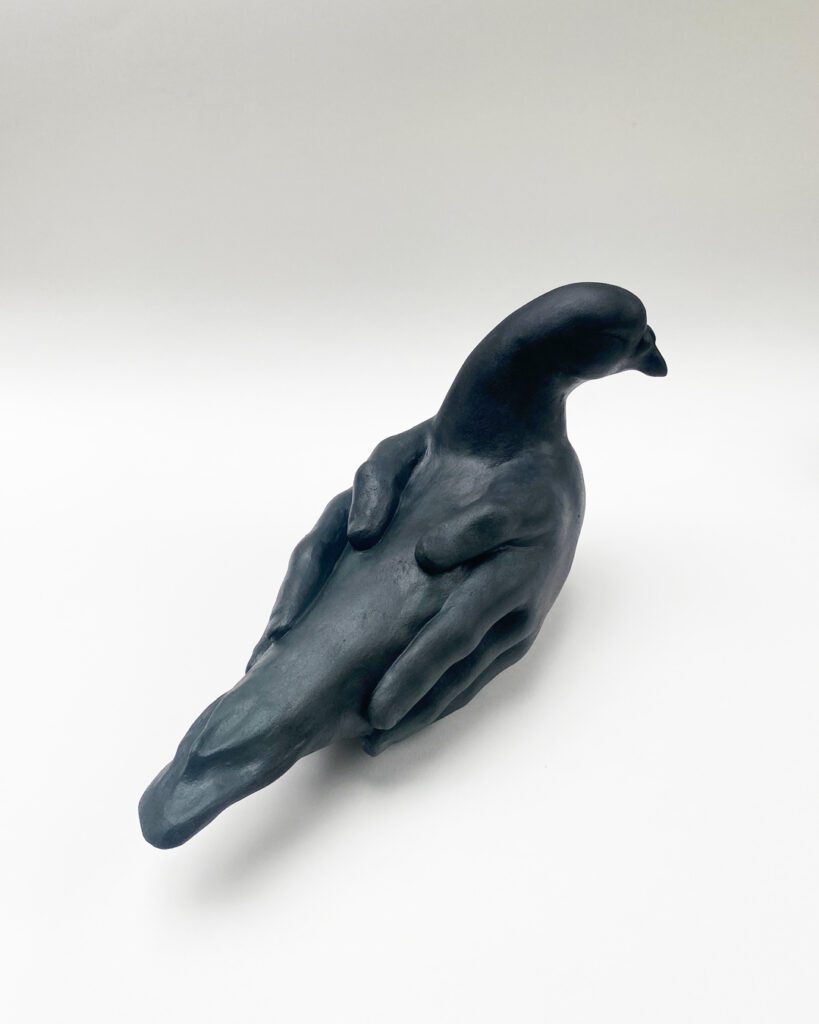
There’s also brutal honesty in how she describes struggle. She went through years of being creatively rudderless questioning everything, unable to work the way she used to, feeling trapped. She compares it to a chrysalis, where you’re transforming but can’t see what you’re becoming and don’t know if you’ll survive it. She doesn’t romanticize that period or pretend it was “necessary for growth.” It was just hard. Now she’s on the other side, working with enthusiasm again, but she’s not erasing the cost it took to get there.
What stayed with me most is her process. She works with pastels, grinding and layering slowly, building depth through patient accumulation. Sometimes she works on something for so long she destroys it and starts over not out of perfectionism, but because she’s searching for balance that can’t be rushed. In a world obsessed with speed and instant results, she chooses the method that demands the most patience. That’s not stubbornness. That’s understanding that some things only reveal themselves slowly.
Follow Martine from the links below to see what happens when restraint becomes strength where silence speaks louder than proclamation, and patience builds depth that urgency can never touch.
