
Vicki Sullivan’s Portraits Connect Classical Painting With the People and Issues of Today
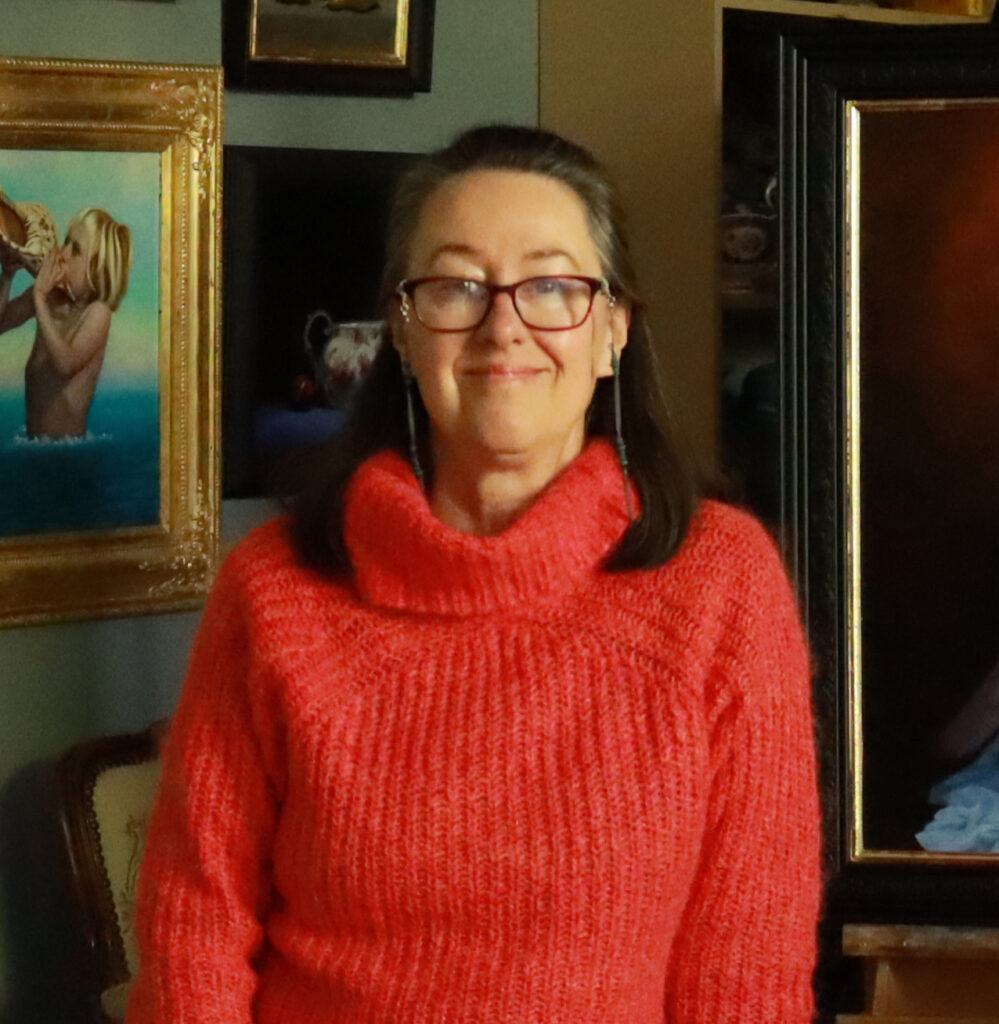
At Women in Arts Network, our Portraits exhibition explored how the oldest art form of all still speaks to us today. For as long as people have made images, we have painted one another, trying to hold onto a face, a feeling, a presence. Yet a portrait has never been only about likeness; it’s about empathy, memory, and the simple recognition of another human life. Each of our selected artists honours that in her own way. Among them is Vicki Sullivan, an Australian painter who brings the glow and precision of the old masters to the real people and stories of the present.
Based on Victoria’s Mornington Peninsula, between the Southern Ocean and Port Phillip Bay, Vicki was drawn to realist painting for as long as she can remember, at a time when it had fallen deeply out of fashion. At university she studied Fine Art, but realism was frowned upon there and everything revolved around conceptual art, which never spoke to her.
It took her years even to discover that the classical training she craved still existed, and three more years of saving before she could study it at the Angel Academy of Art in Florence, under Maestro Michael John Angel. She calls it the best decision of her career; there, at last, she found the tools and the way forward she had long been craving.
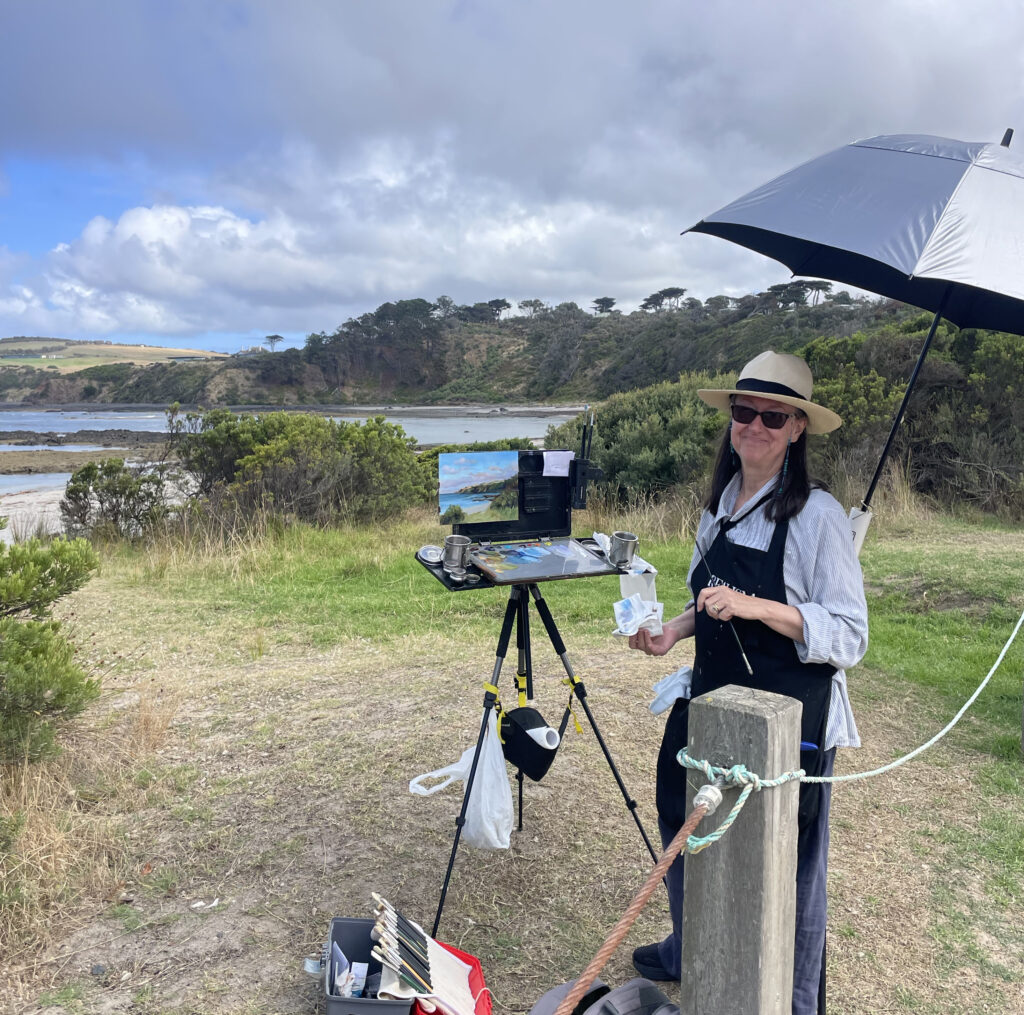
She works almost entirely in oil on linen, and she loves it, for the way it forgives, for the glow and richness of its colour, and for how it lets her build a painting up, layer by patient layer, into something luminous and real. Acrylic she avoids; it makes her think of plastic.
Above all, she is chasing three-dimensionality, turning the form until a figure feels genuinely present, and getting the proportions and the fall of light exactly right, because for her, that is where a true likeness lives.
Yet for Vicki, a likeness is only the beginning. Each painting, as she describes it, is really a vessel for storytelling, a way of conveying emotions and themes that resonate universally. She loves getting to know the people she paints, often weaving a little of their story into the work, and she is especially careful with sensitive subjects, always seeking permission and working closely with her sitters so that a portrait can truly honour them.
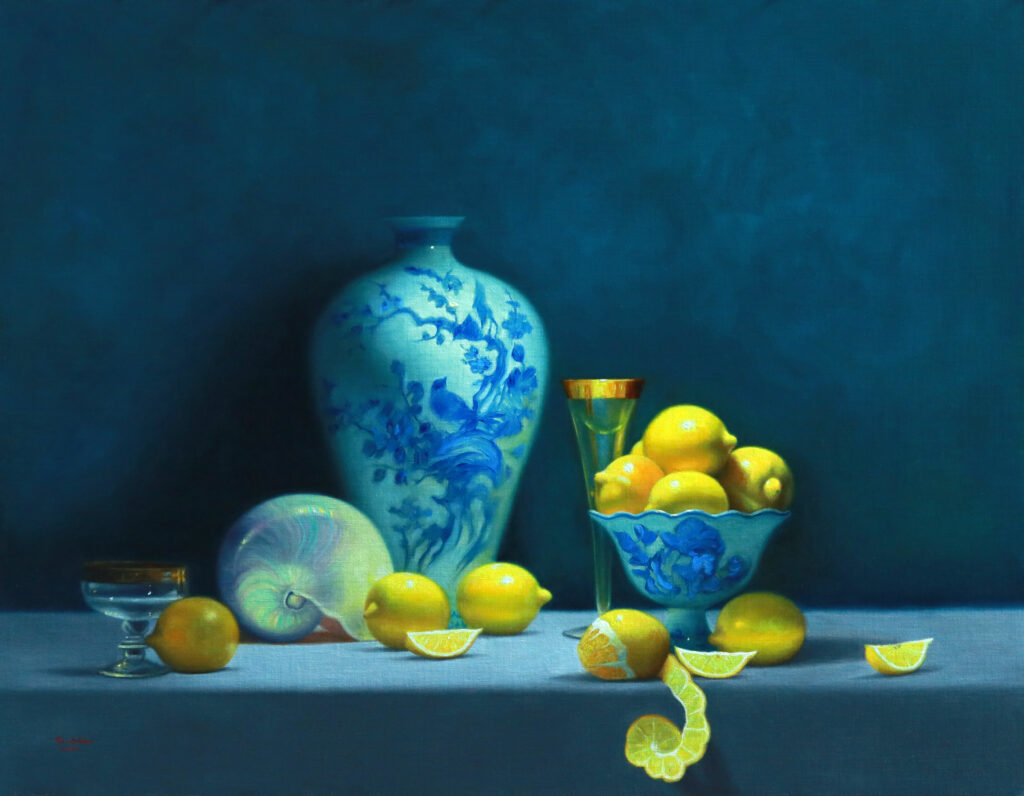
Her practice reaches beyond people, too. A devoted gardener, she grows some thirty fruit trees and countless flowers, and paints the produce straight from her garden, loving its wild, un-cookie-cutter character, sometimes waiting years for a single plant to yield enough for a painting.
Whenever she takes on something new and unfamiliar, such as a night scene or a painting touched with myth and symbolism, she turns to the old masters for guidance. She studies how the great painters before her approached the very same challenges, always keeping a shelf of art books close at hand.
Her mastery has not gone unrecognised. She has been honoured with a prestigious international title celebrating her command of realist art, won awards in several countries, and seen her paintings enter public and private collections around the world. A member of respected portrait and realist art societies, she has also become a champion of other women artists, bringing an international initiative that celebrates women, painted by women, to Australia, because she believes in promoting female artists and in portraying women through a female gaze.
Now let’s hear from Vicki about the training in Florence that changed everything, how she makes a subject feel truly present, why she paints with such care for her sitters’ stories, and the people she most longs to paint next.
Q1. Vicki, what drew you to classical painting, and how did your training in Florence shape your approach to portraiture?
I have always been attracted to Realist paintings, for as long as I can remember. It took me a while to find out about where to get that training because I certainly didnt get any of that at University where I studied Fine Art. In my era realism was frowned upon and everything was about conceptual art which I did not gel with.When I finally found out about classical training in Florence it took me 3 years of saving to be able to afford to go, but it was the best thing I have done for my career. It gave me the tools I was craving and the way forward was opening for me by using those tools and processes.

Q2. You want your subjects to feel as though they could step out of the painting. How do you create that sense of presence?
I focus on turning the form and trying to make my subject as 3 dimensional as possible.
Q3. How does getting to know a sitter influence the way you approach and develop their portrait?
I really enjoy getting to know the sitter for a portrait. I think it helps me paint them if I know them. Also sometimes I am able to weave a little of the person into the story of the painting.
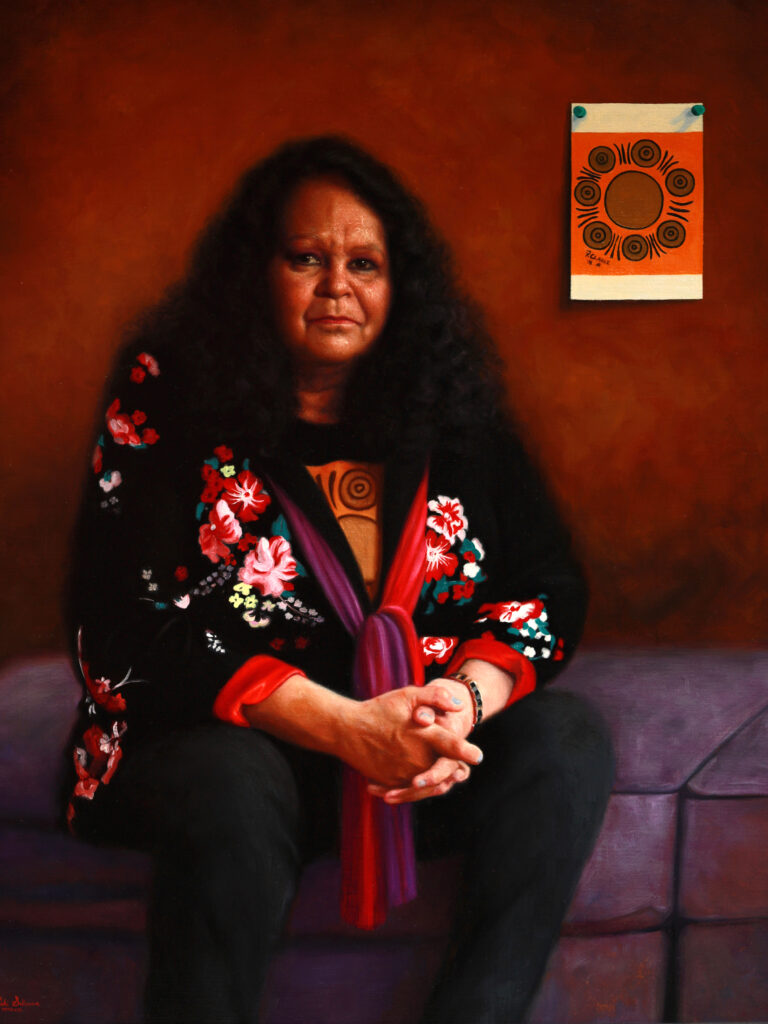
Q4. In your portrait of Deborah Cheetham-Fraillon AO, how did her personal story shape your approach to the painting?
I like to work in conjunction with my subjects and working with Deborah has been really wonderful. Deborah sent me the photo of herself as a small child and told me the story about the photo and wondered if I might like to include it somehow in the painting. It occurred to me that I could paint it as if it was taped to the wall behind her.
Deborah wrote out the description for me which I used with the painting to tell her story. It is important to me to get permission and work closely with people , especially on sensitive topics and I am grateful to Deborah for trusting me to paint such a personal story. I hope people learn from my painting and I hope it evokes empathy in the viewers and enables more understanding.
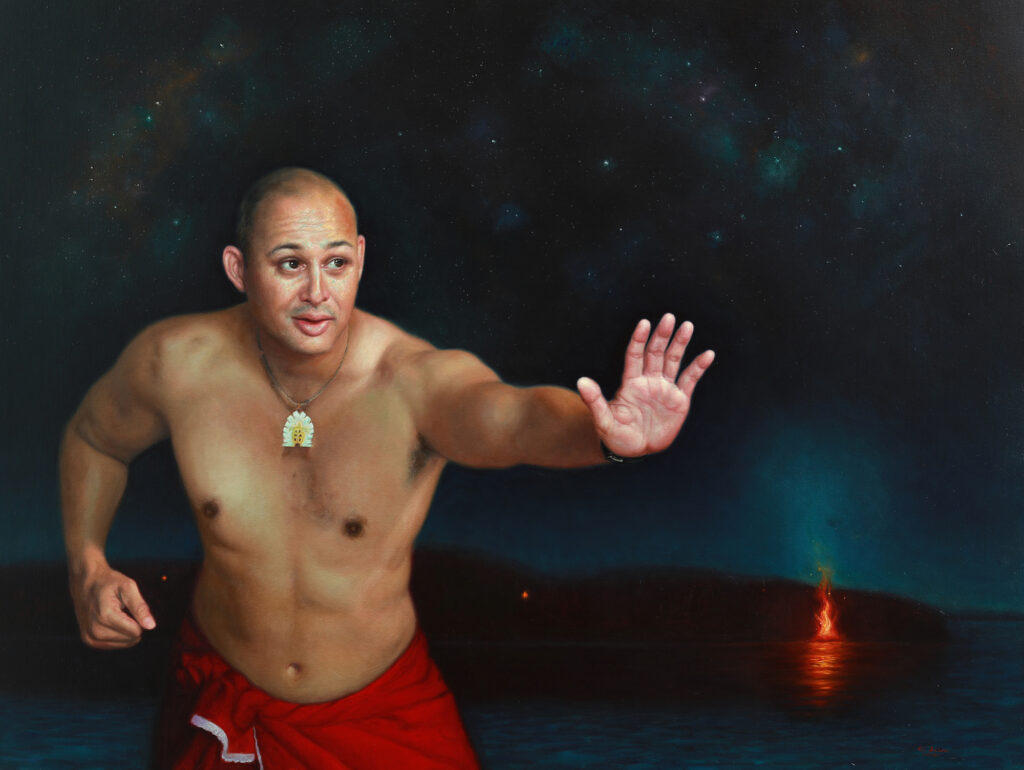
Q5. When creating a convincing likeness, which technical aspects demand the most attention?
Turning the form and making it convincingly 3 dimensional is a really important part of my painting process. Also getting the proportions right on the facial features is a huge factor in getting a likeness.
Q6. You work primarily in oil on linen. What do you value most about this combination when developing a portrait?
I love working in oil, it is very forgiving and I build up layers to make my paintings realistic. I have never worked in Acrylic and I love the way oil paint glows and colour can be so rich. When I think of Acrylic, I think of plastic and I try to avoid plastic.
Q7. When painting a person, what details help you understand and capture something about them?
Each painting id different and each painting shows us something about our subjects. My approach is quite visceral really and I go with my gut on a lot of compositions and getting the lighting right is a bif part of that.
Q8. Your still lifes often feature flowers and produce from your garden. What draws you to these everyday subjects?
I love my garden and we grow about 30 fruit trees and lots of flowers. Painting produce and flowers from my garden is a large part of my practice.
Sometimes I buy produce for a shop to paint but I like my garden produce better because it is more random and not so cookie cutter.I have some plants which I have grown for 7 years before I get a crop with enough to put in a painting but they are always so special when it comes straight from my garden.
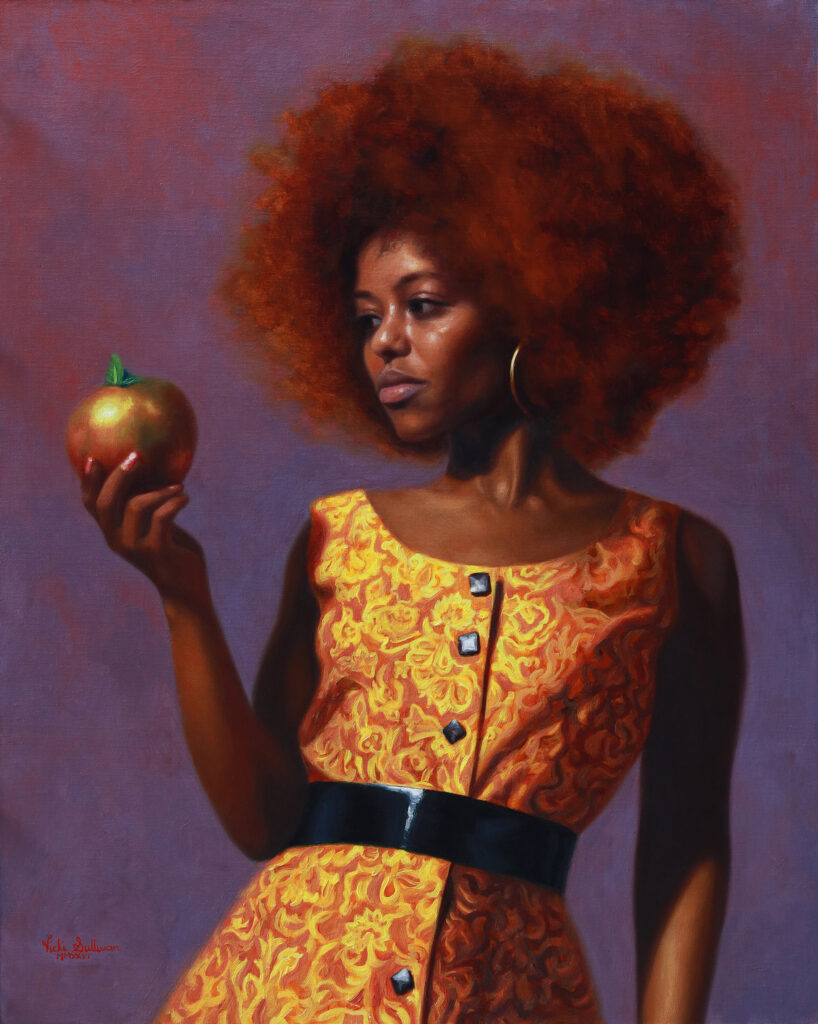
Q9. In Moon Goddess, you explore a different palette and atmosphere. How did you approach this painting and its sense of mystery?
Moon goddess was quite an experiment for me painting in such a cool pallette. I studied lots of night paintings to really get a grip on how the masters painted night scenes before I embarked upon my painting. I often study the painters who went before to help me understand how to tackle new themes and ideas. I have lots of art books on hand to help me with that.
Q10. You brought the Women Painting Women initiative to Australia. What does this movement mean to you as a portrait painter?
I saw the Women Painting Women shows happening in the USA and thought it was a wonderful idea. I actually contacted the founders of the movement and asked them if they would mind if I organised a show here in Australia and they were Happy for me to do it as ling as I mentioned them. Sadie Veleri, Diane Faisel and Alia El Bermani.
I knew a curator JS Mittman at Burrinja cultural Center who loved the idea and has run the Women painting Women show several times. I think its important to promote female artists and also to paint women with a female gaze.
Q11. Your work combines classical techniques with contemporary subjects. How do you bring these two worlds together?
My process is quite traditional but the people I paint are living in todays world so it just seems like a natural process to me.
Q12. Your paintings are held in public and private collections. What does this recognition mean to you as an artist?
I am so thrilled to have my work in some public collections, it is a bit of recognition in a way as a painter, that my work is being taken seriously by the boards of some major cultural institutions. It is a great honour actually and I am very grateful that some of my work has found its way into some major collections.
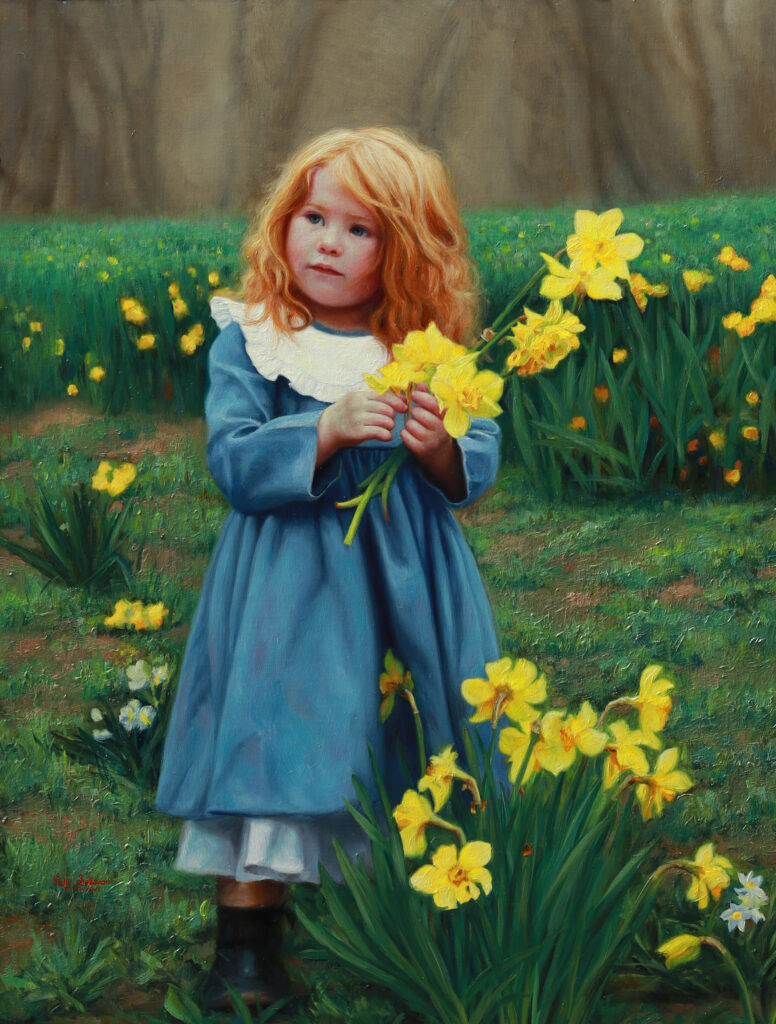
Q13. Commissioned portraits involve balancing a client’s expectations with your artistic standards. How do you approach this?
Usually I manage the balance quite well, but occasionally it has been difficult. I try to advise my client from a painterly perspective to make the painting work as a piece of art as well as try to please my subject.
Q14. Are there particular people or stories you would still like to explore through portraiture?
I want to paint more people who are standing up for human rights. I get quite anxious about the state of the world, especially in recent years and I would like to help amplify the voices of the brave folk who speak up and defend human rights. This has been on my mind a lot.
Q15. What do you hope viewers come to understand or feel when spending time with one of your portraits?
I hope some of my paintings evoke a sense of empathy in the viewer, for humanity and for the person depicted in my paintings.
As our conversation with Vicki came to a close, we found ourselves returning to a question that has always sat at the heart of portraiture: what is a portrait truly for? For much of history, it was a way to record a likeness, to preserve a face for those who came after. But the greatest portraits have always reached further, asking us not just to look at a person, but to feel for them.
Vicki’s work belongs wholeheartedly to that deeper purpose. Trained in the classical tradition, she paints with such care for form, light, and presence that her subjects seem ready to step out of the frame, and yet her real aim is empathy.
By working so closely with the people she paints, and weaving their stories into the canvas, she makes a portrait into something more than a likeness: an invitation to understand another human life. Her approach also challenges the idea that classical technique belongs only to the past; in her hands, it becomes a living language for the people and concerns of today.
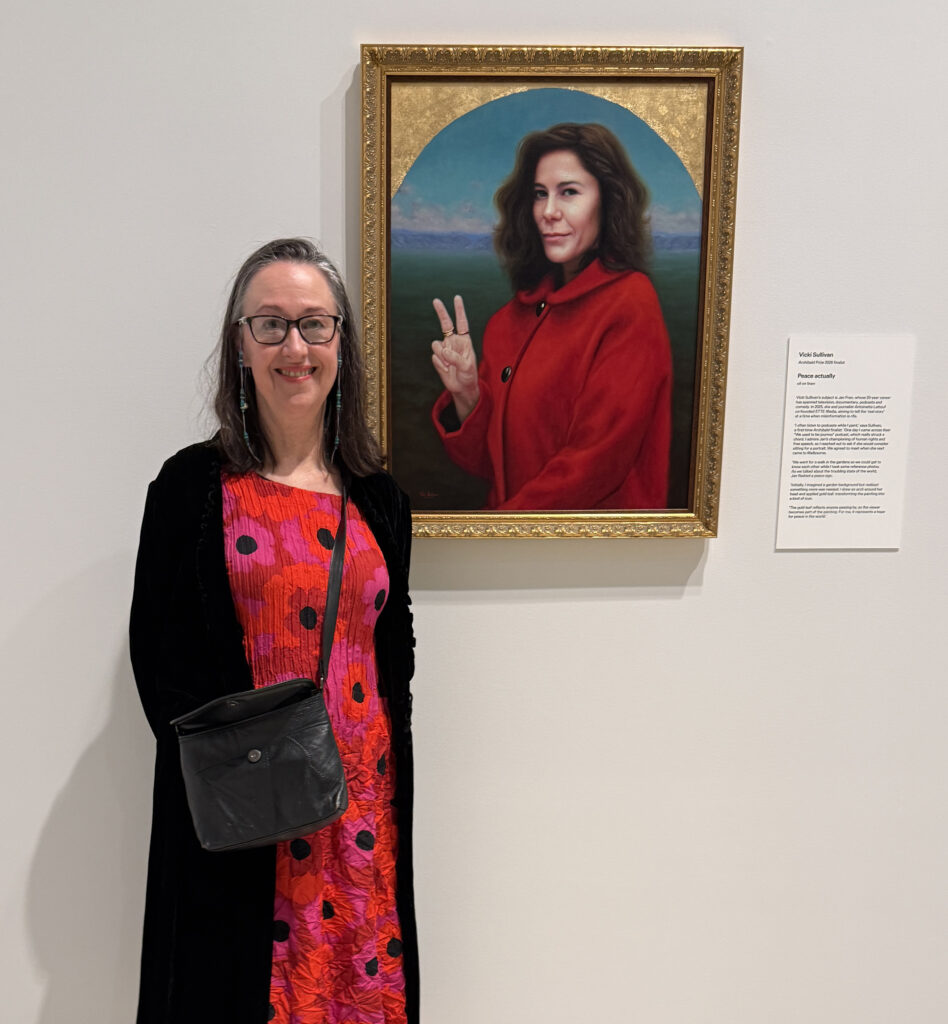
This is part of what keeps portraiture so alive in contemporary art. The old techniques endure, but each artist brings new questions and new eyes to them. Vicki paints living people in a centuries-old language, and she paints women with a woman’s gaze, part of a wider movement to see female subjects through female eyes. There is no single way to paint a person, just as there is no single story a face can tell, and the most powerful portraits honour that complexity rather than flattening it.
For art lovers and collectors, work like Vicki’s offers something increasingly rare: the depth of the old masters brought to the lives of real, contemporary people. Luminous and alive, her portraits reward slow, close looking, and they carry a quiet moral weight, a plea, almost, for empathy and understanding. To live with one is to live with a genuine presence, and a reminder of the humanity we share with the person in the frame.
Perhaps that is the enduring power of a portrait: at its finest, it does not just show us a face, it helps us recognise a fellow human being. Vicki may begin with form and light, but what she is really painting is empathy itself, the quiet understanding that passes between one person and another.
Follow Vicki Sullivan through the links below and explore more of her work and creative journey.
