
This New Orleans Artist Creates Portraits Using Only Wool and Beads︱ Jennifer Morgan
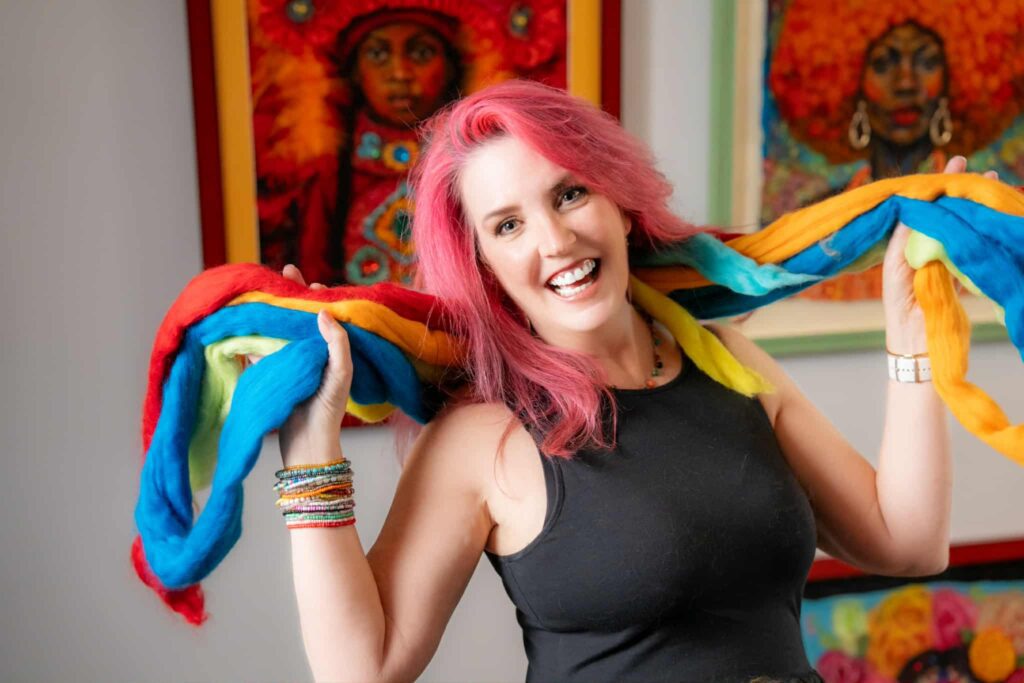
At Women in Arts Network, every now and then someone walks into Faces with a material we never expected and makes us rethink what portraiture can even be. Jennifer Morgan walked in with wool. And nothing in this exhibition has been the same since.
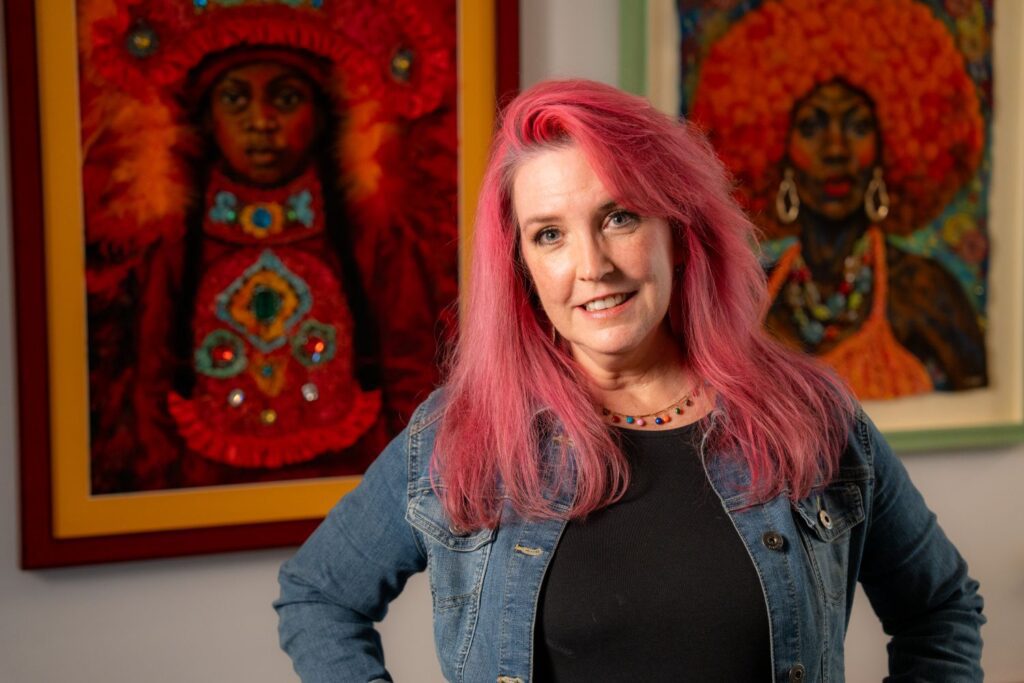
Jennifer is a selected artist for the Faces exhibition and before we tell you what she makes we need to tell you how she got here because that journey is half the reason her work hits the way it does.
She grew up in North Carolina surrounded by creativity, a father behind the camera, a mother behind an easel, art in the air from day one. She earned a BFA in Graphic Design and spent years in the professional design world, agencies, corporate marketing, freelance, learning colour and composition and visual communication from the inside out. Then she moved to New Orleans and built a life there for thirty years.
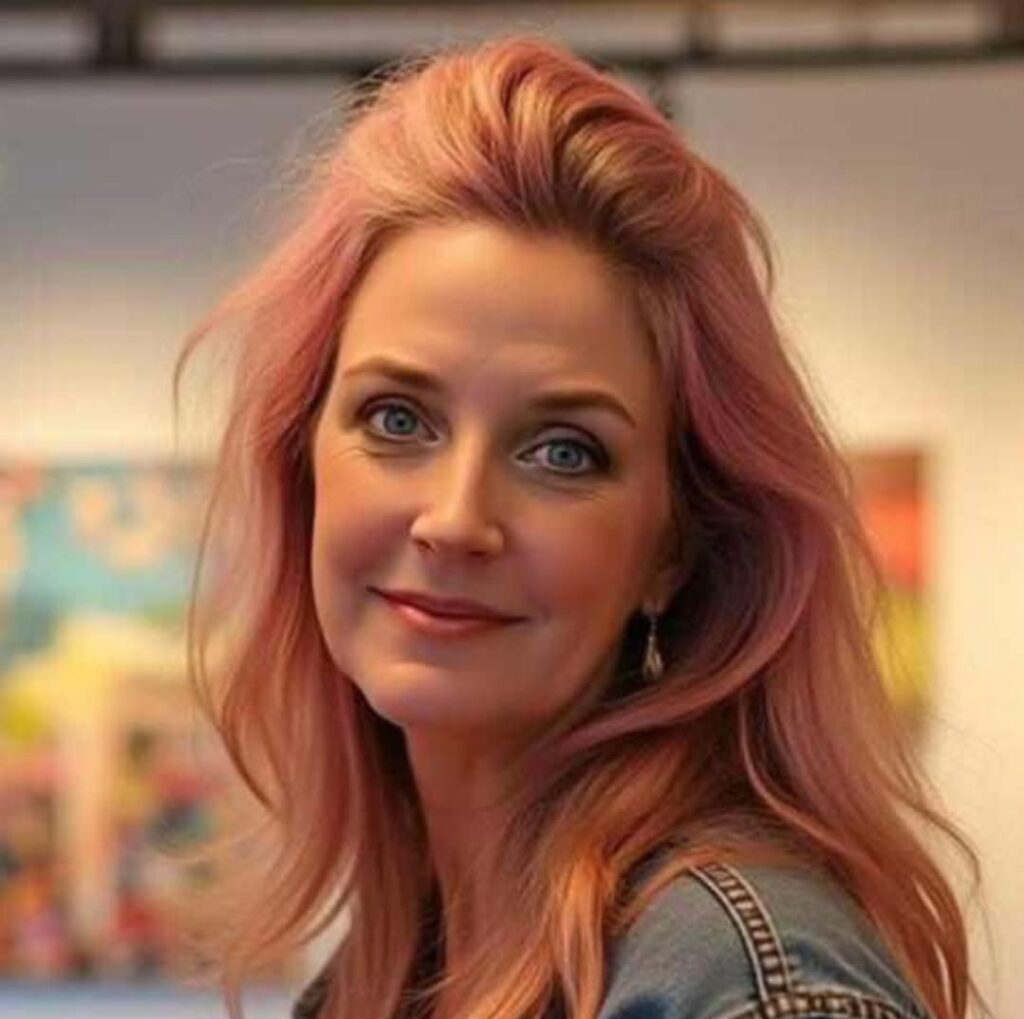
Hurricane Katrina found her twenty weeks pregnant with twin boys. They evacuated, returned before most people did, and spent years putting everything back together. She left design. Raised her sons. Started over in fitness as a personal trainer. Decades passed with the artist inside her staying quiet because there simply wasn’t room for her to speak.
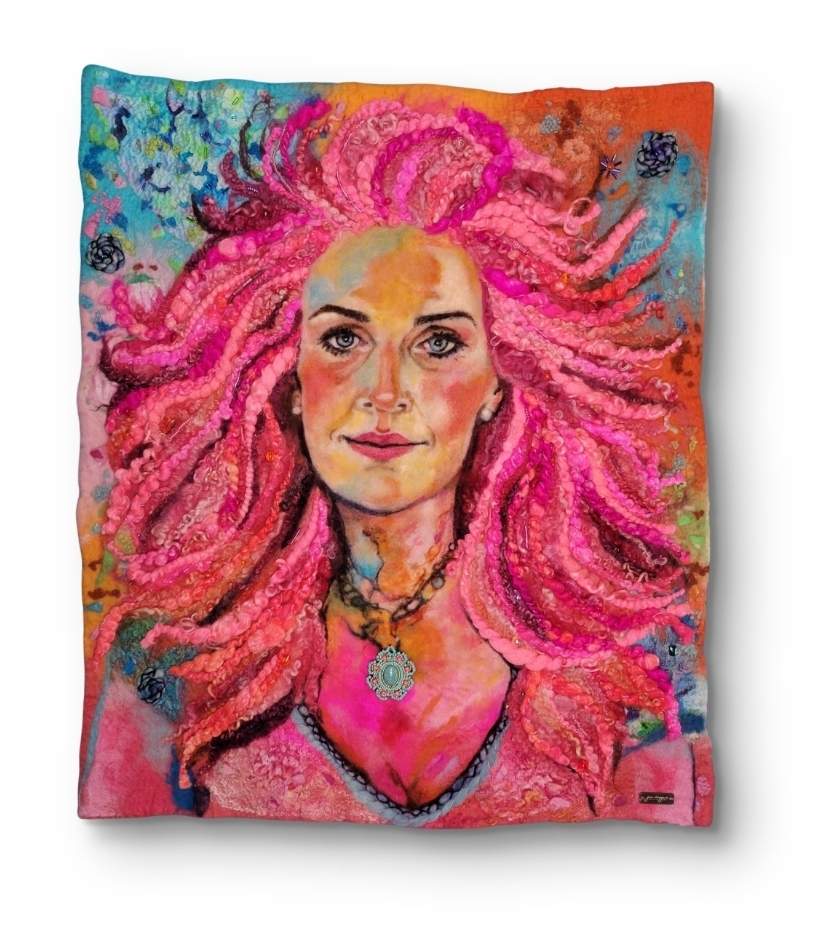
And then a friend said come try this felting workshop and that was the end of the quiet. Something lit up in Jennifer that had been patient long enough. She picked up the wool and every skill she’d built over thirty years of artistic training suddenly had a home. She dove in completely, wet felting, Nuno felting, needle felting, and started making portraits that stopped people in their tracks because nobody could believe they weren’t paint.
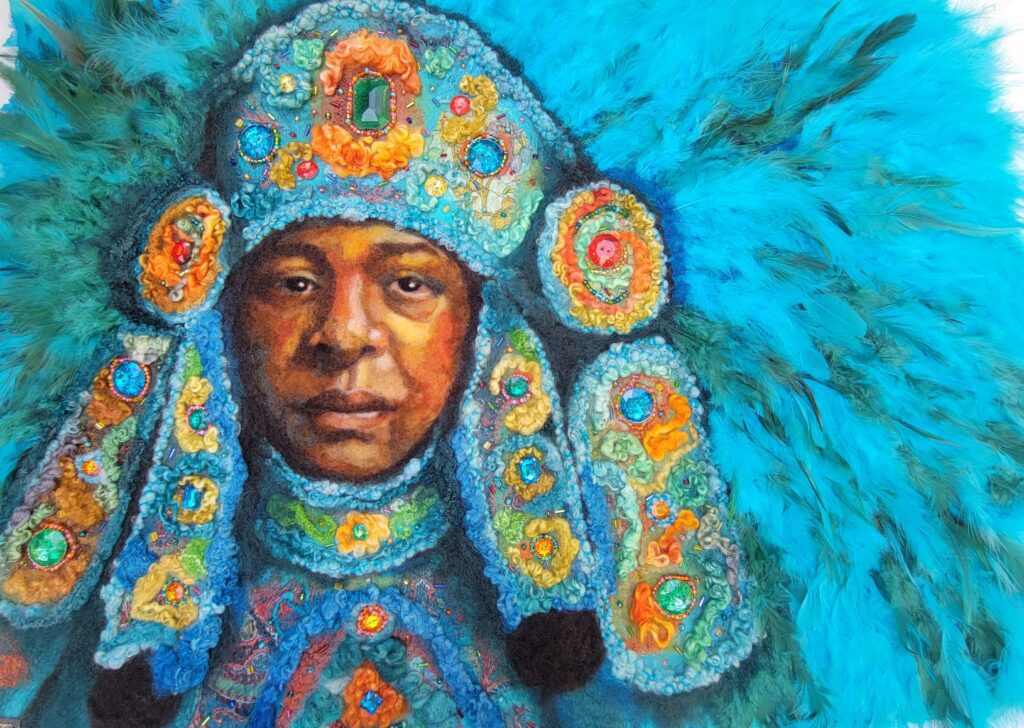
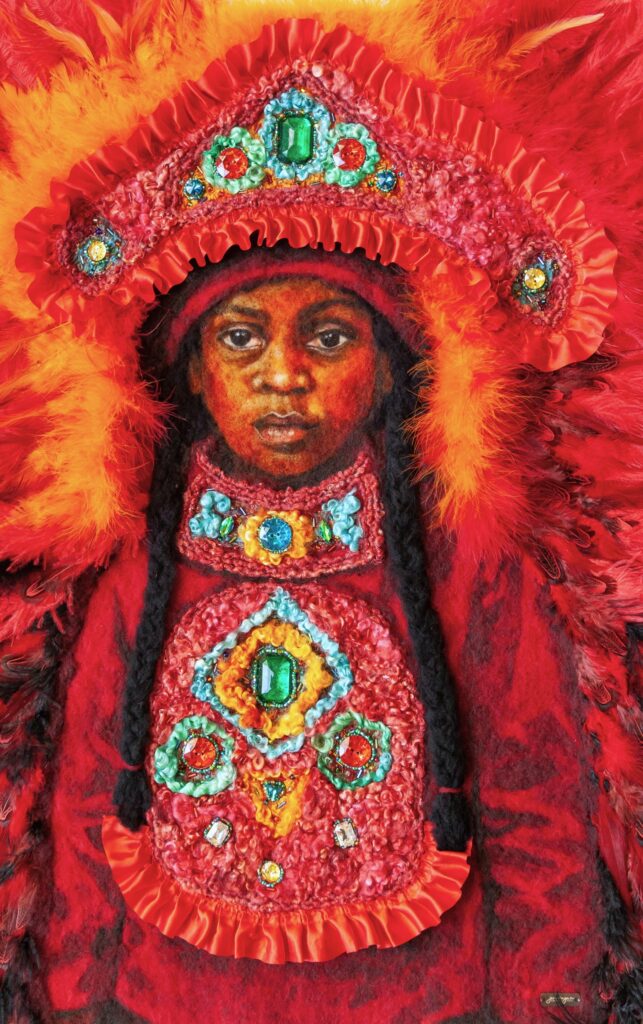
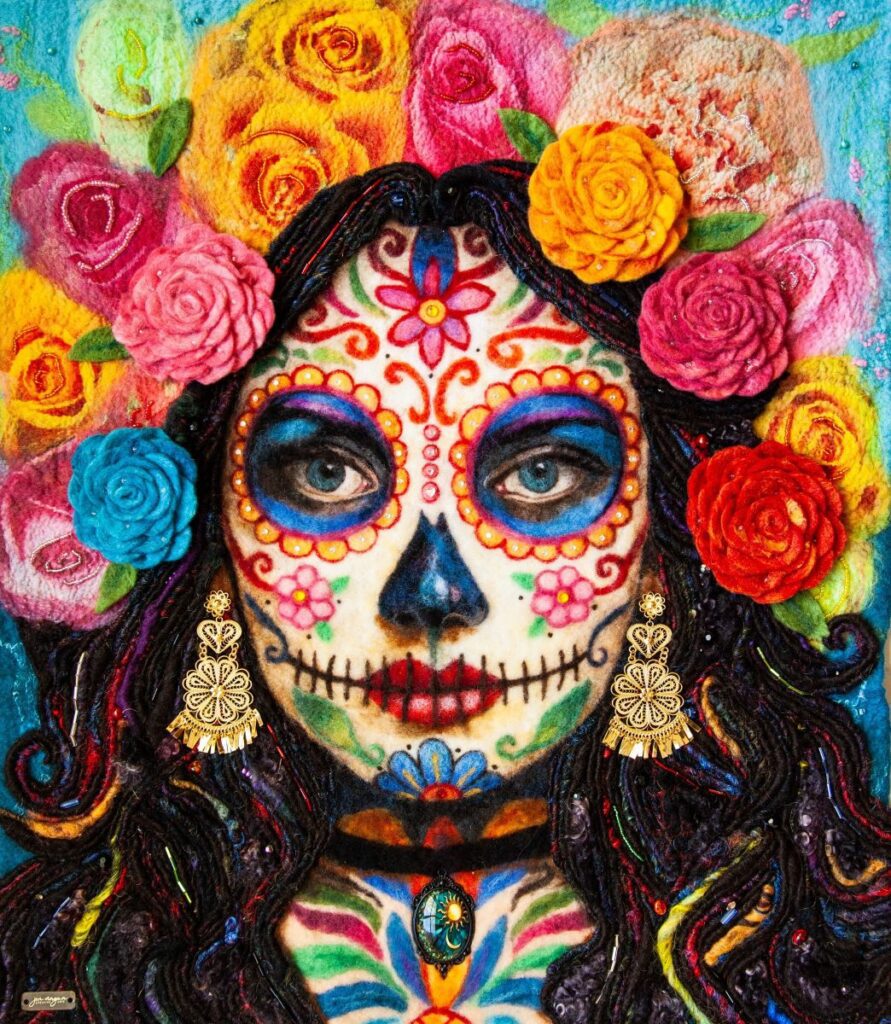
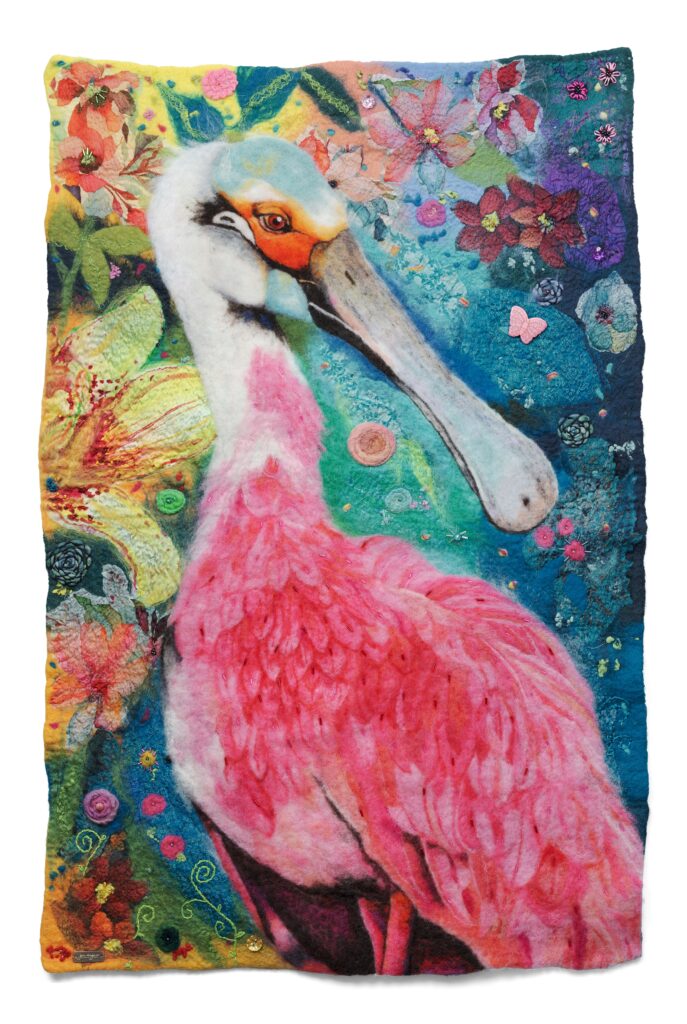
Because that’s what Jennifer does. She builds faces from fibre. Blends wool by hand the way you’d mix oils on a palette. Places each strand individually with a barbed needle, building shadow and highlight and tone one fibre at a time until a face appears that is so alive and so warm and so dimensionally present that your eyes say painting and the truth says wool. The backgrounds are wet-felted first, rich and vibrant and textural. The portrait emerges through needle felting on top, slowly, strand by strand. Then come art yarns and mohair and feathers and beading that give the surface a warmth and a life that no flat canvas can touch.
And the eyes. The eyes are everything. She works them until they hold exactly the right feeling. People tell her the figures watch them. People tell her they feel seen. That’s an artist who understands that the whole portrait lives or dies in the gaze and who won’t stop until one strand of wool makes the difference.
Now let’s hear from Jennifer, about wool instead of paint, about thirty years between the BFA and the barbed needle, about hurricanes and twins and the workshop invitation that woke everything up, and why the face that surprised us most in this exhibition is the one made entirely by hand from fibre.
Q1. Could you take us back to your early years what your background was, how you first began making art, and when painting shifted from exploration into a sustained, serious practice?
Growing up in North Carolina, I knew from an early age that I wanted to be an artist. Creativity was very much part of my upbringing—my father was a professional photographer, and my mother is an oil painter—so making art felt both natural and encouraged. I gravitated toward art classes throughout school and went on to earn a Bachelor of Fine Arts with a concentration in Graphic Design from East Carolina University. The program was a traditional, immersive four-year degree where I explored a wide range of disciplines, including graphic design, photography, textiles, pottery, metalwork, jewelry design, painting, figure drawing, typography, and art history. That broad foundation continues to inform how I work today. After college, I spent much of my adult life as a professional graphic designer, working in advertising agencies, direct mail and printing companies, in-house corporate marketing departments, and later as a freelance designer. In my late twenties, I relocated to New Orleans, where I’ve lived in the greater New Orleans area for the past thirty years. My career—and life—shifted dramatically after Hurricane Katrina. At the time, I was twenty weeks pregnant with twin sons, and we evacuated north of the city. We were among the first to return, and rebuilding—both personally and collectively—took years. During that period, I stepped away from my freelance design business, became a stay-at-home mother, and eventually pursued a second career as a personal trainer and fitness instructor. After the pandemic, I felt a strong pull back toward my creative roots. That reconnection began with a wet-felting workshop led by a friend, which completely reignited something in me. The tactile, physical nature of the process immediately resonated, and I realized I had found a medium that allowed me to “paint” with fiber. In November 2025, I committed to learning felting more deeply—immersing myself in wet felting, Nuno felting, and needle felting—and began applying the artistic skills I had developed decades earlier to this new-to-me medium. That was the turning point when exploration became a focused, serious practice. Today, felting is not only my primary medium, but the culmination of everything I’ve learned as an artist—now expressed through texture, color, and fiber.
Q2. Your work repeatedly returns to landscape-like spaces without describing a specific location. What draws you to suggested terrain rather than identifiable places?
My work is primarily portrait- or subject-driven rather than place-based. The figures—whether people, animals, or symbolic forms—are always the heart of the piece. The surrounding terrain or background isn’t meant to describe a specific location, but instead functions as a vibrant, textural foundation that supports and amplifies the subject. Working in felt allows me to build richly layered surfaces through wet and Nuno felting before I ever begin needle-felting the focal elements. These backgrounds are intuitive and expressive—more about mood, color, and energy than geography. They create a sense of space without anchoring the viewer to a recognizable place, which I find opens the door for personal interpretation. By keeping the terrain suggested rather than literal, I can give full attention to the subject while allowing the background to act almost like an emotional landscape—one that enhances the presence, personality, and story of the needle-felted figure without competing for attention.
Q3. Several pieces seem to hover between calm and unease, visually quiet, yet internally active. How conscious are you of emotional tension while composing a painting?
Emotional tension is something I’m very conscious of, especially in the face and, more specifically, the eyes. When I’m creating a portrait, the eyes are often the point where the piece truly comes alive for me—and they’re usually the part I return to again and again until they feel right. That balance between calm and unease often happens there naturally, through subtle shifts in gaze, contrast, and expression. I may build a background that feels visually quiet or harmonious, but within the eyes I’m intentionally layering emotion—curiosity, strength, vulnerability, introspection. Working in fiber allows me to control those nuances in a very tactile way, adjusting density, direction, and color one fiber at a time. That slow, deliberate process invites an internal energy into the work, even when the overall composition feels still. Viewers frequently tell me they feel drawn in by the eyes—that they feel seen, or that the figure is quietly holding something just beneath the surface. I think that’s where the tension lives for me: in that intimate exchange between subject and viewer, where emotion isn’t spelled out but subtly suggested.
Q4. Your palette often feels restrained, with moments of saturation that appear carefully placed. How do you decide when colour should assert itself and when it should remain subdued?
Color is actually one of my greatest joys, and I tend to work with a predominantly vibrant palette rather than a restrained one. That said, I’m very intentional about where and how color asserts itself. Because my work is subject-driven, I think of color as a way to guide the viewer’s eye and reinforce emotional focus, rather than something that needs to be evenly distributed across the surface. Working in fiber gives me complete freedom with color. I’m never limited to what’s commercially available—I hand-blend many of my own hues, much like a painter mixing pigments on a palette. Instead of a brush or palette knife, I use my fingers, layering and blending fibers until the color feels right. This process allows for subtle shifts, depth, and complexity that can’t be achieved with a single, pre-dyed shade. Moments of heightened saturation tend to emerge where I want energy, emotion, or presence to peak—often within the subject itself—while surrounding areas may remain quieter to allow those moments to resonate. For me, it’s less about restraint and more about orchestration: letting color move through the piece with intention and purpose.
Q5. The sense of light in your work feels diffused rather than directional. How do you think about light as an emotional condition rather than a literal source?
I actually think about light in my work as quite directional, especially when I’m creating portraits. A defined light source is essential for me—it helps establish the planes of the face and gives the subject dimensionality and presence. Even though the materials are soft and tactile, I approach light much the same way a painter would, using it to sculpt form rather than simply illuminate it. In fiber, light behaves differently than paint, so I’m constantly considering how fiber density, direction, and color absorb or reflect light. By intentionally placing highlights and shadows, I can suggest structure and depth, guiding the viewer’s eye across the contours of the face. That process often results in a softer, more diffused overall effect, even though the underlying light source is intentional and specific. Emotionally, that balance is important to me. Directional light gives clarity and focus, while the inherent softness of fiber tempers it, creating a sense of intimacy rather than drama. The light becomes less about a literal source and more about shaping how the subject is felt—quietly defining presence, mood, and connection.
Q6. How has your relationship with abstraction changed over time, particularly in how much meaning you expect the surface itself to carry?
My relationship with abstraction has shifted significantly as my understanding of felting has deepened. When I first began working with the medium, much of my work was highly abstract. I was experimenting with a wide range of fibers within a single piece—each with its own texture, behavior, and shrinkage rate—and the surface itself carried much of the meaning. At that stage, abstraction wasn’t a conceptual choice so much as a natural outcome of learning how the material wanted to move and respond. As I became more technically confident and began to better anticipate how different fibers would behave, my focus gradually shifted. The surface no longer needed to do all the expressive work on its own. Instead, it became a foundation—still rich with texture and movement—but one that could support greater intention and control. Today, my work leans more toward realism, particularly in my portraiture. I use abstraction strategically, primarily in the background, while allowing the subject to emerge with clarity and specificity. Rather than relying on the surface to generate meaning independently, I now see it as a partner in the process—one that enhances the narrative and emotional presence of the figure without overpowering it.
Q7. Many artists working in abstraction wrestle with when to stop. What signals completion for you visual resolution, emotional quiet, or something less definable?
Because my work is largely subject-driven and rooted in realism, visual resolution of the figure usually comes first. I know when the portrait itself is complete—the likeness, expression, and especially the eyes reach a point where nothing more is needed. That clarity gives me a strong anchor. Where I tend to wrestle with stopping is in the embellishment phase. Fiber invites excess in the most beautiful way, and I work with materials like art yarns, mohair locks, feathers, embroidery, and beading—elements that add movement, texture, and energy. The challenge is knowing when those additions are enhancing the subject and when they begin to compete with it. Completion, for me, happens when there’s a sense of balance—when the embellishments feel intentional rather than indulgent, and the piece holds together both visually and emotionally. It’s often less a definable moment than a quiet recognition that the work no longer needs me to intervene. When the subject feels fully present and the surface has settled into harmony, that’s when I stop.
Q8. When uncertainty arises in the studio, how do you stay with the work without forcing resolution too quickly?
When uncertainty shows up in the studio, I’ve learned that the most important thing is not to rush myself toward resolution. My studio is in my home, which gives me a lot of flexibility—I can return to a piece whenever the creative energy feels right, even if that happens in the middle of the night. That freedom helps me stay connected to the work without forcing decisions before they’re ready. At the same time, I’m constantly balancing studio time with the business side of being an artist and my personal life. There are moments—especially when I’m working toward a deadline—when I can feel pressured to push through or take shortcuts just to finish. That’s usually when the process starts to feel tedious rather than intuitive. Over time, I’ve learned to recognize that feeling as a signal to step away. Even a short break creates space for clarity, and when I return, I’m often more energized and able to see the piece with fresh eyes. Staying with the work, for me, isn’t about constant action—it’s about knowing when to pause so the resolution can emerge naturally rather than being forced.
Q9. When someone encounters your work for the first time, what do you hope they feel before they begin to interpret?
Before interpretation sets in, I hope the first thing a viewer feels is a sense of cheerfulness—a lightness that comes from the bright, often whimsical color palette and the layered textures of the fiber. I want the work to feel inviting, almost joyful, encouraging people to step closer rather than analyze right away. As they spend more time with the piece, I often see a second reaction emerge: surprise and awe. Many viewers assume they’re looking at paint, and it’s a powerful moment when they realize that no paint is used at all. Every shadow, highlight, and subtle transition is created by blending different colored fibers and physically embedding them into the surface with a barbed needle. That discovery slows people down. It invites curiosity and a deeper appreciation for the process, turning the encounter from an immediate emotional response into a more intimate experience—one where material, technique, and feeling all come together.
Q10. When you look back at earlier pieces, what do you recognise now about your instincts that you didn’t yet trust then?
When I look back at my earlier pieces, I recognize how much of my energy was devoted to experimentation—testing different fibers, learning how they interacted, and discovering what would happen once a wet-felted piece fully dried. I was paying close attention to material behavior: which fibers developed a soft sheen, which created puckering or movement, and how those effects could coexist within a single surface. Those works were very much learning experiments, even as I was still striving to create something beautiful and resolved. What I didn’t fully trust then were my instincts—my growing sense of when something was working and when it needed restraint. As my skills have developed, I’ve become more confident in making decisions earlier and committing to them. That confidence shows in the final work, both in the clarity of the subject and in the intentional use of texture and embellishment. At the same time, I still see myself as a student of the medium. Felting continues to surprise me, and there’s always more to learn. That ongoing curiosity is something I value deeply—it keeps the work alive and prevents the process from becoming formulaic.
Q11. What advice would you give to artists working within abstraction about developing depth and coherence without relying on overt narrative?
While abstraction isn’t the primary focus of my practice, I do think a lot about depth and coherence outside of overt narrative. Over time, I’ve developed multiple bodies of work that function almost like parallel narratives—distinct series that I return to again and again. Each one has its own visual language, yet they’re all unmistakably connected by my materials, techniques, and sensibility. Because of that, my advice to artists working in abstraction would be to focus less on telling a specific story and more on developing a cohesive, recognizable style that feels authentically their own. Depth can emerge through repetition, restraint, and commitment—through returning to similar forms, processes, or materials long enough for meaning to accumulate naturally. That kind of coherence takes time. It’s something that evolves through making a lot of work, paying attention to what keeps resurfacing, and trusting those instincts. Ultimately, the goal is for someone to encounter a piece and recognize it as yours before they ever understand why—because the surface, the rhythm, and the decisions carry their own quiet authority.
As we wrapped our conversation with Jennifer, we kept thinking about all the years in between. The design career. The hurricane. The twins. The fitness classes. The decades where the artist inside her didn’t disappear but just went quiet because there wasn’t room for her yet.
And we thought about how many women are living that exact story right now. Carrying something creative inside them that keeps getting pushed aside because someone needs dinner or someone needs a mum or someone needs a logo designed by Friday or the house needs rebuilding after a storm that took everything. The thing you love most about yourself becomes the thing that waits the longest because everything else feels more urgent.
Jennifer’s journey is proof that the waiting doesn’t kill it. Thirty years of life between the BFA and the barbed needle and when she finally picked up the wool it was like no time had passed at all. Everything she’d ever learned was right there, ready, patient, just waiting for the right material to show up.
That should mean something to every woman reading this who’s been telling herself it’s too late. It’s not too late. It was never too late. The thing inside you that wants to make something is not going anywhere. It will outlast the career and the chaos and the kids and the storm and it will still be there when you finally have a minute to sit down and listen to it. And when you do, it won’t ask where you’ve been. It’ll just be glad you’re back.
And for anyone who collects art or is thinking about what to bring into their home, pay attention to Jennifer right now. Because what she offers is something genuinely rare, a portrait that isn’t paint, that has a physical warmth and texture that changes with the light throughout the day, that invites you closer instead of keeping you at a distance, and that starts a conversation every single time someone new sees it. The moment a visitor says wait that’s not paint and you say no that’s wool, something shifts in how they see not just the piece but what art can be.
That kind of work doesn’t fade into your wall after a month. It keeps surprising people years later. And an artist with this much training and this much life experience who has just found the medium that unlocks everything, that’s someone whose trajectory is only going one direction. The people who see it now are the ones who’ll be glad they did.
To follow Jennifer’s journey and see more of her work, find her through the links below.
